Memorial to the Victims of the Holocaust and the Ustasha Regime
Spomenik žrtvama holokausta i ustaškog režima
In the Croatian capital Zagreb, a memorial commemorating the victims of the Holocaust has been inaugurated in 2022. After a lengthy and controversial debate, the memorial has also been dedicated to all victims of the Ustasha regime.
History
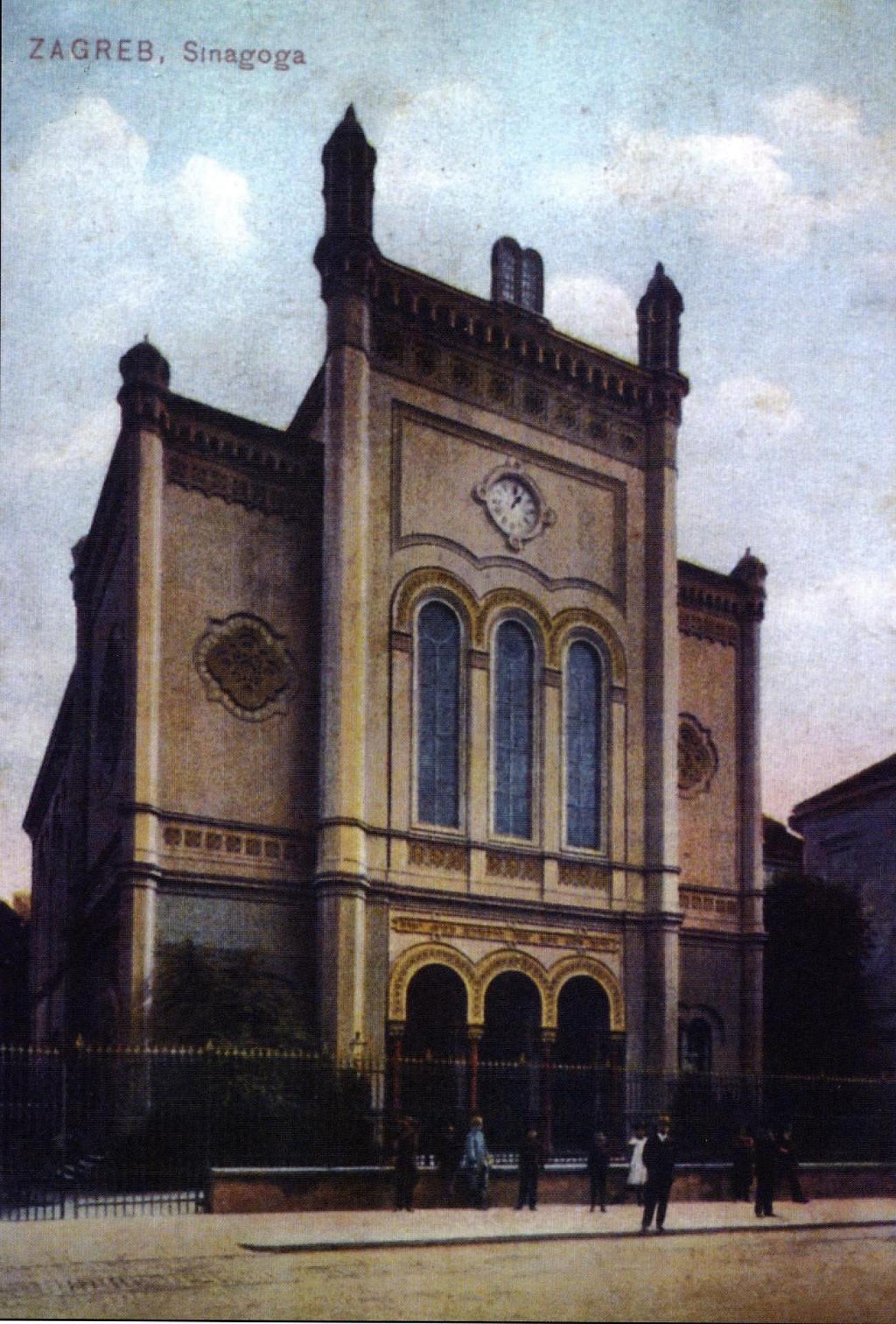
Jews already lived in Zagreb in the Middle Ages before they were expelled at the beginning of the modern era. A new Jewish community was founded in 1806, when Croatia was part of the Habsburg Empire. The centre of Jewish life was the synagogue built in 1867 in Moorish style, modeled on the Leopoldstädter Tempel in Vienna. In 1873, Jews in Croatia were granted full legal equality, and Jewish life flourished. In 1900, around 3,000 of the 20,000 Jews in Croatia were living in Zagreb, and at that time more than half of them declared Croatian to be their mother tongue.
After the First World War, Croatia became part of the new state of Yugoslavia. The number of Jews living in Zagreb continued to grow to over 11,000 in the interwar period, their lifestyle characterized by modernity. During the years 1938 to 1941, many Jewish refugees arrived from the German sphere of influence.
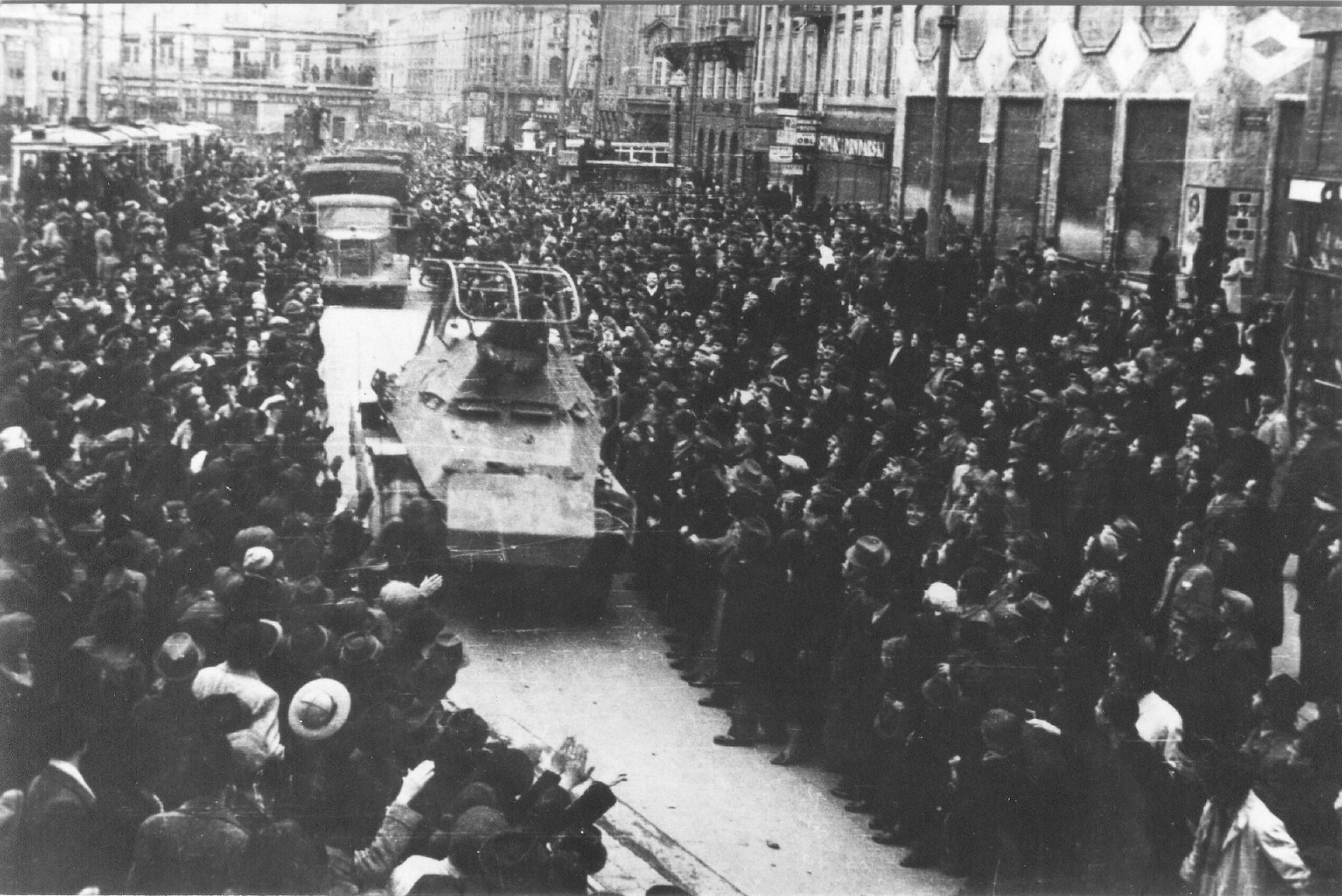
After the Axis attack on Yugoslavia on April 6, 1941, the Independent State of Croatia was proclaimed under the leadership of the fascist Ustasha movement, which immediately began to persecute Jews and other minorities. Jews were deprived of their rights, their property and their homes. As early as April 1941, the Ustasha set up camps in its territory, to which political opponents, Roma and Serbs were deported apart from Jews. The Jasenovac camp, set up in August 1941, became a murder centre. Around three quarters of the Jewish victims in Croatia were murdered by the Ustasha, a quarter in German camps. Between August 1942 and May 1943, several deportation transports with a total of 6,200 Jewish prisoners left Croatia for German concentration camps, in particular Auschwitz-Birkenau. In August 1942 alone, the Ustasha arrested 1,700 Zagreb Jews, most of whom were deported to the German Reich from the main train station a few days later. Only a few of them survived.
Victims
Only a little more than 2,000 of the approximately 12,000 Jews who had lived in Zagreb before April 1941 survived the Holocaust. Most of them were murdered by the Ustasha in camps such as Jasenovac. The SS deported probably about 3,000 Jewish children, women and men from Zagreb to German concentration camps, mainly to Auschwitz-Birkenau, with the help of the Ustasha authorities, and murdered them there, with a few exceptions. The first deportation from Zagreb departed from Zagreb Central Station in August 1942, the last in May 1943 from an industrial track near Zagreb North Station. However, the exact number of victims deported from Zagreb to the German Reich is unknown.
The Zagreb synagogue was demolished at the behest of the city's Ustasha mayor in 1942.
Remembrance
Until the collapse of Yugoslavia in 1991, but also beyond, the Holocaust played only a subordinate role in Croatia's culture of remembrance. For a long time, nothing in Zagreb commemorated the murdered Jews. The site where the synagogue stood until its destruction by the Ustasha remains a blank space to this day. Although a memorial plaque was placed there in 1986, all attempts to rebuild the synagogue or erect a new one have so far failed. It is estimated that around 500 Jews live in Zagreb today.
The producer of »Schindler's List« Branko Lustig (1932-2019), who had survived deportation and forced labour in several German concentration camps as a teenager, was the main initiator for the erection of a Holocaust memorial in Zagreb. He did not live to see the inauguration of the memorial on April 27, 2022, which was attended, among others, by Croatian President Zoran Milanović.
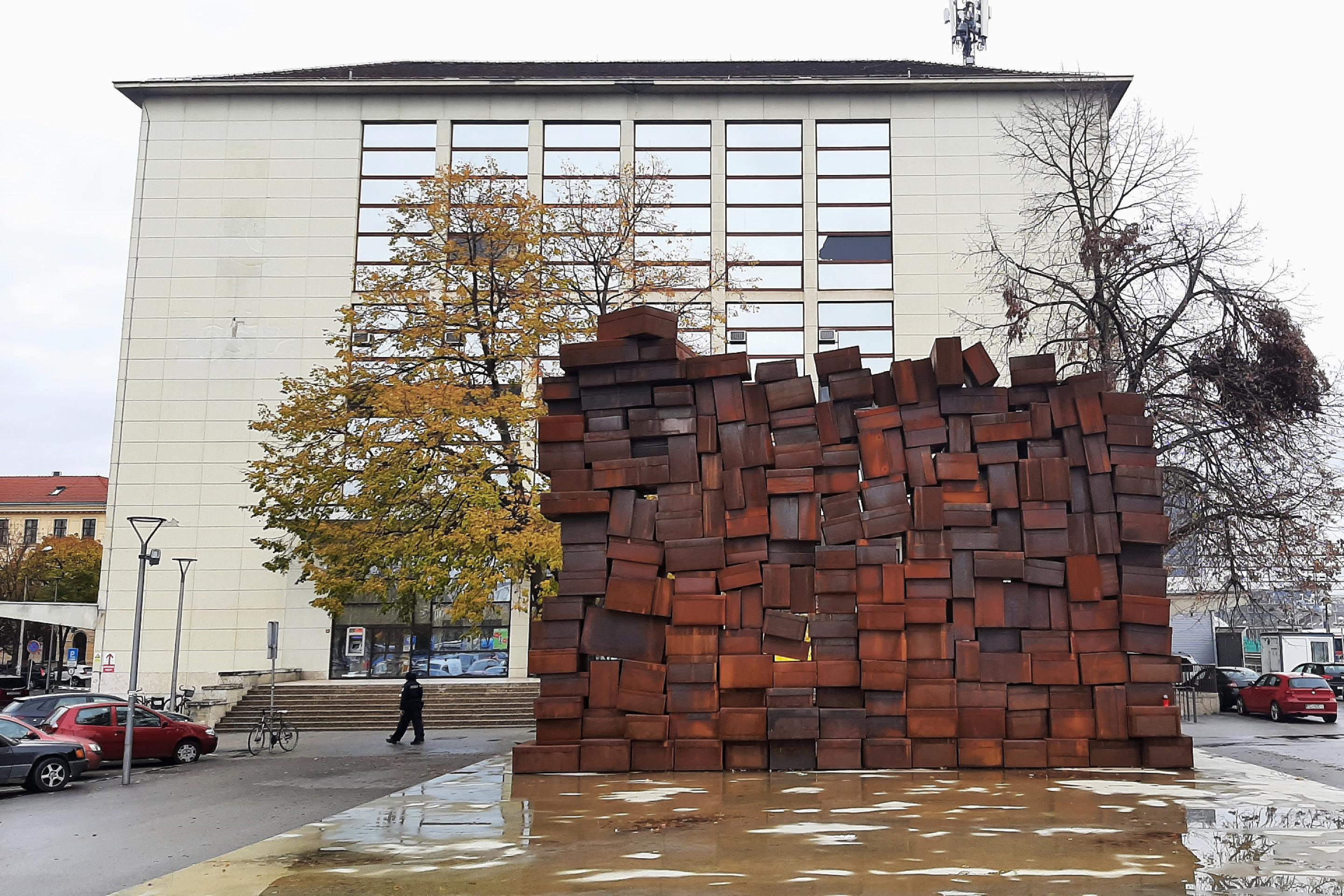
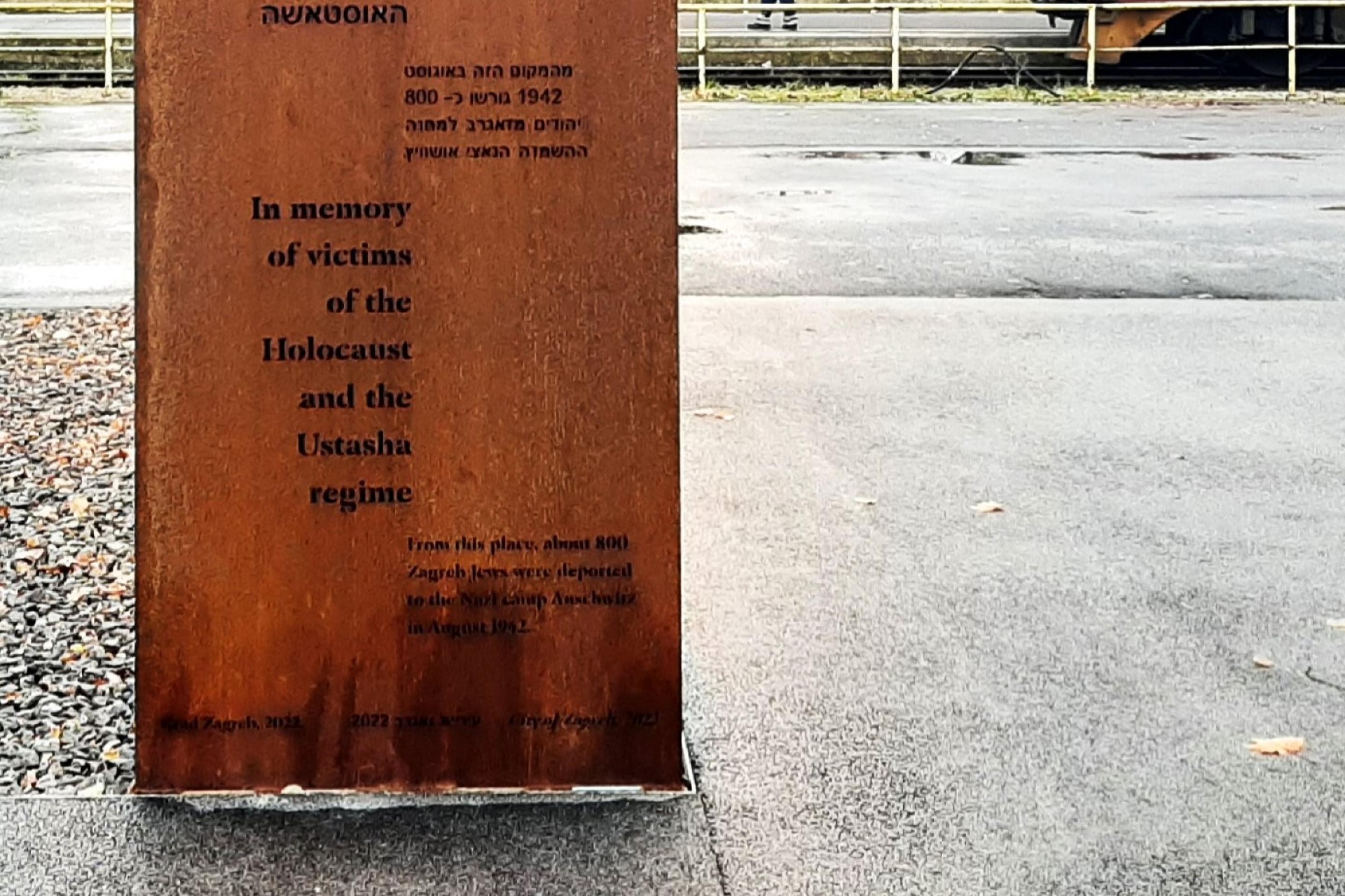
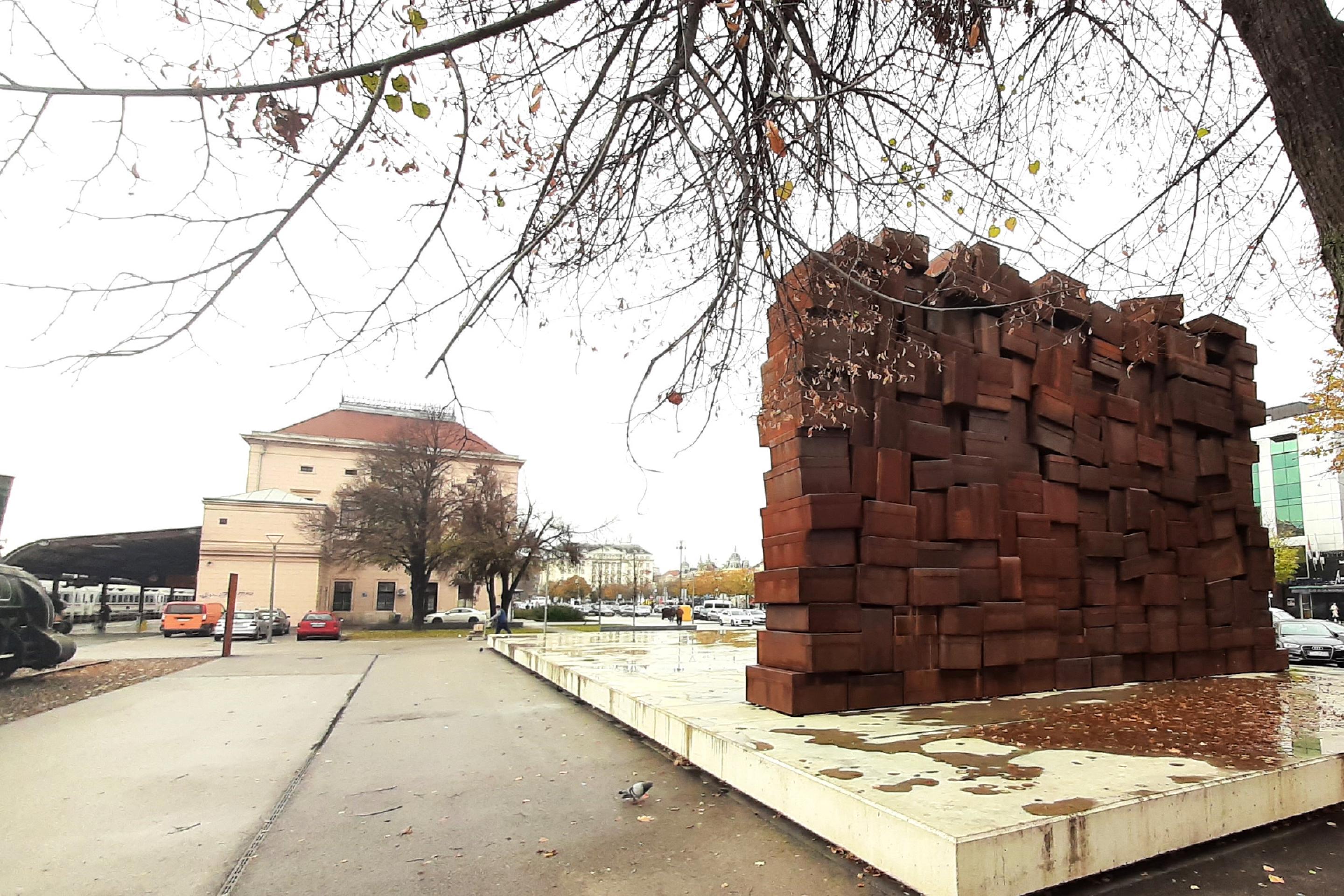
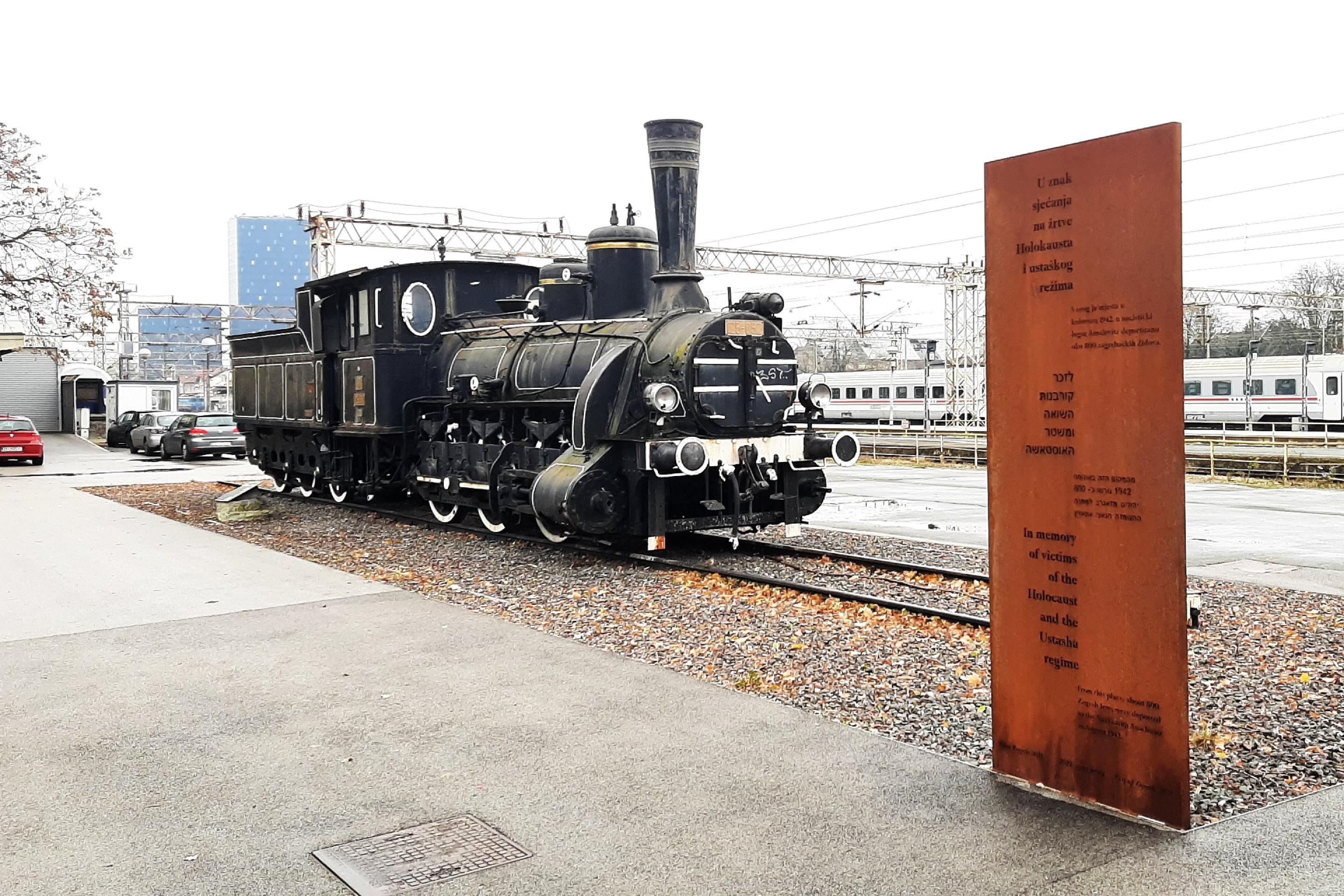
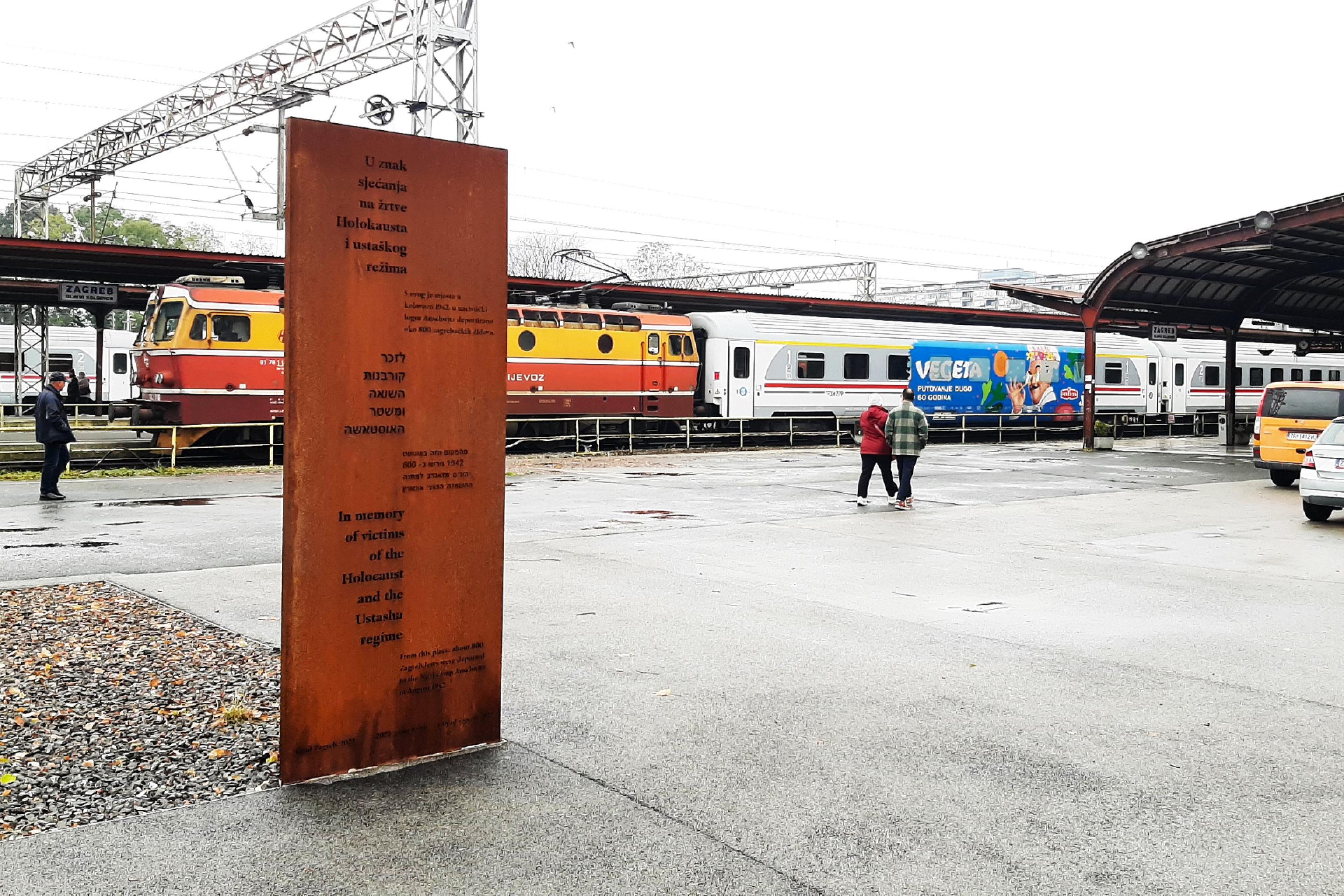
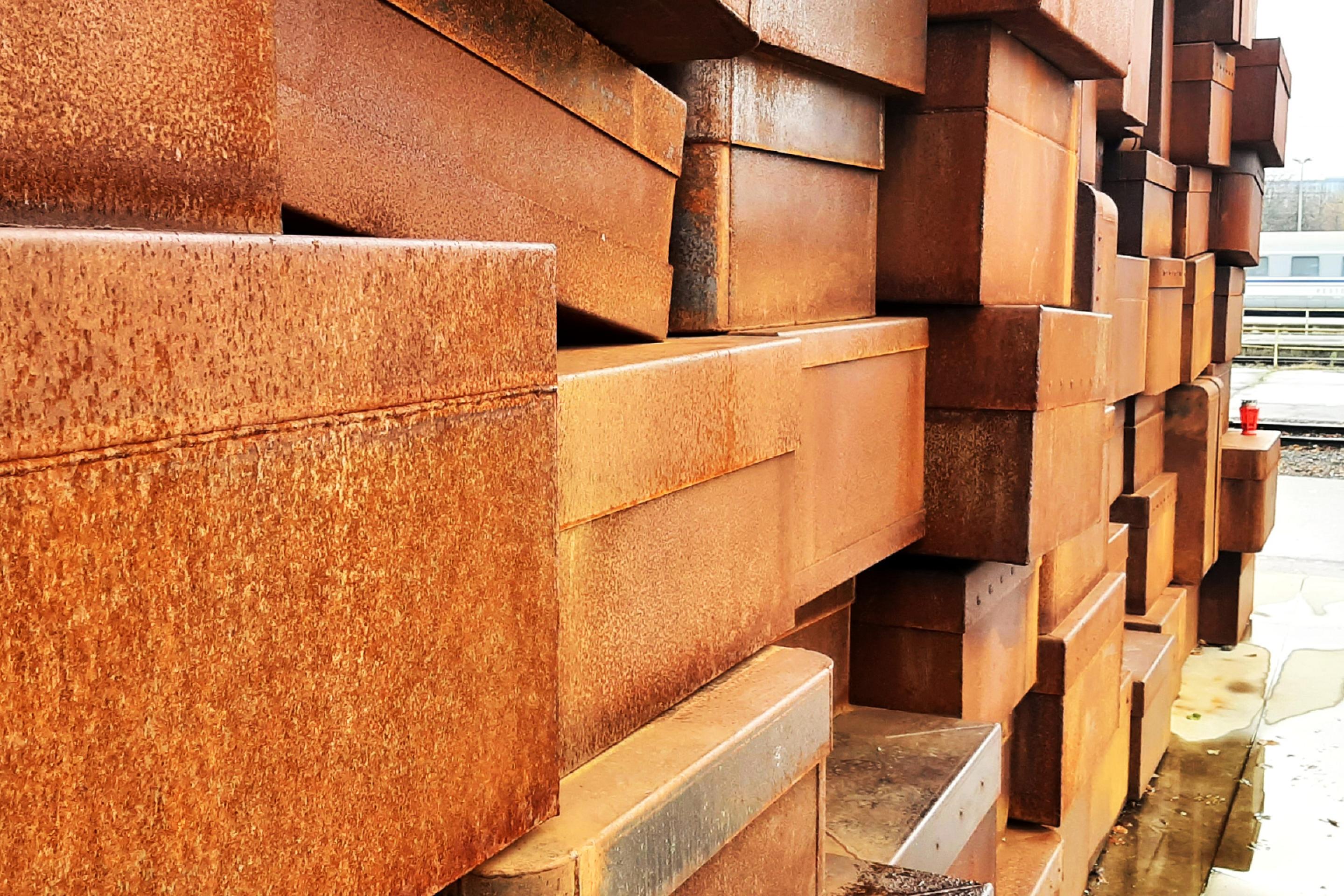
The monument was commissioned by the city of Zagreb. It was designed by the architect Krešimir Rogina and the sculptor Dalibor Stošić. It is located in the immediate vicinity of Zagreb's main railway station next to a locomotive that was allegedly used during deportations. The main element of the memorial is an 11-metre-high sculpture made of Corten steel, which represents a pile of suitcases. A memorial plaque, also made of Corten steel, bears the dedication of the memorial in Croatian, Hebrew and English: »In memory of victims of the Holocaust and the Ustasha regime«. This wording was preceded by years of controversy and represents a compromise: while many claimed that a memorial to the Jews deported to Auschwitz would relativize or even conceal the responsibility of the local Ustasha for the murder of Jews in Croatia, many feared that a reference to all victims of the Ustasha could in turn dilute the Jewish identity of the victims of the Holocaust.
Open
The memorial is accessible at all times.
Contact
Ul. kneza Branimira, 10000, Zagreb