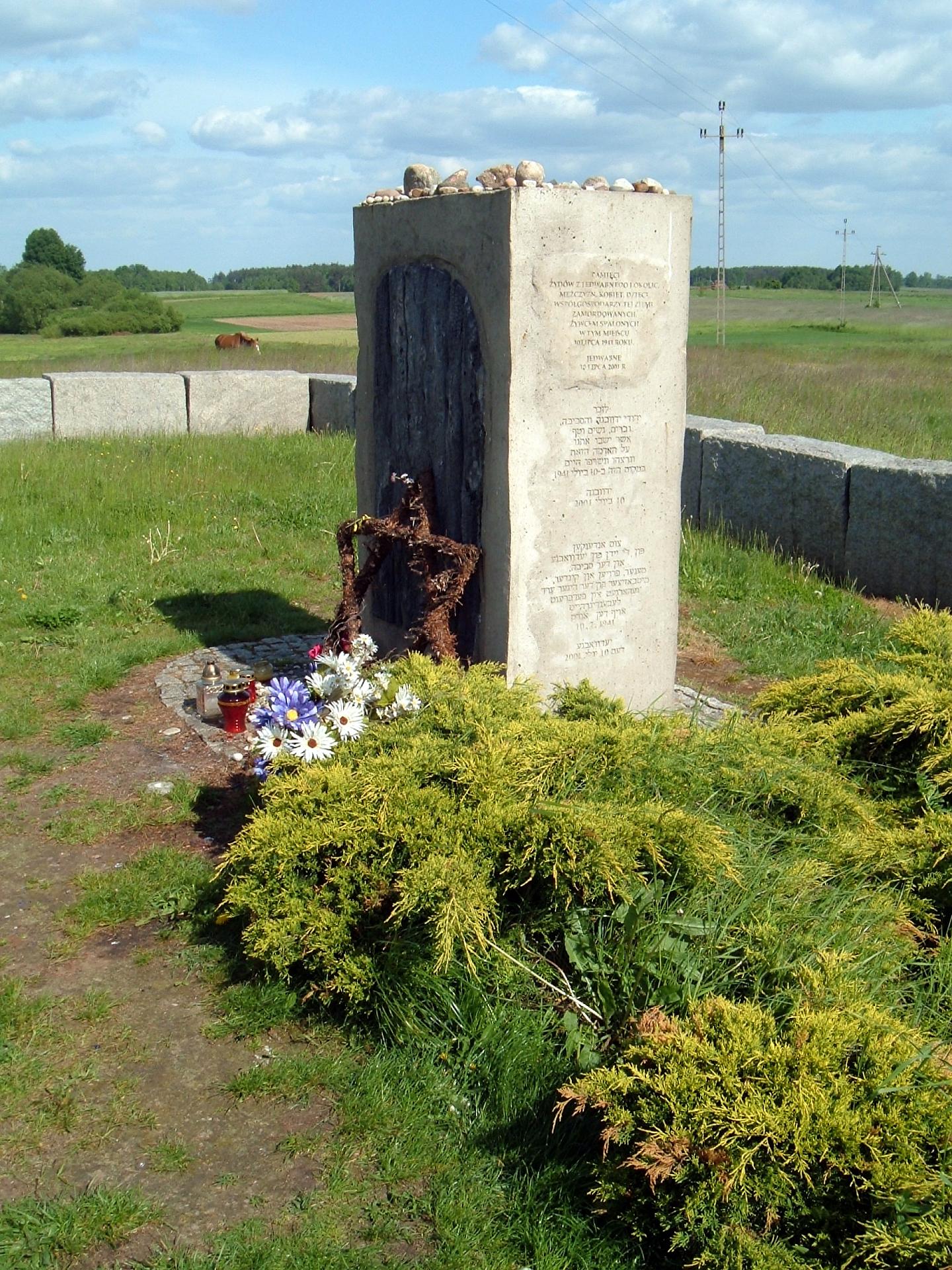
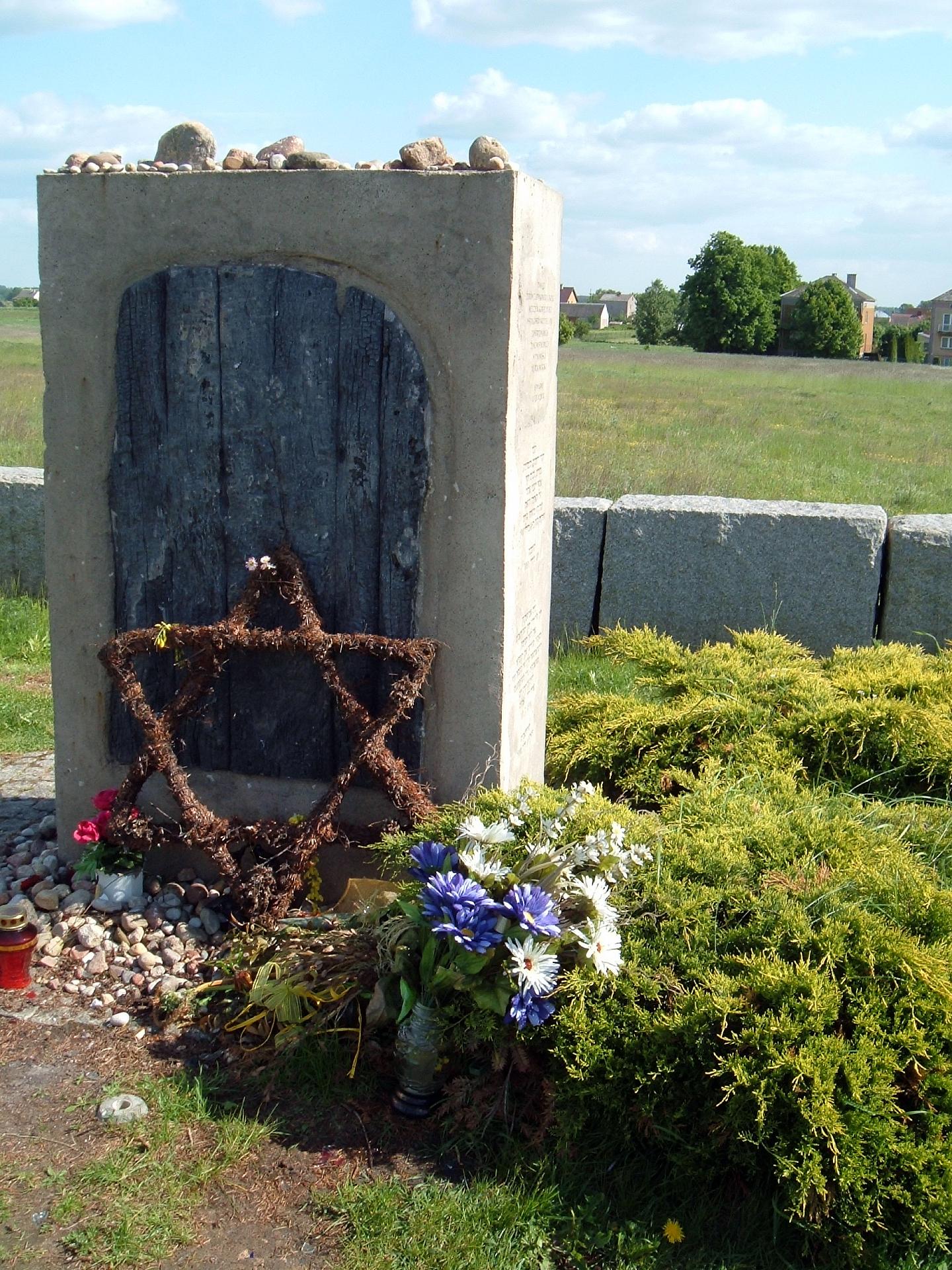
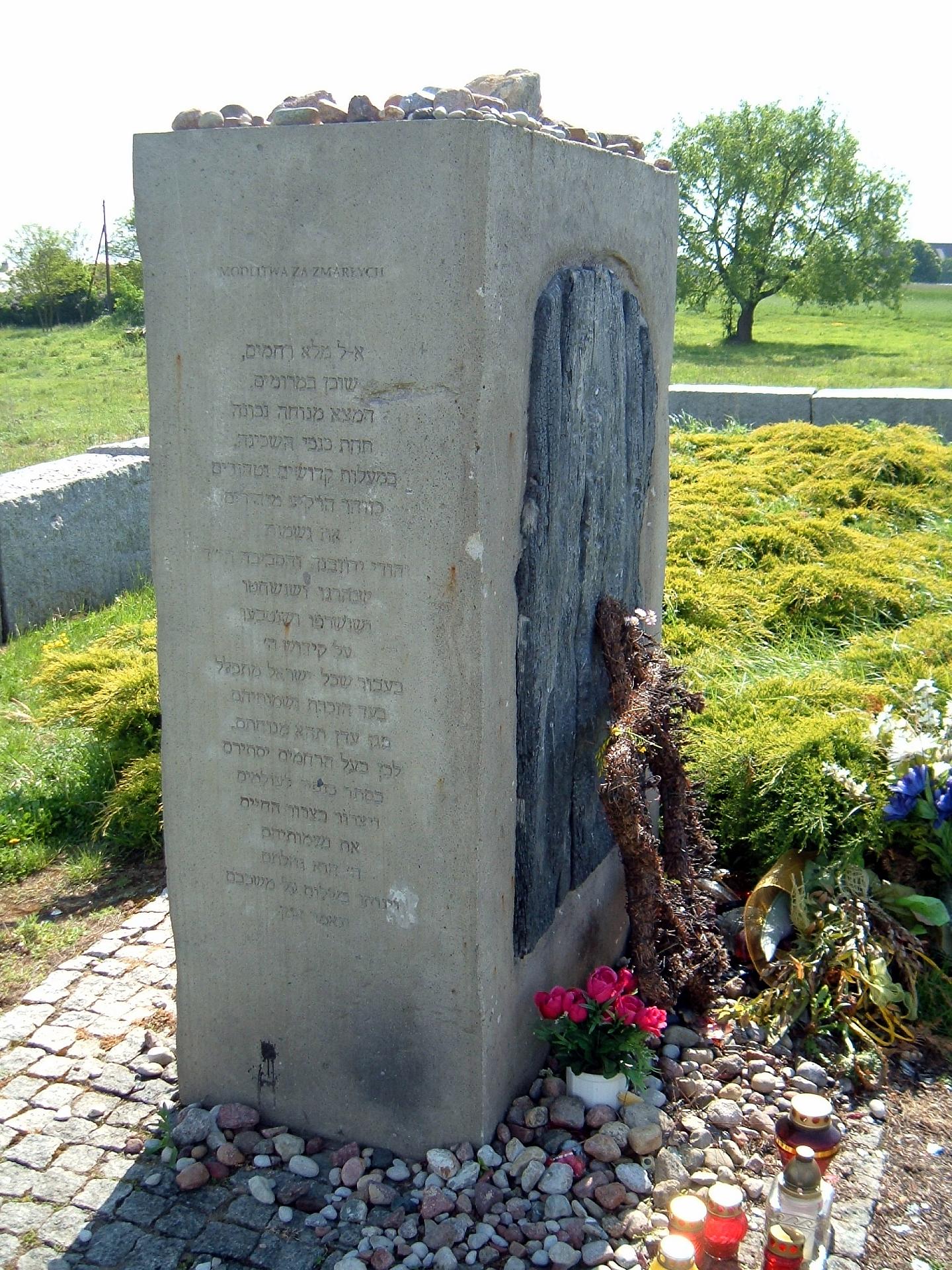
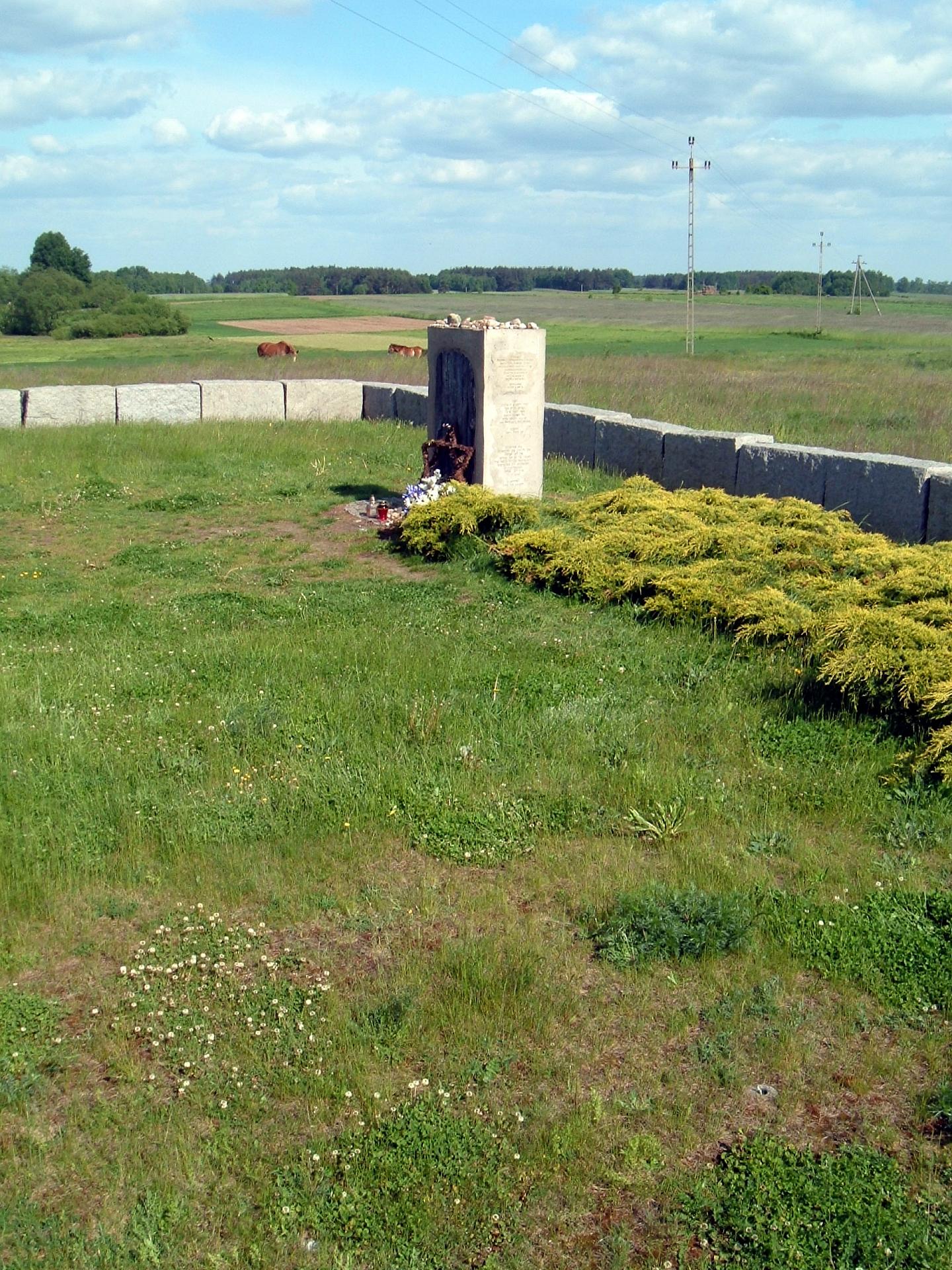
Memorial to the Victims of the Jedwabne Pogrom
Pomnik upamiętniający pomordowanych Żydów z Jedwabnego
On July 10, 1941 about 90 Polish inhabitants murdered presumably 400 of their Jewish neighbours in Jedwabne in eastern Poland by burning them alive in a barn. A memorial to the victims was set up there 60 years after the massacre.
History
Jedwabne is a small town in the Northeast of Poland, approximately 60 kilometers away from Białystok. Jews settled here since the end of the 18th century. In the 1930s the Jewish community comprised of presumably 1,200 members out of a total population of 2,100. In September 1939 the Red Army occupied the East of Poland including Jedwabne as a consequence of the Molotov-Ribbentrop Pact. For Jedwabne's population the Soviet occupation meant persecution, expropriation and deportation to Siberia.
When Germany and its allies invaded the Soviet Union in summer 1941, Jedwabne very soon came under German occupation. Polish inhabitants of Jedwabne accused the Jews of collaboration with Soviet authorities during the Russian occupation. On the morning of July 10, 1941 about 90 Polish men from Jedwabne and its environs chased the town's Jewish inhabitants to the market square. Many non-locals hoped to loot Jewish property and had come to Jedwabne for this very reason. It might be that a small Gestapo unit was present this day, encouraging the Polish inhabitants to start the pogrom. However, according to post-war testimonies it can only be reconstructed that a group of Germans were present in Jedwabne on July 10, 1941. The Polish population started the pogrom without coercion by the German occupying forces. Polish inhabitants of Jedwabne tortured and beat the Jews for hours in the market place. Many Jewish men were slain. The perpetrators drove the survivors into a barn. There they caged the approximately 300 to 400 Jewish men, women and children and set fire to the building, burning them alive. The surviving Jews later had to resettle in a ghetto.
Victims
The number of victims in Jedwabne is disputed. The number of the town's Jewish inhabitants is uncertain as well, because of the absence of records from immediate pre-war times and due to the fact that, from September 1939 onwards, refugees repeatedly entered Jedwabne. The estimated number of victims ranges from 300 to 1,000. During a non-complete exhumation in 2002 the remains of 300 to 400 victims could be recovered. It must therefore be assumed that at least 300 people were murdered.
Remembrance
In post-war Poland there was a number of trials concerning the Jedwabne pogrom. The judicial proceedings against the perpetrators were concluded after a couple of years, some of the perpetrators sentenced to imprisonment. More then 60 trials took place in the Białystok region, where similar pogroms took place in roughly thirty locations. However, the dealings with these pogroms were soon aborted. In the communist People's Republic of Poland collaboration with the German occupying forces and the murder of Jews by Polish perpetrators was considered a taboo. Only with the publication of Jan Tomasz Gross' book »Neighbors« in 2000 the Jedwabne pogrom gained some public awareness, followed by a heated discussion about the county's historical self-perception. In 2001 the Institute of National Remembrance (Instytut Pamięci Narodowej, IPN) was charged with the investigation of the history of the Jedwabne massacre. On the pogrom's sixtieth anniversary on July 10, 2001 a memorial was set up in Jedwabne. During the inauguration ceremony the Polish president Aleksander Kwaśniewski apologized to the victims. In 2002 a forensic investigation took place in Jedwabne where remains of the victims were recovered. The same year the IPN's final report concerning the Jedwabne massacre was published. It confirmed that in 1941 Poles murdered the Jews of Jedwabne in the barn. Moreover the IPN proved a large number of similar incidents in the area. The memorial in Jedwabne has repeatedly been a victim of vandalism and is rejected by many local inhabitants to date.
Open
The memorial is accessible at all times.
Contact
ul. Krasickiego
18-420 Jedwabne