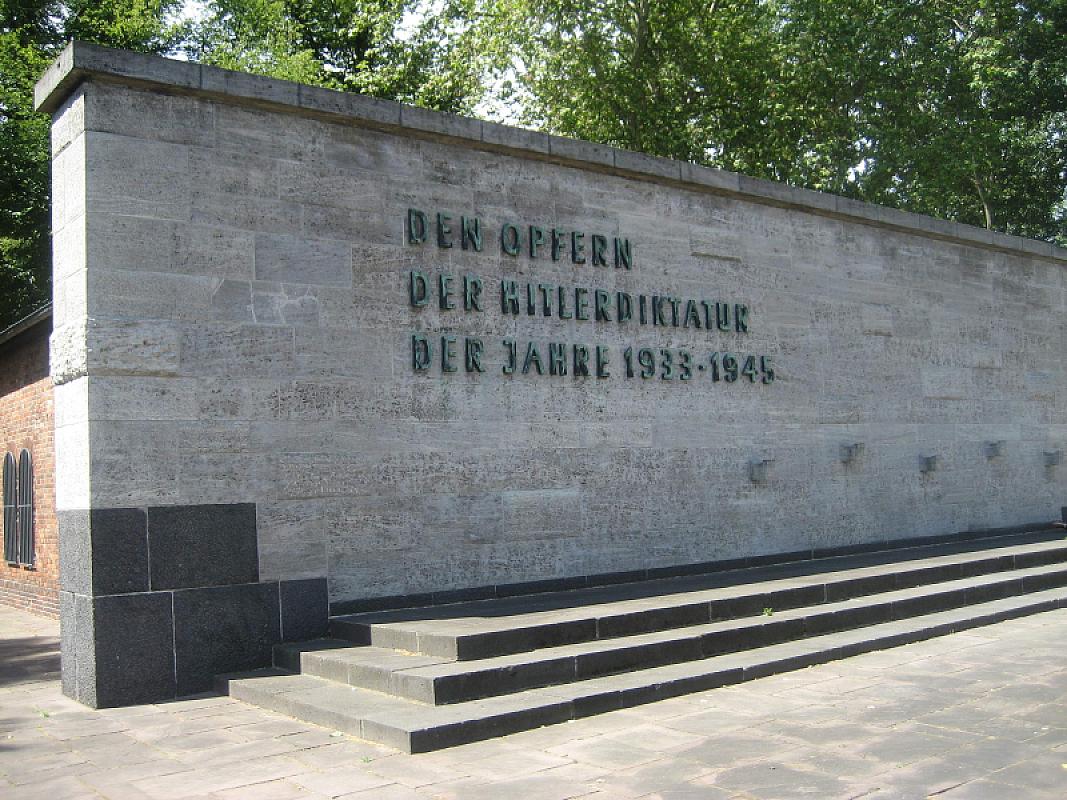
Memorial to the Victims of the Prisoners of War Camp Stalag 352
Мемориал-кладбище жертвам концлагеря »Шталаг-352« / Мемарыял-могілкі ахвяраў канцлагера »Шталаг-352«
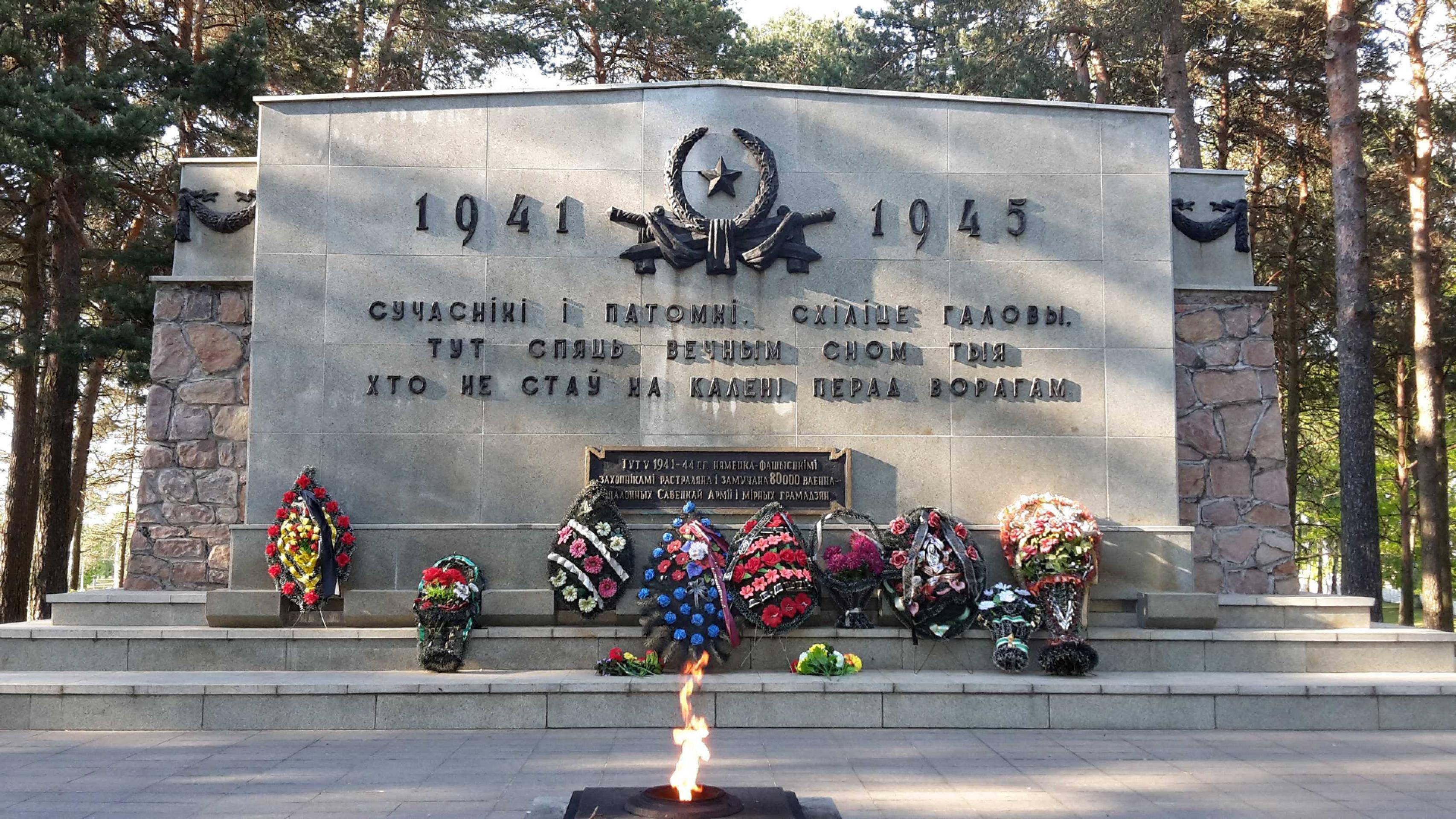
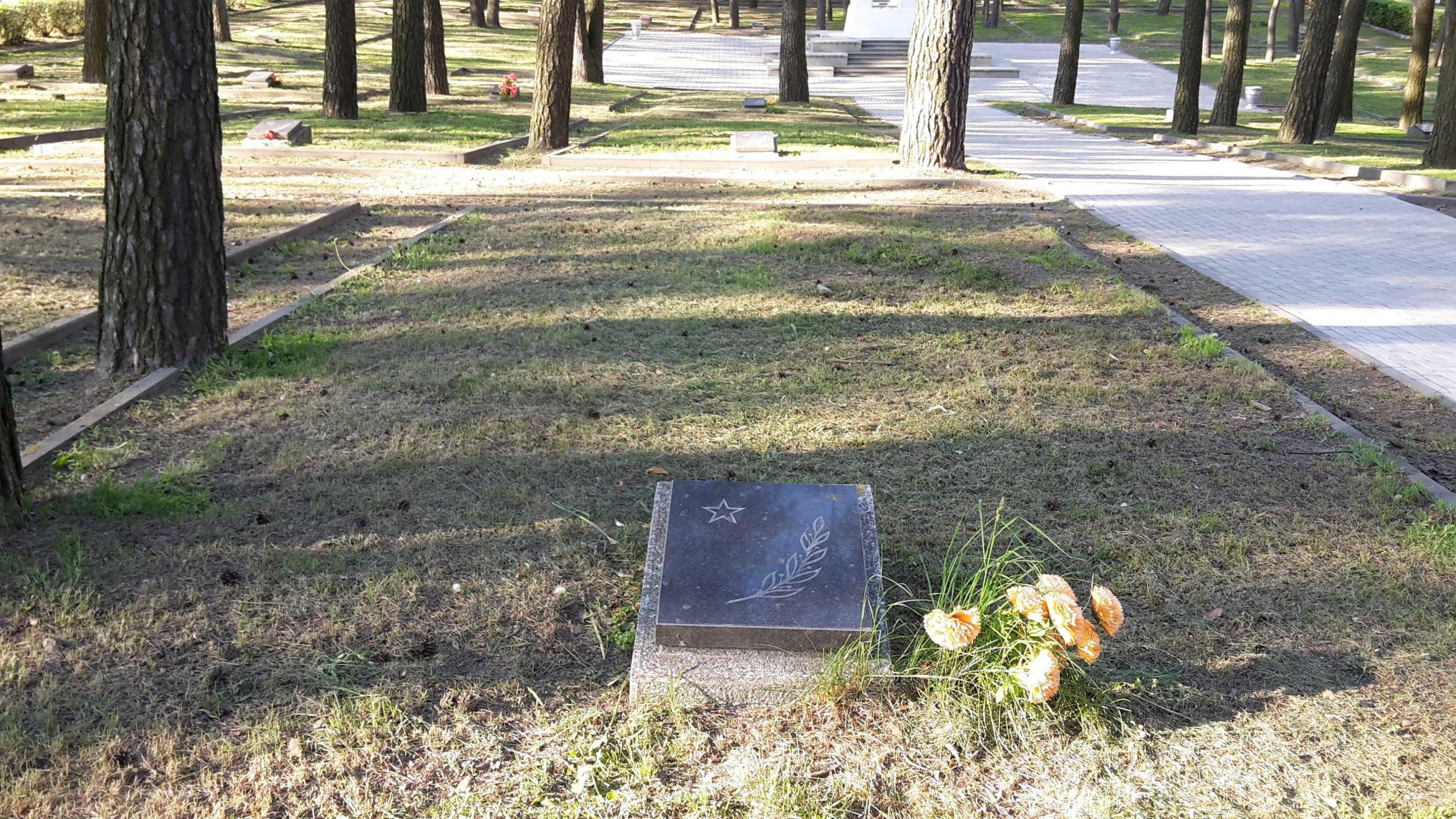
In the Belarusian capital Minsk a memorial complex consisting of 60 curbed mass graves commemorates since 1964 the up to 80,000 Soviet prisoners of war who died in Stalag 352 between July 1941 and August 1944.
History
After severe destruction by warplanes the Wehrmacht occupied Minsk on June 28, 1941. During the battle of encirclement of the Belarusian capital tens of thousands of soldiers of the Red Army were taken prisoner. For the accommodation of approximately 100,000 POWs and 40,000 civilian prisoners the military administration set up the Stalag 352 along the railway connection Minsk – Molodechno in early July 1941. The camp consisted of two parts: the so called Waldlager (camp in the woods) near the village of Masyukovchina and the city camp in Minsk on the site of a former military area. Upon their arrival the commanders, political commissars and above all Jews were »singled out« and shot. The Stalag 352 took prisoners from virtually all sectors of the German-Soviet front and also served as a transit camp for the onward transport to occupied Poland or the German Reich. The 21 wooden sheds were severely overcrowded, 80% of the prisoners had to live in the open – even in the harsh winter of 1941/42 with temperatures down to minus 30 degrees Celsius. Neither was provision made for sanitary facilities nor did the prisoners receive enough food. Random floggings and shootings were happening on a daily basis. Diseases broke out. Between December 1941 and March 1942 up to 500 soldiers died every day. Until March 1942, 55,000 Red Army soldiers died in the camp in the woods, in the city camp 10,000 perished until January 1942.
Since the German occupiers needed their manpower, the survivors were housed in sheds from summer 1942 onwards, the conditions improved. Of the initially up to 140,000 prisoners 10,000 were all that remained in summer of 1942, in summer of 1943 the number stood at 5,000 to 6,000 prisoners and at approximately 5,000 in January 1944. In the autumn of 1943, after Italy's alliance with Hitler's Germany broke up, 5,000 Italian military internees were committed to Stalag 352. Only 98 of them lived to see the recapture of Minsk by the Red Army in summer 1944.

Victims
In the late summer of 1941 up to 140,000 prisoners – Red Army soldiers and civilians – were imprisoned in the Stalag 352, about 80,000 of them perished until July 1944. Only 98 of the 5,000 Italian military internees who were imprisoned there in autumn of 1943 lived to see their liberation by the Red Army in summer of 1944.
Remembrance
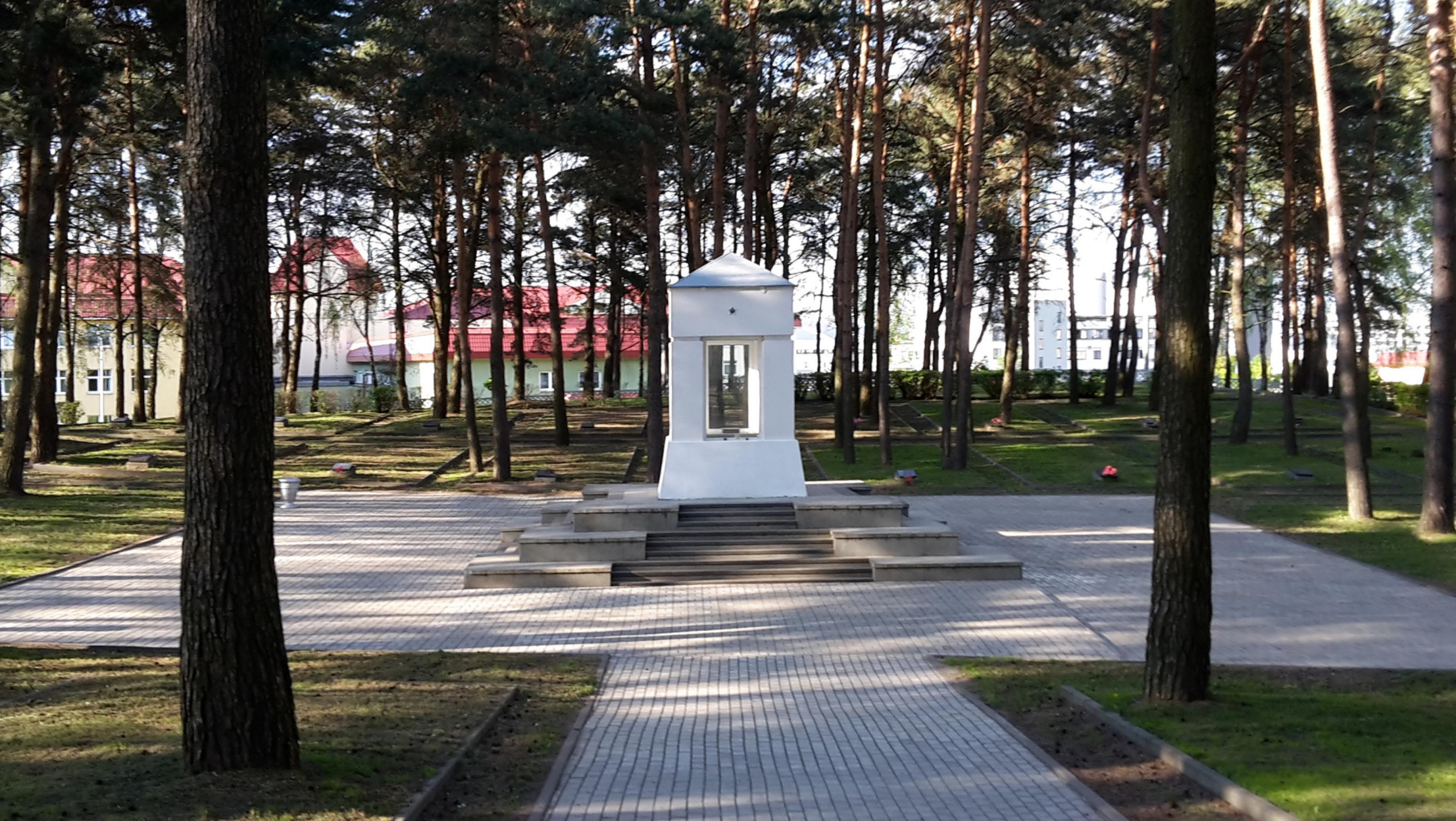
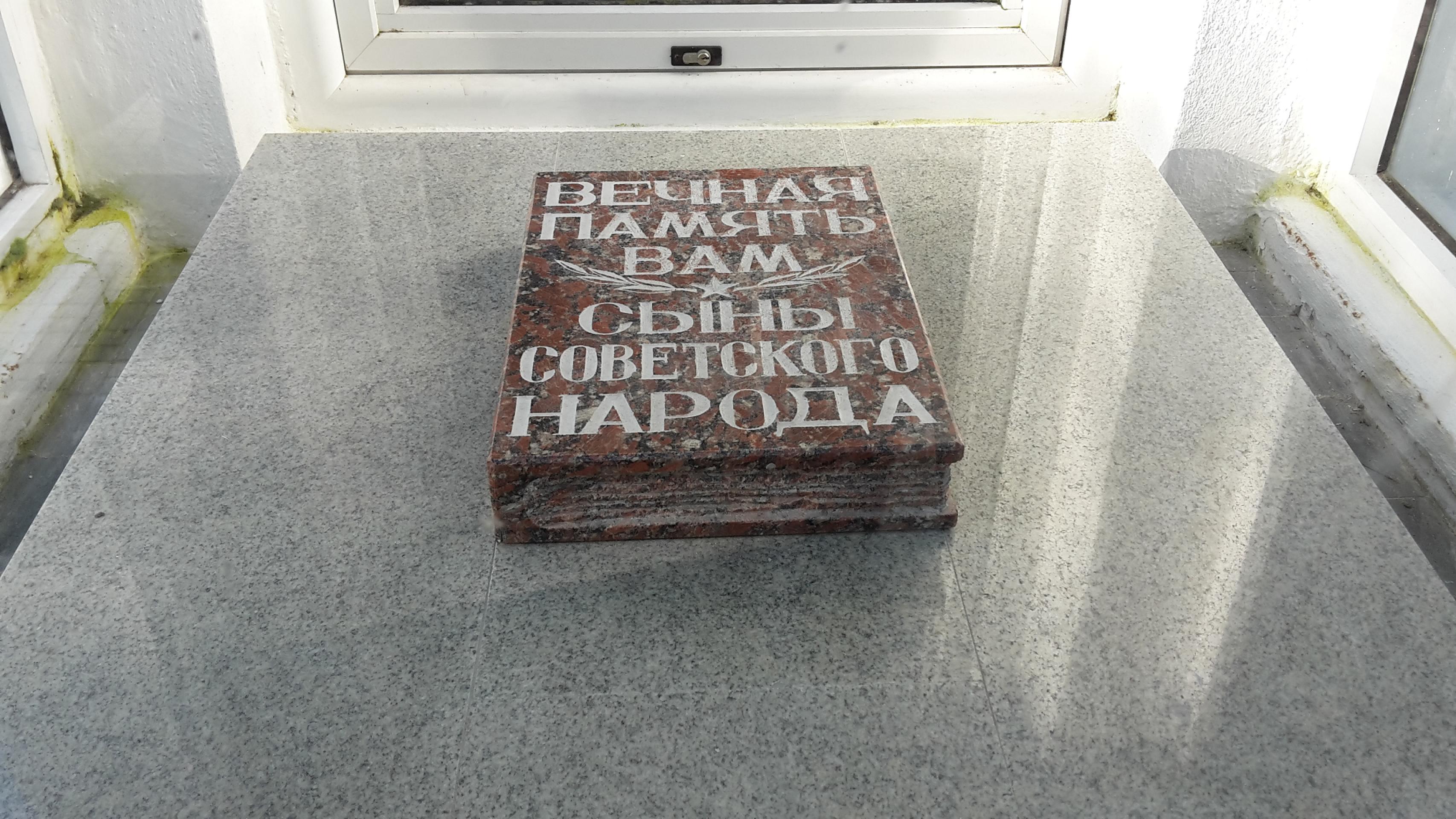
From autumn 1944 on the mass graves of the up to 80,0000 deaths of Stalag 352 were put into a dignified state. Sources say that a camp for Wehrmacht POWs was located there temporarily. On the occasion of the 20th anniversary of the liberation of Minsk on July 3, 1964 a fenced memorial complex was erected on the site of the Masyukovchina camp in the woods with an eternal flame, 60 curbed mass grave sites and a pavilion with a memory book which held the names of 9,425 Soviet POWs who perished there. Since then annual commemoration ceremonies take place on the 9th of May (»Victory Day«) and on the 3rd of July, day of the liberation of Minsk and national day of independence of Belarus.
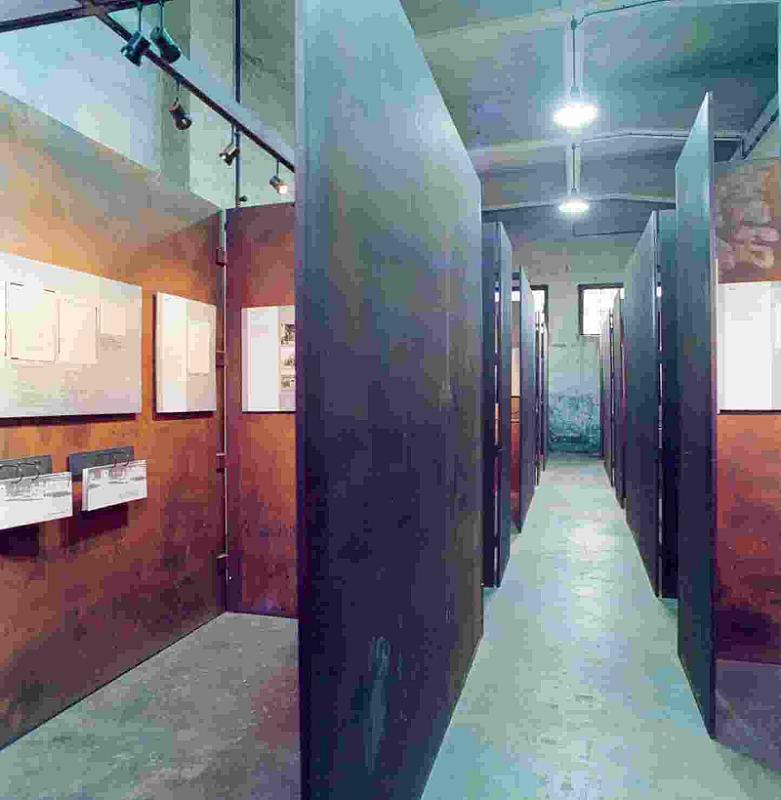
The memorial book has been replaced by a stone replica behind glass. Pages of the original with victims' names are shown as part of the permanent exhibition in the State Museum of the Great Patriotic War in Minsk. Additional information at the historical site are missing, as well as reference to the Italian victims.
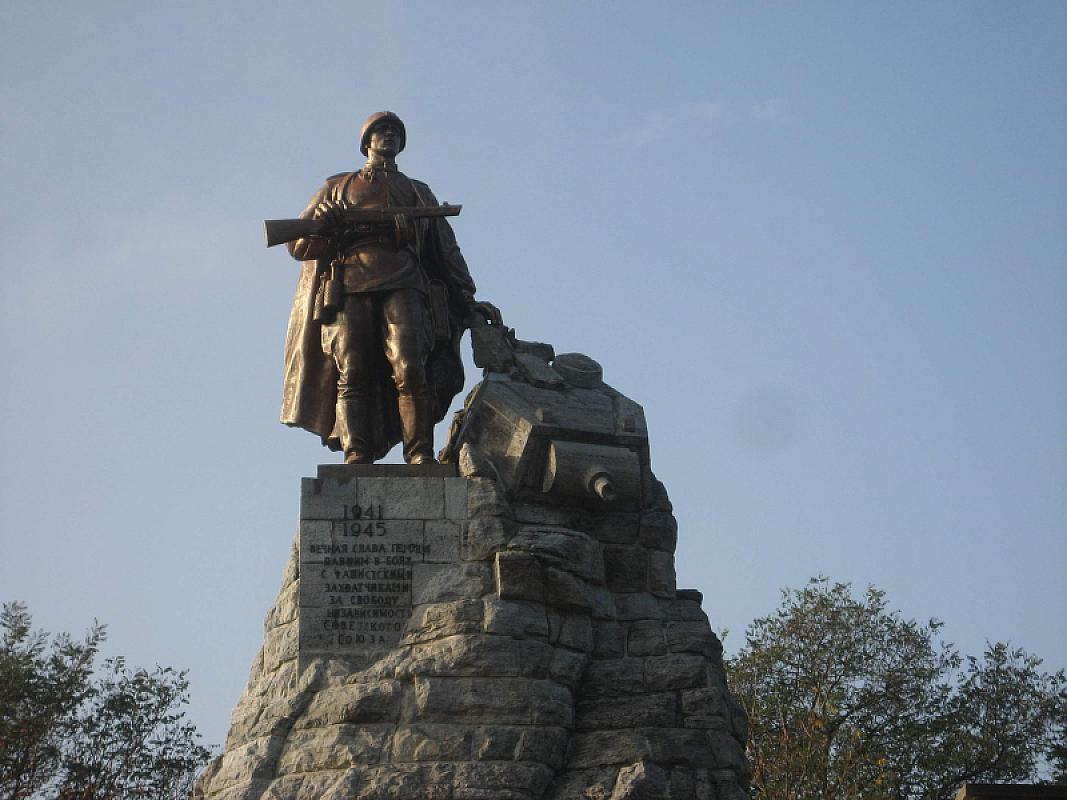
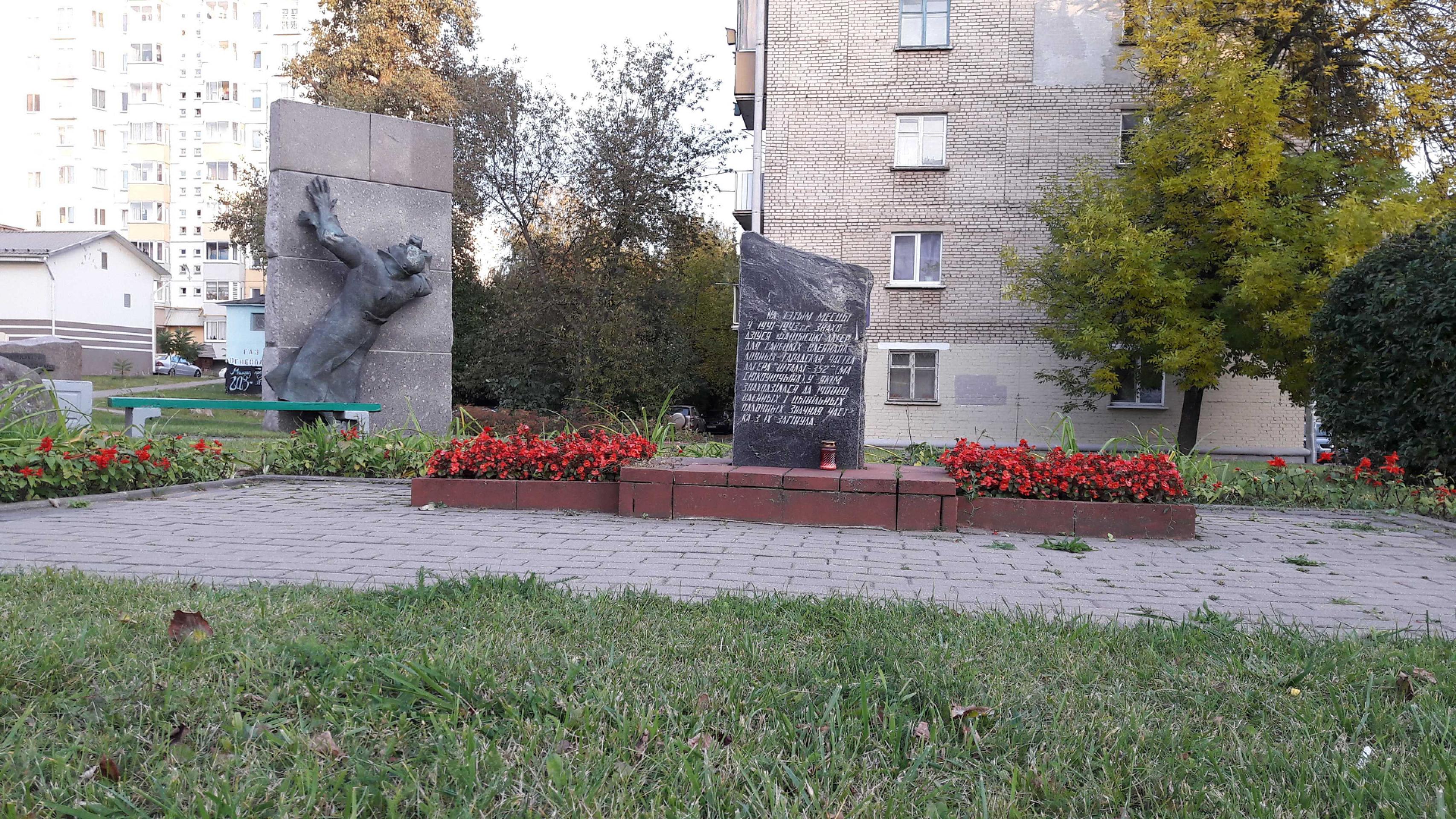
About nine kilometres further east, in the midst of a housing estate a memorial remembers the victims of the city camp.
Open
The memorial complex and the memorial at the site of the city camp are accessible at all times.
Contact
ul. Zimirazjewa 86
220000 Minsk