Memorials to the Deported Magdeburg Sinti and Roma
Erinnerungsorte an die deportierten Magdeburger Sinti und Roma
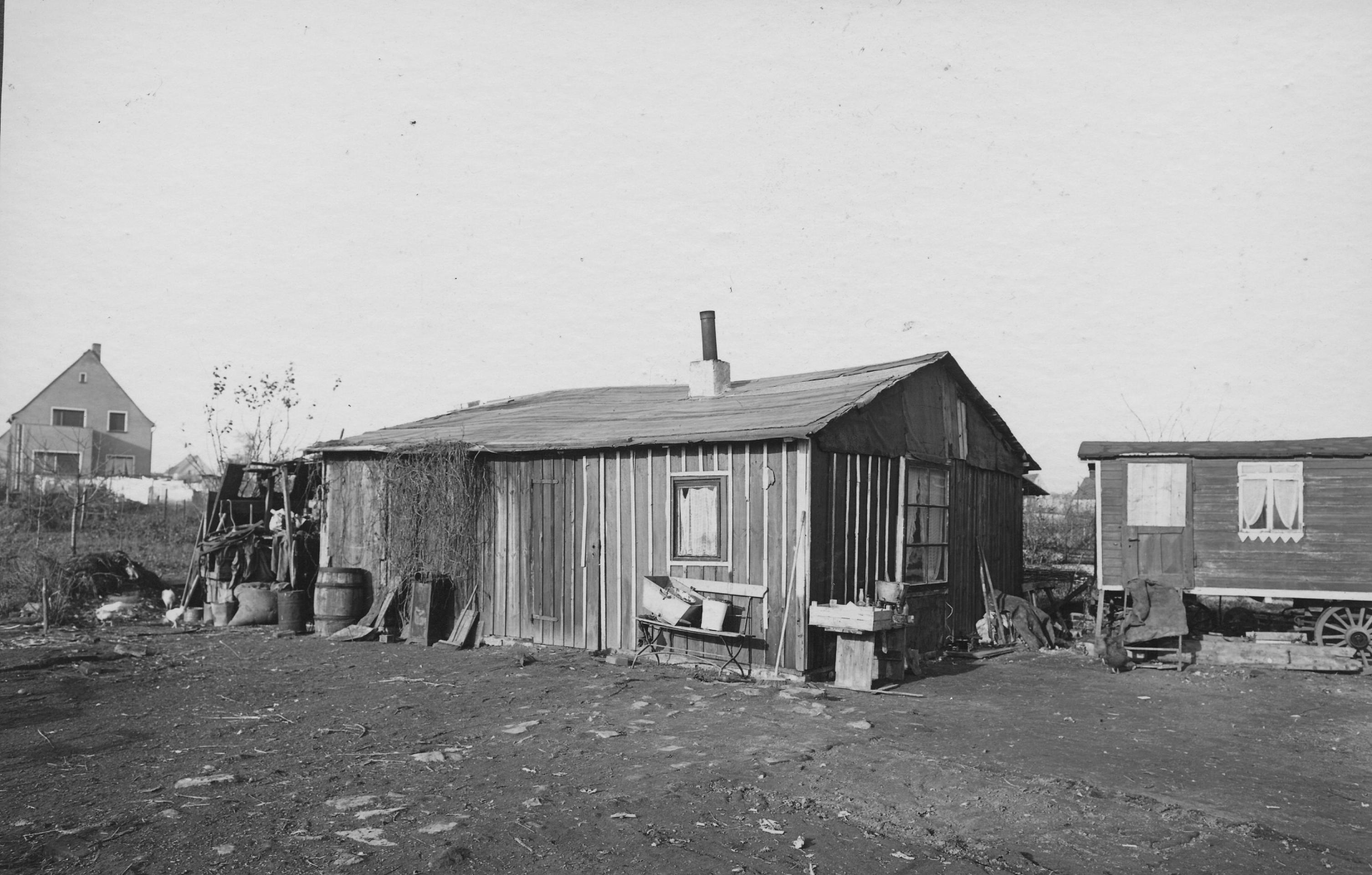
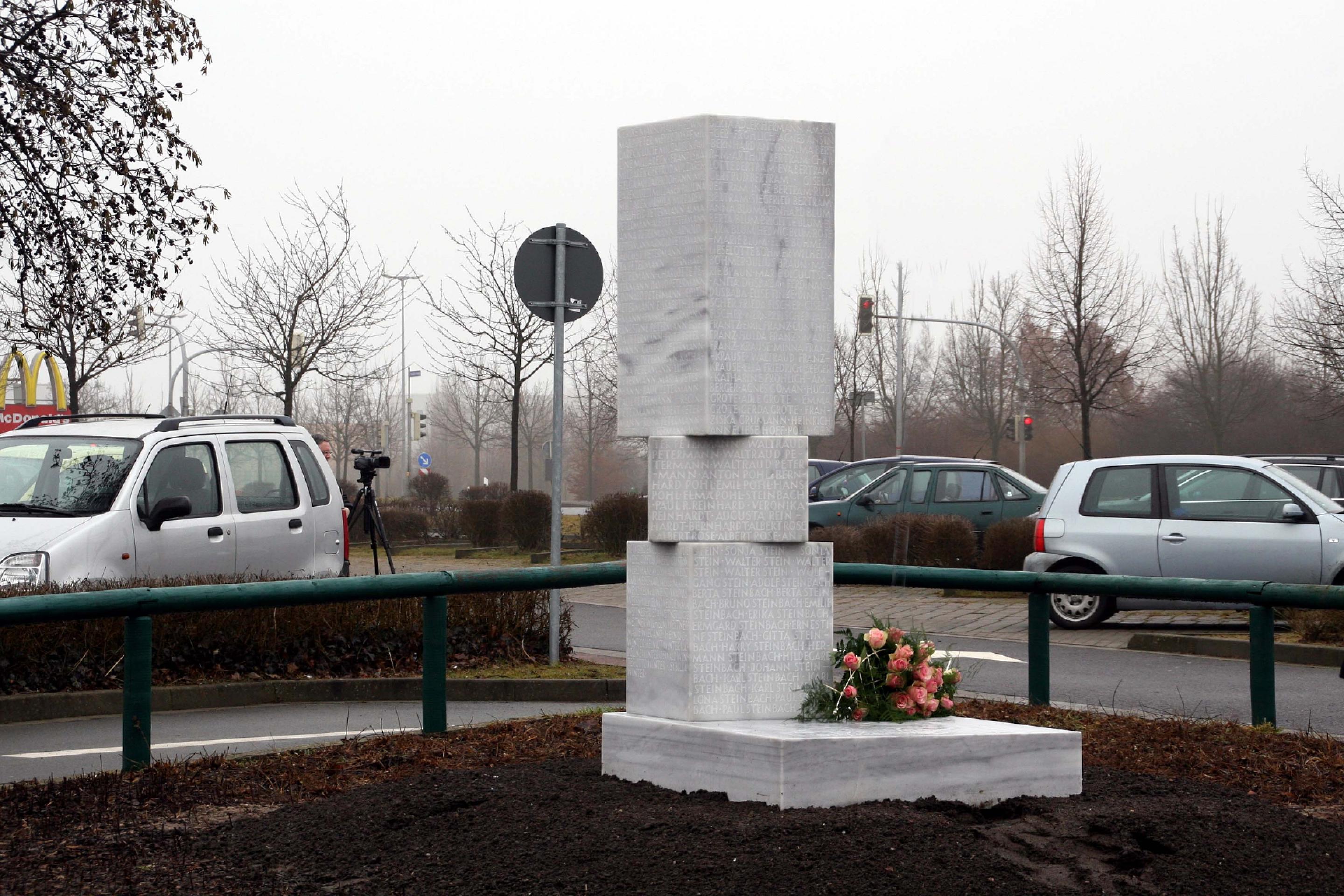
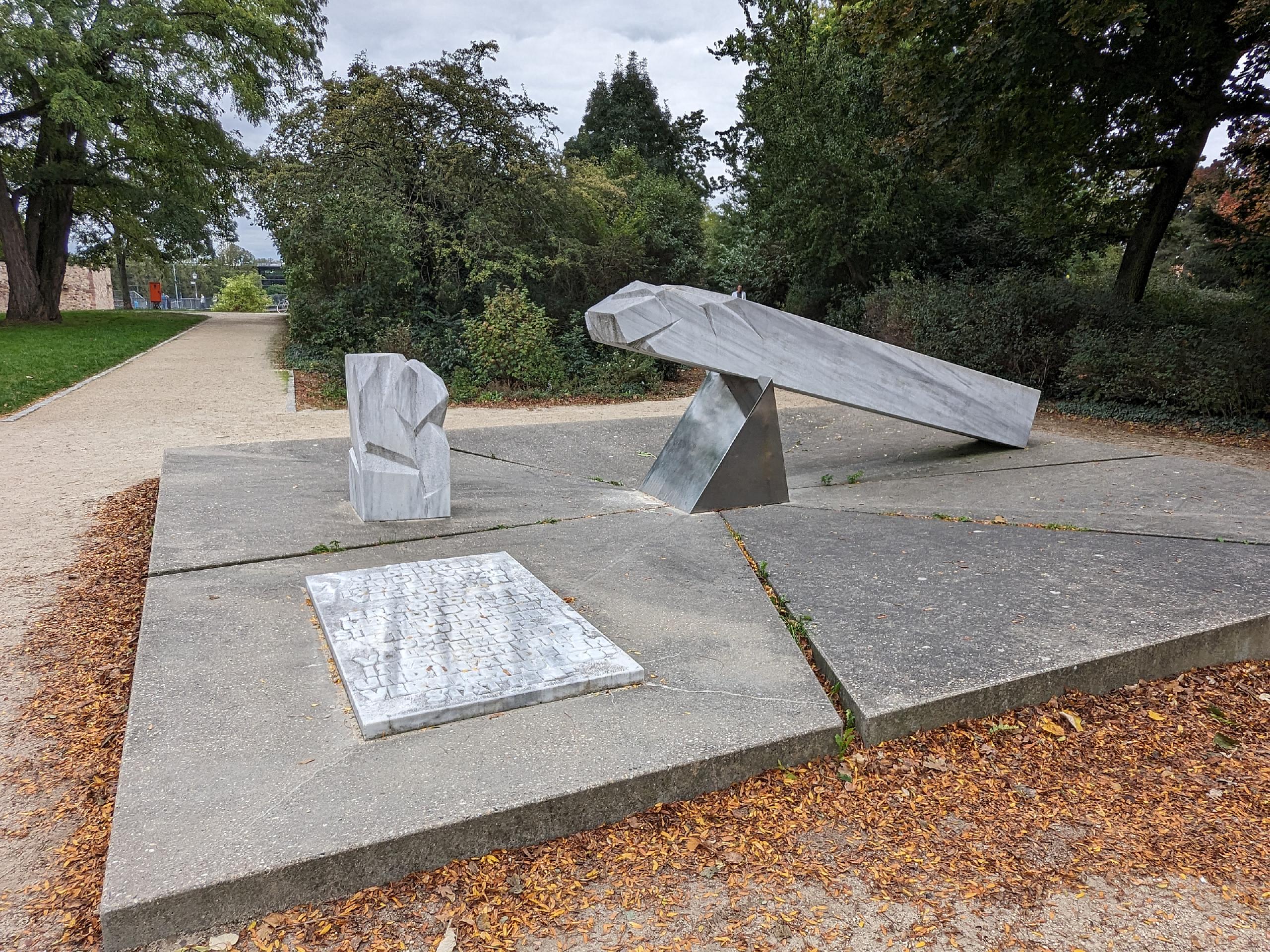
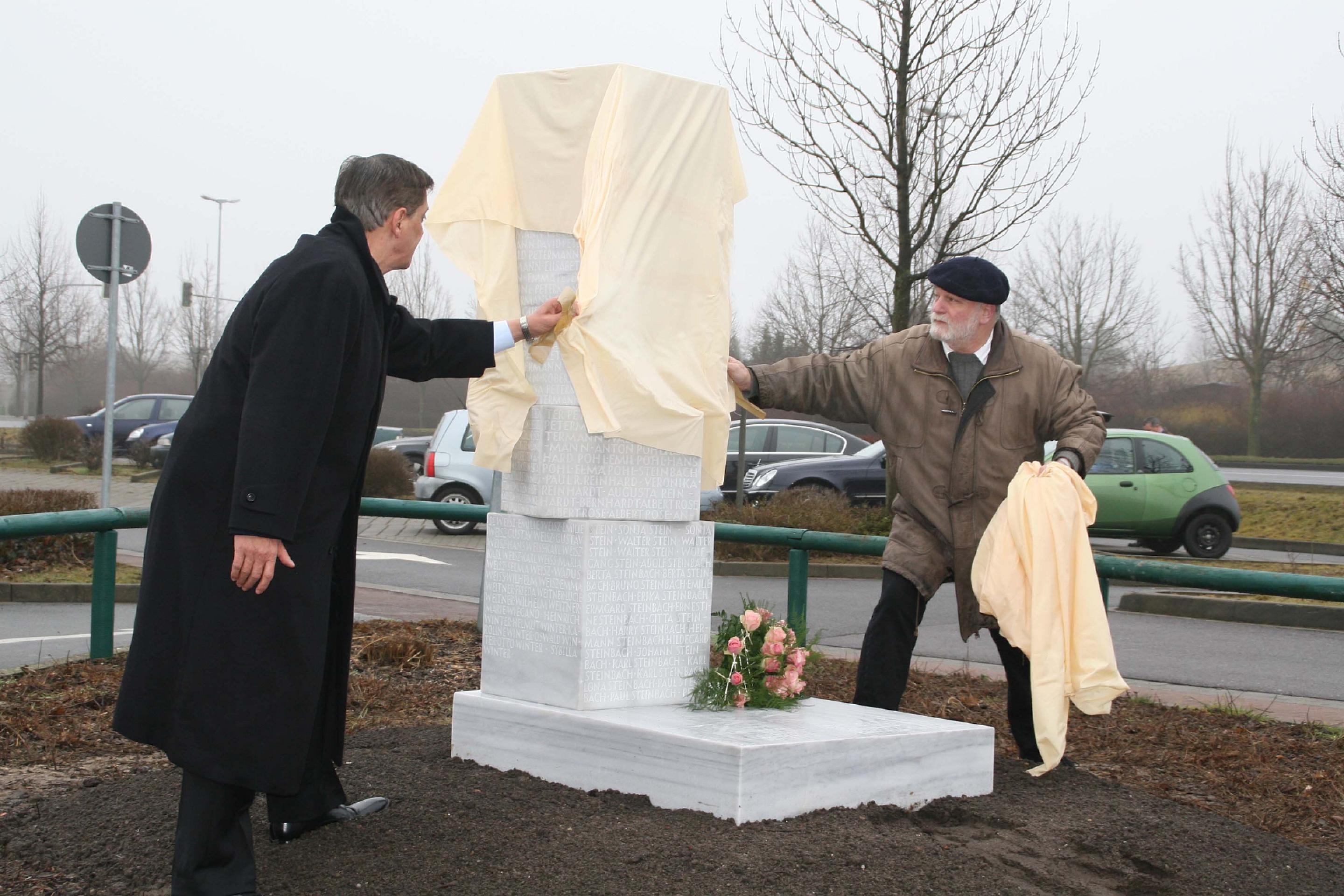
The Porajmos (English: »devouring«) was the genocide of the European Sinti and Roma by the National Socialists. As early as 1935, the city of Magdeburg set up a so-called »gypsy camp«, whose inhabitants were deported to Auschwitz on 1 March 1943. On 29 October 1998, the Memorial to the Deported Magdeburg Sinti and Roma was unveiled in the immediate vicinity of the Magdeburg Cathedral as the first memorial to the victims of the genocide of the Sinti and Roma in East Germany. Since 1 March 2009, there has also been a memorial stele at the site of the former »Zigeunerlager Magdeburg Holzweg« (»Magdeburg Holzweg Gypsy Camp«).
History
Settlements of Sinti and Roma have been recorded in the region around Magdeburg since the Middle Ages. As everywhere in Europe, the Sinti and Roma were seen as foreigners and were ostracised. This discrimination took on new forms with the emergence of the natural sciences and, in particular, Social Darwinism in the nineteenth century. Sinti and Roma were often reduced to their character as a »travelling people« and confronted with racist prejudices.
The systematic recording and stigmatisation of Sinti and Roma as potential criminals began in Magdeburg already during the Weimar Republic.
On the orders of the Prussian Ministry of the Interior, the municipal police collected the data of members of the ethnic group and compiled dossiers, so-called »gypsy files«.
From 1933 onwards, the pressure of persecution on Sinti and Roma grew. As early as 1935, more than 20 municipalities in the German Reich, including Magdeburg, set up »gypsy camps«. Many Sinti and Roma who had previously lived in rented flats were forced to move to the camps. They were to be pushed out of the cityscape, controlled by the police and excluded from employment. As part of the »Arbeitsscheu Reich« campaign against alleged »asocials«, hundreds of Sinti and Roma were also deported to concentration camps from 13 to 18 June 1938. In Magdeburg, 44 Sinti and Roma were affected. They were deported to Sachsenhausen and Buchenwald.
On the basis of Heinrich Himmler's so-called Auschwitz Decree of 16 December 1938, preparations began throughout the Reich for the deportation of the Sinti and Roma to the Auschwitz extermination camp. On 1 March 1943, the Gestapo and police dissolved the »Magdeburg gypsy camp« and took its inhabitants to the Magdeburg police headquarters. The next day, they were deported to Auschwitz on a freight train. Of the 470 Sinti and Roma in the Magdeburg camp, 340 did not survive the »Auschwitz gypsy camp«.


Victims
Of the approximately 20,000 German Sinti and Roma, only around 5,000 survived the genocide, many of them forcibly sterilised. The total number of murdered Sinti and Roma in Europe is estimated at up to 500,000 victims.
The memorial commemorates the 470 Magdeburg Sinti and Roma who were murdered in concentration camps.
Remembrance
In the Federal Republic of Germany, the mass murder of the Sinti and Roma was only recognised as genocide in 1982. In the German Democratic Republic (GDR), Sinti were recognised as a persecuted group from the very beginning. Despite official recognition, however, the stories of the victims remained unheard. In the GDR, the memory of the anti-fascist fighters took centre stage. Discrimination against the Sinti and Roma had not ended in the GDR either.
The initiative for the Magdeburg memorial came from the writer and GDR civil rights activist Reimar Gilsenbach (1925-2001). As early as January 1981, he had asked the First Secretary of the Cultural Association at the Magdeburg district leadership to campaign for a memorial plaque. However, Gilsenbach's proposal was rejected. In March 1985, he sent a petition to the Chairman of the GDR State Council, Erich Honecker. In it, he suggested setting up memorials to the persecution of the Sinti and Roma. His efforts proved successful, as in November 1988, the Magdeburg City Council decided to erect a memorial »for the Sinti persecuted and murdered by the fascists«.
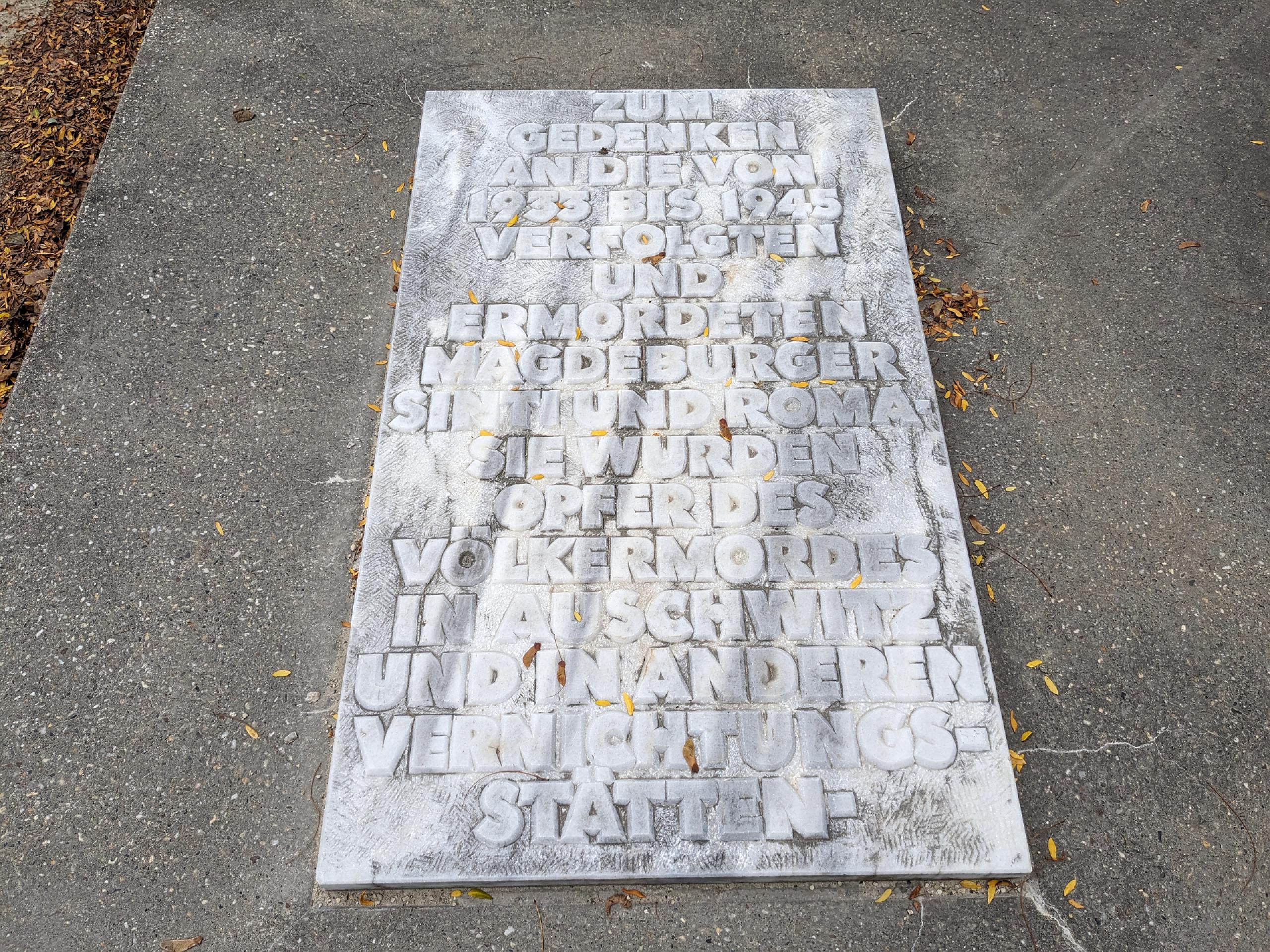
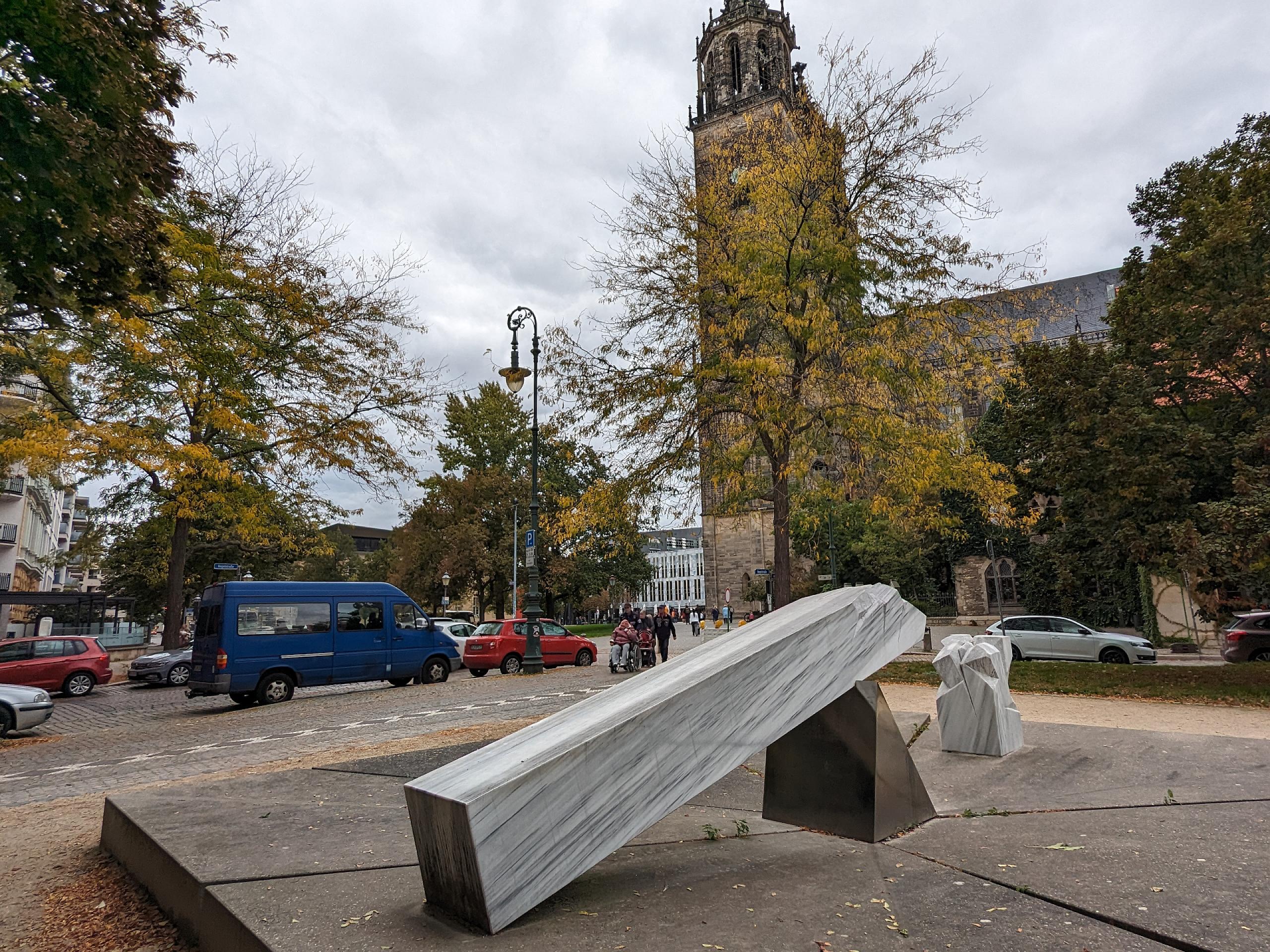
The political and social changes in the course of reunification delayed the realisation of the monument. Eventually, the sculptor Wolfgang Roßdeutscher was commissioned to realise the monument and the location was chosen in the immediate vicinity of Magdeburg Cathedral. The memorial, inaugurated on 29 October 1998, shows a fallen, broken block of marble with the following inscription: »In memory of the Magdeburg Sinti and Roma persecuted and murdered from 1933 to 1945. They became victims of the genocide in Auschwitz and other extermination sites«.
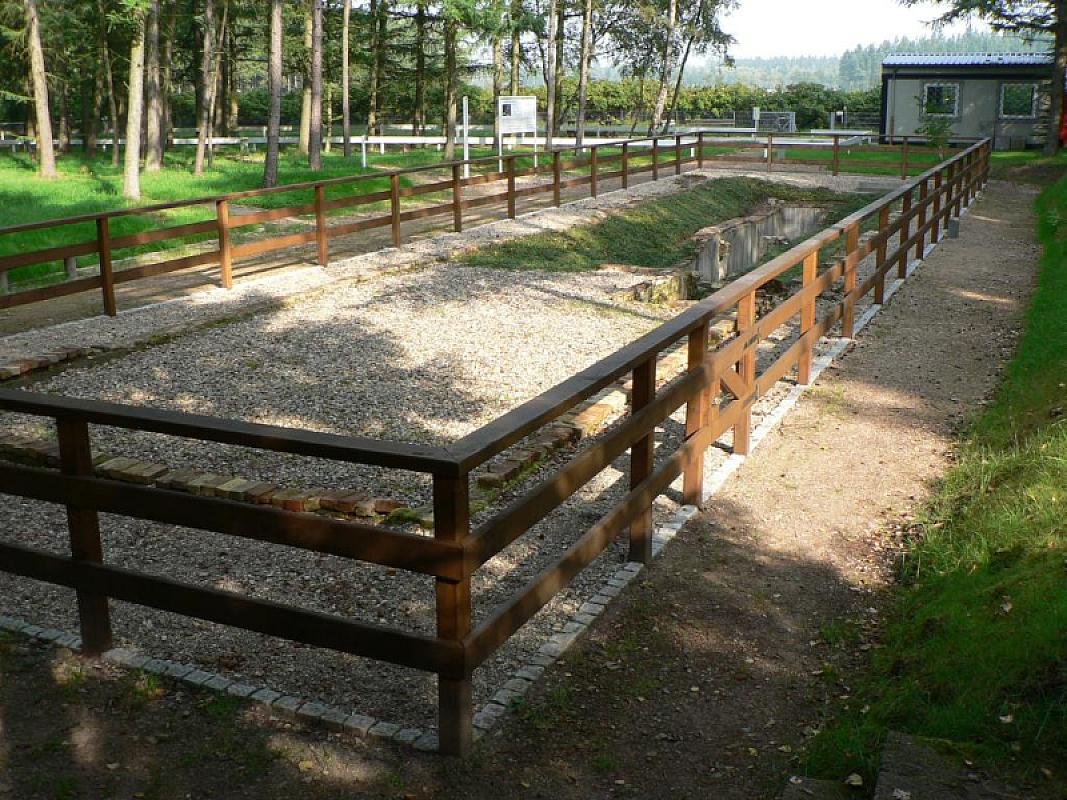
In addition to the memorial at Magdeburg Cathedral, a memorial stele was erected in 2009 at the site of the former »Magdeburg Holzweg Gypsy Camp«. It bears the names of the murdered Magdeburg Sinti and Roma and commemorates the historical significance of the site. Like the memorial next to the cathedral, the memorial stele was designed by Wolfgang Roßdeutscher. An apple tree was planted right next to the memorial stele as a symbol of life.
Contact