In the harbour town of Kherson two memorials and a memorial plaque remember the murdered Jews of Kherson and surroundings.
History
Kherson, located on the Dnieper delta on the Black Sea in southern Ukraine, was founded in 1778 at the instruction of the Empress Catherine II of Russia. Jews began to settle there a few years later. In the early 20th century many Jews perished during famines and anti-Jewish pogroms. Prior to the Second World War approximately ten percent of the 167,000 inhabitants were Jewish. Their number rose after the outbreak of the war in 1939 because of many refugees from German-occupied Poland and later from other parts of the Ukraine.
After their attack on the Soviet Union the German Wehrmacht occupied the city on August 19, 1941. Two thirds of the Jewish population managed to flee beforehand or were evacuated, about 7,000 remained in the city. The German authorities forced them to wear badges and to hand over their valuables. In addition they deployed a Ukrainian police force who actively took part in persecuting the Jews. On August 29, 1941 the Sonderkommando (special unit) 11a of the Einsatzgruppe (mobile killing unit) D shot 200 inhabitants of Kherson who were accused of anti-German activities. Most of them were Jews. A few days later the Kommando shot another 200 Jews. Besides these »Aktionen« the Sonderkommando murdered several Jews who didn't follow the previously imposed instructions.
On September 7, 1941 a ghetto was established near the city centre into which all Jews had to move. According to their own account, the Sonderkommando shot another 400 Jews on September 15, 1941. On September 23 all inhabitants of the ghetto were moved to the prison and incarcerated there. Within the next three days the Sonderkommando 11a under the command of SS-Hauptsturmführer (captain of the SS) Eberhard Heinze murdered all confined Jews and had the victims buried in anti-tank ditches near the village of Zelenivka (Russian: Zelenovka). The following days the Germans murdered further Jews who had earlier managed to escape. On October 2, 1941 the Einsatzgruppe D declared the city to be »judenfrei« (free of Jews). In January and February 1942 the occupiers murdered about 400 Jews who had been spared earlier because they were married to non-Jews.
Victims
On September 15, 1941 the German authorities declared to have killed 400 Jews in two »Aktionen«. Another 17 Jews were shot because they didn't wear badges. From September 23 to September 25, 1941 the ghetto was liquidated by the Sonderkommando (special unit) 11a under the command of SS-Hauptsturmführer (captain of the SS) Eberhard Heinze. The German perpetrators stated the number of 5,000 murdered, after the war the Soviet commission of inquiry stated the number to be more than 8,700 victims. The exact number of Jewish victims is hard to establish since there are also POWs buried in the mass grave in Zelenivka. In January and February 1942 the Einsatzkommando 12 murdered about 400 Jews married to non-Jews.
Remembrance
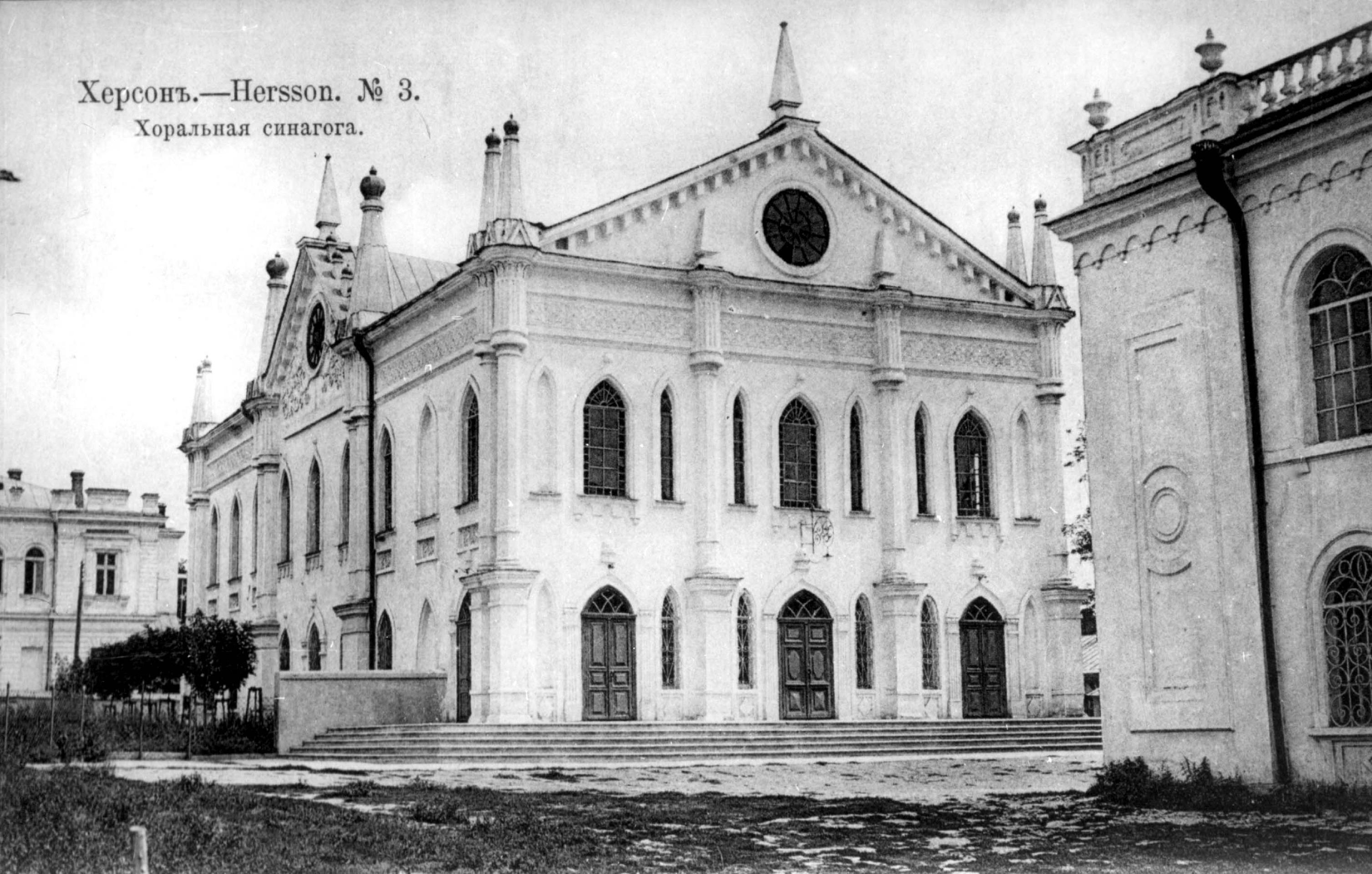
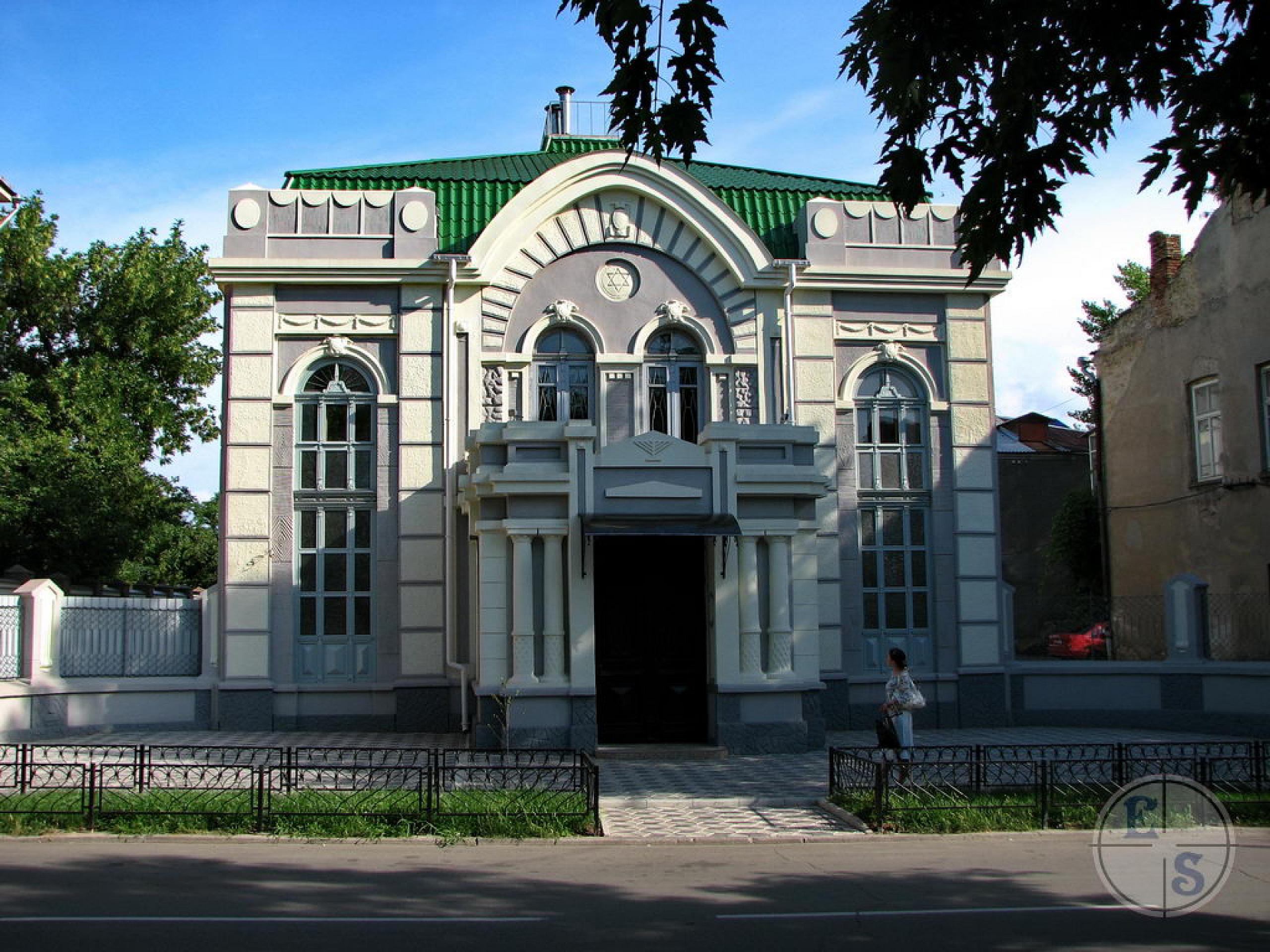
Kherson was liberated by the Red Army on March 13, 1944. In 1959 approximately 9,500 Jews lived in Kherson, accounting for 6% of the total population. Many emigrated to Israel in the 1990s. Today there is a Jewish community and a community centre. Their most important place of worship is the synagogue »Chabad«, built in 1855. It was burned down during the German occupation and rebuilt in the 1950s but wasn't used as a synagogue during Soviet times. The façade of the former »Great Synagogue« is only partly preserved. The building has been used as a planetarium since the 1960s. Beside it there once stood three more synagogues which where demolished by the Soviet authorities.
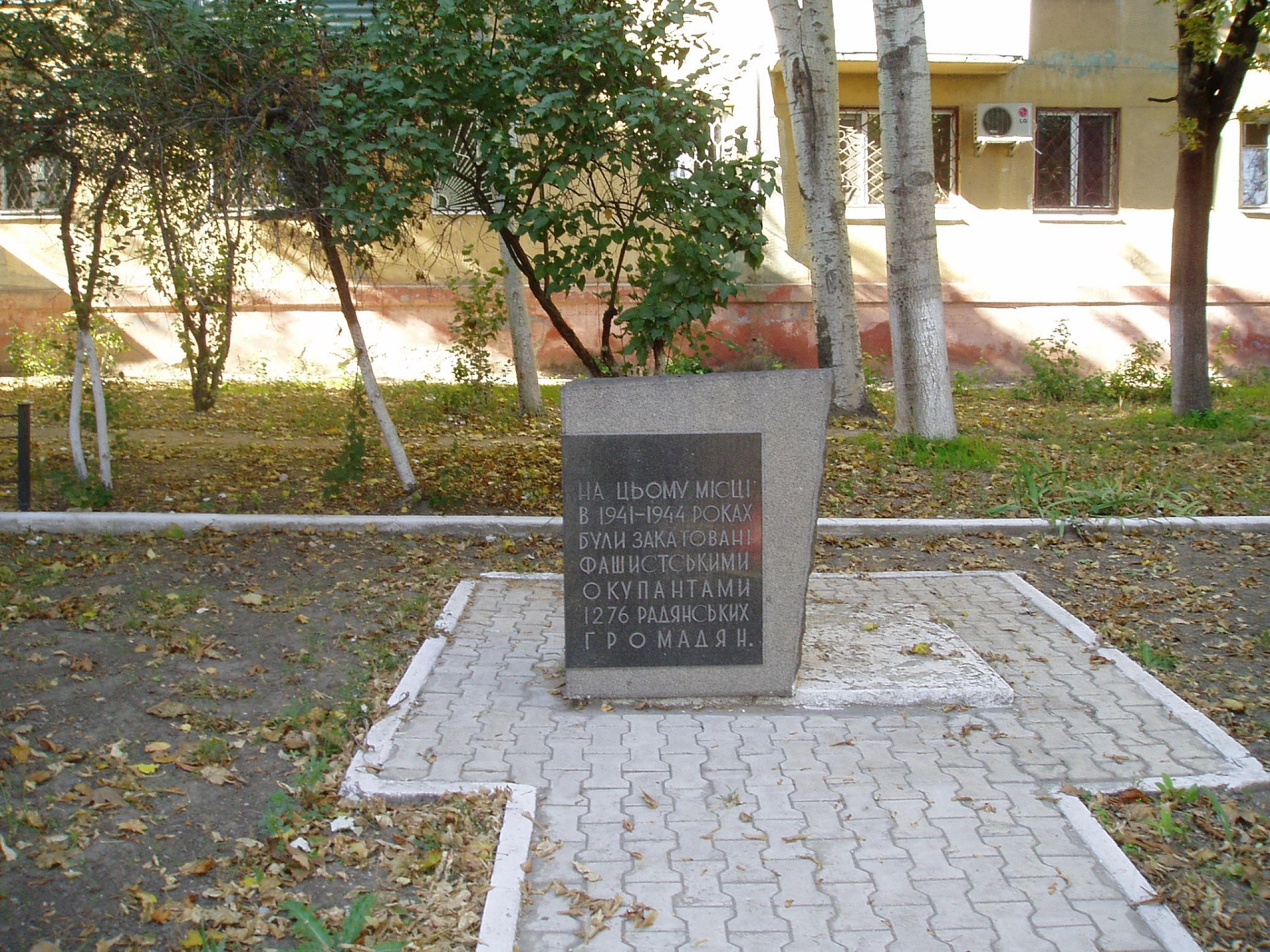
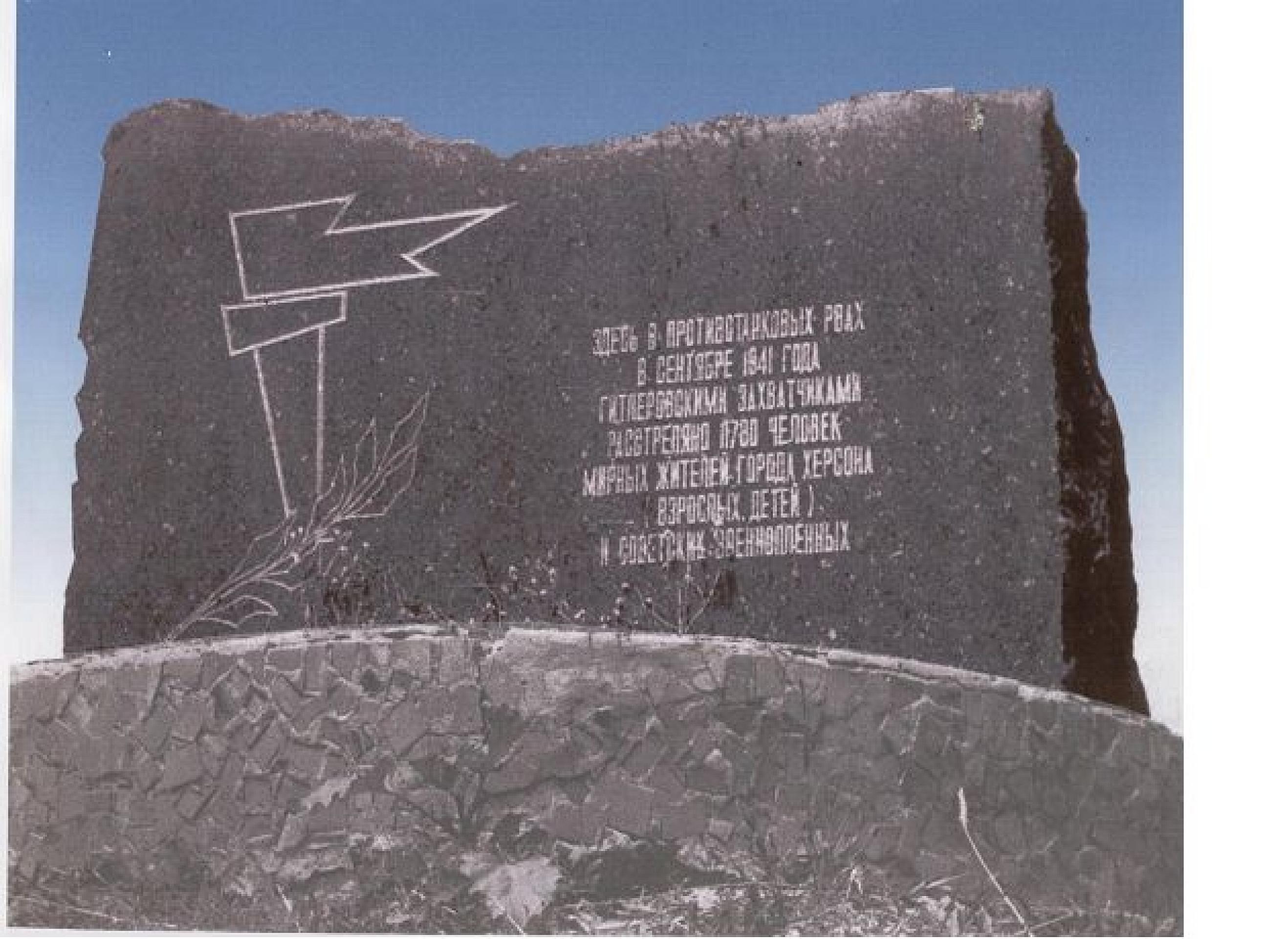
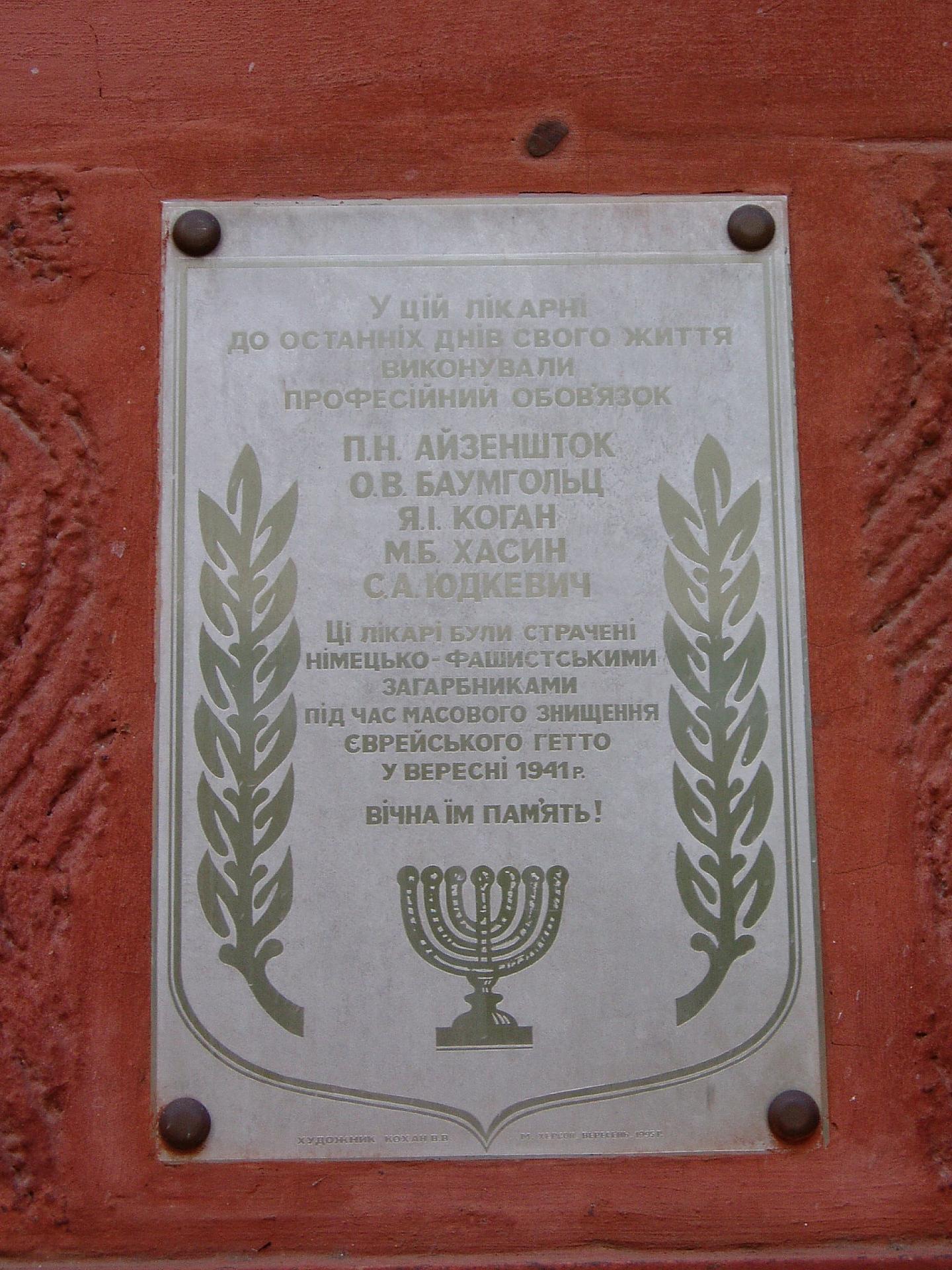
In 1966 a memorial was erected near a brewery in the city centre where human remains were found during construction work. They were later buried on the Jewish cemetery although the identity of the victims has not been determined beyond doubt. The Ukrainian inscription reads: »On this site the fascist occupiers murdered 1,276 Soviet civilians«. In 1962 the director of the »Ovotchtchnoy« collective farm erected a memorial commemorating the murdered who were buried on the site of the mass shooting near the village of Zelenivka. In 1979 the old memorial was replaced by a new one. It is located on top of an artificial hill. On the slab a torch and a Russian inscription is engraved: »Here in these anti-tank ditches the Hitlerite occupiers shot 11,780 civilians from Kherson (adults and children) and Soviet prisoners of war in September 1941«. In 1998 a memorial plaque bearing an Ukrainian inscription was placed on the building of the Tropin hospital, remembering the Jewish doctors who were murdered in the mass shootings of September 1941.
In 2004 a museum of the Jewish history of the Kherson region was opened in the building of the Jewish welfare organisation »Chesed Shmuel«. »Chesed Schmuel« regularly organises memorial services remembering the murdered Jews of Kherson.
Open
The memorials are accessible at all times.
Contact
http://www.hesed.kherson.ua/en.html
shmuel.kherson@gmail.com
Bohorodytska St, 124
73000 Cherson