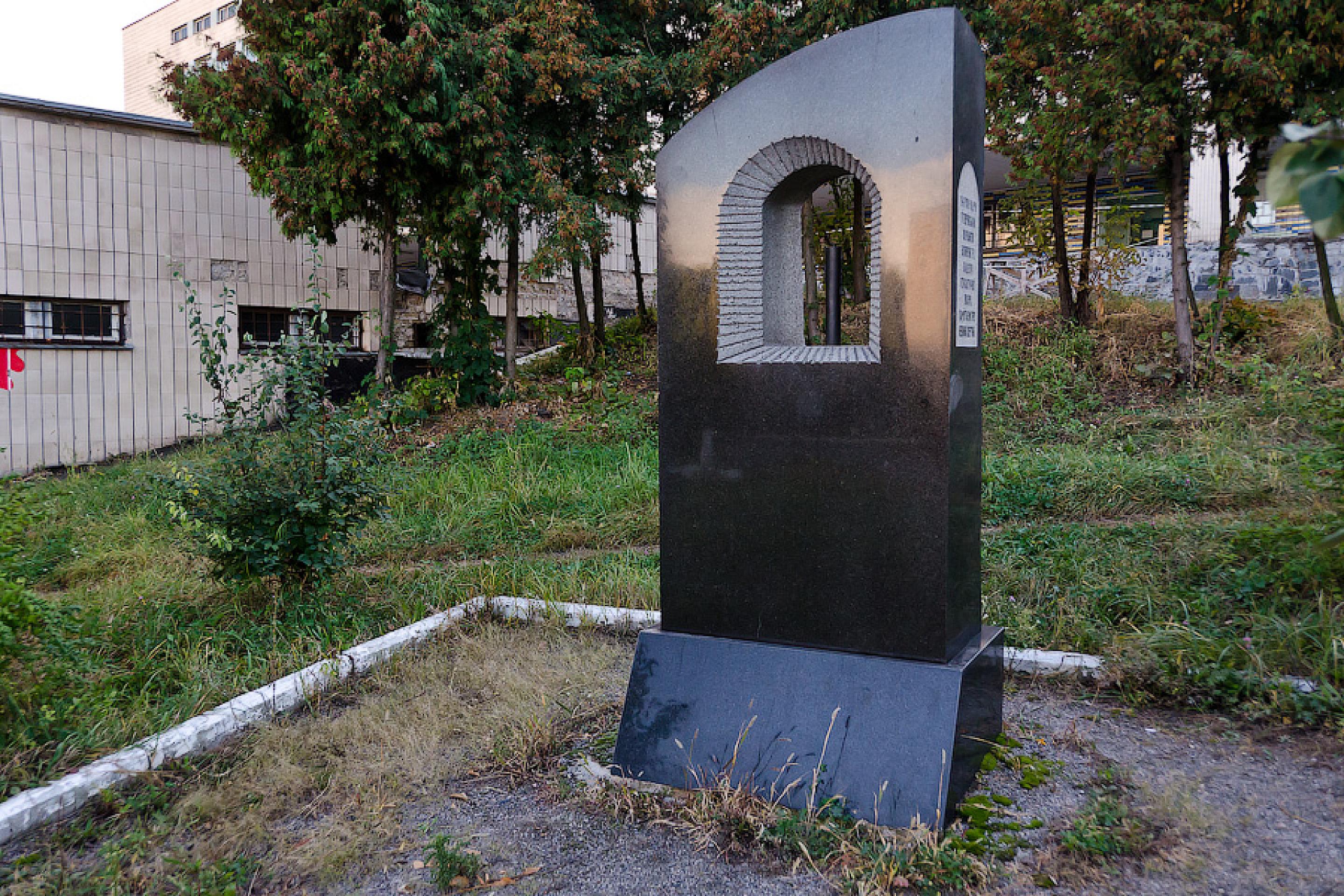
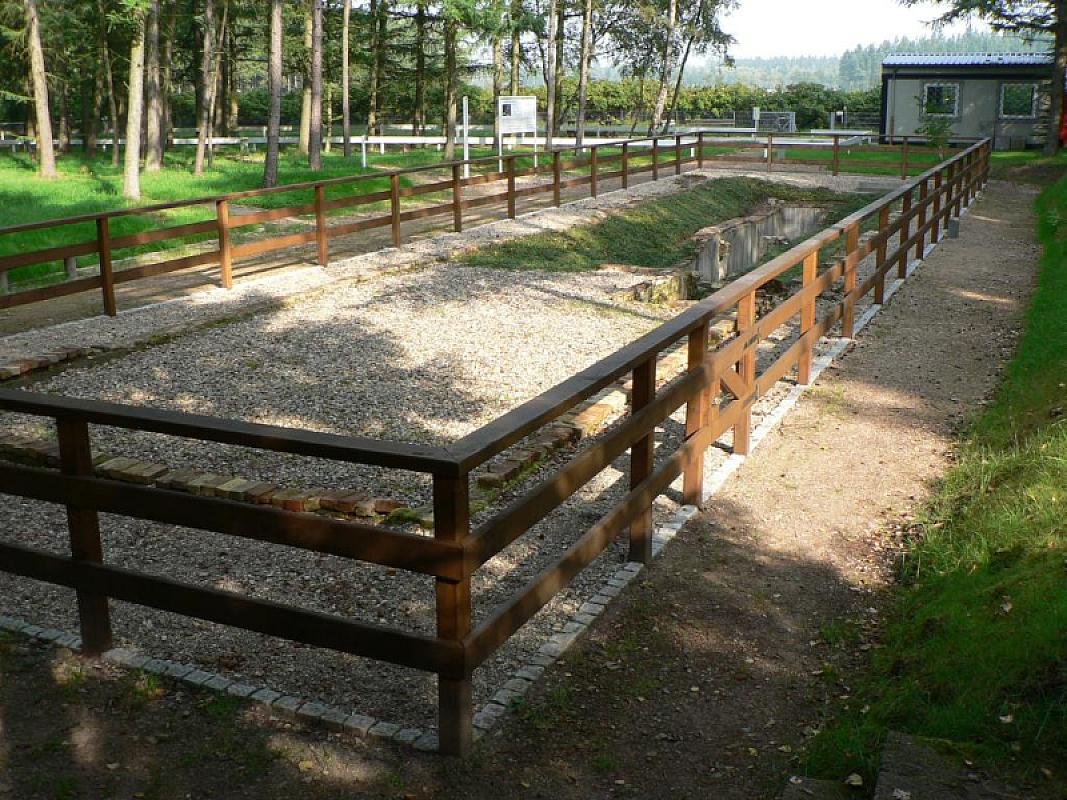
Пам'ятний знак розстріляним пацієнтам Кирилівської психіатричної лікарні
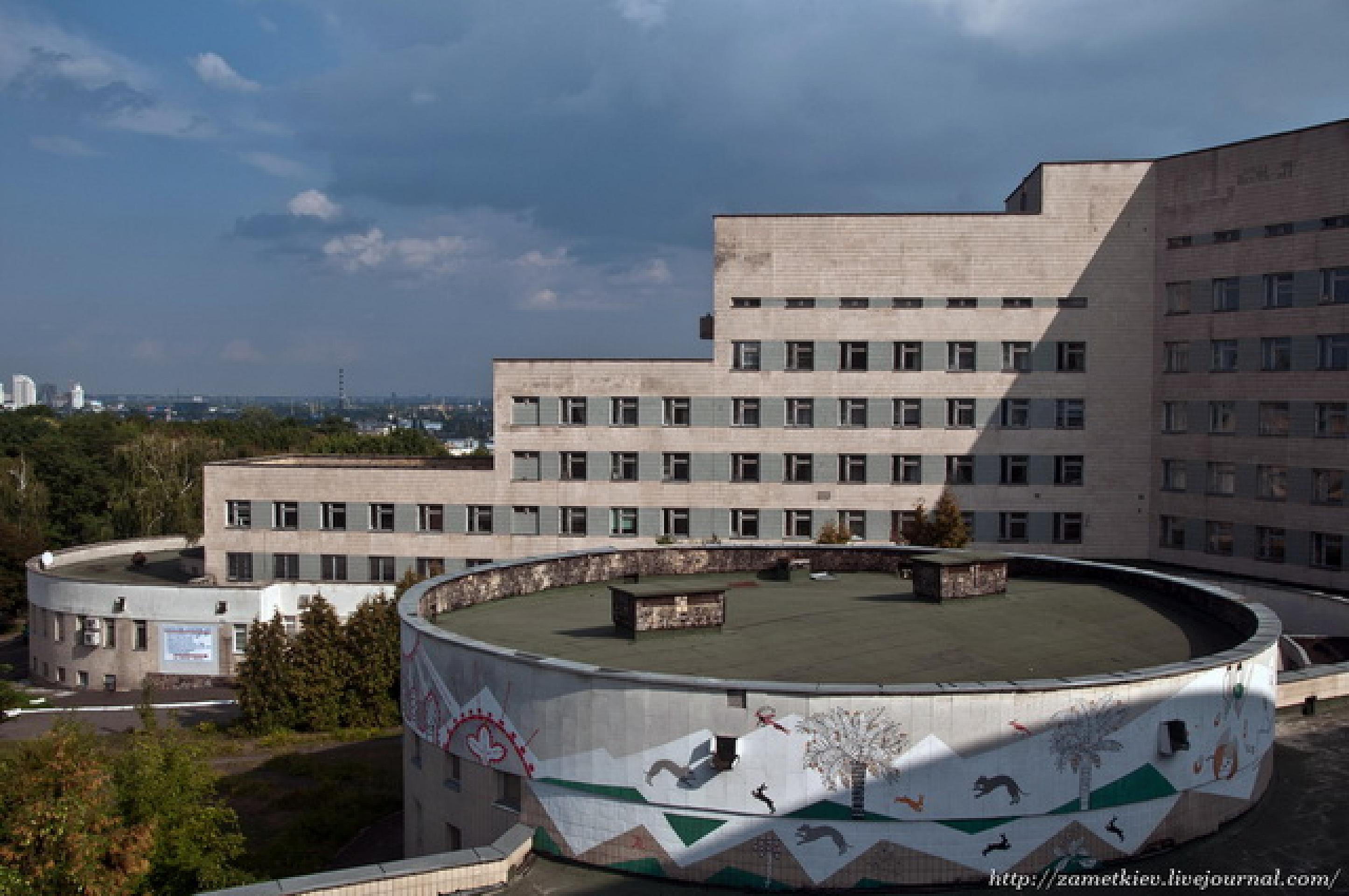
On the site of the psychiatric hospital Ivan Pavlov there are three memorials commemorating the approximately 800 former patients who were murdered during the German occupation. A memorial remembers doctors who tried to save the lives of the patients.
History
Before the war the psychiatric hospital Ivan Pavlov had about 1,300 patients. The German Wehrmacht occupied Kiev after heavy fighting on September 19, 1941. A few days later, even before the »Großaktionen« against Kiev's Jewish population, members of Einsatzgruppe (mobile killing unit) C shot about 300 Jewish patients of the clinic on September 27, 1941. The bodies were buried in a nearby ravine not far from the Babi Yar ravine. After this murder the hospital's doctors made every effort to either discharge the patients or transfer them to another hospital to protect them from the Germans. In the course of 1942 all patients still in the hospital were killed in three murder operations. So-called gas vans were used, in which engine exhaust fumes were led with a pipe into the closed car interior in order to suffocate the victims.
Victims
In 1941 and 1942 a total of up to 800 patients were murdered at the psychiatric hospital Ivan Pavlov.
Ukraine, the second-largest Republic in the European part of the former Soviet Union, was at the centre of the Second World War and the Holocaust. It is estimated that five to six million Ukrainians died during the war, including around 630,000 Jews.
In mid-September 1939, following the Soviet occupation of eastern Poland in accordance with the Hitler-Stalin Pact – a secret German-Soviet agreement –, the south-east of Poland became part of the Soviet Ukraine. The oppression of the local population was now an everyday occurrence. In summer 1941, the German attack on the Soviet Union initially affected these very regions. Right from the start of the invasion the Jewish population was accused of supporting the Soviet powers and became the target of brutal attacks. These attacks were often the work of nationalist Ukrainians, who initially welcomed the advance of the Wehrmacht. German SS Einsatzgruppen and allied Rumanian units soon began to carry out mass shootings of Jews. The Babyn Yar ravine near Kiev, where German units and Ukrainian militia murdered over 33,700 Jews over two days in September 1941, has since become a global symbol of the genocide of Jews. The non-Jewish population was also a target for persecution. National Socialist racist ideology classed Ukrainians, as all »Slavs«, as »subhuman«. The occupiers looted the country, deported way over one million civilians to carry out forced labour and publicly executed hostages. By 1943 a partisan war against the Wehrmacht was raging along with the campaign of the nationalist »Ukrayinska Povstanska Armiya« (Ukrainian Rebel Army or UPA) against the Soviets and the Polish population in western Ukraine. The number of Poles to die in the process lies way over 100,000. From 1944 the Ukraine was again part of the Soviet Union and also encompassed former territories in eastern Poland. The UPA continued its campaign until the mid-1950s. The Soviet authorities deported around 300,000 Ukrainians to Siberia to counter the resistance.
The Ukrainian culture of memory was aligned with the symbolic forms of remembrance found in the Soviet Union. Monumental sites of memory were constructed to celebrate the »victory« in the Great Patriotic War. It is only recently that victims have been remembered alongside the venerated heroes. In addition, a culture of memory centred on the campaign of the UPA has emerged in western Ukraine, with the UPA’s legacy being interpreted as a struggle for independence. Confrontation with anti-semitism and the collaboration with the German occupiers has only begun around 2000. With just a few exceptions, the mass shootings of Jews were ignored until the 1980s. It was not until 1991 that the government of independent Ukraine acknowledged Babyn Yar as a »symbol of Jewish martyrdom«. Long after gaining independence, Ukraine was still on the search for its national identity. The documentation of Soviet crimes – for example the state’s responsibility for the Great Famine (Holodomor) in 1922-23 that led to millions of deaths – has more significance in the establishment of a Ukrainian identity than learning about the Holocaust. Nevertheless, new memorial sites for the murdered Jews were established throughout the country, such as Drobitskiy Yar in Kharkiv or the Holocaust Museum in Odessa. On many mass grave sites new memorials were created, partially with German support. In Kiev, a new grand memorial site with global relevance was planned at Babyn Yar. These plans were put on hold with the beginning of the full-scale Russian invasion of Ukraine on February 24, 2022. What impact the current defensive war will have on Holocaust remembrance in the future remains to be seen.
Remembrance
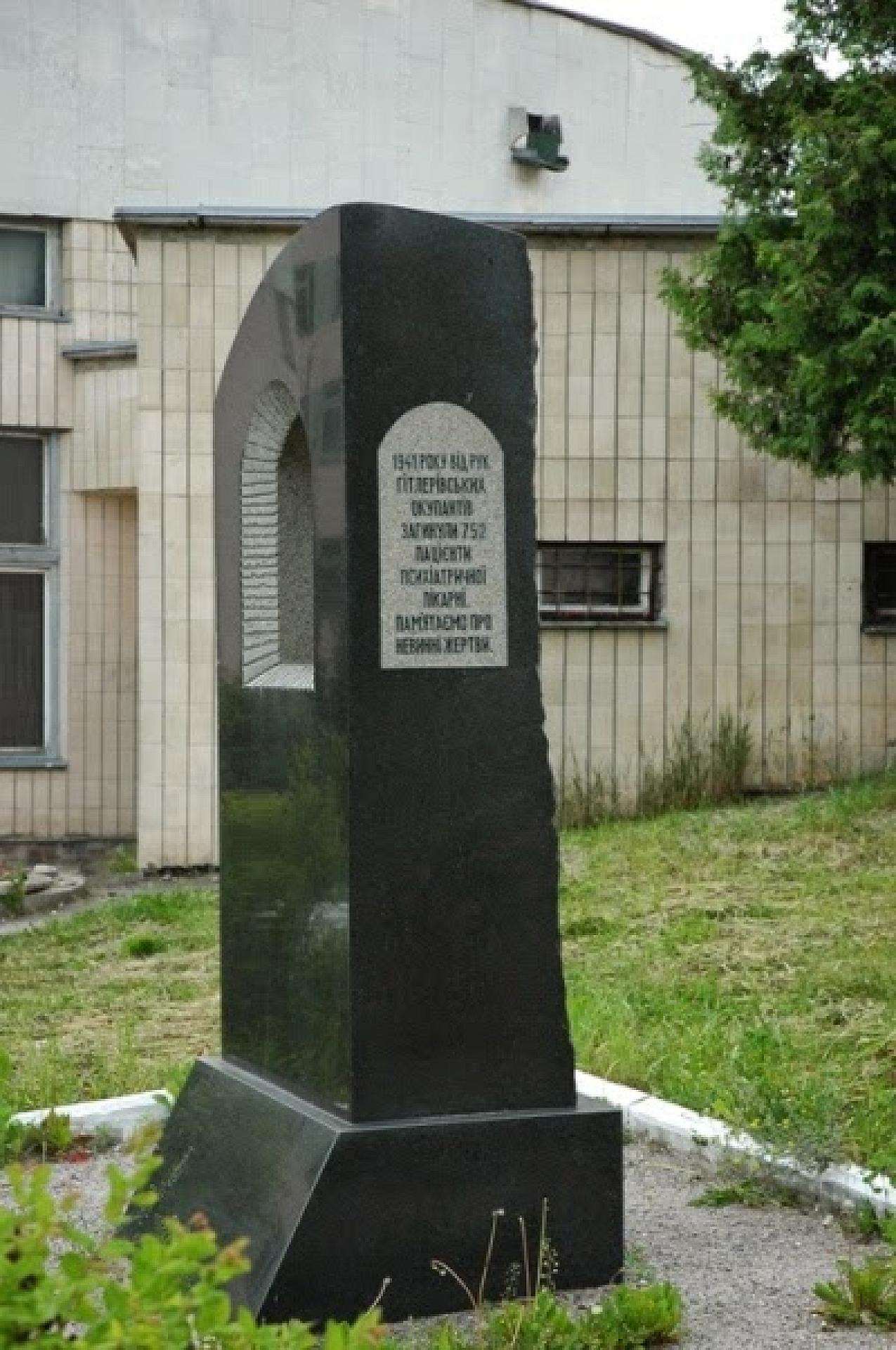
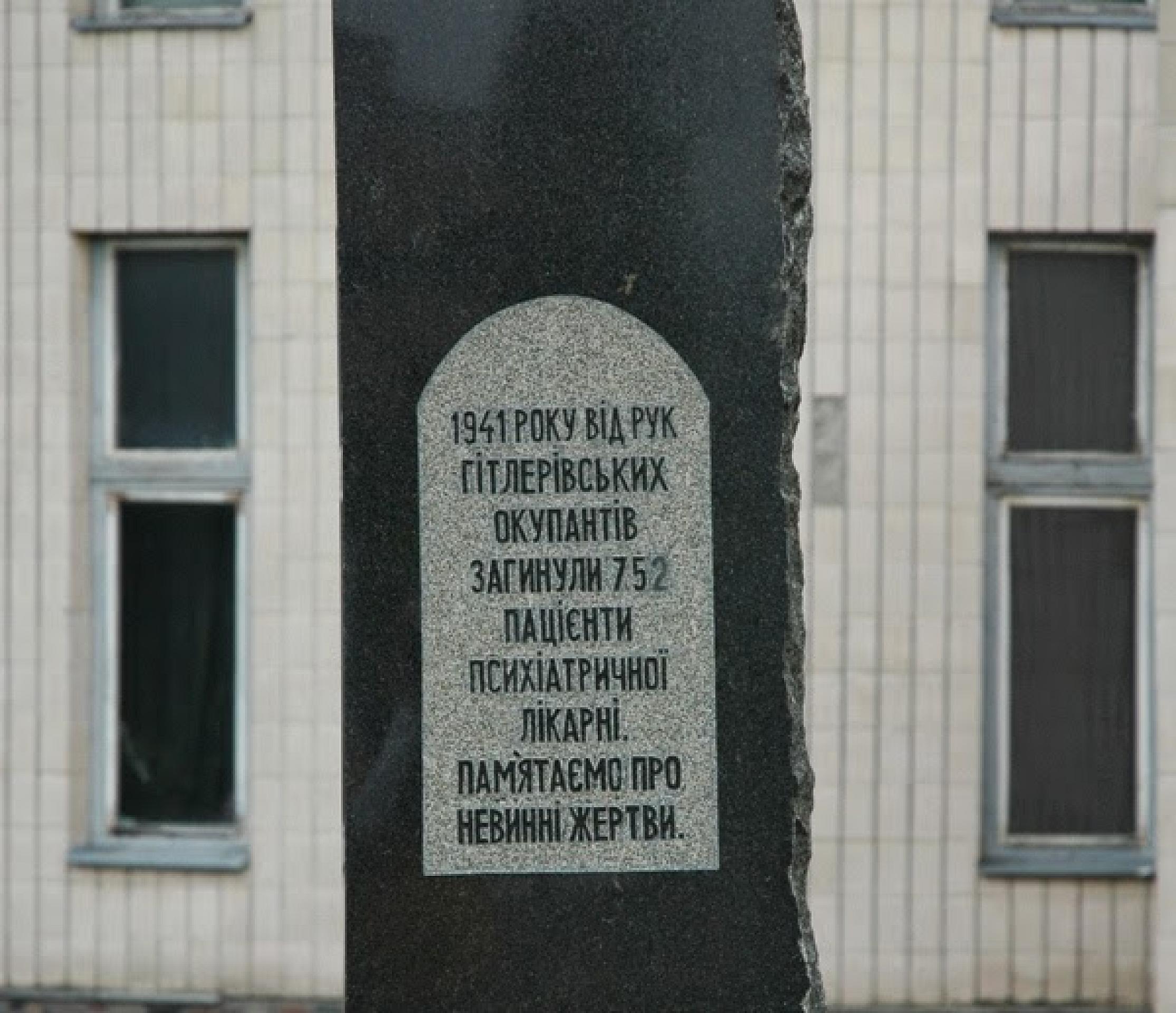
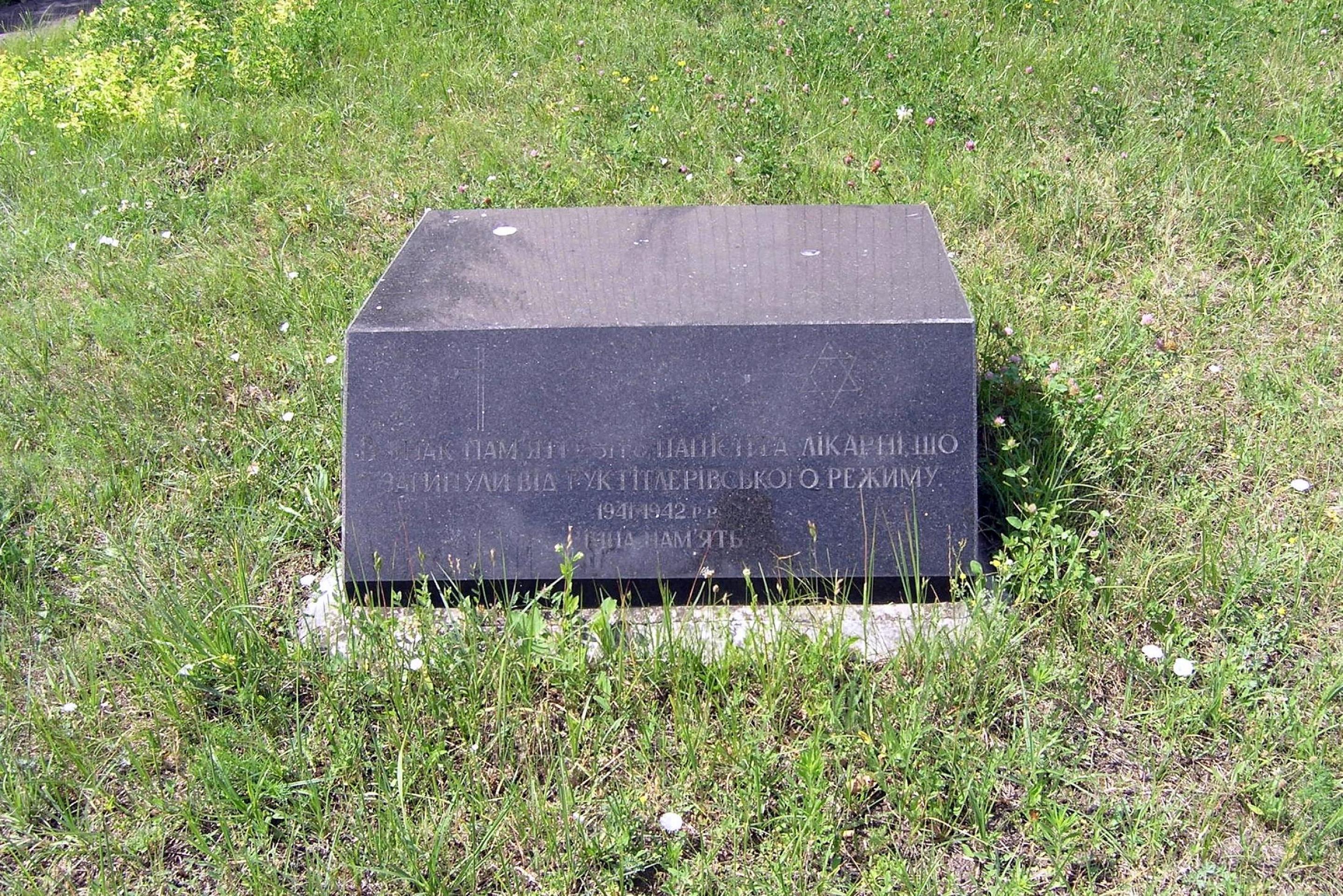
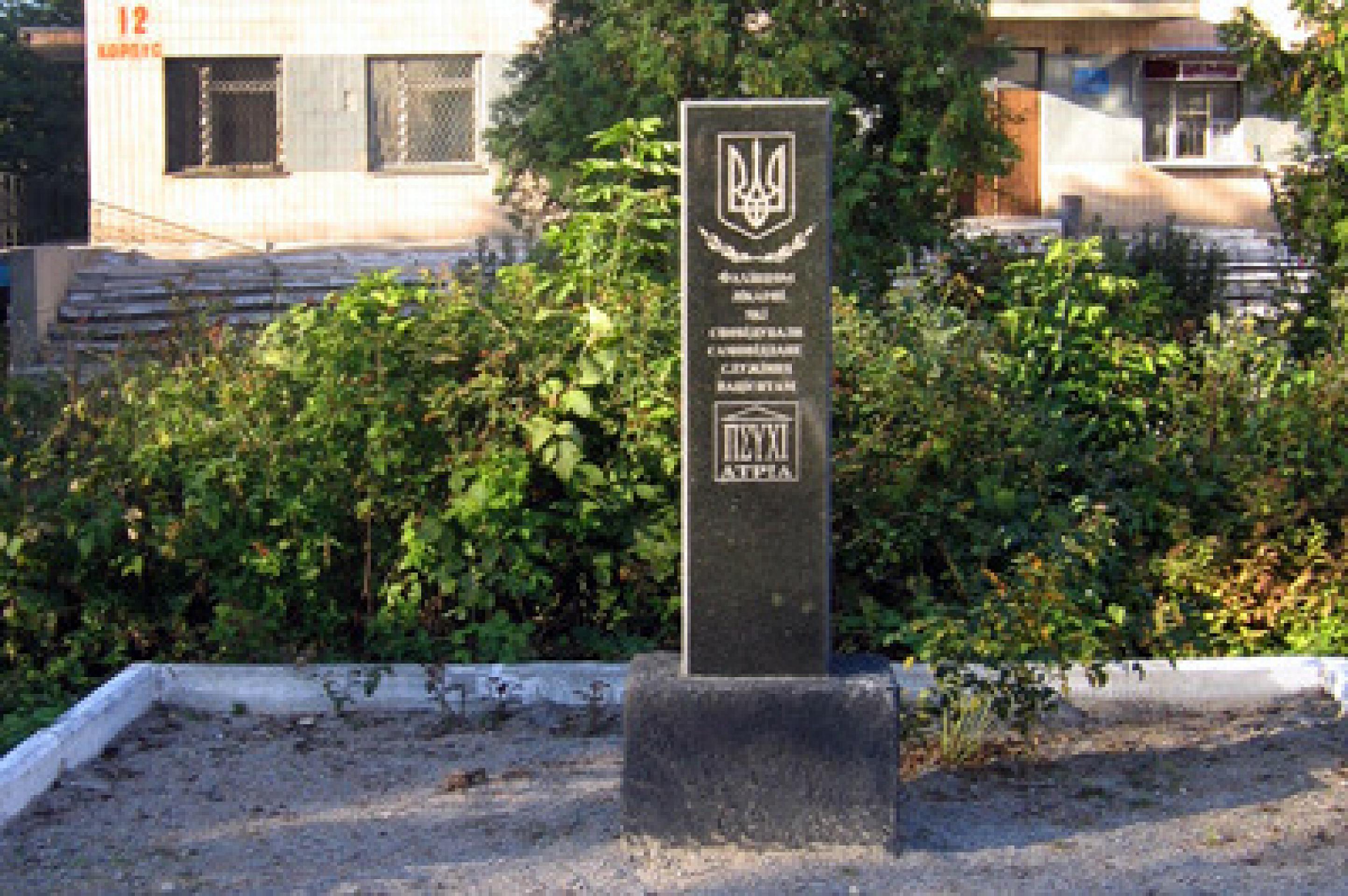
In 2001 the first of three memorials to the murdered patients of the hospital was erected. The black rectangular stone shows a cross and a Star of David next to the Ukrainian script. In 2003 another memorial was erected according to designs by the architect L. Skorik. This bears the inscription: »In the year of 1941, 752 patients of the Psychiatric Clinic died at the hands of the Nazi occupiers. We remember the innocent victims«. A window with a candle in it is embedded in the memorial. The doctors who saved the lives of many patients were commemorated one year later with another memorial on the site of the hospital. It bears the inscription: »To the specialists of the hospital who selflessly helped the patients«.