On 1 September 1941, 5,000 Jewish men, women and children were murdered by members of the SS and their Lithuanian helpers in Mariampolė. The victims were for the most part Jewish residents of the town of Mariampol and surrounding areas. After the war, a monument was erected at the site of shootings on the initiative of Lithuania's Jewish Community.
History
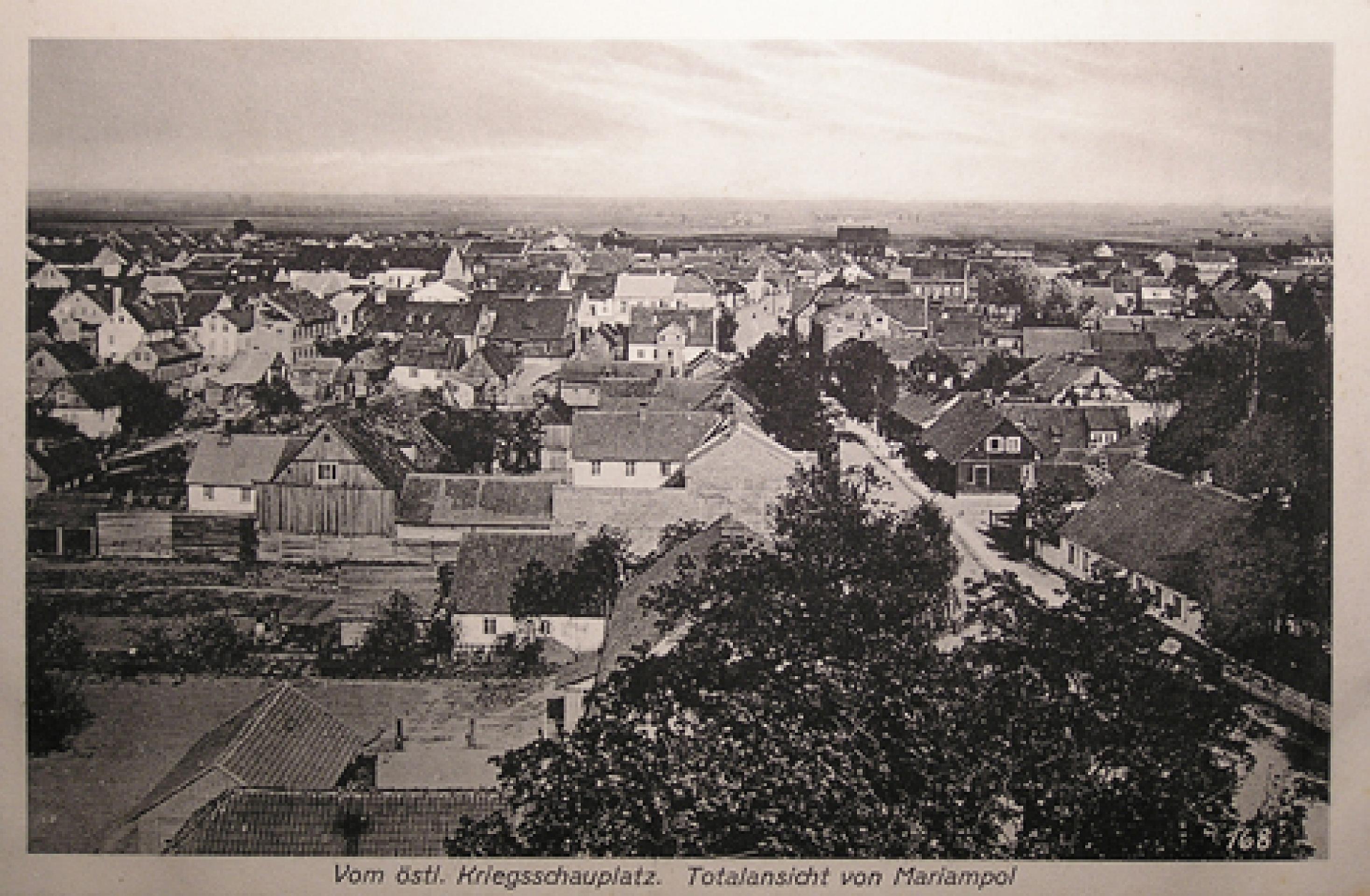
Around 2,800 Jews lived in Mariampolė in 1939. The town, centre of the Suvalkija region in southwest Lithuania, was a hub for Jewish culture. The first Hebrew college of the Jewish Diaspora was founded here already in 1919. After the Soviet invasion in 1940, the German Wehrmacht occupied Mariampolė on 23 June 1941. In August, orders were issued to intern all the Jews of Mariampolė and surrounding towns of Kazlų Rūda, Liudvinavas and Kalvarija in a ghetto. The Jewish men and women were then seperately murdered in former military barracks on the city outskirts. A part of the ghetto residents was forced into slave labour. On 1 September, Lithuanian auxiliary police, under the command of Einsatzkommando 3 (task force) of the SS-Einsatzgruppe A (mobile killing squad), shot well over 5,000 ghetto inhabitants in a ditch outside the town.
Victims
According to the SS, 5,090 Jewish men, women and children were shot in Mariampolė and buried in mass graves on 1 September 1941. It is assumed that the number of victims was much higher. The memorial stone in Mariampol speaks of 8,000 Jewish and 1,000 other victims.
After World War One Lithuania gained independence from the Russian Empire. In June 1940 it was occupied by the Red Army as the result of a German-Soviet agreement – the so-called Hitler-Stalin (or Molotov-Ribbentrop) Pact. Many Catholic Lithuanians blamed the Jews as a whole for the loss of sovereignty and for the Soviet terror. Following the German invasion of the Soviet Union on June 22, 1941, the Wehrmacht soon gained control of Lithuania. Just two days later German units carried out the first mass shooting of Jews during this campaign in the border region of Garsden. In the first days of the war Lithuanian nationalists killed hundreds of Jews. Subsequently, the German-Lithuanian mobile killing unit »Rollkommando Hamann« launched daily attacks on Lithuanian towns and villages. By the end of 1941 they had shot almost all of the Jews living in the countryside and in small towns. Lithuanian SS units and police battalions were also involved in killing operations, particularly in Belarus. By summer 1944, between 140,000 and 150,000 Lithuanian Jews had been murdered – almost 99 percent of the Jewish population of the country in the interwar period. There were also around 70,000 Jewish victims from Vilnius and its surroundings, which had again become part of Lithuania following the destruction of Poland in autumn 1939.
After 1941, these acts of terror were also directed against mainly communist critics and other minorities. In addition, this period saw the start of deportations of forced labourers into the Third Reich. A total of around 170,000 non-Jewish Lithuanian civilians died in the process. After the Red Army had regained Lithuania in 1944, the country once again became part of the Soviet Union. Thousands of Lithuanians emigrated, whilst thousands more engaged in partisan combat against the Soviet occupation until the late 1950s (these partisans were also known as »Forest Brothers«). The Soviet secret service NKWD deported a total of around 500,000 Lithuanians to the Soviet Union. During the Soviet period, official memory in Lithuania focused above all on the heroes of the »Great Patriotic War« and on pro-Soviet Lithuanian patriots, but the murdered »peace-loving Soviet citizens and communists« were also commemorated. In 1958, a museum was opened at the former IX. Fort in Kaunas, one of the most significant mass murder sites in the country. An ensemble of monumental concrete memorials was erected on the site in 1984.
In 1990-91, Lithuania fought for independence from Moscow. The associated struggle with Soviet troops cost 14 lives. Many monuments from the Soviet period were subsequently dismantled and the decades of occupation and resistance became the main feature of national memory. The Soviet annexation of Lithuania in 1940-41 and between 1944 and 1990 was placed on an equal footing with the German occupation. As in Latvia and Estonia, occupation museums were established with a focus on the years of Soviet terror. A broad discussion of Lithuanian involvement in the Holocaust did not emerge until the 1990s. In 1998, an international committee was founded to investigate crimes during the National Socialist and Soviet occupation regimes.
In the decades since then, Lithuania’s memorial landscape has become much more diverse. One of the most important institutions is the Vilna Gaon Jewish State Museum. At the former mass shooting site Paneriai on the outskirts of Vilnius a new museum building is being planned to complement the number of memorials and monuments already there. Already since 2014, there is a new permanet exhibition in Fort IX in Kaunas, while the internet project »Holocaust Atlas of Lithuania« is providing in-depth information on the mass shooting sites all over the country.
Remembrance
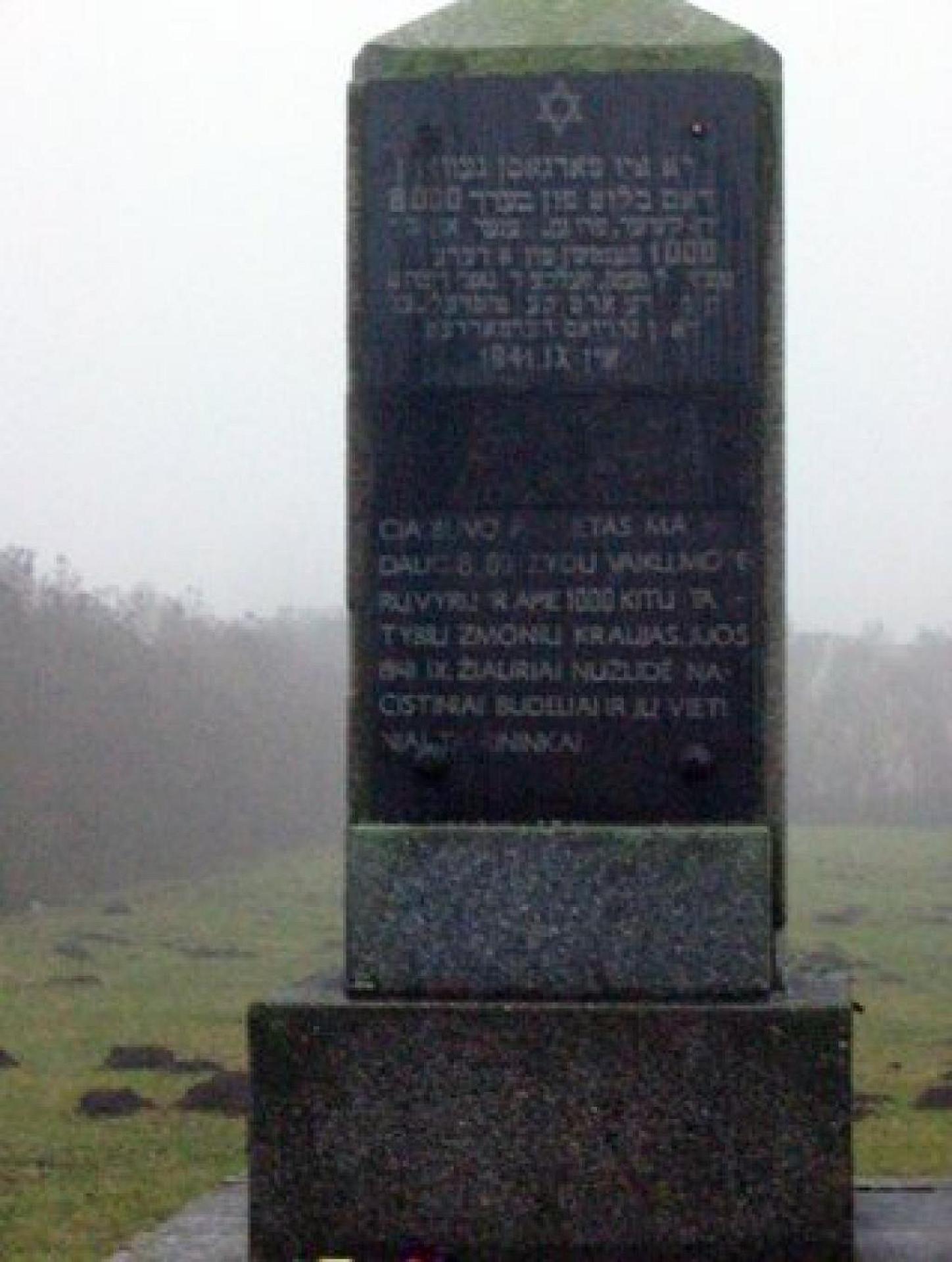
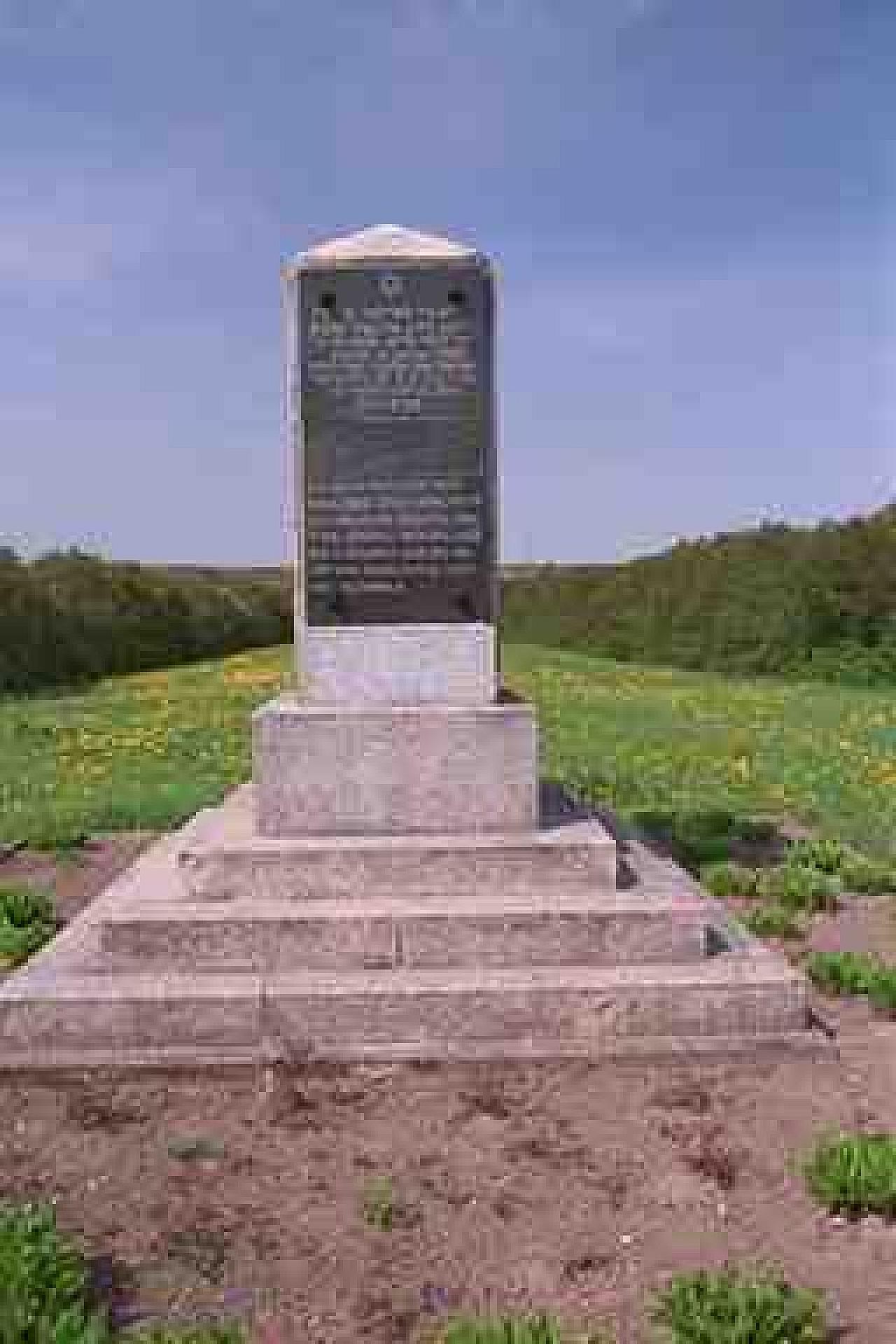
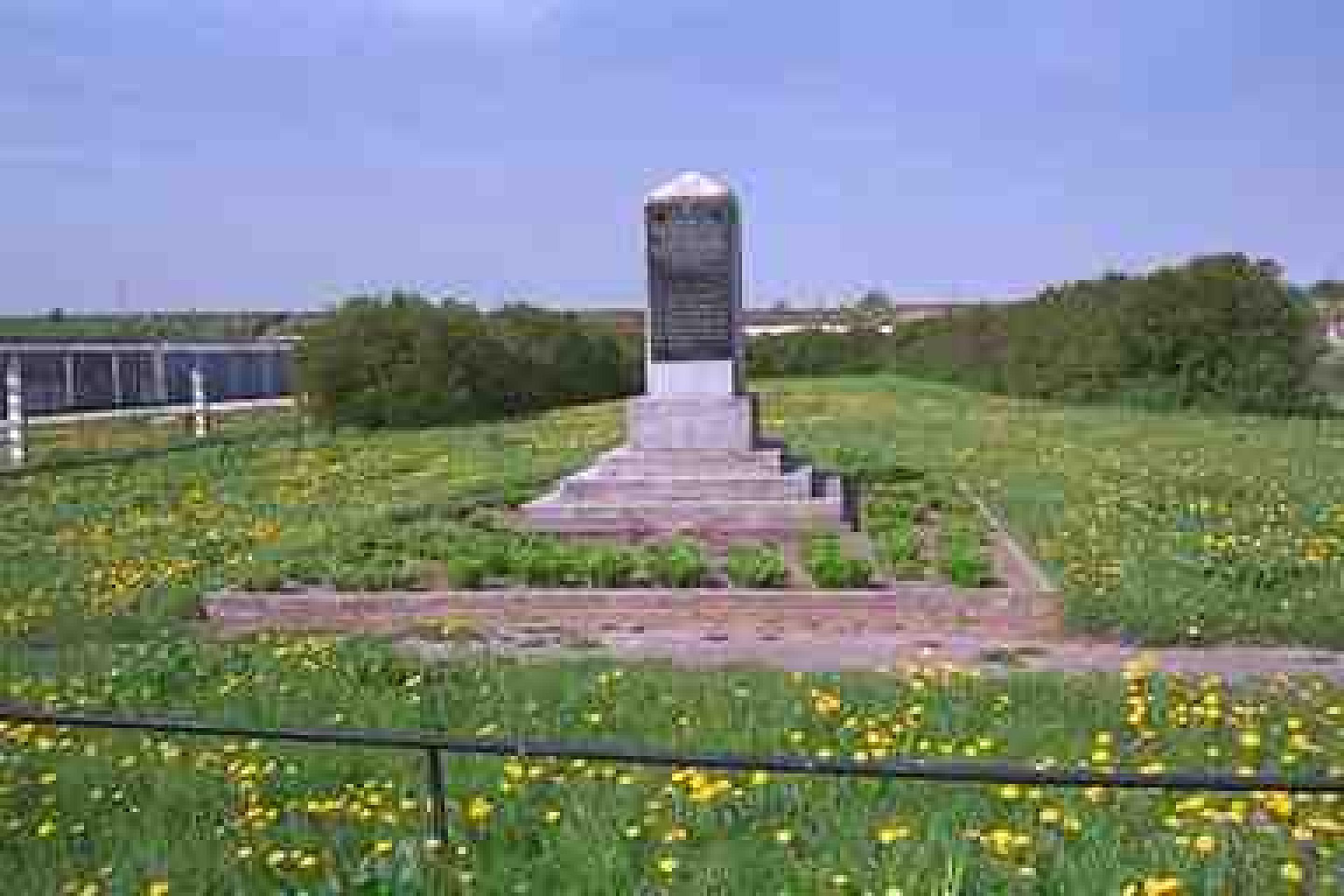
The memorial, renovated in 1992, consists of a concrete stele. The Hebrew and Lithuanian inscription of the granite memorial plaque reads: »Here, the blood of 8,000 Jewish children, women and men, as well as 1,000 people of other nationalities was shed. They were brutally murdered in September 1941 by National Socialist murderers and their Lithuanian helpers.«