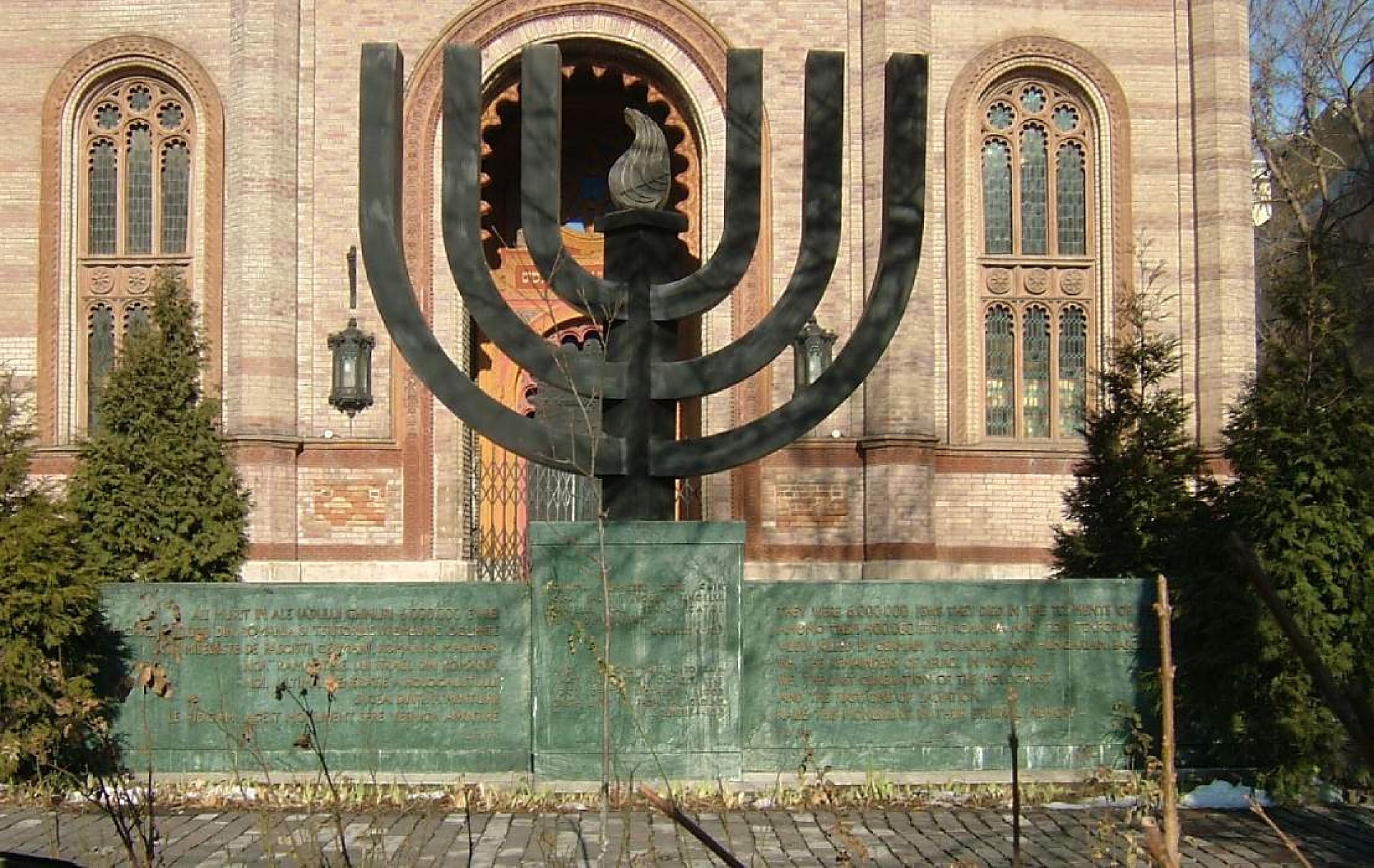
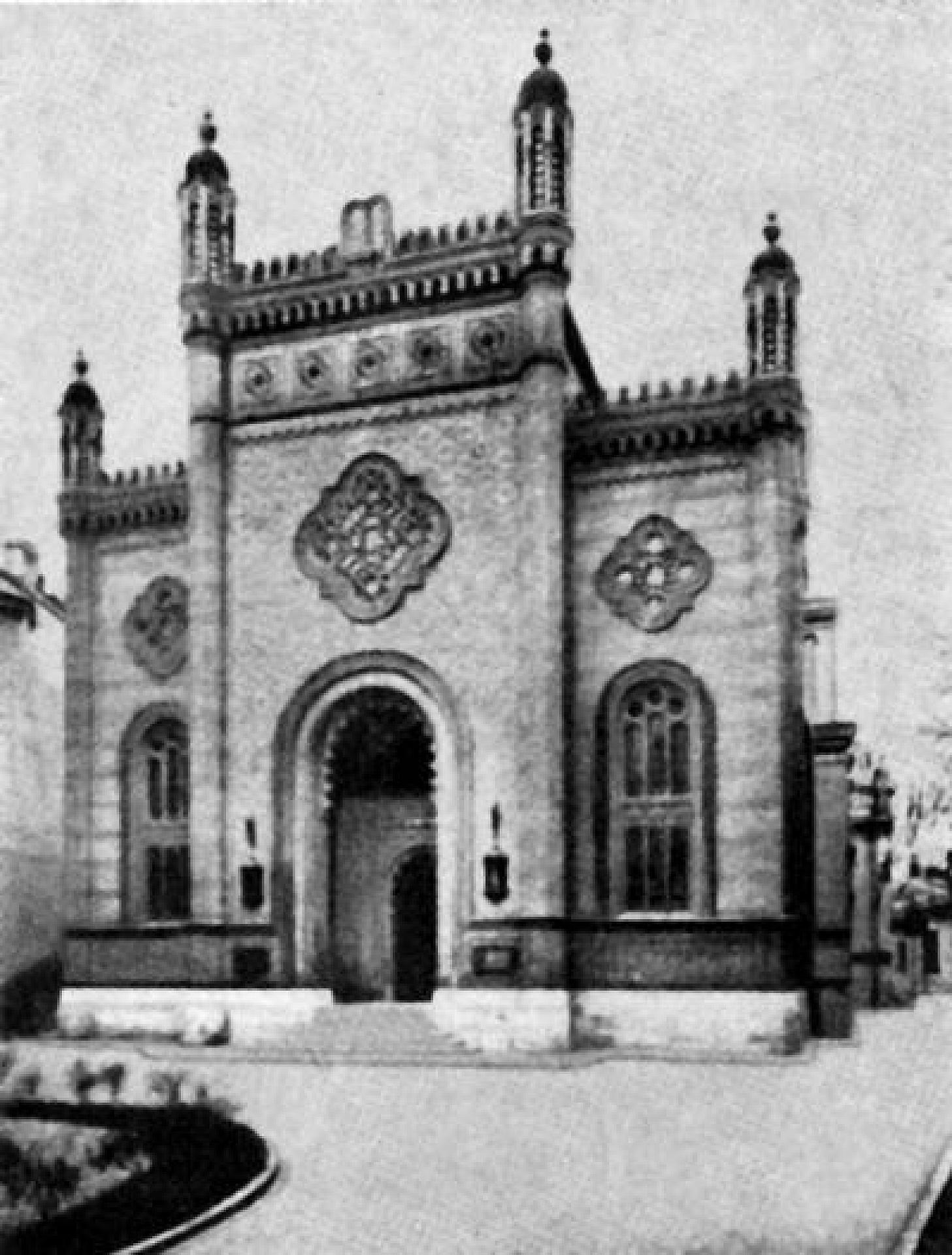
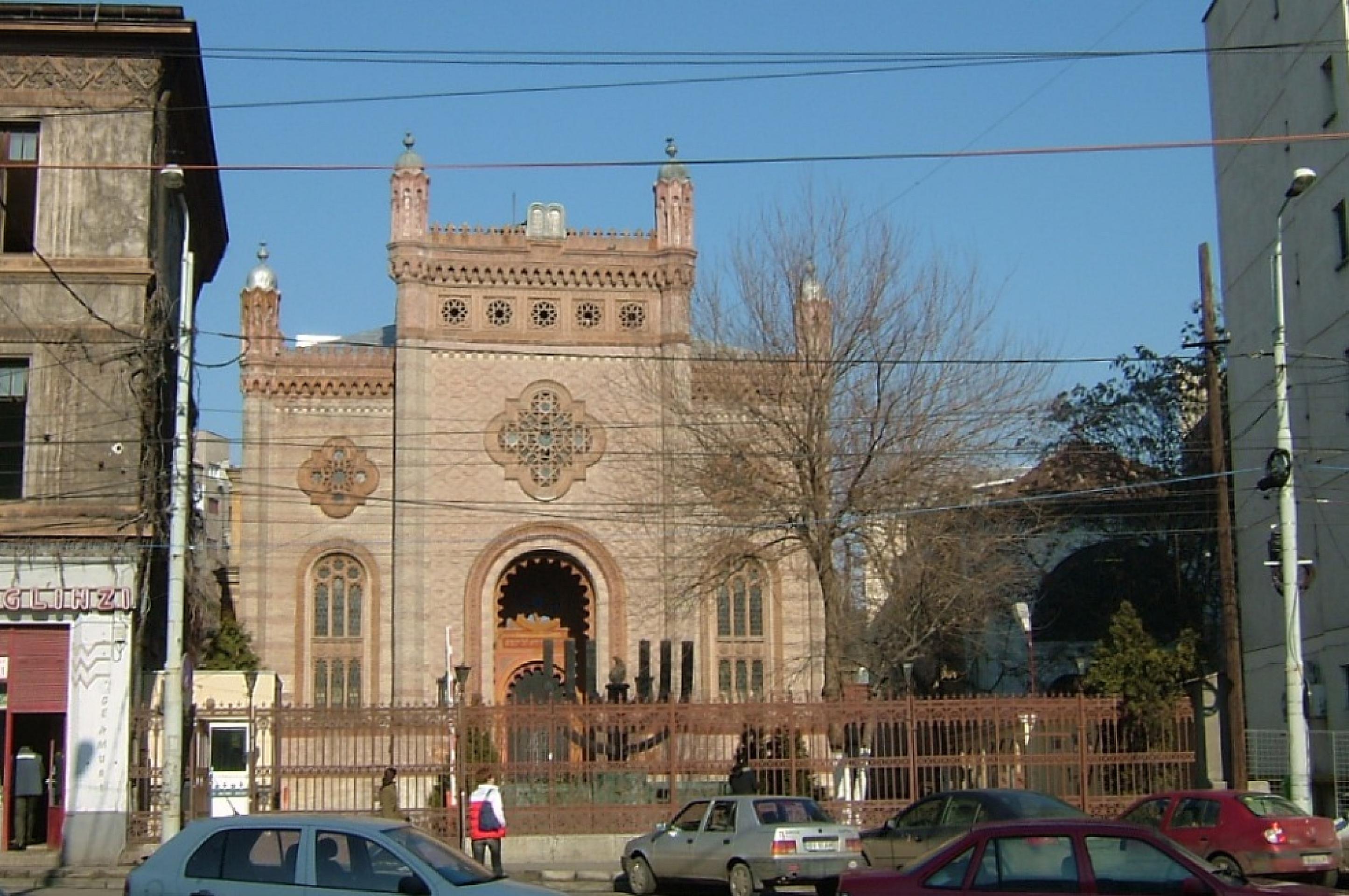
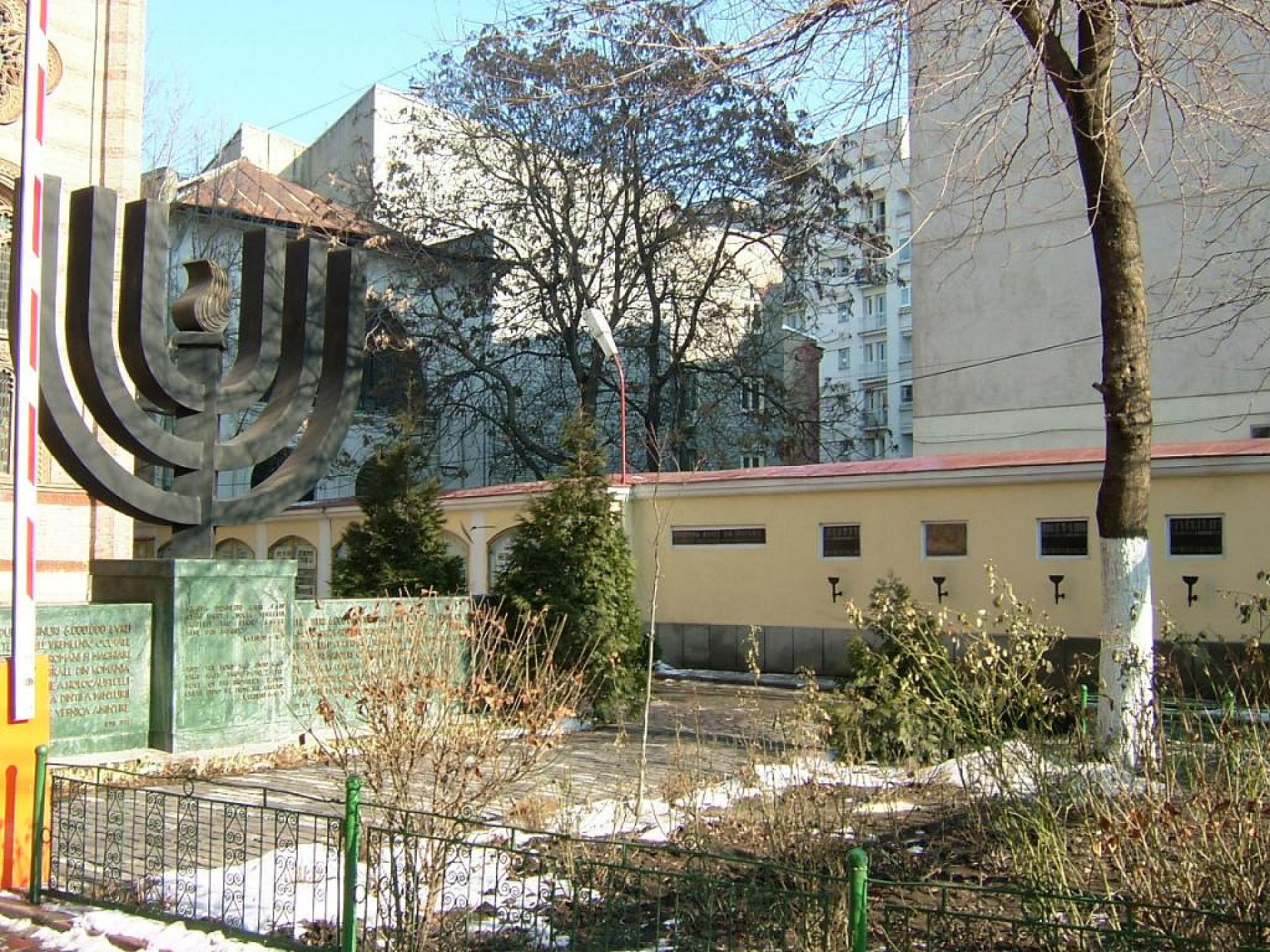
In 1991, a monument in front of the Choral Temple in Bucharest, one of the largest synagogues in the city, was dedicated to the Romanian victims of the Holocaust. It is primarily dedicated to the Jews of Bucharest who were killed in the pogrom of January 1941 or who were deported to Transnistria in 1942.
History
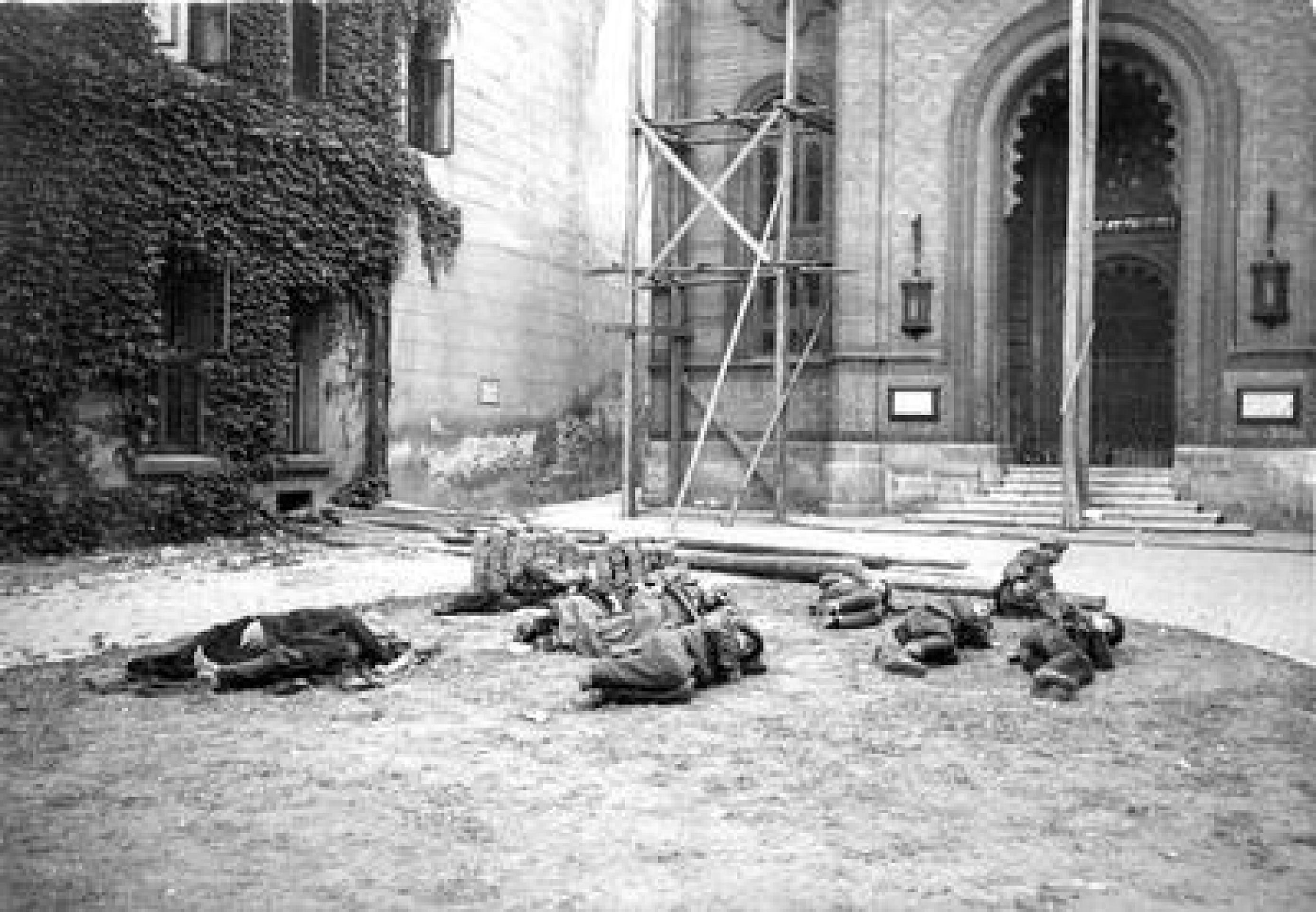
In 1941, about 102,000 Jews lived in Bucharest, among them many refugees from other parts of Romania, who had sought refuge from the growing Romanian anti-Semitism in a larger Jewish community. In January 1941, the Iron Guard, which was part of the government led by General Ion Antonescu, attempted a military coup in order to take complete control of the government. Days of chaos and riots ensued, while members of the Iron Guard specifically targeted Bucharest Jews in their violence: Jews were arrested and abused, synagogues and Jewish property destroyed. During the pogrom of January 20 to 24, 1941, about 120 Jews died in Bucharest. The Choral Temple – as many other synagogues – was severely damaged. After the revolt had been suppressed, Antonescu's government introduced harsher anti-Jewish policies: from autumn 1941 on, many Jewish men were drafted for forced labour, and in 1942, Romanian authorities deployed over 28,000 Jewish men in labour detachments. Hundreds of Jews were deported from Bucharest to Transnistria, the Romanian-occupied part of Ukraine, where they had to live in catastrophic conditions in ghettos and camps and conduct forced labour.
When it became foreseeable that the Axis powers would eventually lose the war, Antonescu's government changed its strategy towards the end of 1943: contrary to previous plans, the Romanian Jews were not handed over the the Germans. Those who had been deported to Transnistria could return to their homes from the end of 1943 on, as had been demanded by the Jewish communities. In August 1944, in anticipation of the invasion of the Red Army, Antonescu was ousted from power by King Michael I. Romania changed sides and became an ally of the Soviet Union.
Victims
A majority of the Jews of Bucharest survived the Holocaust due to the fact that Romania did not hand the Jews over to the Germans as had been planned, and instead becoming an ally of the Soviet Union after a regime change. At least 120 Bucharest Jews perished in the pogrom of January 1941. Thousands of Jewish men were drafted for forced labour, several hundred Jews were deported to Transnistria. It is not known exactly how many Jews from Bucharest died there.
In total, about 285,000 of the Jews who had lived in Romania before the Second World War perished in the Holocaust.
Remembrance
The Choral Temple, which was severely damaged during the pogrom of 1941, was renovated already in 1945. That same year, the synagogue served as a hospital and as temporary housing for Jewish refugees from Romania and Hungary. Later, the synagogue was once again used for religious services. In 1947, about 150,000 Jews lived in Bucharest, many of them refugees. In the following years, many Jews emigrated to Israel, and the Jewish community shrank significantly. By the year 2000, there were only about 3,500 Jews living in Bucharest.
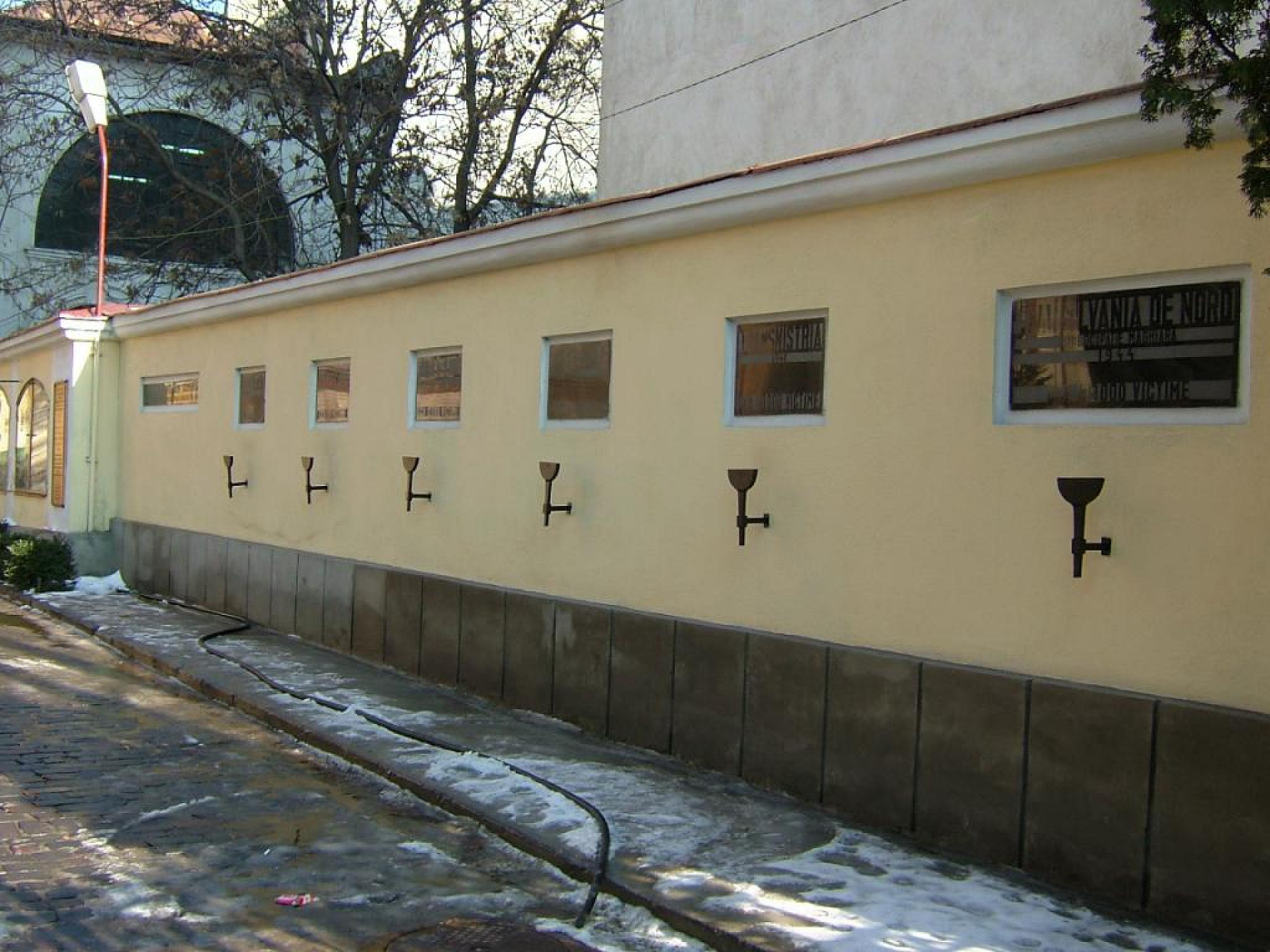
In 1991, after the collapse of the communist regime, the Jewish community set up a monument to the victims of the Holocaust on the square in front of the Choral Temple. It was one of the first Holocaust memorials in Bucharest. The monument consists of a bronze menorah mounted on a pedestal. Memorial plaques documenting the numbers of victims from the different regions of Romania have been affixed to a wall in the synagogue courtyard.
Contact
+40 (0)21 3131782
Strada Sfânta Vineri 9-11
Bukarest