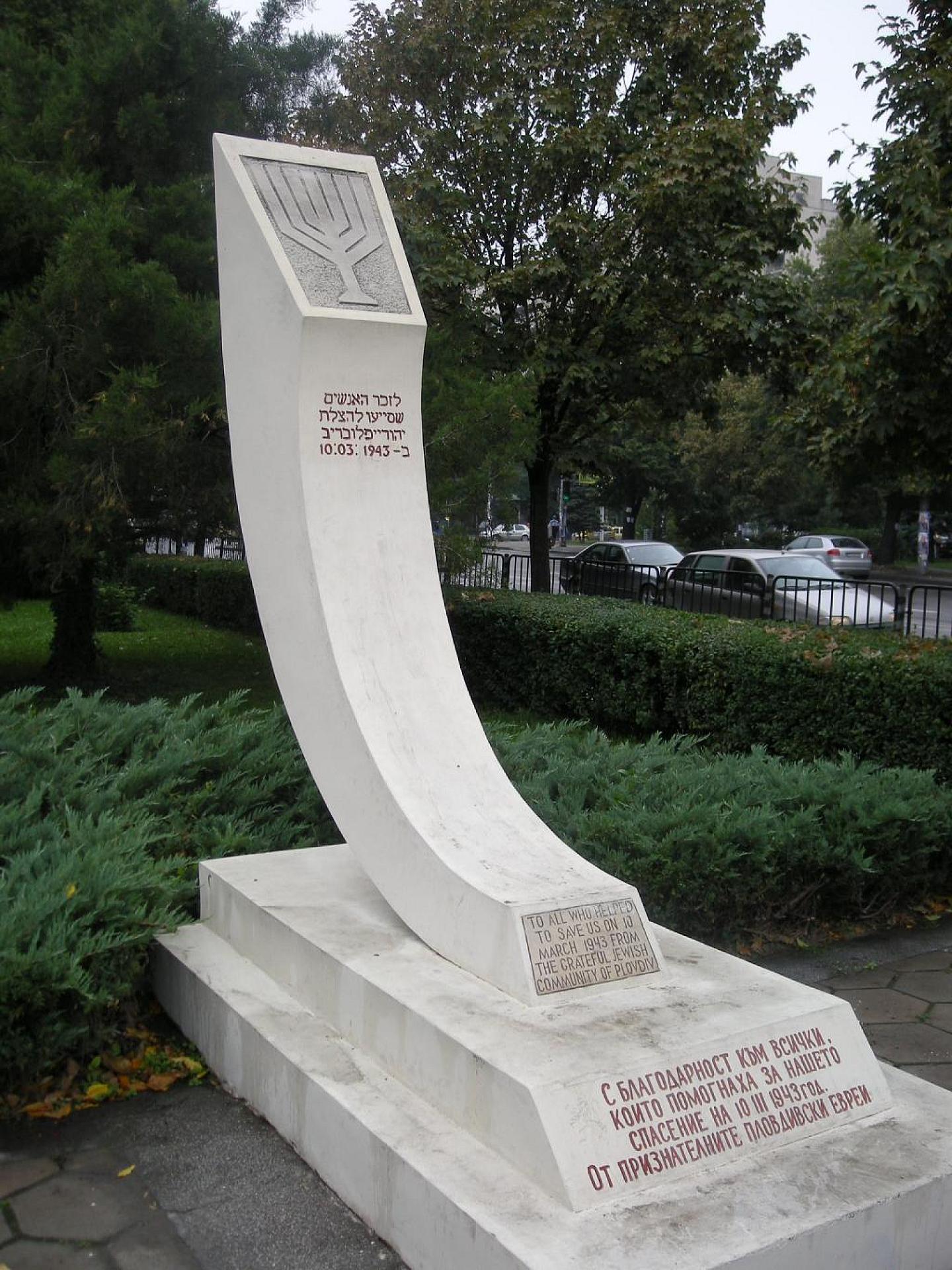
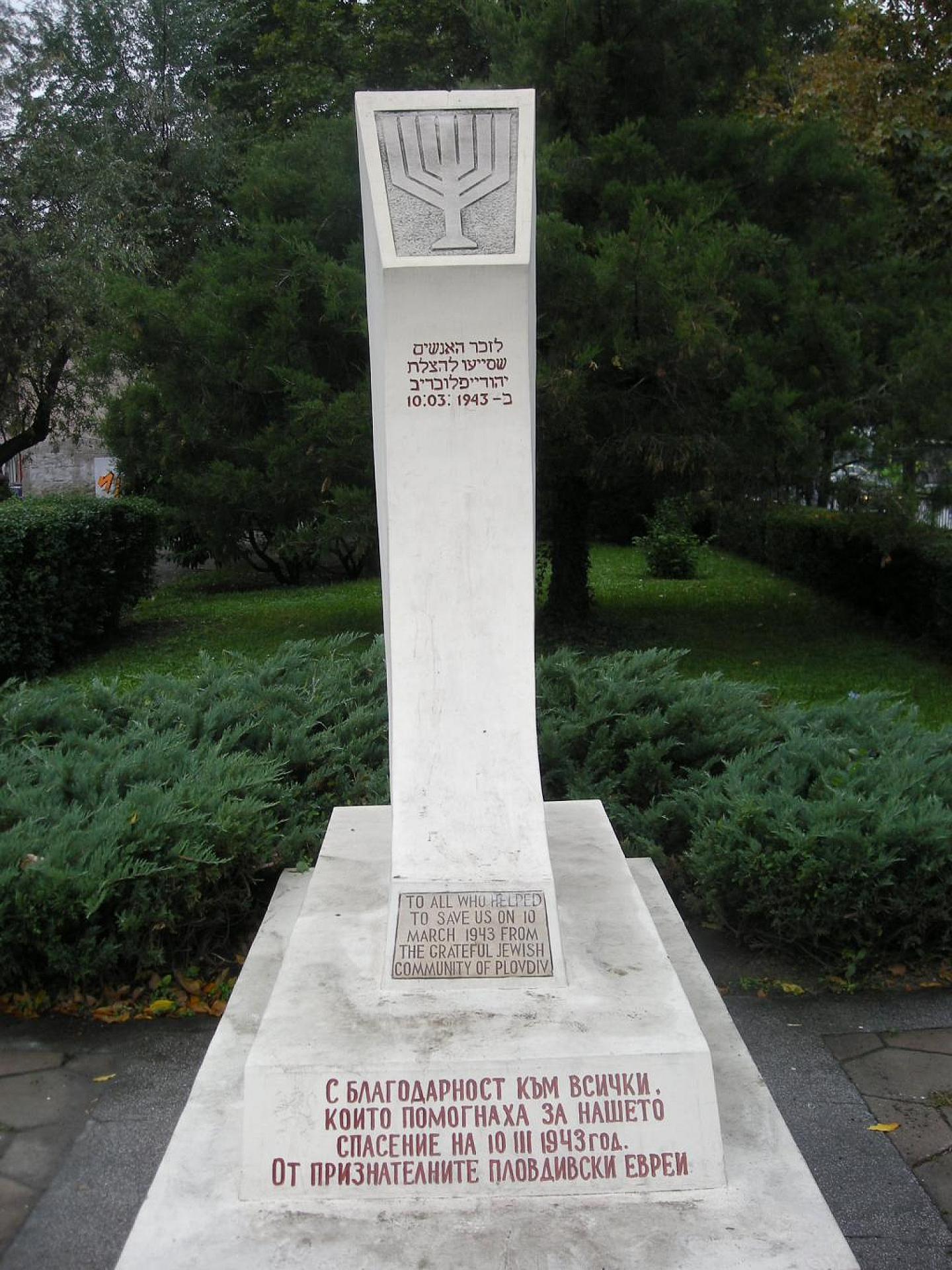
The »Monument of Gratitude«, established in 1998 in Plovdiv, the second-largest city of Bulgaria, commemorates the averted deportation of the Plovdiv Jews in March 1943.
History
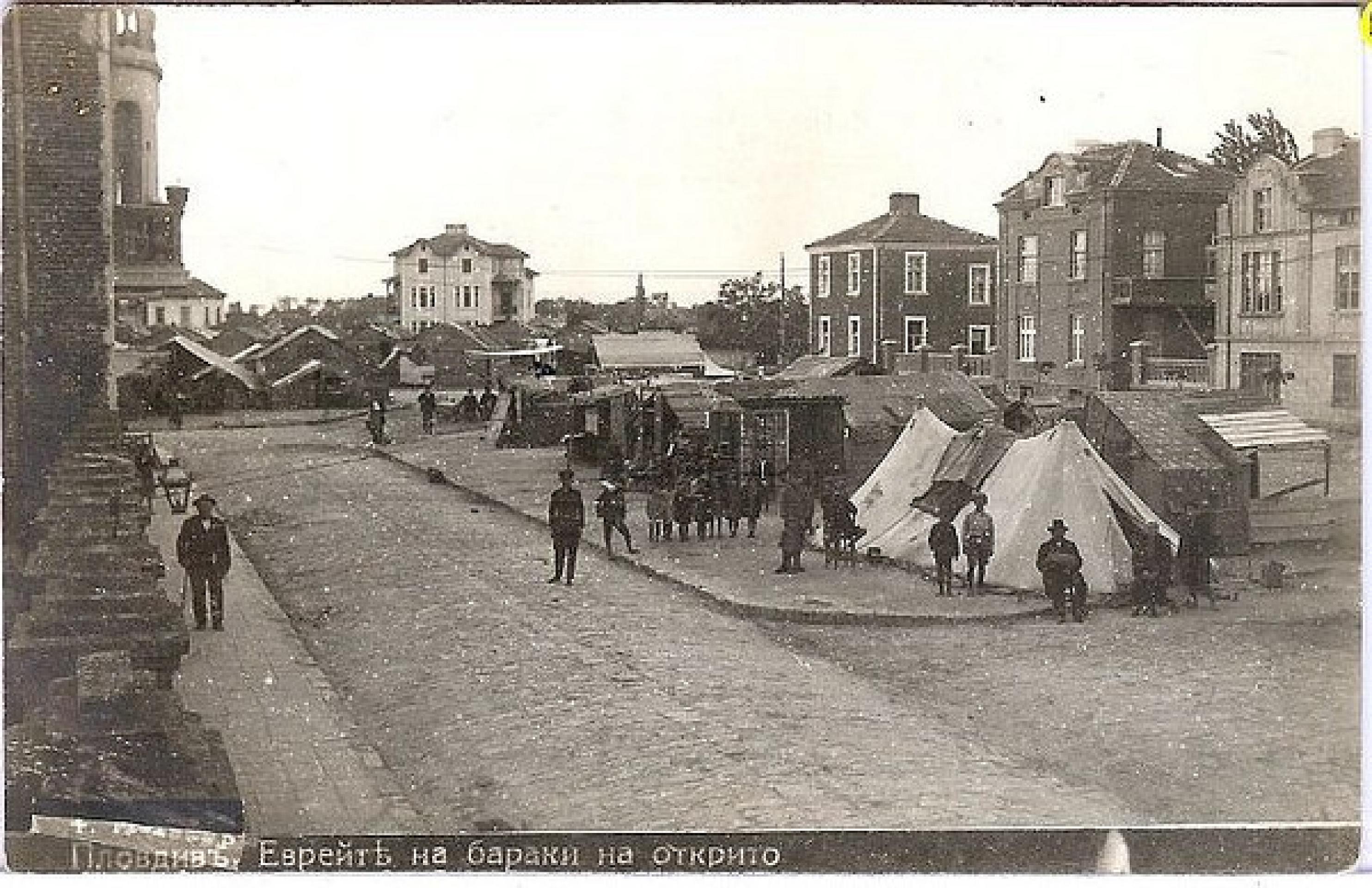
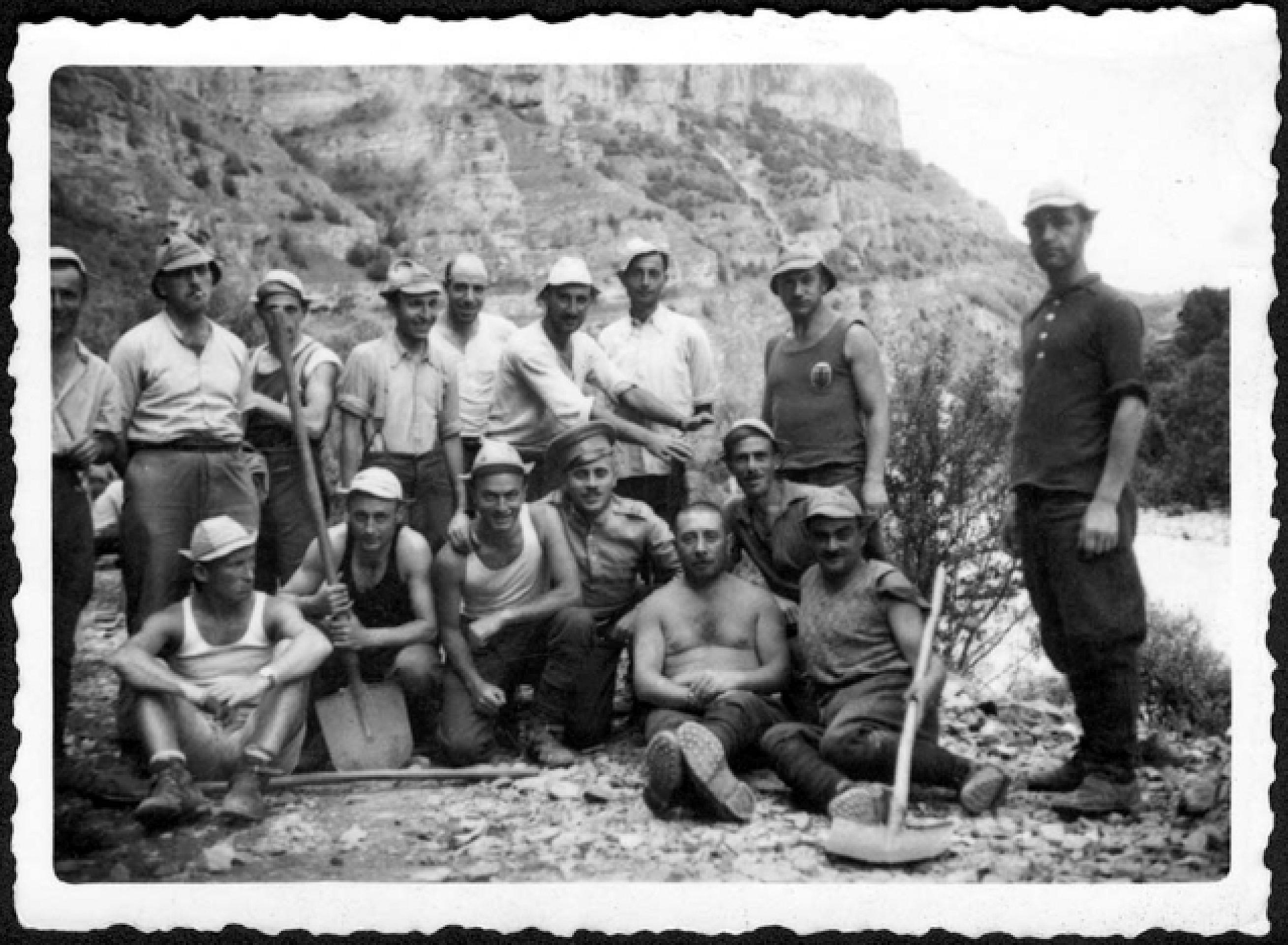
Already in September 1939, the Bulgarian government expelled all foreign Jews from the country. The law for the »protection of the nation«, which came into effect in January 1941, marked the beginning of the persecution of Jews in Bulgaria. They had to wear a yellow star to identify themselves, they were expropriated and expelled from cities. Thousands of Jewish men had to conduct forced labour in camps under terrible conditions. Bulgaria moreover agreed to the deportation of its Jewish citizens who lived abroad to Auschwitz. When the Wehrmacht occupied Yugoslavia and Greece in the spring of 1941, Bulgaria occupied the Greek region of Thrace and parts of Macedonia and Serbia. Although the country wasn't occupied, Bulgarian authorities arrested nearly 11,500 Jews in March 1943 and handed them over to the SS, who deported them to the Treblinka death camp in occupied Poland and murdered them there. Mass arrests were also conducted in Bulgaria proper. At the beginning of March 1943, authorities interned about 7,400 of the 8,000 Jews of Plovdiv and brought them to labour camps in the countryside. It is not known whether this operation was to avert their deportation from Bulgaria or whether it served as a preparation for it. The Jews who remained in the city were temporarily hidden by the Orthodox metropolitan Cyril in his house. He wrote numerous letters to the Bulgarian parliament protesting against the prospective deportation of the Jews of Plovdiv. Politicians' protests - especially by Dimitar Peshev (1894–1973), the deputy speaker of the National Assembly of Bulgaria - and opposition from the church eventually prevented the planned deportation of Jews from the Bulgarian heartland. One reason for this success was probably the looming military victory of the Allies.
Victims
The monument is dedicated to the rescue of the Jews of Plovdiv, who, like most Bulgarian Jews, survived the war. However, the Bulgarian authorities delivered over 11,000 Jews from the occupied territories of Greece and Yugoslavia to the SS, who deported them to the Treblinka death camp and murdered them there.
Boris III (1894–1943), reigned in Bulgaria since 1918, established an authoritarian regime in the country in 1934. At the end of 1940 the »Law on Protection of the Nation« made Jews into second-class citizens. The country was allied with Nazi Germany during the Second World War. On 1 March 1941 it adhered to the tripartite pact between Germany, Japan and Italy. Through a German initiative, the previous year Bulgaria had regained part of the Dobrudzha region on the Black Sea from Romania. In spring 1941 Bulgaria was able to further expand its sphere of influence. Following the invasion of Yugoslavia and Greece by the German Wehrmacht, Bulgaria occupied the Greek region of Thrace as well as parts of North Macedonia and Serbia.
In March 1943, the Bulgarian authorities captured 11,500 Jews living in these occupied territories and handed them over to the German SS. The SS deported them to German extermination camps in occupied Poland, where they were murdered. Arrests also took place in Bulgaria itself, which was home to around 50,000 Jews. The deportation of these Jews was averted as a result of political protests – especially from Dimitar Peschev (1894–1973), deputy president of the Bulgarian national assembly – and protests from the church. Boris III most likely also agreed not to deport these Jews. Nonetheless, Jews had to wear a yellow star as an identifying mark, their assets were confiscated and they were banished from towns. Thousands of Jews worked as forced labourers in camps. Researchers estimate that around a thousand additional Bulgarian Jews died as a result of persecution in Bulgaria and in the German sphere of influence.
In September 1944 the Soviet Union declared war on Bulgaria and the Red Army invaded the country shortly afterwards. The communist-dominated »Patriotic Front« assumed power and exacted revenge. Some 2,500 death sentences were issued against political opponents in the course of 135 trials carried out by a »people’s tribunal« and over 28,000 people disappeared.
The Bulgarian culture of memory was also determined by the new regime. An enthusiastic personality cult developed around the head of the Bulgarian communist party, Georgi Dimitrov (1882–1949), who was honoured, unlike the discredited »fascist« Tsar Boris III. Dimitrov had been tried at the Leipzig Reich court in 1933, accused of involvement in the Reichstag fire in Berlin, but he managed to secure his acquittal in this show trial staged by the Nazis. His then triumph was regarded as proof of the lengthy anti-fascist struggle in Bulgaria after 1944. Only after 1991 did it come to light that local partisan groups had received no public support for a long time during the war. The genocide of European Jews and Peschev’s intervention for the Bulgarian Jews also found little resonance during the communist period. On the contrary, the communist party claimed that it had organised their »rescue« itself. Memorial sites have since been established to remember the intervention for the Bulgarian Jews and a museum to Peschev was opened in Kyustendil in 2002. However, these sites present the myth of a nation of rescuers.
There is still no differentiated approach to the contradictions in Bulgarian policy towards the Jews in the Second World War, for example the attitude of the Tsar, the treatment of Jews in Bulgaria, the expulsion abroad of Jews with a Bulgarian passport, the deportation of Jews from Thrace and Macedonia and the pressure on Jews to emigrate after the war.
Remembrance
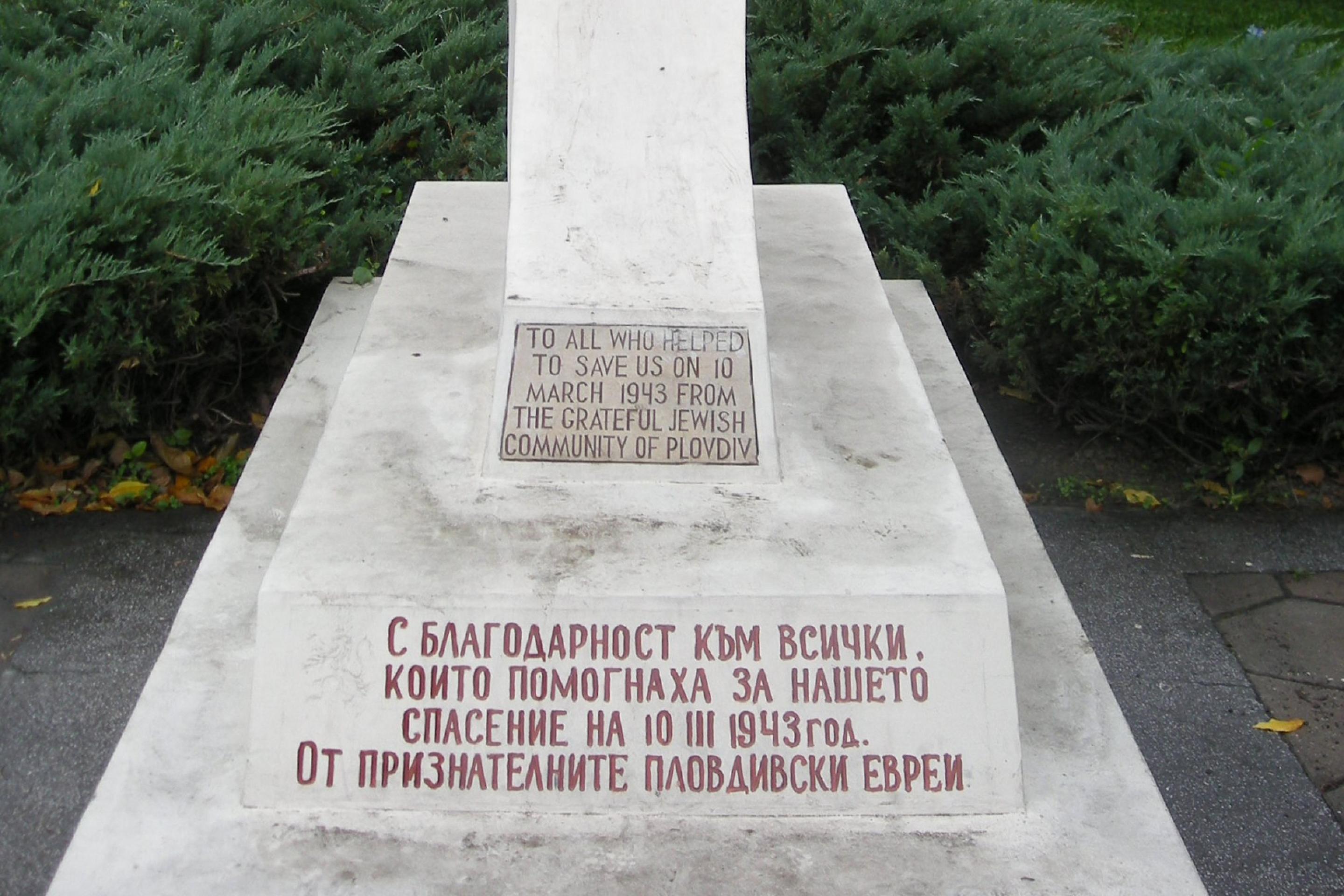
The »Monument of Gratitude« was dedicated on March 10, 1998, in the former Jewish quarter of Plovdiv. The inscription reads in Hebrew, English and Bulgarian: »To all who helped to save us on 10 March 1943 from the grateful Jewish community of Plovdiv«. The monument is shaped like a shofar, a musical horn used for Jewish religious purposes, and was designed by architects G. Georgieff and Kr. Karakasheff. Each year, a memorial service attended by the members of the Jewish community, the city council and the orthodox church takes place in March.