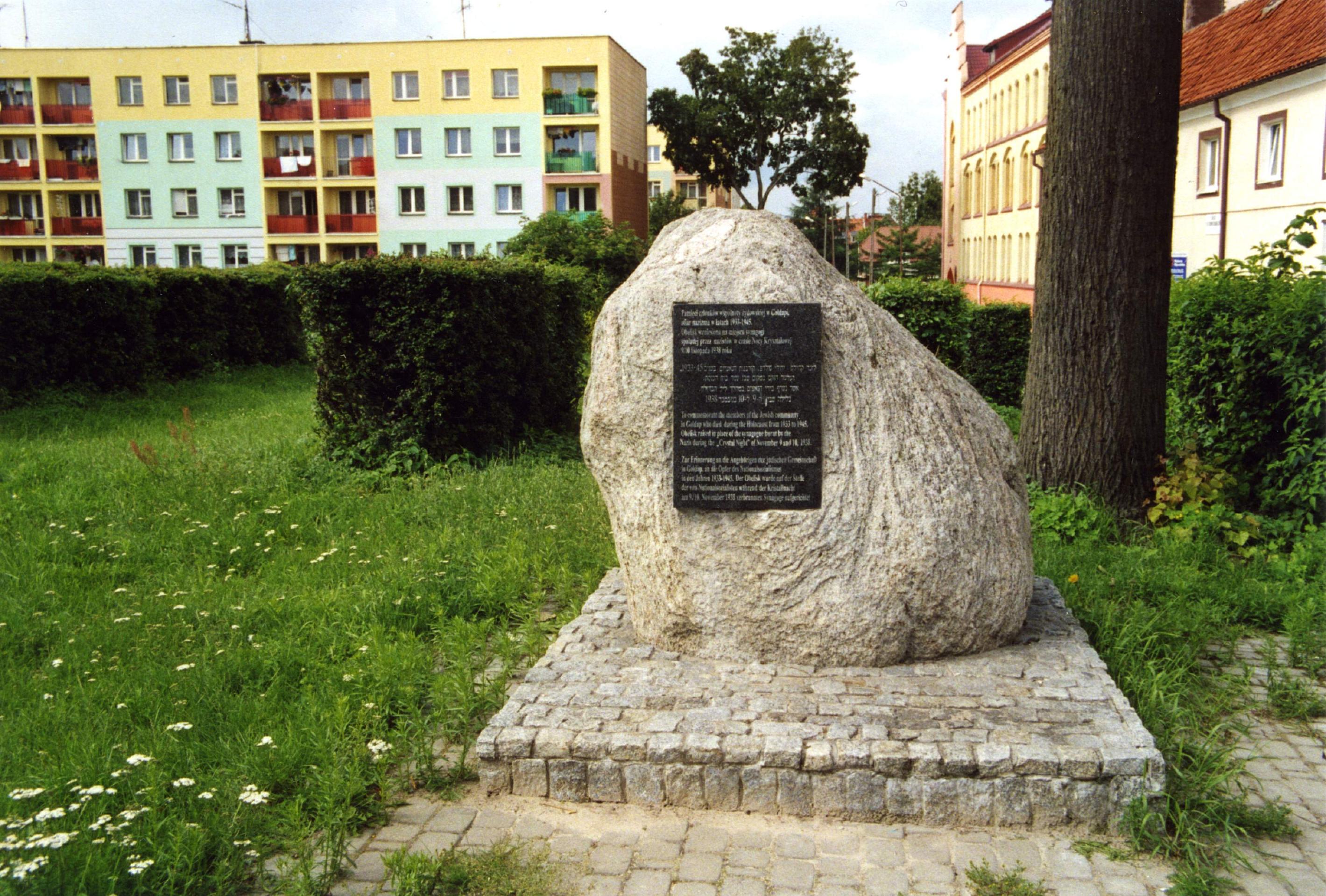
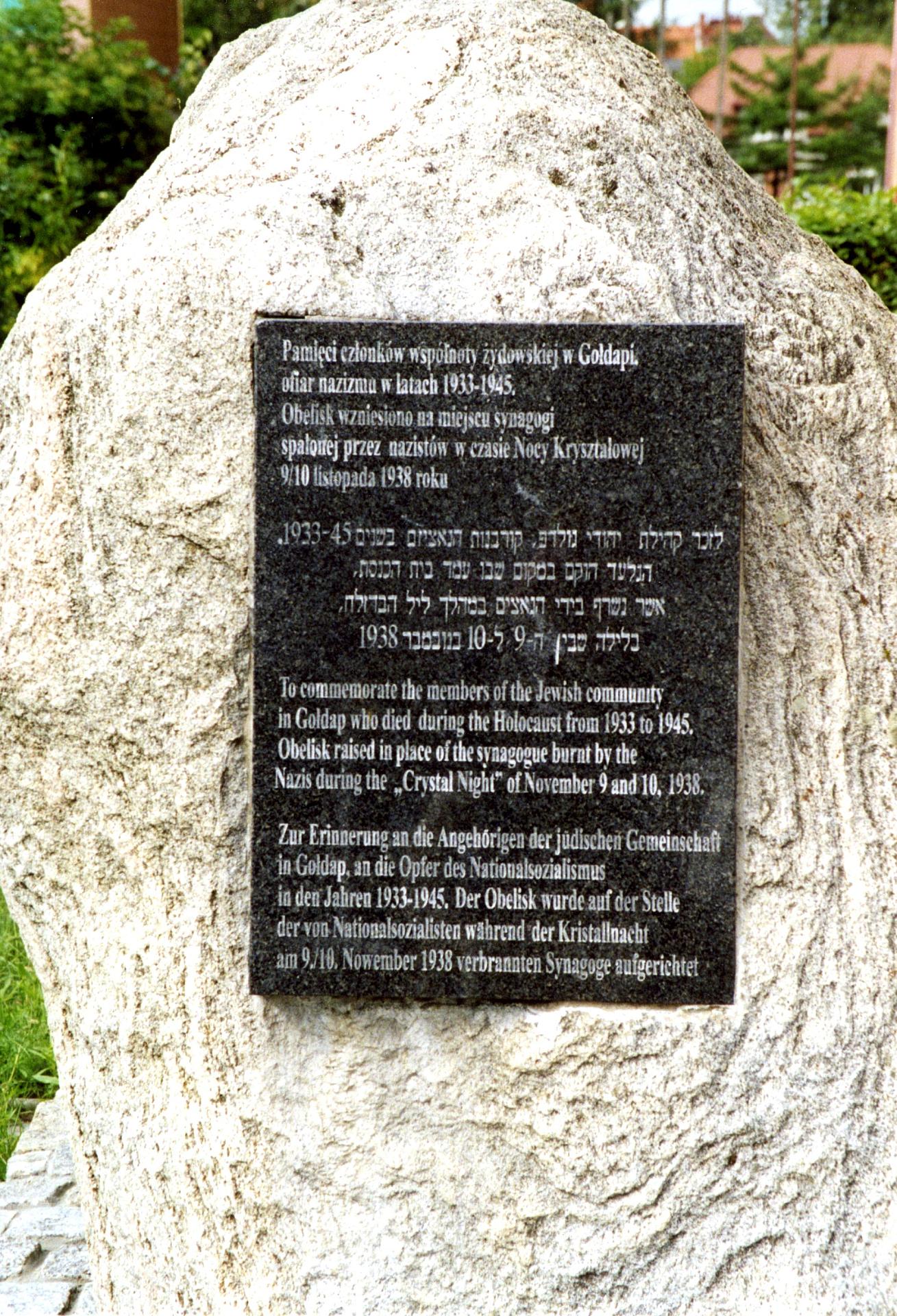
In 2001, a monument was dedicated in the small town of Gołdap (German: Goldap), located in the south of what was once German East Prussia, on the former site of the town's synagogue. The monument commemorates the annihilated Jewish community of Goldap and the victims of the National Socialist regime.
History
The district town of Goldap, which prior to 1945 was located in the east of German East Prussia, lies on the edge of Masuria and the Rominter Heath. Today, it is the border town between Poland and the Russian Kaliningrad Oblast. At the end of the 19th century, Goldap, with a total population of 7,200, was home to only 80 Jews; in 1932/1933, only 48 remained, while at the beginning of the war in 1939, there were merely 19 Jews left in the town, which by then had grown to a total population of 11,500. There were two Jewish cemeteries, one prayer room on the market square - in the Jahnke courtyard - and a synagogue on the corner of Schulstrasse and Töpferstrasse. Apart from that, little is known about Jewish life in Goldap.
Following the National Socialist rise to power, Jews in Goldap were increasingly excluded from society and persecuted, as in all of Germany. In the night of November 9/10, 1938, during the so-called »Kristallnacht«, most likely members of the SA looted Jewish shops in Goldap and set fire to the synagogue, which was completely burned down. One can only speculate as to what subsequently happened to the Goldap Jews: Some may have been able to flee abroad, while others were deported by the SS and murdered. There were two large transports from East Prussia: one at the end of June 1942 bound for the Maly Trostenets extermination camp, one at the end of August 1942 headed for Theresienstadt. The transports carried Jewish men, women and children from all three police departments in the area, possibly also from Goldap. The municipal telephone directory for 1942 didn't list any Jewish families. In late autumn 1944, the Red Army took Goldap. The town was retaken by the German Wehrmacht after intense fighting, during which large parts of Goldap were destroyed. In early 1945, Soviet troops occupied Goldap anew. In mid-1945, southern East Prussia, including Goldap, became part of Poland. The few Germans who had remained or returned to their home town were expelled and Poles settled in their place. Thus ended the 400-year long history of German Goldap and began the history of Polish Gołdap.

Victims
Close to nothing is known of the fate of the Jews of Goldap. Most of the Jewish residents who still remained in Goldap in 1939 have most probably been murdered by the National Socialists by 1942.
Remembrance
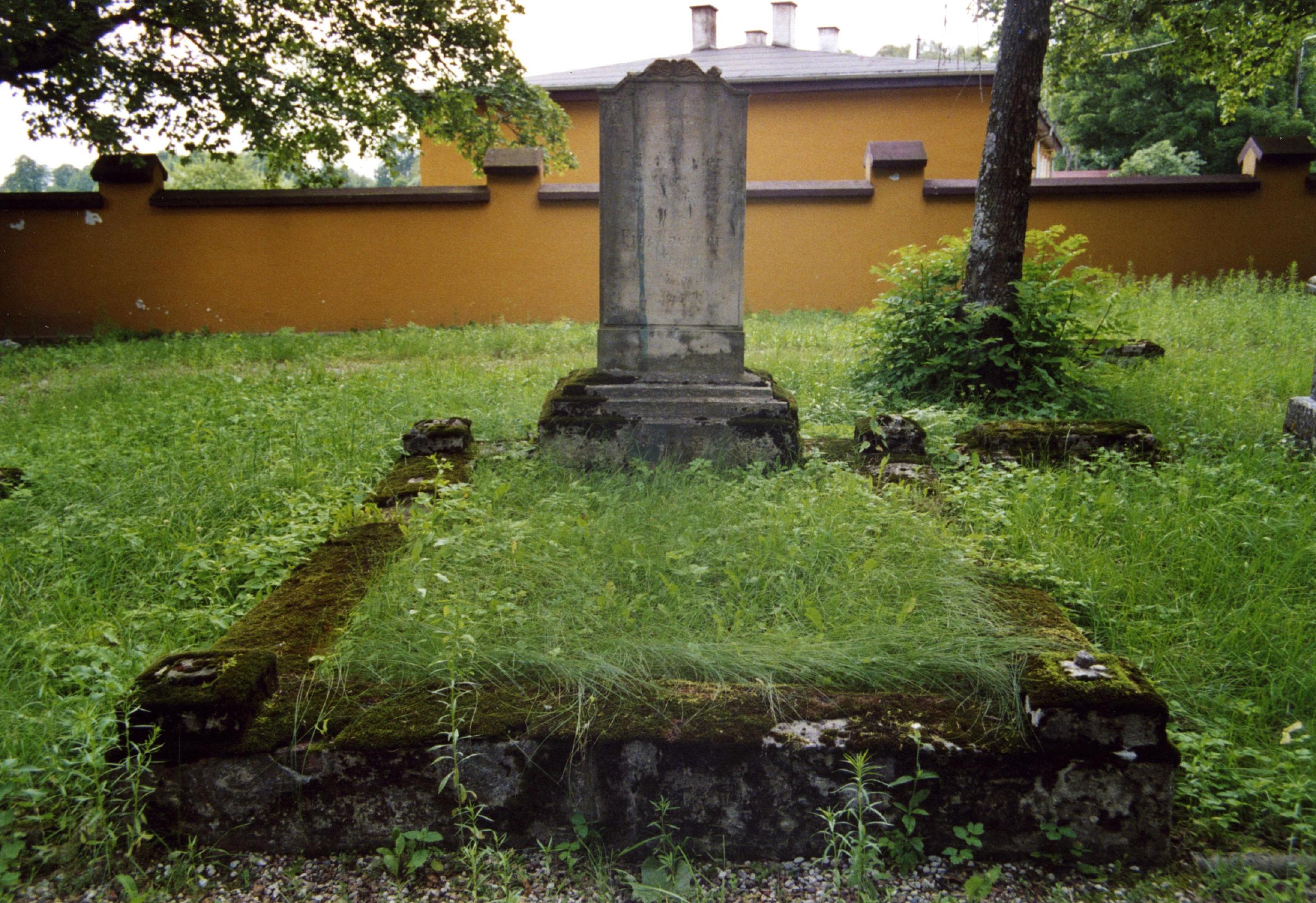
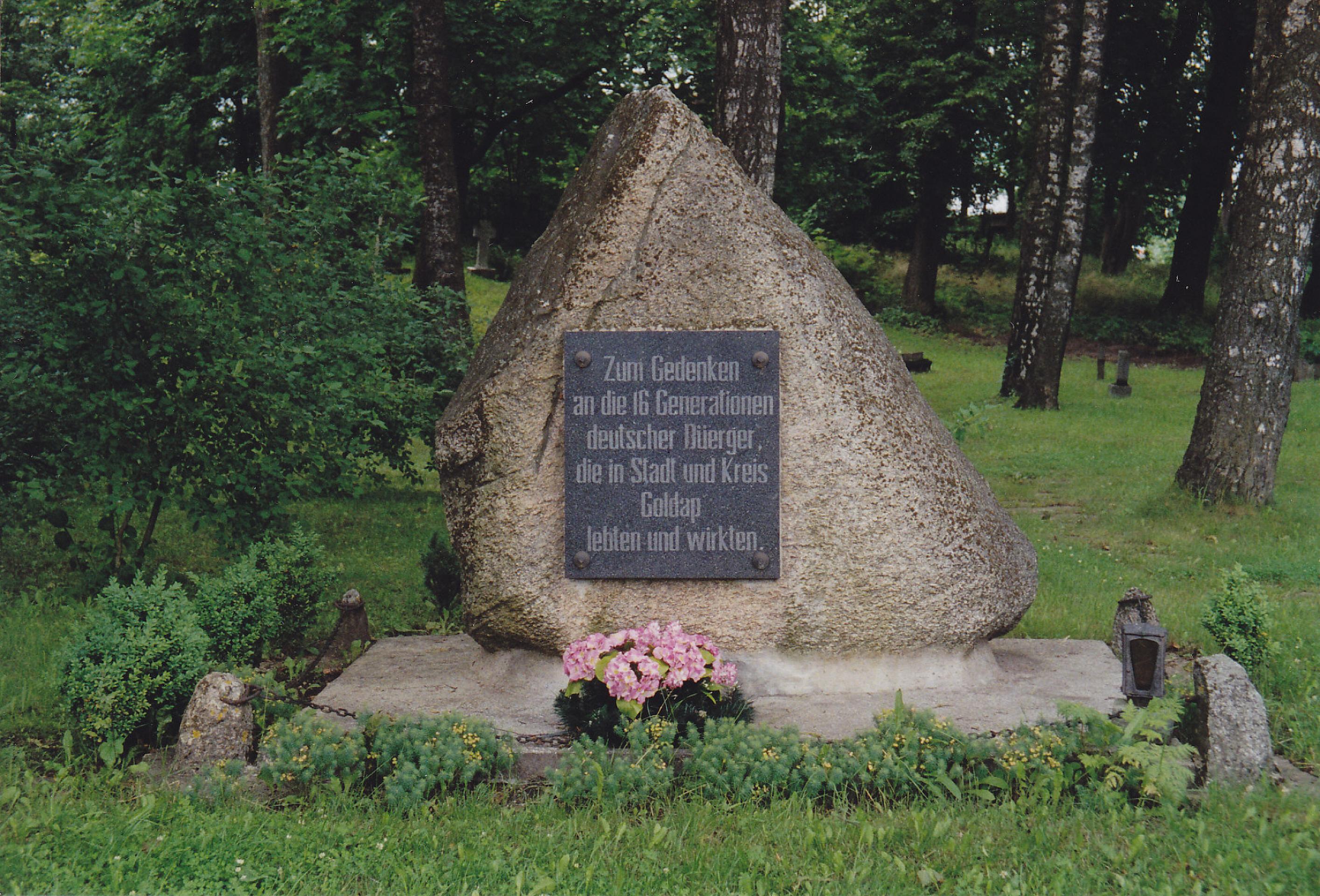
In 1992, the German Kreisgemeinschaft Goldap Ostpreussen association erected a memorial stone on the municipal cemetery with the following inscription: »In memory of the 16 generations of German citizens who lived and worked in the Goldap district«. In the own words of representatives of the association, this dedication includes the town's former Jewish residents. Nearly a decade later, on July 30, 2001, a monument was dedicated on the former location of the synagogue. The project had been initiated by Goldap native Karl-Heinz Hohmann, who had made contacts in Israel, and was seen through by the Polish town and district council as well as the German Goldap association. Stephan Grigat, a representative of the German Goldap association, held a speech during a commemorative ceremony in 2001 which was attended by the Polish mayor, stating clearly that: »This monument commemorates the German victims of German perpetrators in a town that was once German, that was German at the time of the crime. Not one of these perpetrators had been able to imagine that they would in only six years share the fate of the synagogue.« A granite memorial plaque bears the following inscription in Polish, Hebrew, English and German: »In memory of the members of the Jewish community of Goldap, victims of the National Socialist regime in 1933-1945. The obelisk was set up on the location of the synagogue, which was burned down by the National Socialists on Kristallnacht on November 9/10.« No photos remain of the former synagogue of Goldap.
Open
The monument is accessible at all times.
Contact
Ecke ul. Szolna / ul. Armii Krajowej