Poland had been under German and Soviet occupation since September 1939. After the German invasion of the Soviet Union on 22 June 1941, eastern Poland was also occupied by the National Socialists. Years of brutal oppression followed. On 1 August 1944, the Polish Home Army (Polish: Armia Krajowa) rose up against the German occupiers in the Warsaw Uprising. SS and police units attempted to crush the uprising, in particular by massacring the civilian population. More than 50,000 people were killed in the Wola district between 5 and 12 August 1944. In terms of the number of victims, the massacre was the largest war crime committed on European soil during the Second World War. Nevertheless, the crime is hardly known outside Poland. The Monument to the Victims of the Wola Massacre was erected in 2004 to commemorate the murdered inhabitants of the district.
History
The Polish capital Warsaw was attacked by the German Luftwaffe on 1 September 1939, the first day of the Second World War. After a three-week siege, the city was captured by the Wehrmacht on 1 October. As a result, the National Socialists established a regime of terror against the Polish population. The Jews, who were imprisoned in the Warsaw Ghetto from 1940, were hit even harder. On 19 April 1943, they fought back in the Warsaw Ghetto Uprising. However, the uprising failed and the Jewish quarter of Warsaw was razed to the ground. Only a fraction of the city's Jewish population survived the German occupation and the systematic extermination.
A year later, on 1 August 1944, the Polish Home Army rose up against the German occupiers. They tried to liberate the city themselves before the Red Army marched in. After fierce house-to-house fighting, the Polish units took control of important parts of the city in the first few days. However, the Germans quickly gained the military upper hand and in the weeks that followed, SS and police units carried out countless massacres of the civilian population.
Shortly after the outbreak of the Warsaw Uprising, Heinrich Himmler gave the order to storm the Wola district, which was occupied by Polish units. The »Kampfgruppe Reinefarth«, which was made up of SS units and divisions of the order police, was tasked with this. In the course of the fighting, the German units carried out numerous mass shootings of the population in addition to brutal assaults. Between 5 and 7 August, the Germans murdered around 30,000 Polish civilians. By 12 August 1944, it is estimated that up to 50,000 inhabitants of Wola had lost their lives.

Victims
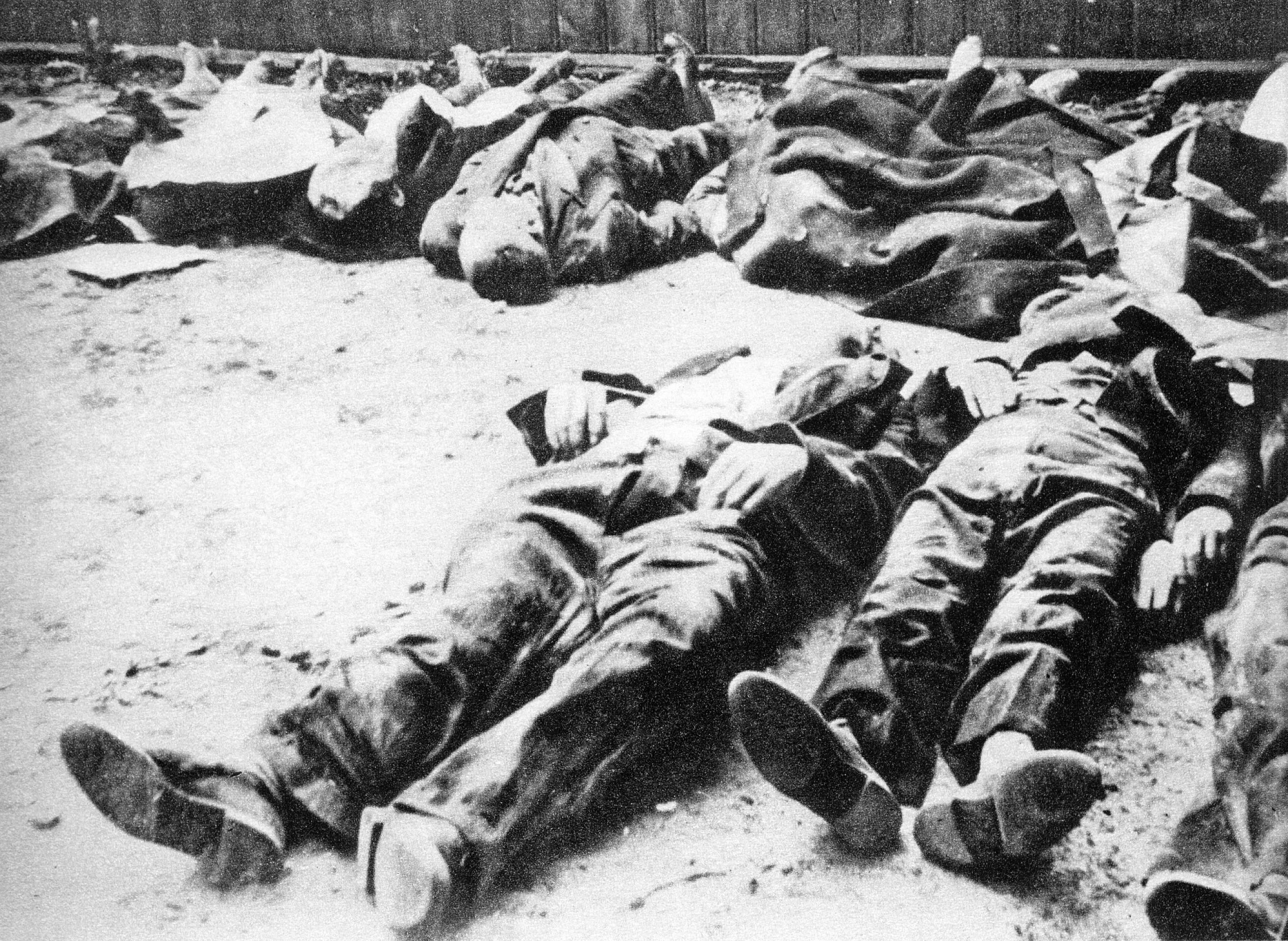
In the seven days between 5 and 12 August 1944, German units murdered more than 50,000 inhabitants of the Warsaw district of Wola. By far the majority of the victims were civilians.
Remembrance
The commemoration of the victims of the Wola massacre was suppressed by Poland's post-war Communist regime, as was the entire memory of the Warsaw Uprising. Although the »Warsaw Insurgents Cemetery« was established in the Wola district a few months after the end of the war, the cemetery was hardly maintained by the regime and all symbols commemorating the uprising were removed. It was not until 2023 that a new memorial with a wall bearing the names of the identified victims was inaugurated on the site of the cemetery.
The only widespread form of commemoration of the victims of the German occupation in Warsaw in communist Poland were the so-called »Tchorek memorial plaques«. Designed in 1949 by the Polish sculptor Karol Tchorek (1904–1985), they are made of sandstone and can be found in many places in Warsaw. They always bear an inscription in front of a Maltese cross with the number of those murdered at the respective location. There are also many of these memorial plaques in Wola, but they often contain incorrect information and do not adequately record the total number of execution sites.
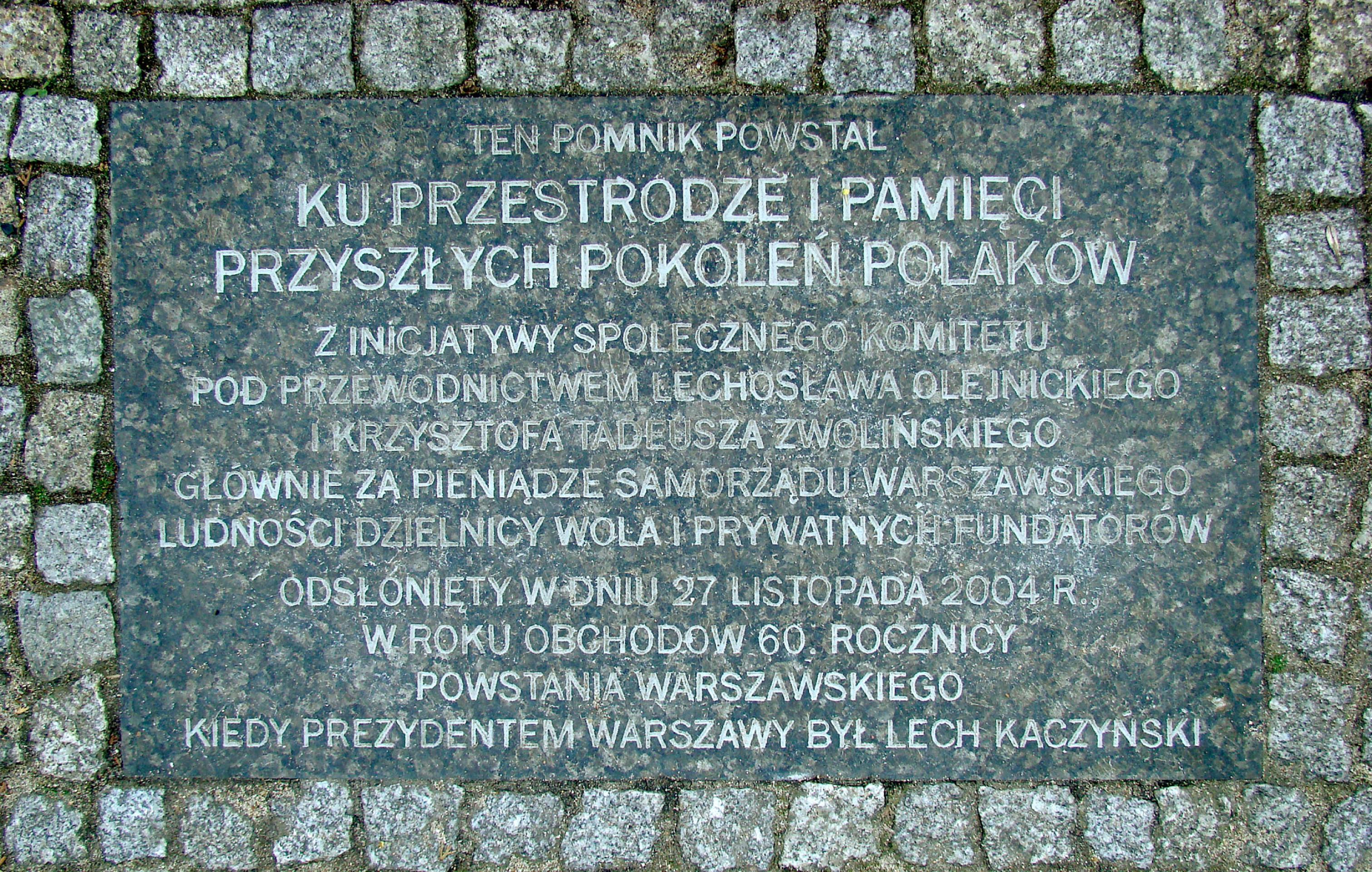
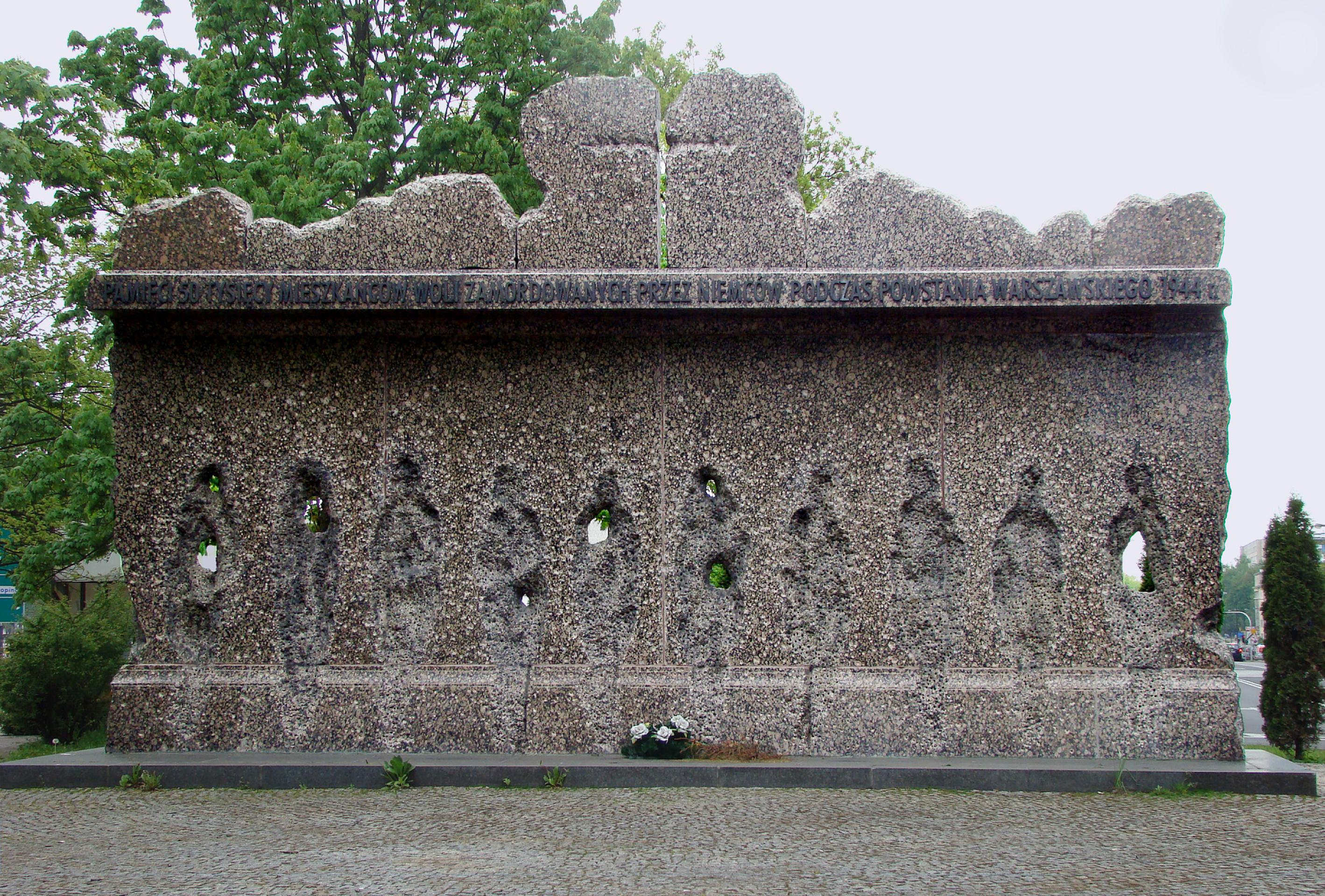
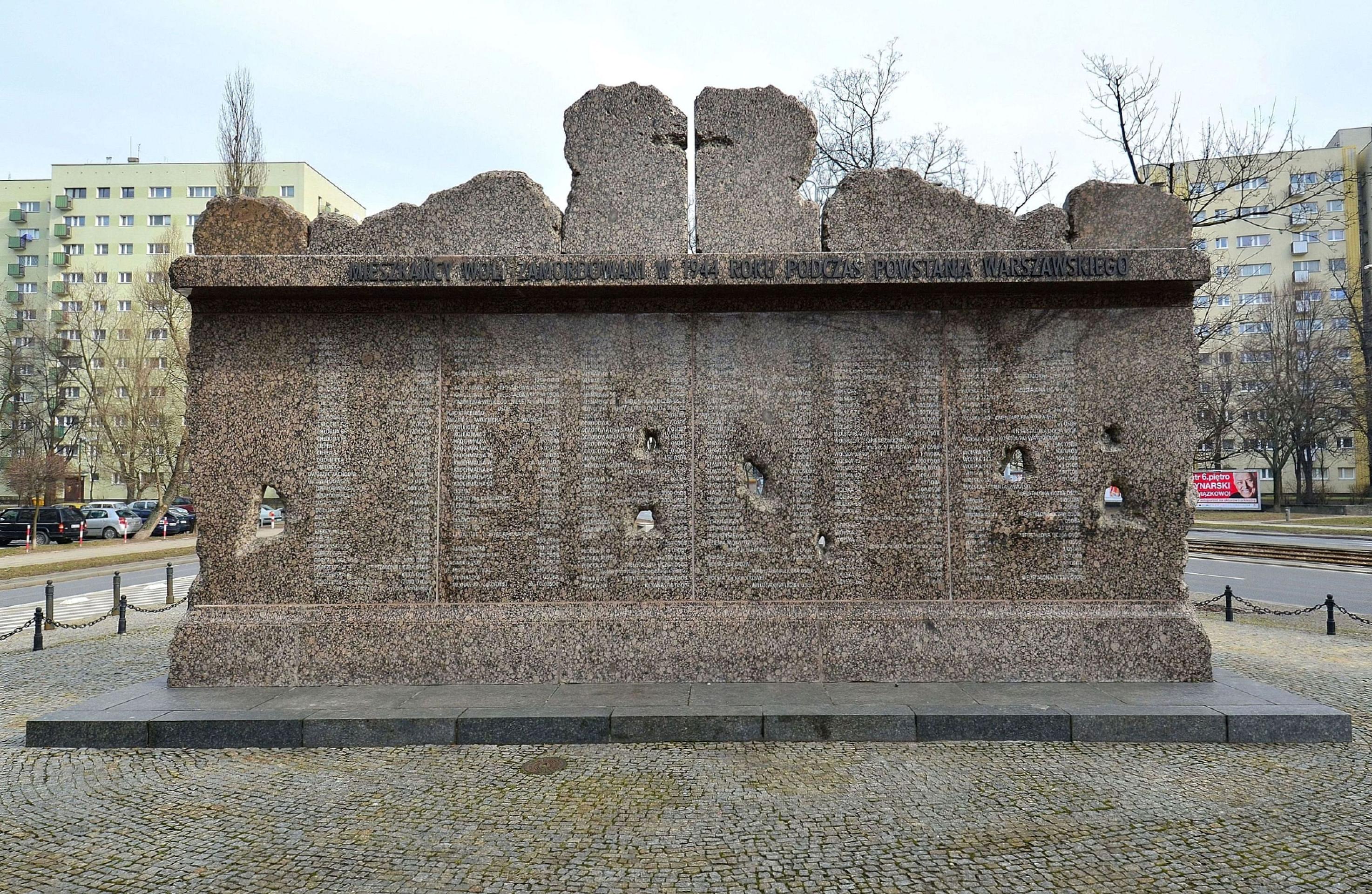
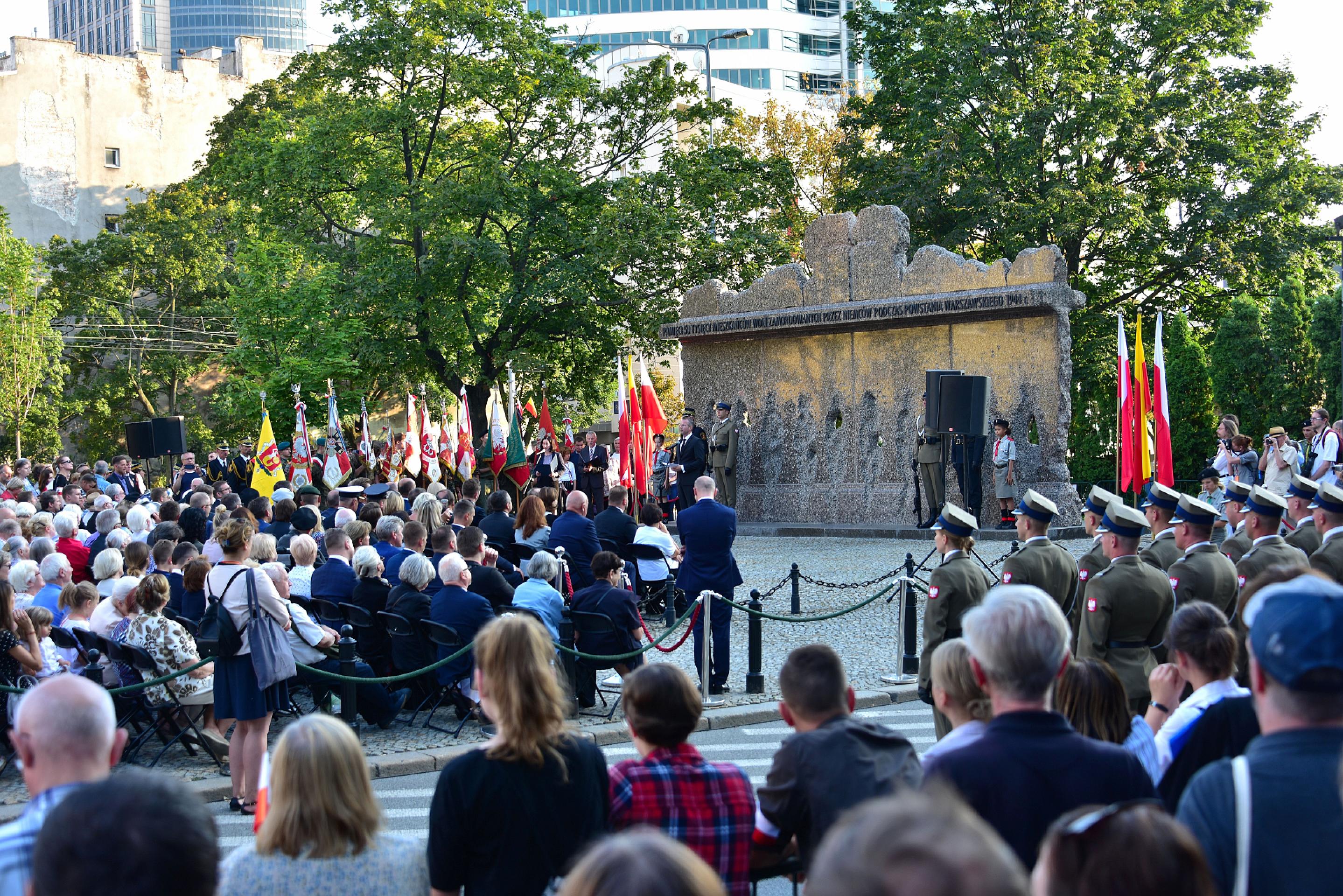
The most important memorial to the victims of the Wola Massacre was unveiled on 27 November 2004 on a small square between Aleja Solidarności and Ulica Leszno. This place is not directly connected to the massacre. The monument was designed by the sculptor Richard Stryjecki in collaboration with the architect Olaf Chmielewski and the sculptor Mieczyslaw Syposz and is made of Finnish granite. On the east side of the memorial, ten pits are set into the granite surface, reminiscent of the silhouettes of people who were placed against a wall to be shot. Above them is the inscription: »In memory of the 50,000 inhabitants of Wola who were murdered by the Germans during the Warsaw Uprising in 1944«. On the west side is a list of places with the number of people murdered there.
Contact
al. „Solidarności” 98
01-016 Warszawa