National Monument Commemorating the Victory of the Red Army over Nazi Germany
אנדרטה לציון ניצחון הצבא האדום על גרמניה הנאצית
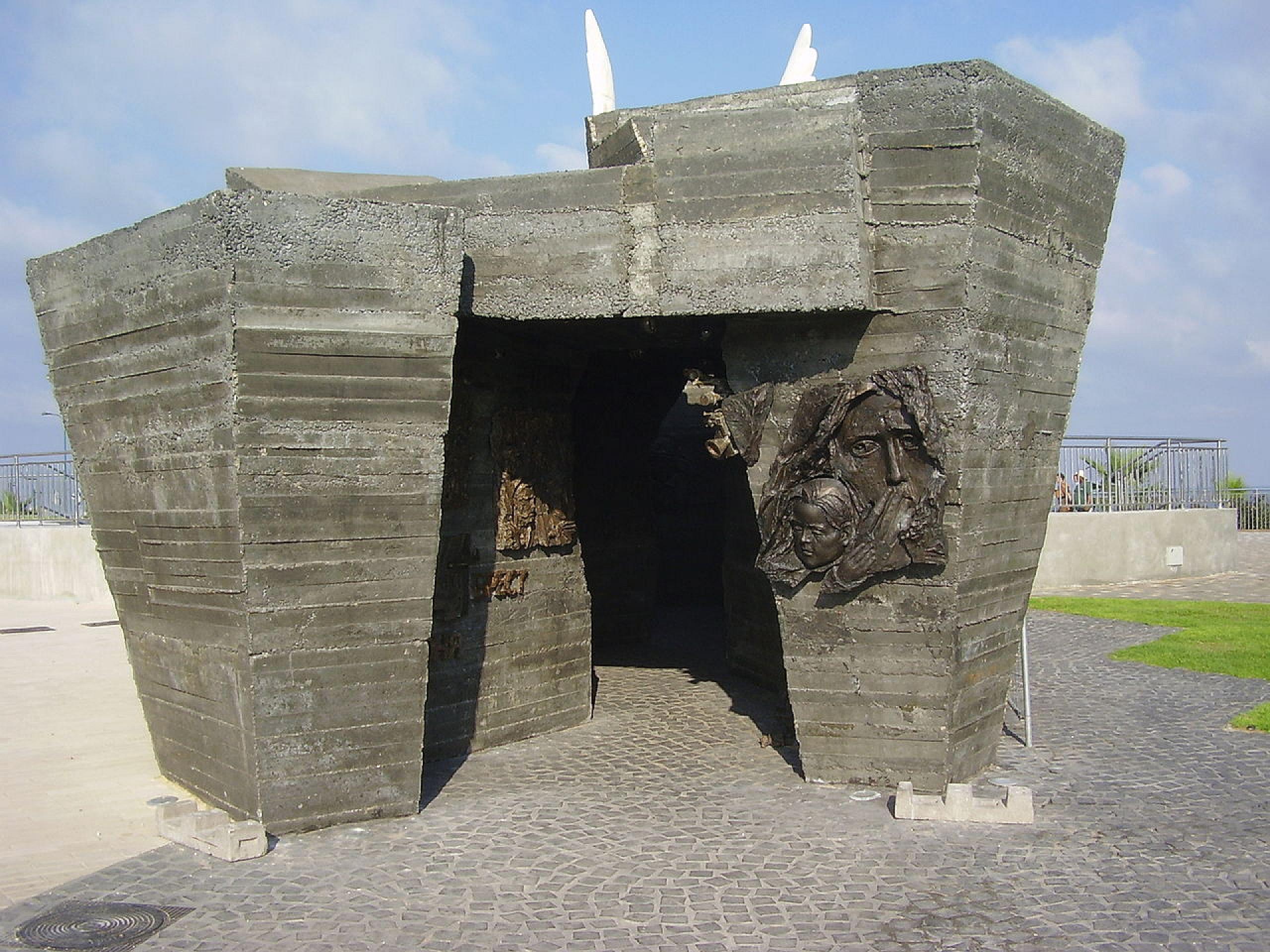
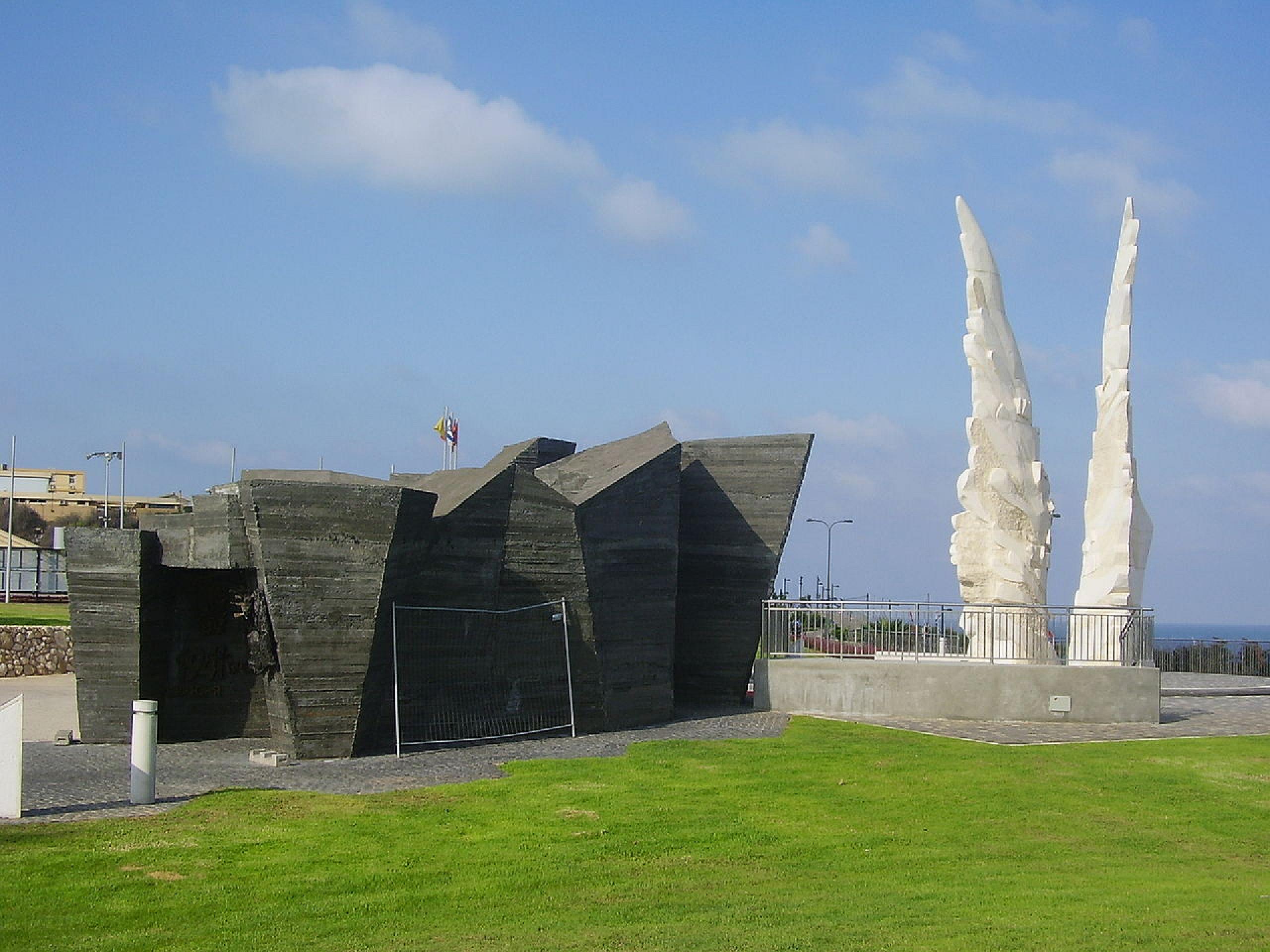
In the Israeli coastal town of Netanya, a memorial commemorates the victory of the Soviet army over Nazi Germany in World War II.
History
In the first few months after the German invasion on the Soviet Union, the Red Army suffered enormous losses. Within a short period of time, large parts of the European part of the USSR were occupied by the Axis powers, and millions of Red Army soldiers were taken prisoner of war. In December 1941, the Wehrmacht offensive came to a halt a the gates of Moscow. One year later, the Red Army won the Battle of Stalingrad, which is regarded as the turning point of the war in the East. From 1943 onwards the Soviets took over the initiative more and more, and in 1944, the territory of the Soviet Union was liberated. After the Allies landed in Normandy in July 1944, the German resistance gradually collapsed. The Red Army conquered large parts of Eastern and Central Europe and finally Berlin. The High Command of the Wehrmacht signed its unconditional surrender in the night of May 8 to 9, 1945, ending the Second World War in Europe.
The victory of the Red Army meant the survival of the remaining Jewish population in Eastern and Central Europe and their liberation from concentration camps and ghettos. For example in January 1945, the Red Army liberated both the Auschwitz concentration camp and the Budapest ghetto. Immediately after the end of the fighting, Soviet commissions of inquiry were set up to document the crimes committed by the Nazis.
According to estimates, more than half a million Jewish soldiers fought in the Red Army, with over 200,000 of them killed in action. Often, they encountered difficulties: in both the Soviet population and the Red Army, Jews were often subject to discrimination and mistrust.


Victims
As a result of the Second World War, 27 million Soviet citizens lost their lives, including 13 million soldiers and 14 million civilians. More than three million Soviet prisoners of war were killed in German camps and well over one million Soviet Jews were deliberately murdered, most of them in mass shootings. More than 200,000 Jewish Red Army soldiers were killed in action.
Remembrance
At the end of the 1940s, the Soviet Union supported the founding of the State of Israel and was initially its main ally. But the Soviet dictator Stalin refused to let the Soviet Jews emigrate and at the same time launched an anti-Semitic campaign at home that ended only when he died in March 1953. Until then, the former ally of Israel had become an opponent in the Middle East: While the USSR now supported the Arab states, the United States became the protective power of the Jewish state. Israel's relations to the communist states of Eastern Europe remained tense until the end of the Cold War.
In the wake of the collapse of the Soviet Union approximately one million Jews emigrated to Israel from its successor states. Their influx also changed Israel itself, socially, politically and culturally. After the end of the Cold War, intergovernmental relations between Israel and Russia improved enormously. The idea of a monument commemorating the Red Army's victory over Nazi Germany was first discussed by Israeli Prime Minister Benjamin Netanyahu during a visit to Moscow in 2010. It was realized two years later and inaugurated in the presence of the presidents Vladimir Putin and Shimon Peres. The design of the monument, inaugurated in a central place of Netanya where several memorials remember Israeli soldiers killed in action, was designed by the Russian monumental artist Salavat Shcherbakov. According to the Hebrew, Russian and English inscriptions, the labyrinthine memorial symbolizes the transition from darkness to light - with war and the Holocaust on the one hand, and victory, peace and hope on the other. Realistically appearing reliefs depict events of the Holocaust and war.

Open
The memorial is accessible at all times.
Contact
Moked@netanya.muni.il
http://www.netanya.muni.il
Sderot Oved Ben Ami
Netanja