New Synagogue Berlin – Centrum Judaicum Foundation
Stiftung Neue Synagoge Berlin – Centrum Judaicum
Until its destruction during World War II, Oranienburger Straße was home to Germany's largest synagogue. Following extensive reconstruction, the Centrum Judaicum could be opened in 1995. The New Synagogue Berlin – Centrum Judaicum Foundation seeks to uphold Jewish tradition and commemorate the victims of the Holocaust.
History
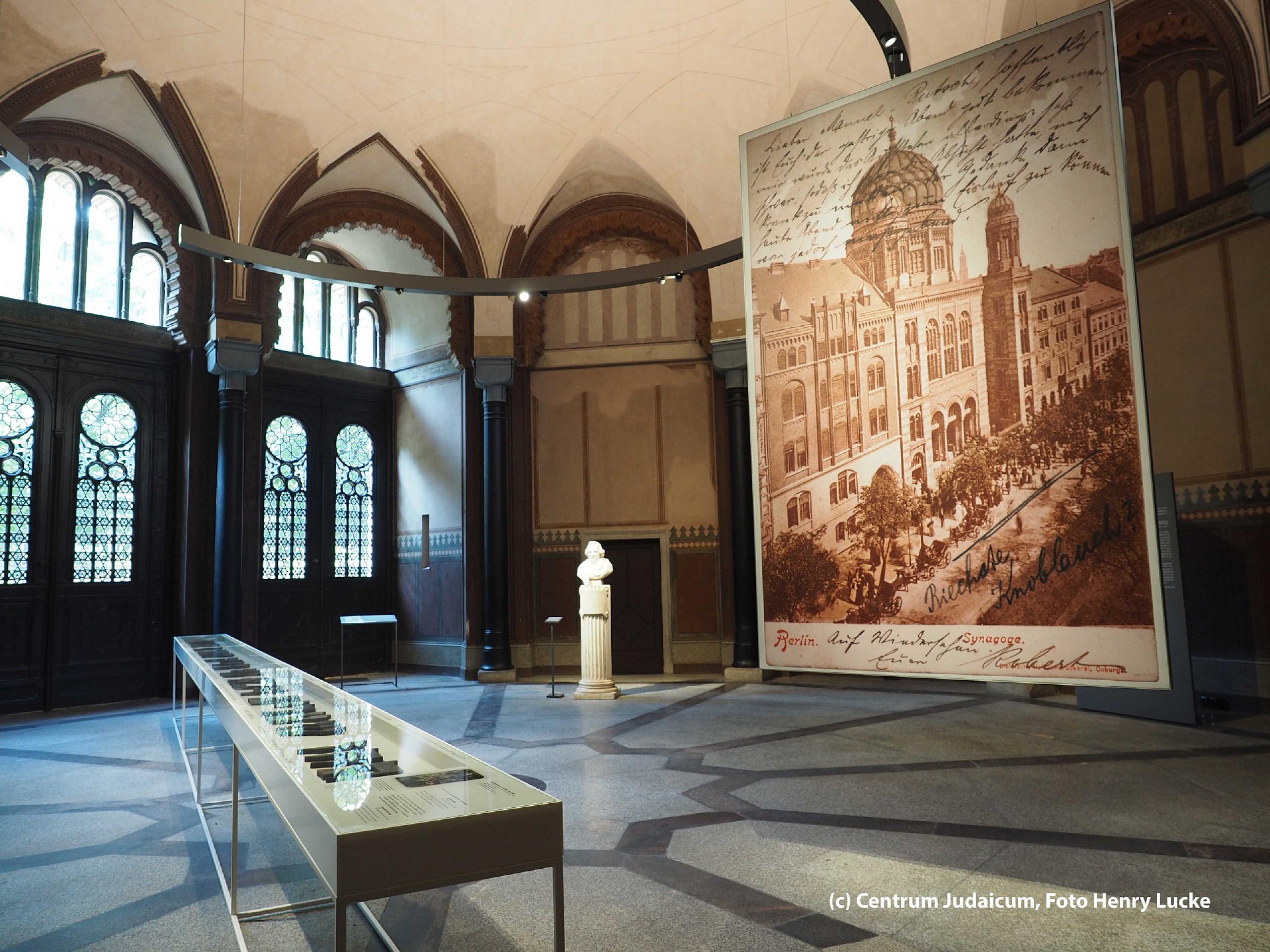
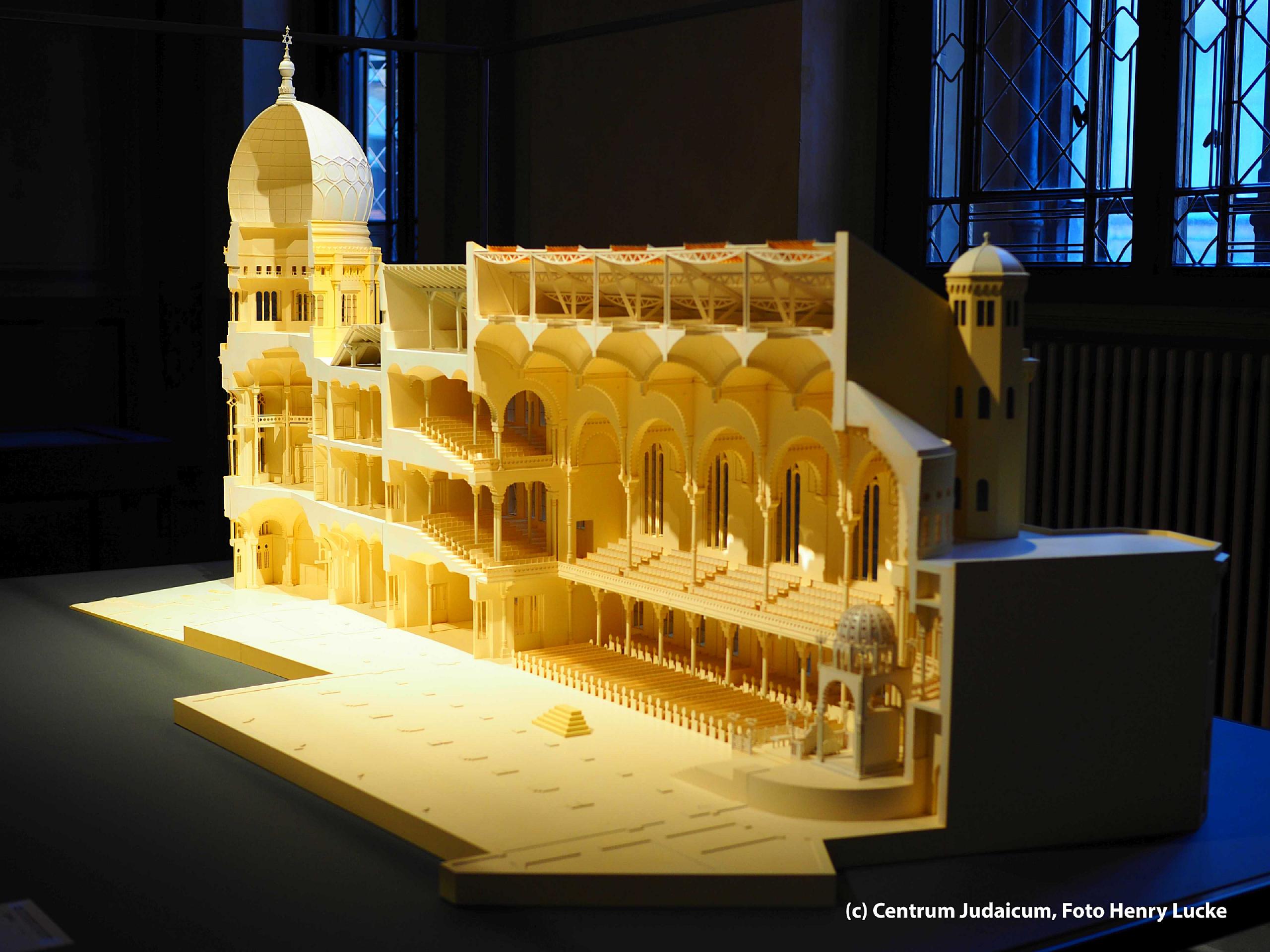
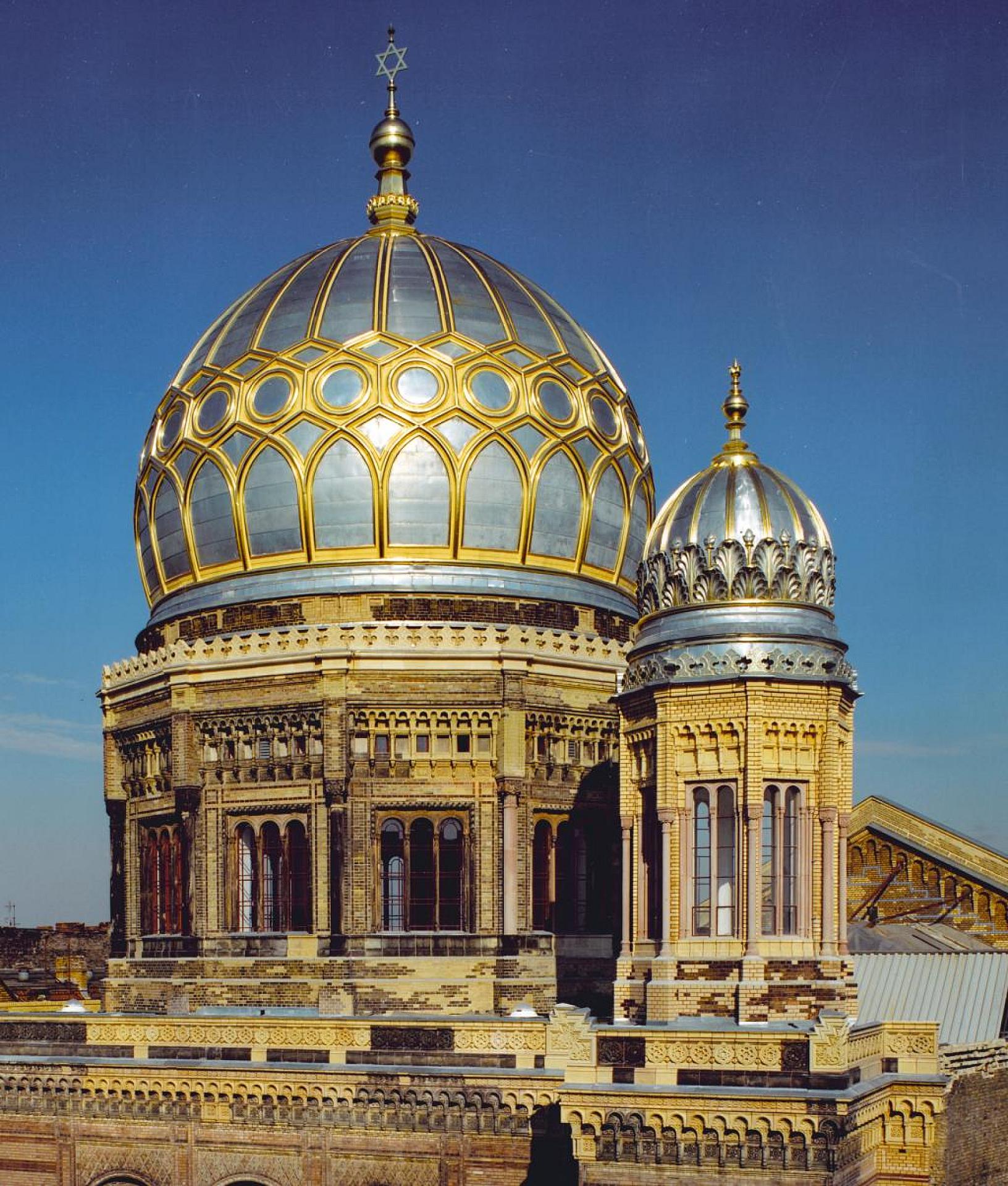
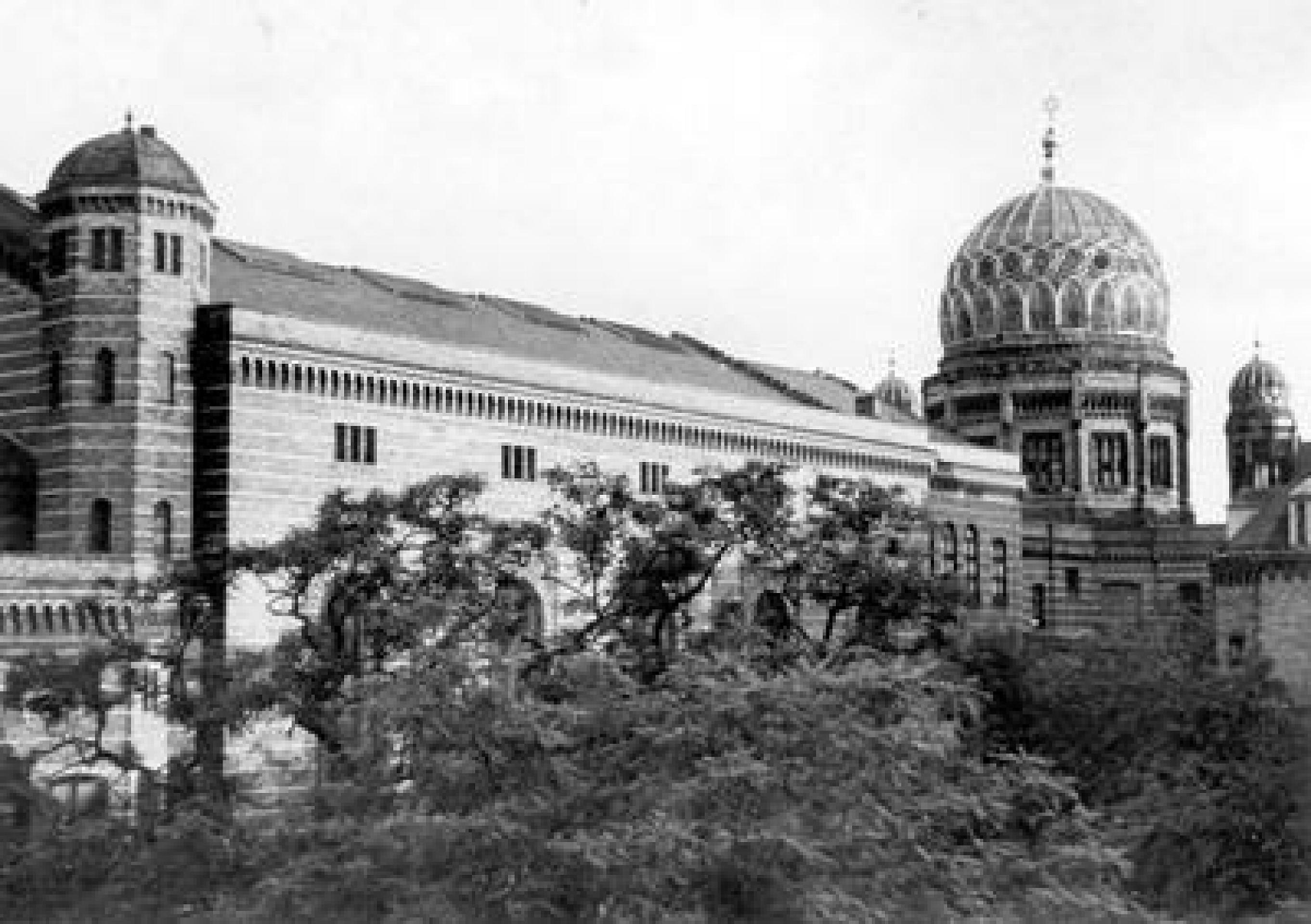
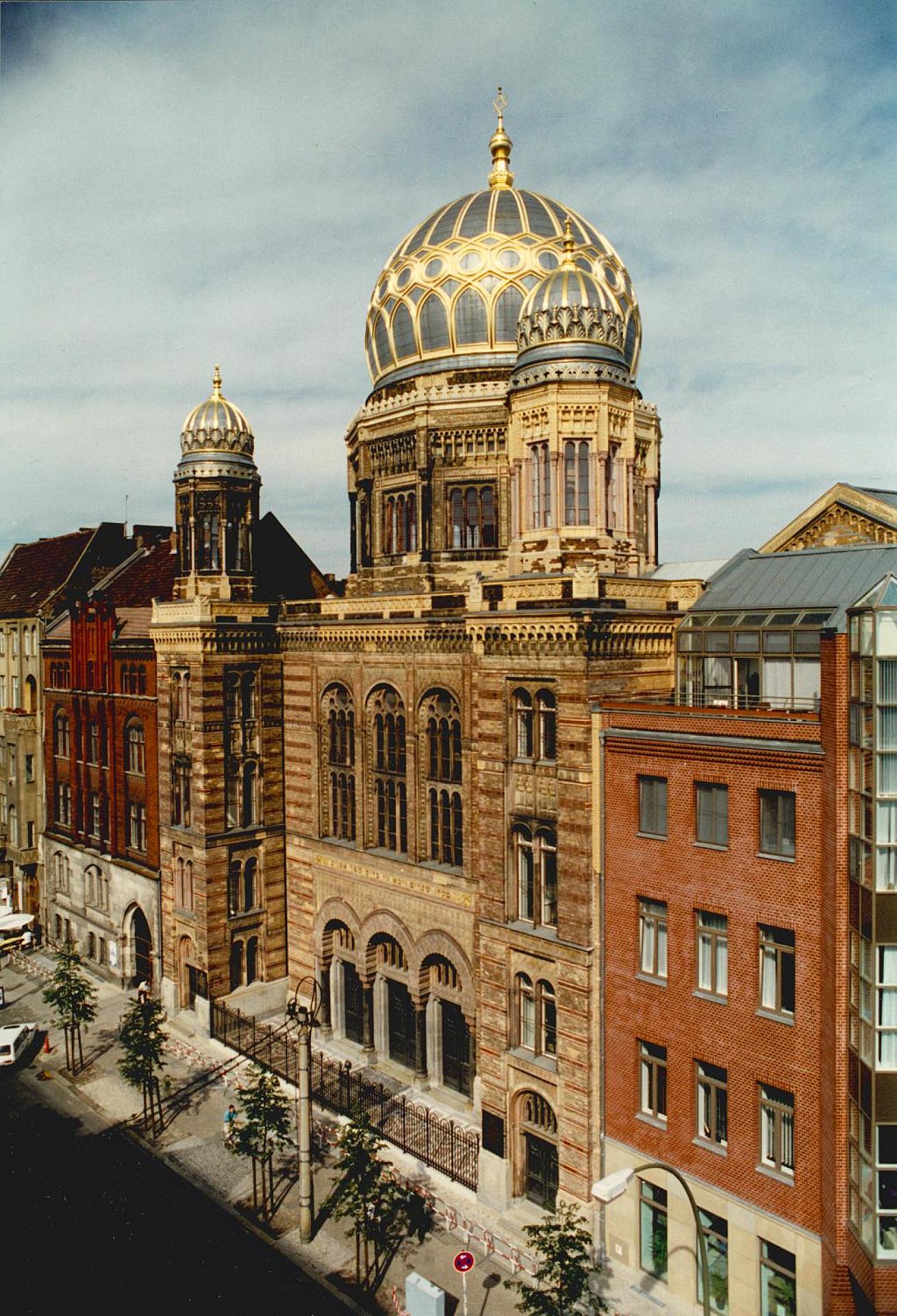
In the second half of the 19th century, the number of Jews living in Berlin doubled. Many new buildings were erected, and others remodelled: Jewish cemeteries, schools and hospitals were built as well as numerous synagogues. Until 1866, there had only been one synagogue in Berlin, in the Heidereutergasse. The New Synagogue in the Oranienburger Straße was built in Moorish style between 1859 and 1866 according to the design by architect Eduard Knoblauch. With a fifty-metre high golden cupola, an elaborate and lavish interior and room to seat over 3,000 people, this became the largest and most magnificent synagogue in Germany, situated in the heart of Berlin. It soon became a centre for Reform Judaism; services were also held in German and accompanied by organ music.
The opening of the New Synagogue was also met by anti-Jewish sentiments surfacing in Berlin. In the eyes of some, the size of the synagogue, its pompous interior and oriental architectural style bore witness to the supposed wealthiness and foreignness of the city's Jewish residents.
During the »Kristallnacht« in November 1938, National Socialists conducted an arson attack on the synagogue. Thanks to the actions of the responsible police officer at the local precinct, the synagogue could be saved from serious harm: he ordered the fire brigade to put out the fires in the synagogue. Until the National Socialist state expropriated the building the Jewish community could continue to use it for services. In January 1943, the Wehrmacht set up storage for army attire on the synagogue premises. A few months later, in November 1943, the New Synagogue was severely damaged during an air raid.
Victims
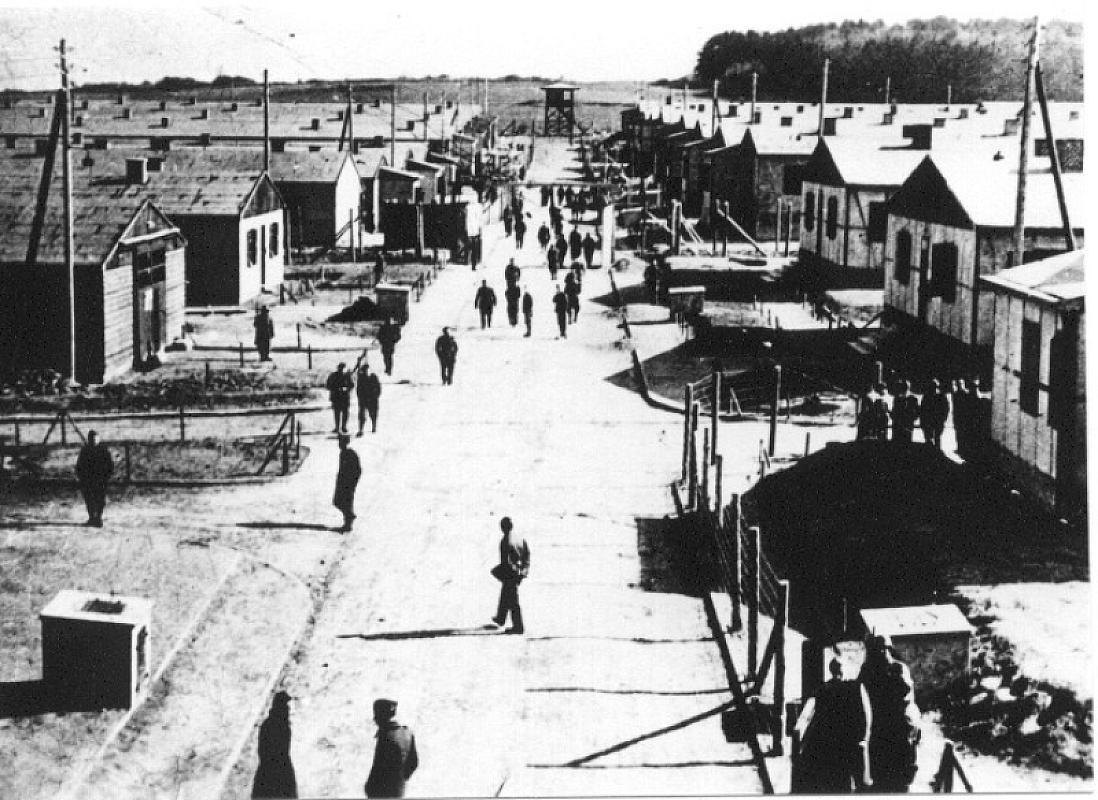
The National Socialists deported over 50,000 Jews from Berlin alone to ghettos and extermination camps in the east, thus for a large part annihilating the pre-war Jewish community.
Remembrance
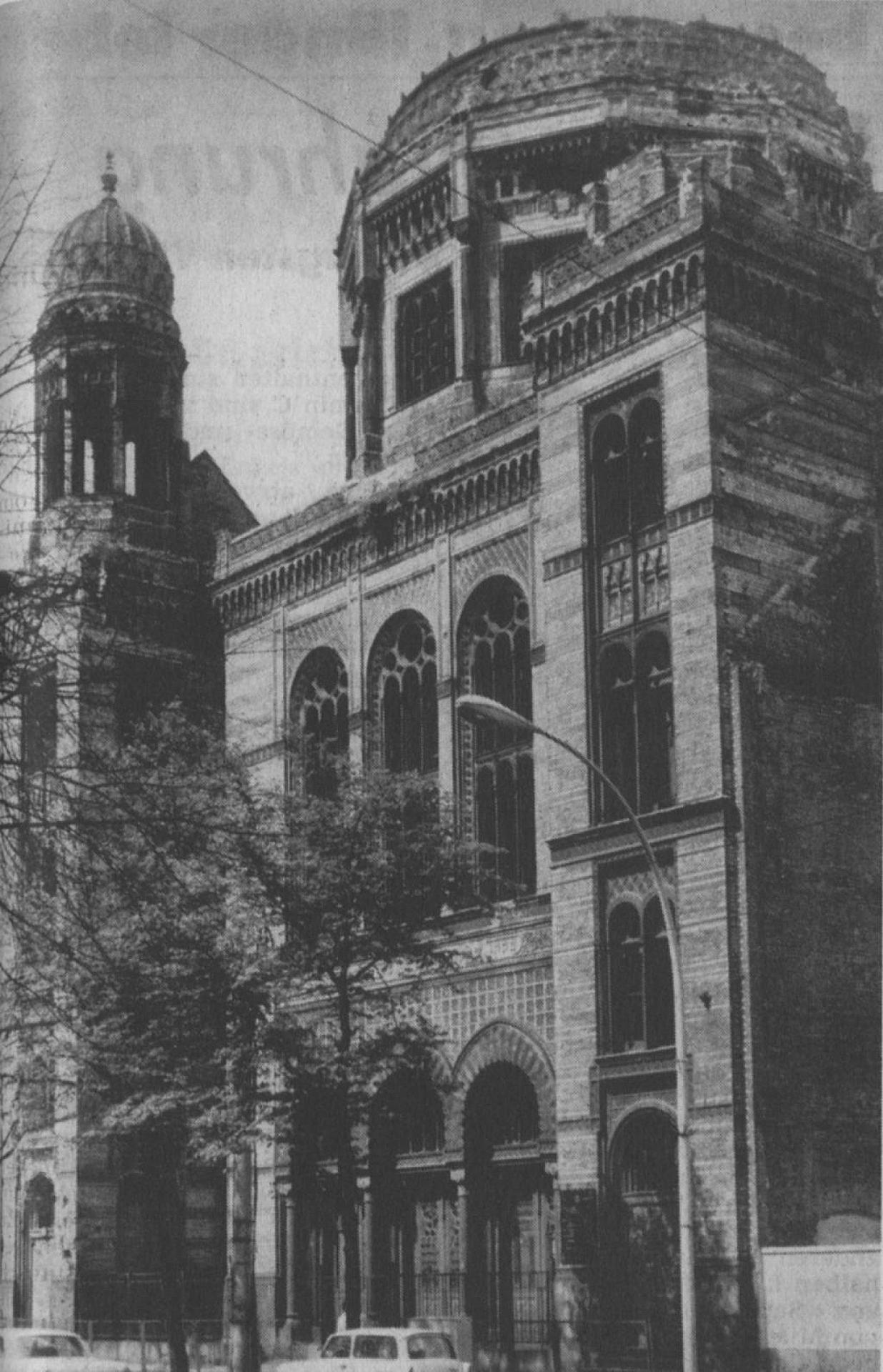
The building of the New Synagogue remained badly damaged after the war. In 1958, the GDR government had the main room and dome of the synagogue demolished as they were in danger of collapsing.
For many years, the small Jewish community in East Berlin fought for the preservation of the ruins of the New Synagogue and the establishment of a memorial site. Only in 1988, fifty years after the »Kristallnacht«, did the GDR government give permission to reconstruct the synagogue. In order to implement this plan, which was also intended as a strategic foreign policy move, the New Synagogue Berlin – Centrum Judaicum Foundation was established.
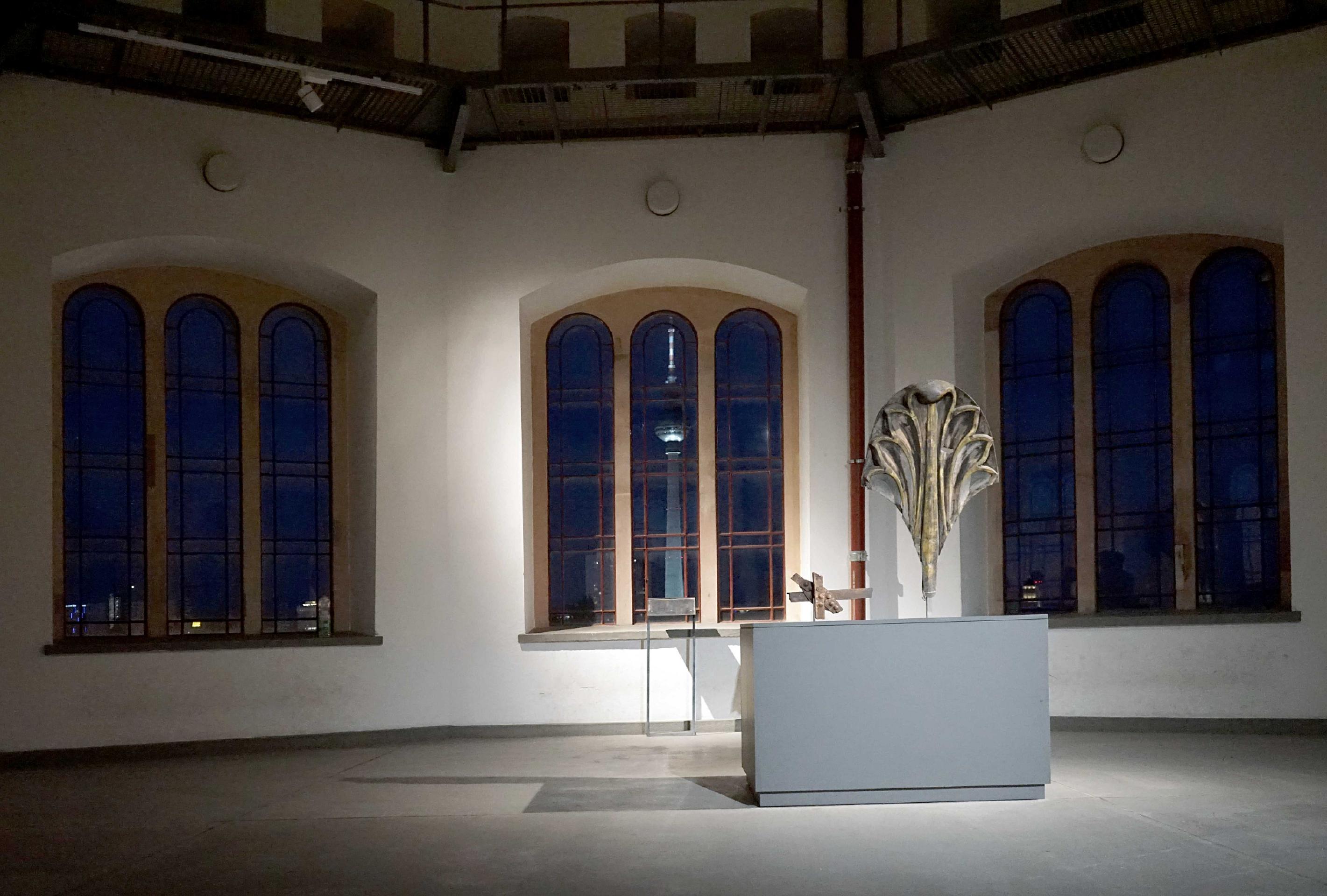
Most of the reconstruction work was completed after Germany's reunification. On the street side the original façade was reconstructed, beyond that, however, significant changes were made. The main hall where services were once held was not reconstructed. The rear side of the building is glassed in, with the site of the prayer room which could once seat over 3,000 people made visible. Markings on the floor can help visitors imagine the size of the former synagogue. The ruins were integrated into the new building and remain on display. The former site of the Torah ark is marked with columns.
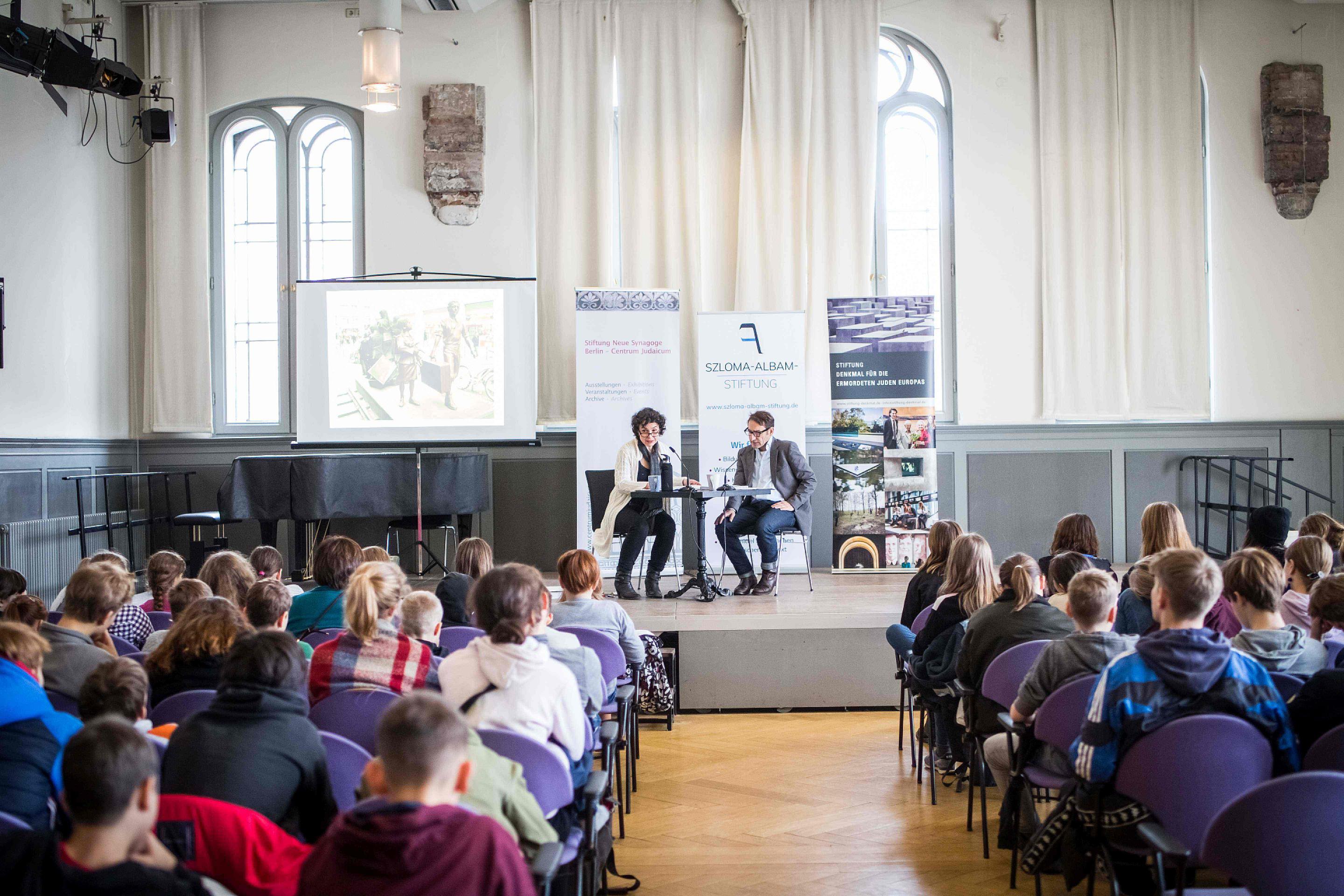
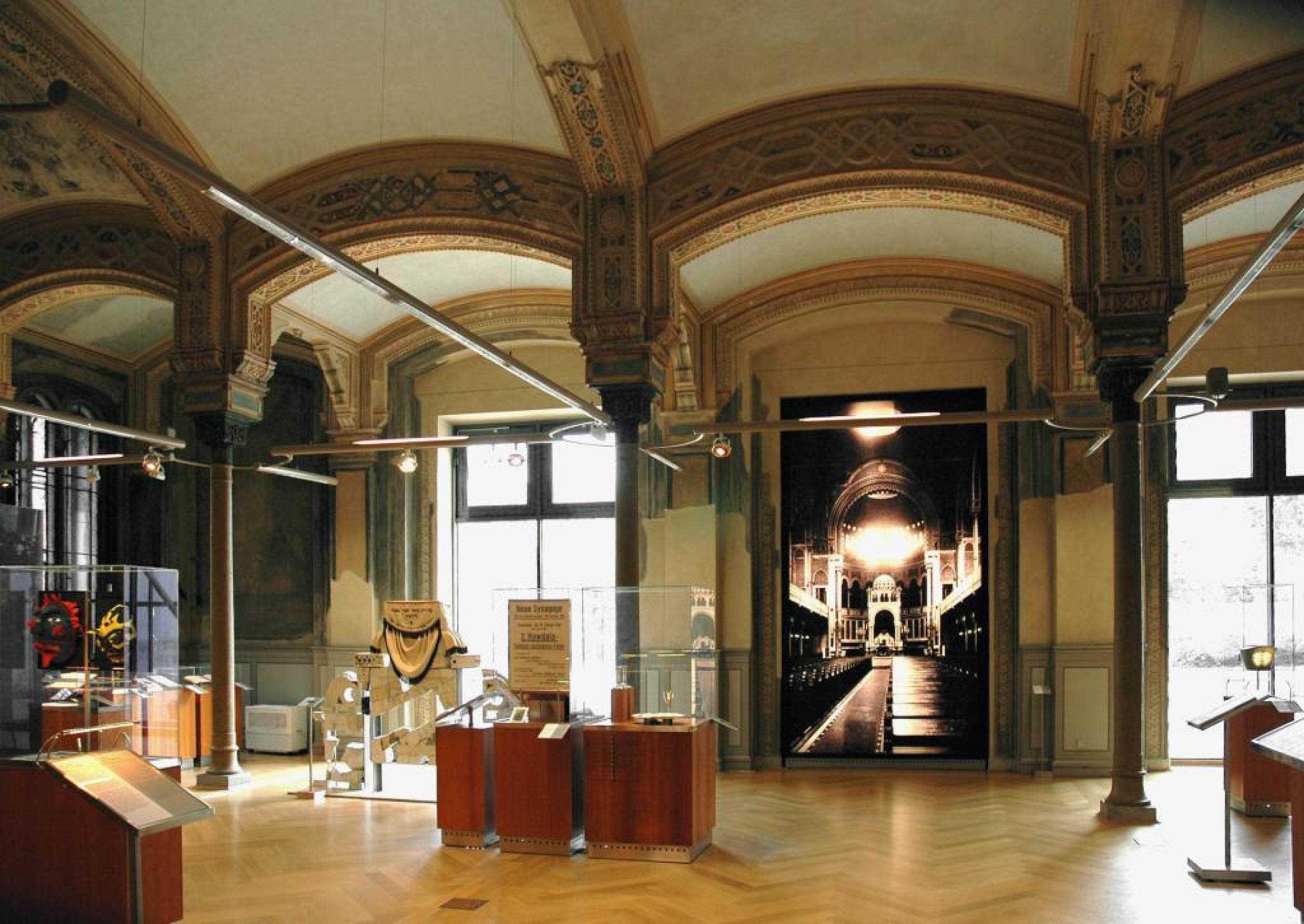
In May 1995, the building was reopened as the Centrum Judaicum with a permanent exhibition entitled »Open ye the Gates«. Located in Oranienburger Straße 28 to 30 are a small prayer room, an archive, a documentation centre and the Jewish community college. The Jewish community and the Jewish cultural association also have rooms in this complex. A new building is home to the offices and archive rooms of the Centrum Judaicum. Its main task is to keep the memory of the Jewish community Berlin once had alive and to preserve its traditions and culture.
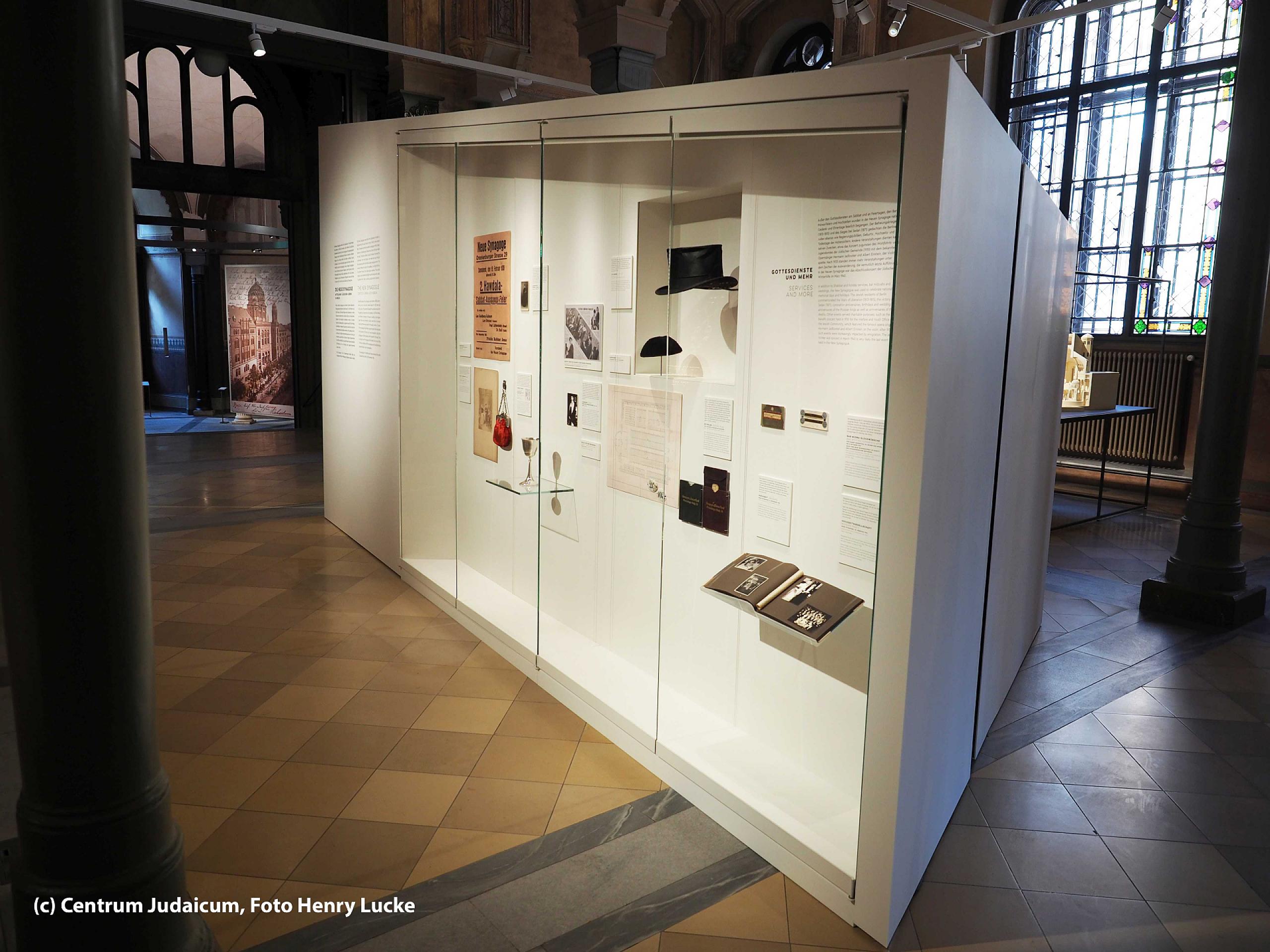
A new permanent exhibition opened in 2018.
Possibilities
Permanent exhibition, temporary exhibition, guided tours, archive, photo archive, library, miscellaneous events
Open
April to September: Sunday to Friday 10 a.m. to 6 p.m., Sunday 10 a.m. to 7
October to March: Sunday to Thursday 10 a.m. to 6 p.m., Friday 10 a.m. to 3 p.m., closed on Saturdays and Jewish holidays
Contact
office@centrumjudaicum.de
+49(0)30 880 283 00
Oranienburger Straße 28/30
10117 Berlin