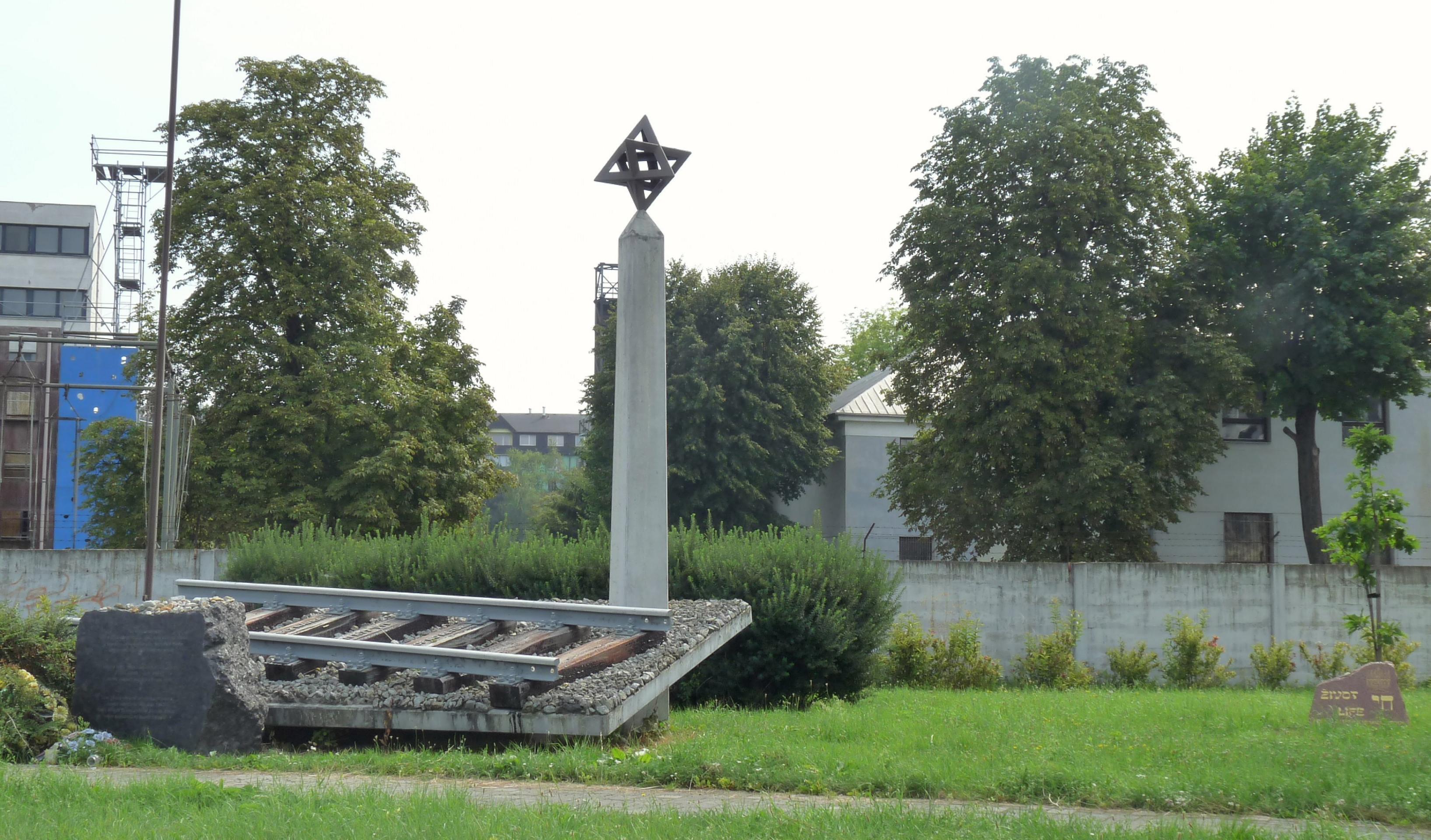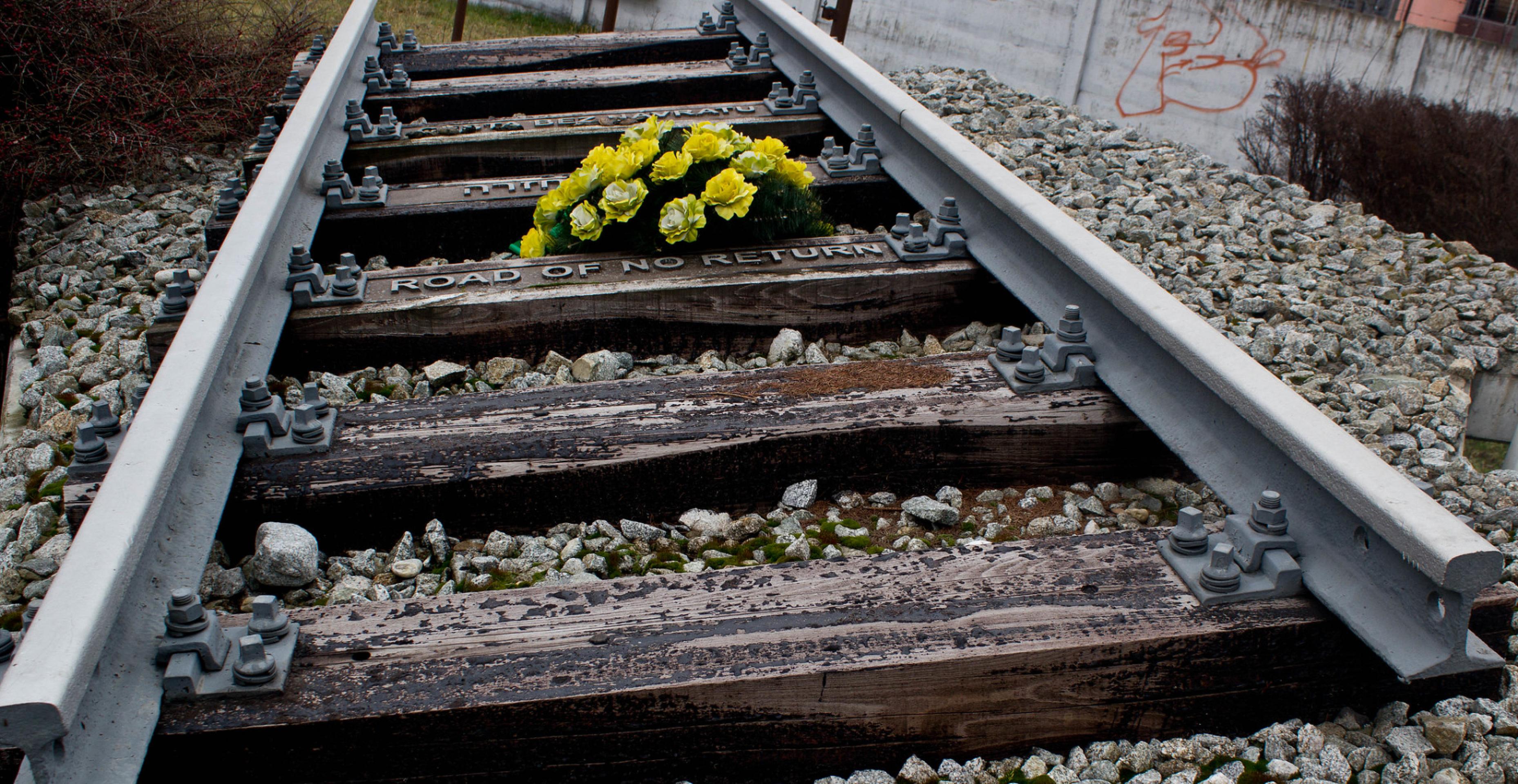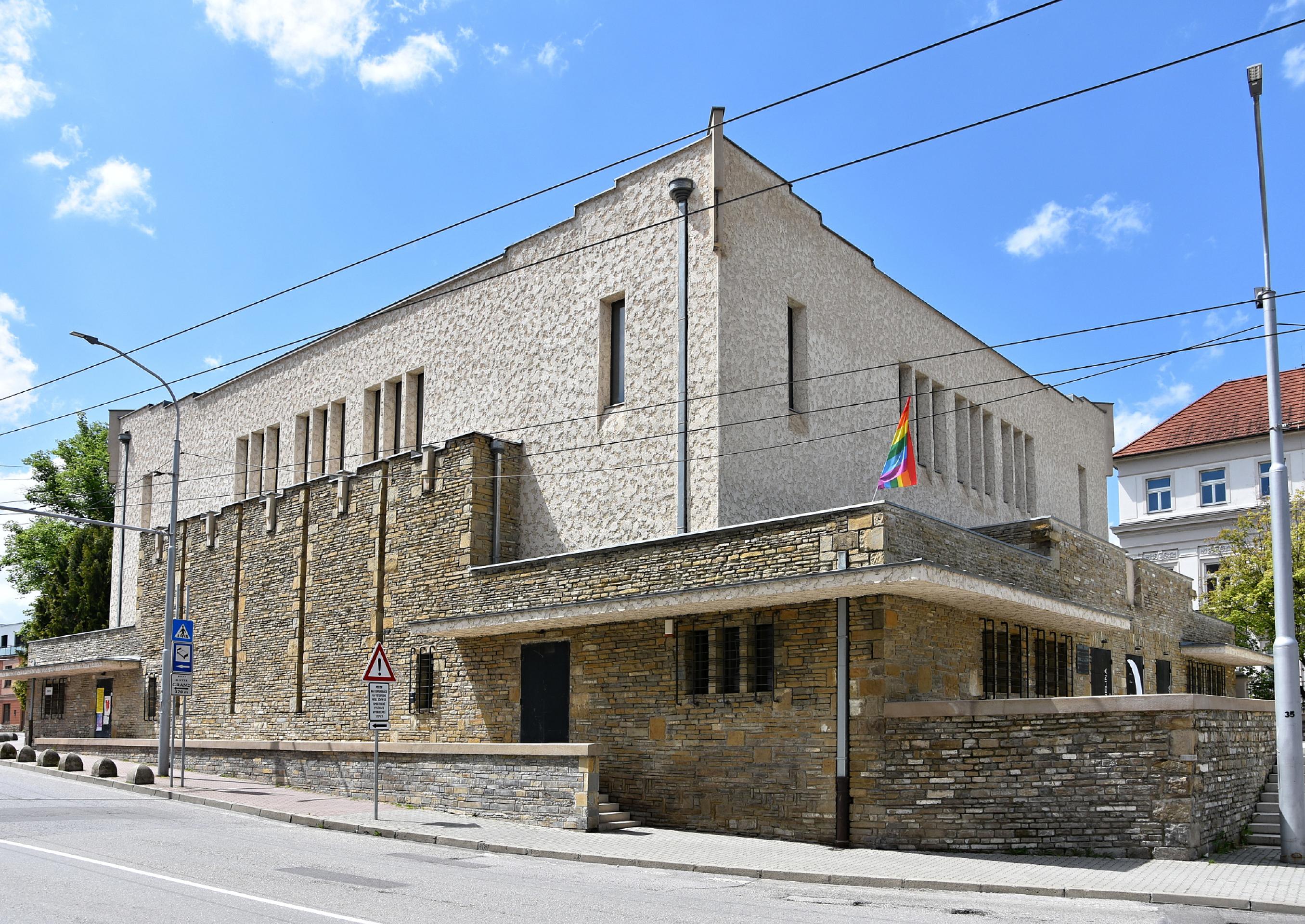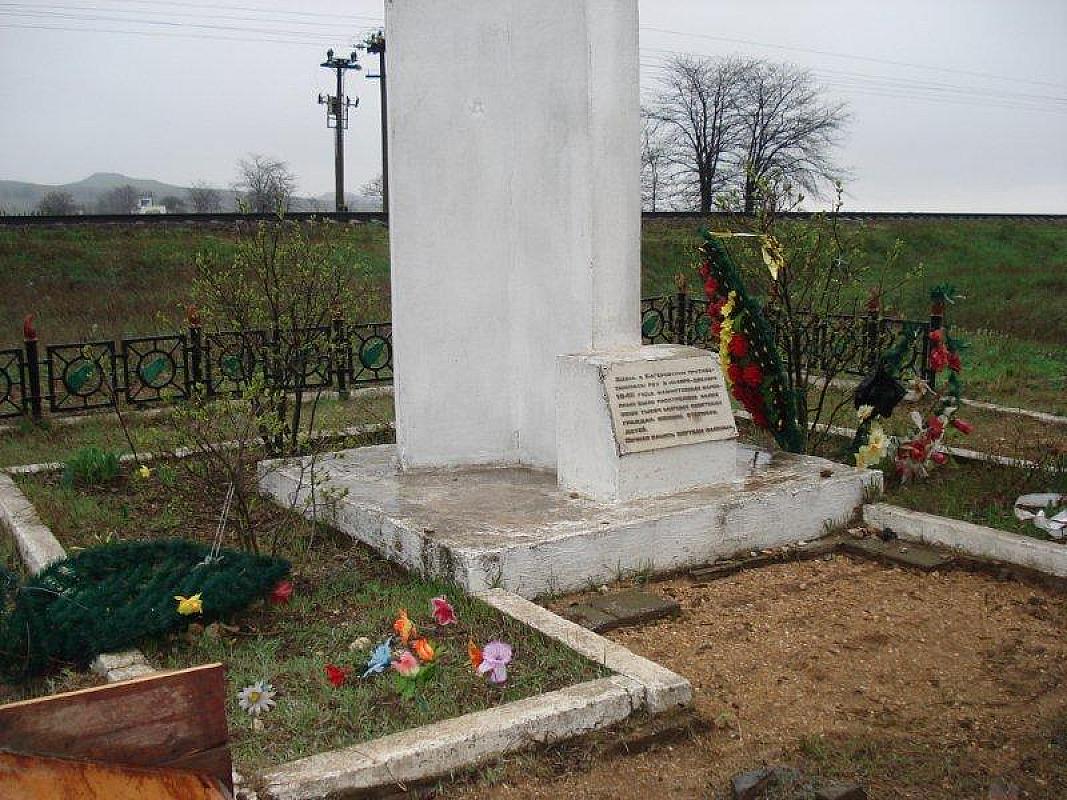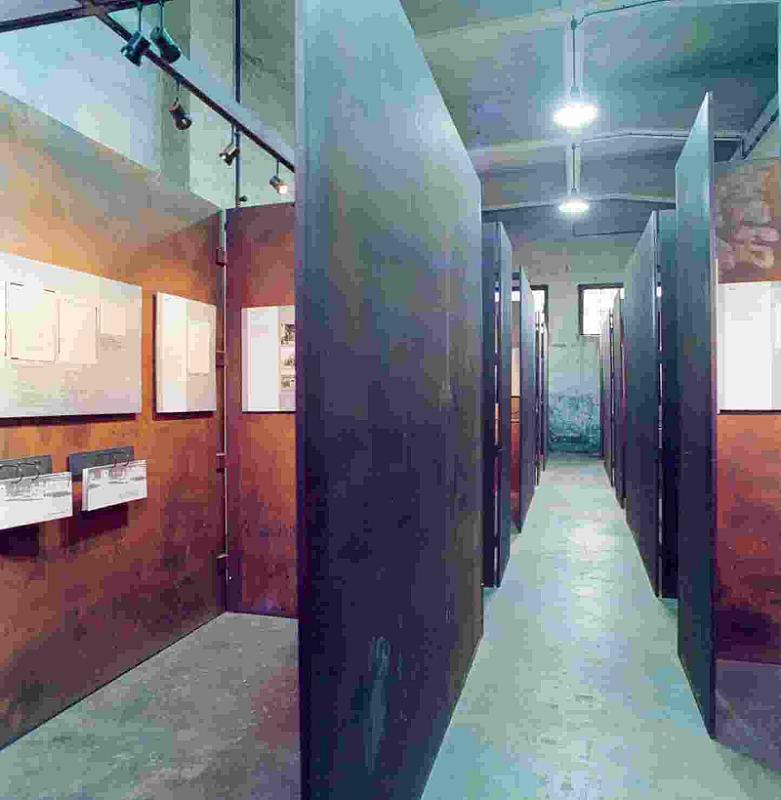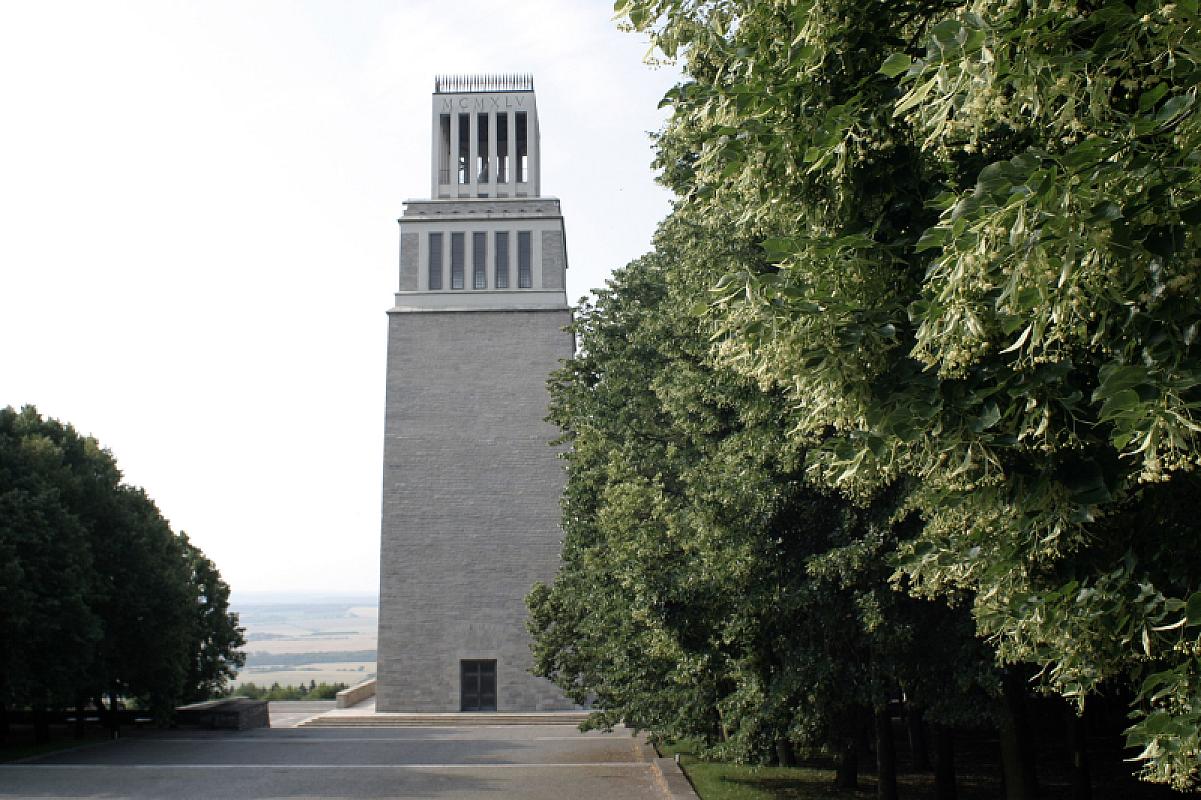
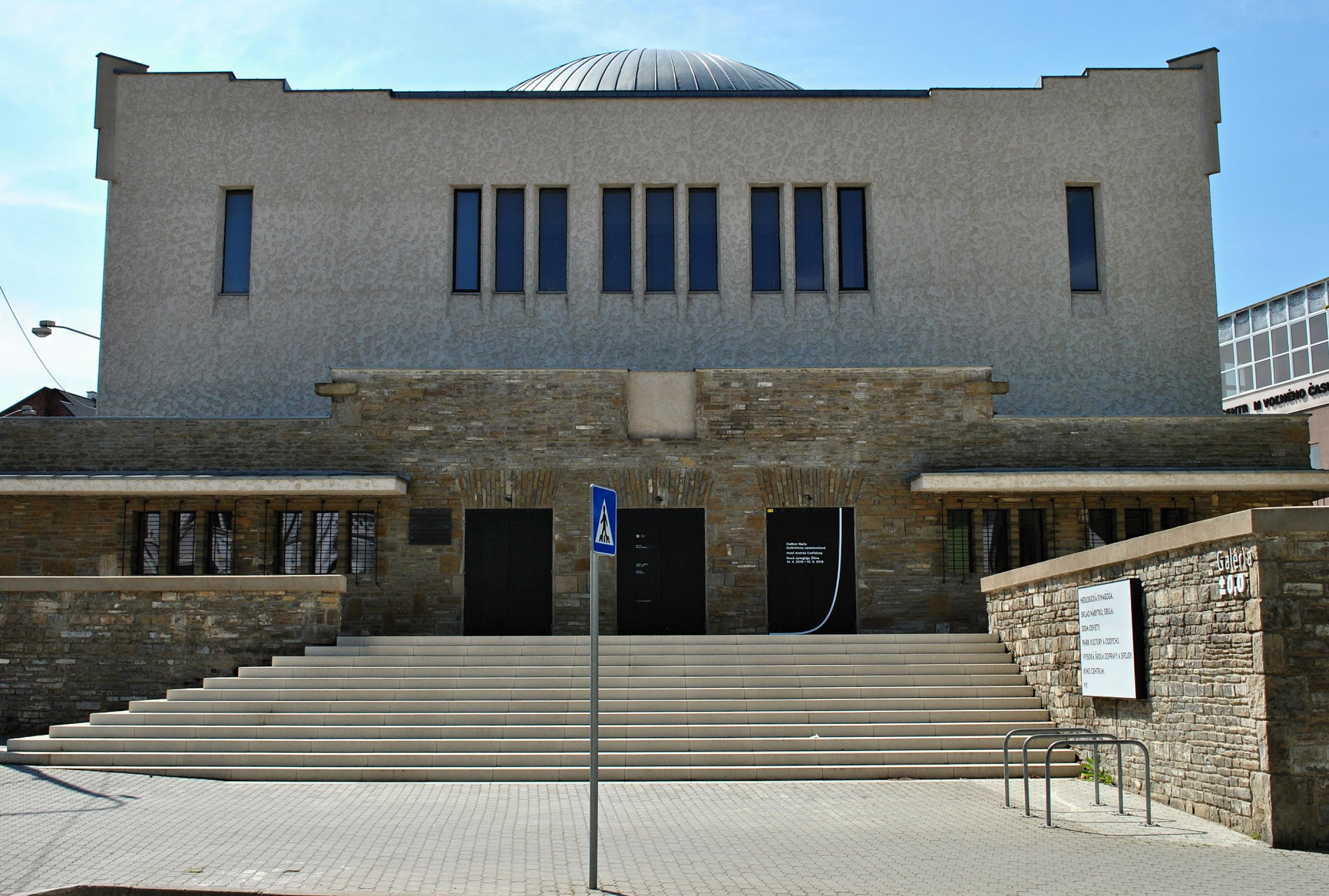
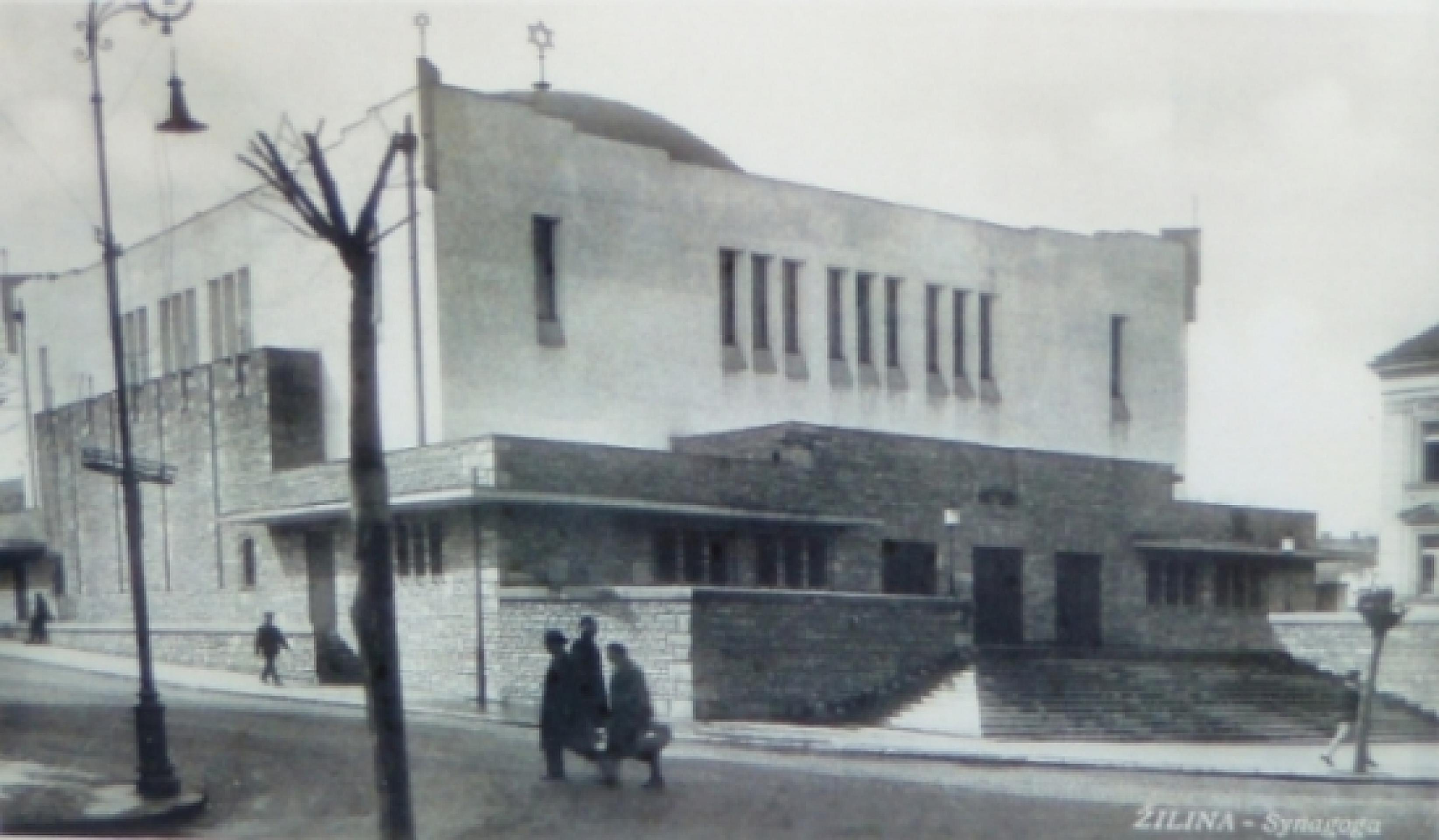
The synagogue in Žilina (German: Sillein, Hungarian: Zsolna), designed by German architect Peter Behrens (1868-1940) for the Jewish community, was completed in 1931. Only used as a synagogue for a few years, the building was used as a meeting room, university building, concert hall and cinema until 2011. Since 2017, the extensively restored building has been providing space for art and culture as a new art hall in the city of 80,000 inhabitants. In 1942, the Slovakian state, which was allied with Nazi Germany, operated a large transit camp in Žilina, from which over 25,000 Jews were deported to occupied Poland. Since 2004, the camp is being commemorated by the memorial »Road of no Return«.
History
The town of Žilina in present-day Slovakia belonged to the Kingdom of Hungary until 1918. Its roots lie in the Middle Ages and it experienced its heyday in the late Middle Ages. After a period of decline, Žilina was only able to develop economically again at the end of the 19th century after it has been connected to the railway.
Until the 19th century, Jews were forbidden to settle in the town. They were only allowed to stay and trade in the town during the day. In 1850, there were still only 22 Jews living in the town. The community then grew due to the influx of Jewish families. In 1867, Jews were given equal legal status in the Kingdom of Hungary, which enabled them to rise in society. The first synagogue was built in Žilina in 1881. In the first census after the founding of Czechoslovakia, to which Žilina now belonged, around 14 percent of the almost 12,000 inhabitants stated that they were Jewish in 1920.
In 1929, construction began on a new synagogue for the Neolog community on the site of the old synagogue, which was designed by the German architect Peter Behrens. Completed in 1931, the synagogue is now considered one of the most impressive buildings of the interwar period in Slovakia. The synagogue offered space for up to 750 worshippers. However, the Jewish community was only able to use the place of worship unhindered for a few years. With the break-up of Czechoslovakia, the rise of the anti-Semitic Hlinka party and the increasingly radical anti-Jewish measures in Slovakia, which was closely allied with Nazi Germany, Jewish life in Žilina was gradually restricted and eventually made impossible.
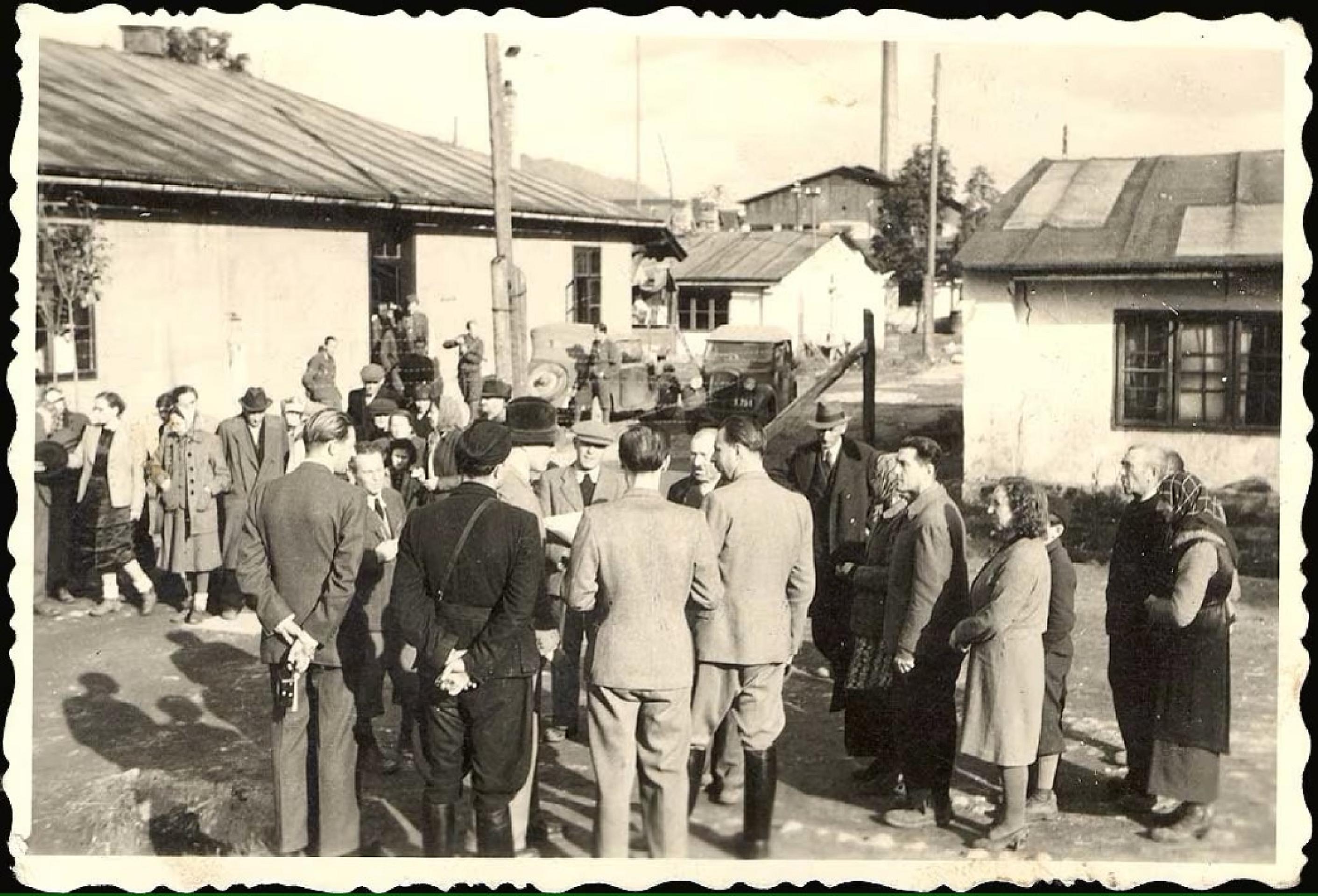
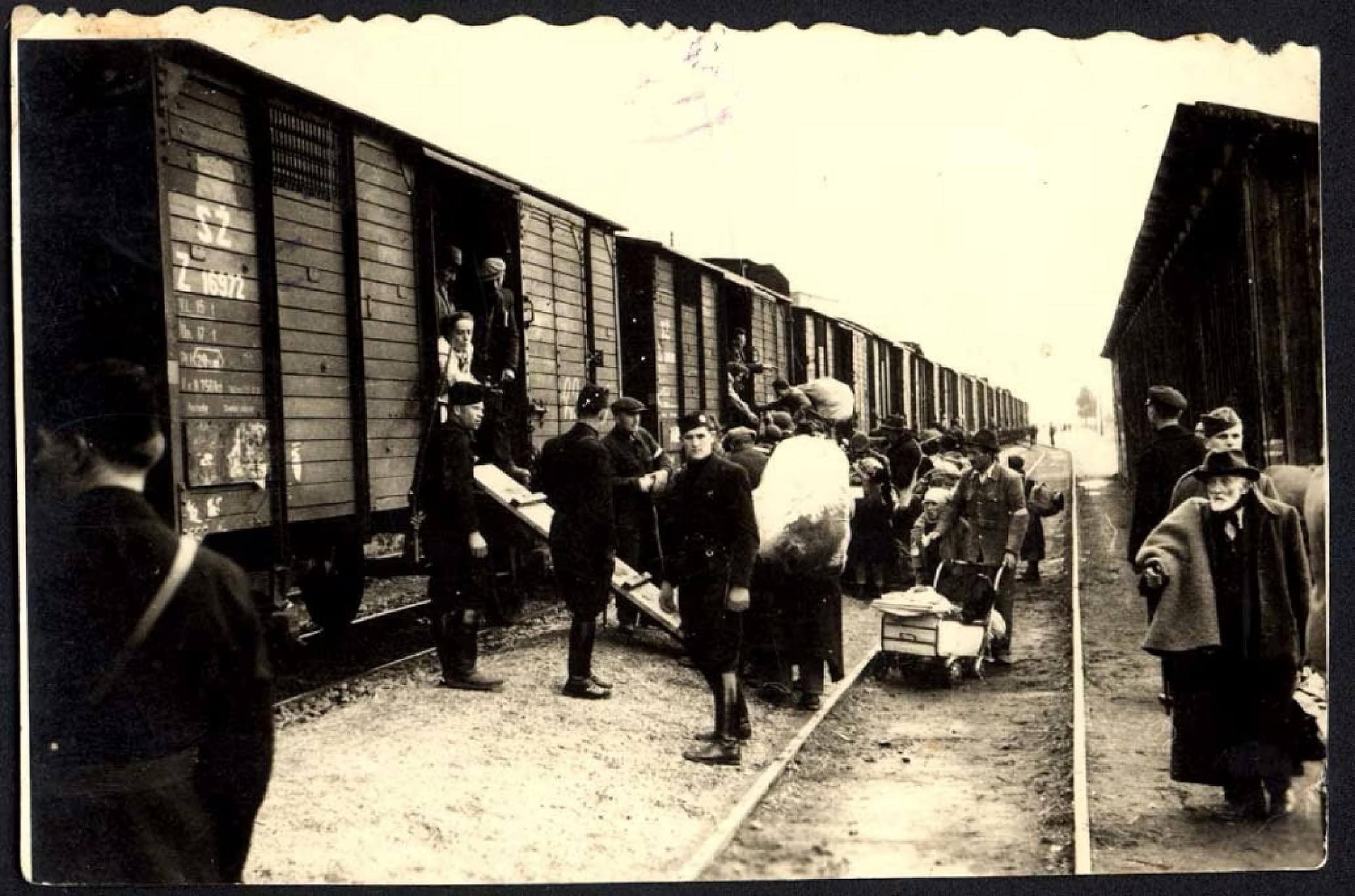
In 1942, the Slovakian state operated one of its largest transit camps in Žilina, from which over 25,000 Jews were deported to German-occupied Poland. The majority of the Jews living in Žilina and the surrounding area were also deported, the last of them in autumn 1944, after the suppression of the Slovakian national uprising by German troops.
The autonomy of Slovakia, which came about under pressure from the German Reich and the weakening of Czechoslovakia in 1939, was proclaimed with the so-called »Sillein Agreement« of 6 October 1938 in Žilina.
At the end of August 1944, partisans in Žilina were the first group nationwide to attack German soldiers with arms as part of the national uprising. However, the Wehrmacht, which arrived the following day, immediately forced the insurgents to flee.
The deportation of the remaining Jews was resumed after the invasion of the Wehrmacht in September 1944. Now it was the SS and the SD who organised and carried out the deportation of the Jews.
Victims
In September 1941, the Slovakian government decided to exclude Jews from public life and to aryanise Jewish property. Between March and October 1942, the Hlinka Guard deported a total of 57,752 Jews from Slovakia to German-occupied Poland in collaboration with the Slovakian authorities and the Volksdeutsche Volunteer Protection Squadron (Volunteer SS).
The main destinations in the Generalgouvernement were the Lublin district, including the Majdanek concentration camp and the Sobibor (Polish: Sobibór) extermination camp, as well as the Auschwitz-Birkenau extermination camp. The deportations were conducted using Slovakian railway trains. The German Reich paid 500 Reichsmarks per deported Jew for the deportation from Slovakia to the Generalgouvernement. This made Slovakia the only country to pay the German Reich for the deportation of Jews. In October 1942, at the end of the first wave of deportations, only around 24,000 Jews remained in Slovakia.
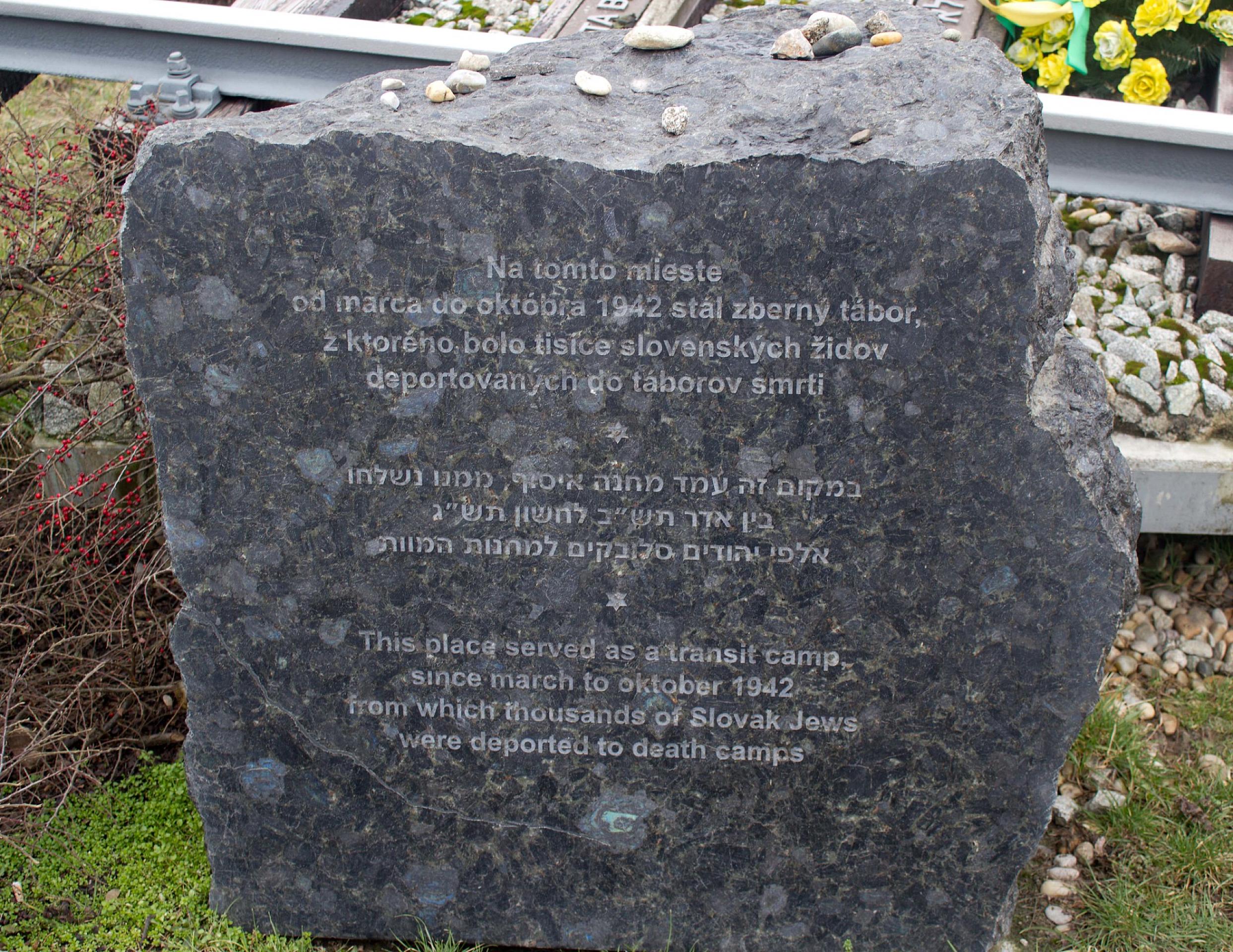
The Slovakian state operated one of the most important transit camps in former military barracks in Žilina, only about 150 kilometres from Auschwitz. The camp had a capacity for around 2,500 prisoners. From here, 26,384 Jews were deported to the Generalgouvernement, almost half of all Slovakian deportees. Thirteen transports, each with around 1,000 deportees, travelled directly from Žilina to Auschwitz-Birkenau.
Jews from the eastern parts of Slovakia were disproportionately affected by the deportations.
Two years later, after the suppression of the Slovakian National Uprising, the German occupiers resumed the deportations. During this period, the SS and SD deported a total of around 13,000 Jews from Slovakia.
Remembrance
After the war, the Jewish community of Žilina had only 200 members. At the end of the 1960s, it was mainly the young members of the community who emigrated. In the decades that followed, the ageing community shrank considerably. Today it has around fifty members.
The New Synagogue had become too large for the dwindling Jewish community. In the years that followed, it was used as a university building, meeting hall, concert venue and cinema. The former synagogue has been a listed building since 1963.
When the idea of setting up a bowling alley and disco in the former synagogue came up, there were vehement protests from the Jewish community. The plans were prevented. Together with local artists, architects, building contractors and other representatives of civil society, the Jewish community tried to revitalise the building as a cultural space. From 2011 to 2017, numerous people volunteered to renovate the synagogue. A large proportion of the funds required for this were raised through donations and EU funding.
Since the reopening of the building in 2017, Žilina has attracted considerably more cultural attention thanks to the impressive building in the city centre, which is constantly being revitalised with new exhibitions, art formats, theatre performances and concerts.
In 2004, a memorial to the former collection camp, called »Road of no Return« was erected in front of the town in the presence of the Slovakian president. Arieh Klein, born in Žilina, was largely responsible for the erection of the sculpture. It is located directly in front of the former camp complex and just a few minutes' walk from the Žilina-Záriečie deportation station. The former camp site is now used as military barracks again.
Possibilities
Exhibitions, concerts, cultural events, commemorative events
Open
Tue-Sun 13.00-19.00
The »Road of no Return« memorial is accessible at all times.
Contact
info@novasynagoga.sk
+421911862111
J. M. Hurbana 220/11
010 01 Žilina, Slowakei