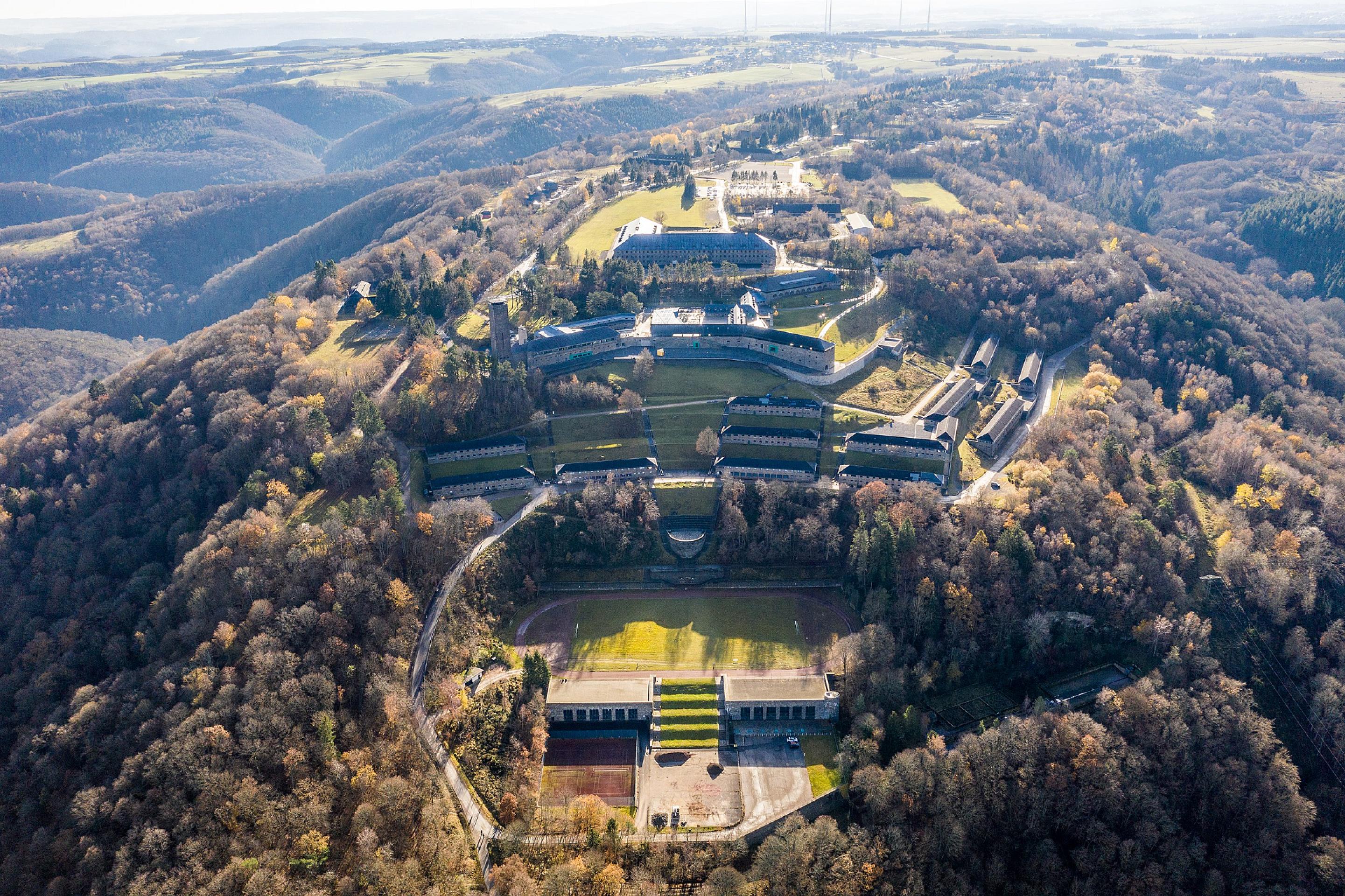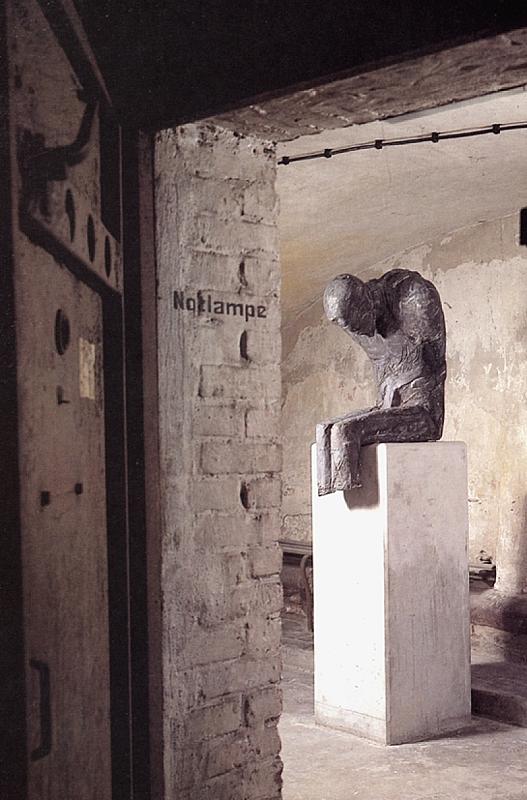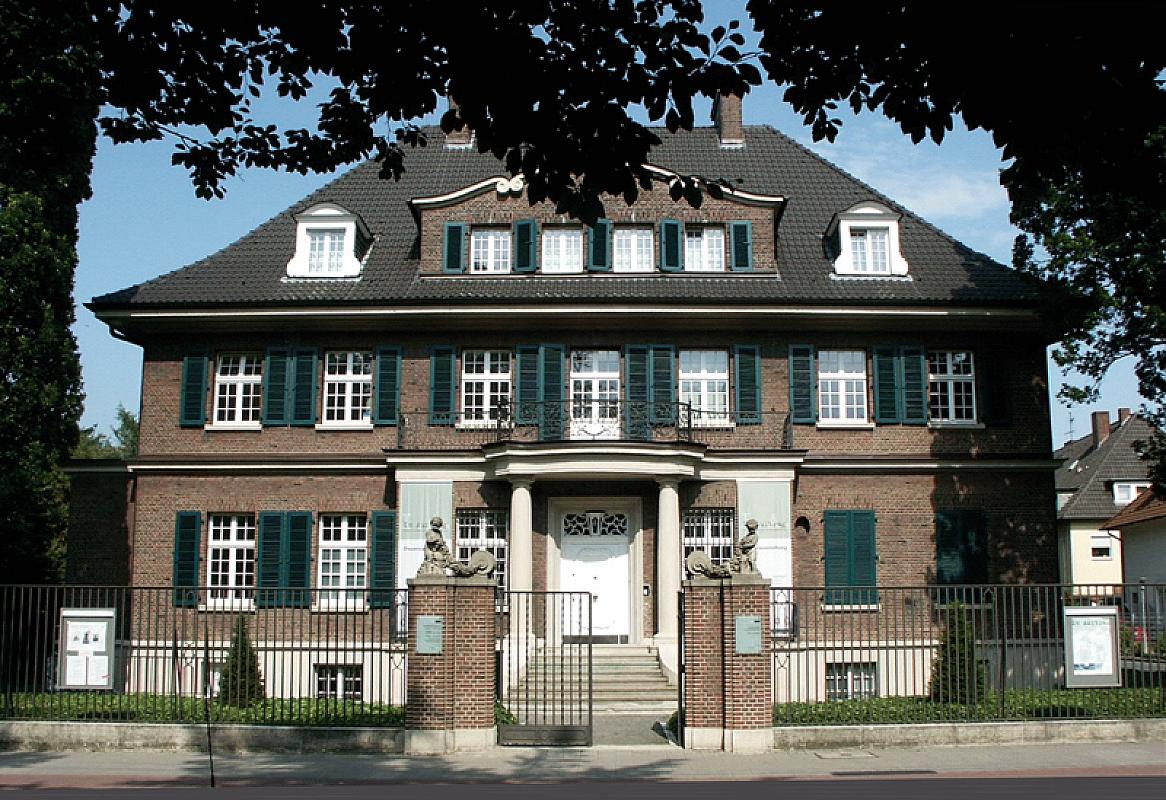
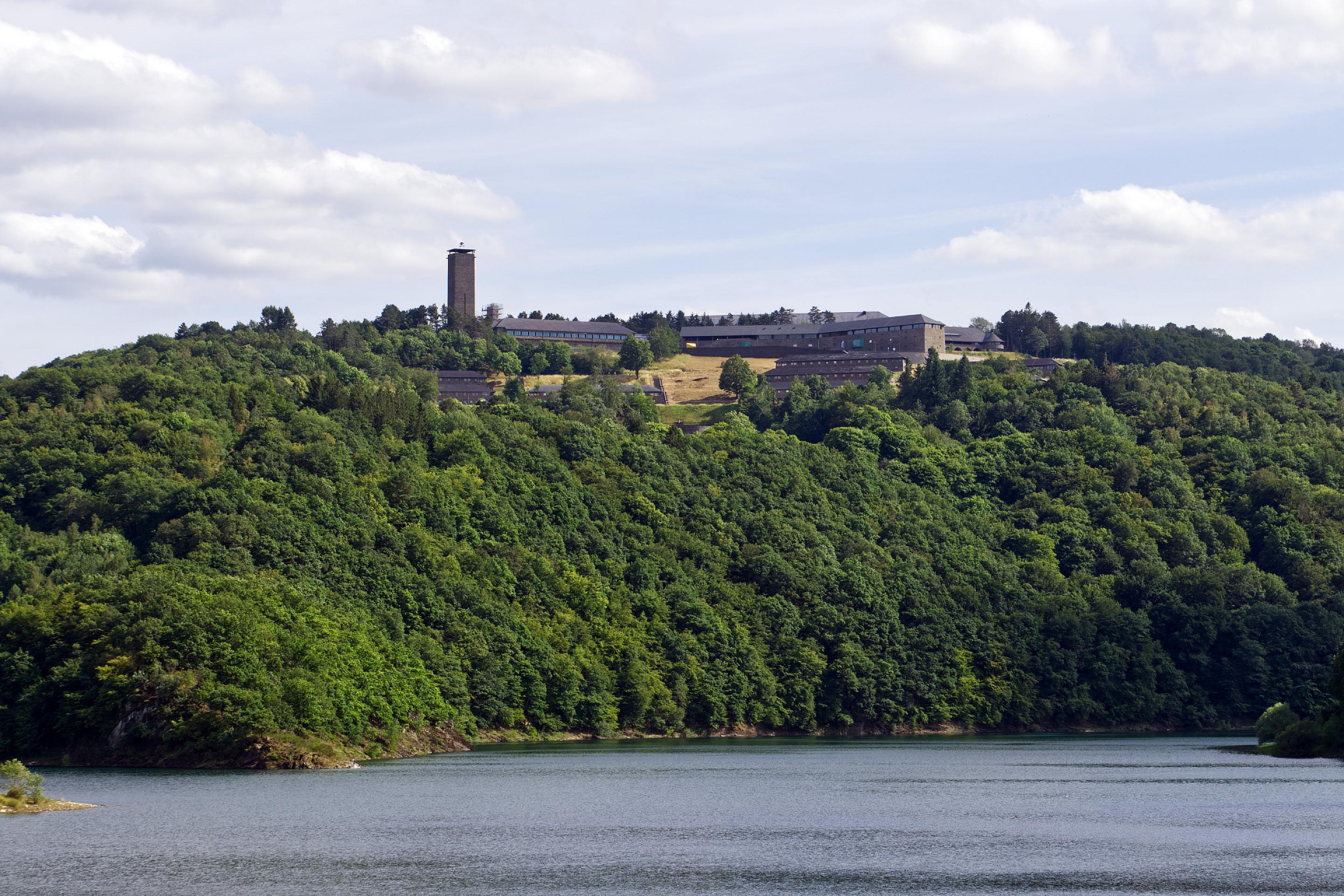
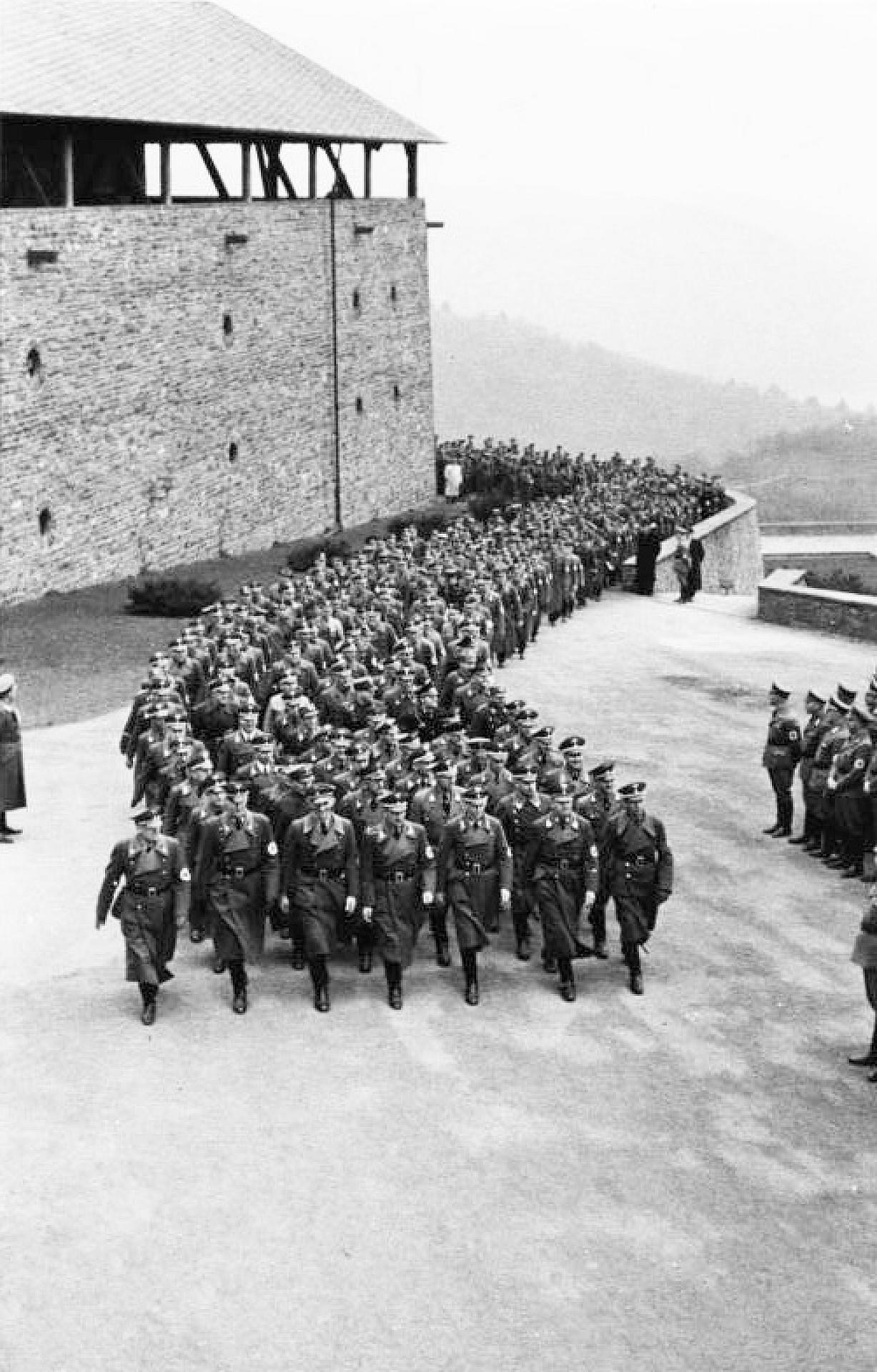
The »Ordensburg Vogelsang« is one of the three National Socialist »Ordensburgen«, which were intended to serve the training of future NSDAP leadership personnel. Located at the Urft Dam (Urfttal dam) in the Eifel region, the monumental building was constructed between 1934 and 1939. Today, the permanent exhibition and changing special exhibitions commemorate the crimes and the racist and inhuman ideology of the NSDAP.
History
In 1933, Adolf Hitler called for the creation of sites for the training of future NSDAP leaders and commissioned Robert Ley, the Reichsorganisationsleiter of the NSDAP and head of the German Labour Front (DAF), to plan such facilities, the »Ordensburgen«.
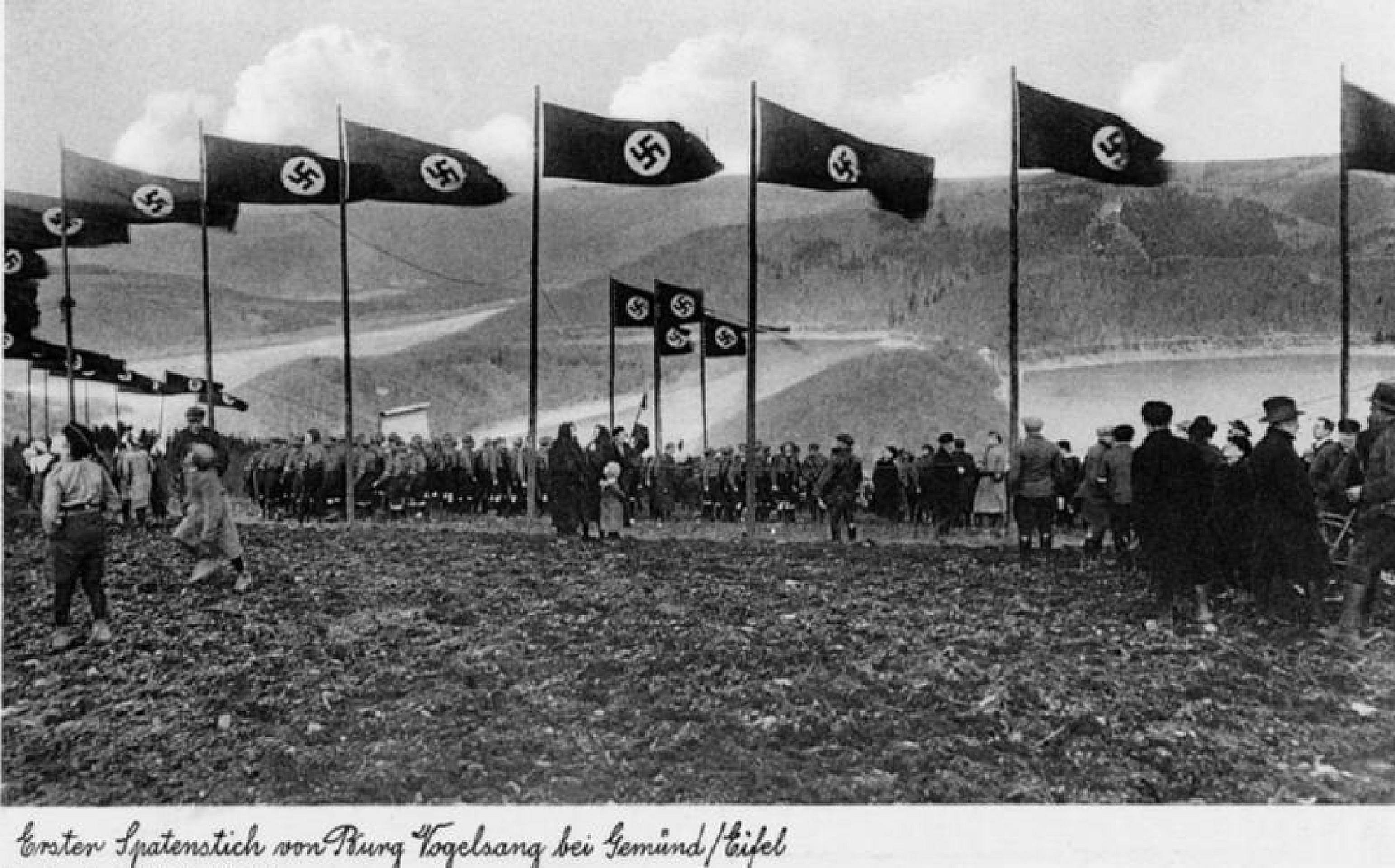
Construction work on the Ordensburg Vogelsang began in 1934 as one of three facilities planned throughout the Reich. The first construction phase was completed after just two years in 1936 and teaching began on site. Construction continued on site until 1939. However, in view of the preparations for war, the labour force was needed in more crucial areas. This brought the construction site to a standstill.
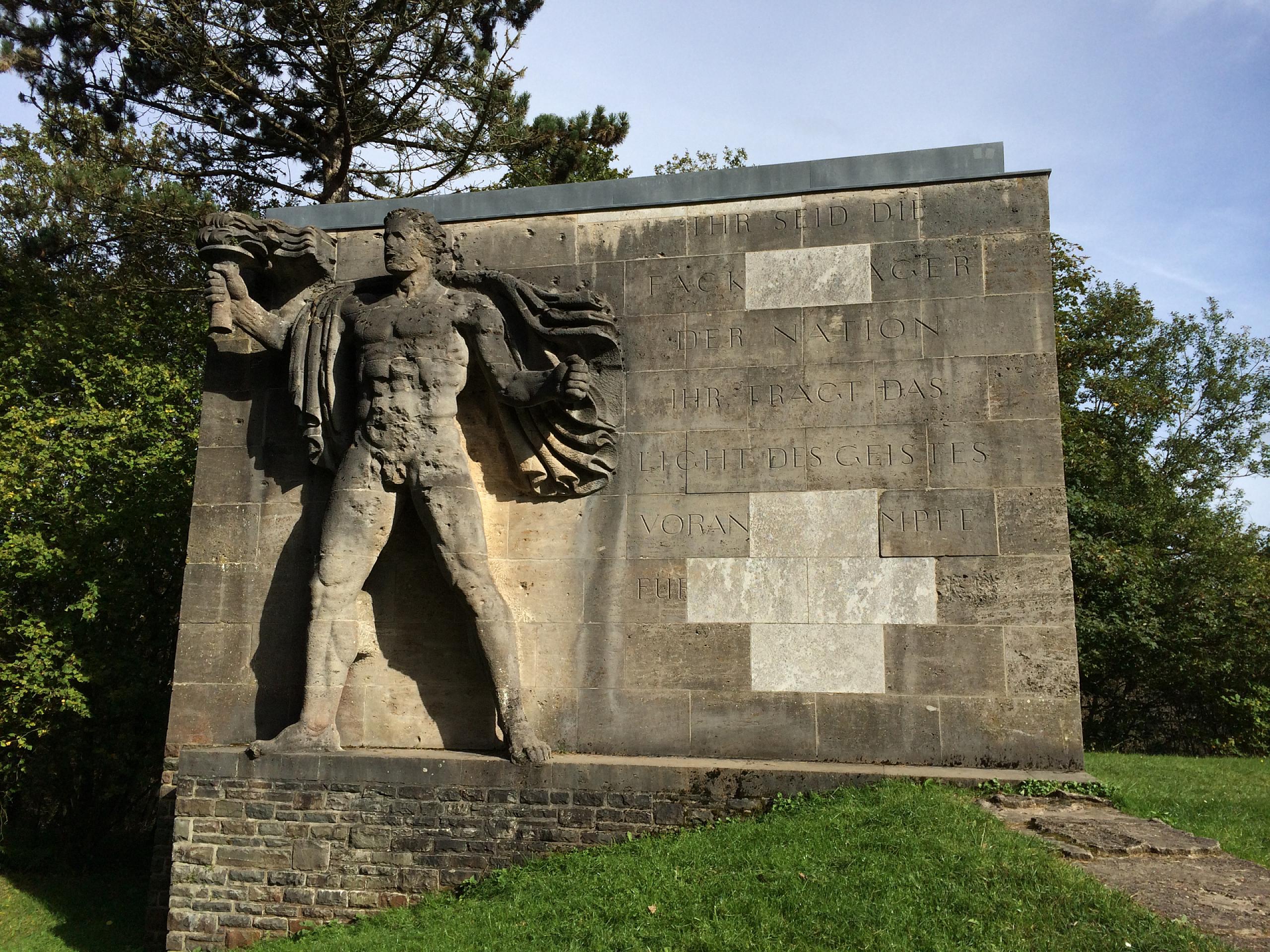
Students at the school had to fulfil various requirements to be accepted. In addition to physical health, party membership and initial experience in party work, military service and proof of descent were also required. The majority of the students were around 25 years old at the time they attended the school. The aim of the Ordensburgen was to train a National Socialist party elite. In particular, the term »Herrenmensch« was intended to characterise the »Ordensjunker« and clarify their position within the elite. Academic achievements were not of interest for admission. In terms of style, all art on the premises was reminiscent of the ideology they had been indoctrinated with.
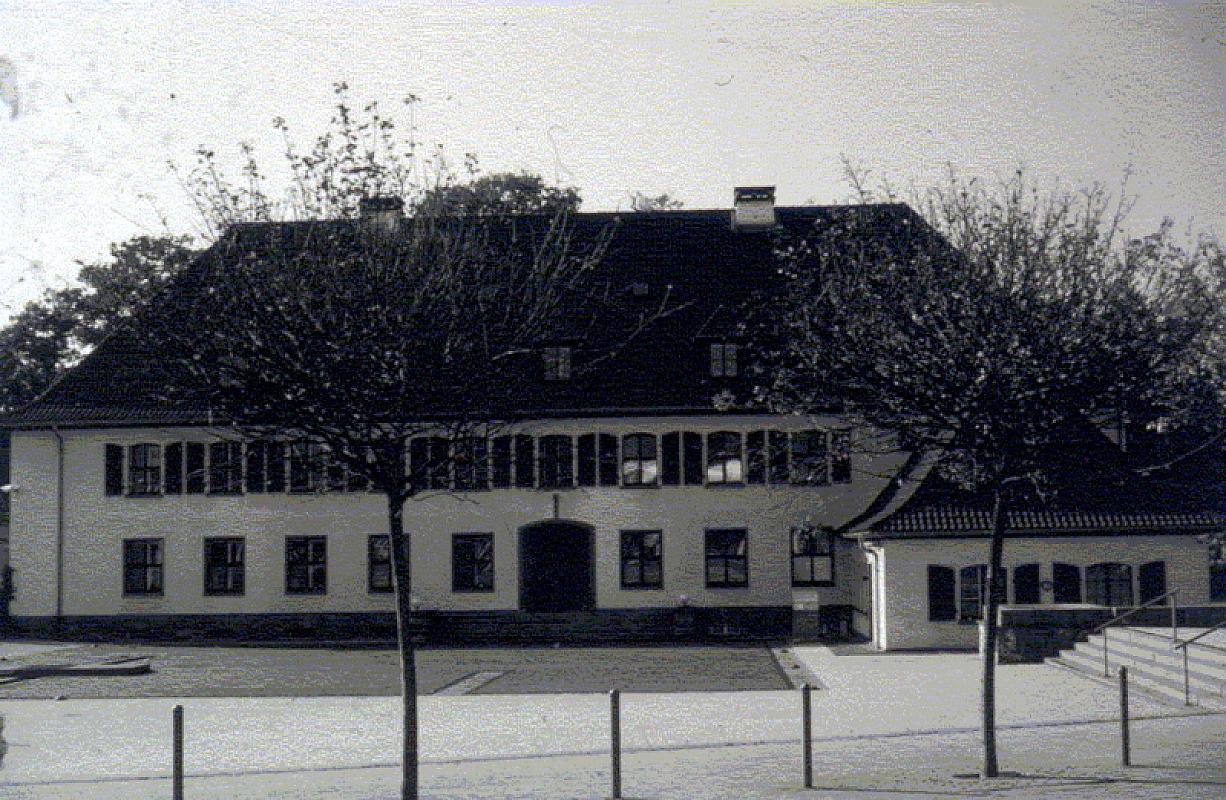
After the start of the war in 1939, the Wehrmacht took over Vogelsang. This put an end to the training of the ‘Ordernsjunker’ in the Eifel with a total of around 450 graduates in three years. The infrastructure was used temporarily during the Western military campaign. In 1941, classes from Adolf Hitler schools were transferred to Vogelsang. In 1944, the castle was used as a ‘defence training camp’ to prepare young people for the war service. An infirmary was set up in 1941 and a maternity ward in 1943.
The name Vogelsang is derived from the name of the area around the site.

Victims
Between 1942 and 1945, a total of 42 mainly female forced labourers, 39 of them from Ukraine, Belarus and Russia - so-called »Eastern workers« - and three from Poland were deported to Vogelsang and forced to work. There are no eyewitness accounts from the victims' perspective. Former pupils who were in Vogelsang at the time report little contact with the forced labourers, but that they were aware that they were forced to work.
Apart from that, Vogelsang Castle is a classic »perpetrator site«. No crimes were committed here, but people were indoctrinated with National Socialist ideology and »racial doctrine« (Rassenlehre). Around half of the former students died in war service. Reports about the Ordensjunker in action tell of their pronounced fanaticism and war mania. It can be assumed that many were at least organisationally involved in war crimes in the occupied eastern territories. Individuals were prosecuted after the war and some were found responsible for the deaths of thousands of people.
Remembrance
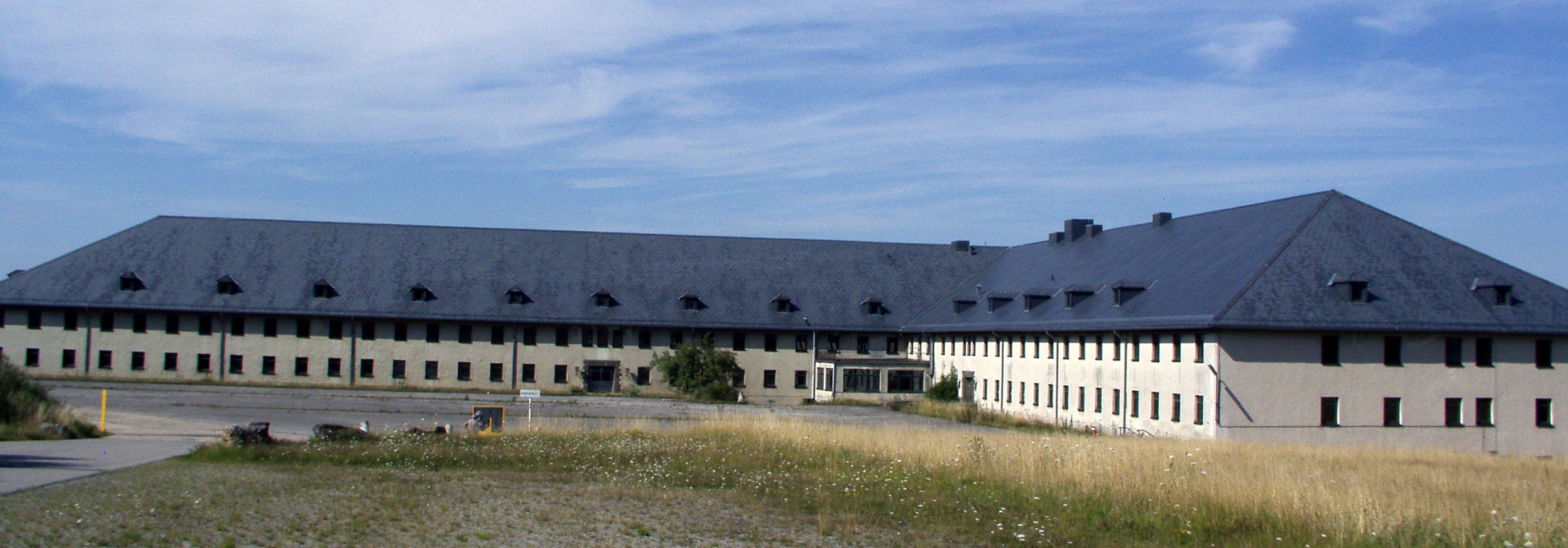
After Germany's capitulation, the building and the surrounding area fell to the British military administration. They established a military training area around Vogelsang and removed symbols of National Socialism. In 1950, the British handed Vogelsang over to the Belgian armed forces. This led to the creation of ‘Camp Vogelsang’, which was used from then on as a Belgian military training centre. War damage was repaired by the Belgian administration and further functional buildings were erected alongside some maintenance facilities.
After the Second World War, around two-thirds of the surviving graduates of all the order's castles (Ordensburgen) came together to form the ‘Alteburg Circle’. The association organised internal events until the 1970s. The last newsletter of the Alteburg Circle was sent out in 1997. Until the end of its existence, statements suggest that its members continued to harbour extreme right-wing/Nazi views.
On 1st January 2006, the Belgian administration handed over the site to the Federal Republic of Germany. The »Vogelsang IP« (International Place) facility was thus opened to the public. In addition to the creation of a visitor centre under the name ‘Forum Vogelsang IP’, various buildings in the complex are used by a wide range of associations and companies. Since 2017, refugees have been housed in a former military accommodation centre on the site.
A temporary visitor centre was set up on site back in 2006. Forum Vogelsang IP was completed in 2016 after more than four years of construction. Since 2016, the buildings have housed the permanent exhibition »Destination: Herrenmensch. Nazi castles (Ordensburgen) between fascination and crime«.
Vogelsang has seen itself as an ‘International Place’ since 2006 and thus as a tolerant, diverse and peaceful place of remembrance.
Possibilities
Permanent exhibition, special exhibitions, guided tours, commemorative events, seminars, workshops, cultural events, virtual tour (https://route-des-erinnerns.de/vogelsang/#go-section-360)
Extracurricular learning centre, educational offers
Conference and event centre
Open
Daily 10.00 am to 5.00 pm
Contact
info@vogelsang-ip.de
+49 (0) 2444 915 790
Vogelsang 70
53937 Schleiden