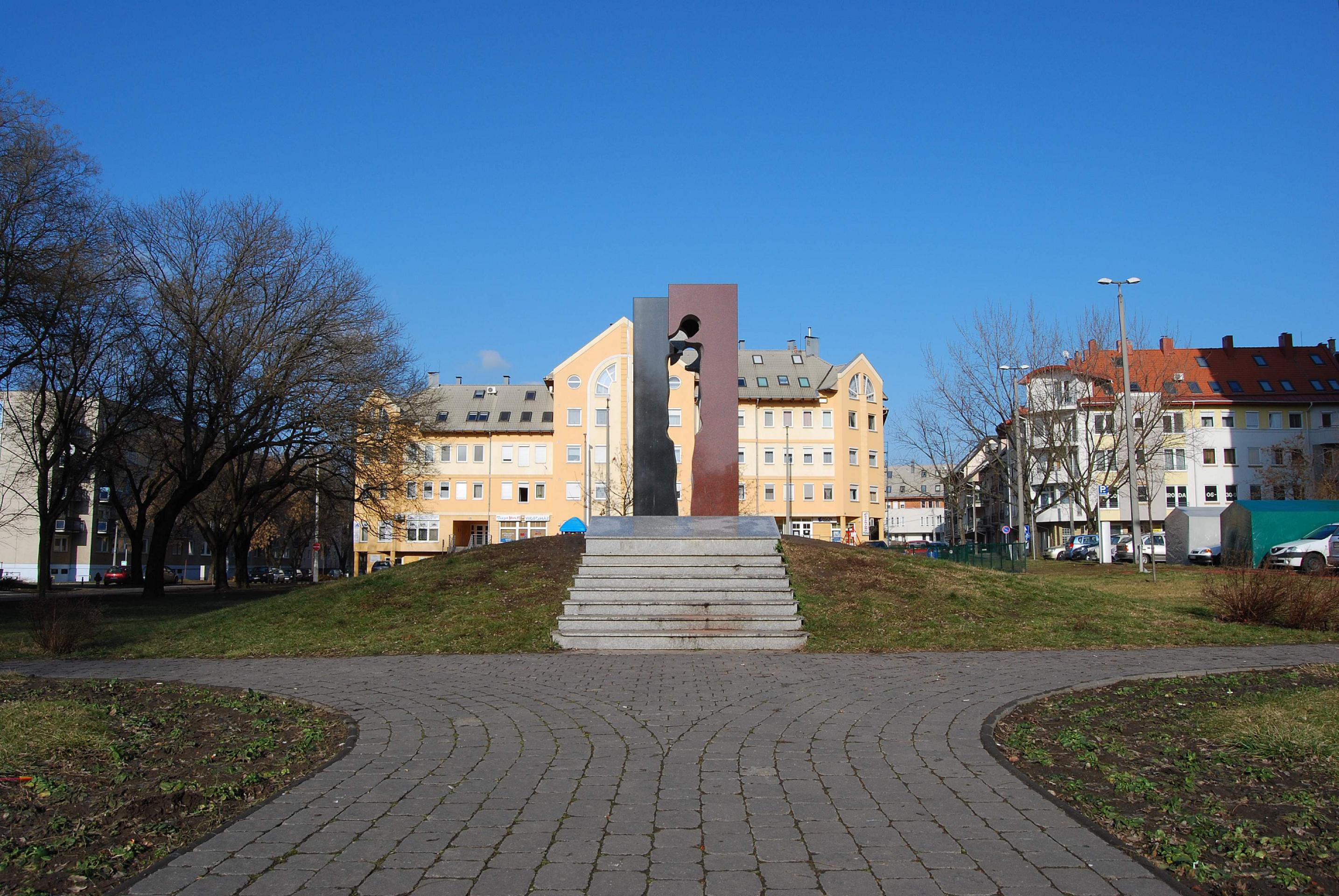
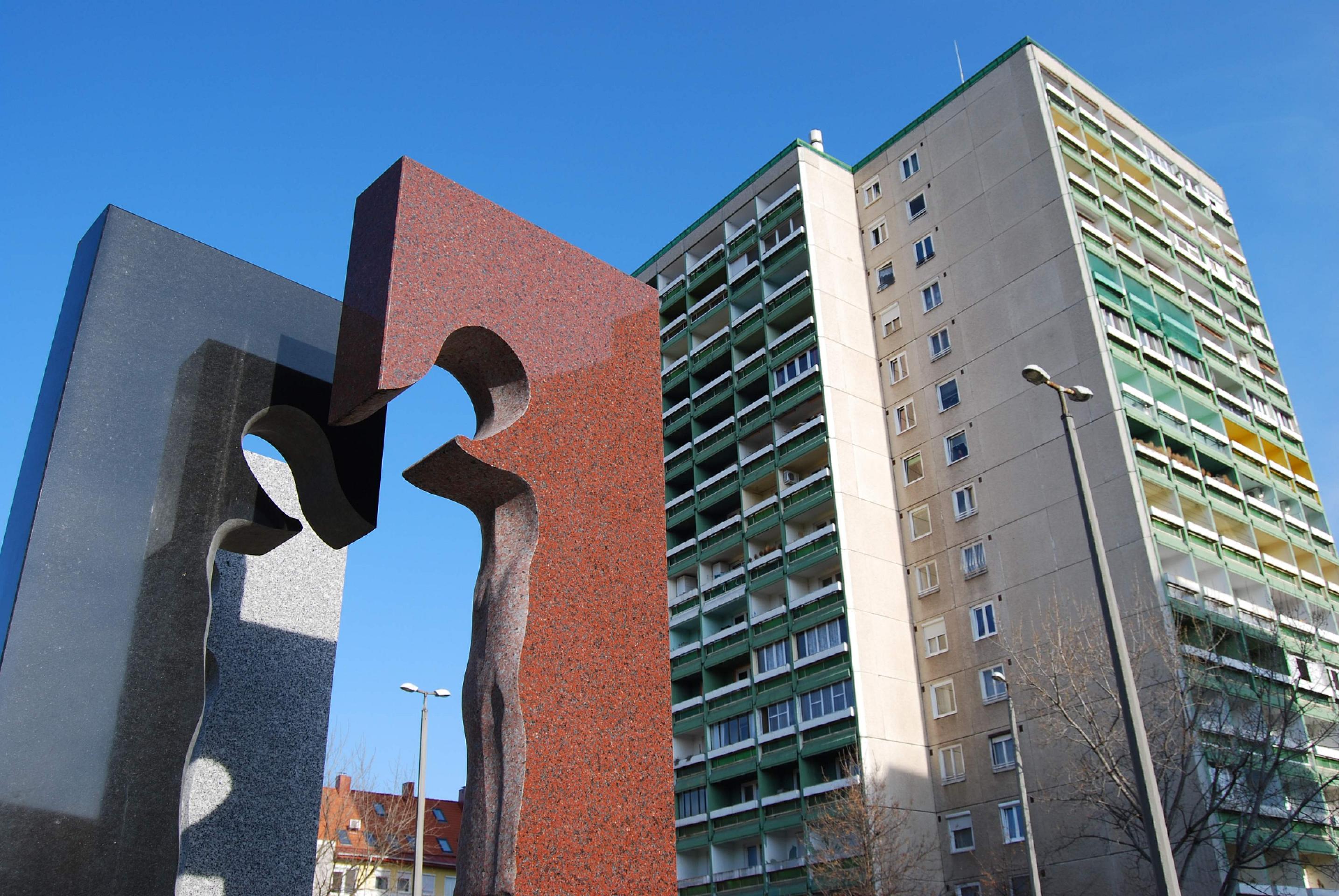
In 2004, a memorial to the murdered Jews of Nyíregyháza was erected in a prominent location in the city.
History
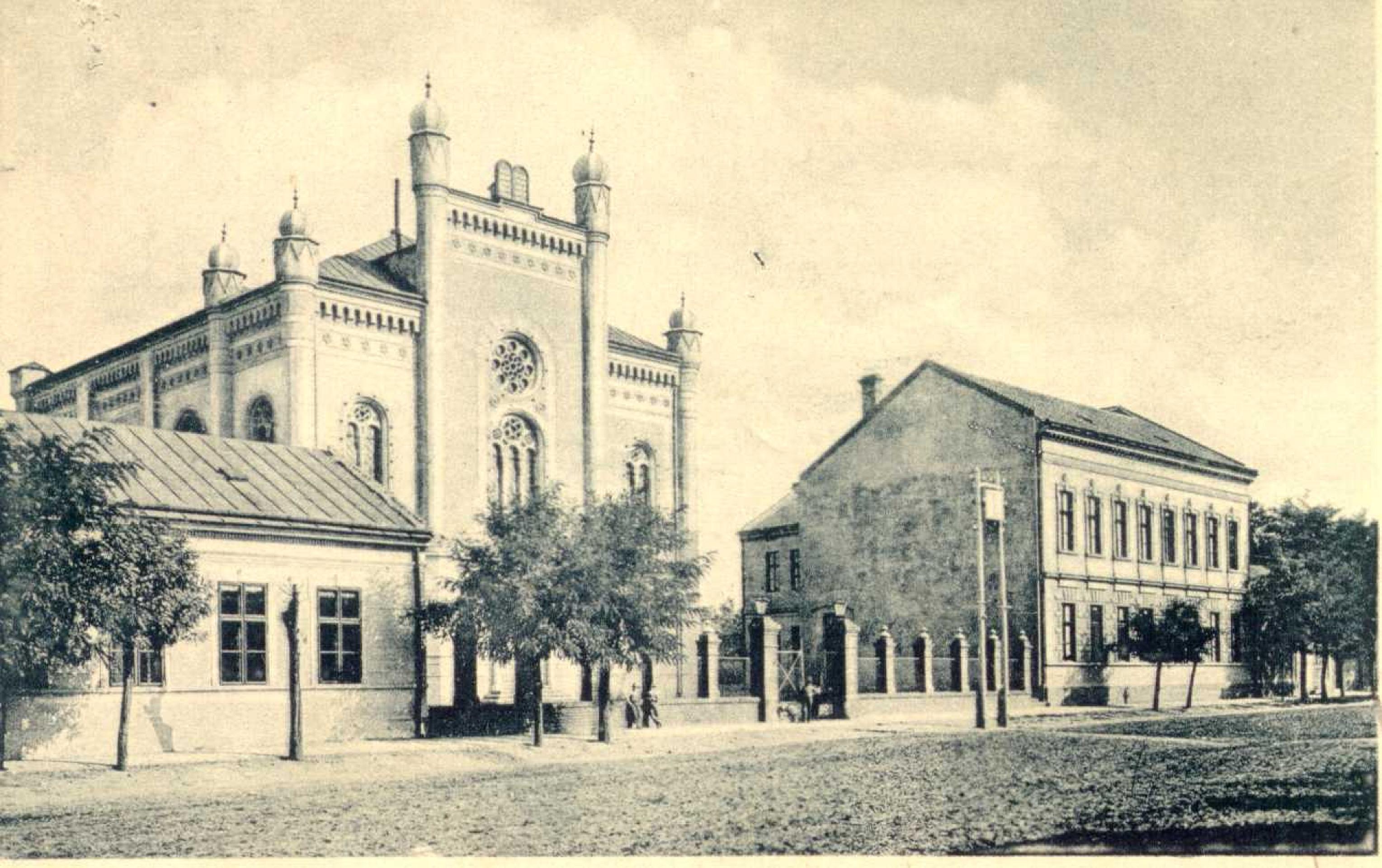
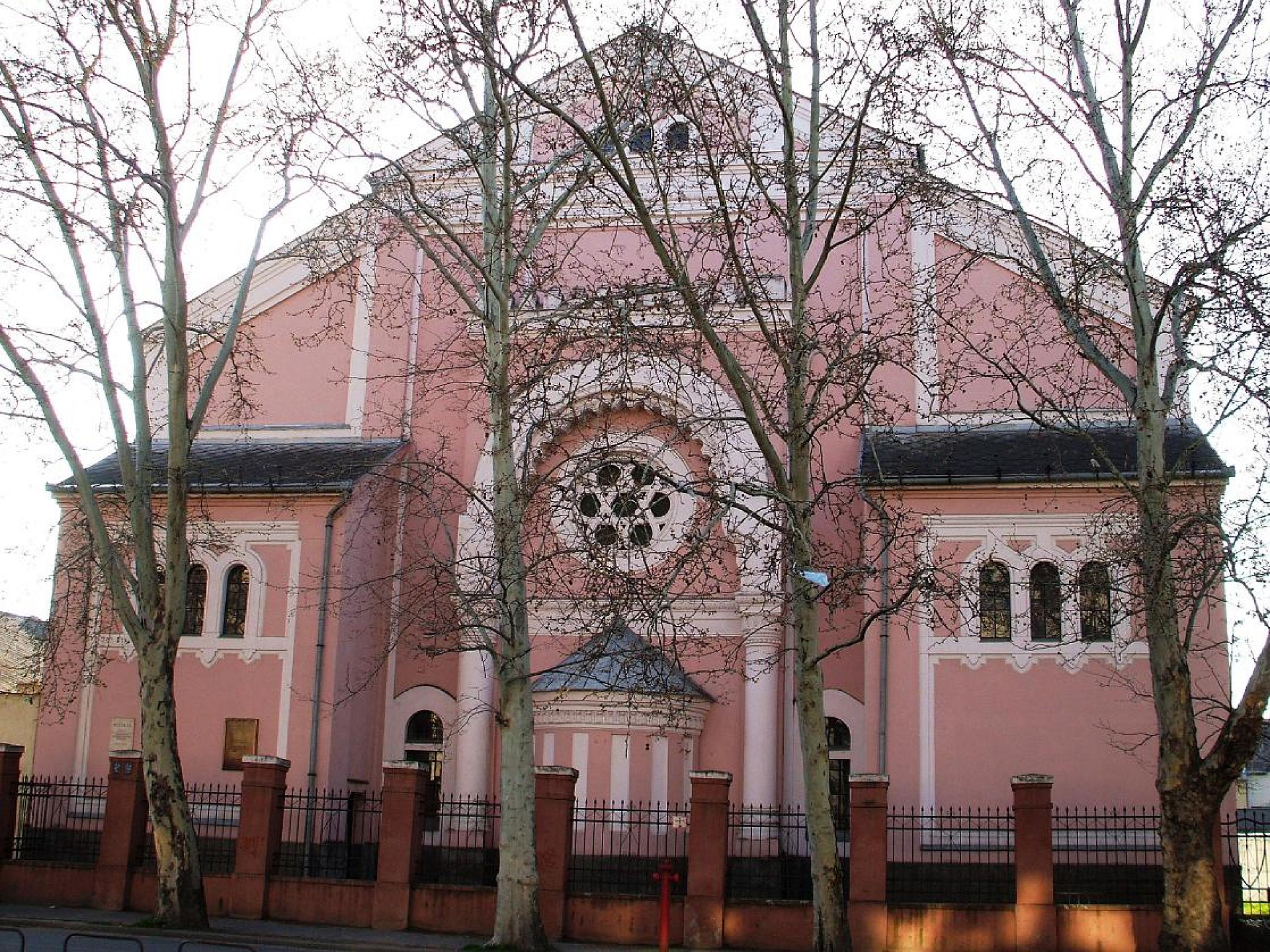
Nyíregyháza is the capital of the Szabolcs-Szatmár county in the north-east of Hungary. The city's rapid development began in the early 19th Century. Jews had lived here since 1840; in 1865, an independent Jewish community was established, which quickly grew. During the schism in the Hungarian Jewish community, most of the community of Nyíregyháza aligned with the »status quo ante« movement, consecrating a synagogue in 1880. The followers of the Orthodox movement built their own synagogue between 1924 and 1932. At the beginning of the 1940s, about 4,500 of the 60,000 residents of Nyíregyháza were Jewish. Nearly 30 percent of businesses were owned by Jews. Around this time, the situation of the Jewish population became increasingly dire: Jews were expropriated, men were drafted for forced labour service for the army and, in 1941, Jews deemed »homeless« were deported to occupied Ukraine, where they were murdered by the SS in Kamianets-Podilskyi.
On April 5, 1944, a few weeks after the German invasion of Hungary, the mayor of Nyíregyháza issued an order by which all Jews were obliged to wear a yellow star. In the following days, the newly installed Judenrat had to compile a list of all Jews living in Nyíregyháza. On April 16, all of the Jews from the surrounding areas were rounded up and forcibly settled in a ghetto in Nyíregyháza. At the end of the month, the Jews from Nyíregyháza too had to move into the ghetto. Several thousand people were crowded in a small area, where the conditions were catastrophic. In May 1944, the ghetto was dissolved in several steps: Hungarian constabulary first took the ghetto inmates in groups to collection camps in the area. The deportations from the collection camps began on May 14. The deportation trains went via Košice, Prešov and Cracow to Auschwitz-Birkenau. The last transport departed from the area of Nyíregyháza on June 4, 1944. The next day, the county was declared »judenfrei« – »free of Jews«.
Victims
Several hundred Jewish men from Nyíregyháza survived the Holocaust because they were drafted for work service before the deportations had begun. Only few of those deported to Auschwitz returned – most of the returnees were young women, who had been selected for forced labour. All the other Jews of Nyíregyháza – about 4,000 – were murdered by the SS in the gas chambers.
Remembrance
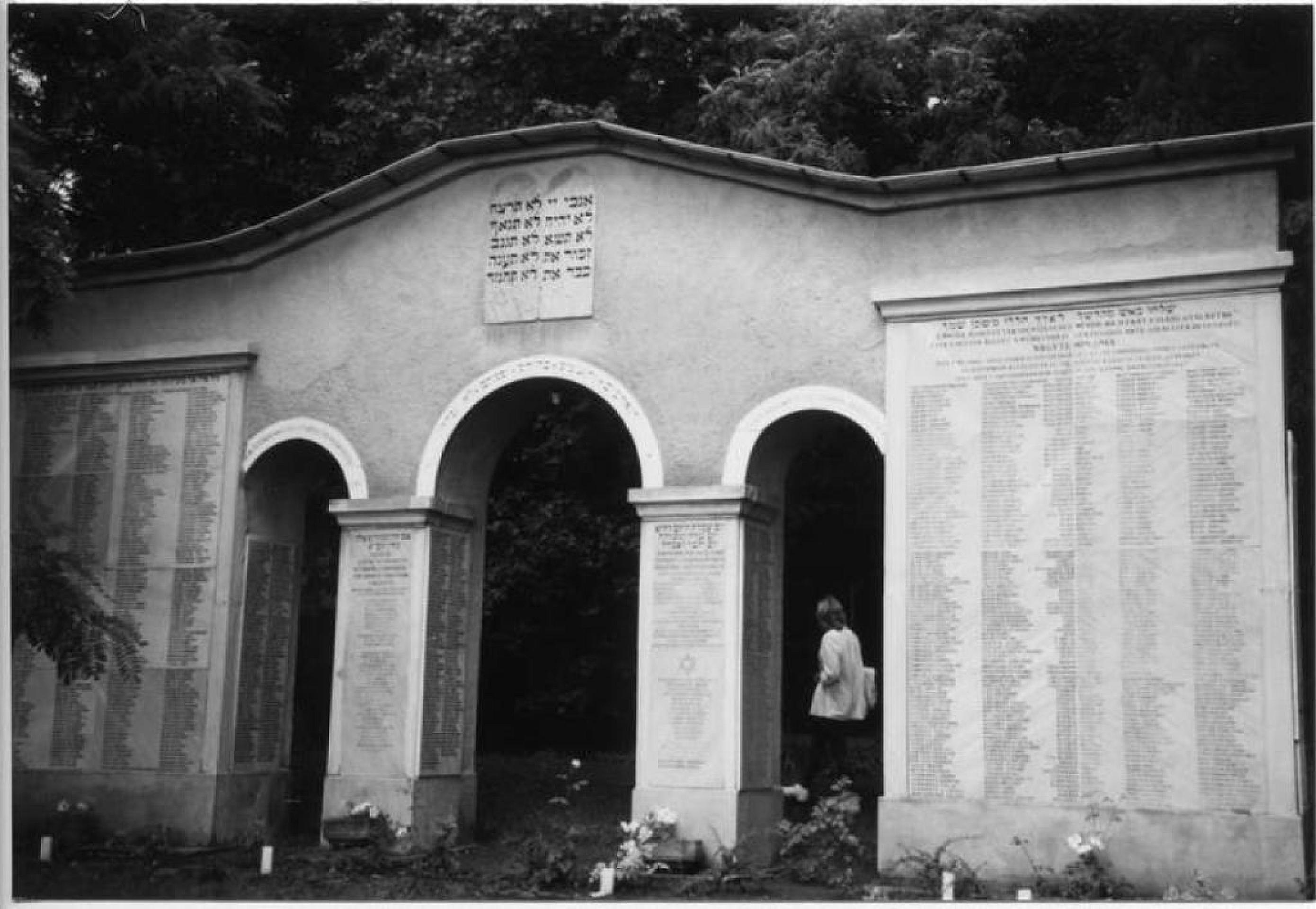
After the war, the two Jewish communities of Nyíregyháza organised themselves anew. Jointly, they had about 1,000 members in 1949. The synagogue of the status quo community was destroyed during the war, it was not rebuilt. One of the remaining outer walls was instead used for commemorating the victims: the names of about 17,000 murdered Jews from north-east Hungary were affixed to the wall on plaques. In 1953, the memorial wall had to make way for a new building. It was moved to the Jewish cemetery, which was first opened in 1844.
Under the communist regime, it was increasingly difficult for Jews to maintain their traditions. Many emigrated, especially in the course of the revolution of 1956. Today, the Jewish community is rather small with only about 100 members. The community does not have its own rabbi.
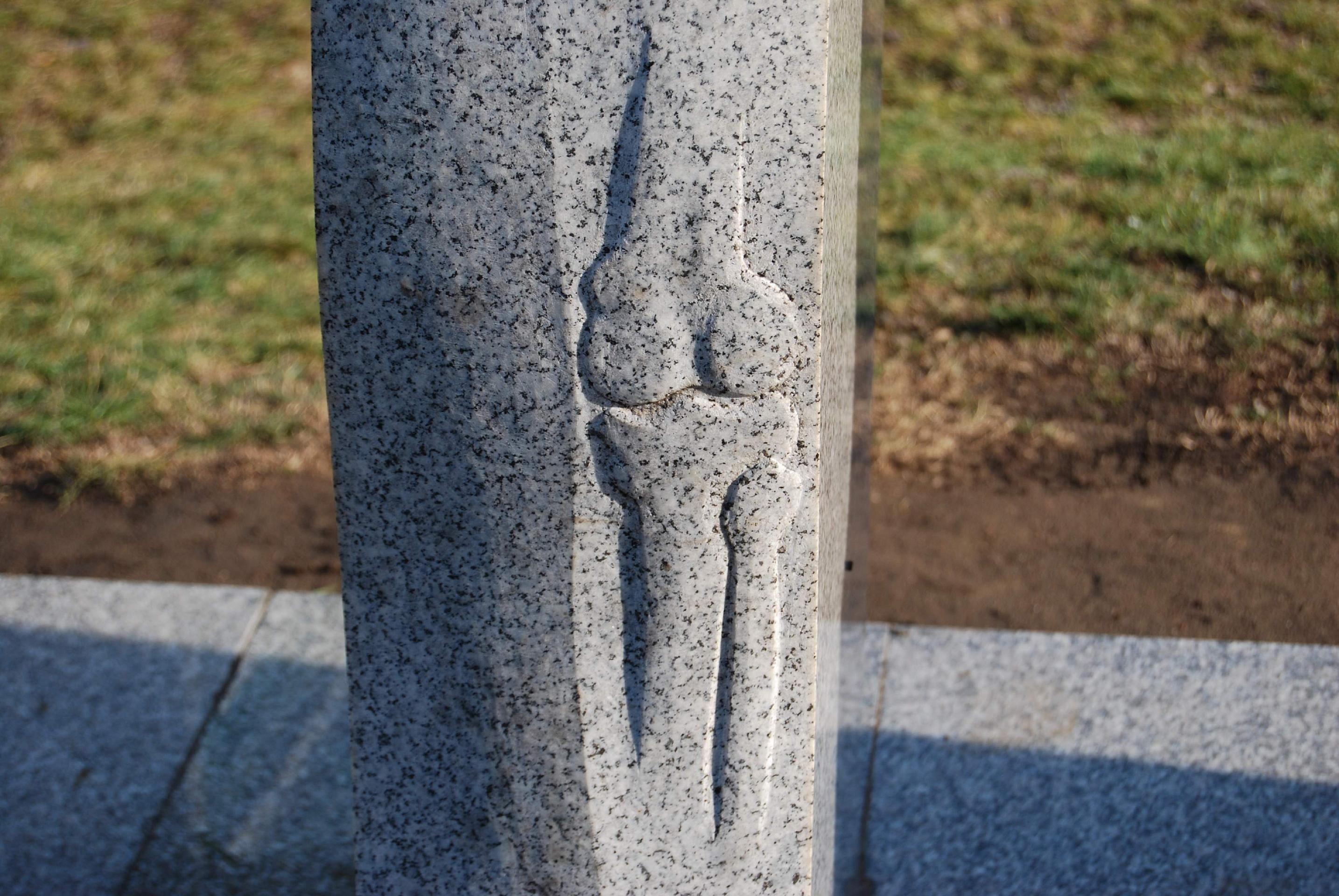
In the summer of 2004, 60 years after the deportations, the city erected a Holocaust memorial on the site of the former ghetto. Designed by Hungarian sculptor László Zagyva, it consists of three 287 centimetre tall granite columns in red, black and grey. Regarded from various perspectives, the columns form human silhouettes. From close up, details such as hands or bones can be discerned.
Possibilities
Annual commemorative ceremonies
Open
The memorial is always accessible.
Contact
nyirzsido@gmail.com
+36(0)42 417 939
Sólyom utca
4400 Nyíregyháza