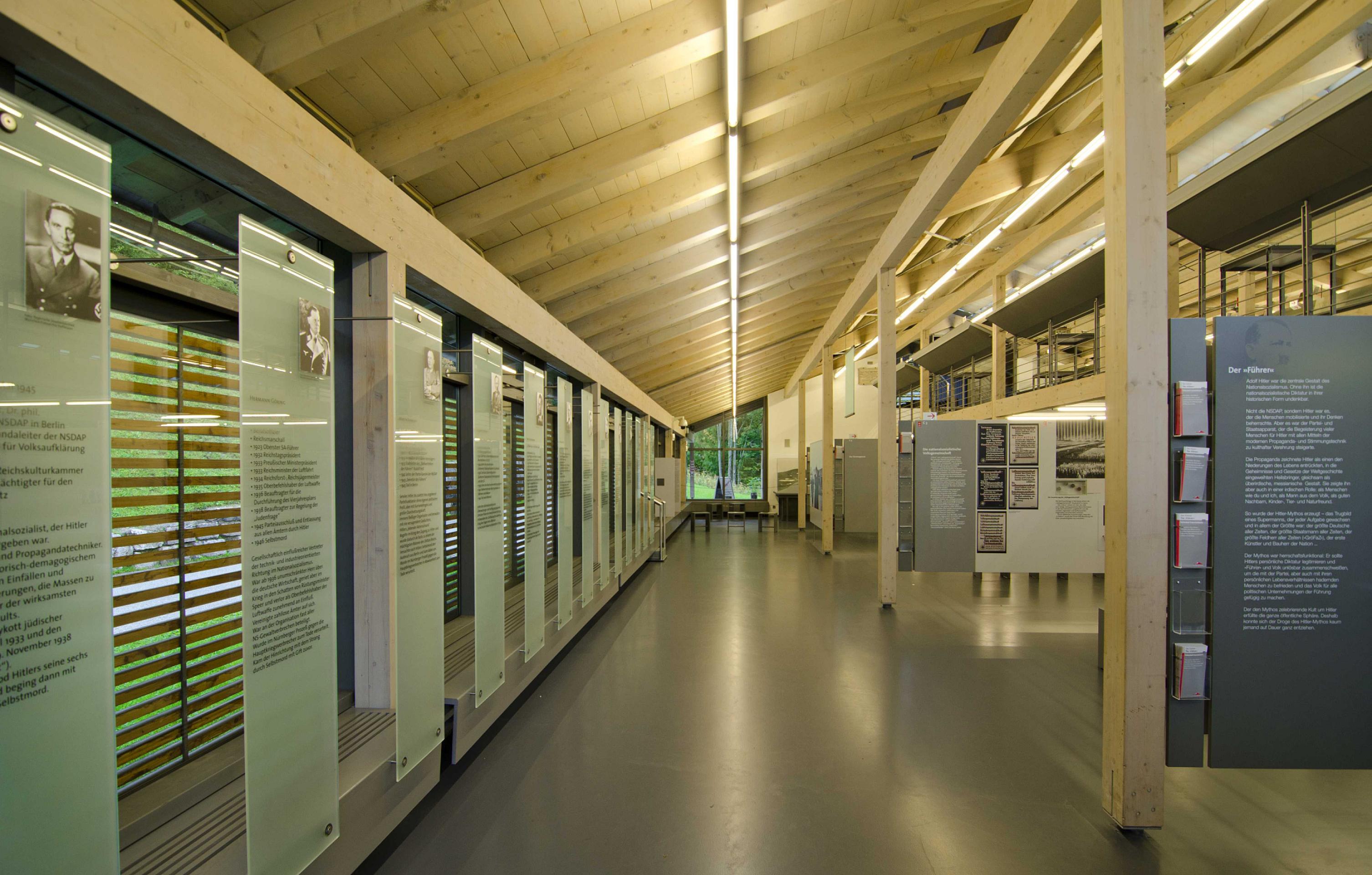
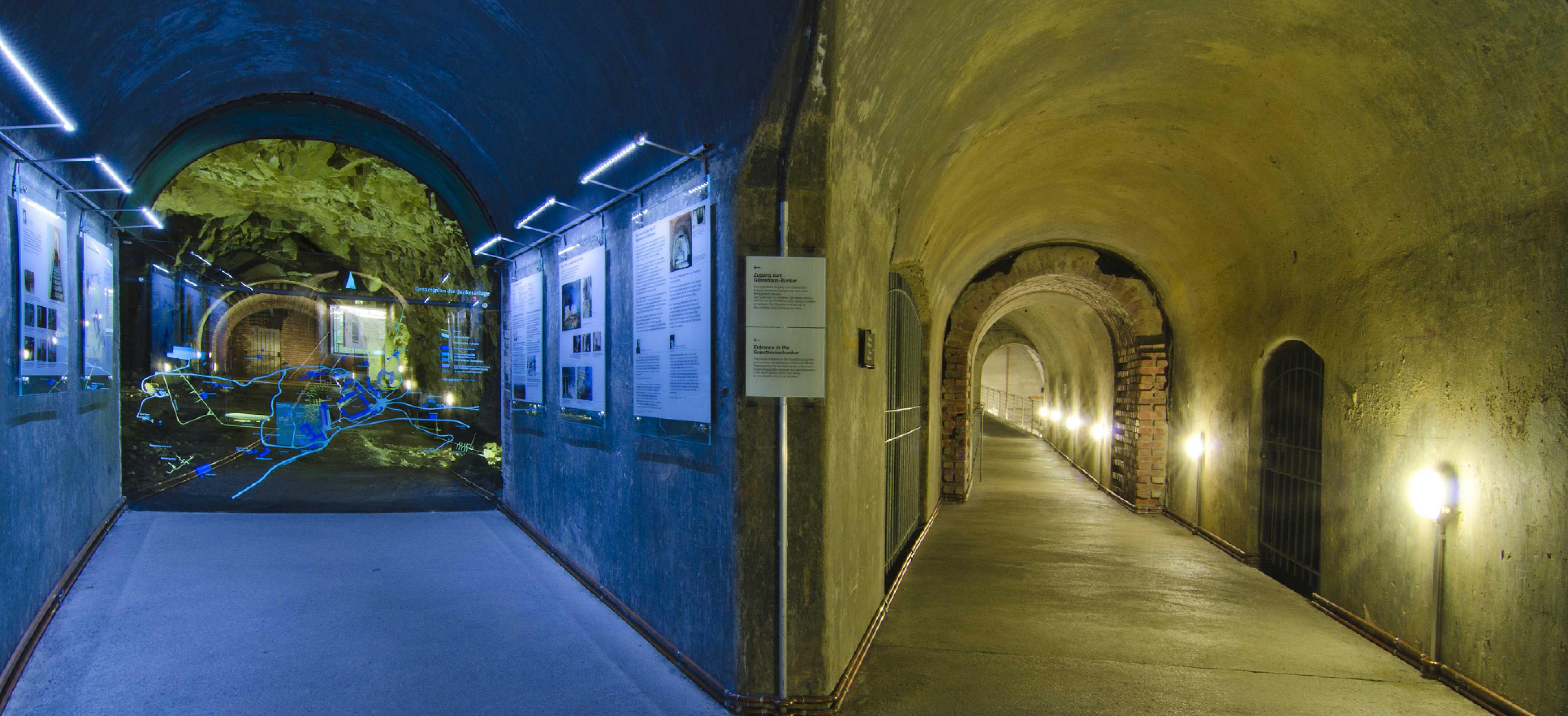
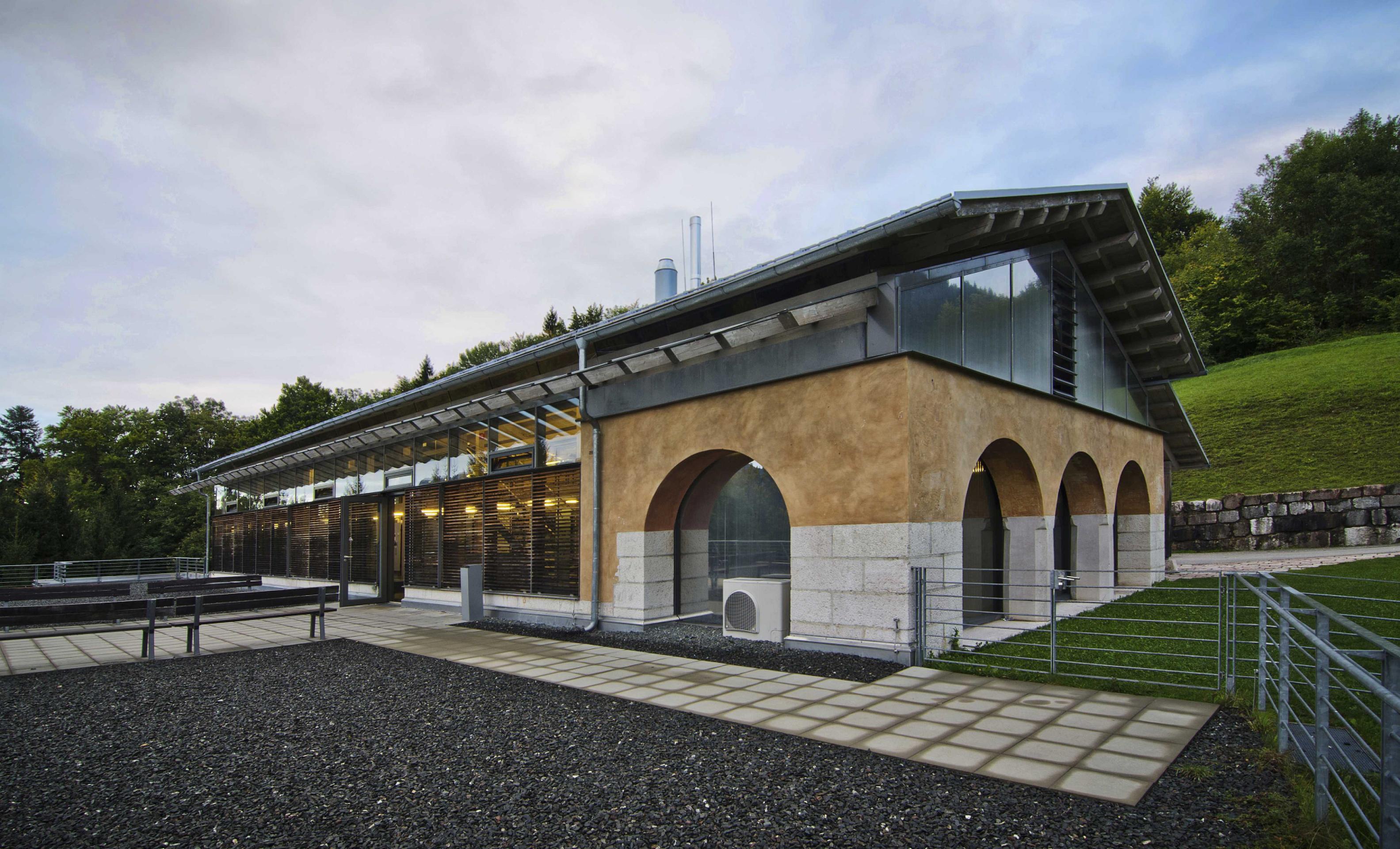
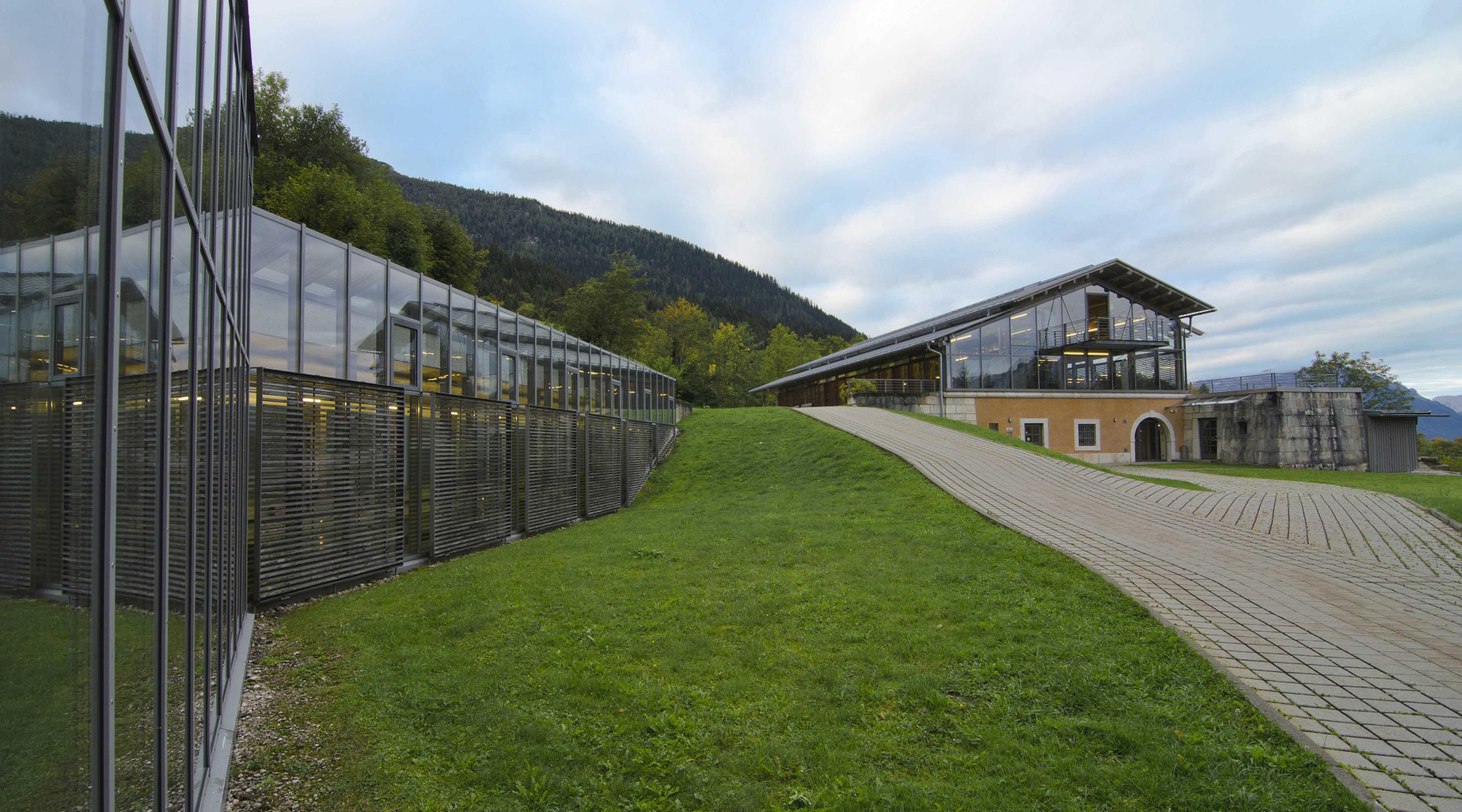
The »Obersalzberg Documentation« presents the history of National Socialism and the history of the »Berghof« closely linked to it. Between 1933 and 1945, Adolf Hitler extended his holiday home on the Obersalzberg by several buildings and used the »Berghof« as a second seat of government in addition to Berlin.
History
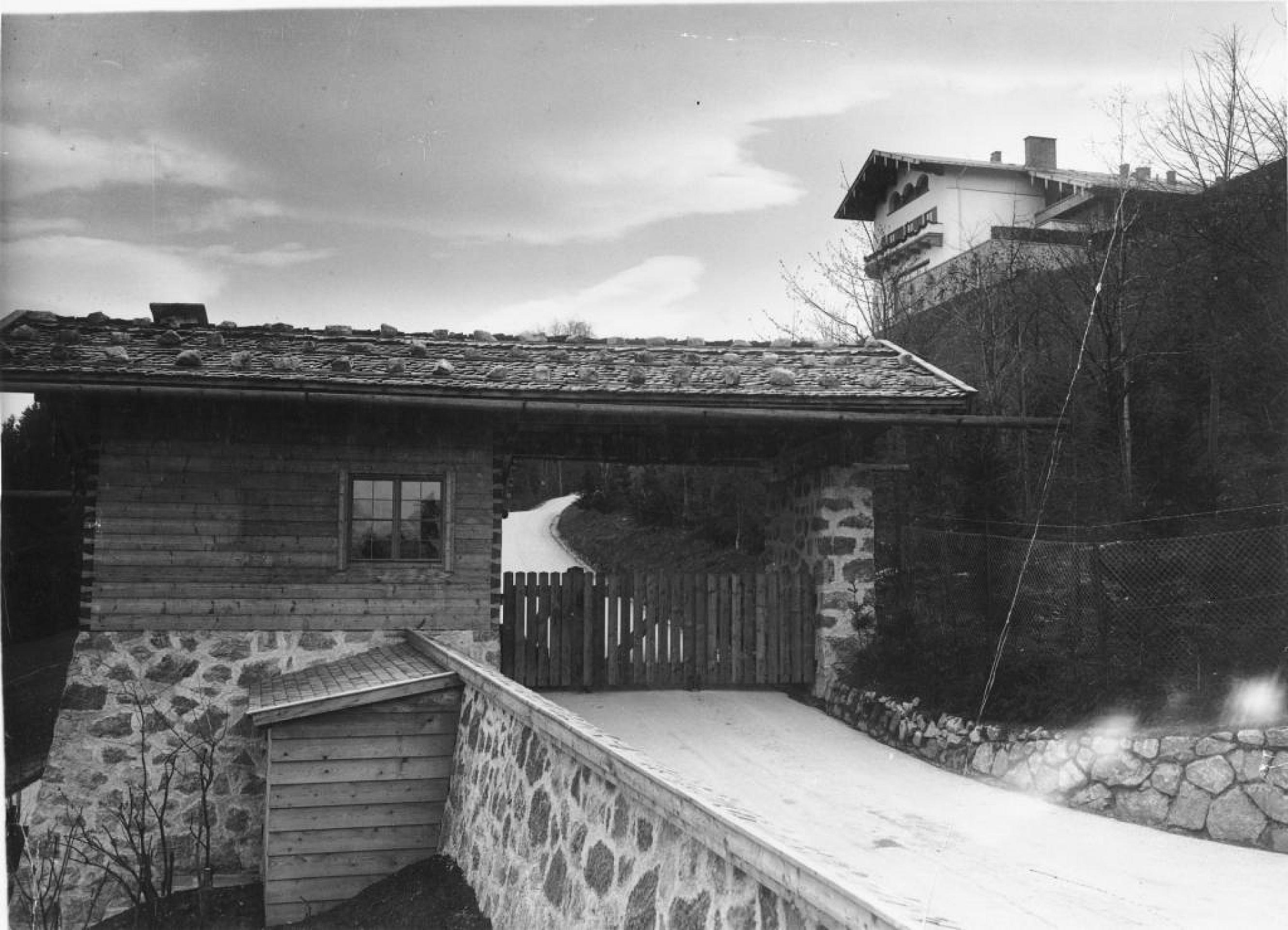
Hitler first visited the Obersalzberg, a foothill of the Kehlstein in the Berchtesgaden Alps, in 1923. He frequently returned to Obersalzberg and from 1928 on, rented the Wachenfeld house, which he went on to purchase in 1933. In the following years, the country house was extended into the »Berghof« - here Hitler could pursue governmental issues and receive guests of state. Further National Socialist politicians and functionaries moved to Obersalzberg: Hermann Göring, Albert Speer and Martin Bormann. From 1937 on, the »Berghof« became an official seat of government when the »Reich chancellery Berchtesgaden office« was set up. Additional buildings were erected, among them SS barracks and later an underground bunker complex. The Obersalzberg was declared a »Führersperrgebiet« (Führer's restricted area) and was no longer accessible to the public. The National Socialist leadership made important decisions at the »Berghof«: for example, on August 22, 1939, Hitler informed Wehrmacht generals about the impending war against Poland at the site. On April 25, 1945, British bombers destroyed the premises.
Victims
Obersalzberg was a site on which National Socialist crimes were planned and decided upon, although it was not a site for the execution of those crimes. It was also a place at which Hitler was portrayed as a private citizen for propaganda purposes.
The entry to power of the National Socialists in 1933 heralded the state persecution of opponents of the regime, Jews, Roma – who were classed as »gypsies« -, the sick and many other groups. For the first time, anti-semitism became part of the government policy of a modern state and the persecution of all groups was progressively heightened. The process was characterised by the interplay between state regulation, violence from supporters of the regime and rabble-rousing propaganda from the press. The acts of terror against the Jews in November 1938 (»The Night of the Broken Glass«), culminating in around one hundred deaths, marked the prelude to the complete exclusion and murder of the Jewish minority.
With the outbreak of the Second World War in September 1939, large parts of Europe fell under German control. In Eastern Europe in particular a multi-tiered system of camps and extermination sites was established, in which the SS murdered up to six million Jews, among them around 165,000 German Jews. It is estimated that around seven million Germans lost their lives in the war, including almost 3.5 million civilians. Around 28 million residents of the occupied Soviet Union (both soldiers and civilians) and three million non-Jewish Poles met a violent death. These groups are still barely commemorated in Germany.
Germany came under Allied occupation in 1945 and 1949 saw the foundation of the German Democratic Republic (GDR) and the Federal Republic of Germany (FRG), who had very different cultures of remembrance. The GDR profiled itself as an »antifascist« state. The former concentration camps at Buchenwald, Ravensbrück and Sachsenhausen became »National Memorials« and primarily documented the communist resistance during the war.
In the Federal Republic, the dominant memory was initially of the victims of Allied bombing raids and those who had fled or been expelled from their homes in the former territory of the Third Reich. It was left to specific groups to remember Nazi persecution, the Holocaust or the resistance. With the exception of the war crimes trials, there was no public discussion of perpetrators or involvement in crimes. However, the situation was to change in the mid-1960s, when the statute of limitations for murder was lifted following a lengthy debate. Also during this period, memorial sites were established at former concentration camps (1965: Dachau and Neuengamme; 1966: Bergen-Belsen) and the German Resistance Memorial Centre was opened in 1968 in West Berlin. However, it was not until the 1980s that a diverse and often small-scale landscape of memory developed as the result of local initiatives.
Following German unification in 1990, a national memorial site concept was developed and there was a major review of German sites of memory. The Memorial to the Murdered Jews of Europe in Berlin was inaugurated in 2005. The Topography of Terror, a comprehensive documentation of National Socialist crimes and perpetrators, has opened with a new centre in May 2010; the documentation centre »Flight, Expulsion, Reconciliation« followed suit in 2021. In the meantime, central memorials in Berlin have been erected to commemorate further groups of Nazi victims as well: the murdered Sinti and Roma, the patients murdered in the context of the Nazi’s »Euthanasia« killings and the persecuted homosexuals.
The German victims of National Socialist terror in the former Eastern territories of the Third Reich were forgotten by both German states after the end of the war. For decades, memory of these victims was only preserved by West German associations for Germans born in these territories and it mainly excluded the period from 1933 to 1945.
Remembrance
After US troops had taken the Obersalzberg, the area was declared a restricted zone. In 1949, the Allies handed over Obersalzberg to the Free State of Bavaria. In 1952, the ruins of the »Berghof« and neighbouring buildings were blown up in order to prevent the site from becoming a magnet for admirers of National Socialism. The Kehlsteinhaus (also known as the Eagle's Nest) on the peak of the Kehlstein and the former Hotel Platterhof continued to be used: The Kehlsteinhaus was leased out in 1952 and until today houses a restaurant. Between 1953 and 1996, the US Army used the former Hotel Platterhof as an »Armed Forces Recreation Center« for soldiers and their families. In 1996, the Americans handed the Obersalzberg premises over to the Free State of Bavaria for its own use. In 1999, the Institute of Contemporary History Munich-Berlin opened the »Obersalzberg Documentation«.
Possibilities
Permanent exhibition, temporary exhibitions, guided tours, workshops for students and soldiers, advanced education for teachers, winter exhibitions, miscellaneous events such as panel discussions
Open
November to March: Tuesday to Sunday 10.00 a.m. to 3.00 p.m.
April to October: Monday to Sunday 9.00 a.m. to 5.00 p.m.
Closed on January 1, November 1 and on December 24, 25 and 31.