The museum in the Old Synagogue in Erfurt was opened in 2009. Both the displayed artefacts and the building itself illustrate the history of the Jewish community in Erfurt.
History
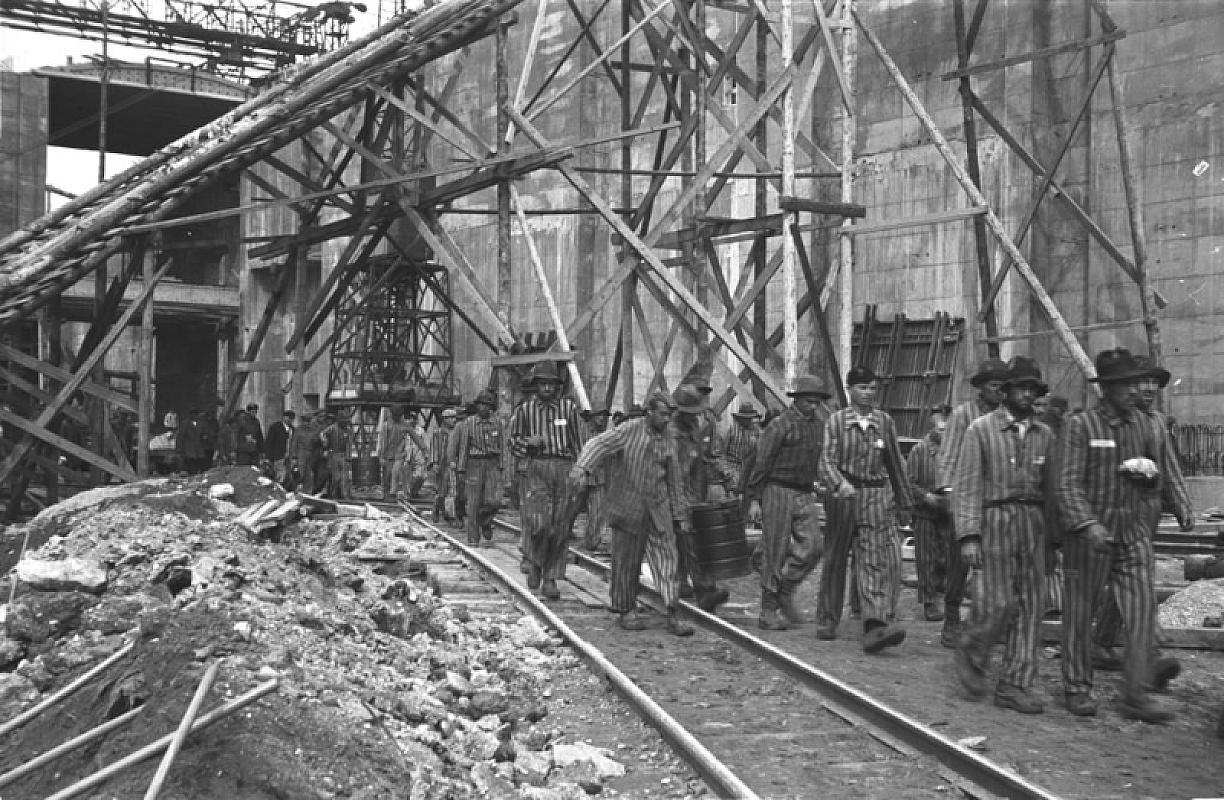
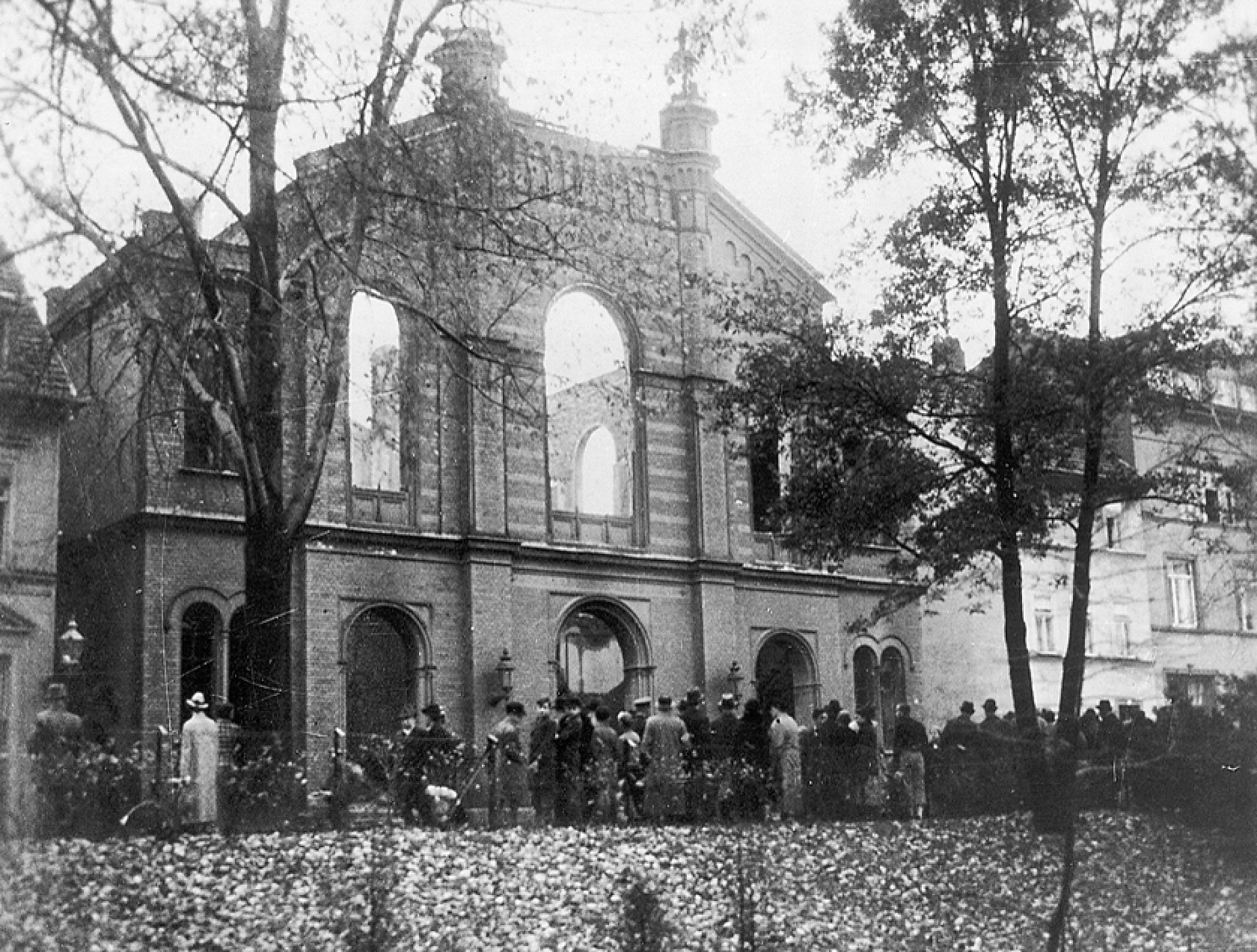
During the Middle Ages, Erfurt was an important centre of Jewish life in Europe. The Jewish community, which had scholars and merchants among its members, strongly influenced the economic and intellectual life of the city. This era came to an end with the pogrom of 1349. After the Jews' final expulsion from the city in 1485, the city had no Jewish residents. Only under Prussian rule did Jewish merchants return to Erfurt and receive the same rights as Christians. In 1840, the Jews of Erfurt dedicated a new synagogue. Soon, this building did not meet the requirements of the rapidly growing Jewish community so the new Great Synagogue was inaugurated in 1884. The community continued to grow: in 1853, there were 191 Jews in Erfurt; in 1900, there were 782. After the NSDAP had taken power, the National Socialists organised a boycott of Jewish businesses. By 1936, the number of Jews living in Erfurt had sunk to 660. During the »Kristallnacht« on November 9/10, 1938, the National Socialists destroyed the Great Synagogue. 197 Jewish men were arrested and deported to the Buchenwald concentration camp. During the war, the SS and the Gestapo deported nearly all Jews who had remained in Erfurt to concentration camps and ghettos in the east.
After the war, a few Jews returned to Thuringia and established the Jewish community in Erfurt and vicinity anew. In the years that followed, however, many left for Israel due to the political situation. With the exception of the Jewish community in Erfurt, the second-largest in the GDR after Berlin, all Jewish communities in Thuringia were dissolved. The synagogue in Erfurt, which had been inaugurated in 1952, became more and more derelict. In 1988, the Jewish community in Erfurt consisted of only 30 members.
Victims
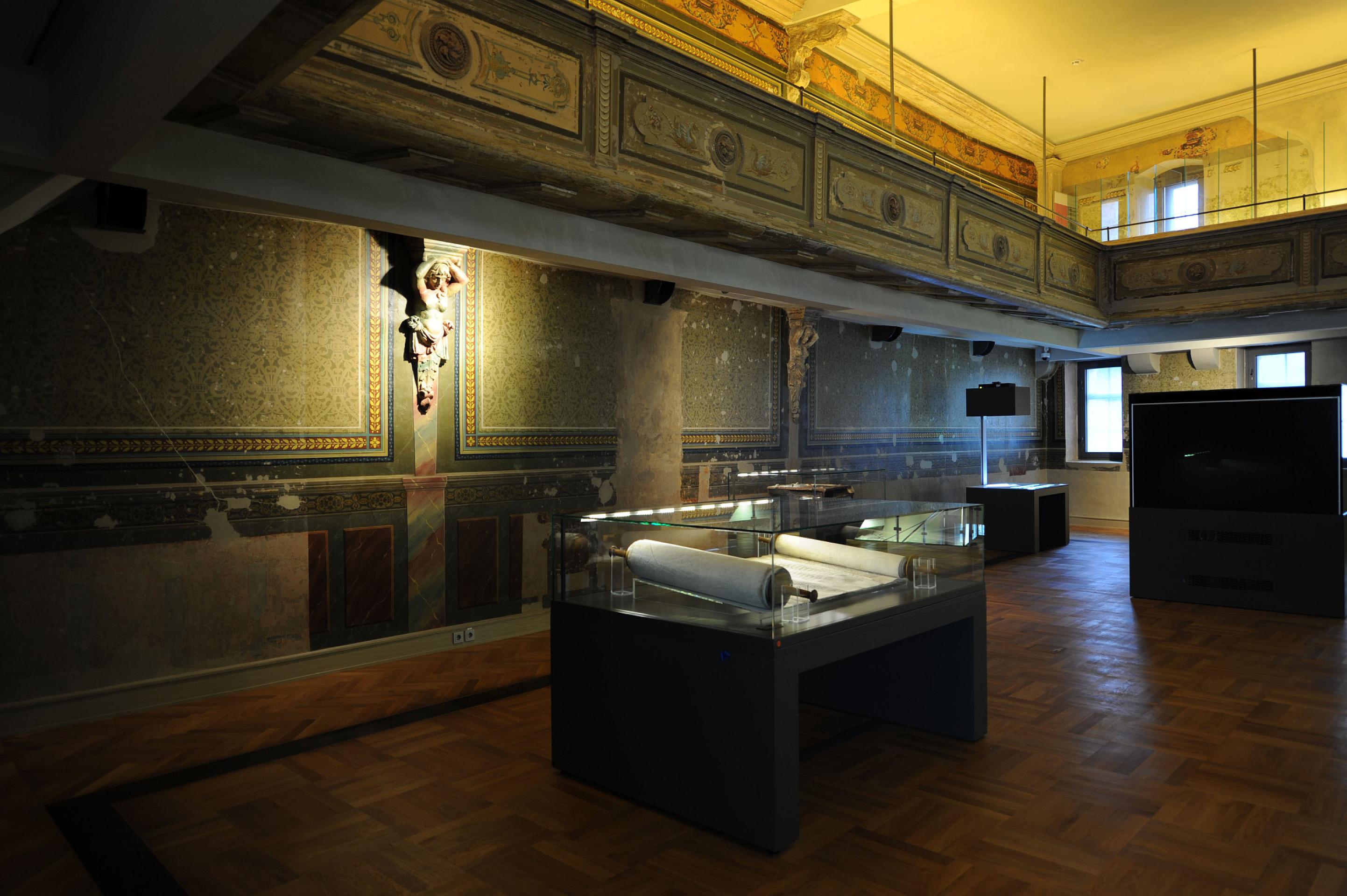
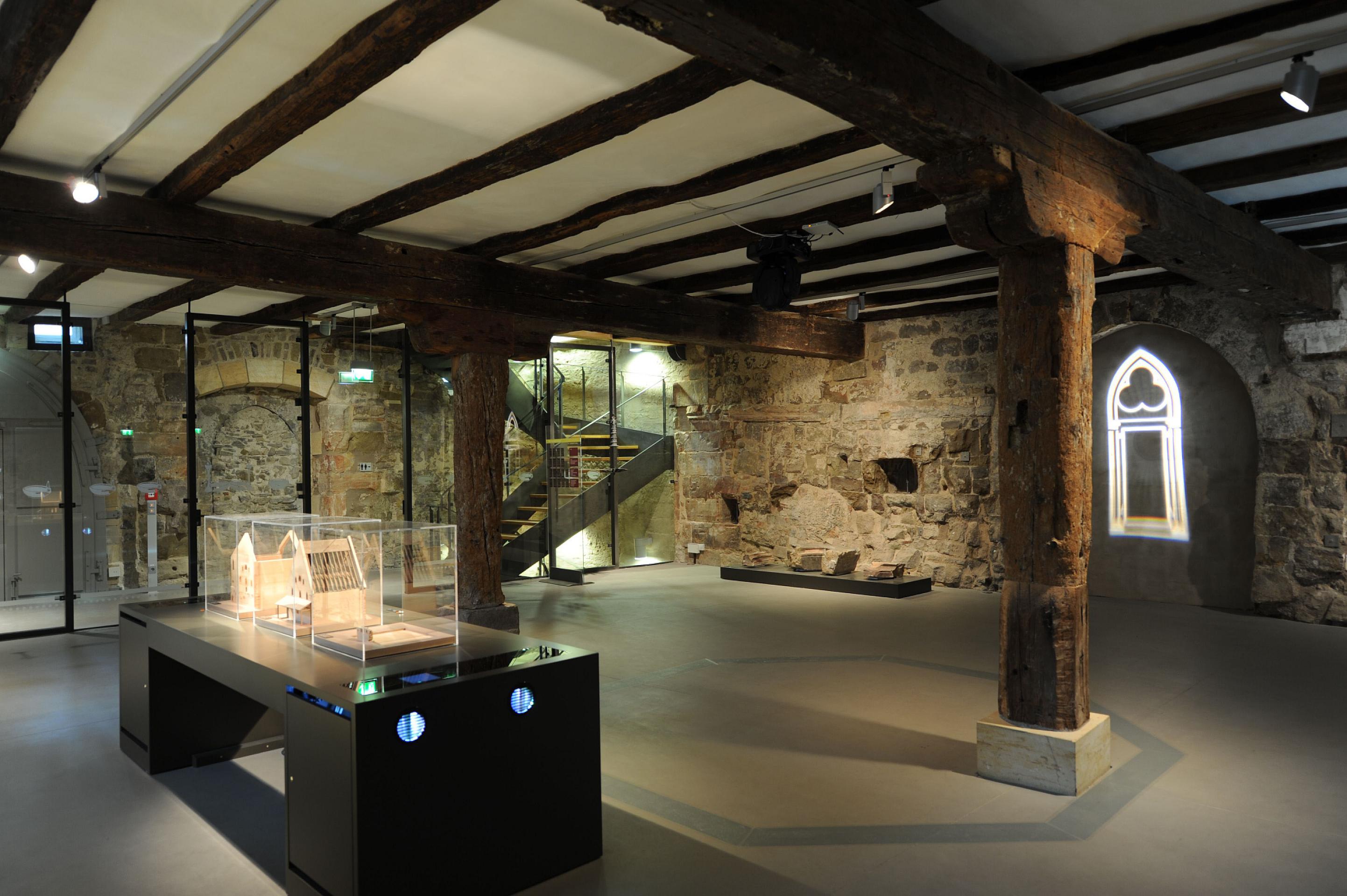
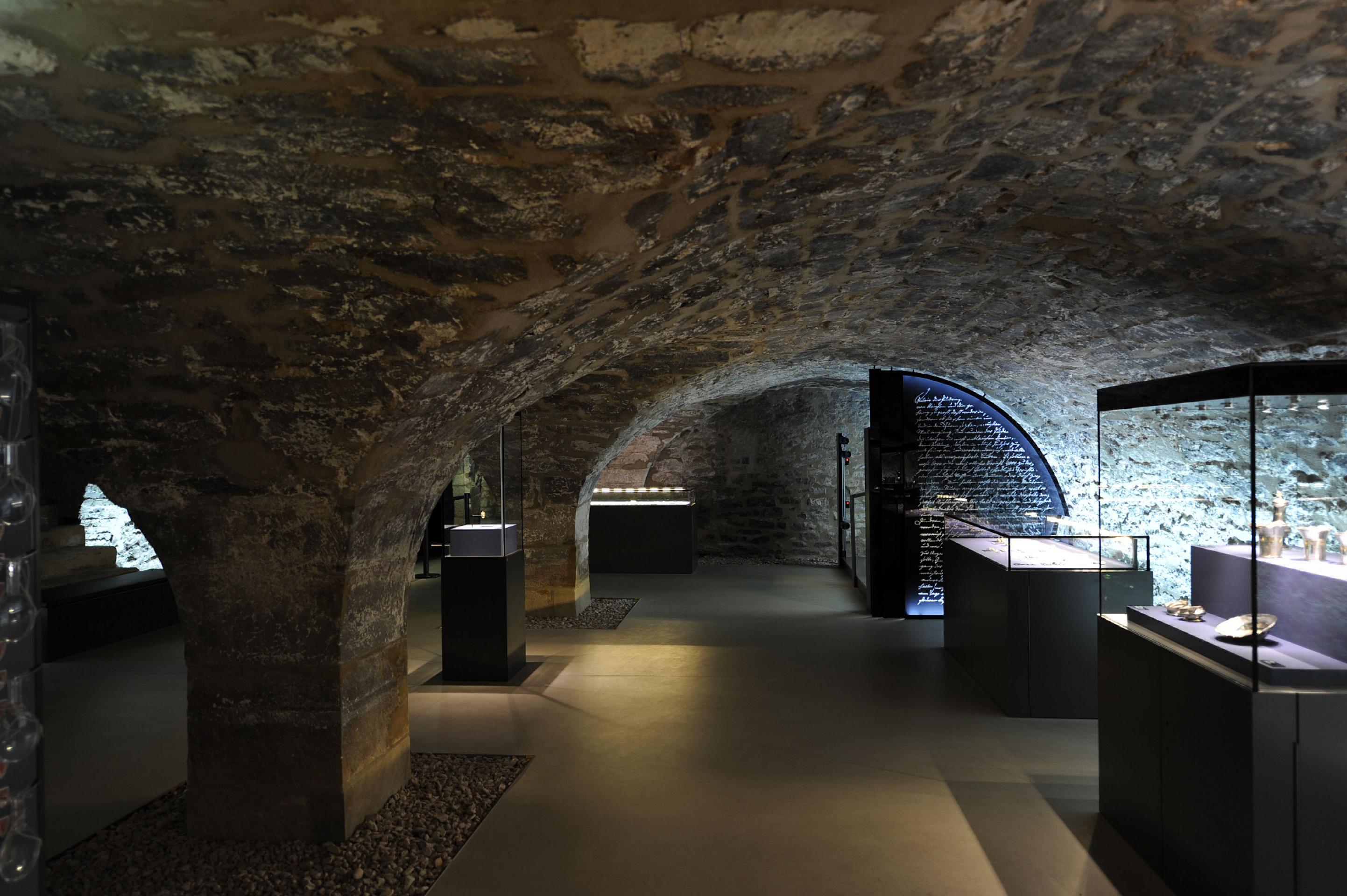
The exhibition in the Old Synagogue presents models, artefacts and scriptures with the help of which the history of Jewish life in Erfurt during the Middle Ages is told.
Remembrance
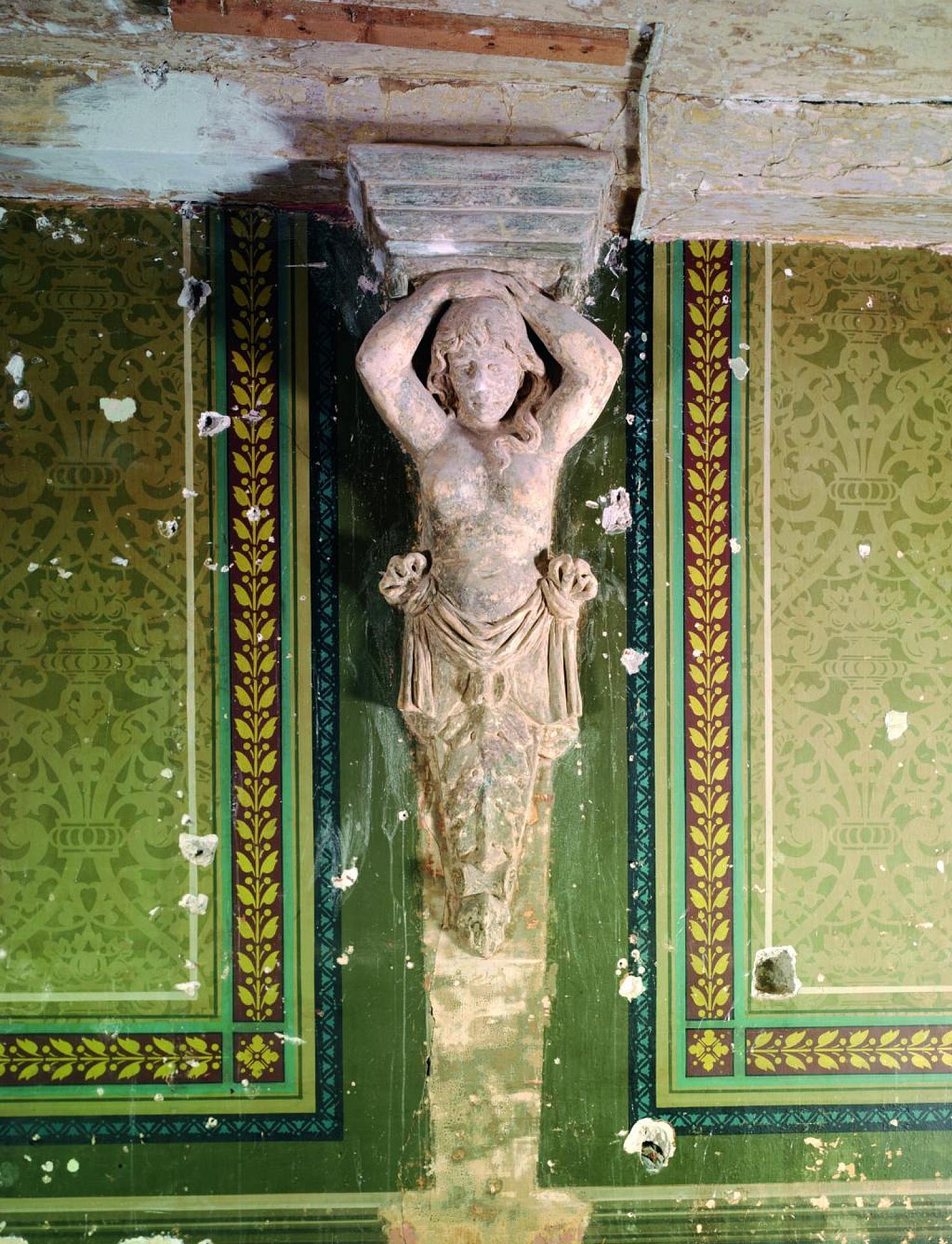
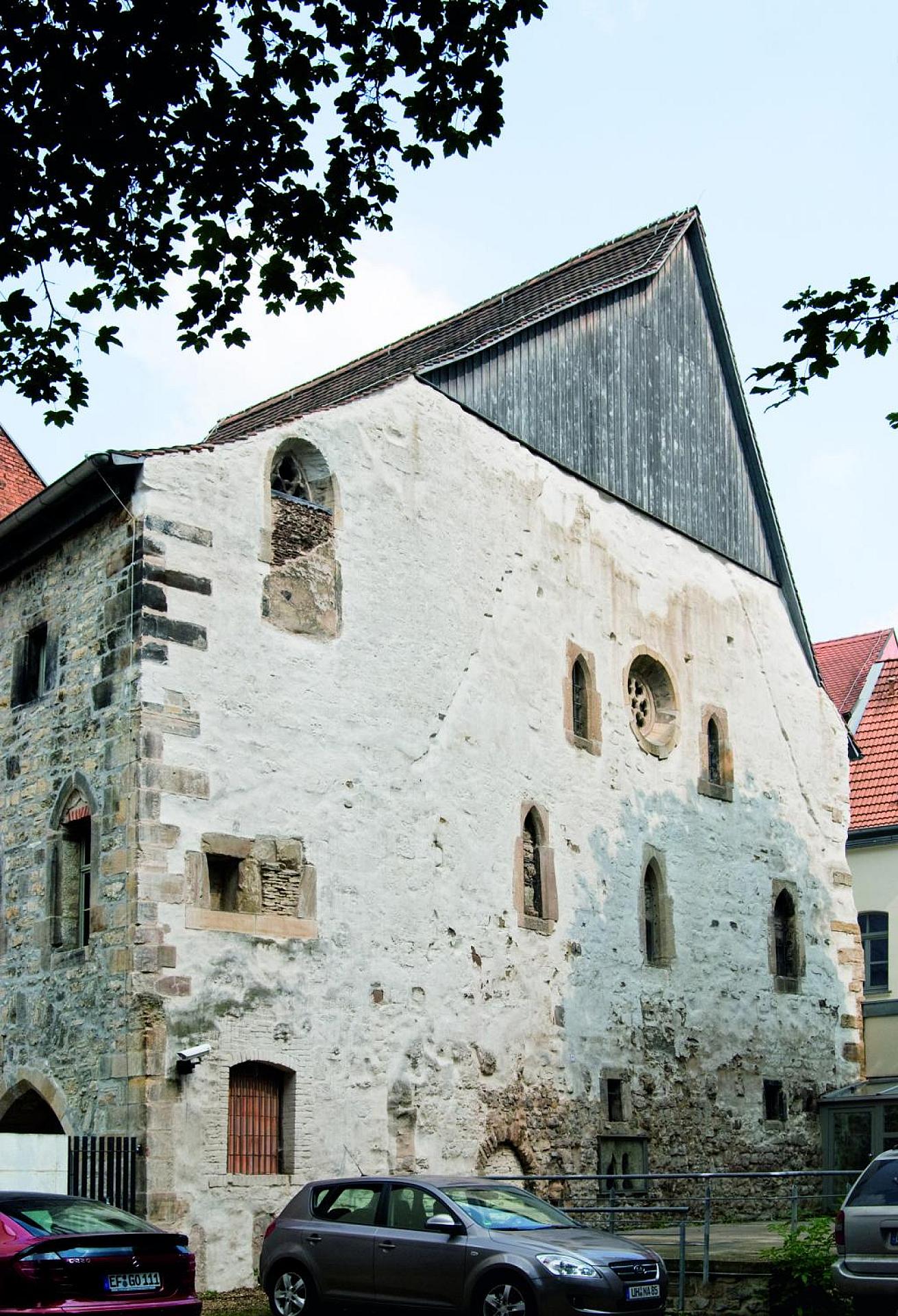
The Old Synagogue, the oldest parts of which date back to the 11th century, is considered to be Europe's oldest intact synagogue. The building was not destroyed throughout the centuries due to the fact that its initial function was largely forgotten. In the course of the 500 years after the pogrom of 1349, when the synagogue was severely damaged, the building was used as a warehouse. In the late 19th century, the building was used as a tavern. Located on the first floor was a dance hall in which the stucco figures and colourful ornamental painting for the most part remain. The suspended ceiling has been replaced by a gallery; situated on the ground floor were a kitchen and a guest room. There were bowling alleys on both the ground floor and in the basement.
When the building was restored at the beginning of the 1990s, its various functions over the centuries were made visible. In 2009, the city of Erfurt opened a museum in the building. The valuable artefacts presented in the exhibition, such as the Hebrew scripts of the Jewish community, make the Middle Ages its focal point.
Two other synagogues in Erfurt testify to the history of Jewish life in Erfurt. The Small Synagogue, built in 1840, was used as a synagogue only until 1884. It henceforth served as a residential building and a warehouse, which spared it from being destroyed by the National Socialists. In 1884, the Jewish community opened the Great Synagogue, a domed structure which could seat 500 people. It was destroyed by the National Socialists on November 9/10, 1938. The New Synagogue was built on the same site in 1952, the only synagogue to be built during the existence of the GDR.
Possibilities
Permanent exhibition on the history of Jewish life in Erfurt during the Middle Ages, audio guides, guided tours by appointment
Open
Tuesday to Sunday 10 a.m. to 6 p.m.
Contact
http://www.alte-synagoge.erfurt.de
altesynagoge@erfurt.de
+49 (0)361 655 160 8
An der Stadtmünze 4/5
99084 Erfurt