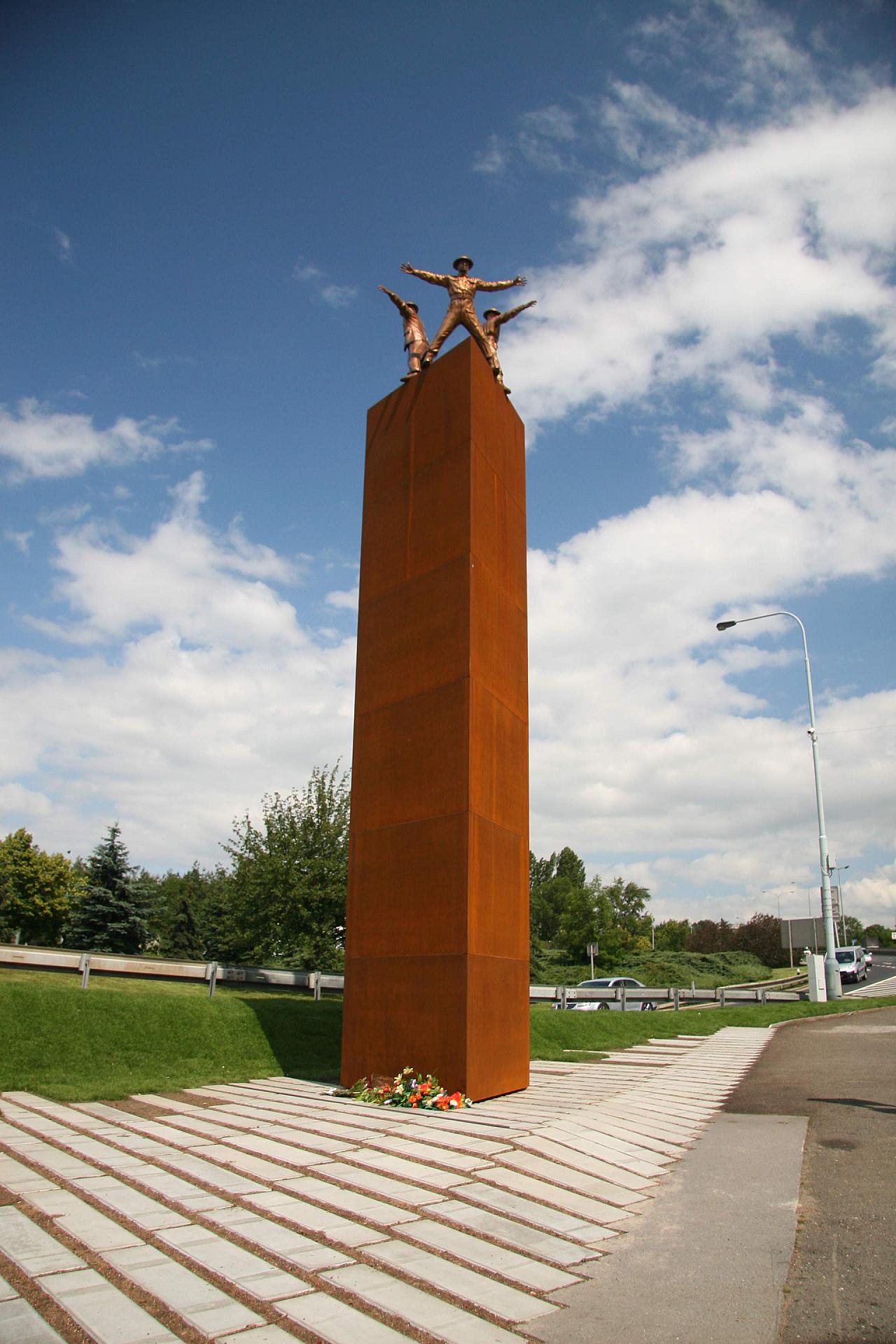
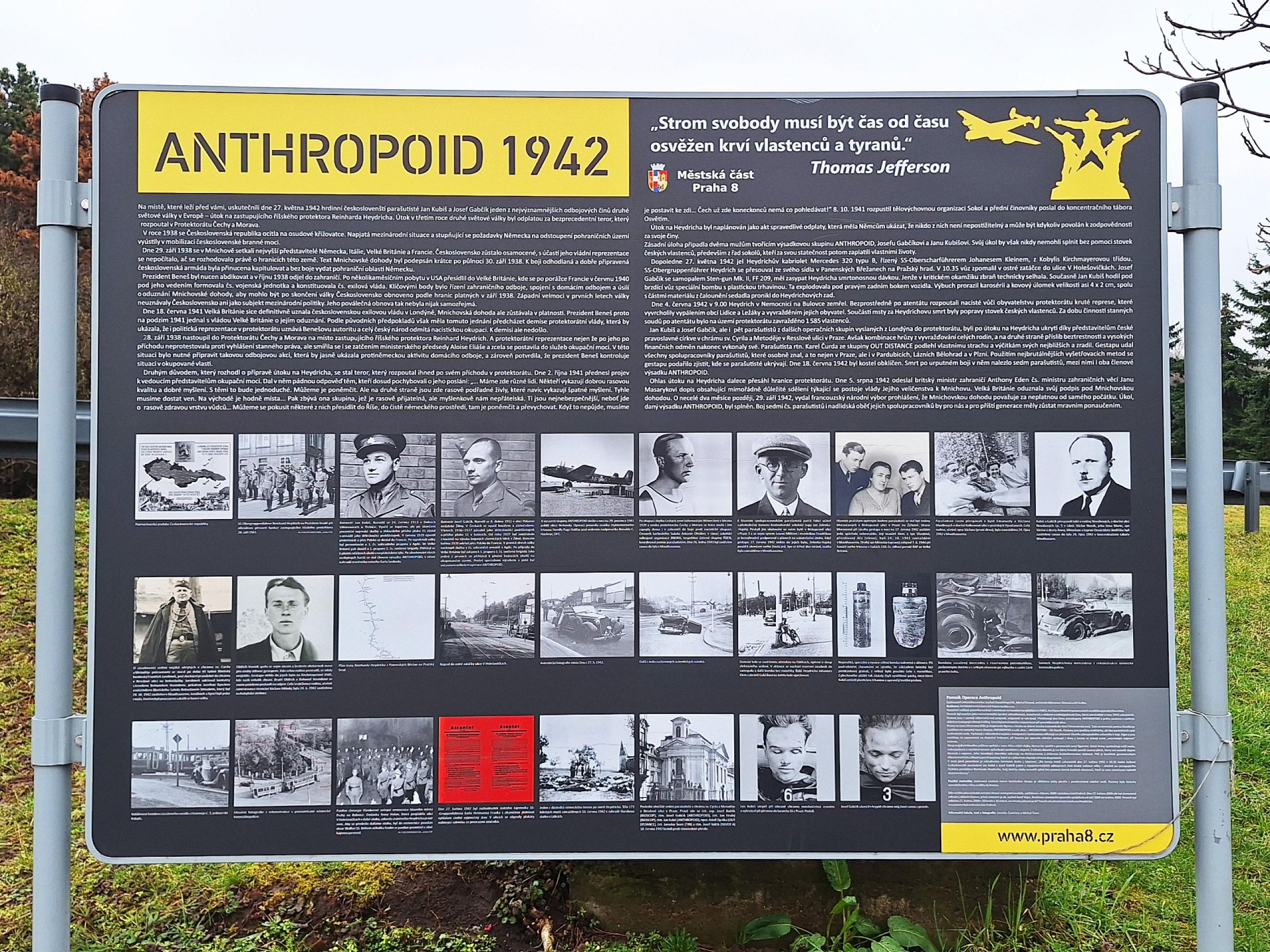
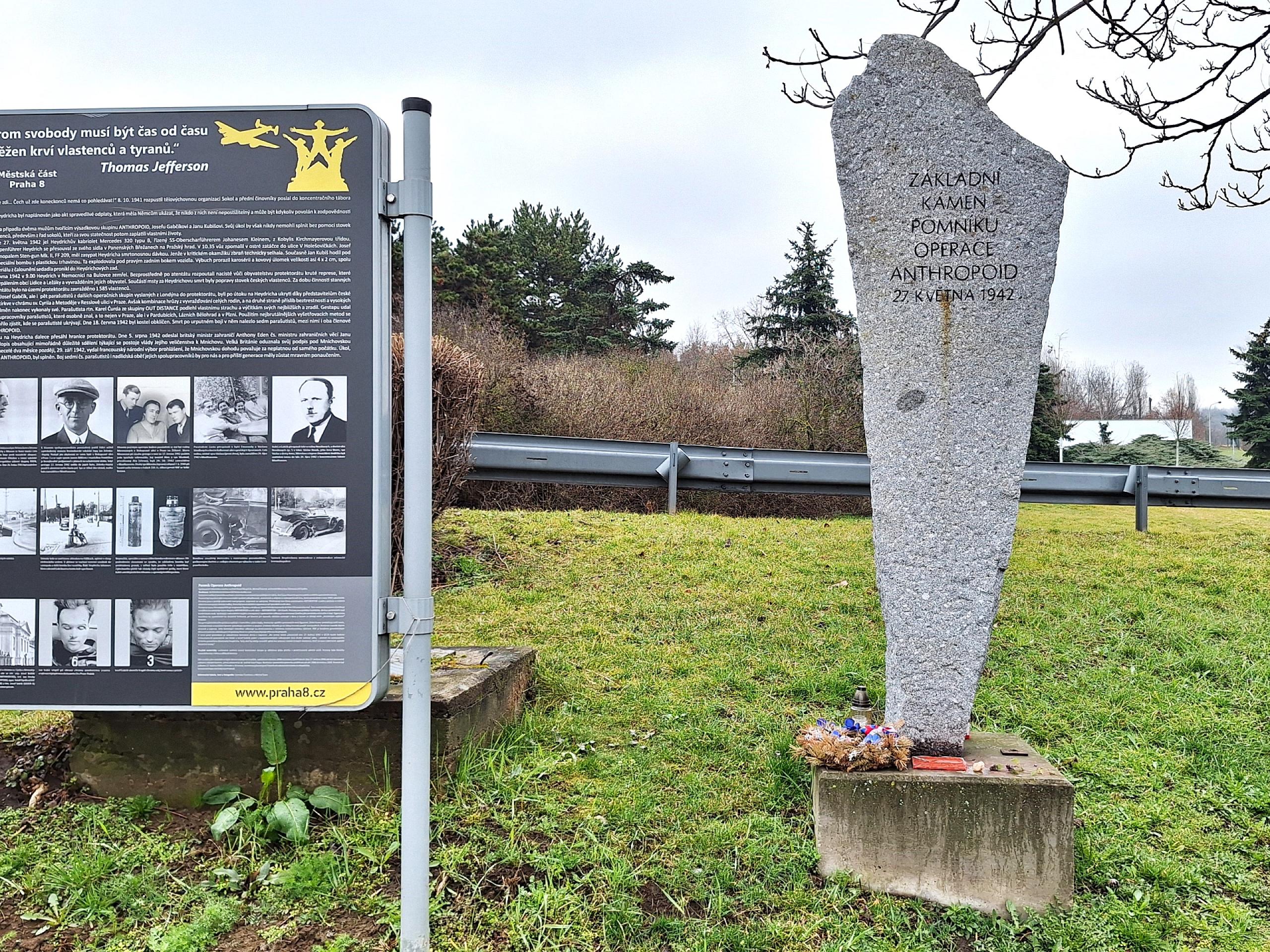
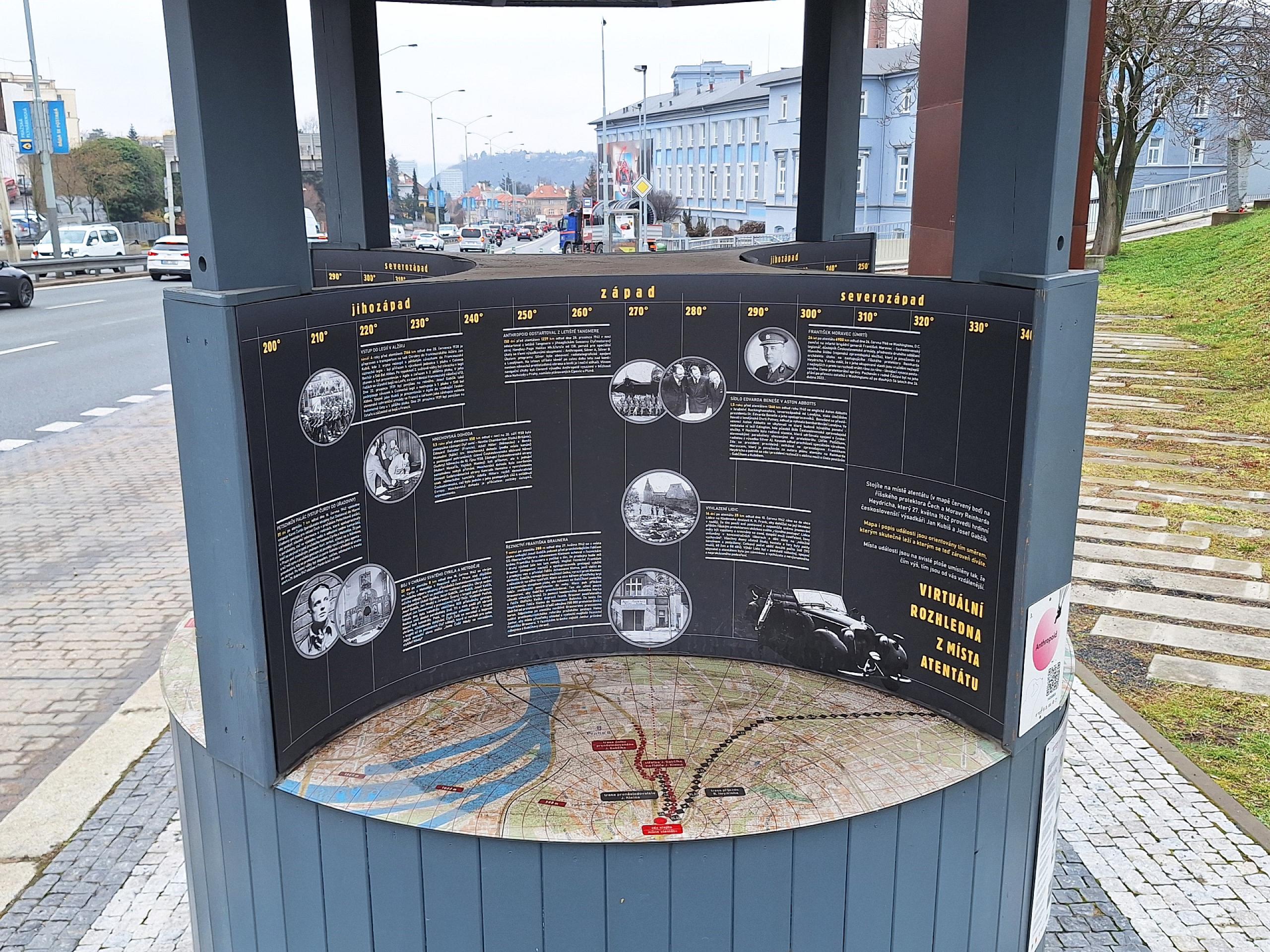
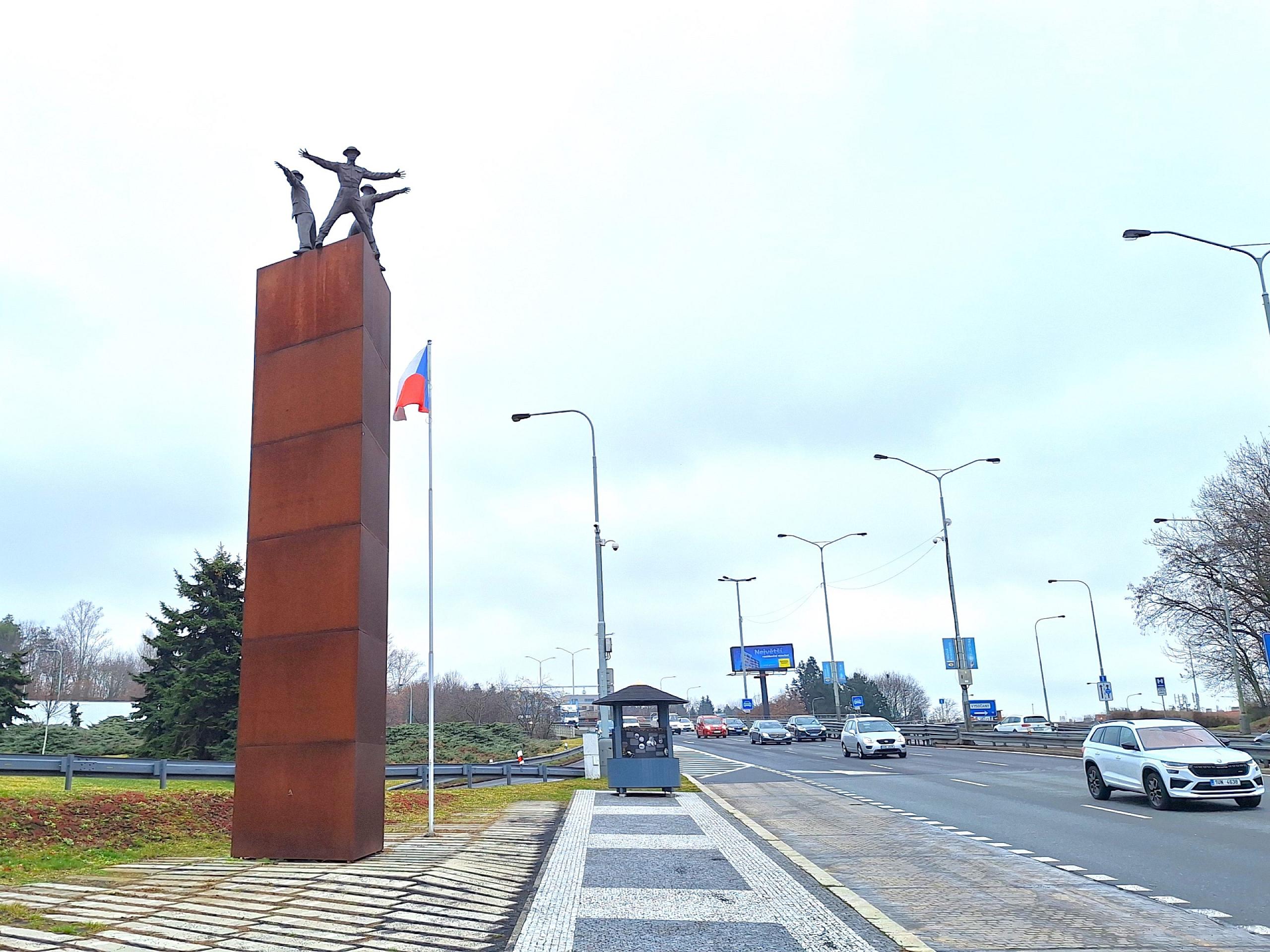
A memorial at the historic site in Prague commemorates the Czechoslovakian parachutists who committed an assassination attempt on Reinhard Heydrich's life in 1942.
History
On March 16, 1939, the Czech rump state was incorporated into the German Reich as the Protectorate of Bohemia and Moravia, following the invasion of the German Wehrmacht. Though there was still a government in Prague, it was for the most part dependent on Berlin. A Reich protectorate was set up in the city in order to enforce German interests locally. In 1941, the head of the Reich Main Security Office Reinhard Heydrich was appointed acting Protector in Prague, thus replacing the suspended Konstantin von Neurath, in order to introduce harsher measures in fighting Czech resistance.
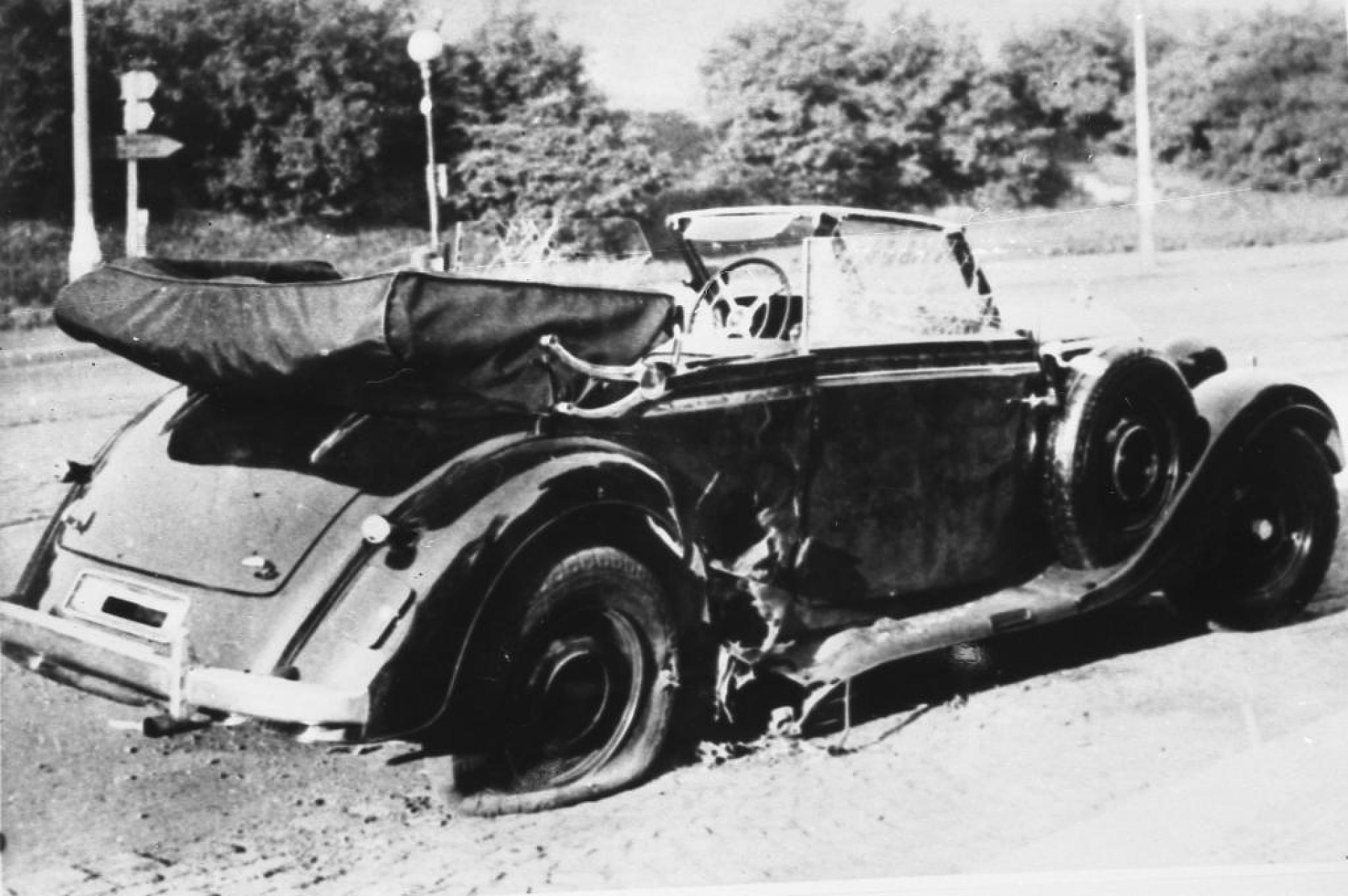
The British Special Operations Executive (SOE) developed a plan - codenamed »Operation Anthropoid« - to assassinate Heydrich, considering him a key figure in the National Socialist hierarchy of power. Two former officers of the Czechoslovak army, Jozef Gabčík and Jan Kubiš, were trained for this mission. In December 1941, they were parachuted into Protectorate territory. They managed to get in touch with the underground and, after long preparations, they ambushed Heydrich with the help of an additional agent in the Liben suburb of Prague. Though the attack of May 27, 1942 failed, Heydrich died of his injuries on June 4.
The German authorities declared a state of emergency and retaliated with most brutal measures. Many were arrested, executed, the villages of Lidice and Ležáky were annihilated. The assassins Gabčík and Kubiš went into hiding. After being denounced by a comrade, they died in a shoot-out with the SS in a church in Prague on June 18, 1942.
Victims
The memorial honours the parachutists who committed an assassination attempt on Heydrich's life and were later killed in action. The assassins, Jozef Gabčík and Jan Kubiš, were assisted by resistance fighter Josef Valčík.
Until 1918, the Czech regions of Bohemia, Moravia and Czech Silesia belonged to the Austro-Hungarian Empire. After the First World War they merged with Slovakia to form Czechoslovakia. From autumn 1938 to spring 1939 the state was gradually broken up by the Third Reich. In September 1938 Germany annexed the northern and western border region, which had a majority German population. This was now known as the »Sudetengau« (Sudetenland administration district). The remaining territory, the so-called rump state, was taken by the German Wehrmacht on March 14, 1939. At the same time Slovakia declared independence. Czechoslovakia ceased to exist and the Czech regions now came under German control as the Reich Protectorate of Bohemia and Moravia. The emerging civilian resistance was brutally crushed and the persecution of Jews and Roma began. Around 78,000 of the approximately 120,000 Jews of Bohemia were murdered in the Holocaust. The former fortress of Theresienstadt (Terezín) served as a central detention camp and a transit camp for those being deported to the extermination sites in Eastern Europe. Around 8,000 non-Jewish Czechs were also killed, some 1,700 during the wave of terror following the assassination of the Deputy Reich Protector Reinhard Heydrich (1904–1942) on May 27, 1942. In response to this assassination, German police forces razed the village of Lidice and the hamlet of Ležáky to the ground. Four days before the end of the war in 1945, an armed rebellion broke out in Prague and other Czech regions. It was directed above all at Czech collaborators and the German minority.
Memory of the period 1938 to 1945 centres above all on the trauma of the complete dismemberment of the country. Focus was placed on National Socialist crimes and for a long time the desire for revenge. One of the consequences was the expulsion of the German-speaking population. Remembrance today however also encompasses the painful awareness of the relatively weak extent of resistance and the widespread collaboration.
The re-established state of Czechoslovakia became communist in 1948. There was barely any remembrance of the Holocaust, especially as the country was overcome by a wave of anti-semitism during the peak of the Stalinist purges in the early 1950s. Along with the homage to the victorious Red Army that was standard in the »Eastern Bloc«, the Czechoslovakian culture of memory focused particularly on the massacre at Lidice. This made it possible to represent National Socialist brutality without having to remember the Holocaust.
A change set in with the collapse of communism from 1989 onwards; a change that had emerged once before during the Czech reform period known as the Prague Spring in 1968, before coming to an end with the invasion of Warsaw Pact troops. Hence, parts of Czech society gradually began to also remember the co-existence of Czech, German and Jewish cultures that had been built up over centuries but has now disappeared. Traces of this multicultural past are more and more visible, not only in the capital Prague. Meanwhile, the most important site of remembrance for the victims of the holocaust is the Terezín Memorial on the site of the former Theresienstadt Ghetto. Since the 1990s there have been public disputes over the former concentration camp at Lety, where Bohemian Roma were forcibly detained prior to their deportation to Auschwitz-Birkenau. For decades, a pig farm was located on the site, making appropriate remembrance impossible. The pig farm was finally dismantled in 2022 to make place for a new memorial.
Remembrance
After the assassination attempt, the Germans set up a memorial in honour of Heydrich. It was destroyed at the end of the war.
In 2007, two citizens' initiatives set up memorial plaques - independently of one another - close to the historic site. One of them disappeared in 2009.
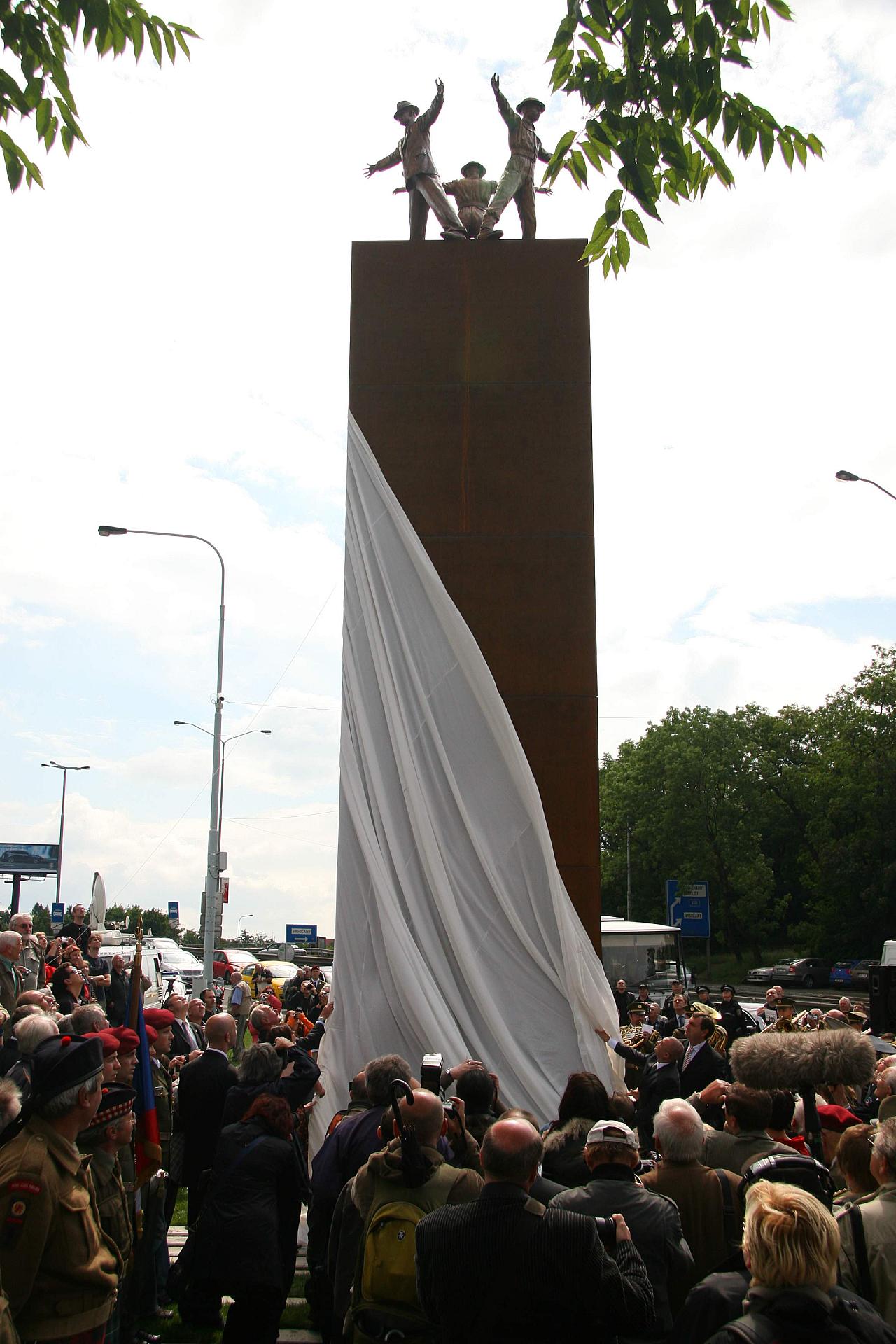
The »Operation Anthropoid« memorial was dedicated on May 27, 2009, on the anniversary of the assassination attempt on Heydrich. It is located at the exact site, though the street configuration today is different. At the time, there was a hairpin curve on Heydrich's way to work - the perfect spot for an assassination attempt as his car had to brake hard.
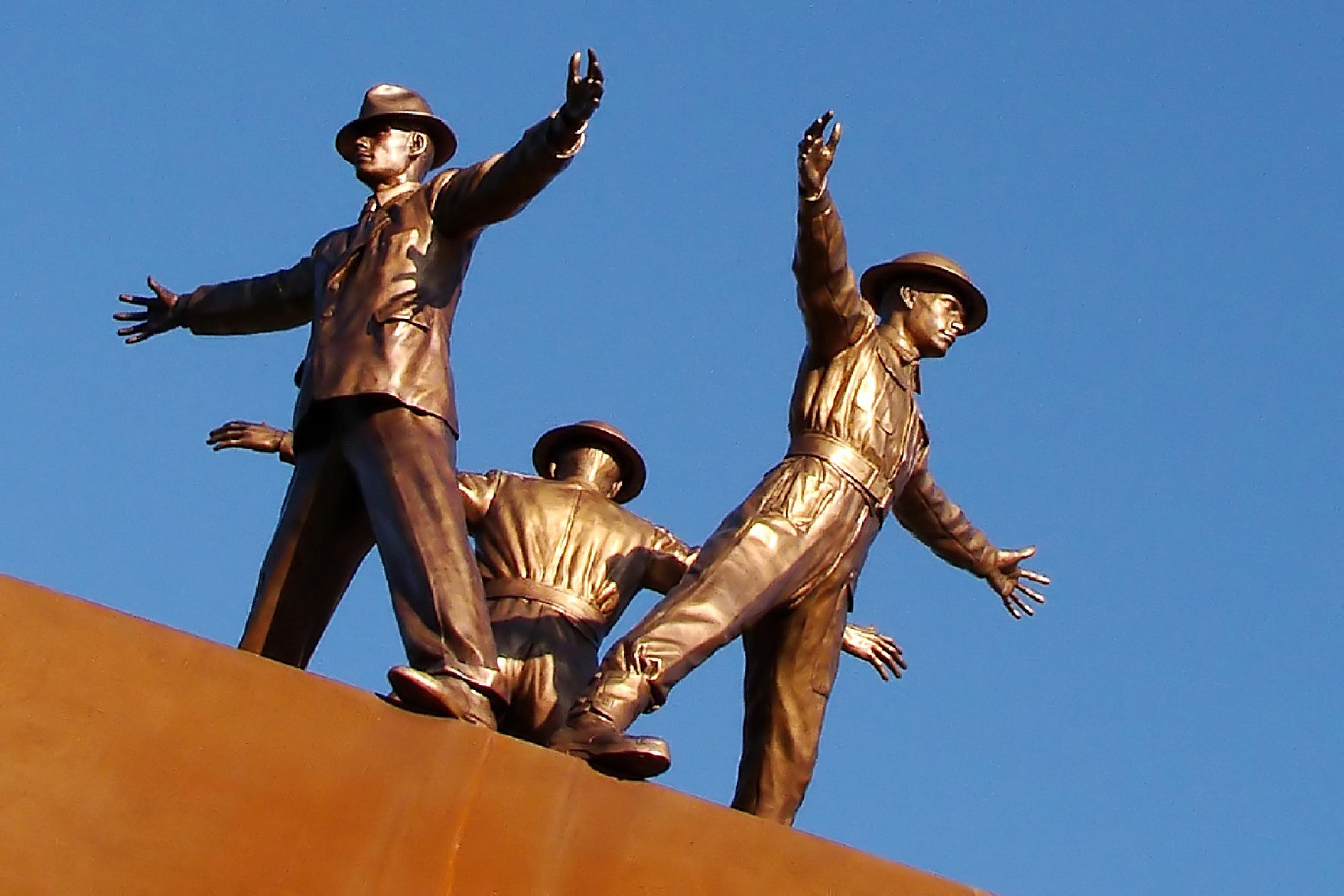
The three figures depicted on the statue represent Gabčík, Kubiš and a civilian as a symbol of civil resistance. The sculptors David Moješčík and Michal Šmeral as well as architects Miroslava Tůmová and Jiří Gulbi were involved in the creation of the memorial. The project was initiated and funded by the Prague 8 district in 2008.