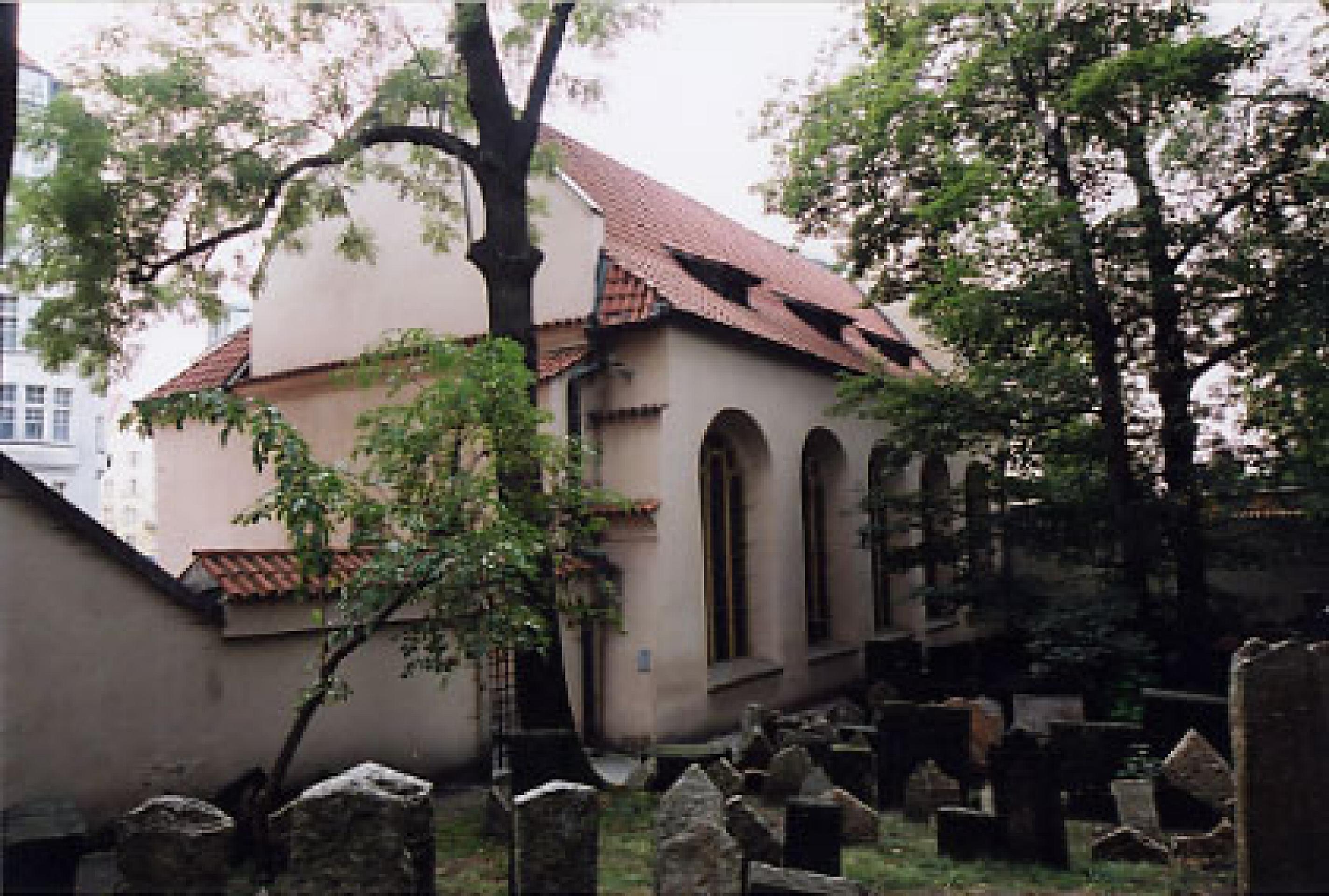
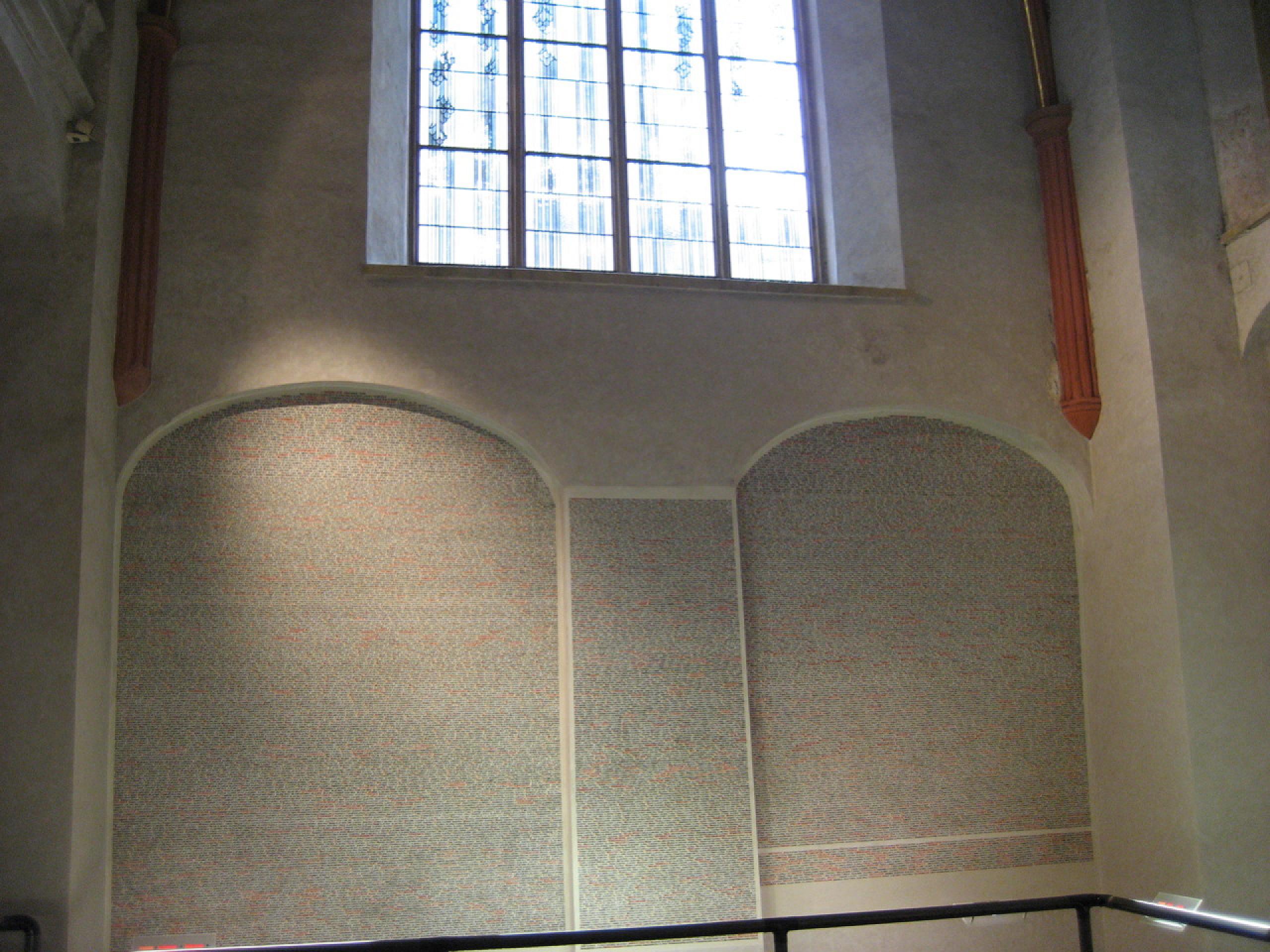
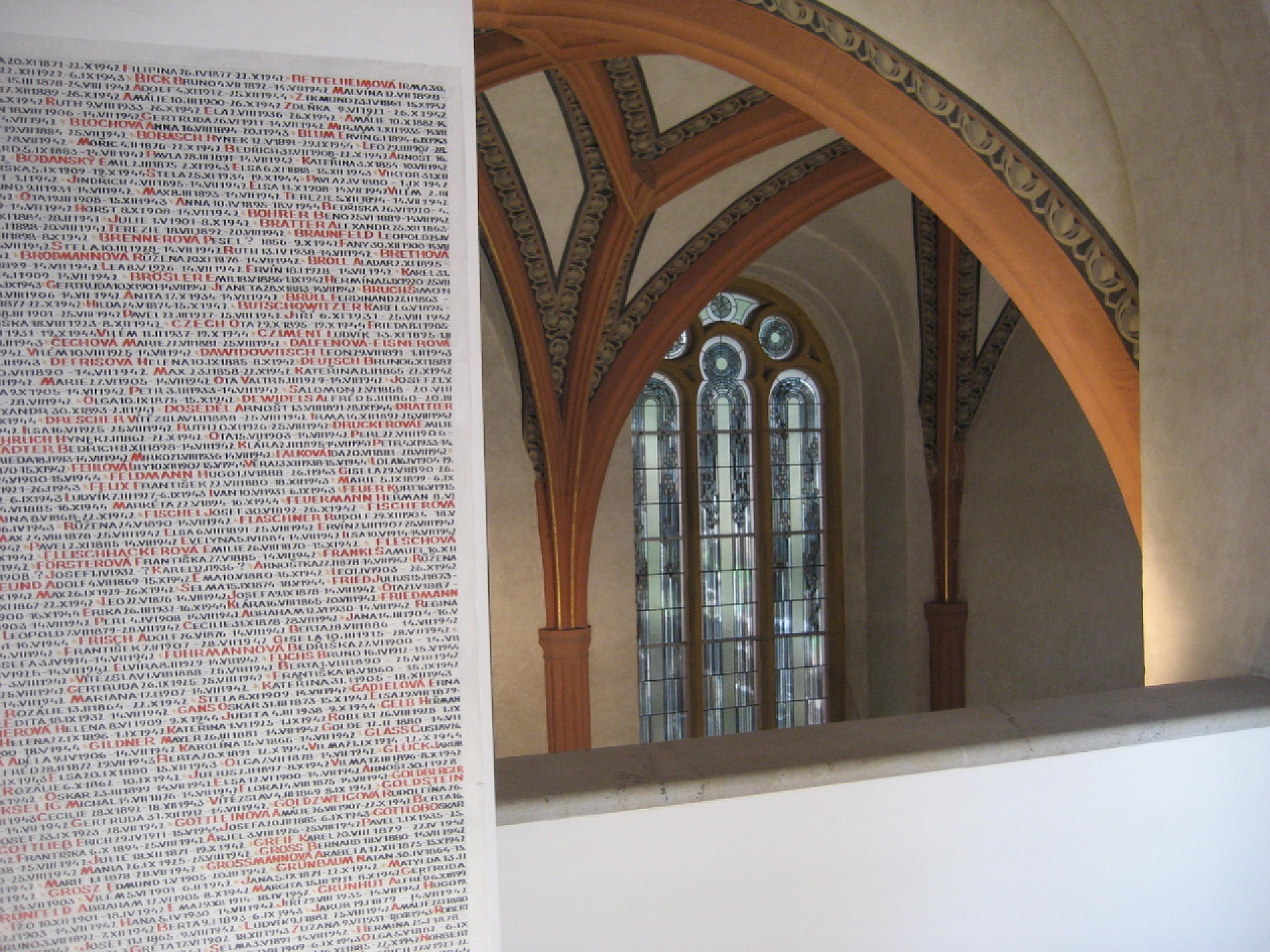
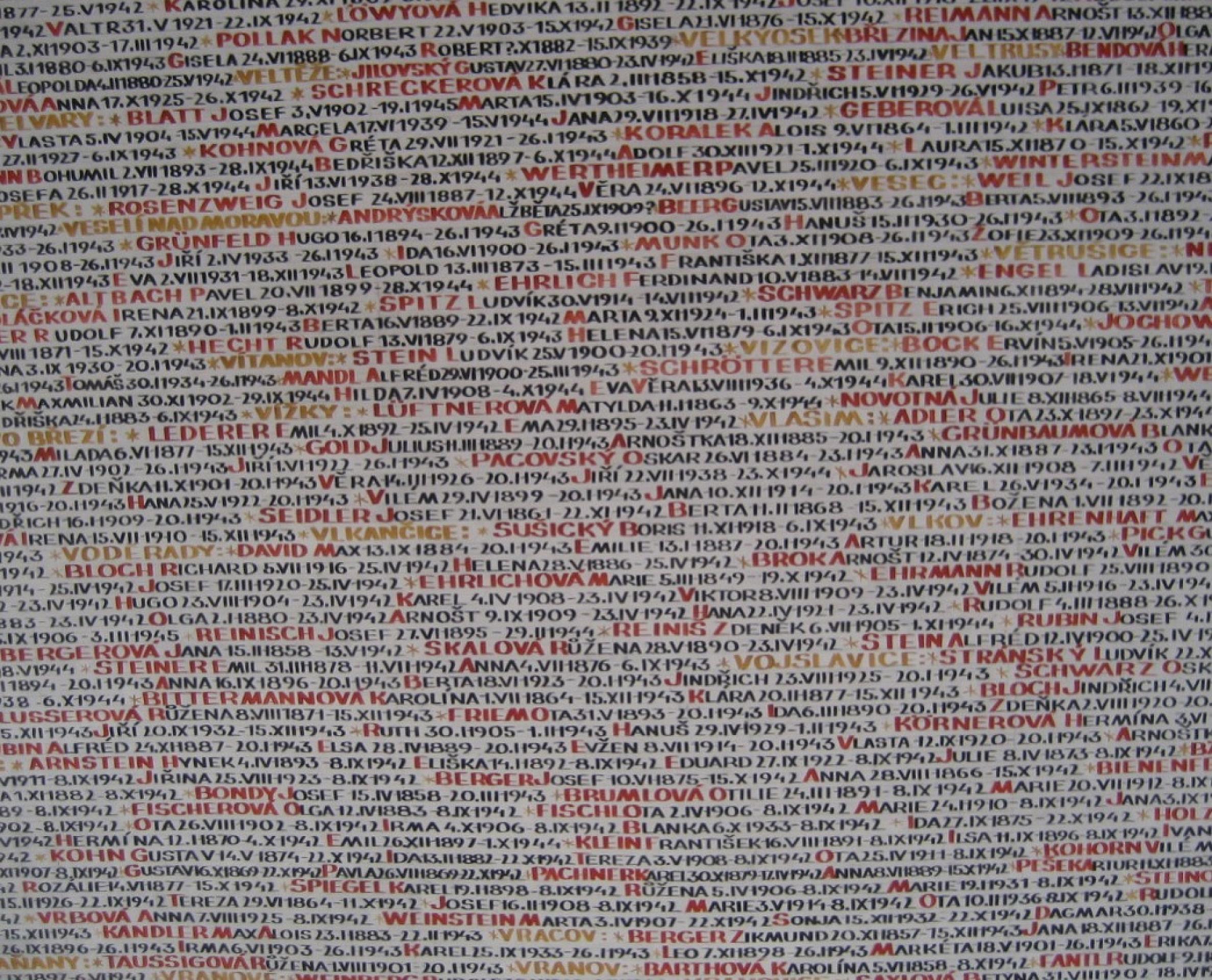
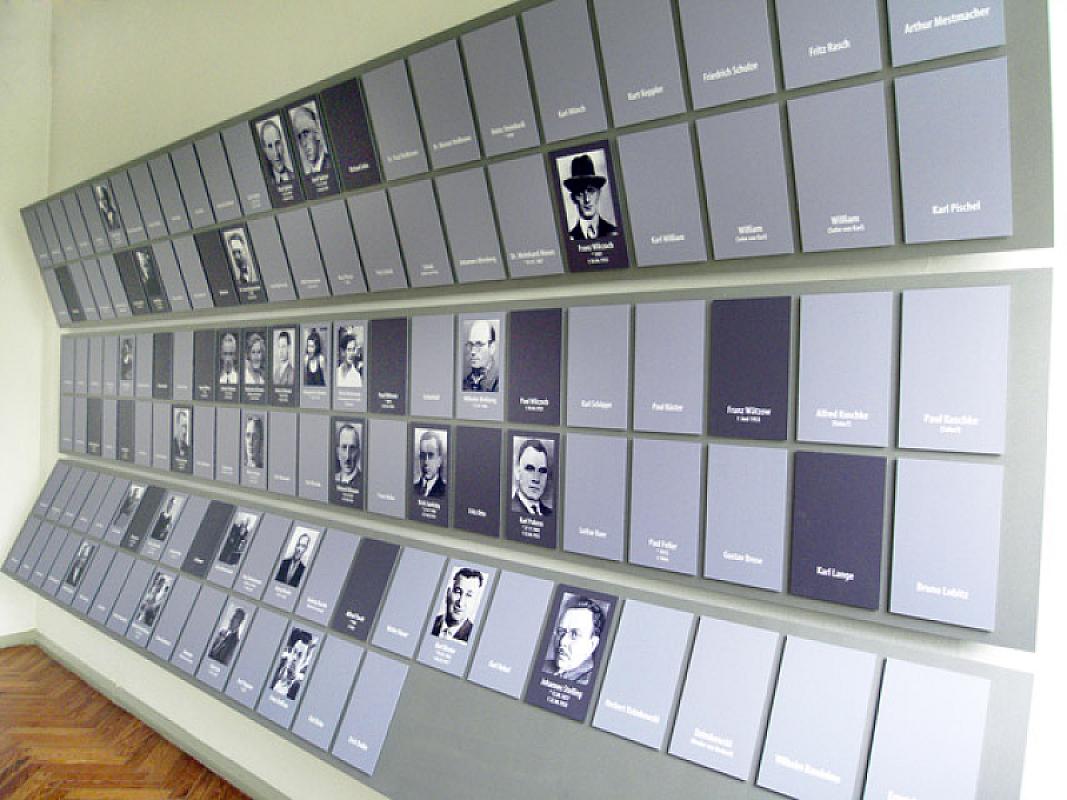
The Pinkas Synagogue, which is part of the Jewish Museum, is the central memorial site to the victims of the Holocaust in Prague. The names of 80,000 Jews from Bohemia and Moravia who perished in the Holocaust are inscribed on the interior walls of the synagogue.
History
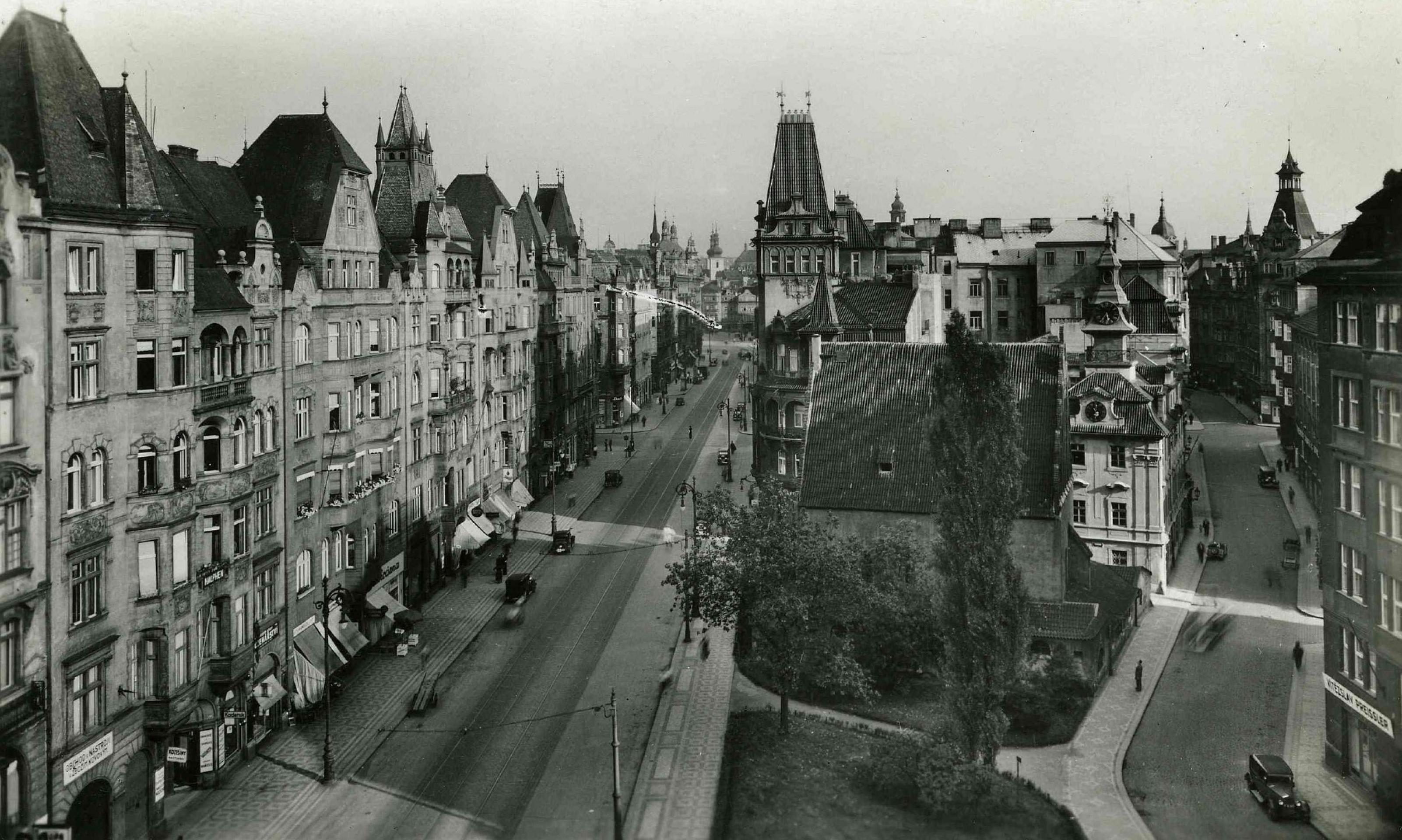
Prague's Jewish community dates back to the tenth century. The city became a centre of Jewish learning. In 1930, the city was home to 35,000 Jews, who enjoyed equal rights as citizens of democratic Czechoslovakia. The Jewish quarter Josefov was a focal point of Jewish life, where adjacent to the old Jewish cemetery stood the Pinkas Synagogue, built in 1535.
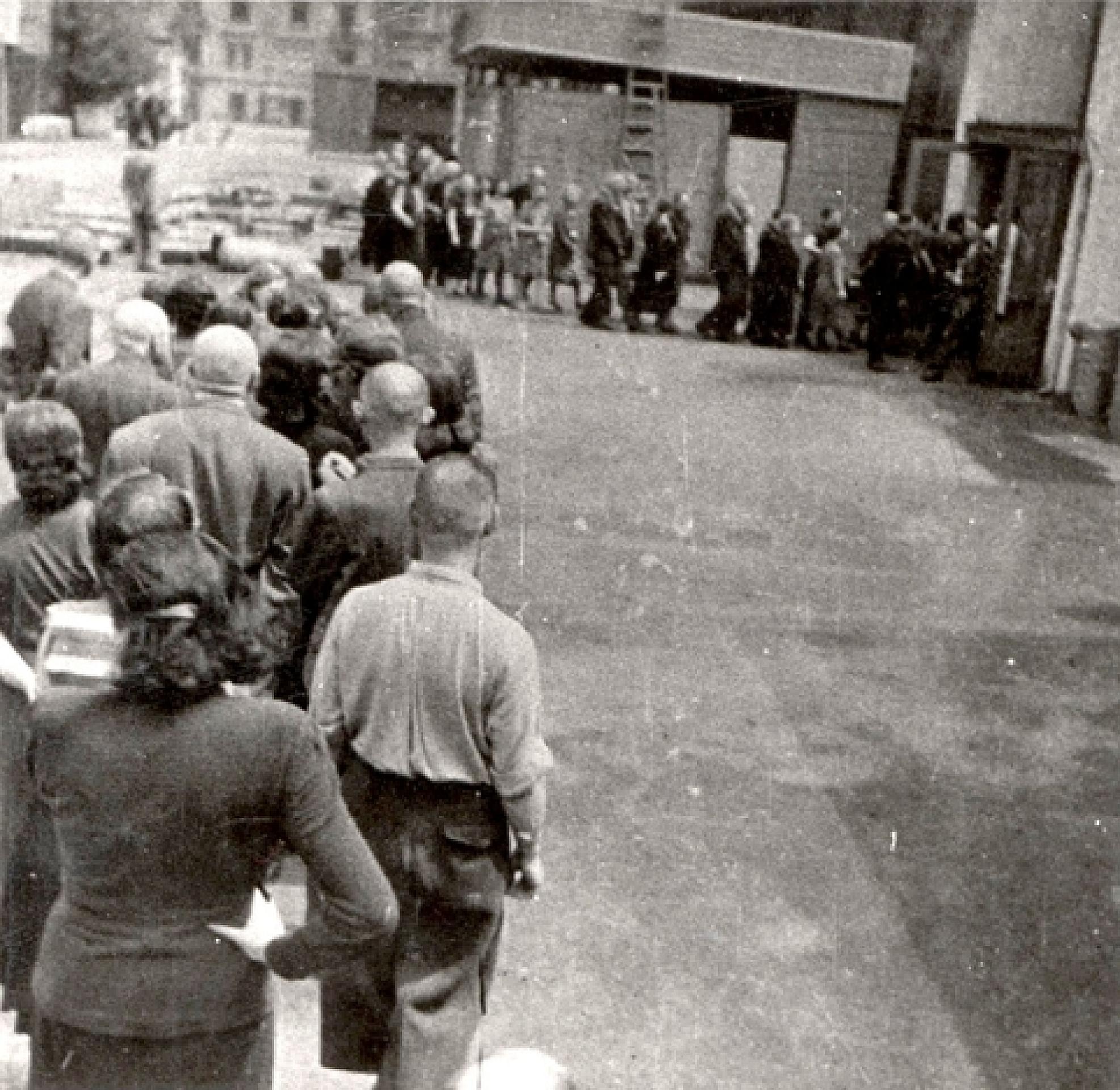
The persecution of Jews began immediately after the invasion of the German Wehrmacht in March 1939. They were excluded from public life and pressured to emigrate. In 1941, the German authorities began systematically deporting Jews from Prague, first to the ghetto in Łódź, later to the Bohemian fort Theresienstadt (czech: Terezín), which had been transformed into a ghetto. Beginning 1942, most of the inmates of Theresienstadt were deported to ghettos, death camps and mass shooting sites in the occupied east. Only a small minority of Prague Jews survived the war.
Victims
Of the 35,000 Jews who lived in Prague before 1939, fewer than 5,000 survived persecution and war. In all, about 80,000 Jews from Bohemia and Moravia perished during the Holocaust.
Until 1918, the Czech regions of Bohemia, Moravia and Czech Silesia belonged to the Austro-Hungarian Empire. After the First World War they merged with Slovakia to form Czechoslovakia. From autumn 1938 to spring 1939 the state was gradually broken up by the Third Reich. In September 1938 Germany annexed the northern and western border region, which had a majority German population. This was now known as the »Sudetengau« (Sudetenland administration district). The remaining territory, the so-called rump state, was taken by the German Wehrmacht on March 14, 1939. At the same time Slovakia declared independence. Czechoslovakia ceased to exist and the Czech regions now came under German control as the Reich Protectorate of Bohemia and Moravia. The emerging civilian resistance was brutally crushed and the persecution of Jews and Roma began. Around 78,000 of the approximately 120,000 Jews of Bohemia were murdered in the Holocaust. The former fortress of Theresienstadt (Terezín) served as a central detention camp and a transit camp for those being deported to the extermination sites in Eastern Europe. Around 8,000 non-Jewish Czechs were also killed, some 1,700 during the wave of terror following the assassination of the Deputy Reich Protector Reinhard Heydrich (1904–1942) on May 27, 1942. In response to this assassination, German police forces razed the village of Lidice and the hamlet of Ležáky to the ground. Four days before the end of the war in 1945, an armed rebellion broke out in Prague and other Czech regions. It was directed above all at Czech collaborators and the German minority.
Memory of the period 1938 to 1945 centres above all on the trauma of the complete dismemberment of the country. Focus was placed on National Socialist crimes and for a long time the desire for revenge. One of the consequences was the expulsion of the German-speaking population. Remembrance today however also encompasses the painful awareness of the relatively weak extent of resistance and the widespread collaboration.
The re-established state of Czechoslovakia became communist in 1948. There was barely any remembrance of the Holocaust, especially as the country was overcome by a wave of anti-semitism during the peak of the Stalinist purges in the early 1950s. Along with the homage to the victorious Red Army that was standard in the »Eastern Bloc«, the Czechoslovakian culture of memory focused particularly on the massacre at Lidice. This made it possible to represent National Socialist brutality without having to remember the Holocaust.
A change set in with the collapse of communism from 1989 onwards; a change that had emerged once before during the Czech reform period known as the Prague Spring in 1968, before coming to an end with the invasion of Warsaw Pact troops. Hence, parts of Czech society gradually began to also remember the co-existence of Czech, German and Jewish cultures that had been built up over centuries but has now disappeared. Traces of this multicultural past are more and more visible, not only in the capital Prague. Meanwhile, the most important site of remembrance for the victims of the holocaust is the Terezín Memorial on the site of the former Theresienstadt Ghetto. Since the 1990s there have been public disputes over the former concentration camp at Lety, where Bohemian Roma were forcibly detained prior to their deportation to Auschwitz-Birkenau. For decades, a pig farm was located on the site, making appropriate remembrance impossible. The pig farm was finally dismantled in 2022 to make place for a new memorial.
Remembrance
The Jewish Museum in Prague, which had been founded in 1906, was shut down after the German Wehrmacht invaded in March 1939. In 1942, the National Socialists established a »Central Jewish Museum« in which artefacts and objects of Jewish ceremonial art from the destroyed communities of Bohemia and Moravia were hoarded.
During the communist era, the newly established state museum was mainly occupied with preserving the collection. Since 1994, the museum has been run by the Jewish community. It is not located in one building, but spread over several buildings in Josefov. The Pinkas Synagogue is part of this complex.
Between 1954 and 1959, the Pinkas Synagogue was remodelled as a memorial to the victims of the Holocaust from Bohemia and Moravia. Artists Jiři John and Václav Boštik painted the names of about 80,000 victims in alphabetical order on the interior walls of the synagogue. In 1968, however, the synagogue suffered an inrush of water and it was consequently closed. The communist authorities showed little interest in the Jewish memorial site and put off renovating the building over two decades; during this time, the synagogue remained closed. Only in the 1990s was the Pinkas Synagogue once again opened as a memorial site.
Possibilities
Guided tours, workshops, events, archive
Open
The exhibitions are open daily, except on Saturdays and Jewish holidays.
November to March: 9.00 a.m. to 4.30 p.m.,
April to October: 9.00 a.m. to 6.00 p.m.