Skip to content

Prešov Monument and Museum of Jewish Culture

Múzeum židovskej kultúry ─ Prešov


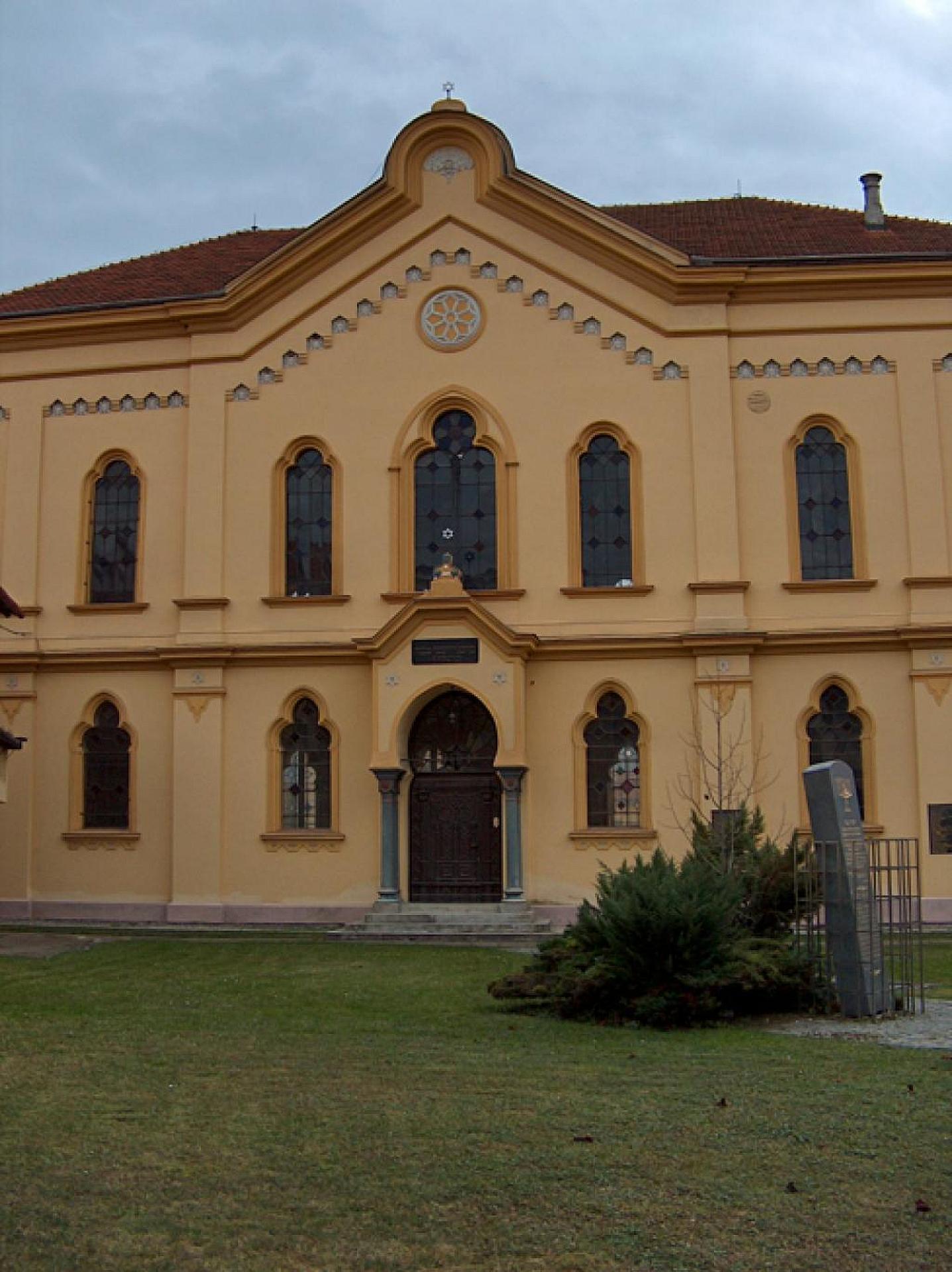
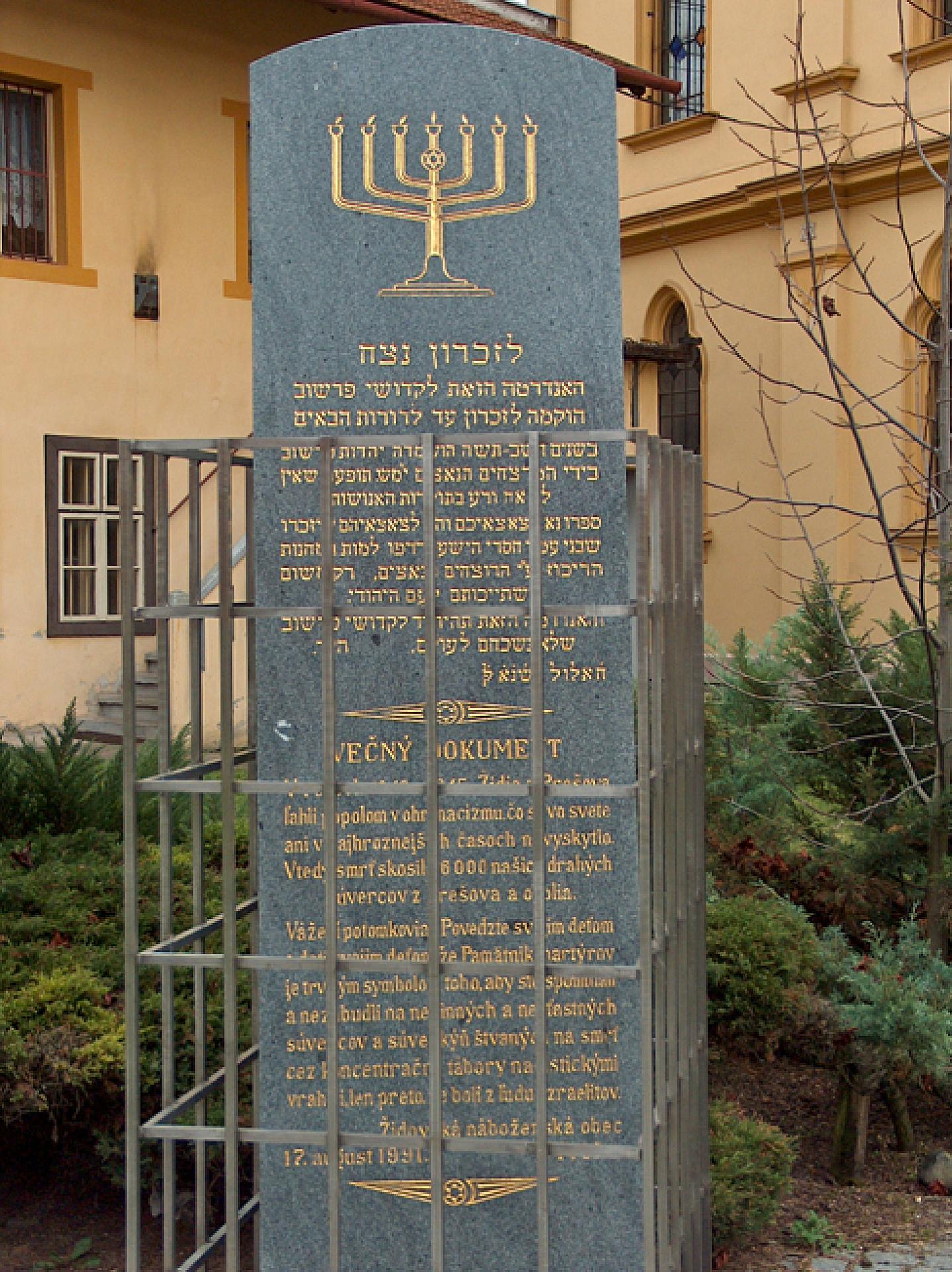
The Museum of Jewish Culture was established in the orthodox synagogue of Prešov. Standing in the courtyard is a monument to the residents of the Prešov region who perished in the Holocaust.

History

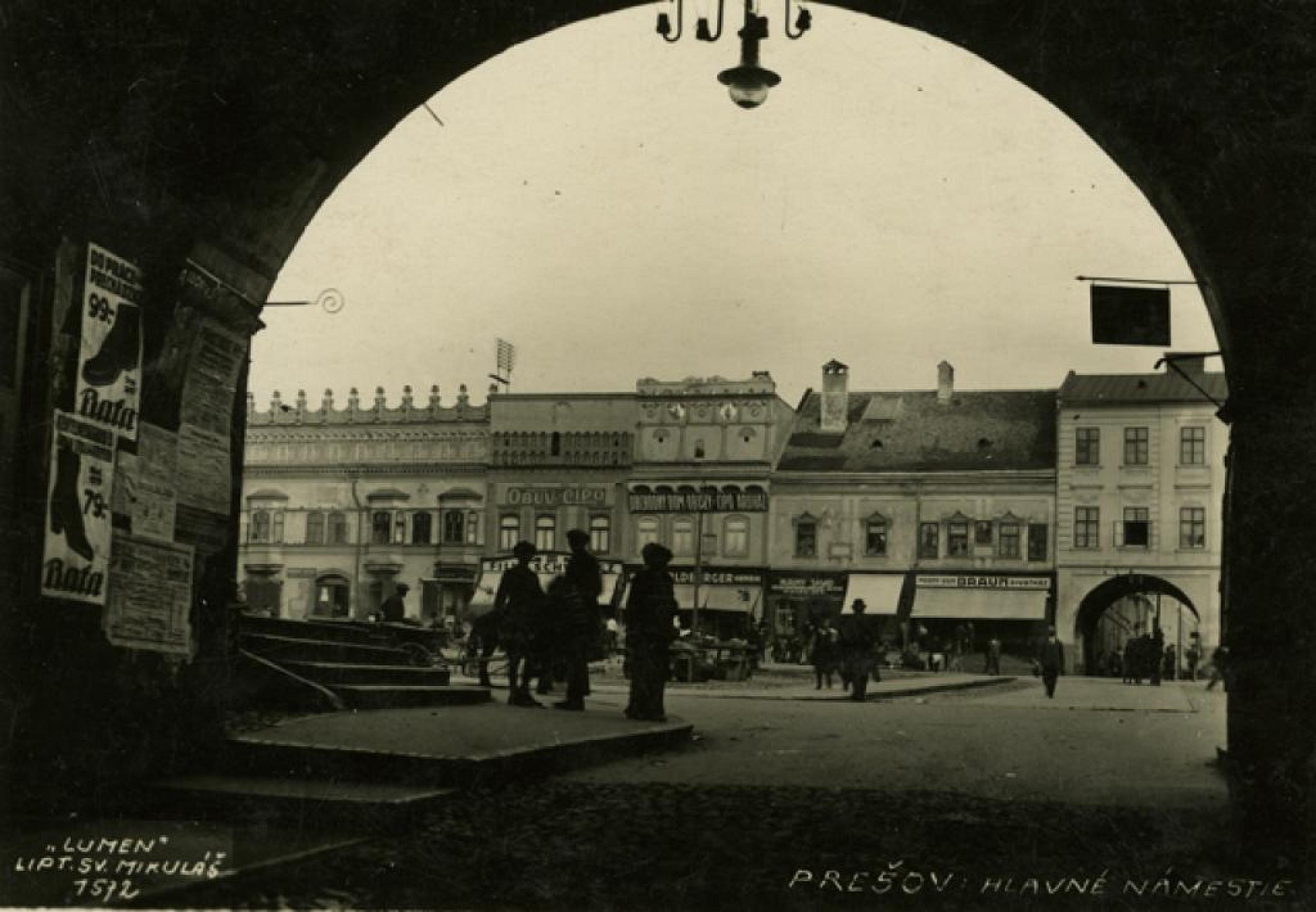
As in all »royal cities« of the Kingdom of Hungary, Jews were not allowed to settle in Prešov (Hungarian: Eperjes) from the Middle Ages on. A small number of Jews lived outside of the city gates. The ban was revoked in 1840 and soon a small Jewish community was established in Prešov. Many supported the Hungarian battle for independence in 1848–1849 against Habsburg rule. In 1849, the first synagogue in Prešov was built, and at the turn of the century, there were about 2,000 Jews living in the city. Apart from Orthodox members of the community, there were also many aligned with Neolog Judaism. At the beginning of the 20th century, there were various Zionist organisations active in Prešov. After the establishment of Czechoslovakia in 1918, the Jewish community of Prešov continued to grow, comprising of 4,300 members in 1938.
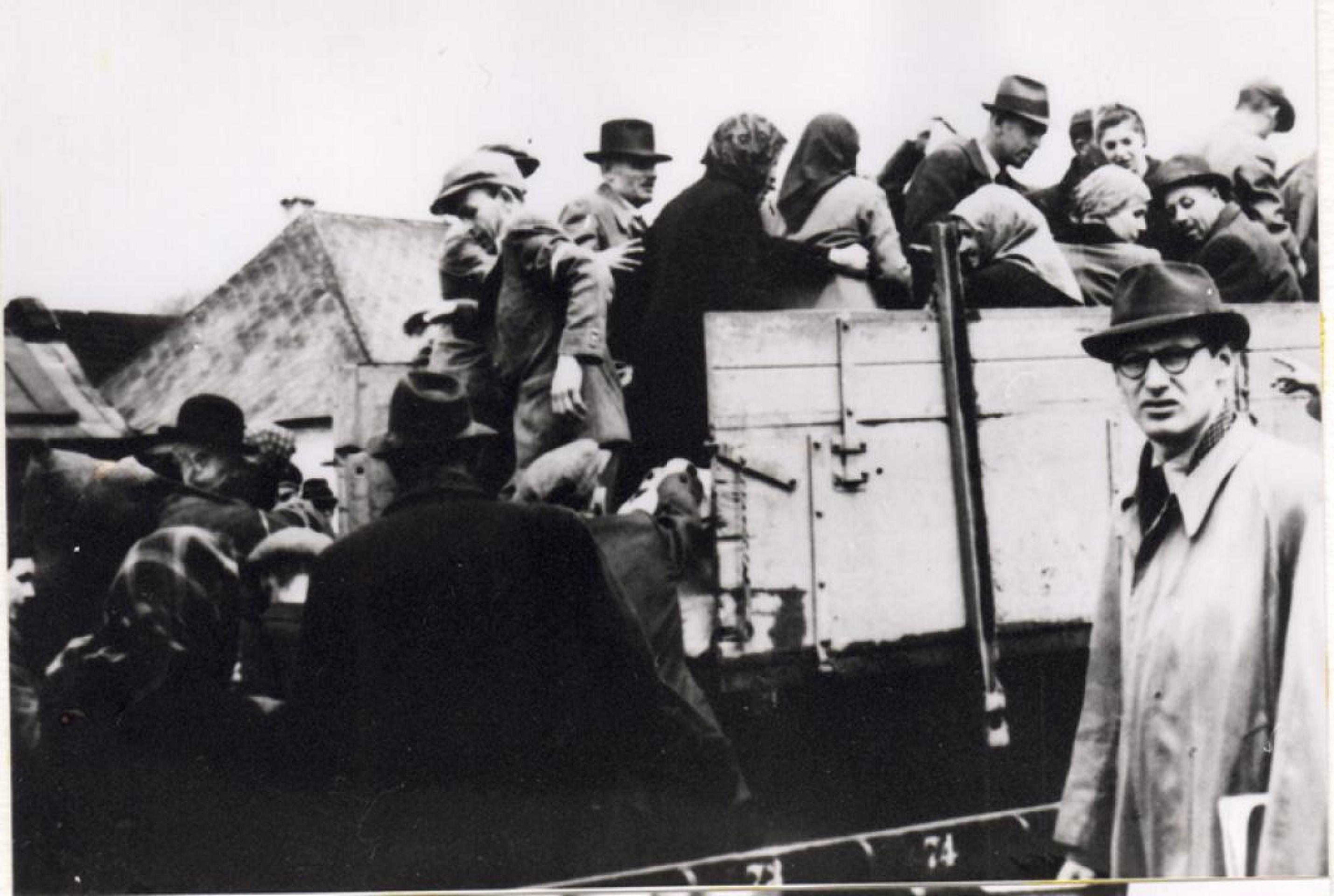
That year, the Slovak People's Party led by Jozef Tiso came to power and in 1939, established a dictatorship in now-independent Slovakia. The Slovak government began systematically persecuting the Jews residing in Slovakia. They were excluded from public life, their property was confiscated and many were deployed in forced labour. In 1942, Slovakia began deporting Jews to ghettos and concentration camps in German-occupied Poland, conducting this in close coordination with the German Reich. The main deportation destinations were the Auschwitz and Majdanek concentration camps. A total of 6,000 Jews were deported from the Prešov region.
Victims

Of the 70,000 Jews deported from Slovakia, 6,000 came from Prešov and the surrounding areas. Only few survived the concentration camps. The Jewish community of Prešov did not recover after the war.

Following the collapse of the Habsburg Monarchy in 1918, Slovakia and the Czech regions of Bohemia, Moravia and Czech Silesia merged to form Czechoslovakia. By spring 1939, Czechoslovakia had been broken up as the result of a number of campaigns by neighbouring Nazi Germany. In autumn 1938 Slovakia became an autonomous state with a government of its own but lost border territories to Hungary at around the same time. In March 1939 it declared independence and became a satellite state of the Third Reich led by the nationalist Hlinka party and President Jozef Tiso (1887–1947), a Catholic priest. The military arm of the party served as the police force and took action against Jews, Czechs, the political left and other opponents. The regime introduced a forced labour system that also affected many Roma. In autumn 1941, the government in Bratislava became the first Nazi-allied administration to vote in favour of the German plan to deport Jews to Eastern Europe. In 1942 alone 60,000 Jews were deported from Slovakia to German extermination camps. A total of around 75,000 Slovakian Jews died in the Holocaust. The imminent arrival of the Red Army led to a national rebellion against the regime of the Hlinka party in the late summer of 1944. The German army and SS units crushed this rebellion, with the loss of some 20,000 lives. After the war Slovakia again became part of Czechoslovakia, which was a communist state from 1948. The national rebellion was the main feature of collective memory. It was depicted as an act of resistance that had allowed a socialist society to emerge. In 1947 a site of memory was established at Banská Bystrica, which had been at the centre of the national rebellion. The site was extended on a number of occasions. Responsibility for collaboration with Germany was attributed solely to supporters of the Hlinka party. 1993 saw the Czech and Slovak parts of the country split into two separate republics. Slovakia had no state tradition of its own beyond the period 1939 to 1945. This is apparent in the culture of remembrance in the country today. Both socialists and civilian forces now refer to the Slovakian national rebellion. They associate it with the hope for a democratic state based on western values, a hope that was bitterly disappointed after 1948. Nationalist groups in Slovakia pursue a different approach. They identify themselves with the state’s independence from 1939–1945, view the rebellion that led to the occupation of the country as a betrayal and honour Tiso. These groups are unwilling to remember the deported Jews. Some view Slovakian collaboration as the result of having to relent to pressure from Germany to avoid endangering the country. Liberal intellectuals aim to defuse these tendencies, referring to Slovakian involvement in the deportations and the persecution of the Roma. Small plaques to the persecuted and murdered Jews have been put up at a number of locations since the 1990s. However, some of these are in the region occupied by Hungary after 1938, from which German SS units deported Jews following the invasion of the Wehrmacht in March 1944. The most important site of memory to the Jews deported from Slovakia is the Holocaust Museum which was opened on the premises of the former forced labour and transit camp Sered’ in 2016.

Remembrance

The synagogue of the Orthodox community was inaugurated in 1898. In 1928, the community opened Slovakia's first Jewish museum in the building of the synagogue. The museum was shut down during the war and the collection was handed over to the Jewish museum in Prague. Only in 1993, after the breakup of Czechoslovakia, was the collection returned and the museum in Prešov reopened. The synagogue building was renovated in the 1990s.
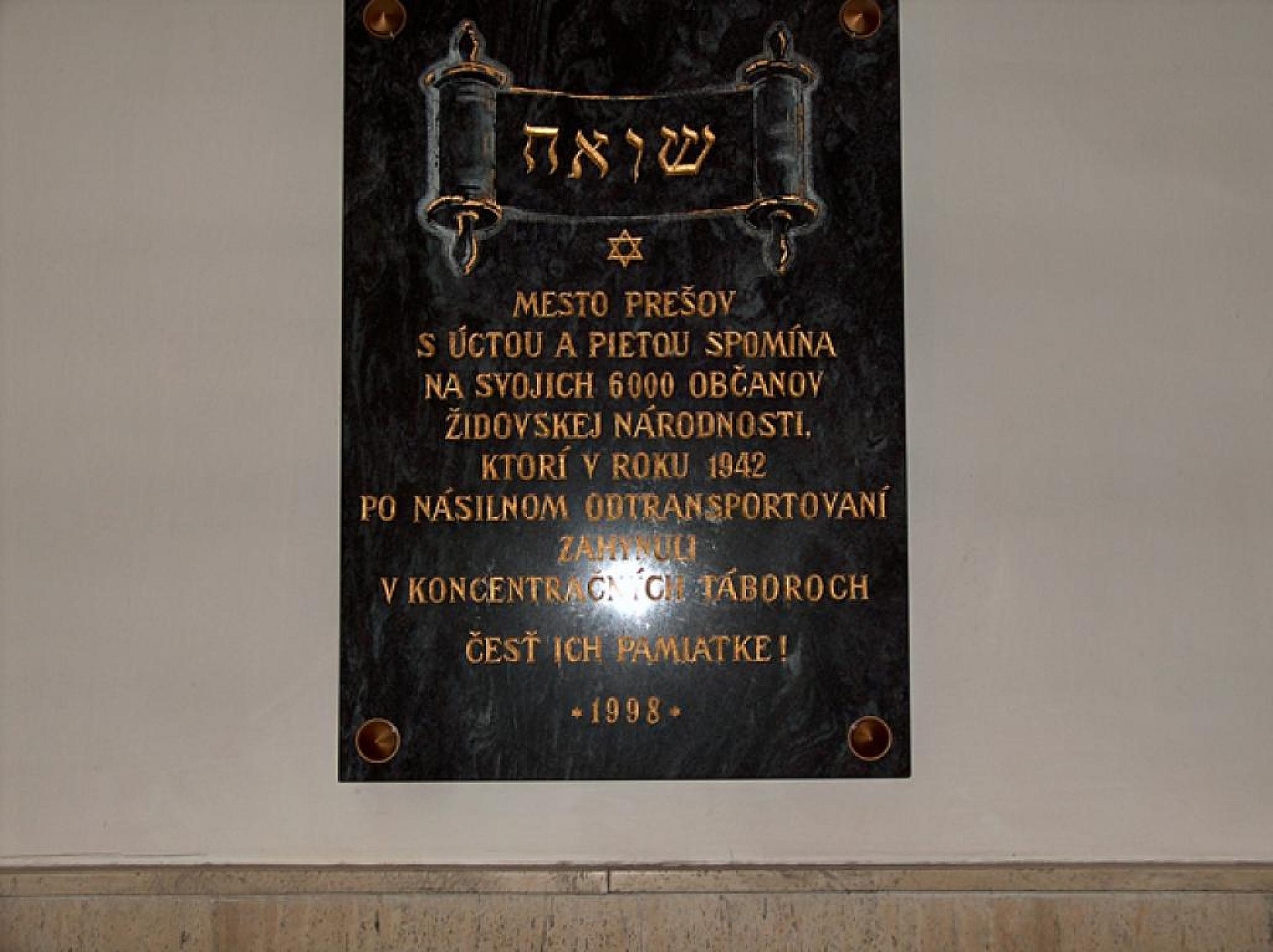
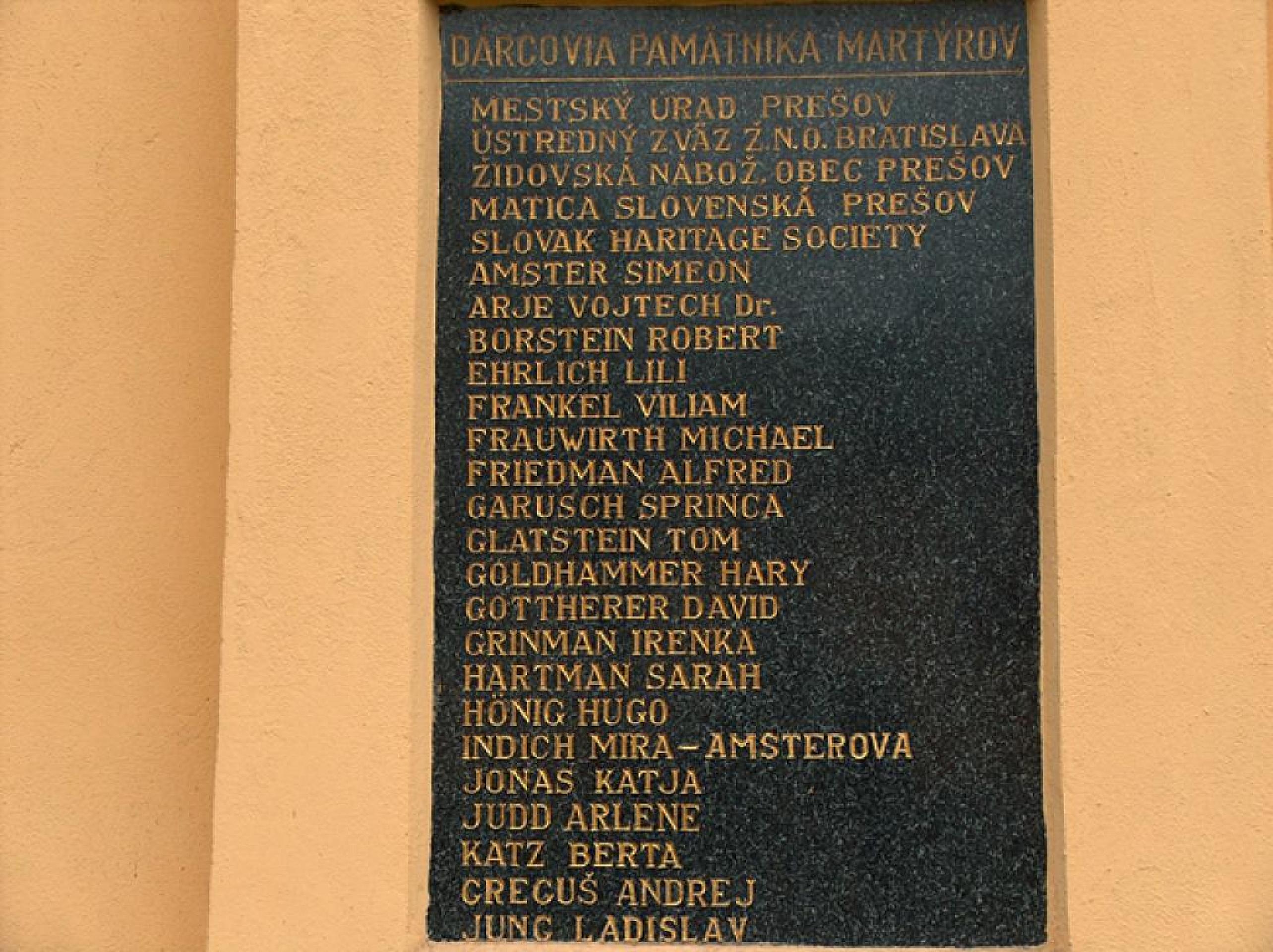
On August 17, 1991, the Prešov Jewish community dedicated a monument in the synagogue's courtyard to the 6,000 Holocaust victims from Prešov and surrounding areas. The city administration unveiled a memorial plaque to the victims on the town hall in 1998.
Possibilities

Permanent exhibition displaying Jewish cultural artefacts and objects of everyday use

Open

Tuesday and Wednesday: 11.00 a.m. to 3.00 p.m.
Thursday and Friday: 9 a.m. to 1 p.m.
Sunday: 2.00 p.m. to 4.00 p.m.

Contact

http://www.synagoga-presov.sk/

kancelaria@synagoga-presov.sk

+421 (0)51 773 1638

Okružná ulica 32
08001 Prešov