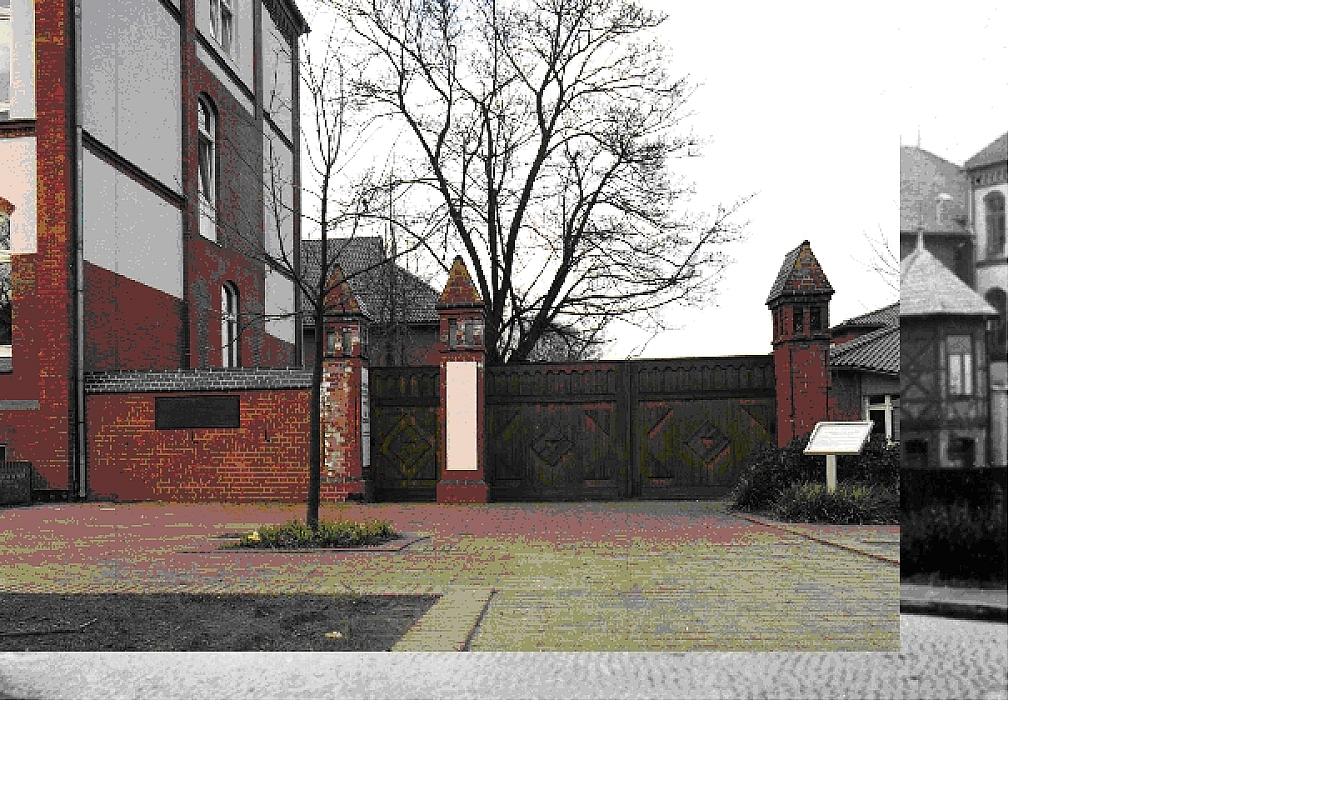
Site mémoriel pour l'ancienne synagogue consistoriale
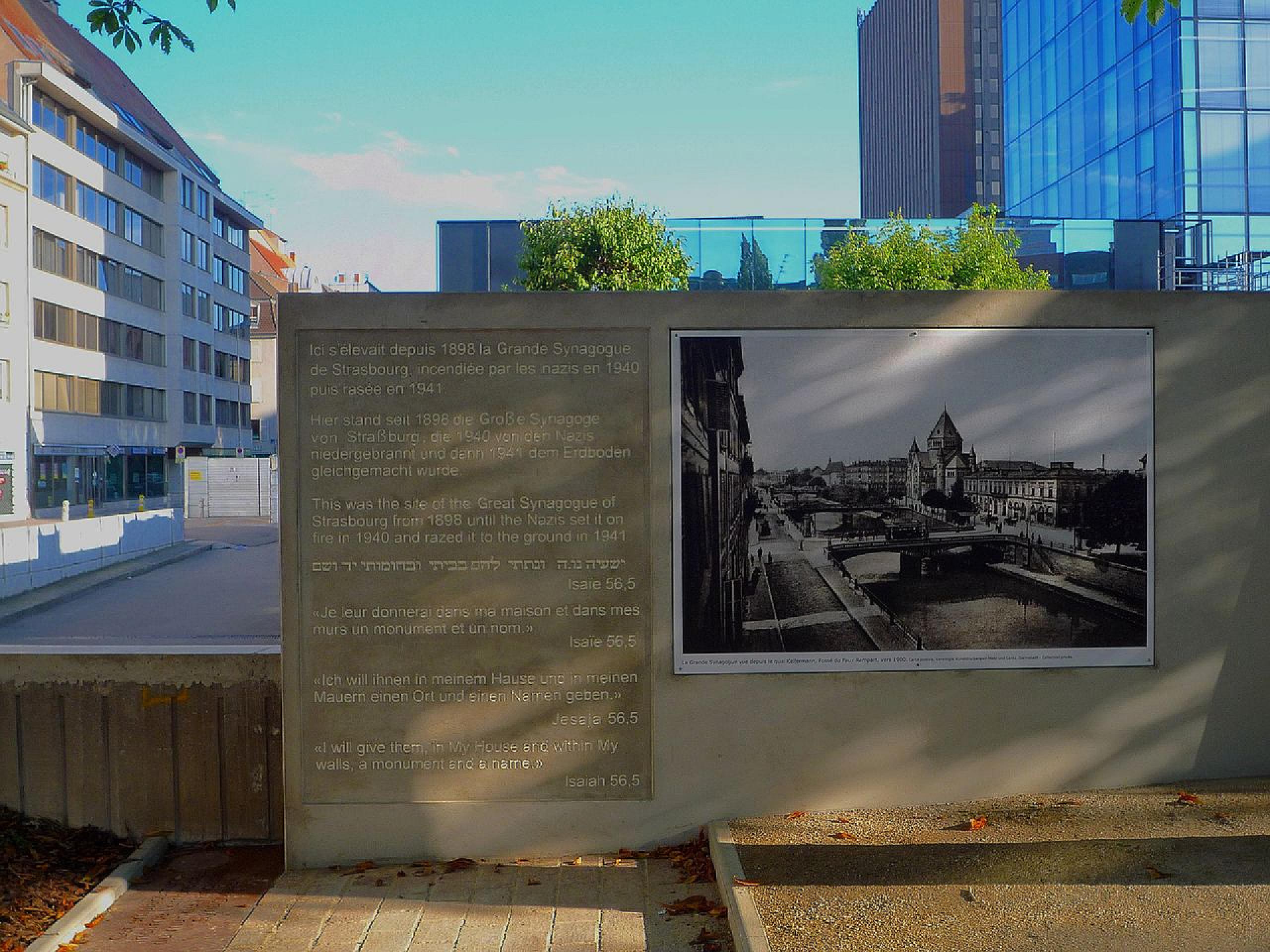
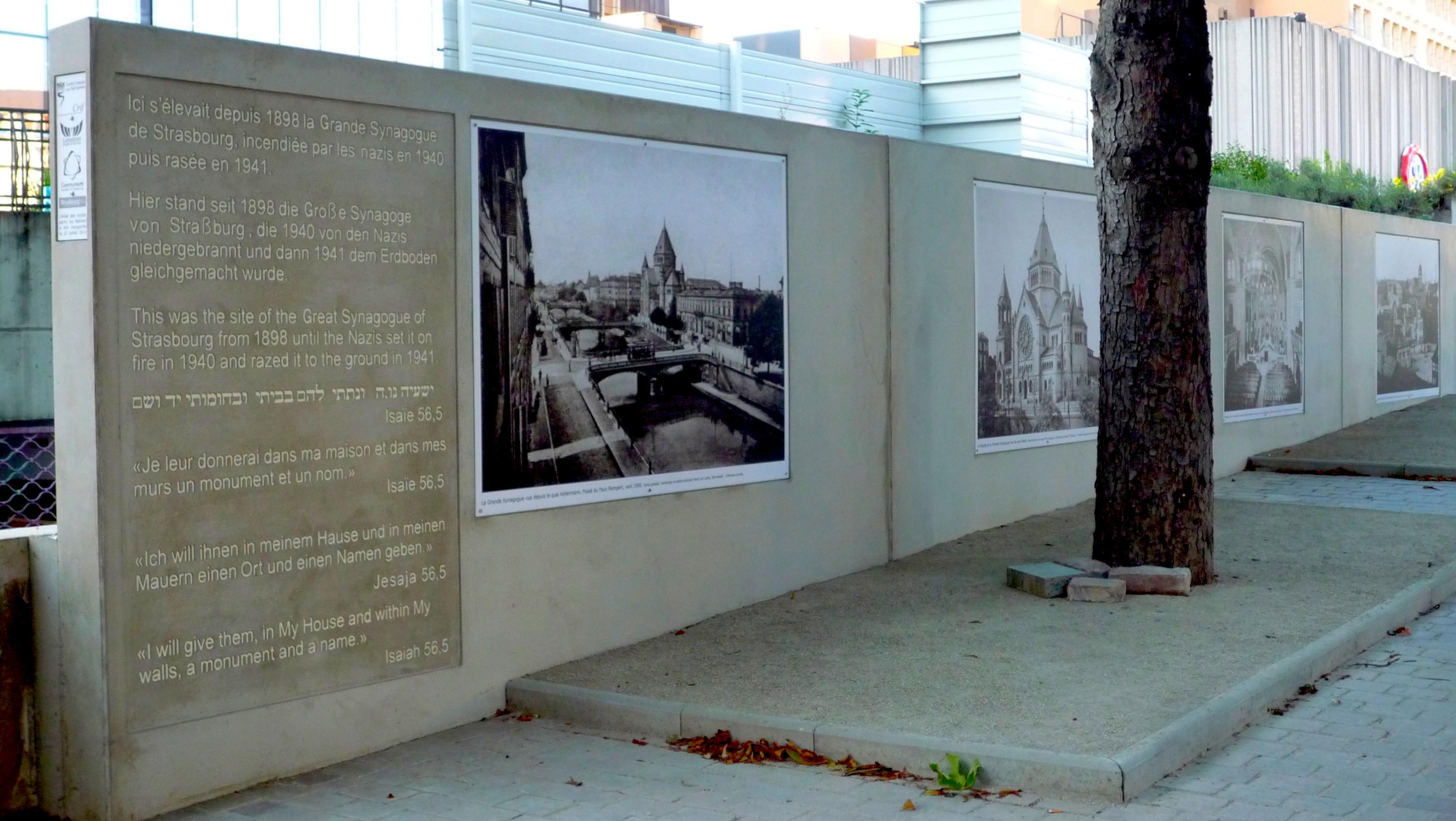
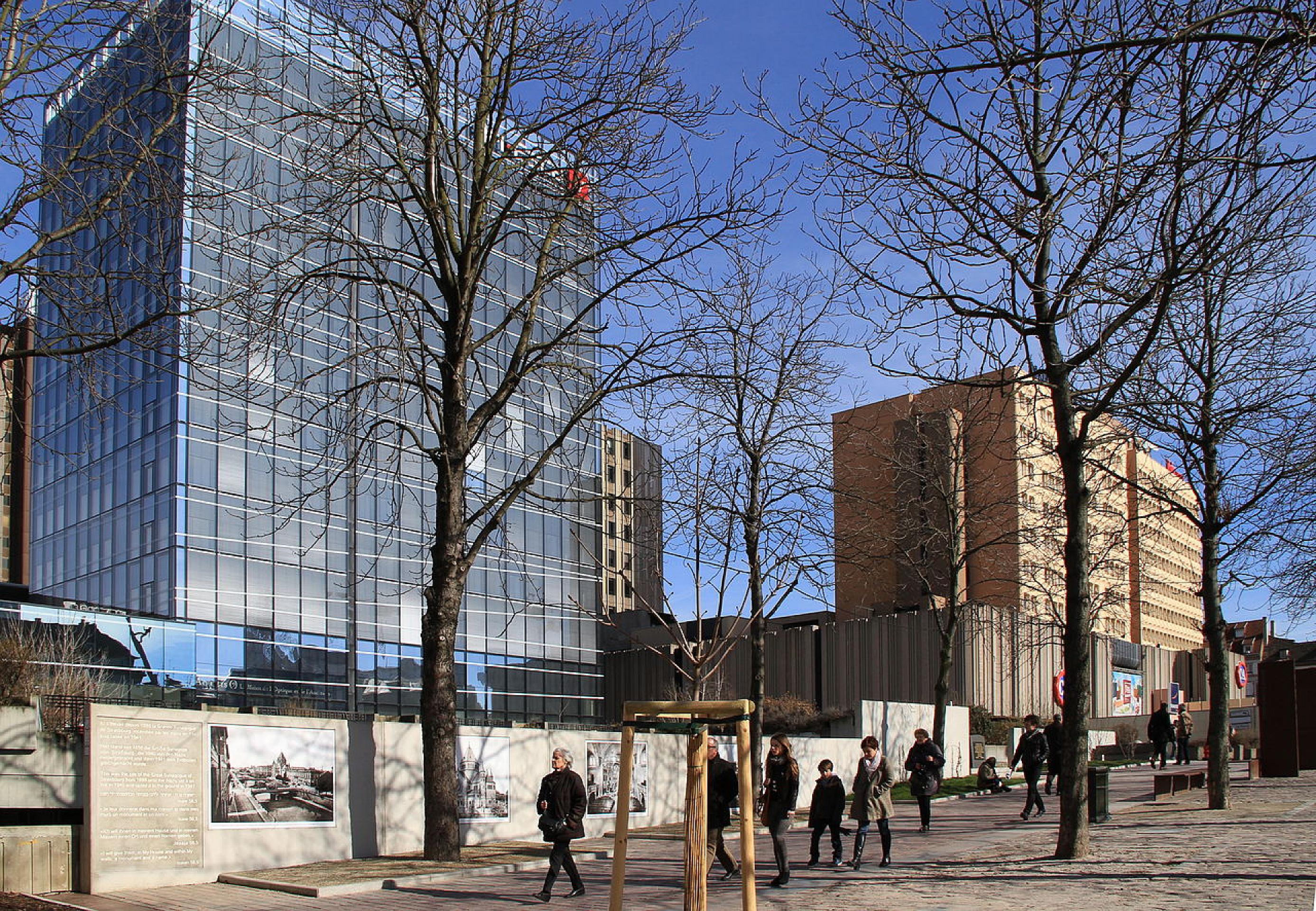
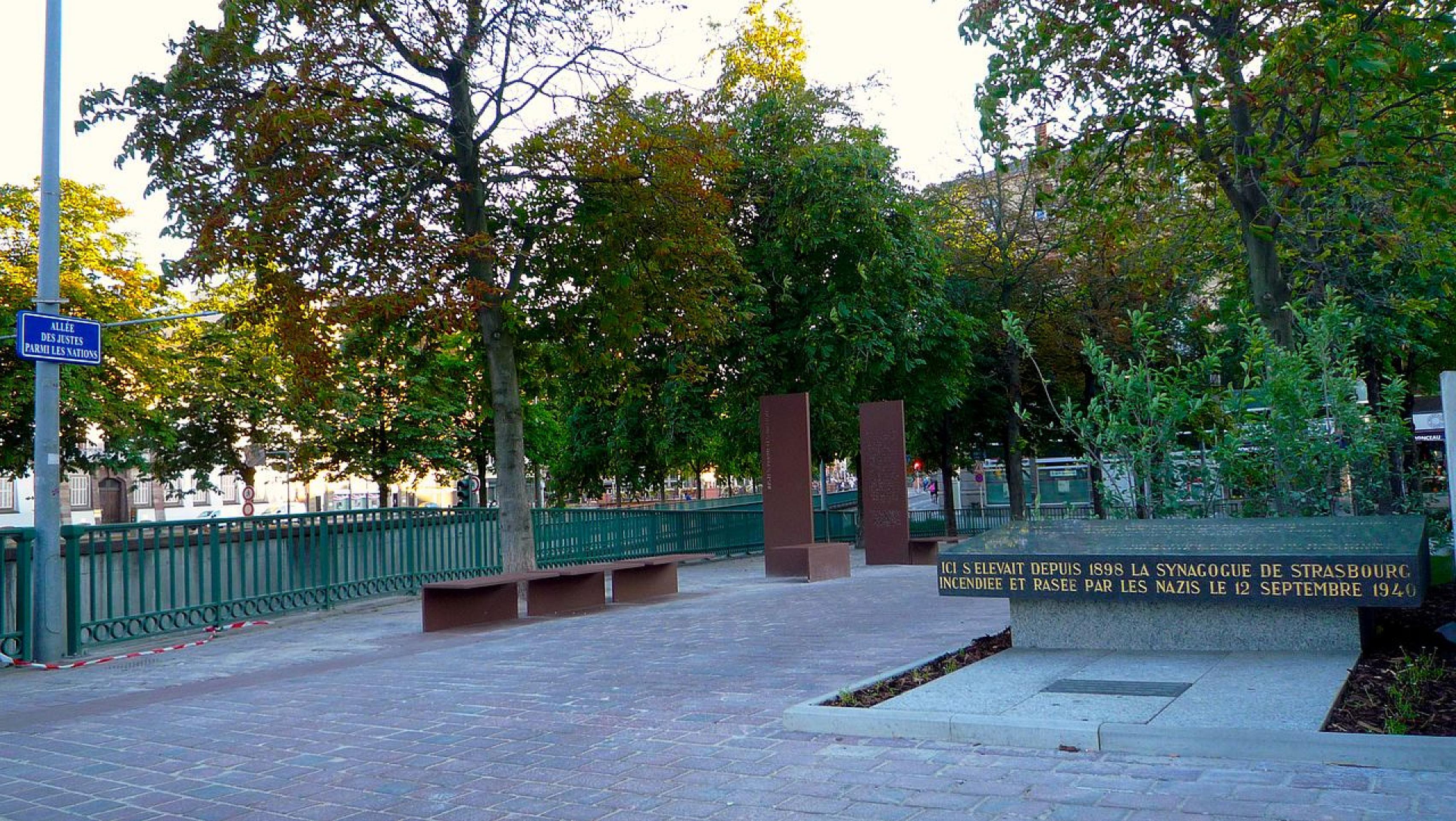
Various memorials in the city centre of Strasbourg mark the site where the Old Synagogue once stood until its destruction by the National Socialists in 1940.
History
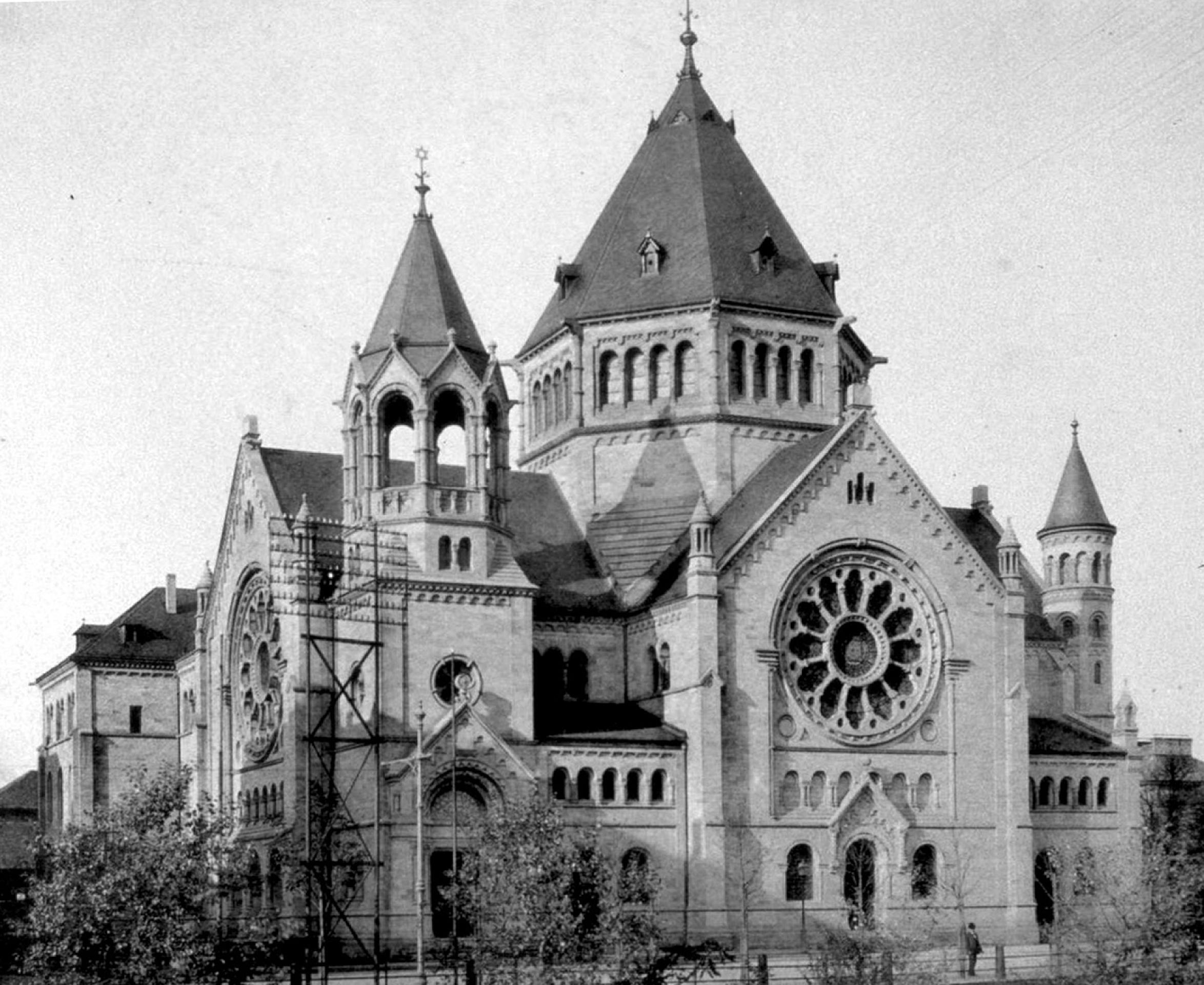
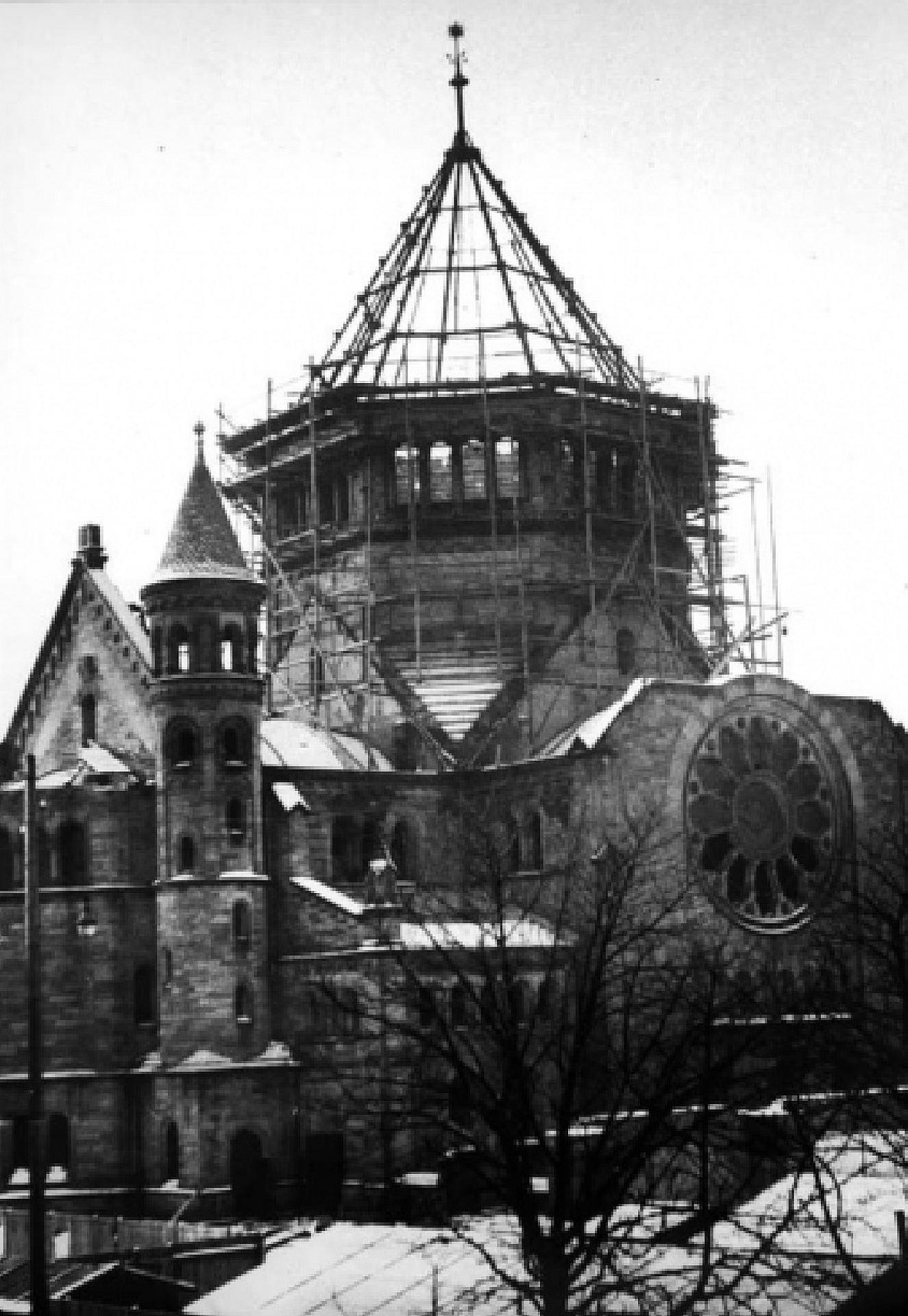
Strasbourg (German: Straßburg), capital of the Alsace region, became part of the German Reich after the Franco-German war of 1870/71. Prior to that, the city was part of France for almost 200 years. Even before 1871 the Jewish population had grown considerably, a trend later intensified by rural exodus. Subsequently the Jewish community decided to build a new main synagogue which came into existence between 1895 and 1898 at the Kleberstaden (French: Quai Kléber). It was designed by the architect Ludwig Lewy in the then popular Romanesque Revival style. The synagogue had a seating capacity of 1,500 and the main dome had an octagonal layout similar to the central dome of the Speyer Cathedral. After the First World War Strasbourg was again part of France until the German Wehrmacht defeated France in 1940 and the German Reich subsequently incorporated Alsace. Many Jews flew to the heart of the country or to the unoccupied part of France but because of the anti-semitic policies of the collaborating Vichy government of Marshall Pétain they were not safe there either. In September 1940 anti-Semites set fire to the Strasbourg synagogue. The gutted building was demolished in the following months.
Victims
Prior to the beginning of the Second World War about 10,000 Jews lived in Strasbourg. About 800 of them perished in the Holocaust.
With the defeat of the French army in June 1940 the country came under German control. Northern France was governed by the German military administration, whilst the south was initially unoccupied. A government under German influence was established in the spa town of Vichy in the south of France. At the beginning of the Second World War, there were around 300,000 Jews living in France. The exact number is not known as there were no records of religious affiliation in France. The first anti-Jewish laws were passed in northern France at the end of 1940. The Jews were forced to register with the authorities, excluded from society and stripped of their possessions. These policies were followed by systematic arrests by the French police. Jews without a French passport were the main targets of the German SS and police as well as the French authorities. In an attempt to deter growing French resistance, the German military commander General Otto von Stülpnagel (1878–1948) started to have those not involved in the resistance shot and to have Jews in particular arrested. Those arrested were among the first to be deported to the death camps in occupied Poland from March 1942 onwards. A total of 75,000 people were deported to their deaths in the course of over seventy deportation operations. Most of the French Jews survived, mainly in hiding in the south of the country. Around 600,000 people died in France as a result of war and persecution, including 270,000 civilians. There continues to be little distinction drawn between the different groups of victims. However, since the late 1980s there has been increased research into the murder of patients of care homes and clinics. It is now estimated that around 50,000 people fell victim to these operations.
Both northern and southern France experienced persecution, collaboration and resistance during the occupation. After the war, remembrance of both the campaign of the »Résistance« as an expression of French patriotism and the suffering associated with the »Déportation« provided a way of bridging the differences between the Gaullist conservatives and the Communists affiliated with Moscow. Consequently, many museums and memorial sites are dedicated to the resistance or remember the deportations, for example the »Mémorial des Martyrs de la Déportation« (Memorial to the Martyrs of the Deportation) in Paris, inaugurated in 1956, and the »Centre Européen du Résistant Déporté« (European Centre for Deported Resistance Fighters), which opened in 2005 at the memorial site at the former Natzweiler concentration camp.
Since the early 1990s a number of sites of memory have been established, such as the Maison d’Izieu (Izieu Home) memorial near Lyon, which remembers the deportation of 44 Jewish children, the national memorial site at the former camp at Gurs as well as a memorial centre in Oradour sur Glane – a village destroyed by the SS in 1944. The central memorial site dedicated to the victims of the Holocaust is the »Mémorial de la Shoah« in the centre of Paris, which was opened in 2005. French presidents have since then acknowledged shared French responsibility for the Holocaust in France.
The memorial site in Caen,commemorating the Normandy landings of 1944, was opened in 1988 and extended in 2002, is the most-visited memorial site outside Paris. The annual national commemorations marking the victory over Nazi Germany take place here. In addition, there are numerous regional museums in France, where the exhibitions focus on the themes of persecution, resistance and deportation.
Remembrance
Since the end of the Second World War, Strasbourg is French again. Many Alsatian Jews returned to the city. In 1958 the Jewish community dedicated a new main synagogue by the name of »Grande Synagogue de la Paix« (»Great Synagogue of Peace«). For decades nothing remembered the old synagogue until 1976 a first memorial stone was erected on its former site. In 2012 the »Alley of the Righteous among the Nations« was added to the memorial. On the installation Alsatians who have saved the lives of persecuted Jews are remembered. At the same time many large-sized images of the old synagogue are shown. The memorial was initiated by the umbrella organisation of Jewish communities in France and the city of Strasbourg. Today about 20,000 Jews live in Strasbourg, some of them come from North African countries like Algeria and Morocco.