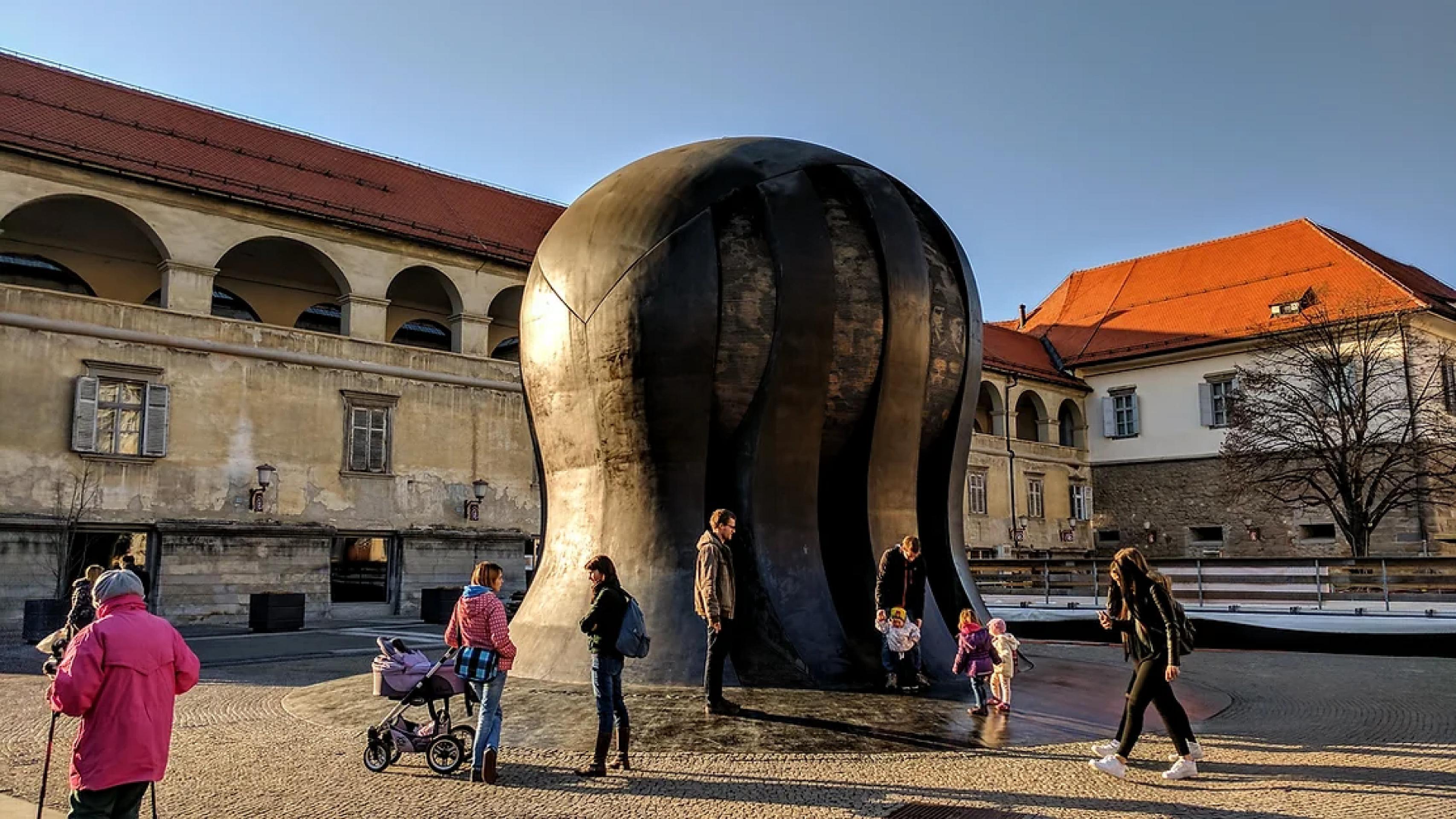
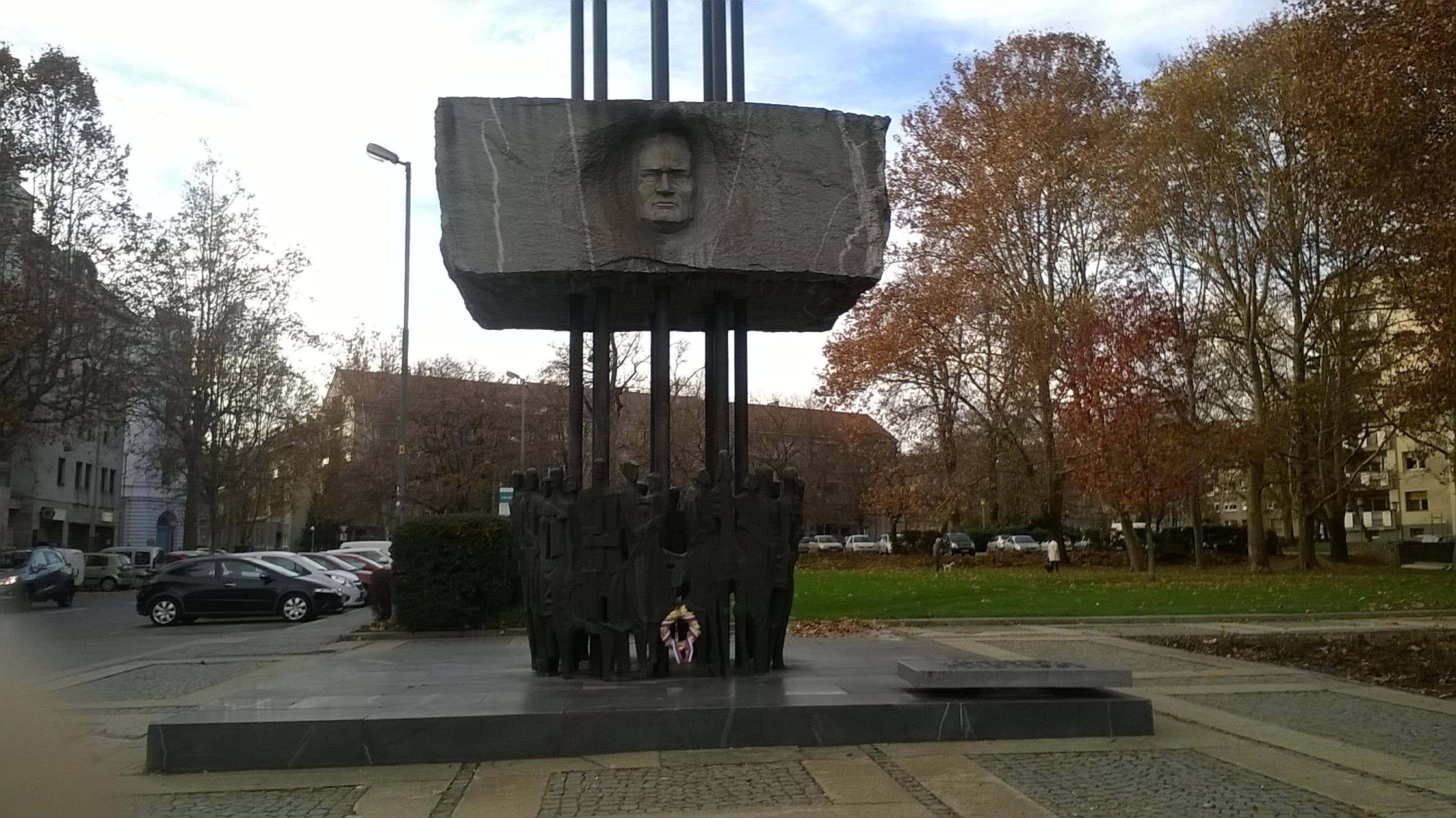
The armed struggle of the Slovenian Liberation Front (Slovenian: Osvobodilna Fronta, short: OF) and Yugoslav partisans against the German and Italian occupiers and their collaborators during the Second World War is known as the National Liberation (Slovenian: Narodnoosvobodilni Boj, short: NOB). In Maribor (German: Marburg an der Drau), the country's second largest city, a bronze monument erected in 1975 on the central Trg svobode (English: Freedom Square) commemorates the national liberation struggle. There has also been a monument to the Slovenian partisan leader Boris Kidrič on the square in front of the railway station since 1963. In addition to the monuments, the National Liberation Museum Maribor provides information about the partisan war.
History
The Kingdom of Yugoslavia, to which Slovenia and therefore Maribor belonged, remained neutral for a long time during the Second World War. Under strong pressure from the Axis powers, the Kingdom of Yugoslavia finally joined the Tripartite Pact on 25 March 1941. Two days later, a coup d'état took place in Belgrade, the capital of the kingdom, which was intended to prevent an alliance with the Axis powers. The German Reich took this as an opportunity to attack Yugoslavia and Greece on 6 April 1941.
After the German Reich invaded the Kingdom of Yugoslavia on 6 April 1941, the Slovenian part of Styria was annexed to the Greater German Reich as the CdZ region of Lower Styria (CdZ = Chief of Civil Administration). On 26 April 1941, Hitler visited Maribor, the capital of the region. At a mass rally, he called on his supporters to »make this country German again«.
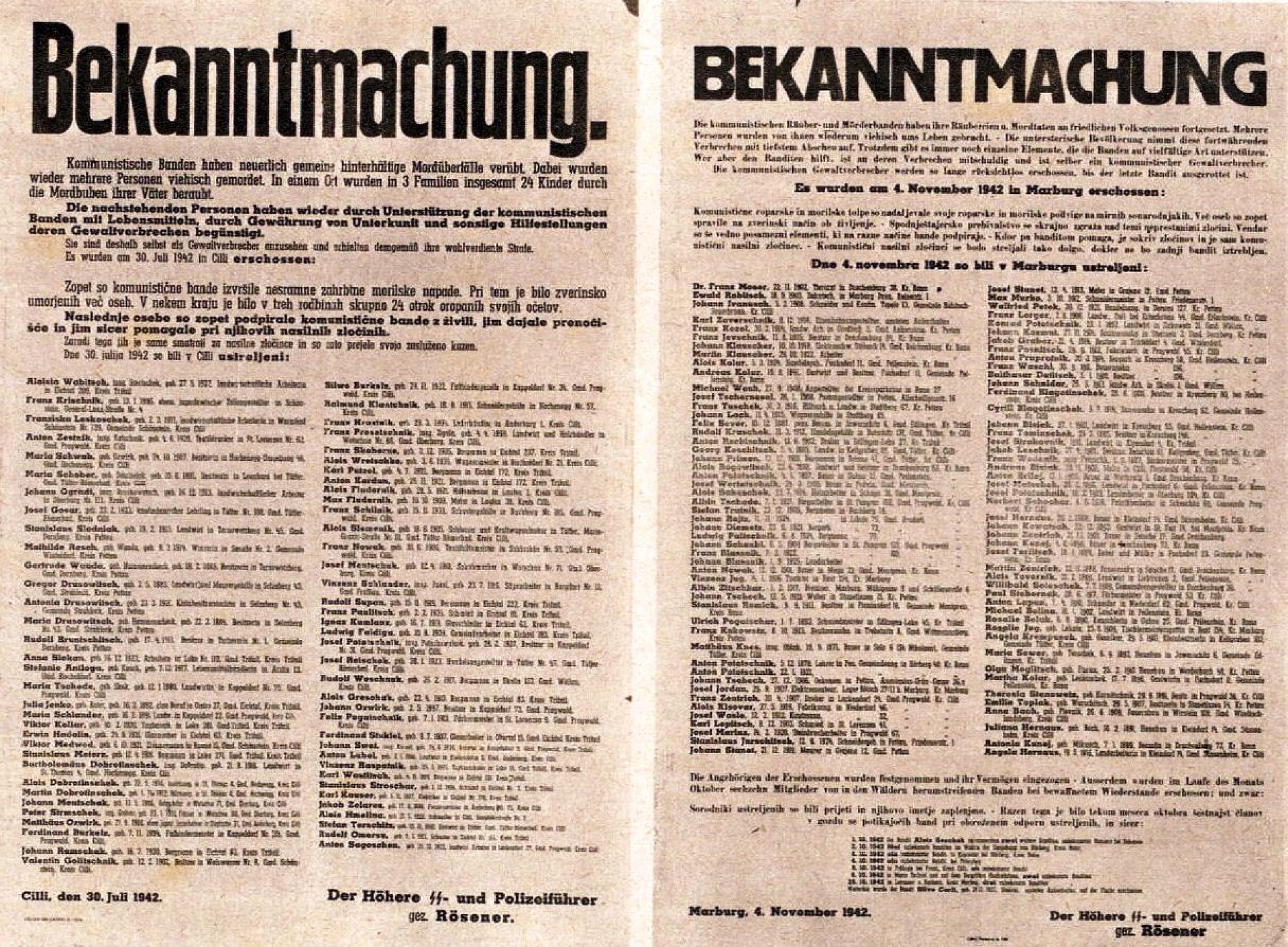
As a result, personal names and place names were »Germanised«, the use of the Slovene language was banned and Slovene institutions were expropriated. In addition, Slovenes were deported to Croatia and Serbia as well as to the German Reich for forced labour. Anyone suspected of supporting the Yugoslav partisans was executed; the death sentences were posted in the city as a deterrent.
On 11 July 1941, the OF, the Slovenian Liberation Front, was formed, which was communist-dominated from the outset and fought against both the German occupying forces and internal political opponents. At the end of 1942, the OF joined the all-Yugoslav partisan movement under Josip Broz Tito. At the beginning of 1944, there were around 40,000 Slovenian partisans.
Due to Maribor's strategic importance as an industrial centre, the city was bombed by the Allies from 7 January 1944. Around half of the city area was destroyed, making Maribor the most devastated city in Yugoslavia. However, the German occupiers only left Maribor at the end of the war on 8 May 1945 and the city was taken by the partisans without any major fighting. From the summer of 1945, the German-speaking population of the city, who had not already fled, was expelled to Austria and their property confiscated.
-large.jpg)

Victims
The Slovenian Institute of Contemporary History estimates that around 90,000 Slovenes lost their lives between April 1941 and February 1946: 40,000 as a result of the war and occupation, 50,000 as a result of the internal political battles after the end of the war.
The annihilation of the partisan movement was one of the main goals of the German occupiers from an early stage. As early as 18 December 1941, Heinrich Himmler and Adolf Hitler reached an agreement to treat partisans and Jews equally and to »exterminate« both groups. The »extermination of partisans« consisted, among other things, of reducing entire villages to rubble. The SS shot or burned the people they could get hold of, and only in exceptional cases did they deport villagers whom they considered fit for labour.
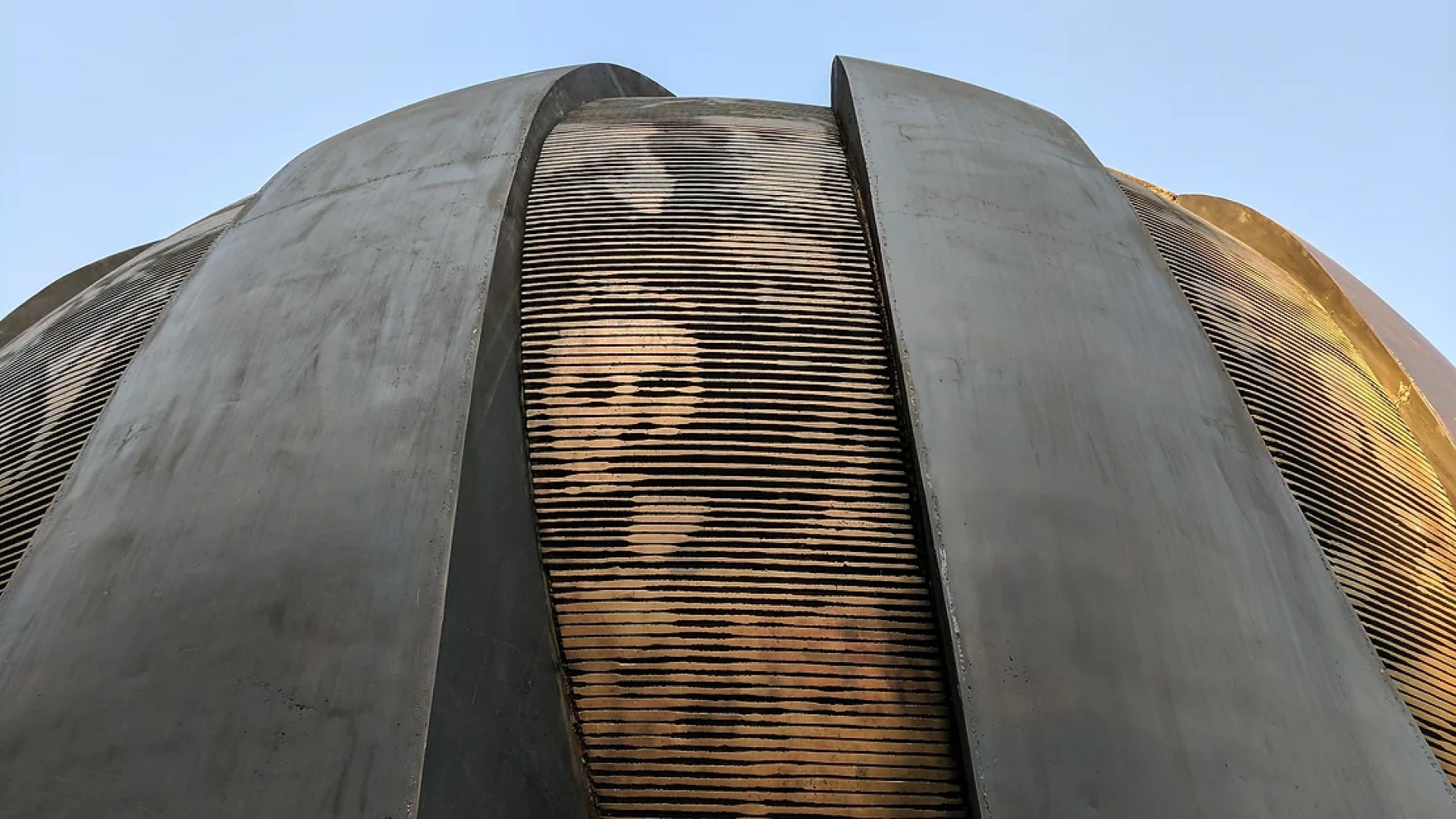
The central »Spomenik NOB« commemorates the 667 resistance fighters who were murdered in Maribor during the German occupation. In total, the Second World War claimed more than 2,600 lives in Maribor.
Remembrance
In the People's Republic of Slovenia (from 1963: Socialist Republic of Slovenia), which was part of Yugoslavia, the memory of the partisans took centre stage in the culture of remembrance. The anti-fascist and Yugoslav character of the partisan movement was particularly emphasised.
The National Liberation Museum Maribor (Slovenian: Muzej narodne osvoboditve Maribor) has been located in the centre of the city since 1958. The beginnings of the museum date back to 1947, when a collection on Slovenia's national liberation struggle was opened in the Maribor Regional Museum. In 1958, the former city villa of the Maribor businessman Gustav Scherbaum, built in the 1890s, became the seat of the museum.
One of Maribor's largest monuments has been located near the railway station since 1963. It is dedicated to the Slovenian-born Yugoslav politician and partisan leader Boris Kidrič. The monument, designed by Stojan Batiča, is around 10 metres high and consists of a group of figures carrying a granite block with the face of Boris Kidrič. The monument remains controversial to this day due to Kidrič's involvement in revenge campaigns and the expulsion of the German-speaking minority.
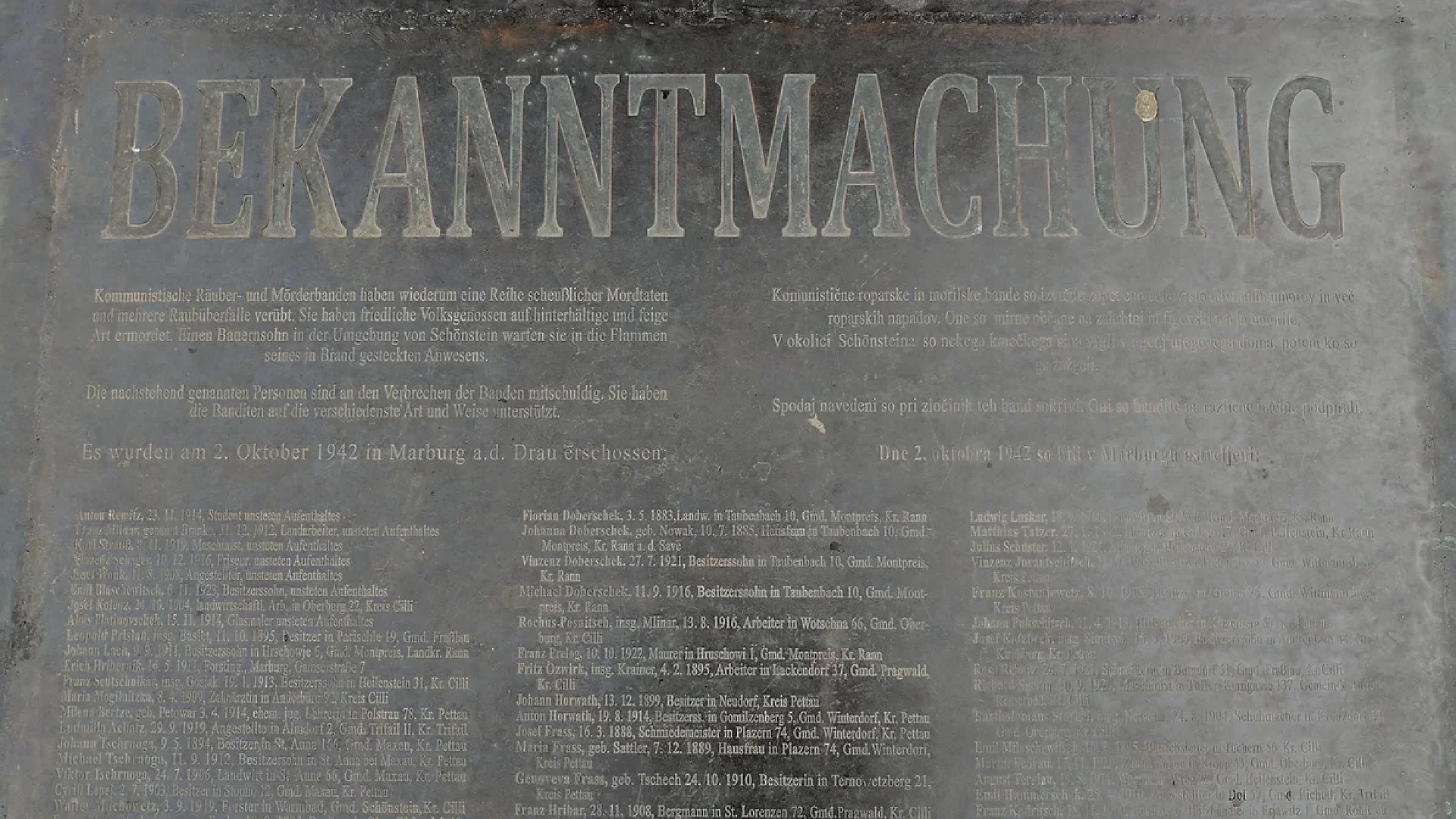
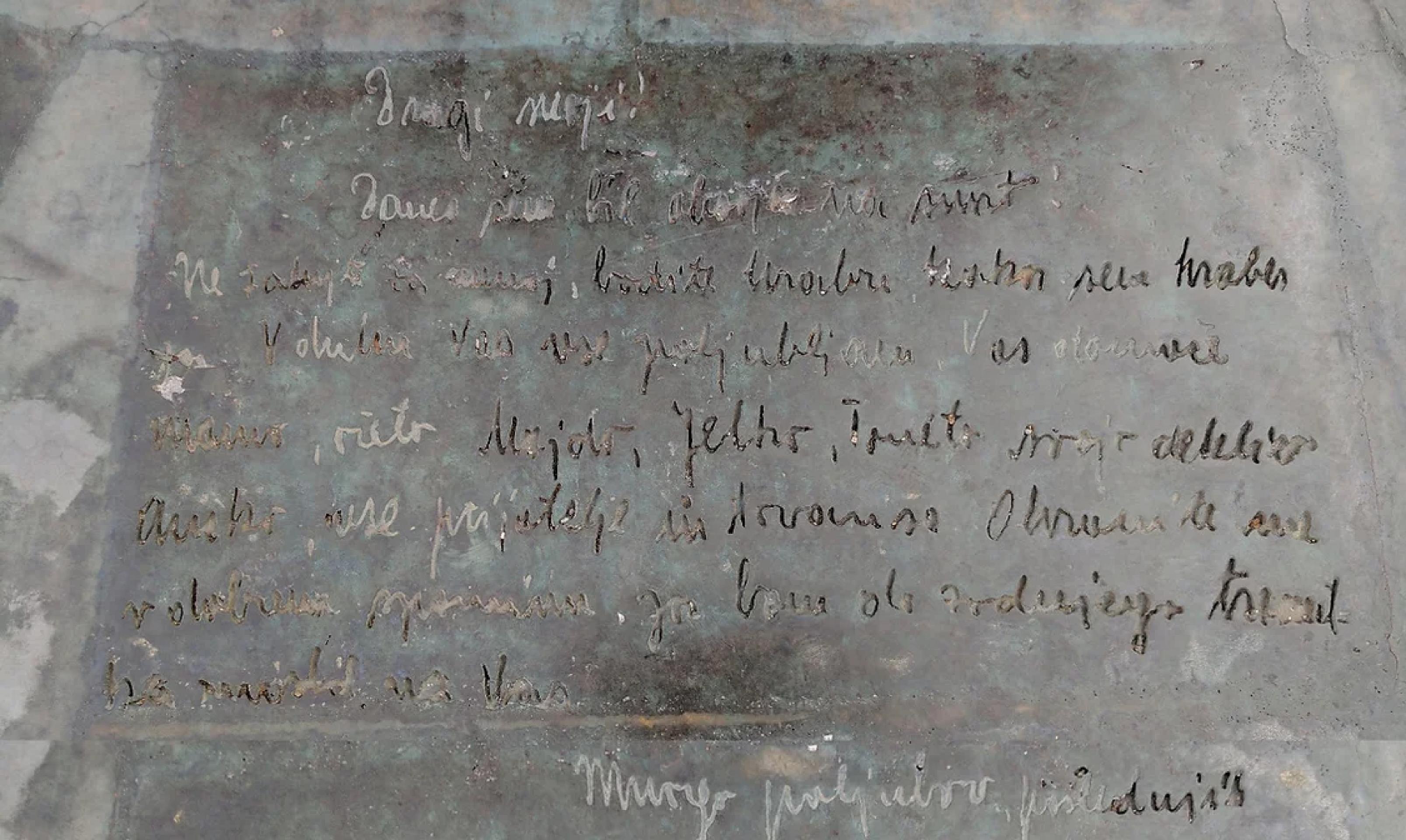
The bronze monument »Spomenik NOB« on the central Trg svobode is a work by Slavko Tihec from 1975. The faces of the murdered resistance fighters can be seen between the bronze plates. Also embedded in the memorial are the announcements about the execution of prisoners and insurgents who were executed during the Second World War. The farewell letter of Jože Fluks, who was sentenced to death, was also carved into the monument.
Since the attainment of state independence in 1991, there have been two opposing versions of the history of resistance during the Second World War. The »partisan version« states that the OF put up legitimate armed resistance against occupiers and collaborators, including the Slovene Home Guard (Slovenian: Slovensko domobranstvo, short: Domobranci). The »Domobranci version« contradicts this: the OF was an instrument of the communists in preparation for the seizure of power. According to this interpretation, it did not so much fight the occupiers as provoke them to excessive violence against the civilian population.
Contact