Resistance and Deportation History Centre
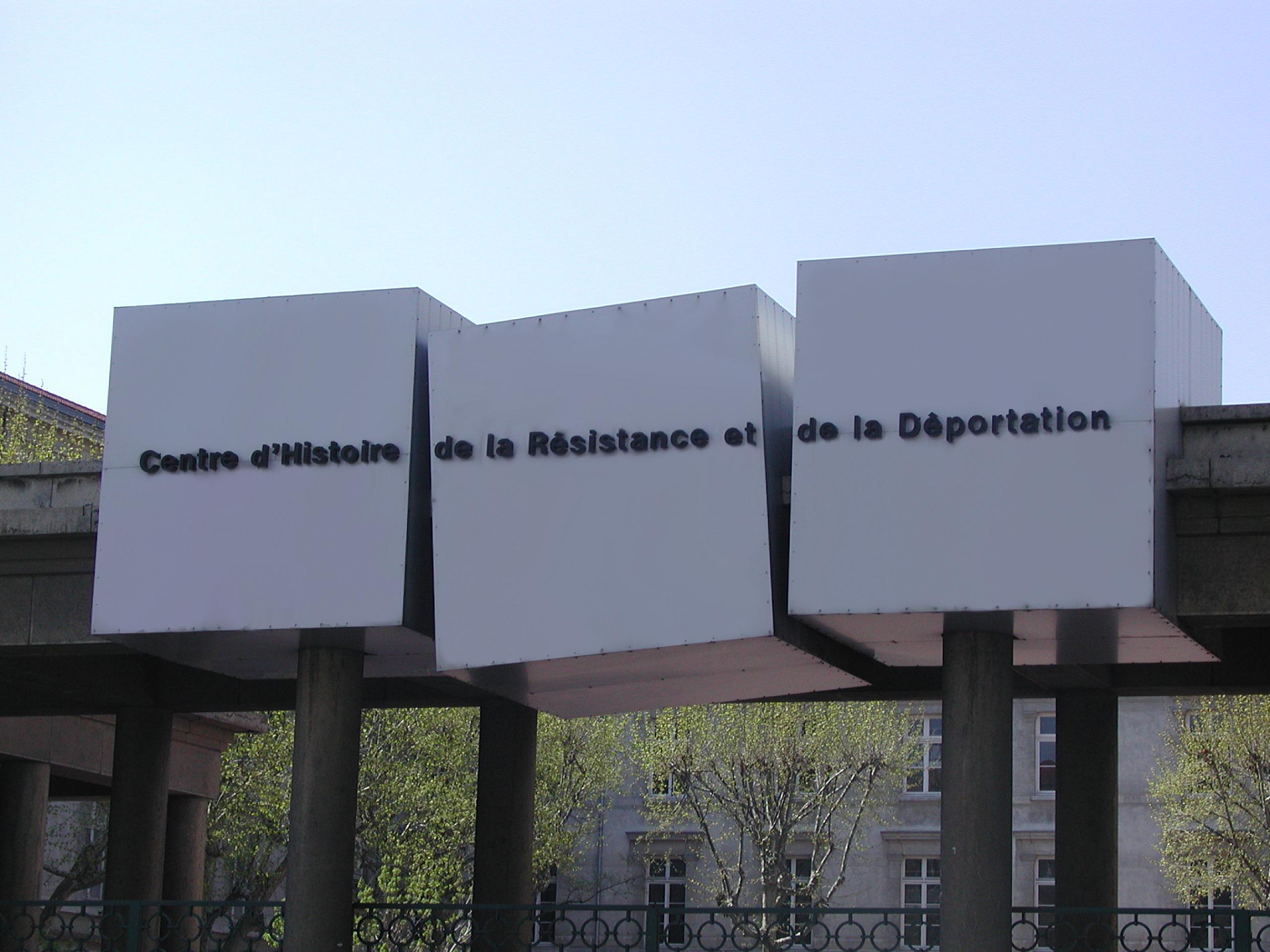
Centre d´Histoire de la Résistance et de la Déportation
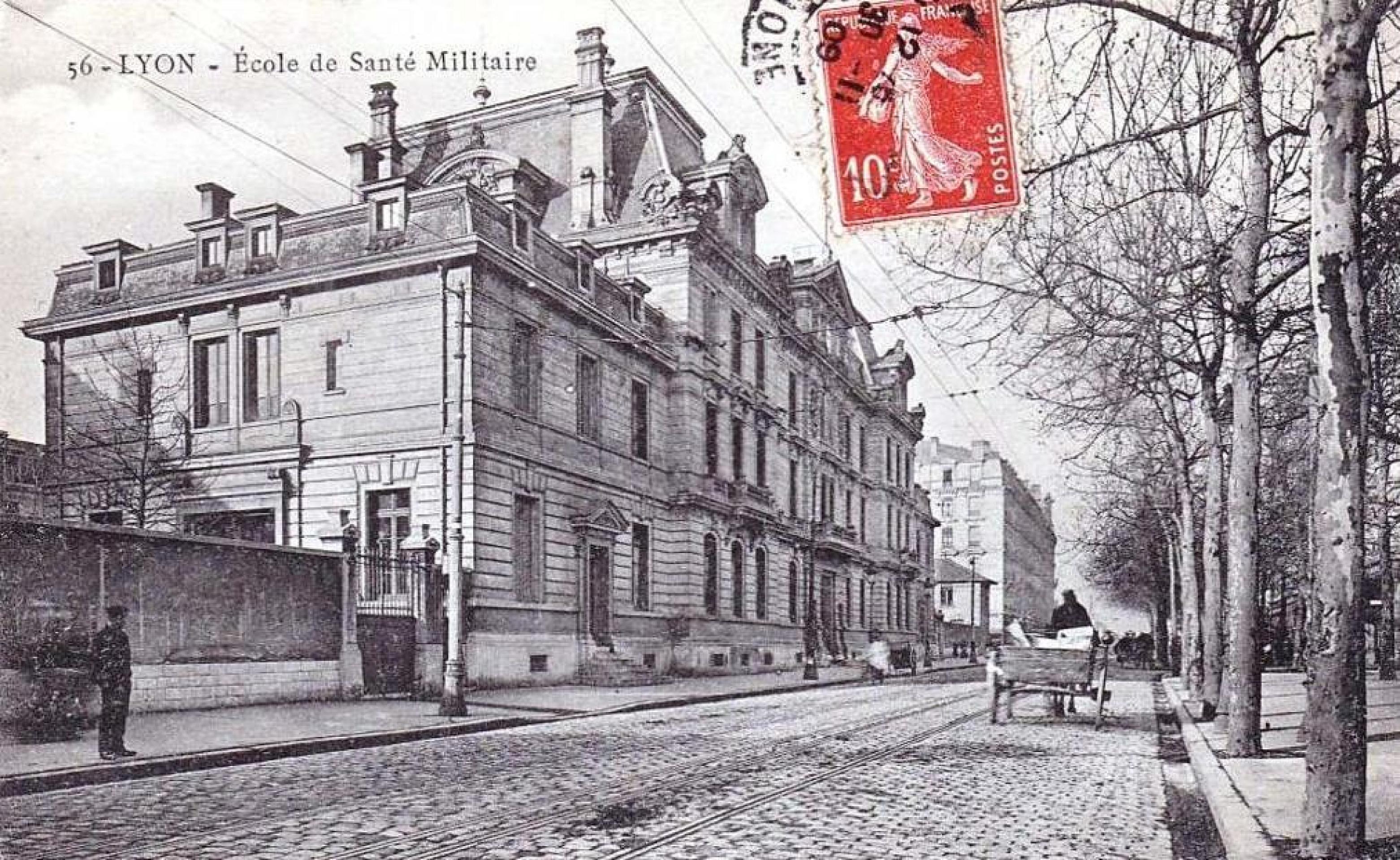
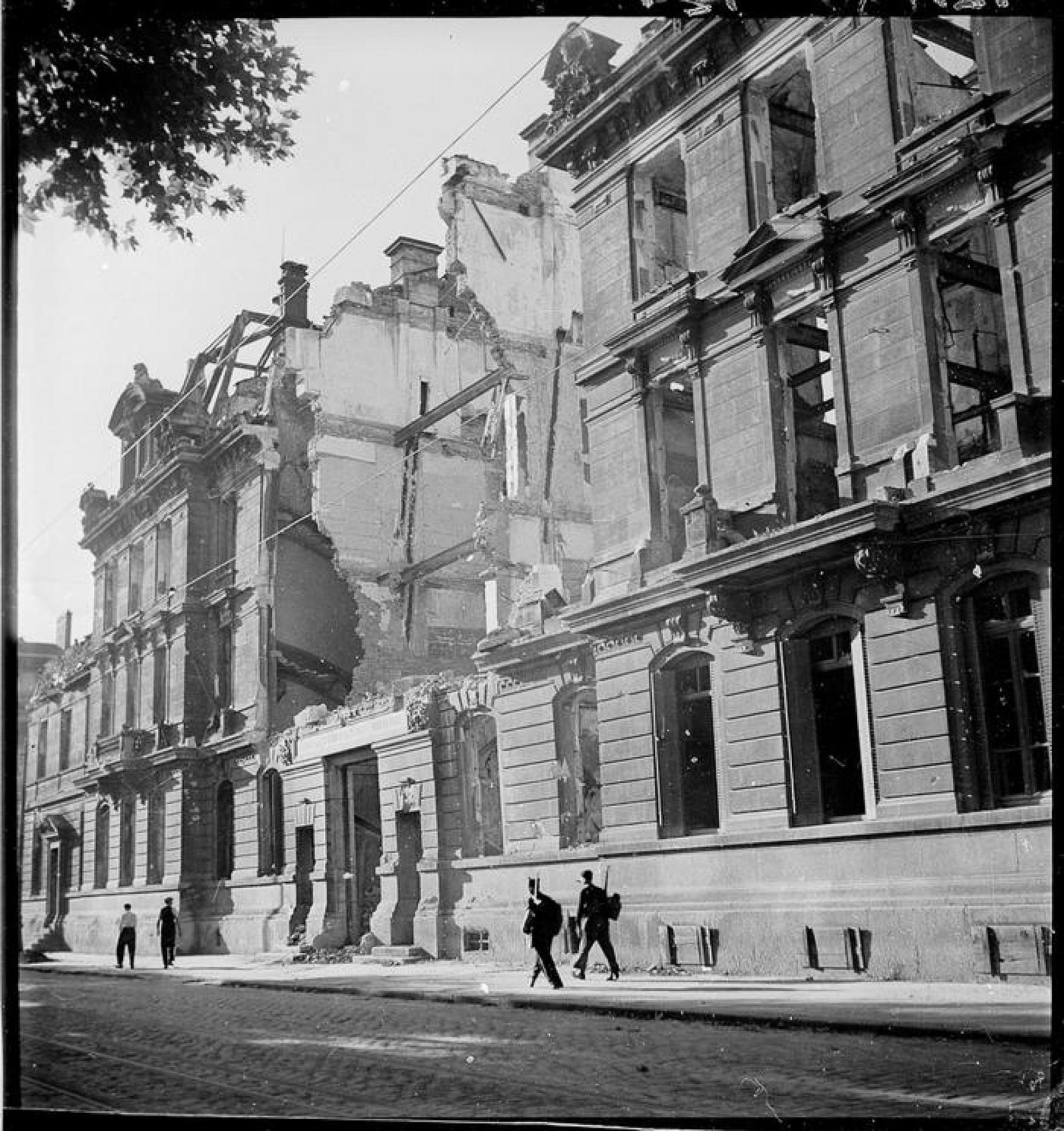
The Resistance and Deportation History Centre in Lyon fulfils a dual mission: on the one hand, it works to preserve the remembrance of the Holocaust and provides information and educational offers to the general public; on the other hand, it houses archives and collections. It is located in the building of the former school for military doctors, which was used by the Gestapo as its headquarters during the German occupation.
History
After France’s defeat against the German Wehrmacht and the signing of the armistice in June 1940, France was divided into two zones: the »zone occupée« (»occupied zone«) in the north and the unoccupied »zone libre« (»free zone«) in the south, which was administered by the Vichy regime. As a major city located close to the demarcation line in the »zone libre«, Lyon became a centre of the Résistance from the summer of 1940 onwards: two of the most important French resistance movements, Combat and Franc-Tireur, were founded in Lyon in 1941, and other resistance groups were also active in the city. In November 1942, however, France’s entire territory was occupied by the German Wehrmacht, which led to a drastic worsening of the situation in Lyon. Repression by the German Gestapo and the French Milice intensified, and key figures of the Résistance such as Jean Moulin and Marc Bloch were arrested in Lyon and died a violent death in custody. Nevertheless, resistance in and around Lyon remained strong until the end of the German occupation.
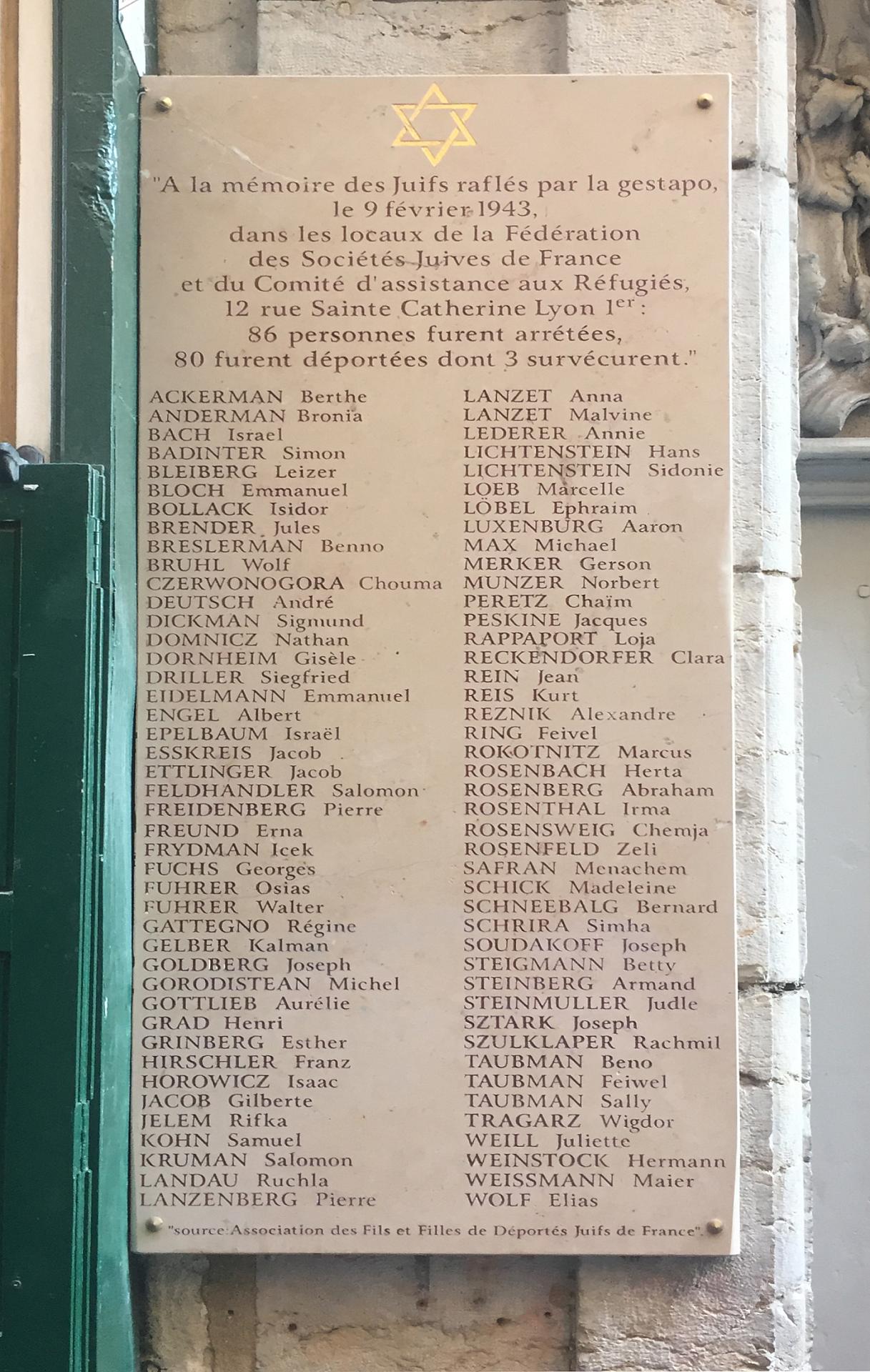
At the same time, the persecution of Jews residing in and around Lyon intensified. Numerous raids were carried out from August 1942 onwards. SS-Obersturmführer Klaus Barbie (1913-1991) played a key role in this, as he had been stationed in Lyon as the head of the Gestapo from November 1942 onwards and acted with extreme brutality. Among other things, he was responsible for the raid on Rue Sainte-Catherine in Lyon on 9th February 1943. He also orchestrated the deportation of Jewish children from the village of Izieu, not far from Lyon, which went down in history as one of the worst crimes of the Holocaust in France.
Victims
A total of 6,100 Jewish children, women and men from the Rhône-Alpes region were deported to German concentration and extermination camps, including 1,995 from Lyon. Of the 11,458 Jewish children deported from France, 395 children who were born in Lyon, lived there or were deported from there have been identified to date.
The victims also included political opponents and resistance fighters. While there are no precise figures for the Rhône-Alpes region, the number of victims in the case of the »maquis du Vercors« (resistance group in the Vercors mountains) alone is estimated to range from 623 to 800 dead. Between 1940 and 1944, across France’s entire territory, more than 60,300 persons who had engaged in political resistance were deported to German prisons and concentration camps. At least 42 percent of them lost their lives.
Remembrance
The events and crimes committed during the German occupation gained international attention when Serge and Beate Klarsfeld tracked down Klaus Barbie, the former head of the Gestapo in Lyon, in Bolivia in 1983. After a trial that was followed worldwide, Barbie was sentenced to life imprisonment in Lyon in 1987 and died in custody in 1991.
A few years after the trial, the Resistance and Deportation History Centre was founded in Lyon. The initiative for its creation came from the then mayor of the city, Michel Noir, and the former lawyer of the victims in the trial against Klaus Barbie, Alain Jakubowicz. The Resistance and Deportation History Centre was inaugurated on 15th October 1992 in the presence of Elie Wiesel, survivor of the Buchenwald concentration camp and Nobel Peace Prize winner, and Jacques Chaban-Delmas, former resistance fighter and Prime Minister of France.
The decision to establish the Resistance and Deportation History Centre in the former school for military doctors was highly symbolic: the building was used by the Gestapo as its headquarters during the German occupation, and the Résistance leader Jean Moulin was tortured there after his arrest on 21st June 1943.
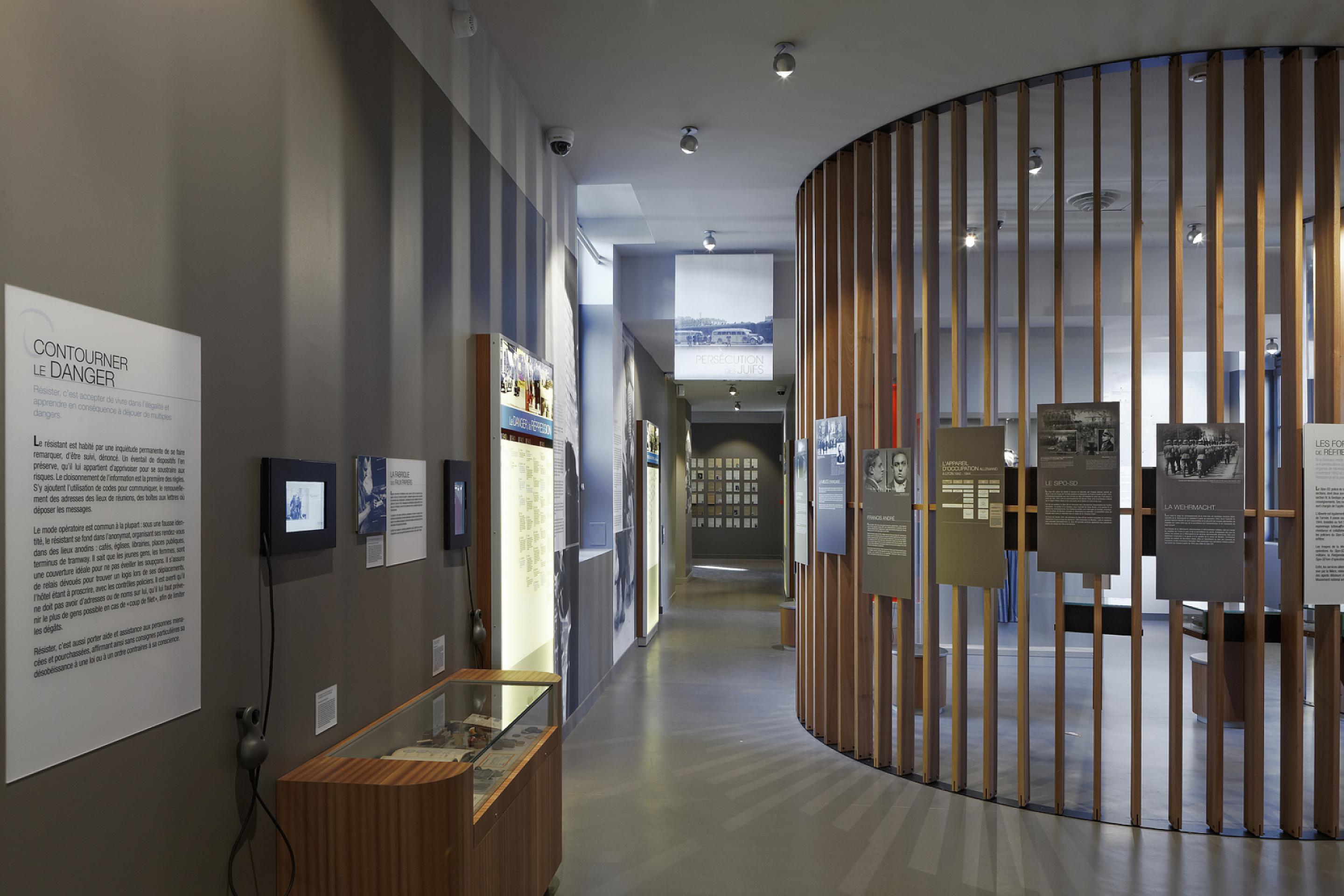
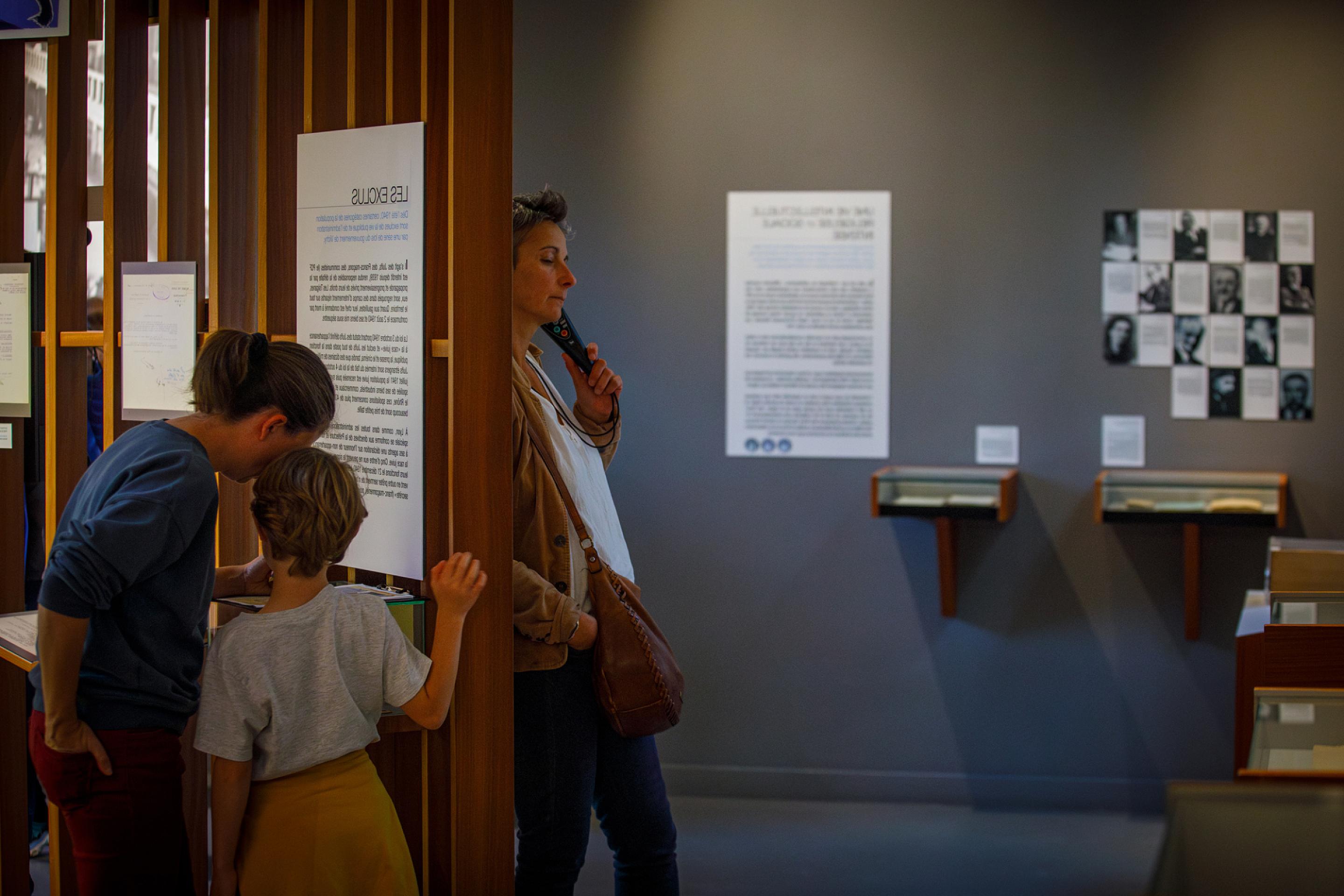
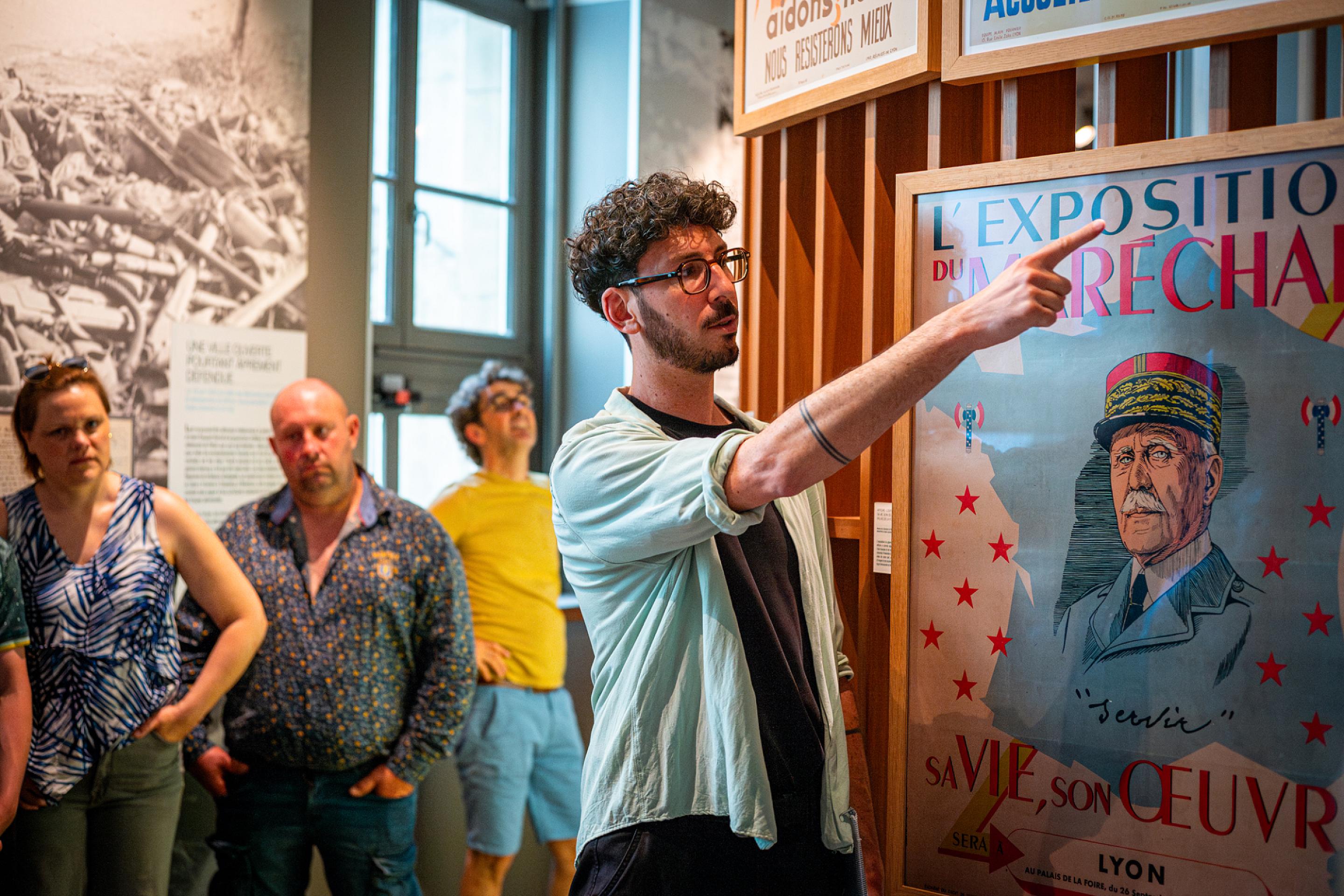
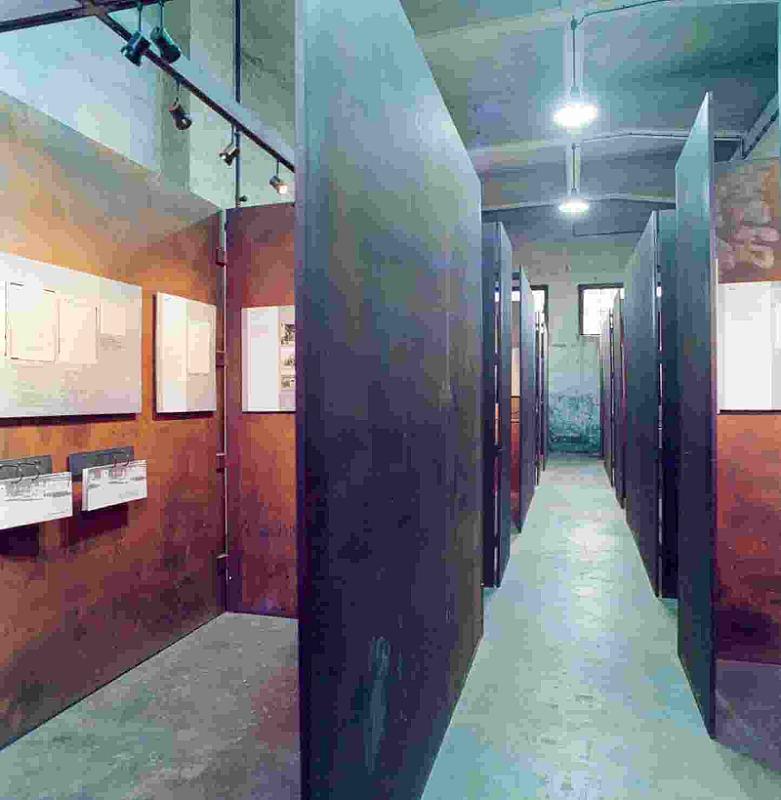
The permanent exhibition was reimagined in 2011 and reopened in 2012. Among other things, it presents objects, photographs, archival documents and audiovisual testimonies illustrating the history of Lyon during World War II. In addition, the Resistance and Deportation History Centre regularly presents temporary exhibitions focusing on everyday life during the war, links with other historical events and current issues and the biographies of historical figures. The Resistance and Deportation History Centre is also the only institution authorised to show excerpts from the trial of Klaus Barbie and provides access to its extensive collections through its library and online portal.
In 2024, the Resistance and Deportation History Centre welcomed more than 65,000 visitors.
Possibilities
Permanent exhibition on the history of Lyon during World War II, temporary exhibitions on various topics, guided tours, workshops, documentation centre, public access to the collections via an online portal, online resources
Open
- Museum and shop:
Wednesday to Sunday: 10.00 a.m. to 6.00 p.m.
Closed on Mondays and Tuesdays
- Library:
Wednesday to Friday: 1.30 p.m. to 5.00 p.m.
Mornings by appointment
Contact
14 avenue Berthelot
69007 Lyon, France