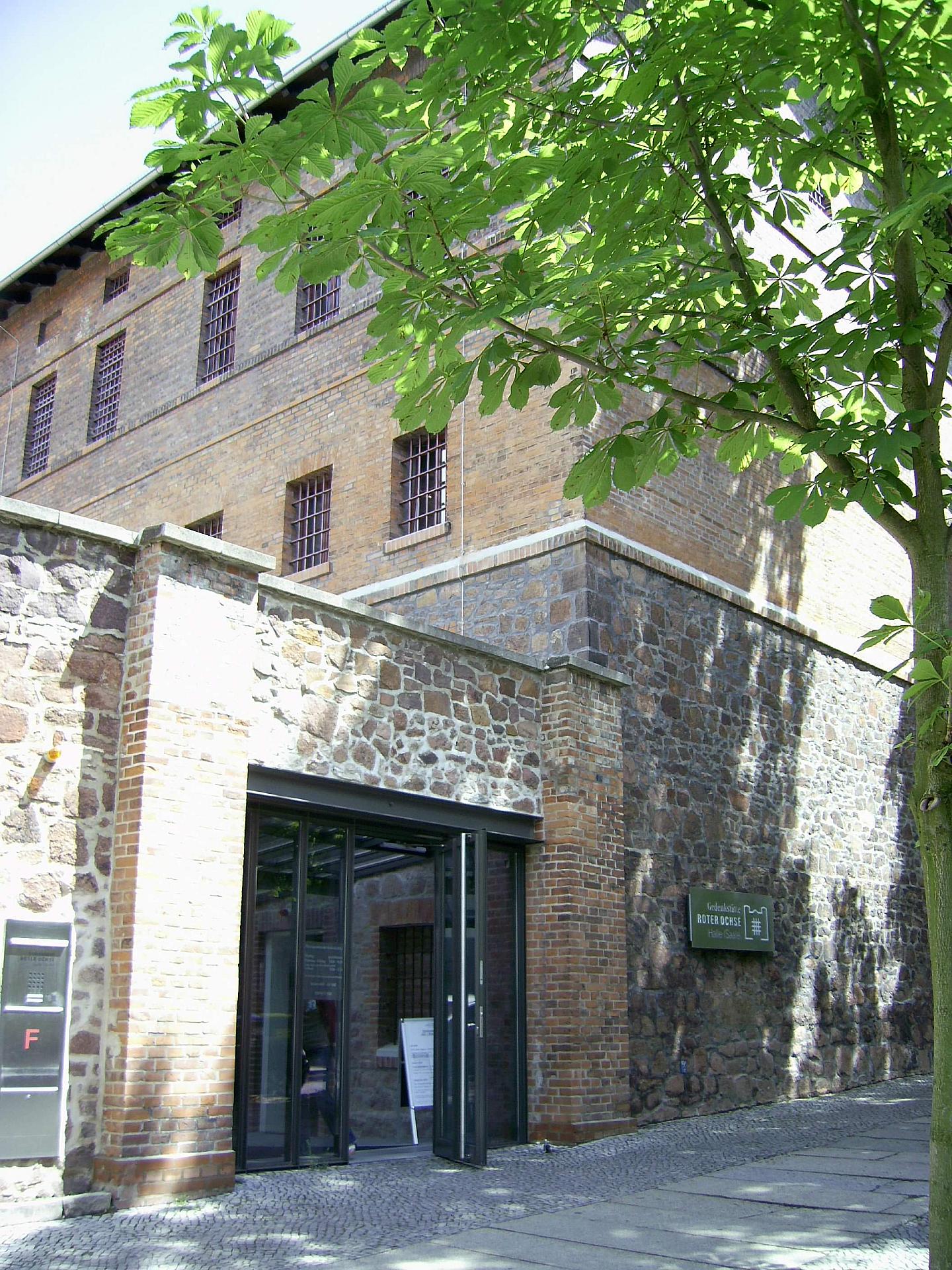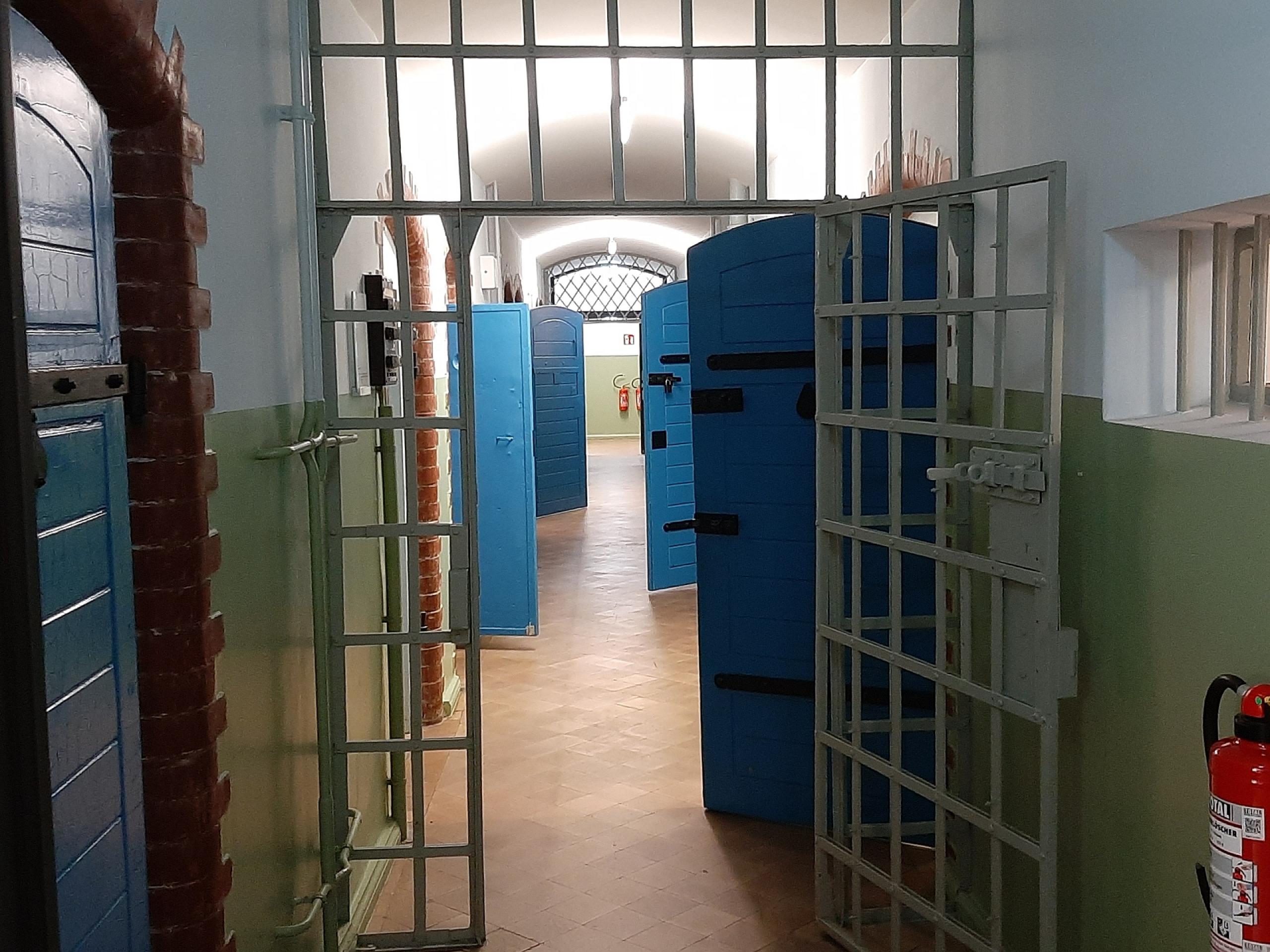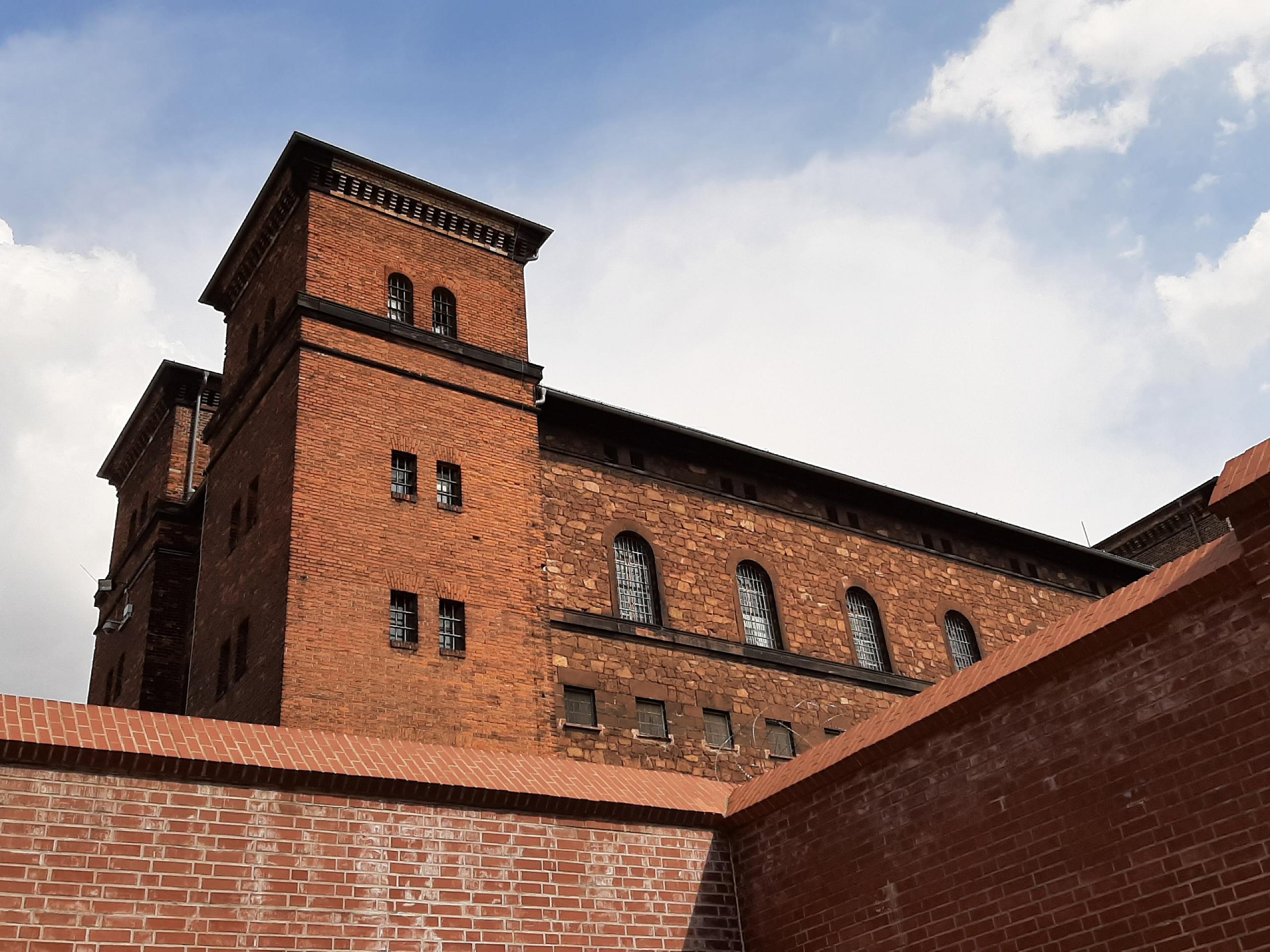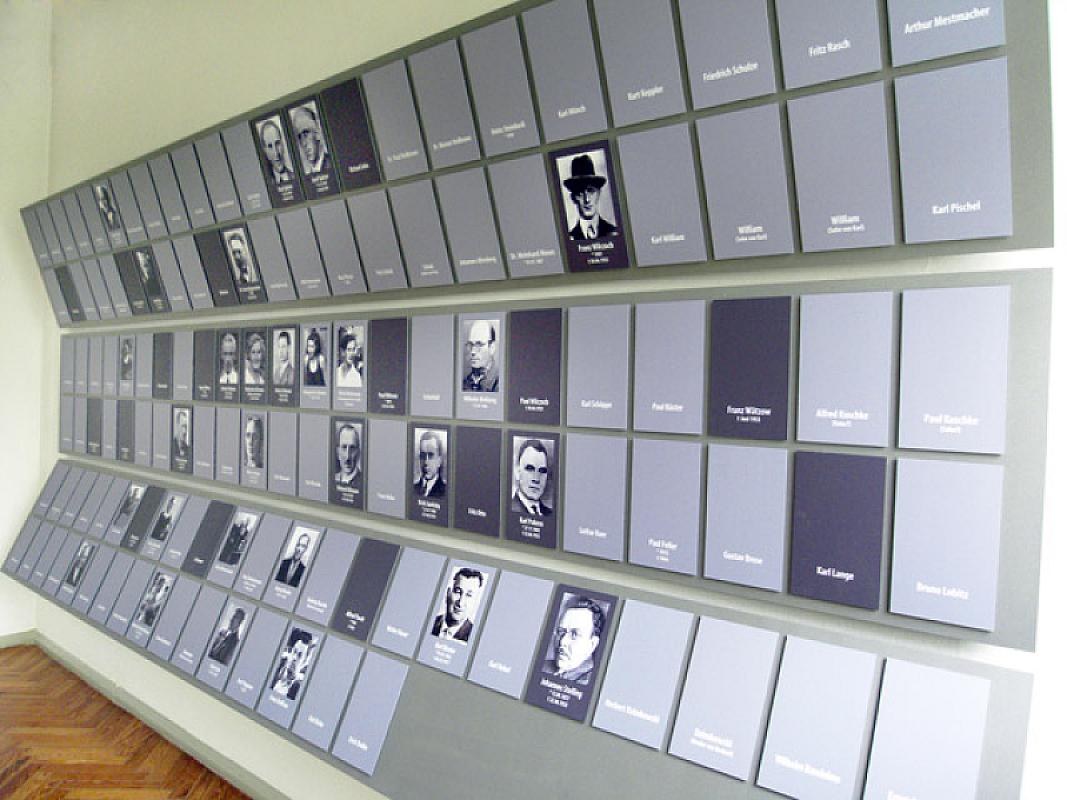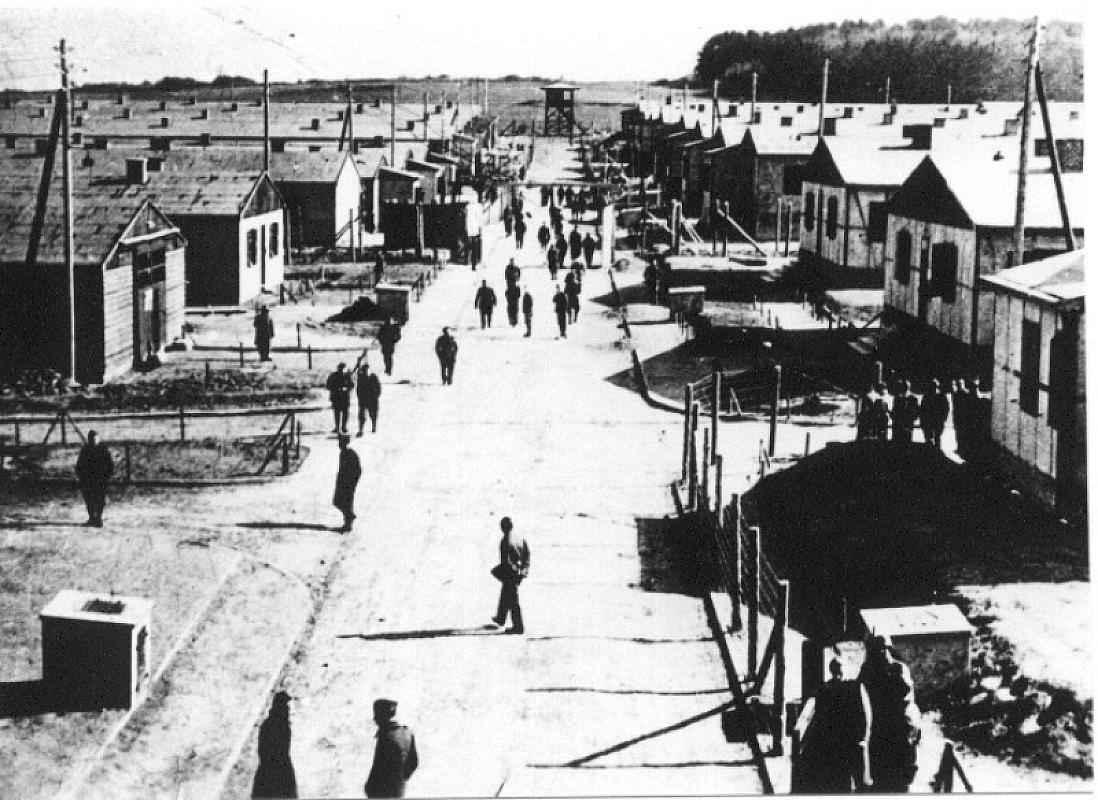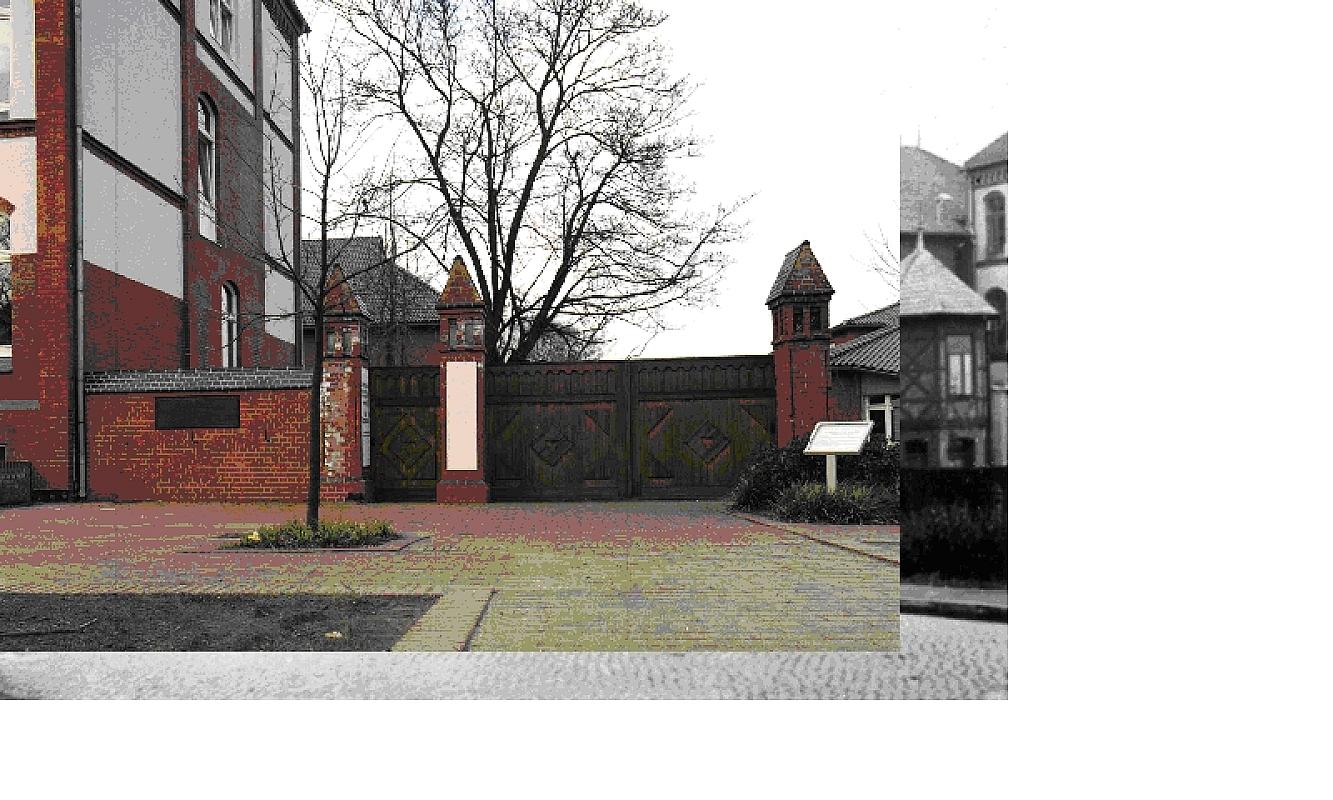
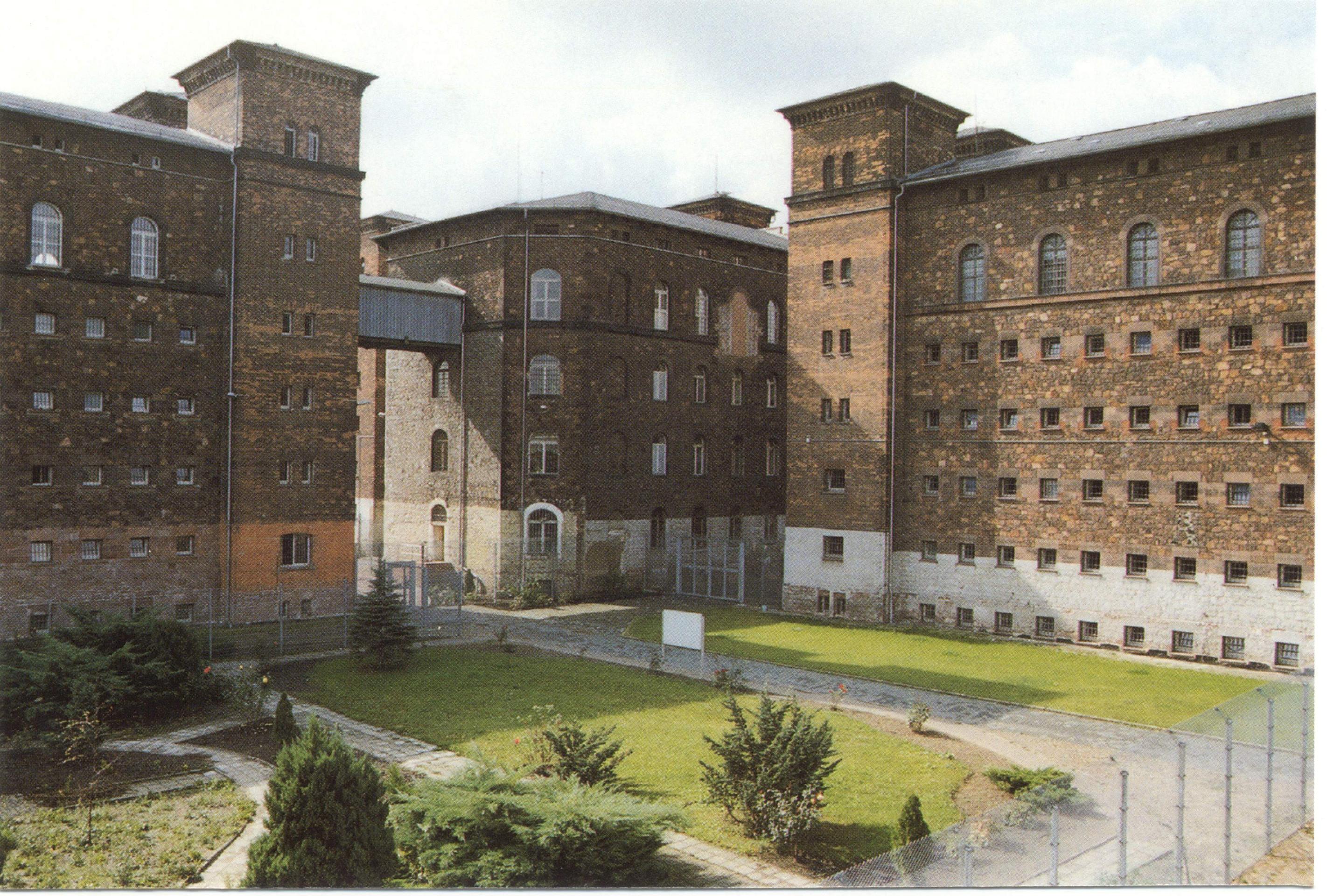
Known as the »Roter Ochse« (»Red Ox«), the prison was used for incarcerating political opponents of the National Socialist regime from 1933 on. Between 1942 and 1945, the National Socialist judiciary also carried out death sentences here. Between 1945 and 1950, Soviet military tribunals were held here; in the following four decades, the Stasi used parts of the building complex. The »Roter Ochse« Memorial was opened in 1996.
History
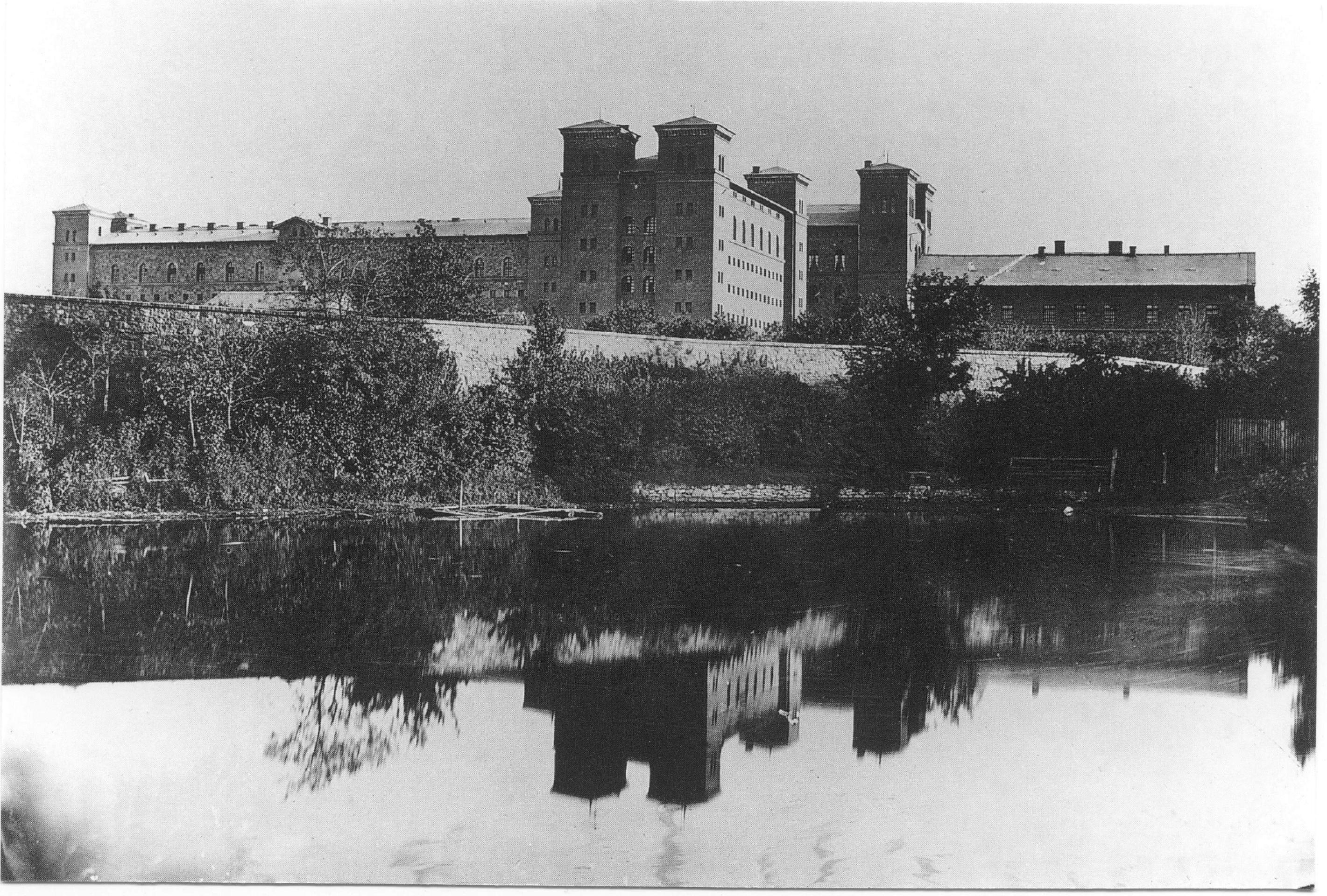
The prison known in the vernacular as »Roter Ochse« (»Red Ox«) was opened in 1842. After the National Socialists' rise to power, it was first and foremost used to incarcerate people who were persecuted on political, racial and religious grounds. In the first few months of 1933, the SA and the police arrested people and held them in »protective custody« for long time periods, without pressing charges, with no documentary evidence or legal counsel. Extraordinary law enactment and emergency decrees led to mass arrests of political opponents. The prison facilities were extended between 1933 and 1938, from a capacity of 500 to 790 prisoners. From 1942 on, the National Socialist judiciary also carried out death sentences at the »Roter Ochse« prison. In April 1945, the prison inmates were liberated as the US Army took Halle.
In July 1945, Thuringia became part of the Soviet occupation zone, and the Soviet secret police NKVD took over the »Roter Ochse«. The prison then served as a detention centre in which Soviet military tribunals were held. From August 1945 on, the Soviets incarcerated war criminals and former NSDAP functionaries at the prison, but also increasingly opponents of the new Soviet-led regime. The Soviet military justice, whose legal proceedings were not in accordance with the rule of law, pronounced at least 1,600 sentences, including over 100 death sentences.
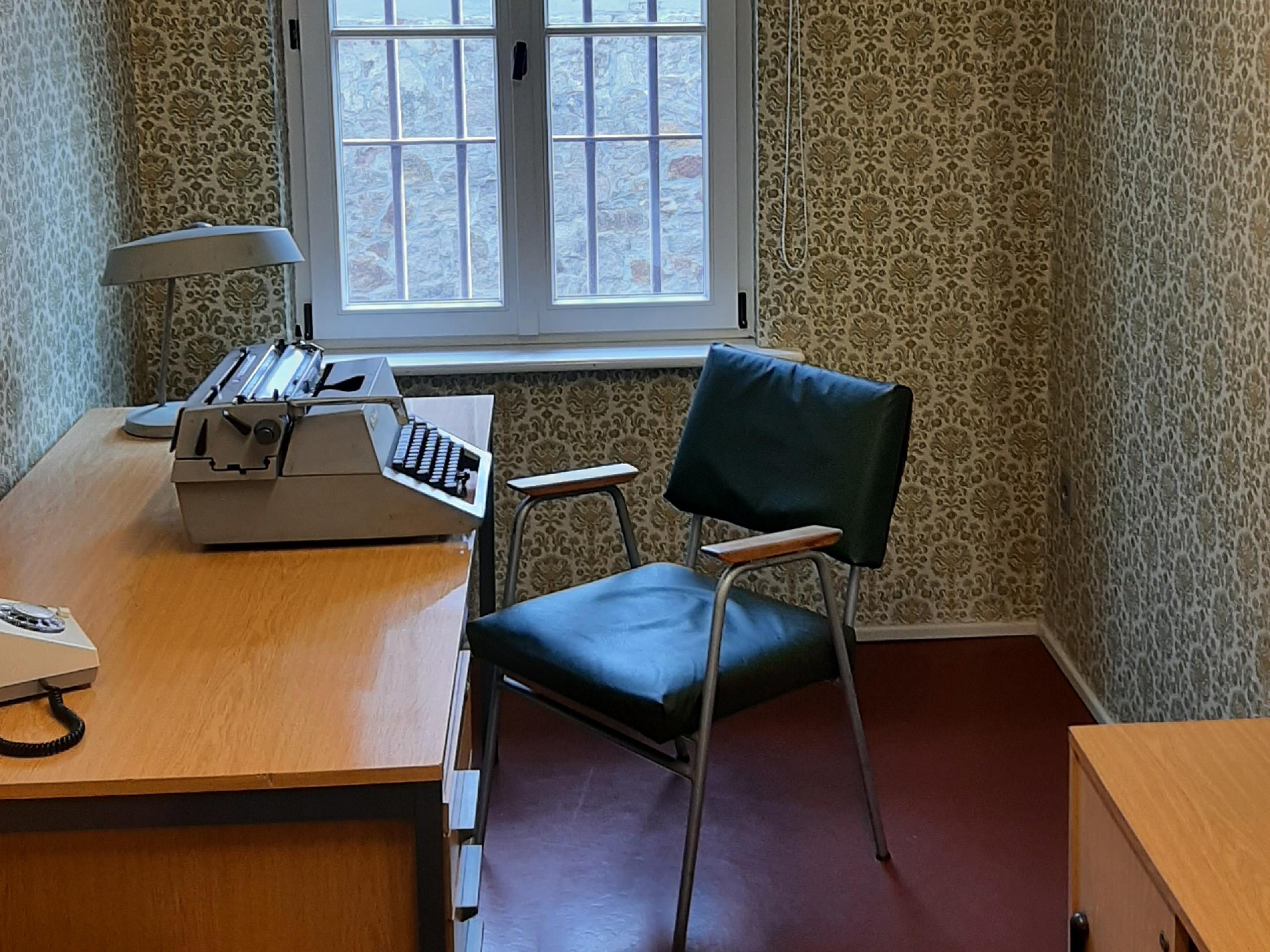
In 1950, the year following the East German state's foundation, the GDR Ministry for State Security (Stasi) took over parts of the detention centre. Until 1989, the ministry held a total of about 9,600 suspects at the »Roter Ochse« – opponents and supposed opponents of the East German regime. In December 1989, the detention centre was shut down following the peaceful revolution in the GDR.
Victims
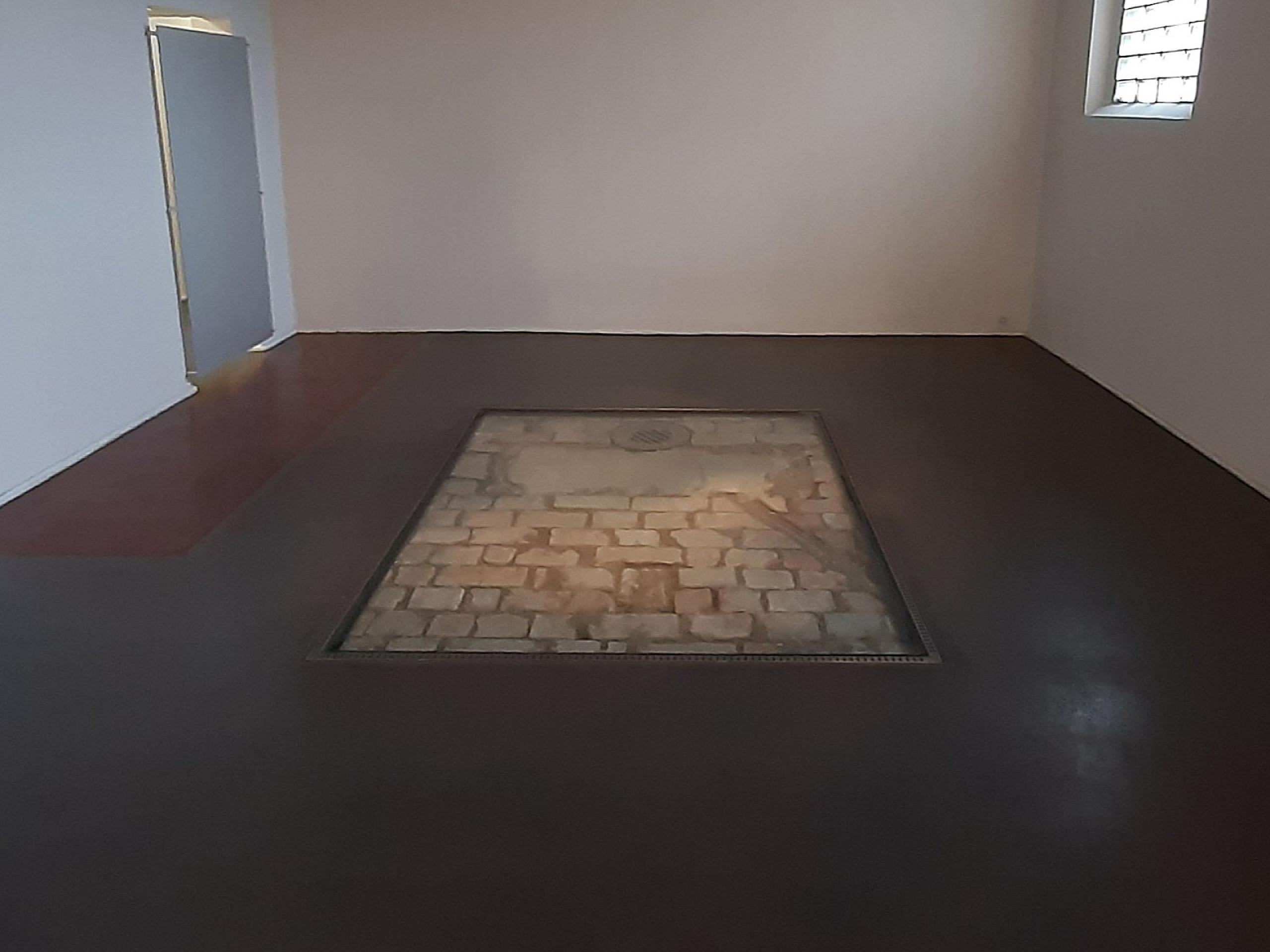
During the National Socialist era, three prisoner groups constituted the majority of the prisoners in Halle: politically, racially and religiously persecuted people as well as criminals and criminalised persons. After its conversion to a jail with much harsher conditions of custody in 1935, the number of political prisoners increased drastically. During the Second World War, citizens of occupied countries were also incarcerated here. In 1942, an execution site was set up; until the end of the war, the National Socialists executed 549 people from 15 countries here.
In October 1945, just a few months after the prison had been taken over by the Soviet military and a transit camp was established on its premises, the »Roter Ochse« already held 1,700 prisoners. Many of the prisoners were transferred to special camps, others were tried in military tribunals on site. Among those accused were many youths who were suspected of being members of »Werwolf« or other »anti-Soviet groups«. At least nine youths were sentenced to death until 1947.
Between 1950 and 1989, the Stasi held a total of about 9,600 prisoners, mainly political prisoners, at the »Roter Ochse«. The most frequently cited grounds for incarceration were illegal border crossings, espionage and »subversive agitation«.
Remembrance
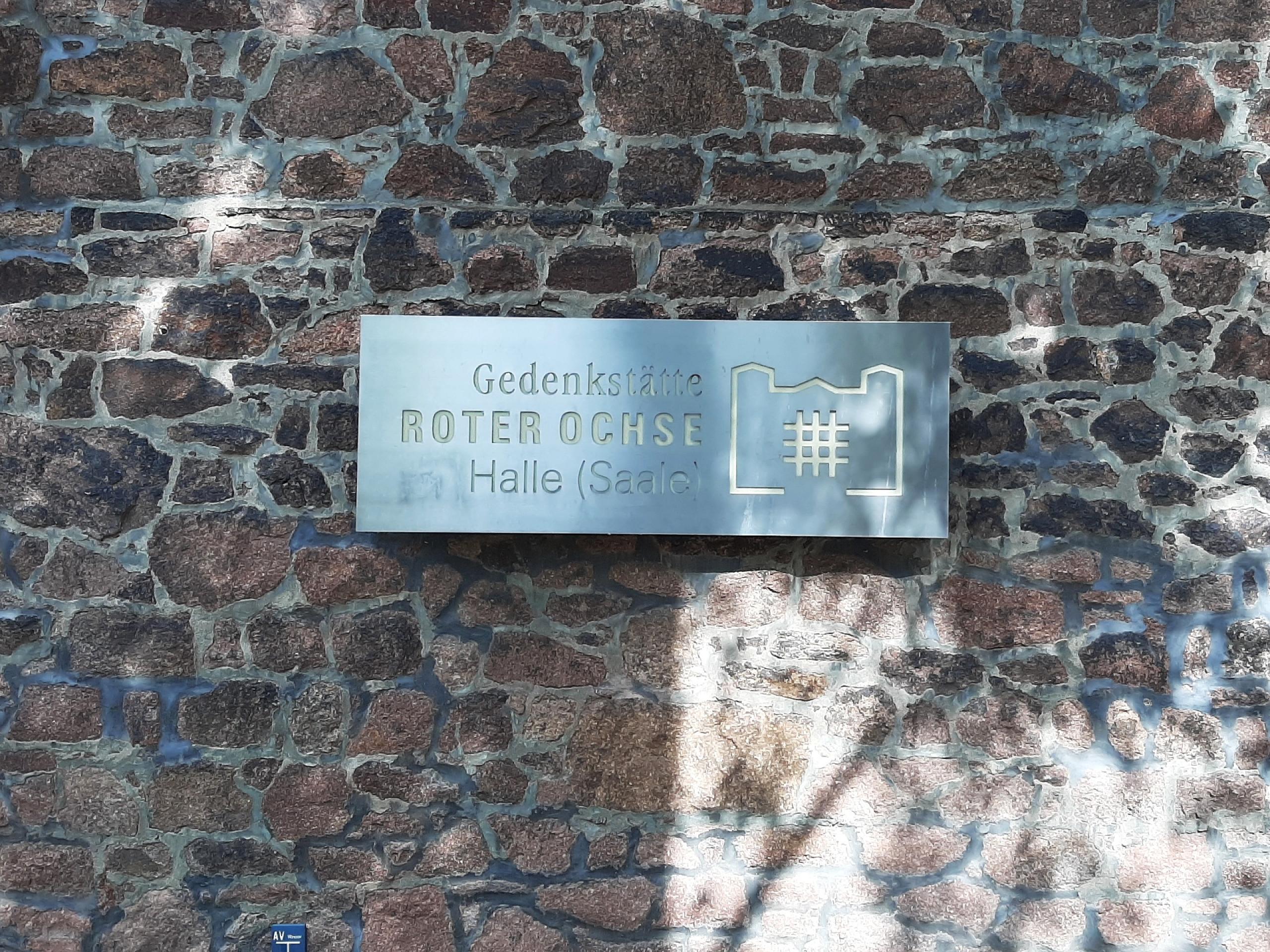
In 1993, Dr. Walter Remmers, then Minister of Justice in Saxony-Anhalt, proposed establishing a memorial at the »Roter Ochse« prison, in honour of the victims of the dictatorships both prior to and after 1945. An expert report was compiled, which suggested spreading the museum rooms addressing the two different eras over separate floors. On February 15, 1996, the memorial was opened by the state of Saxony-Anhalt with a temporary exhibition. In the following years, a workgroup consisting of representatives of various interest and victim groups discussed concepts for an extension of the memorial. Beginning 2002, the building was restored according to guidelines for historical monuments. Since its opening in 2006, the memorial has displayed two permanent exhibitions on three topics. Presented on the ground floor is an exhibition on political judiciary at the »Rote Ochse« between 1933 and 1945; on the second floor visitors can learn about political judiciary between 1945 and 1989 as well as about the history of the building as a site of Soviet military tribunals and a detention centre of the Stasi.
Possibilities
Temporary exhibitions, educational offer for schools and other educational providers, lectures, seminars, guided tours
Open
Monday and Friday 10 a.m. to 4 p.m, Tuesday to Thursday 10 a.m. to 4 p.m., every first weekend of the month 1 p.m. to 5 p.m., closed on holidays
Contact
https://gedenkstaette-halle.sachsen-anhalt.de/
info-roterochse@erinnern.org
+49 (0)345 470 698 337
Am Kirchtor 20b
06108 Halle/Saale