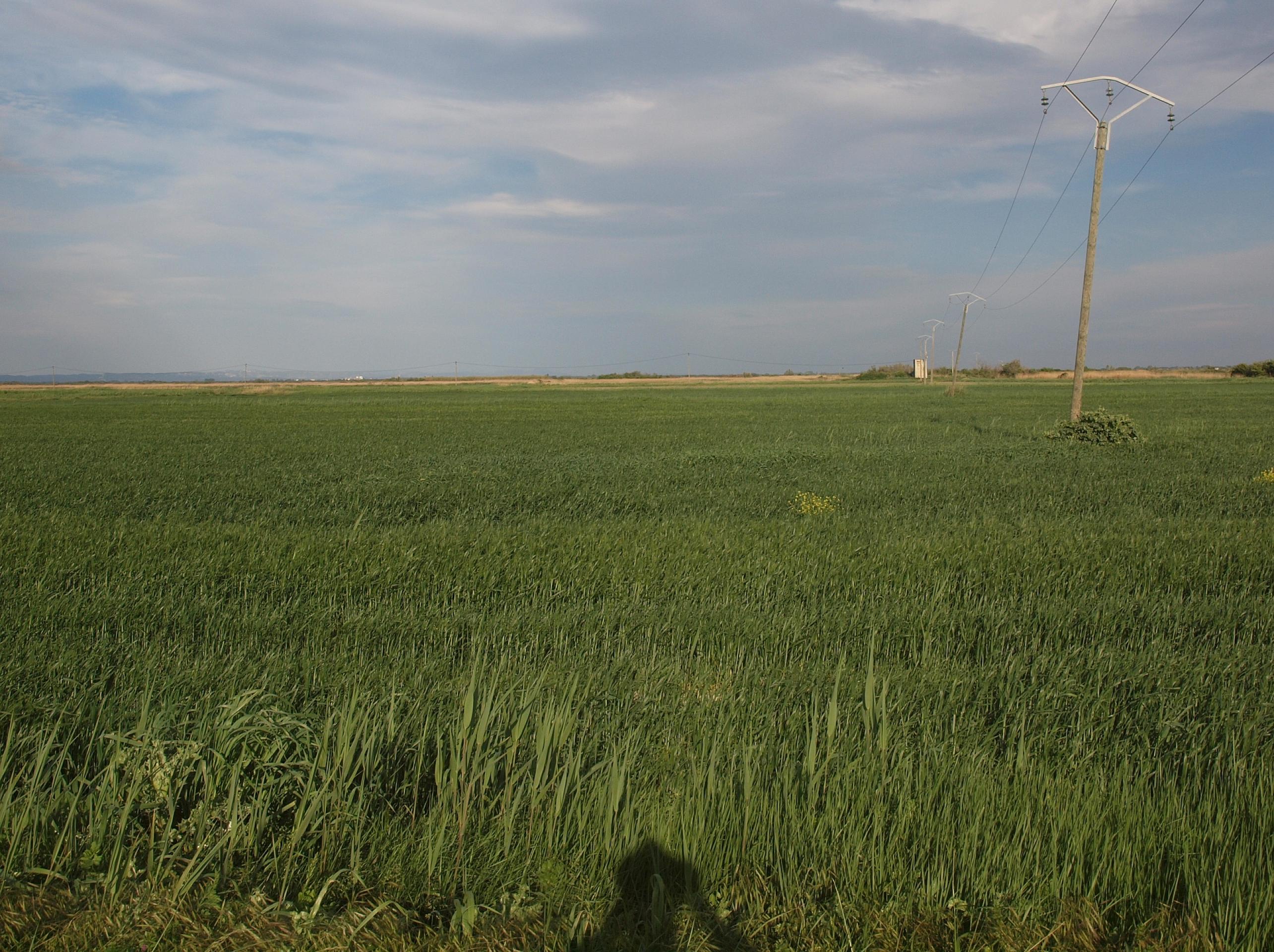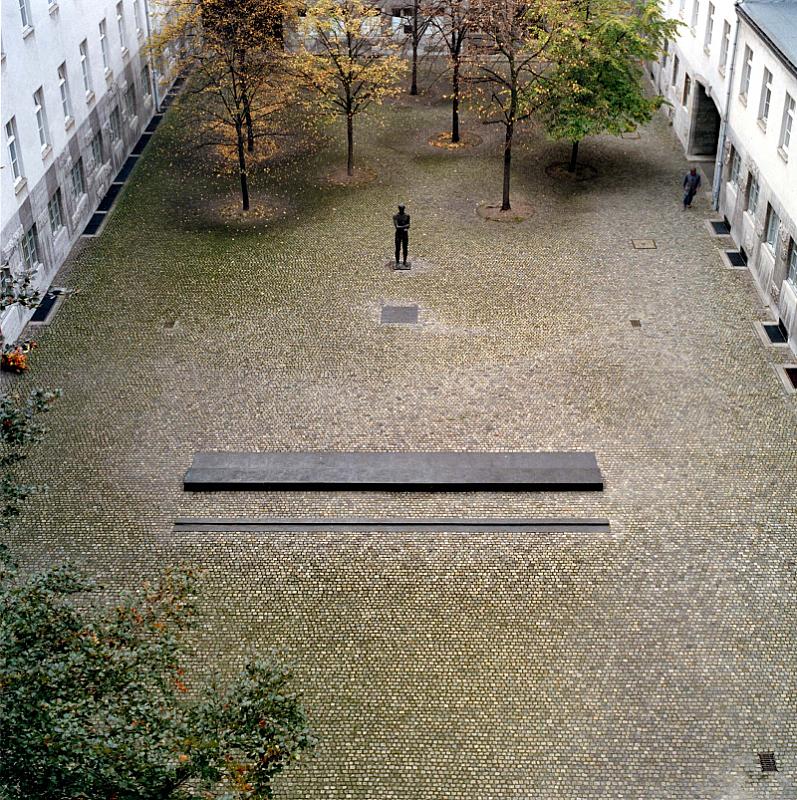
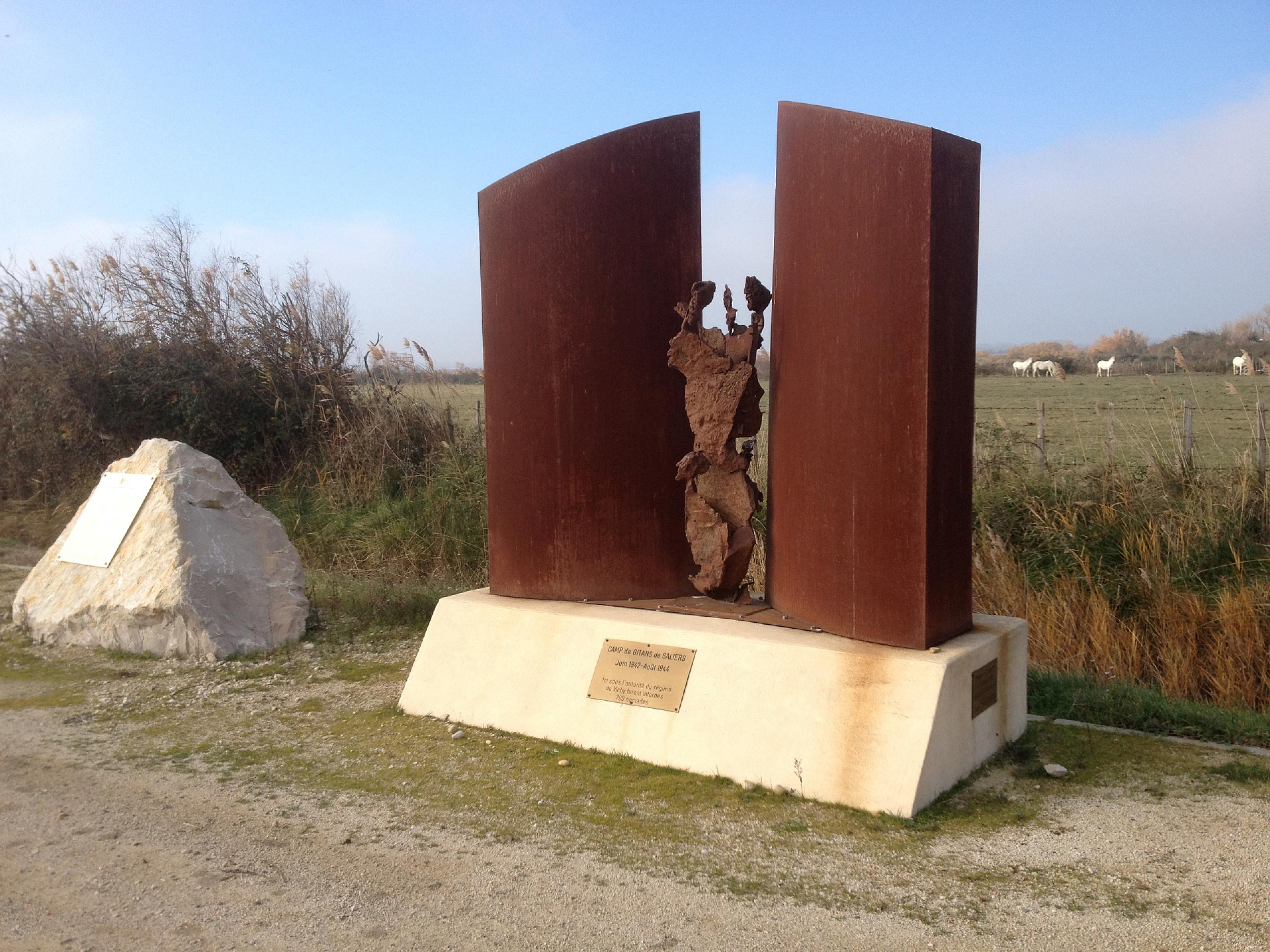
Near the city of Arles, a sculpture and a memorial stone commemorate one of the two internment camps for Sinti and Roma that were set up in southern France under the Vichy regime: the Saliers internment camp. Between 1942 and 1944, almost 700 Sinti and Roma were detained there under inhumane conditions.
History
After France surrendered to the German Wehrmacht in June 1940, France was divided into two zones: the »zone occupée« (»occupied zone«) in the north and the unoccupied »zone libre« (»free zone«) in the south, which was administered by the Vichy regime.
The persecution of Sinti and Roma in France began with their expulsion from Alsace, which had been annexed by the German Reich, to the »zone libre«, where the French authorities arrested them and sent them to internment camps originally intended for Republican refugees from the Spanish Civil War (1936-1939).
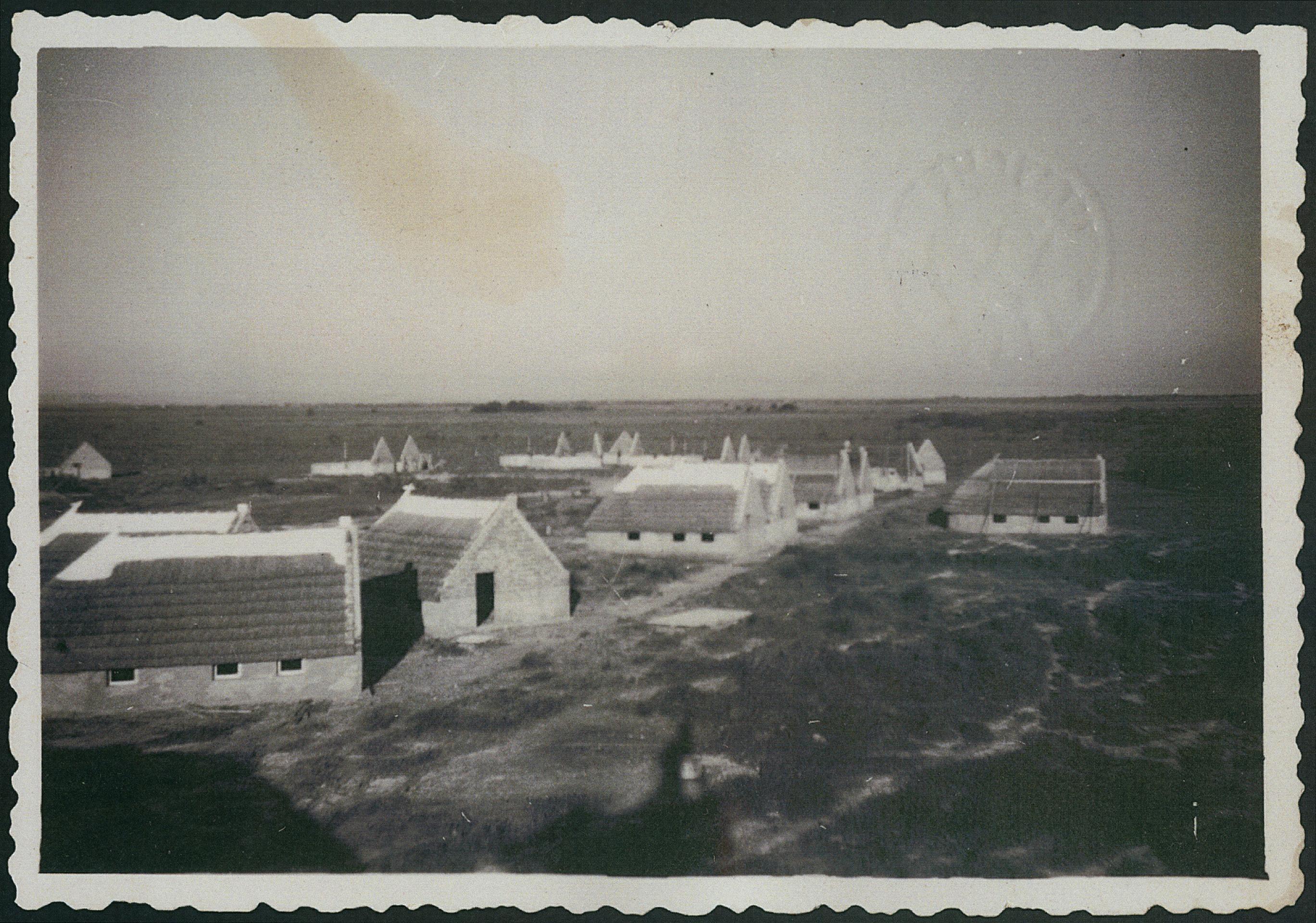
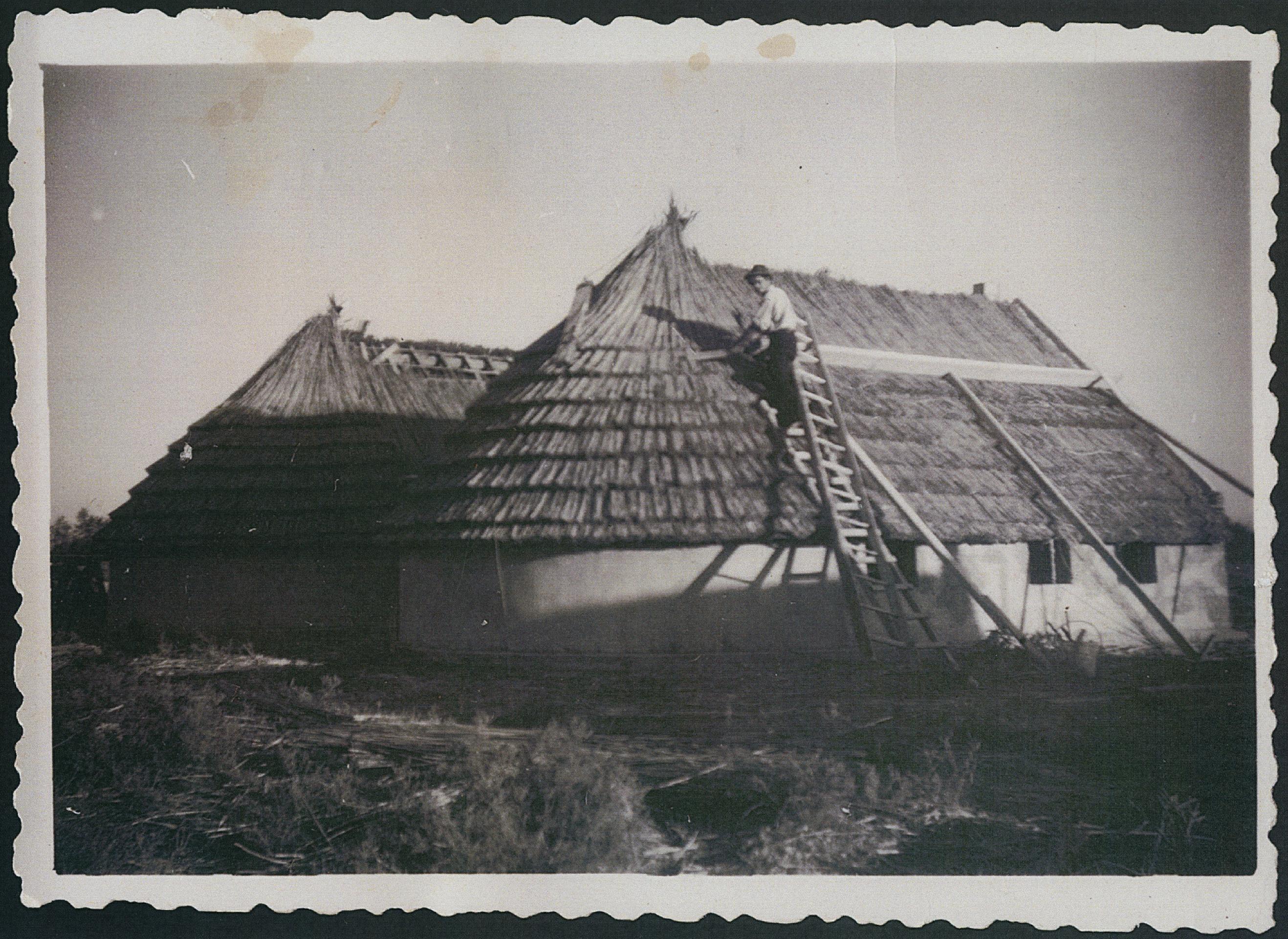
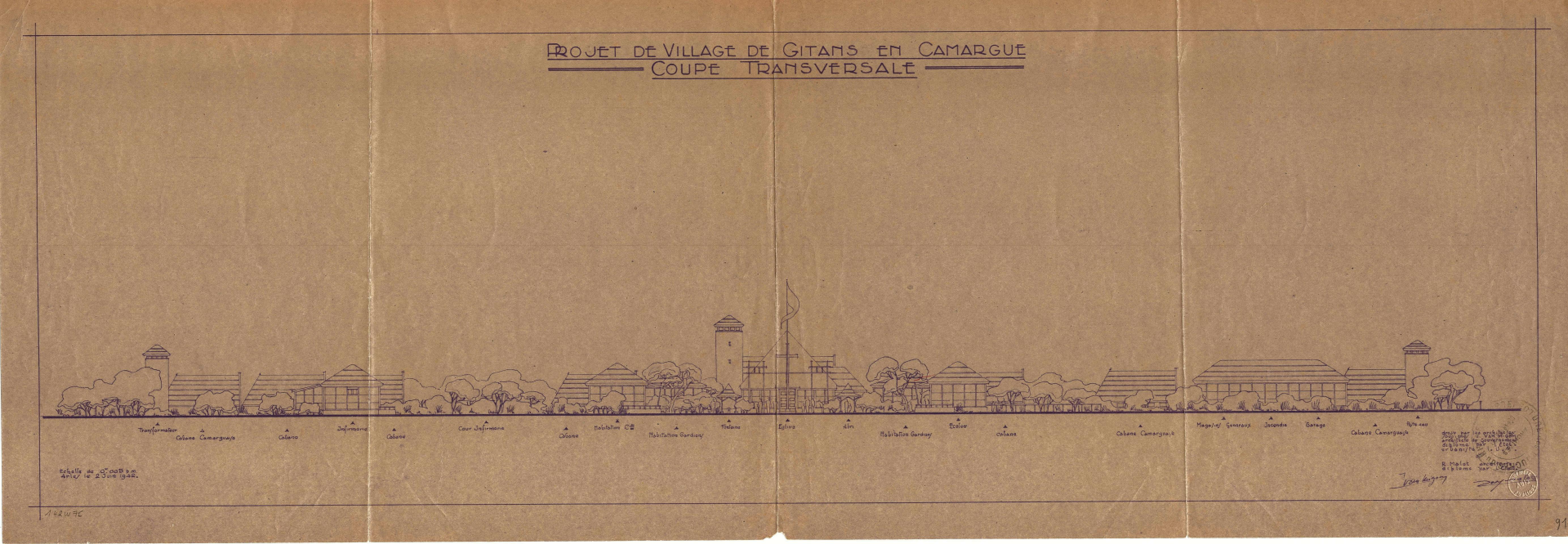
As a result of criticism from foreign newspapers on the treatment of Sinti and Roma by the French authorities, the Vichy government decided in March 1942 to set up a »show camp« for the internment of Sinti and Roma in Saliers, a village not far from Arles in Camargue. The location was not chosen randomly: Saintes-Maries-de-la-Mer, a holy site where Sinti and Roma go on pilgrimage to honour their patron saint, Saint Sarah (or »Sara the Black«), is located nearby. Architect Jacques van Migom was commissioned to design the camp, which he modelled on a traditional Camargue village for propaganda purposes while showing little regard to the actual suitability of the huts for habitation. The camp was formally opened on June 15, 1942, although its construction had not been fully completed yet. Therefore, the first prisoners who arrived in July 1942 from the Rivesaltes camp were used as forced labourers to finalise the construction works.
Despite the takeover of the »zone sud« (»south zone«) by the Germans in November 1942, the Saliers camp remained under French administration. Between July 1942 and August 1944, several hundred Sinti and Roma were detained there. The prisoners were subjected to extremely difficult living conditions: they had no access to heating, running water and sewage disposal and suffered from cold, malnutrition and disease. On August 17, 1944, the camp was hit by an Allied air raid. 211 prisoners took advantage of this opportunity to escape. A few days later, the camp was cleared and officially closed on October 15, 1944.
Victims
Almost 700 Sinti and Roma were detained in the Saliers internment camp between June 1942 and August 1944. Between 30 and 40 percent of them were children. A total of 227 children were forcibly separated from their parents and placed in public welfare institutions in Arles and Marseille to be »re-educated«. 25 prisoners, including 6 children, died as a result of the inhumane living conditions in the camp.
Remembrance
After World War II, the Saliers internment camp was used as a set for the film »The Wages of Fear« by French director Henri-Georges Clouzot and subsequently demolished in 1952.
For a long time, the persecution of Sinti and Roma remained a neglected topic in France. In 1997, during a remembrance ceremony for the victims of the deportation, then-President Jacques Chirac made a reference to the Sinti and Roma victims of Nazi persecution for the first time. However, it took until October 2010 for a law proposal to be presented to the National Assembly stating the official recognition of the genocide of the Sinti and Roma and setting its official commemoration on April 5. Moreover, in 2013, then-President François Hollande acknowledged the responsibility of the French state in the internment of Sinti and Roma from 1940 until 1946.
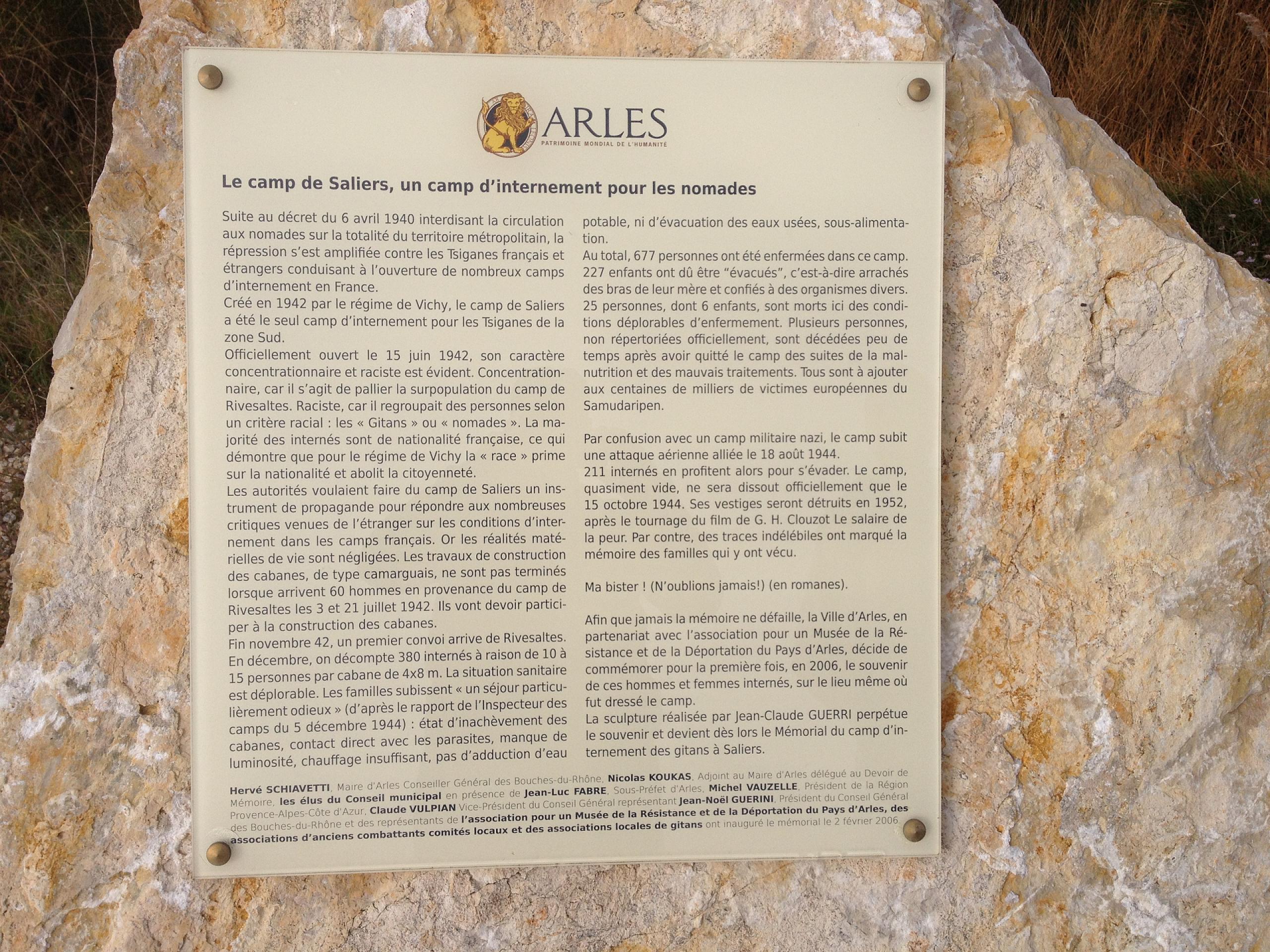
On February 2, 2006, a sculpture by Arles-based sculptor Jean-Claude Guerri was unveiled at the former site of the Saliers camp. It bears the following inscription, which became controversial due to its choice of words: »Saliers gypsy camp [in French »camp de gitans«]. June 1942 to August 1944. 700 nomads were detained here under the authority of the Vichy regime.« In 2015, an additional memorial stone was placed next to the sculpture with a complementary text on the history of the camp.
Open
The memorial is accessible at all times.
Contact
filsfillesinternescampsaliers@gmail.com
+33 6 18 31 98 48
13123 Arles, France