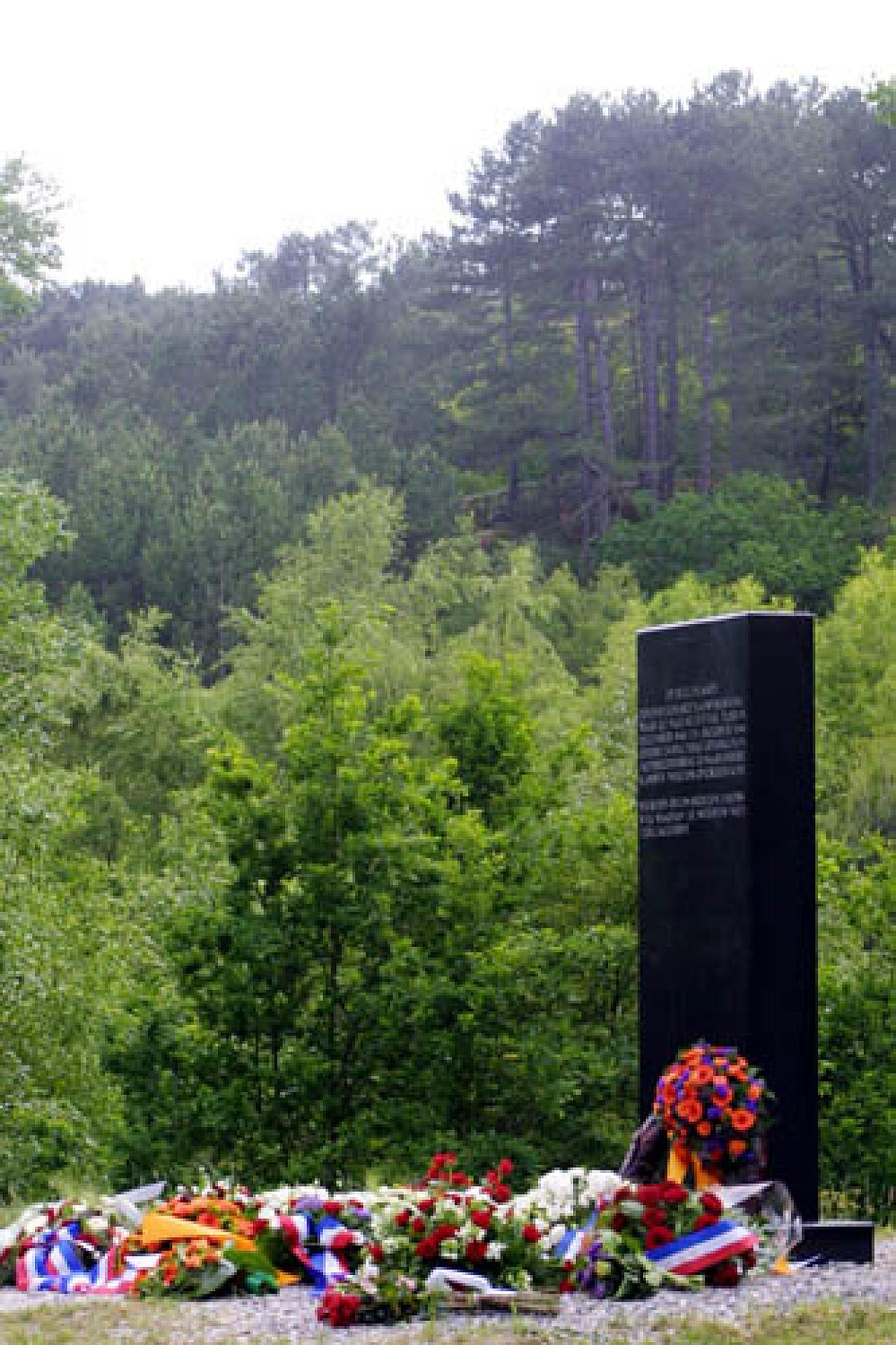
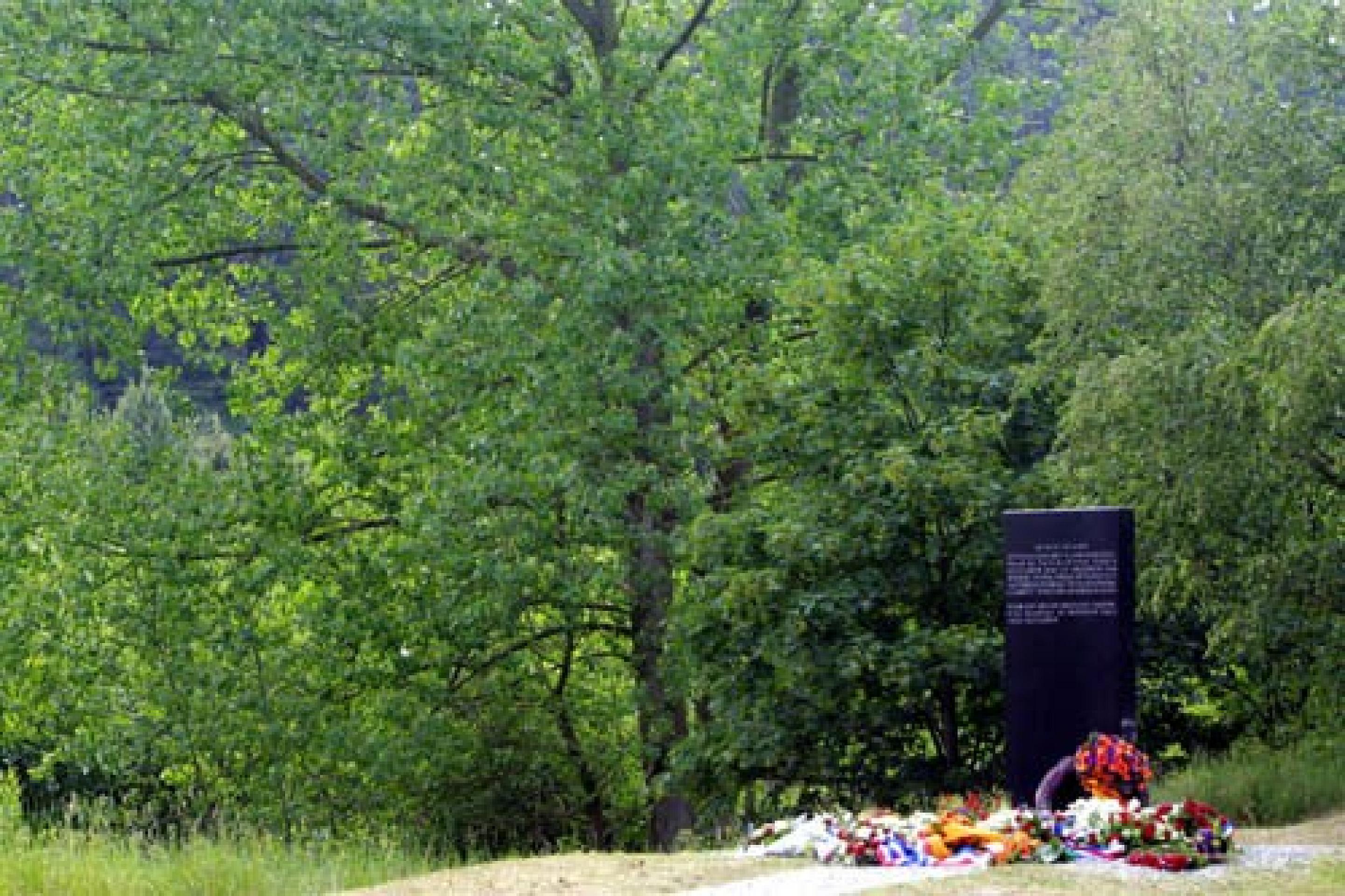
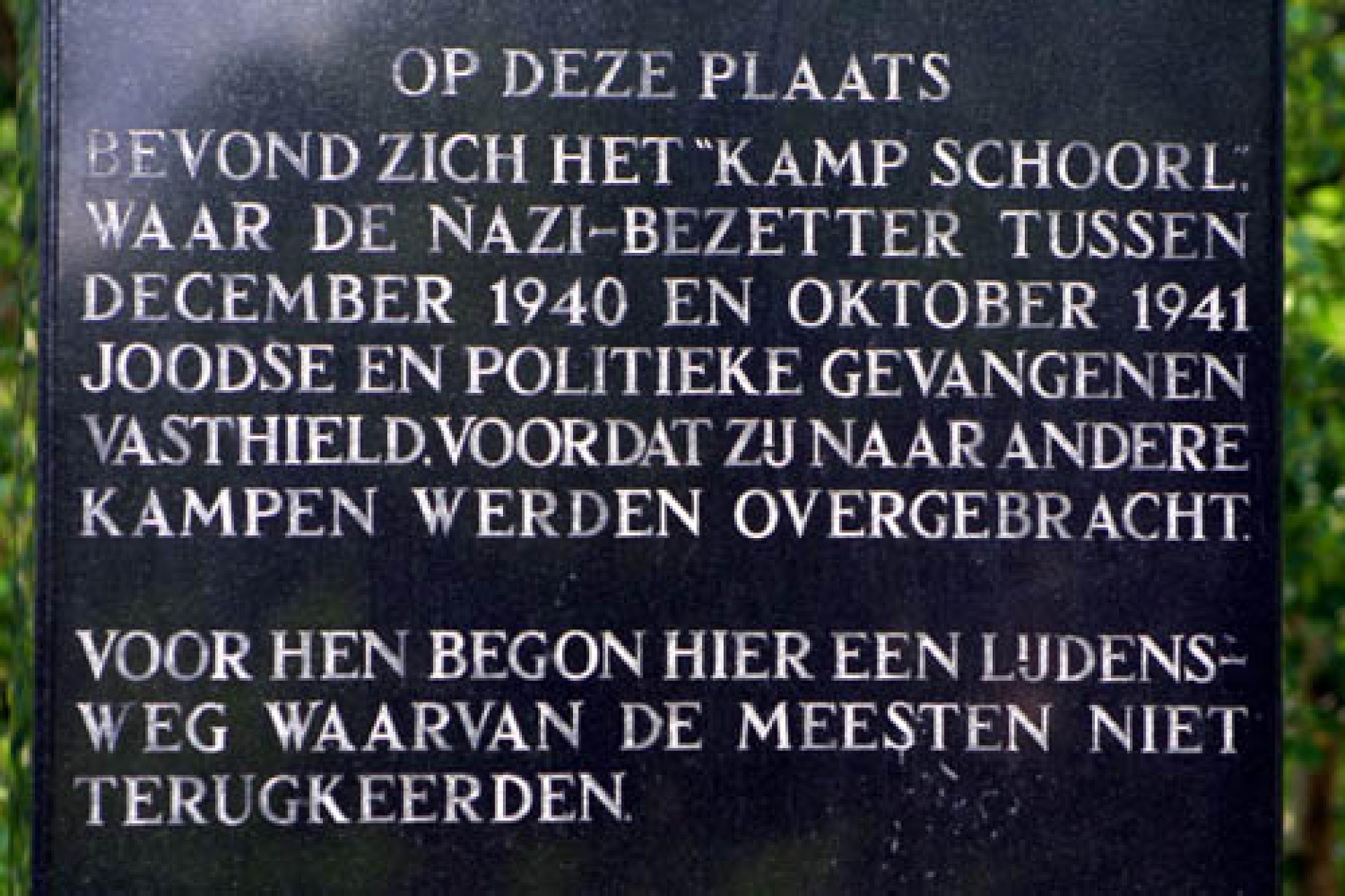
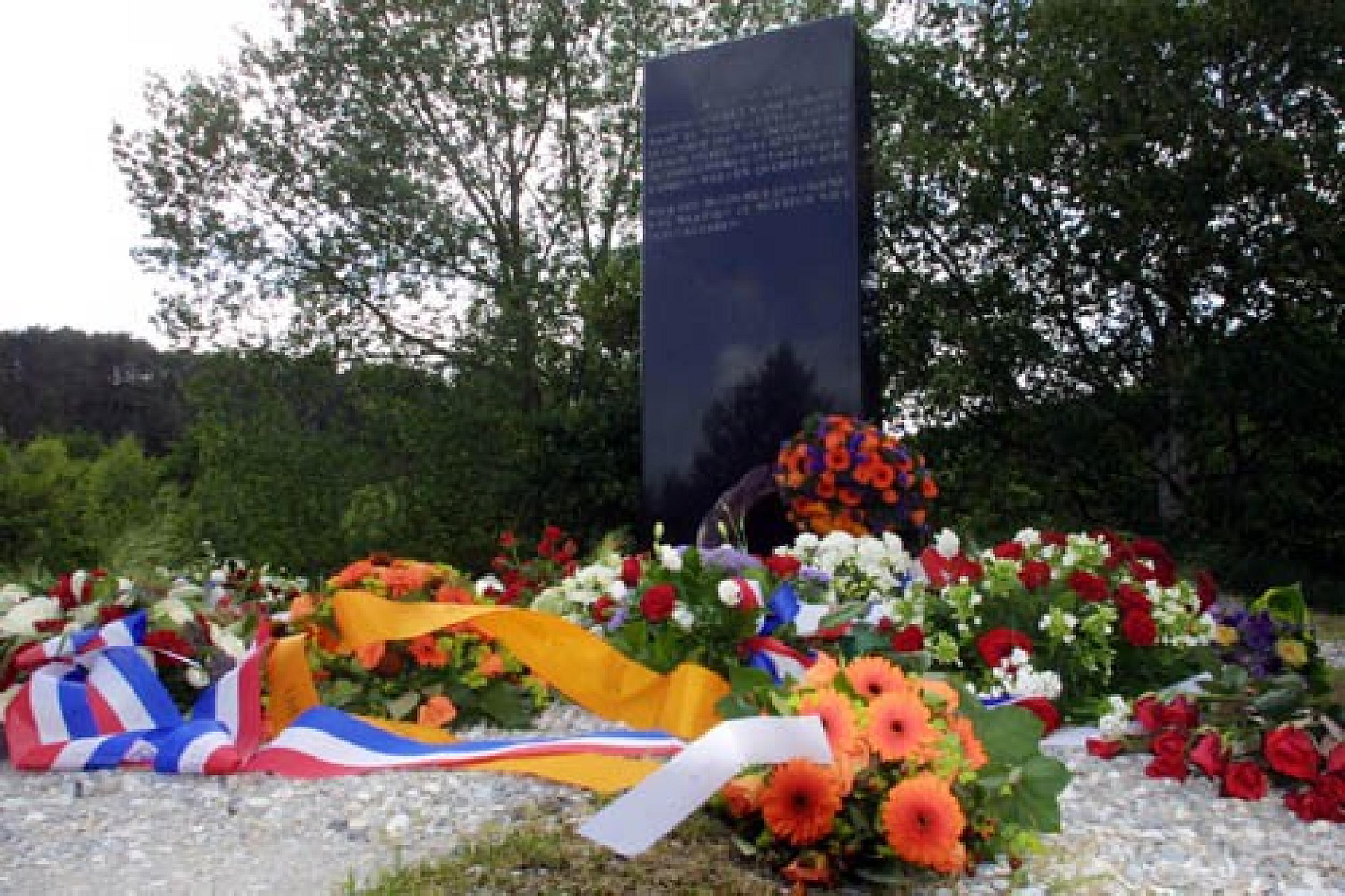
In 1991, a memorial was dedicated to the victims of the »Police Transit Camp Schoorl«, which was in operation in 1940/41.
History
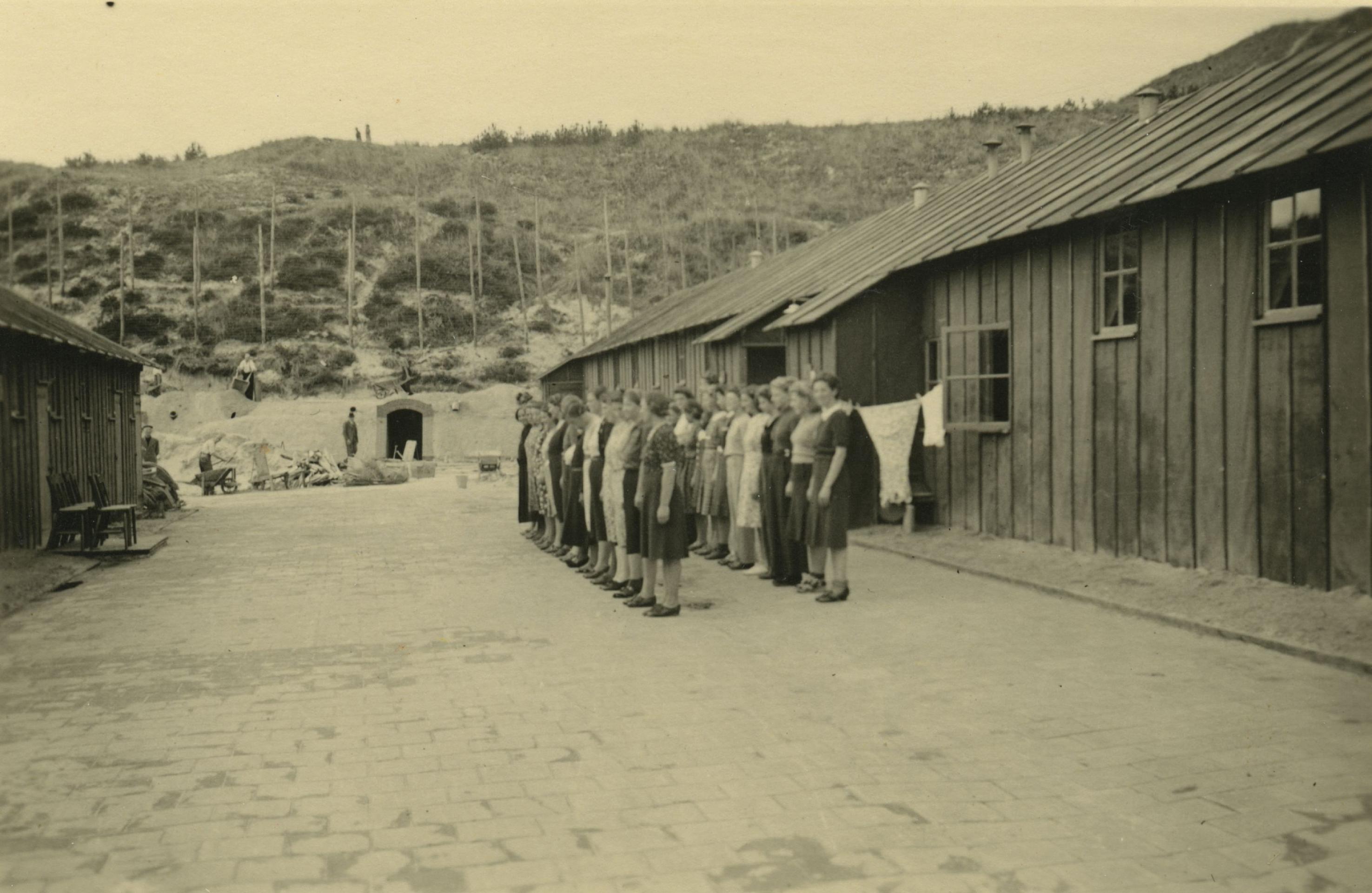
In 1939, the Dutch army set up a barracks camp close to Schoorl, a village near Alkmaar in the northern Netherlands. Following the invasion by the German Wehrmacht, it was transformed into a transit camp by the occupation authorities. In the first months of its existence, the camp was used to intern citizens of the states Germany was at war with. Later, there were various categories of prisoners in Schoorl: Jews, who were arrested between February and June 1941 during raids in Amsterdam, Soviet citizens, political prisoners, former pilots of the Dutch army, civil hostages as well as convicts. The camp existed between May 1940 and October 1941. Most of the prisoners were held at the camp for only a short period of time after which they were either released or transferred to another camp. The living conditions at the camp were better than in concentration camps in which the inmates were transferred to afterwards, so there were no fatalities at Schoorl. The camp was dismantled when the Amersfoort camp was taken into operation and the prisoners were deported to the new camp. The premises were eventually taken over by the Wehrmacht.
Victims
For many prisoners Schoorl was only the first of many camps. No inmates died in the camp, although some were later murdered at other sites. Of the 1,900 prisoners to pass through Schoorl, about 1,000 died in other concentration camps. The approximately 700 Jews who were arrested in raids in Amsterdam in 1941 were deported to the Buchenwald and Mauthausen concentration camps following a short stay at Schoorl. Probably only two of them survived.
When the Germans invaded the Kingdom of the Netherlands in May 1940 there were around 120,000 Jews living in the country, 75,000 of whom were in Amsterdam. An SS-led civil administration quickly began to implement anti-Jewish measures and organised acts of violence. A »Central Office for Jewish Emigration« was established by the SS in Amsterdam by the end of March 1941. On June 22 the following year Adolf Eichmann (1906–1962), head of the department for Jewish affairs in the SS Reich Security Main Office, informed the Foreign Office in Berlin that an agreement had been concluded with the German Reich Railways (Reichsbahn), one of the provisions of which was the deportation of 40,000 Jews from the Netherlands. These Jews were firstly detained in the Westerbork transit camp, where lists of names for deportation were produced. The first trains left here for Eastern Europe in the middle of July 1942. There were repeated raids to get hold of the Jews earmarked for deportation. By September 1944 around one hundred deportation transports had left Westerbork for the Auschwitz and Sobibor extermination camps, the Theresienstadt ghetto or the Bergen-Belsen concentration camp. The SS deported over 100,000 people; mainly Jews but also Roma. Jews with Dutch nationality were also deported to their deaths from France and Belgium. The total number of Dutch Jews murdered between May 1940 and the end of 1944 lies at around 102,000, or 75 percent of the pre-war Jewish population of the country. Over 110,000 Jewish civilians also died during the war and occupation.
There are countless monuments, museums, memorial sites, plaques and small sites of memory related to the Second World War in the Netherlands, along with research institutes and archives. The 22 metre high »Nationaal Monument op de Dam« (National Monument on Dam Square) was inaugurated in Amsterdam as early as 1947. Dedicated to all Dutch »victims of the Second World War«, the monument’s current design dates from 1956. The Anne Frank House was opened in 1960. There are national sites of memory at the former National Socialist concentration or transit camps. For example, a memorial site was established in Westerbork in 1983 comprising the historic grounds, a national monument and a modern museum. In 1987, the »Joods Historisch Museum« (Jewish Historical Museum) was inaugurated in the Great Synagogue in Amsterdam. This museum also charts the persecution and murder of the Jews. In 2021, the Durch Holocaust Memorial of Names was inaugurated in Amsterdam that lists the names of 102.000 murdered Jews and Sinti and Roma on its walls.
After the war, the Dutch culture of memory was characterised above all by its emphasis on the resistance against the German occupation. From the 1980s, increasing attention was paid to the question of how the majority of the population adapted themselves to the occupation, as opposed to those who consciously collaborated. A further feature of Dutch memory is its focus on the present. This approach is especially clear in memorials to the persecuted Sinti and Roma as well as in one of the best known monuments in the world to the homosexual victims of National Socialism, located in Amsterdam.
Remembrance
After liberation, the camp was used as an internment camp for collaborators. Up to 2,000 prisoners were held at Schoorl until the camp was taken over by the Dutch army in 1946. In 1949, the authorities decided to tear down the camp. The premises have since then been a nature reserve. The forestry authority runs a visitor and information centre, which has since 1991 presented an information board about the history of the camp. That same year, a monument was erected on the initiative of the Freundeskreis Mauthausen Foundation in honour of the former prisoners. The three primary schools of Schoorl jointly tend to the monument. Each year on June 11, the Bergen parish council organises a commemorative ceremony.