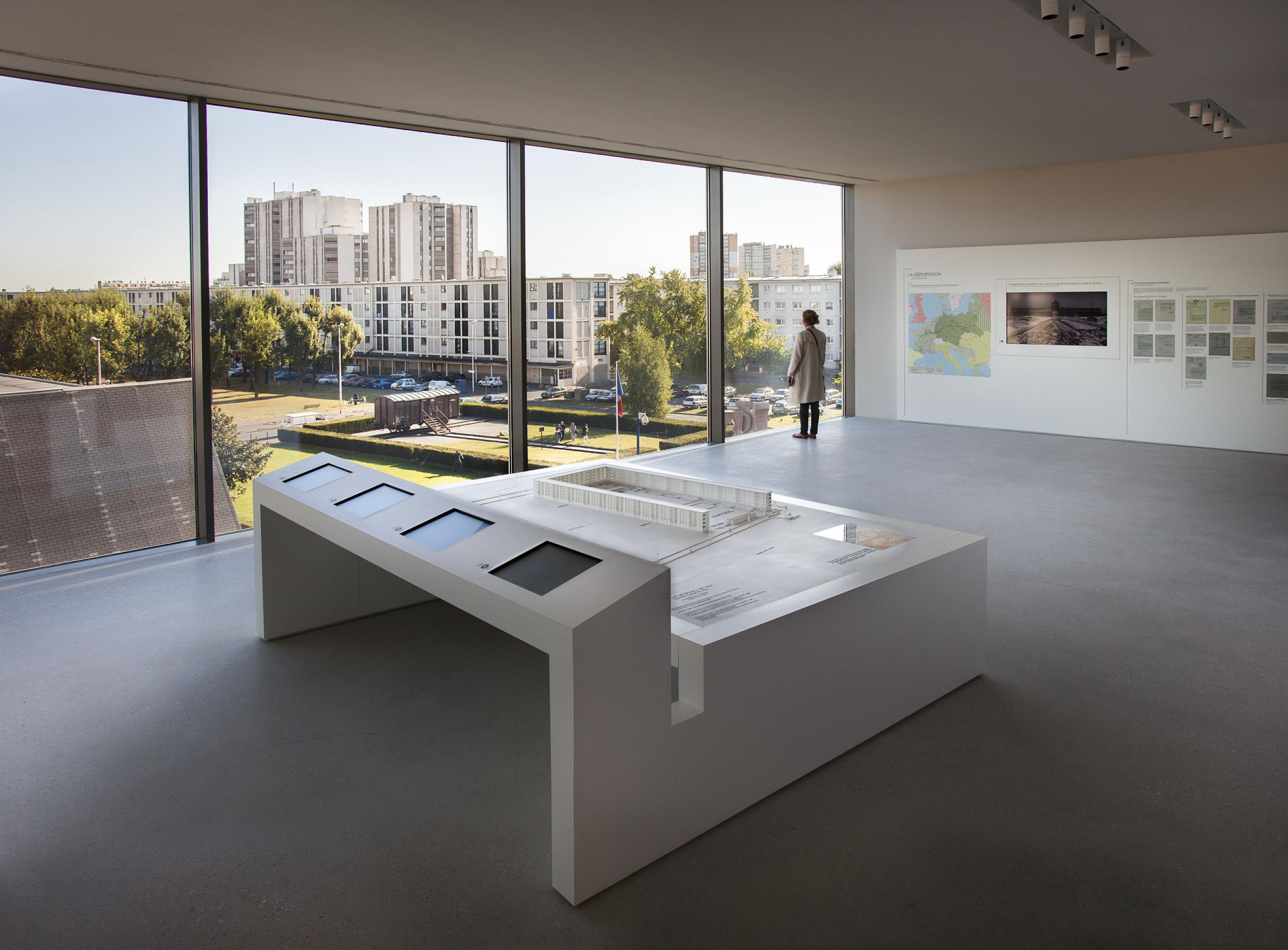
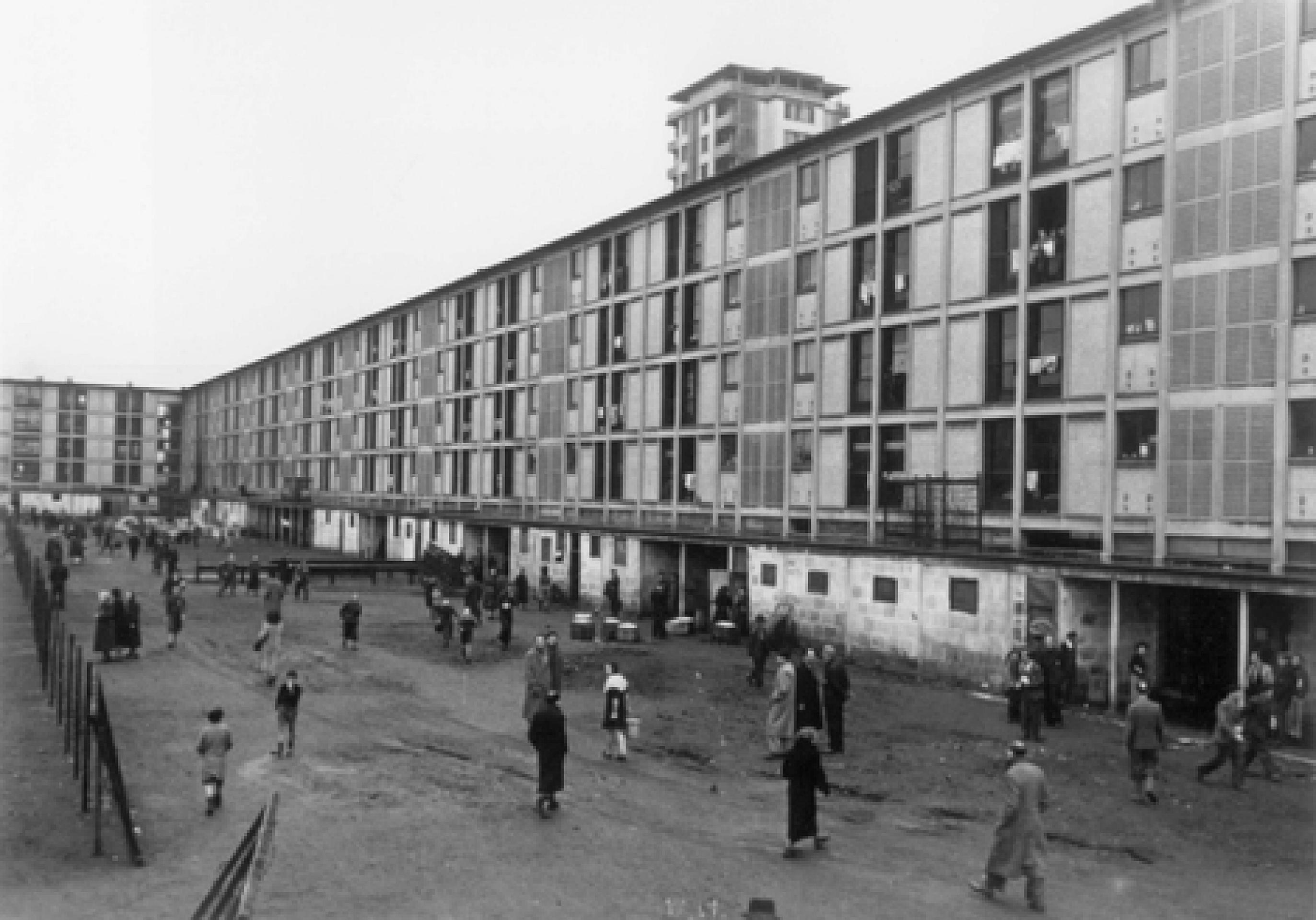
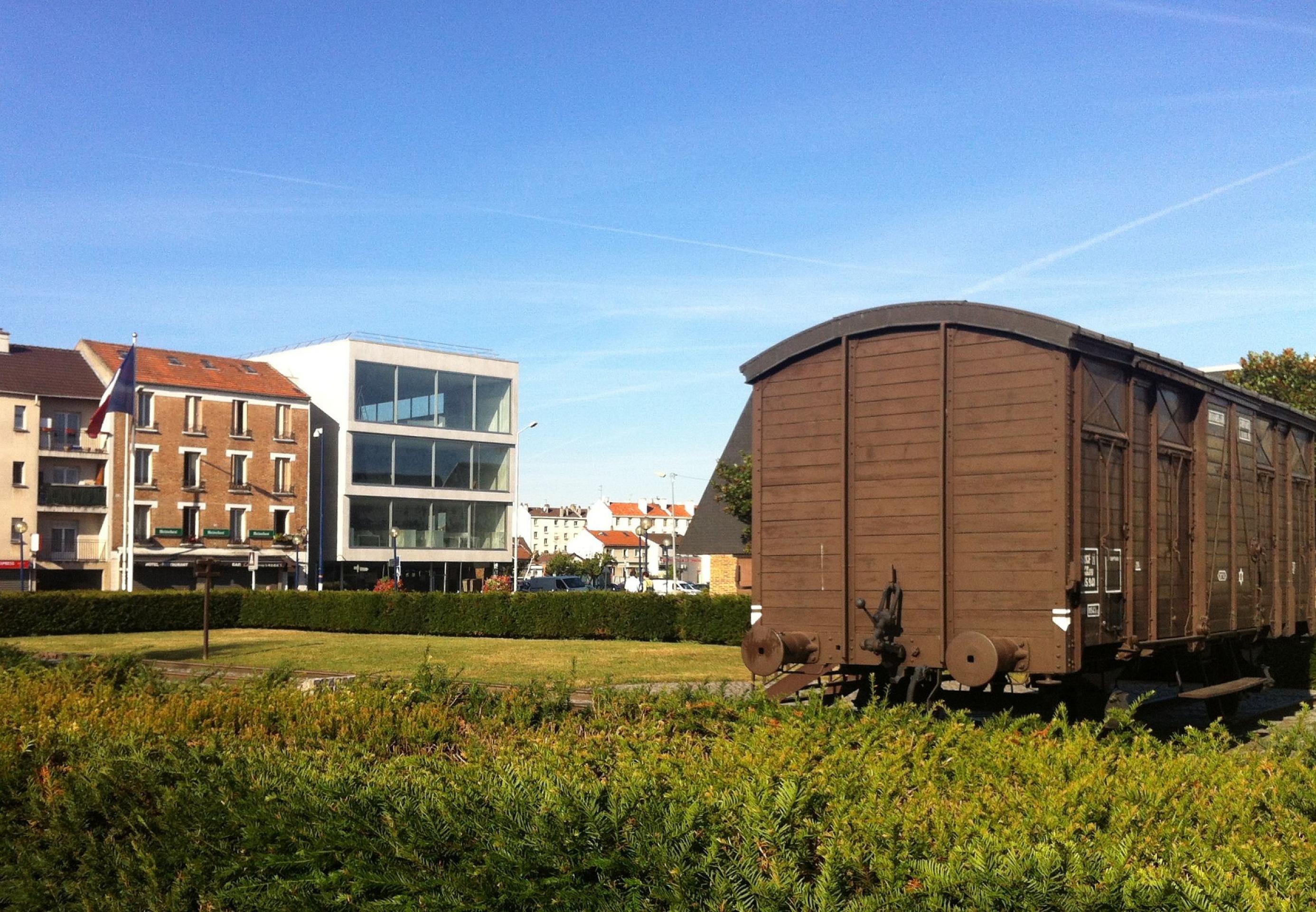
From August 1941 on, the German occupying forces used a building complex in the Parisian suburb of Drancy, built between 1931 and 1934, to intern French Jews. Drancy became an »antechamber of death« when the systematic deportations began in 1942: 65,000 from France were deported from here to death camps in occupied Poland. Today, there is a memorial complex on the former camp premises, including a railway car which is used as a museum.
History
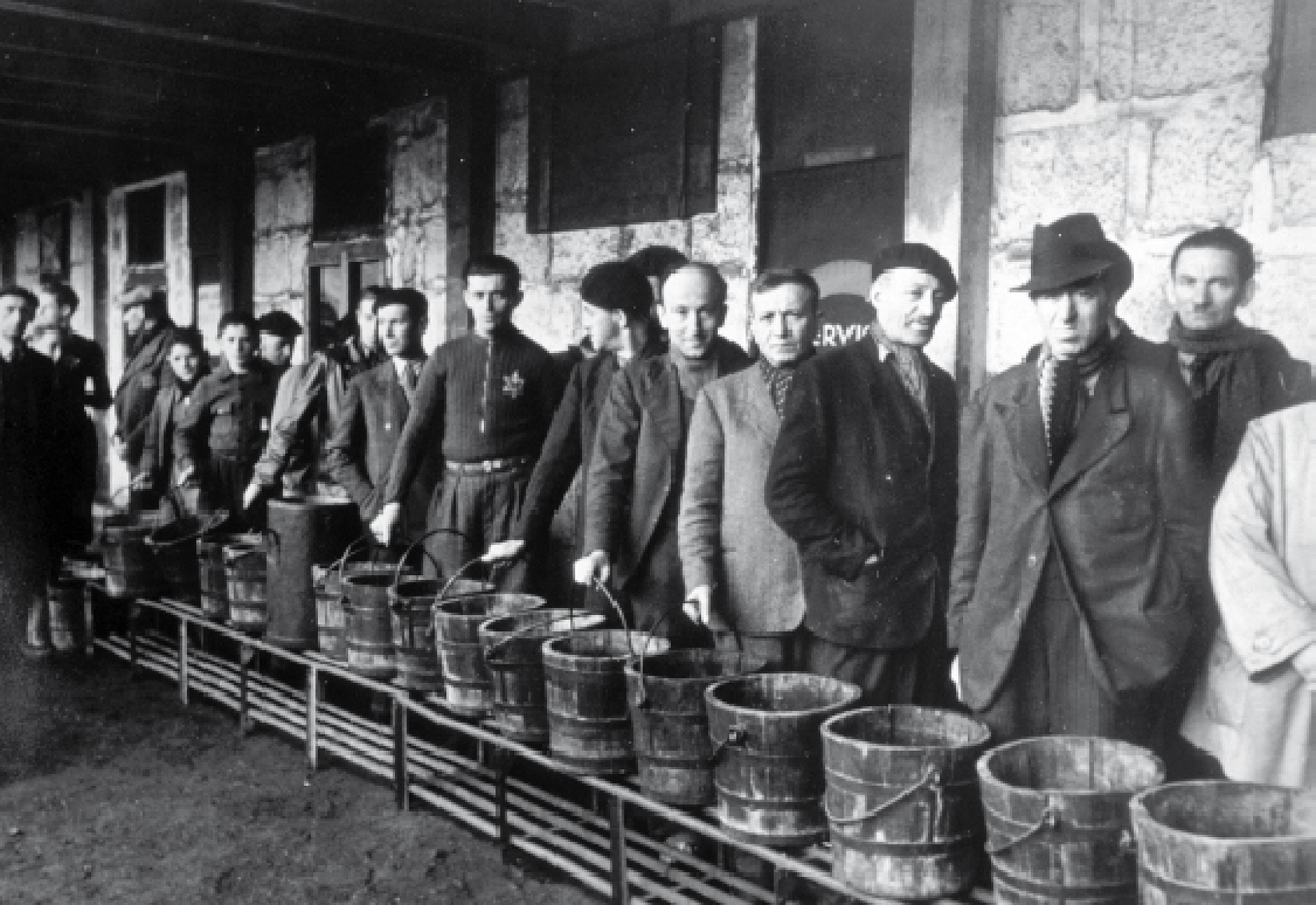
In June 1940, the French army was defeated and all of northern France came under the occupation of the German Wehrmacht. That same month, the Wehrmacht confiscated a building complex in Drancy, a suburb of Paris to the north, in order to intern prisoners of war there. Originally built as a residential complex, the modern, horseshoe-shaped ensemble had served as police barracks. Drancy gradually became one of the central transit camps in France, as several thousand Jewish men were arrested in Paris in August 1941 and interned there. Later, tens of thousands of Jews from all of France passed through the camp. Many of them were Jews who did not have French citizenship and had come to France from countries like Germany, Poland or Russia. The internees were guarded by French constabulary, while the camp itself was administered by the SS. The conditions at the camp were atrocious, particularly in the first few weeks after the mass arrests of 1941; many of the inmates starved to death. Eventually, packages from outside could be received at the camp, which improved conditions to a certain extent. In 1942, the SS began to deport Jews from France to the extermination camps in occupied Poland. The first transport bound for Auschwitz departed from France on March 27. Half of the deportees were Jewish prisoners who had previously been held at Drancy. Until July 31, 1944, a total of 65,000 people were deported from Drancy to the death camps. On August 17, 1944, one day before Paris was liberated by the Allies, the Germans abandoned the Drancy camp. They took 50 Jewish hostages with them, however, most of them were able to escape. On August 19, the 1,467 imprisoned Jews remaining in Drancy came under the care of the International Red Cross.
Victims
Between 1941 and 1944, the Drancy complex served as an SS-run internment camp for Jews from France, many of them originally from other countries. The first victims of the Drancy camp were prisoners who had been arrested in Paris in August 1941; they died of the insufficient provisions at the camp. On December 15, 1941, further internees lost their lives when the Wehrmacht shot prisoners in reaction to a series of sabotage attempts, specifically choosing Jews incarcerated in Drancy as victims. The camp then became one of the internment sites from which the SS systematically deported Jews to occupied Poland. Nearly all of the prisoners – children, women and men – about 65,000 people, were deported by the SS to the Auschwitz, Sobibór or Majdanek death camps. One of the transports went to Tallinn in occupied Estonia; the last deportation in July 1944 was bound for the Buchenwald concentration camp.
Remembrance
After the war, the camp was used to intern French citizens accused of having collaborated with the German occupiers. Then, until 1976, the complex was once again used as barracks. A large part of the complex has been torn down; the remaining buildings were converted to social housing.
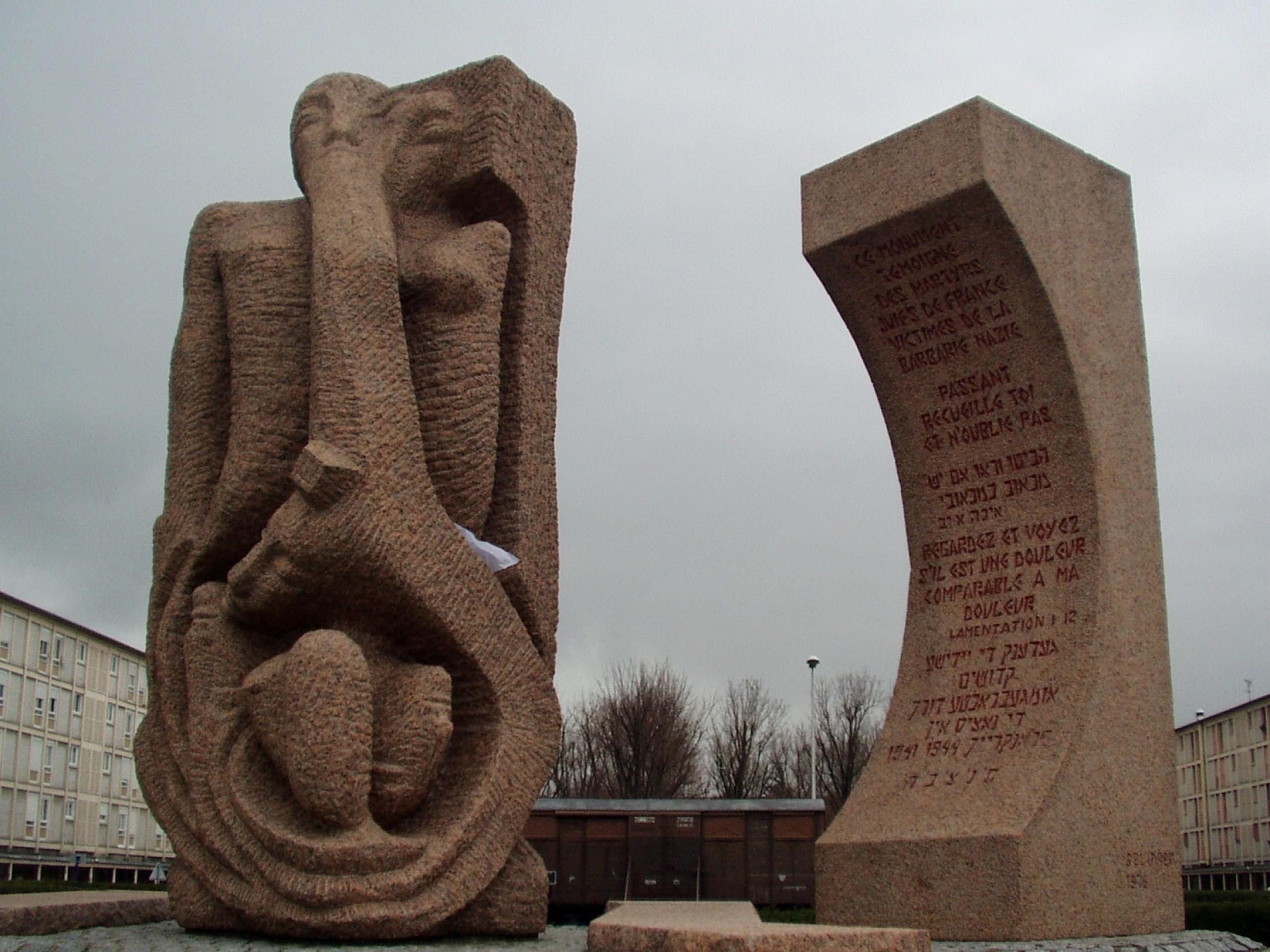
In 1976, artist Shlomo Selinger was commissioned with designing a monument for Drancy, following an international competition. He created a 3.6 metre high pink granite sculpture consisting of three parts, which refer to the site as an »antechamber of death«, addressing the suffering and the dignity of the victims. He also included Hebrew letters and references to Jewish religious symbols. Train tracks, specially laid down for this purpose, connect the sculpture with a railway car which is used as a museum. For a long time, the memorial complex was run by the »Conservatoire Historique du Camp de Drancy« association.
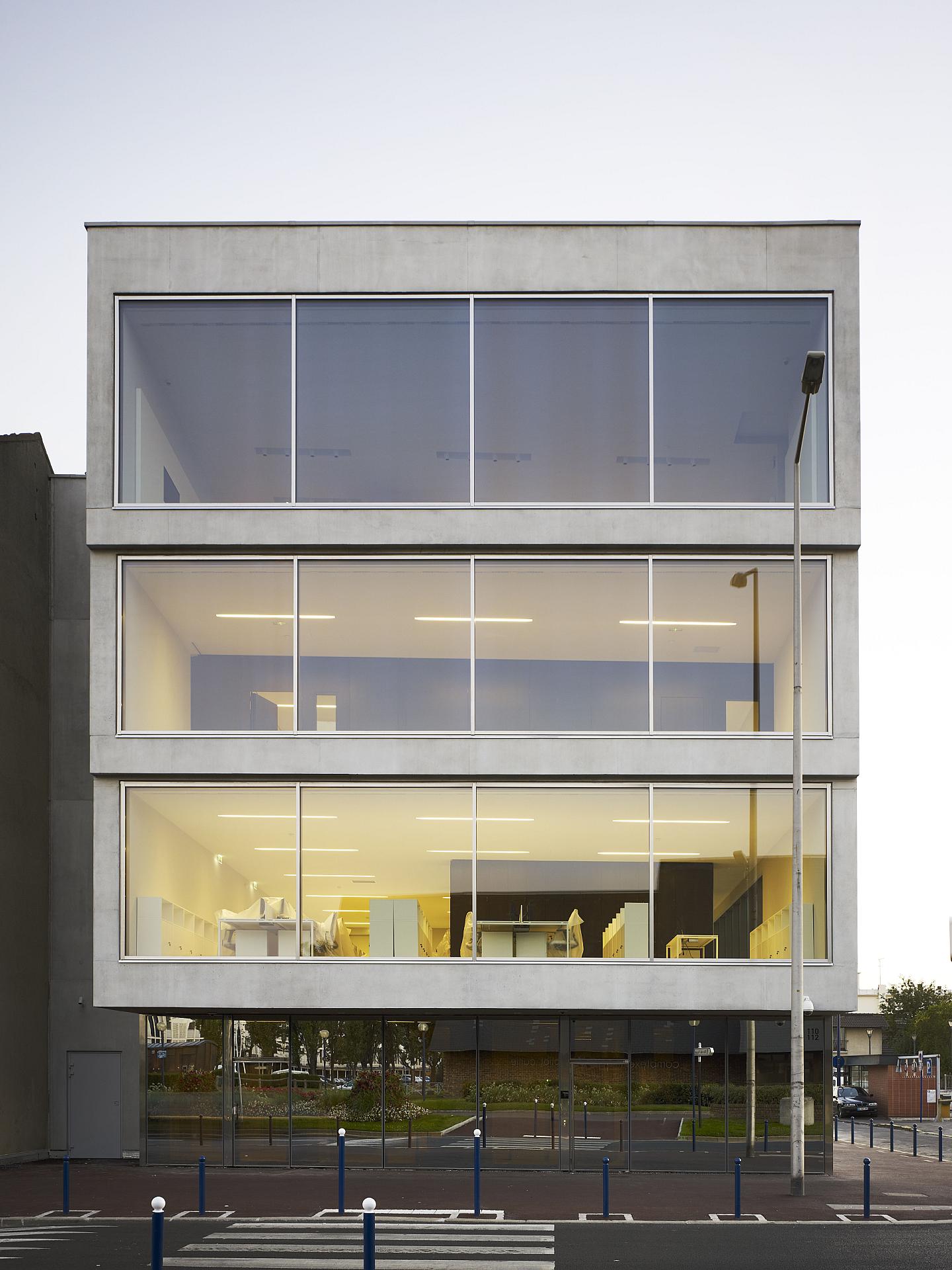
In 2012, a newly constructed documentation centre with a permanent staff was opened on the site. The new centre is administered by the »Mémorial de la Shoah« in Paris.
Possibilities
Free guided tours on Sundays at 3 p.m., guided tours and workshops by appointment.
Open
Sunday to Thursday 10 a.m. to 6 p.m. Closed on the usual French holidays and certain Jewish holidays.
Contact
http://drancy.memorialdelashoah.org/
contact@memorialdelashoah.org
+33 (0)1 427 744 72