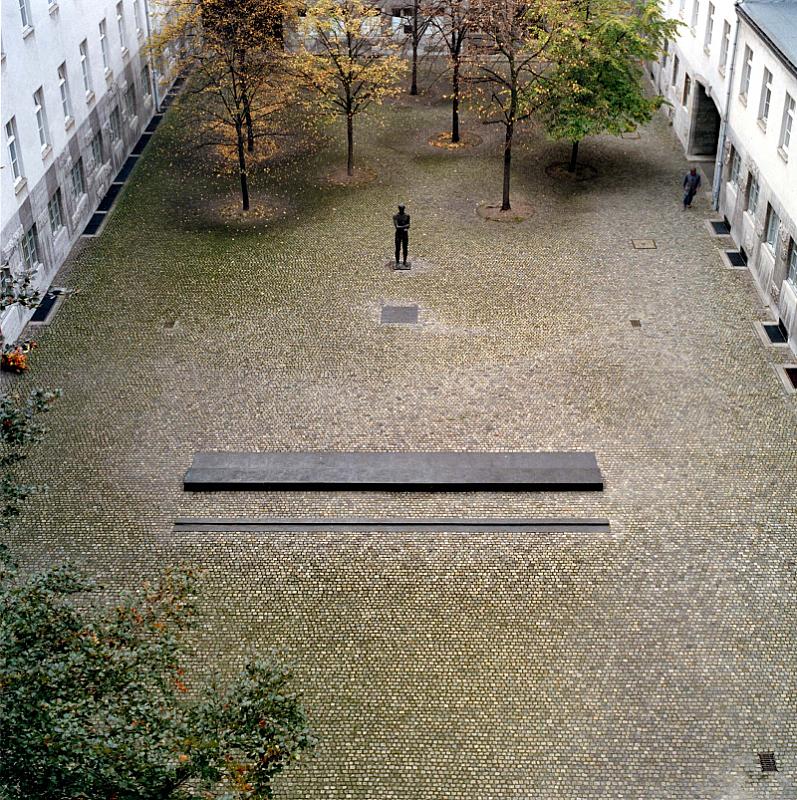
Sites of Remembrance – Memorial in the Bavarian Quarter
Orte des Erinnerns - Denkmal im Bayerischen Viertel
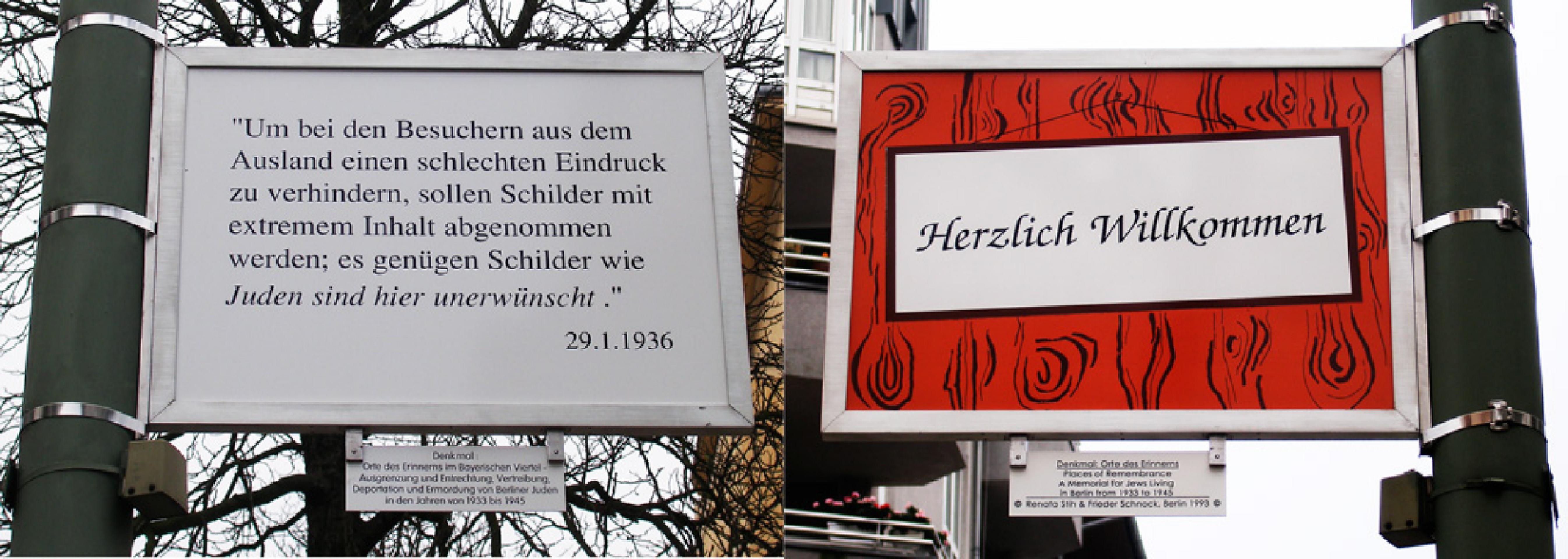
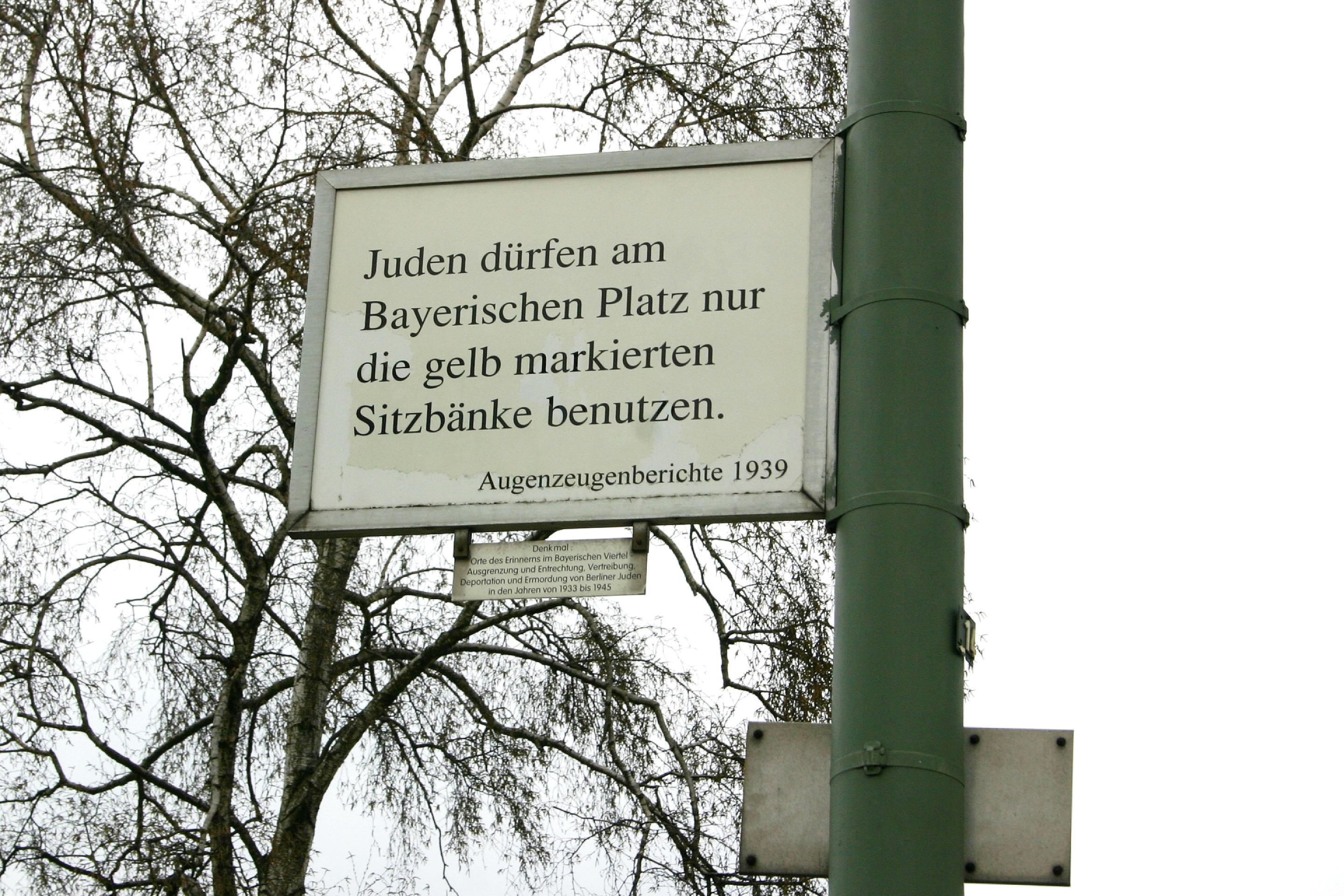
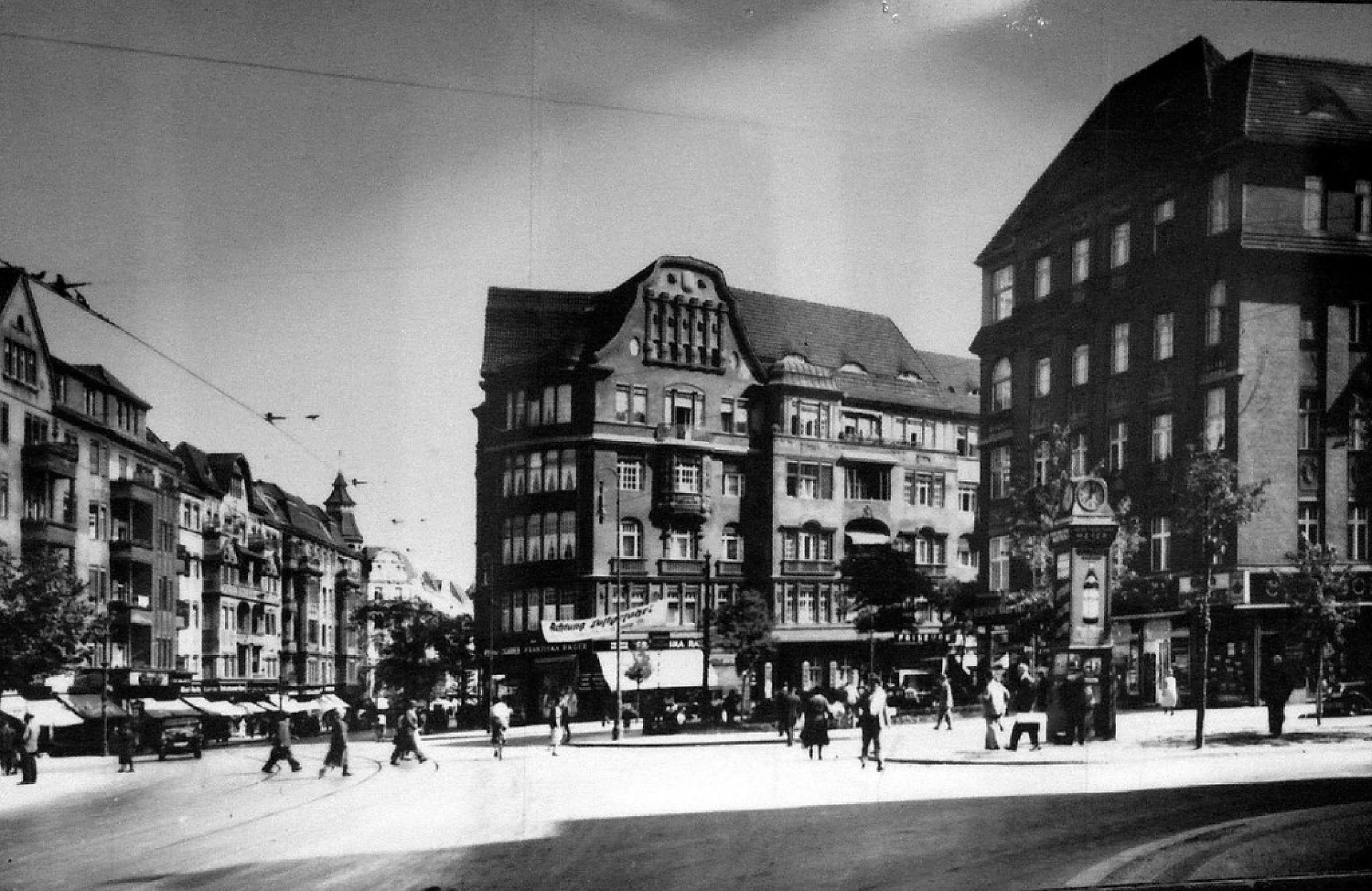
In Berlin's Schöneberg district the decentralized monument »Sites of Remembrance« has been commemorating the gradual exclusion and disenfranchisement of Berlin Jews since 1993. Before 1933, many Jews lived in the Bavarian Quarter, over which the eighty commemorative signs are spread.
History
Since the 18th century, Berlin has developed into a centre of Jewish life. Many Jewish institutions such as Jewish schools and hospitals were founded in Berlin. In addition to the New Synagogue built in 1866, there were many other Jewish places of worship, as well as about 150 Jewish associations and cultural institutions. Around 1930 approximately 170,000 Jews lived in Berlin. 16,000 of them lived in the Schöneberg district, many of them in the upper-class Bavarian Quarter, which was built between 1900 and 1914 at the instigation of the Jewish merchant Salomon Haberland (1836-1914). The quarter had many prominent inhabitants such as Albert Einstein, Alfred Kerr and Marcel Reich-Ranicki.
The life of Berlin's Jews changed abruptly when the National Socialists took power in 1933. They began to gradually exclude Jews from social life: Occupational prohibitions and discriminatory decrees made it impossible for Jews to lead a regular life. During the anti-Jewish terror of November 1938, Nazis and their supporters destroyed synagogues and Jewish shops; several thousand Jewish men were deported to concentration camps and held there for several weeks. By 1940, about 90,000 Berlin Jews had managed to emigrate. The National Socialists' persecution policy led to the complete deprivation of rights and finally to the deportation and murder of German Jews. From 1939 Jews could no longer exercise independent professions, they had to sell their businesses. Many were called on to conduct forced labour. From 1941 Jews had to wear a yellow star on their clothing. In the autumn of 1941 the SS began deporting Berlin Jews, initially to ghettos in the occupied East. From 1942 the transports from the German Reich went directly to the extermination camps in occupied Poland. Only about 8,000 Berlin Jews survived the National Socialist genocide.
Victims
Before 1933, a larger than average number of Jews lived in the Bavarian Quarter, including many doctors, lawyers, businessmen, intellectuals and artists. Of the 16,000 Jewish inhabitants of the Schöneberg district, the SS deported and murdered thousands. 6,000 of the murdered Jews of Schöneberg are known by name.
Remembrance
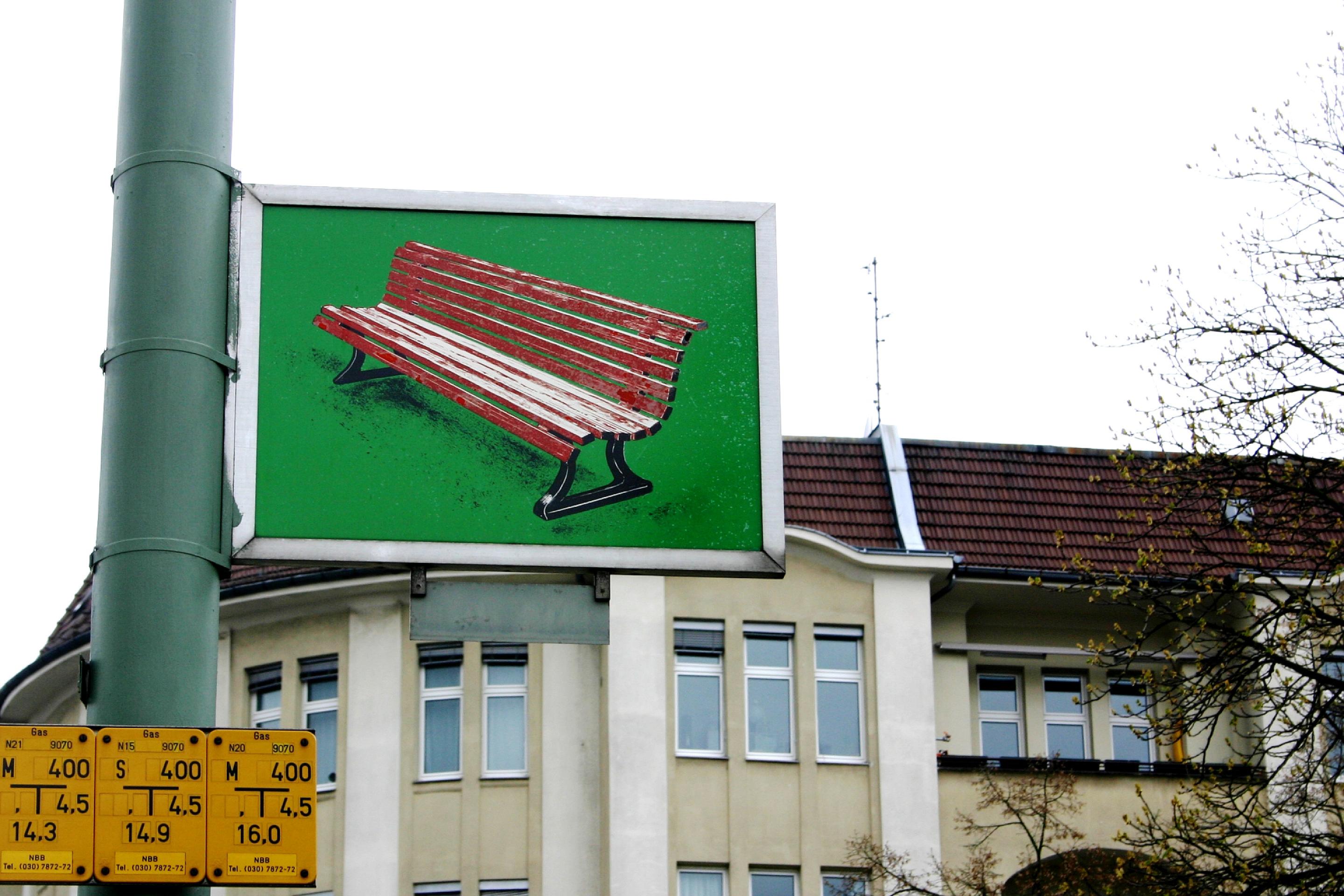
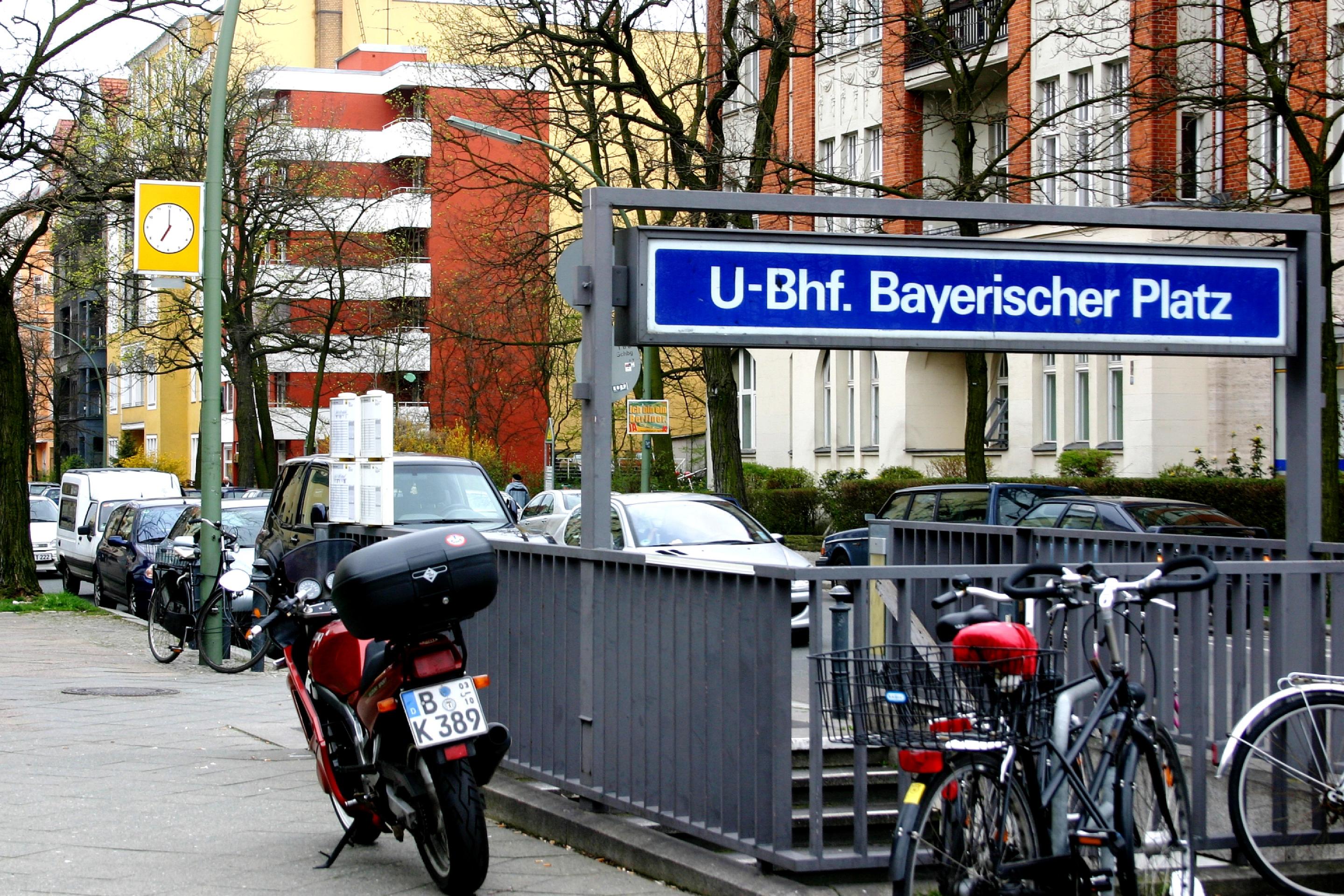
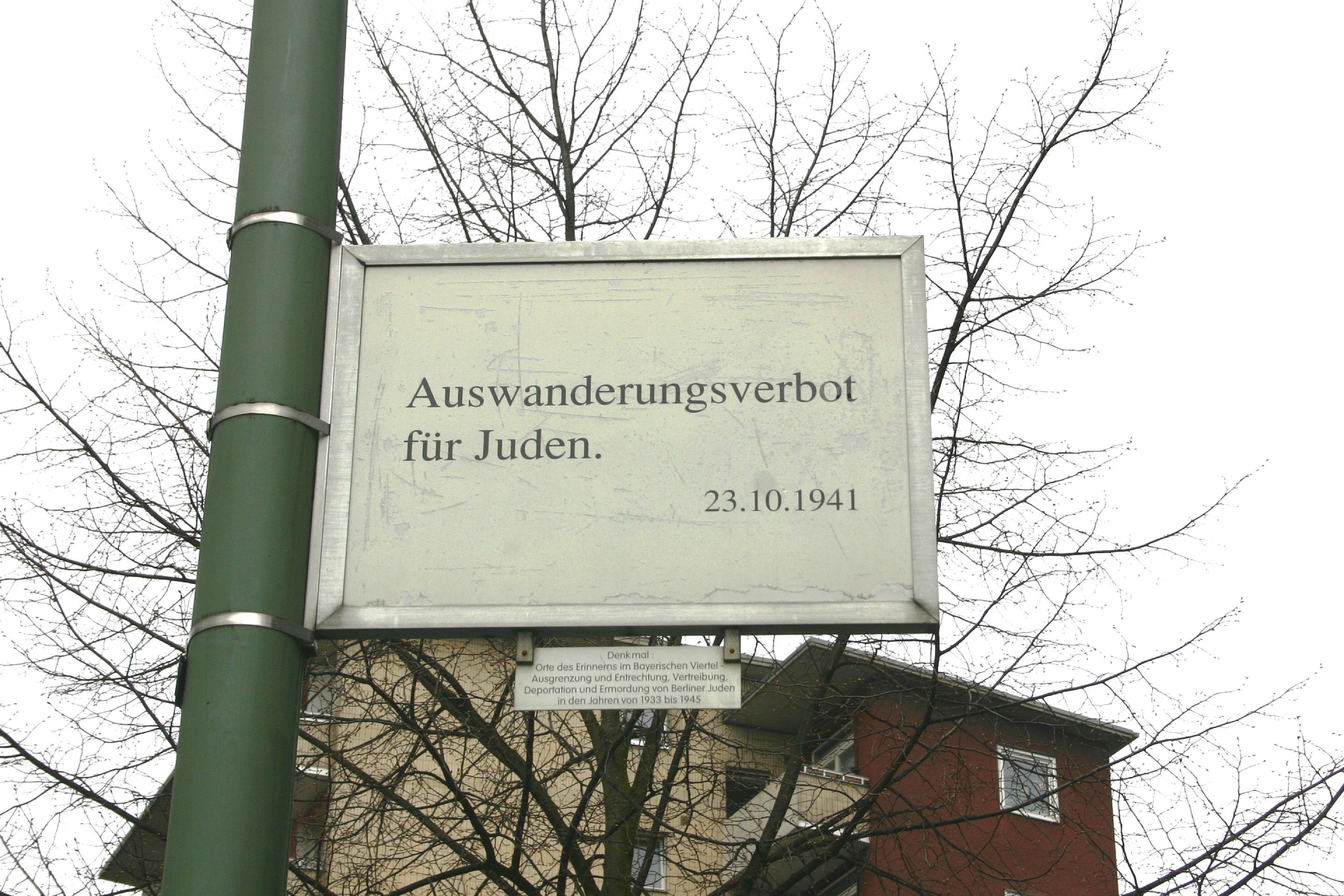
At the beginning of the 1980s, residents of the district began to look into the history of their quarter and to search for traces of Jewish life in the Bavarian Quarter. The Schöneberg cultural office initiated the project »Mahnen und Gedenken im Bayerischen Viertel« (Reminders and Remembrance in the Bavarian Quarter), which was intended to document the events and biographies of Jewish residents at various locations. In 1988 this project gave rise to the idea of erecting a memorial. The project was later modified: Instead of a central memorial, several commemorative signs were to be placed at various locations in the Bavarian Quarter. The resulting decentralized memorial »Sites of Remembrance in the Bavarian Quarter« by the artist duo Renata Stih and Frieder Schnock was inaugurated in 1993. It consists of eighty double-sided plaques attached to lantern poles at various points in the Bavarian Quarter at a height of three metres. On each side of the plaques there are pictograms of everyday objects, on the other side there is a shortened form of anti-Jewish measures and decrees from the Nazi era. An overview map provides information on the locations of all eighty commemorative signs.
Contact
http://www.stih-schnock.de/remembrance.html
mail@stih-schnock.de
+49 (0)30 265 266 5
Bayerisches Viertel
10779 Berlin