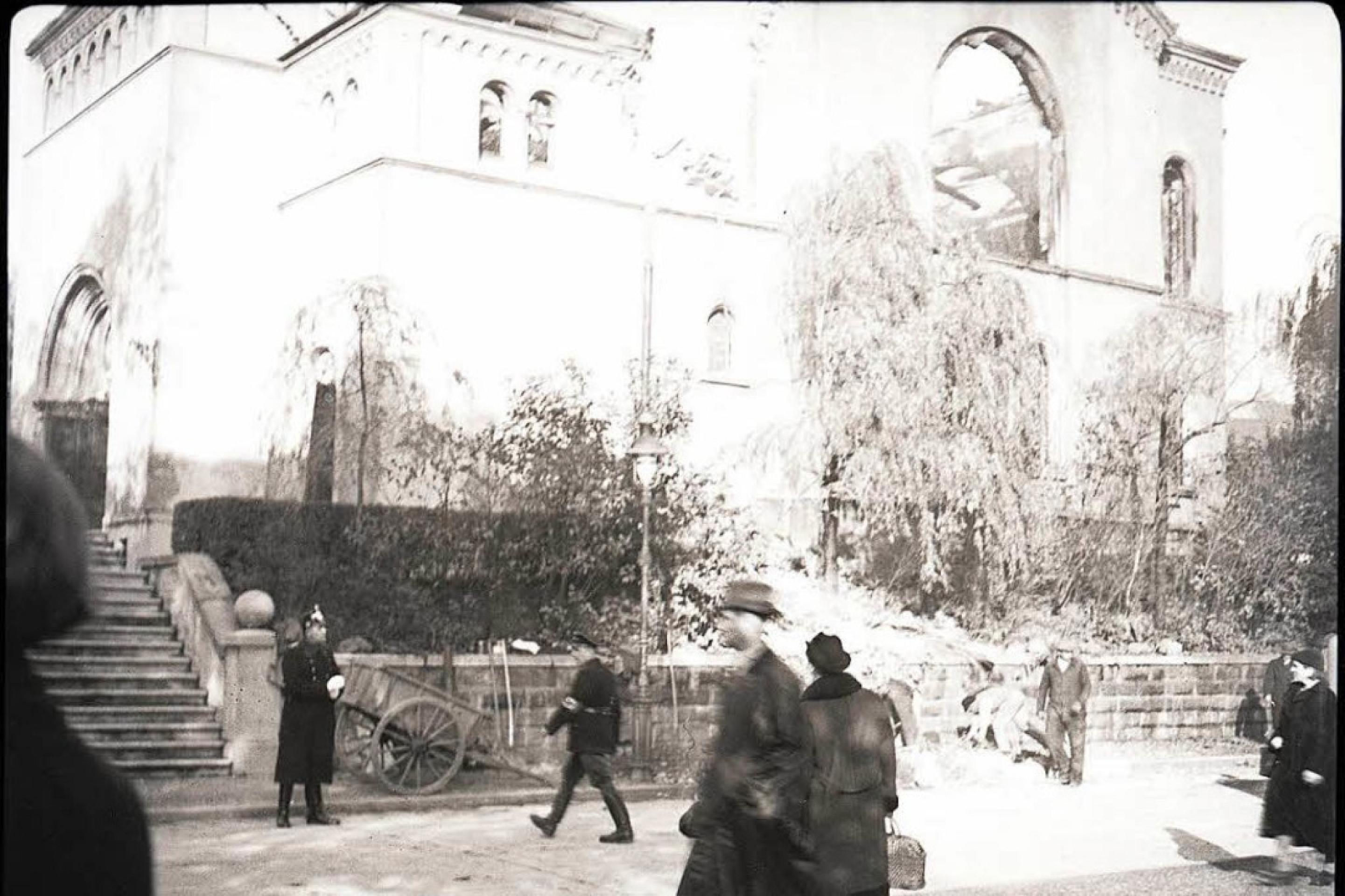
Since 2017, a mirror of water remembers the Old Synagogue in Freiburg, destroyed in November 1938.
History
In 1120 Freiburg was granted town rights. Jews were already living in Freiburg in the 13th century. In 1349, at the height of the plague epidemic, almost all the Jews of Freiburg were burned alive. Later Jews lived in the city again, but they were finally expelled in 1424, so that Jews did not live there again until 400 years later.
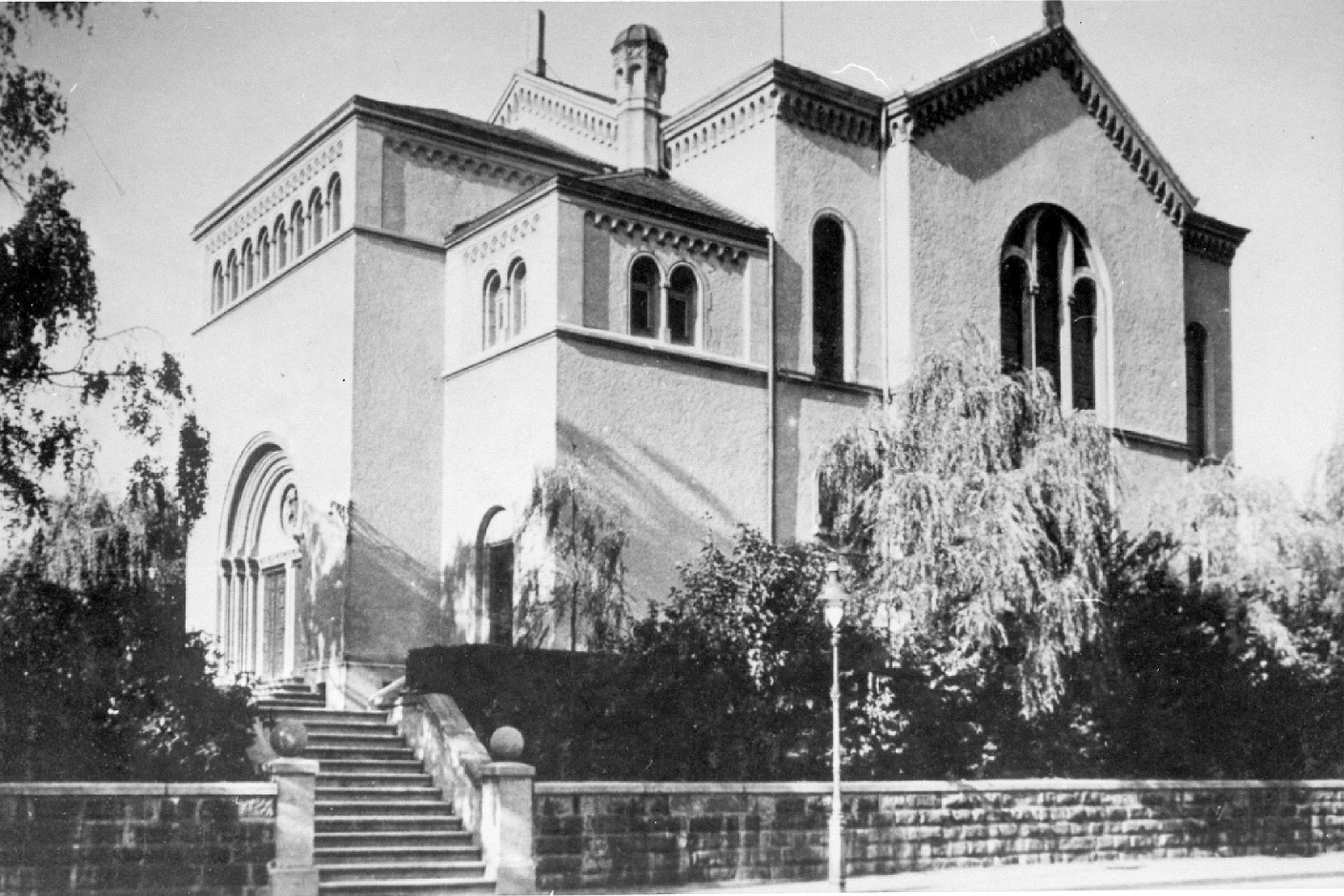
The new community was officially founded in 1863. At first it used a small prayer room but already in 1869/1870 it built its own synagogue in the city centre. It was built in Moorish-Byzantine style with Romanesque elements on an almost square ground plan. Next to the synagogue a community hall was also built. In the mid-1920s the façade of the synagogue was changed when a porch was added. At that time, about 1,400 Jews lived in Freiburg, out of a total population of about 90,000. Many Jewish families were involved in trade, but there were also many Jewish doctors, lawyers and university lecturers in the university town of Freiburg.
After the Nazis came to power, the situation of the Jews in Freiburg deteriorated noticeably. Many chose the path of emigration. On November 10, 1938 local members of the SA and SS set the synagogue on fire. Many Jews were forced to watch the destruction of their place of worship. In addition, 140 Jewish men were arrested and sent to the Dachau concentration camp for several weeks. After this traumatic experience, even more Jews left Freiburg.
Barely two years later, on October 22, 1940 in the so-called »Wagner-Bürckel-Aktion«, most of the Jews from Baden and the Saar-Palatinate were deported to Gurs in southern France, including almost all of the 350 or so Jewish children, women and men still living in Freiburg. Most of them did not survive the persecution: they either died of the poor living conditions in Gurs or were murdered in the Auschwitz-Birkenau extermination camp in 1942/43.

Victims
Of the more than 1,100 Jews who lived in Freiburg in 1933, at least 314 were murdered in the Holocaust.
Remembrance
10 Freiburg Jews who lived in so-called »Mischehen« (miscegenations) survived the persecution in their homeland. After the war, only five native Freiburg Jews returned to the city, where the first Jewish service took place as early as September 1945. In 1948, the Jewish community reached a settlement with the city: the land of the destroyed synagogue remained in the possession of the city, in return for which it took care of the preservation of the Jewish cemetery, which had also been desecrated in 1938. The Jewish community later grew again and in 1985, with the help of the city and the state of Baden-Württemberg, built a new synagogue near the Freiburg Minster.
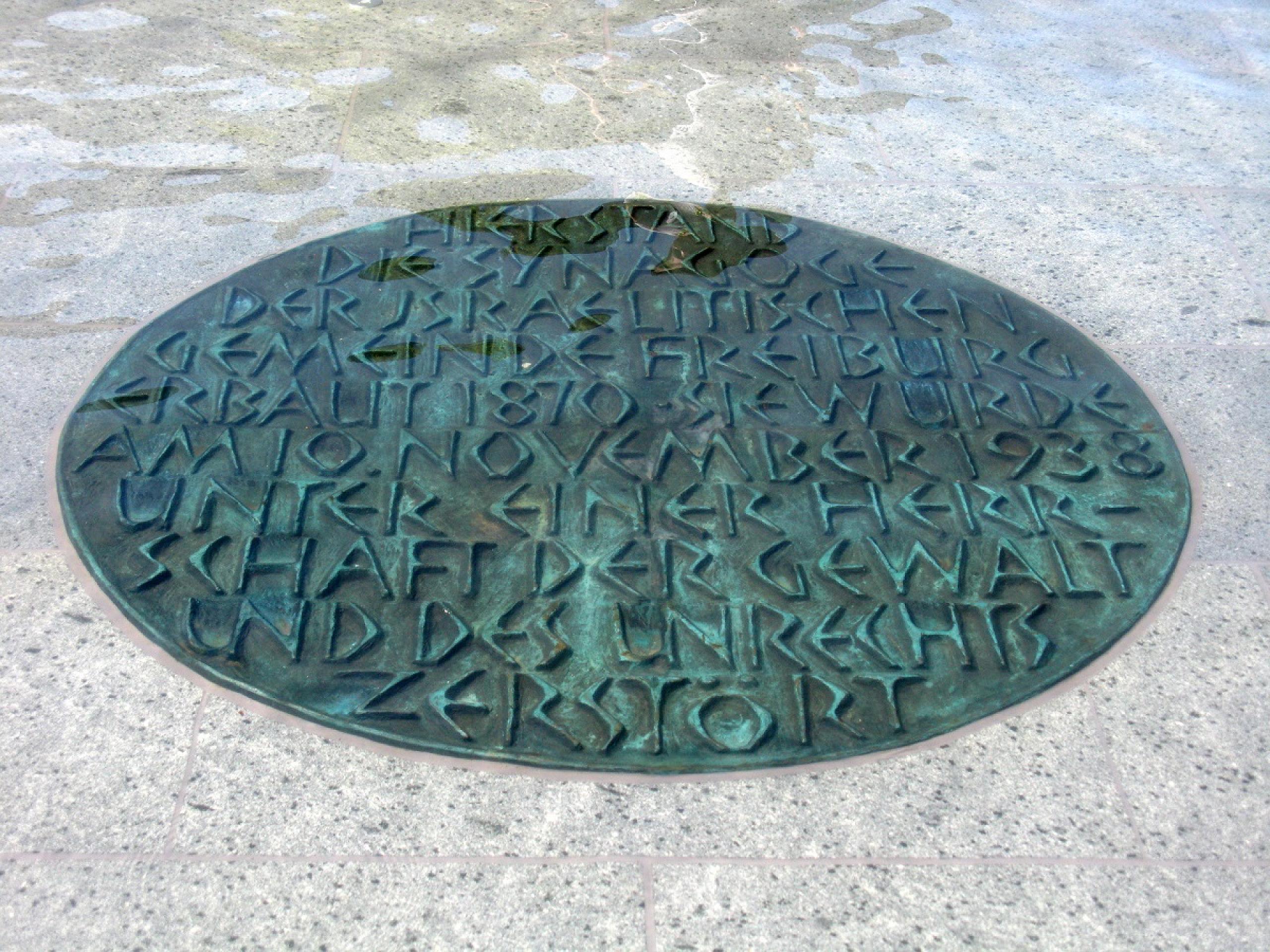
Already in the 1950s, Jewish citizens in Freiburg tried to erect a monument on the site of the destroyed synagogue. In 1961 a round bronze plaque was finally inaugurated. It bears the inscription: »Here stood the synagogue of the Israelite community of Freiburg / built in 1870 – it was destroyed on November 10, 1938 under a reign of violence and injustice«. Commemorative events were held at the memorial annually in November. The square, which is located in the middle of university buildings, was renamed »Platz der Alten Synagoge« (Square of the Old Synagogue) in 1996.
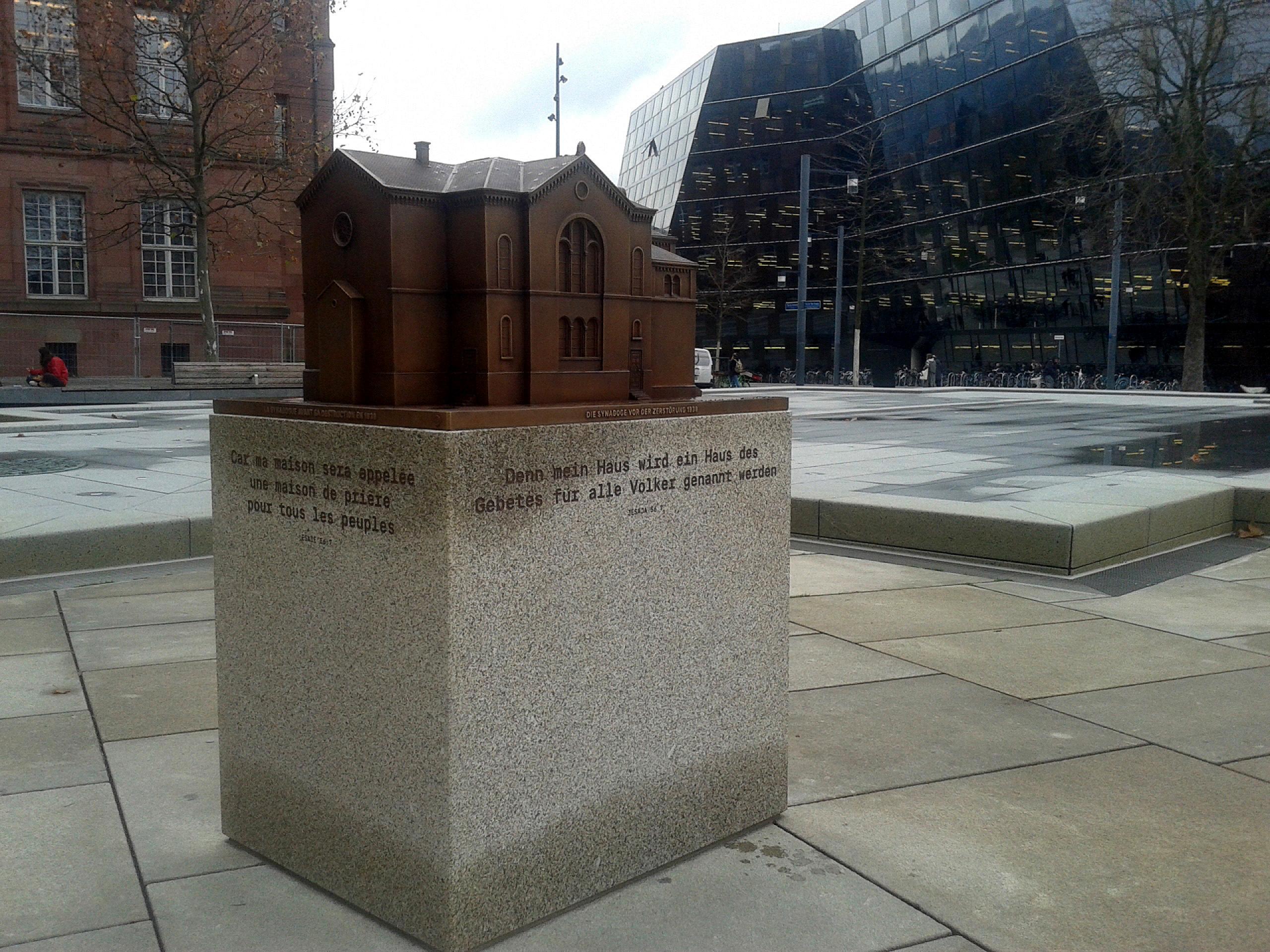
After 2000 a new discussion about a redesign of the square began. The 2006 competition was won by the architects Volker Rosenstiel and Martin Schedlbauer. Their design envisaged the construction of a water-filled basin on the square with the floor plans of the Old Synagogue, in order to make the destroyed building visible again in the cityscape. The monument was opened in 2017. The old commemorative plaque from 1961 was integrated into the memorial. Remains of the foundations of the destroyed synagogue were found during the construction work. Since December 2020, a bronze model of the former Freiburg synagogue complements the memorial.
The memorial has been controversial since its opening, because especially in warm weather many people get into the water and splash around.


Open
The square and the memorial are accessible at all times.
Contact
https://www.freiburg.de/pb/1154785.html
kulturamt@stadt.freiburg.de
+49 (0) 761 201 21 01
Platz der Alten Synagoge
79098 Freiburg im Breisgau