State Memorial Khatyn
Государственный мемориальный комплекс Хатынь / Дзяржаўны мемарыяльны комплекс Хатынь
The State Memorial Khatyn is located on the site where the Khatyn village once stood, 60 kilometres north of Minsk in the Logosky district. In 1943, two SS commandos had attacked the village and burned it down completely in a »retributive action«. Almost all of the village inhabitants perished in the flames.
History
On March, 22, 1943, the German SS Battalion »Dirlewanger« attacked the small village of Khatyn in the Minsk region. In March 1943, Schutzmannschafts-Batallion 118, an auxiliary police battalion of 500 German and Ukrainian policemen that had been assembled in Kiev, came across partisans in the vicinity of Minsk. A battle with the partisans followed, upon which Schutzmannschafts-Batallion 118 had to retreat and the German officer in charge was killed. The battalion called for reinforcements and was joined by the SS battalion »Dirlewanger«. The SS battalion, named after its commander Oskar Dirlewanger, was a unit established in 1940 and composed of poachers, former (criminal and »asocial«) concentration camp prisoners and helpers from the occupied areas of the Soviet Union. The unit was relocated to Belarus in January 1942, where it murdered numerous civilians under the pretext of »combatting partisans«. The members of the unit frequently burned down whole villages and the people living there. When the partisans had retreated in the direction of Khatyn following fighting in March 1943, the SS units were in search of an opportunity to retaliate. The Schutzmannschafts-Batallion 118 and the SS battalion »Dirlewanger« encircled the village of Khatyn. They then looted the village and locked the approximately 149 village inhabitants in a barn. The SS men set fire to the building and shot those who tried to escape the flames. Before their withdrawal, the SS units burned down the entire village.
Victims
The SS murdered around 145 people in a burning barn in the village of Khatyn. Of the victims, around 76 were children. Only one man, the blacksmith Yozif Kaminskiy, and three children survived the massacre.
Remembrance
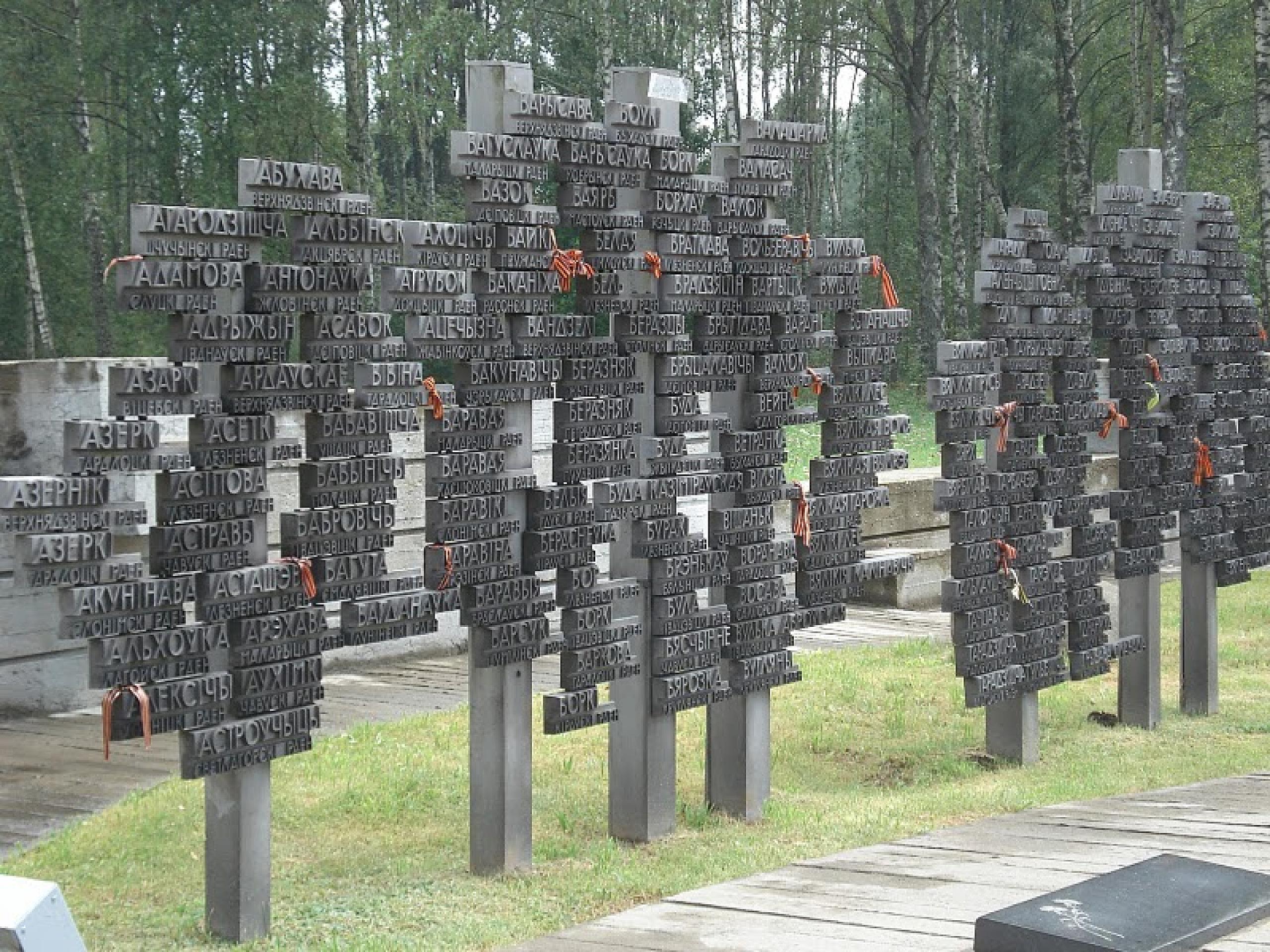
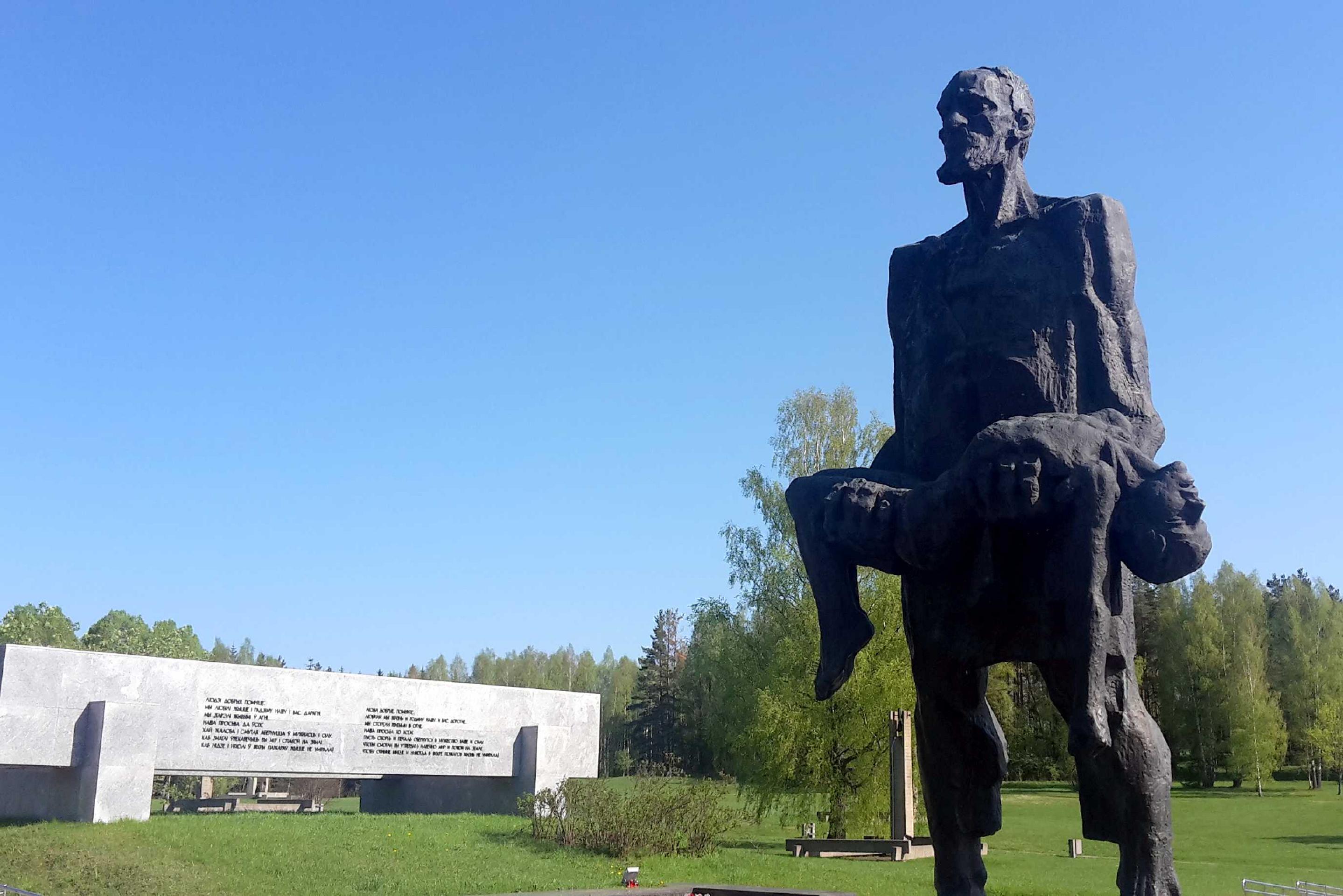
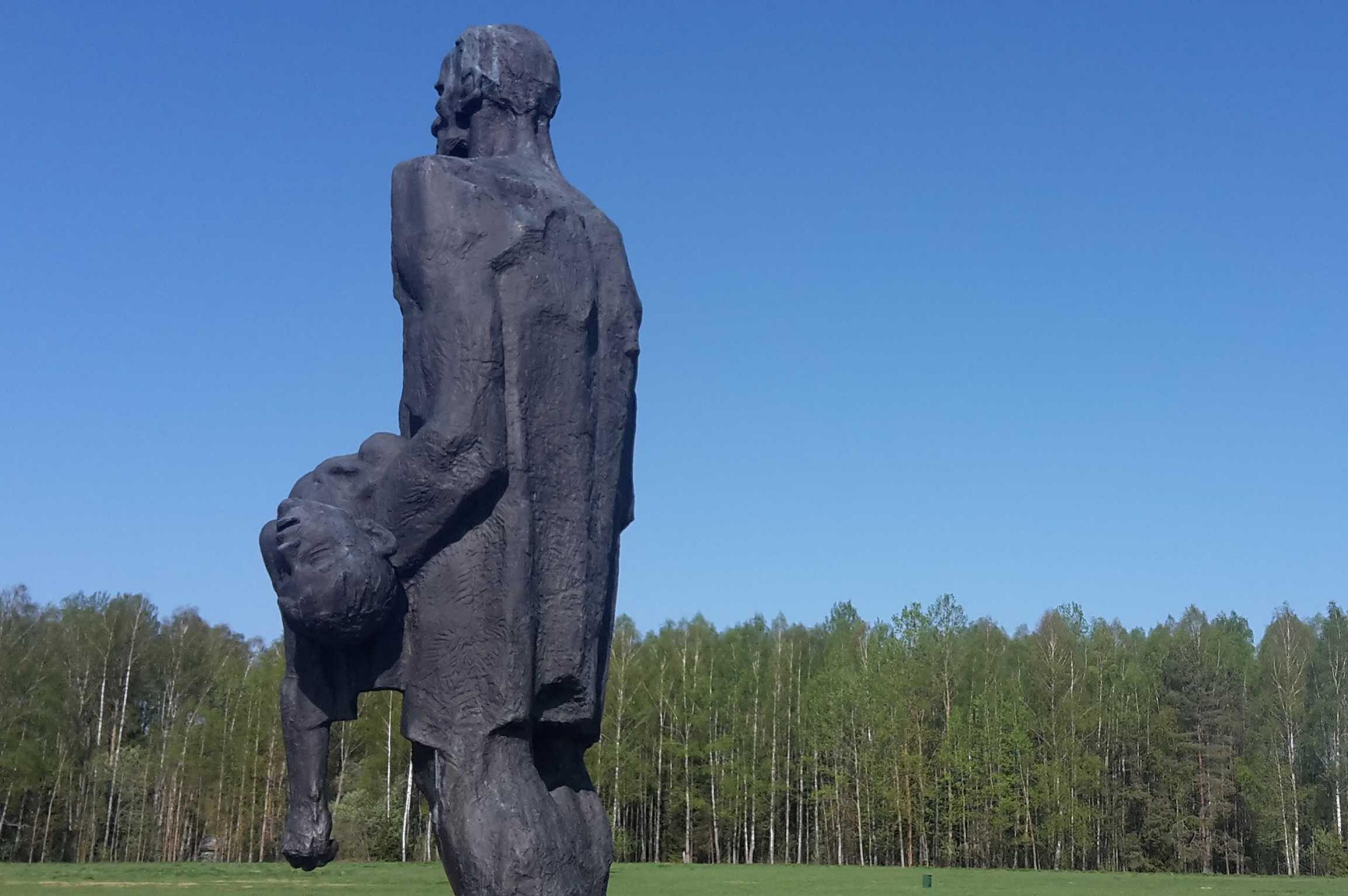
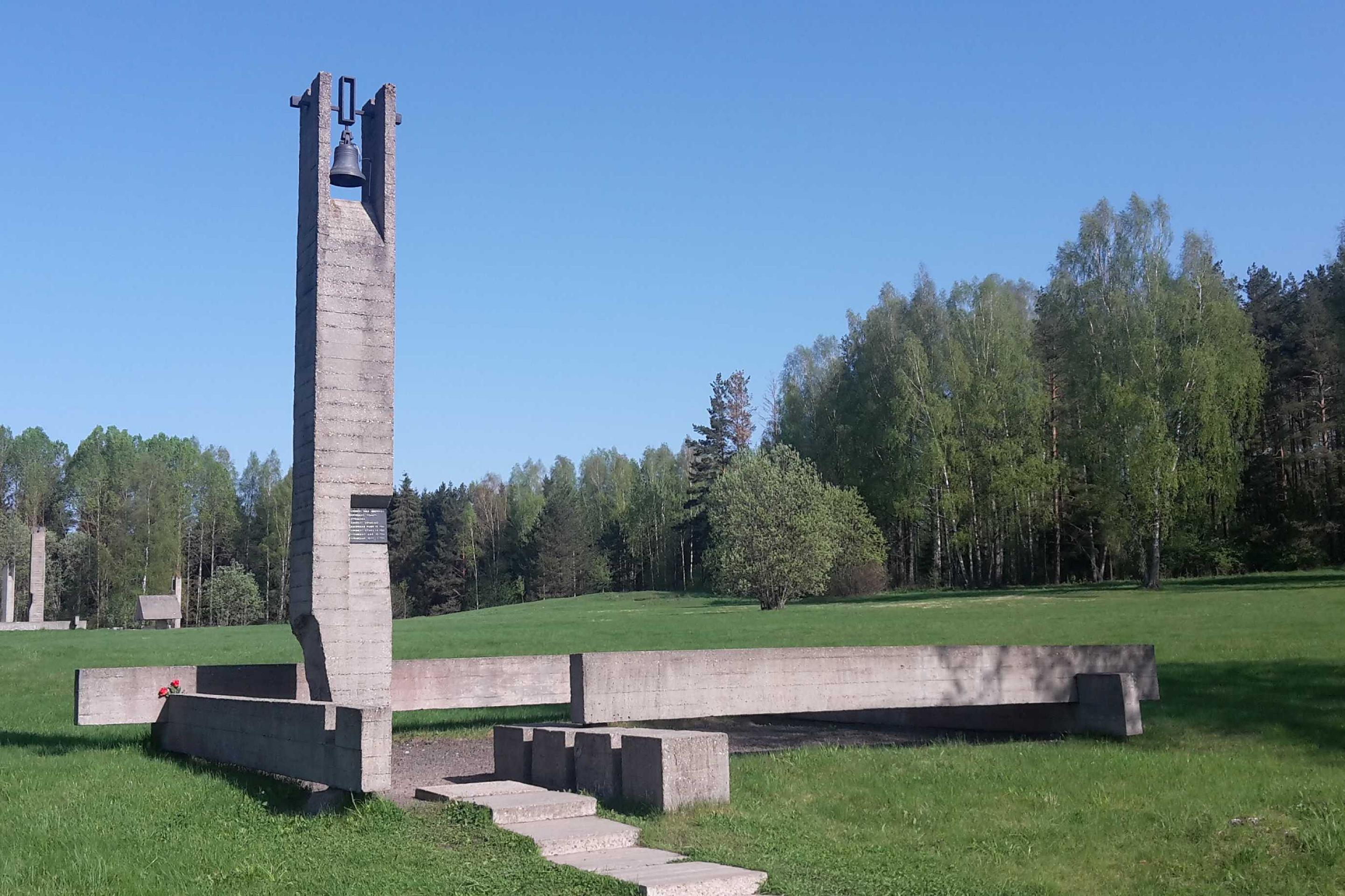
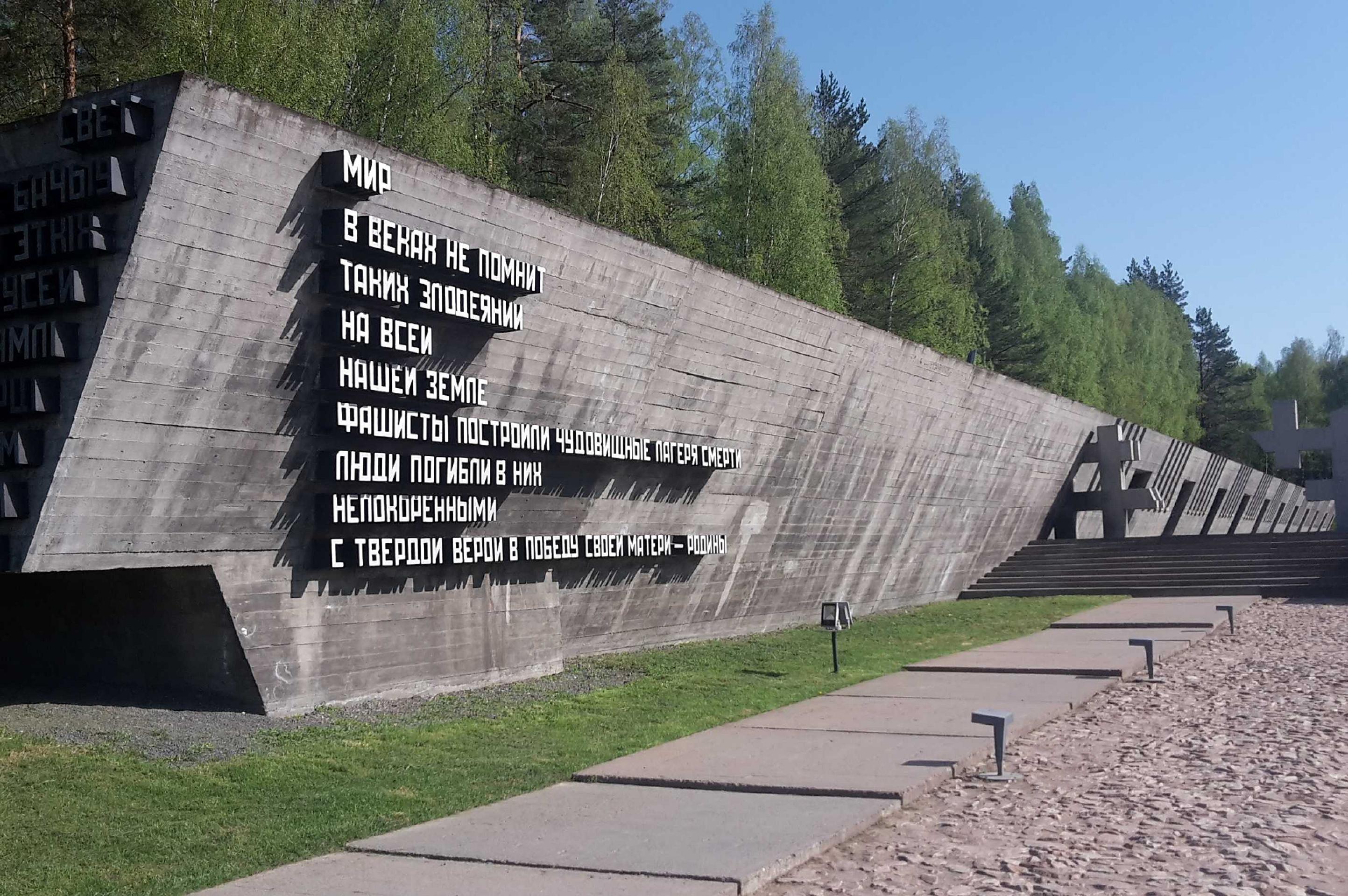
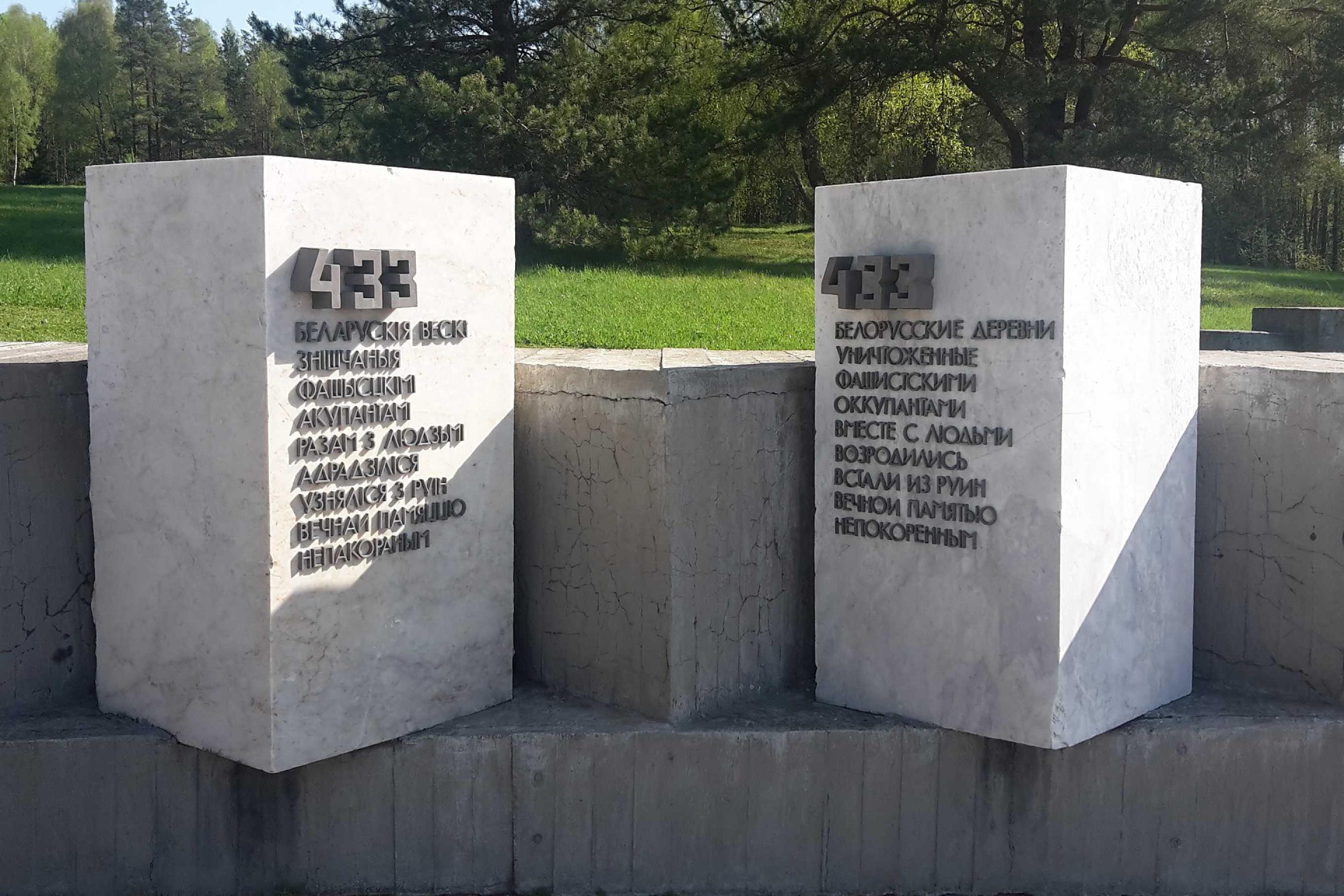
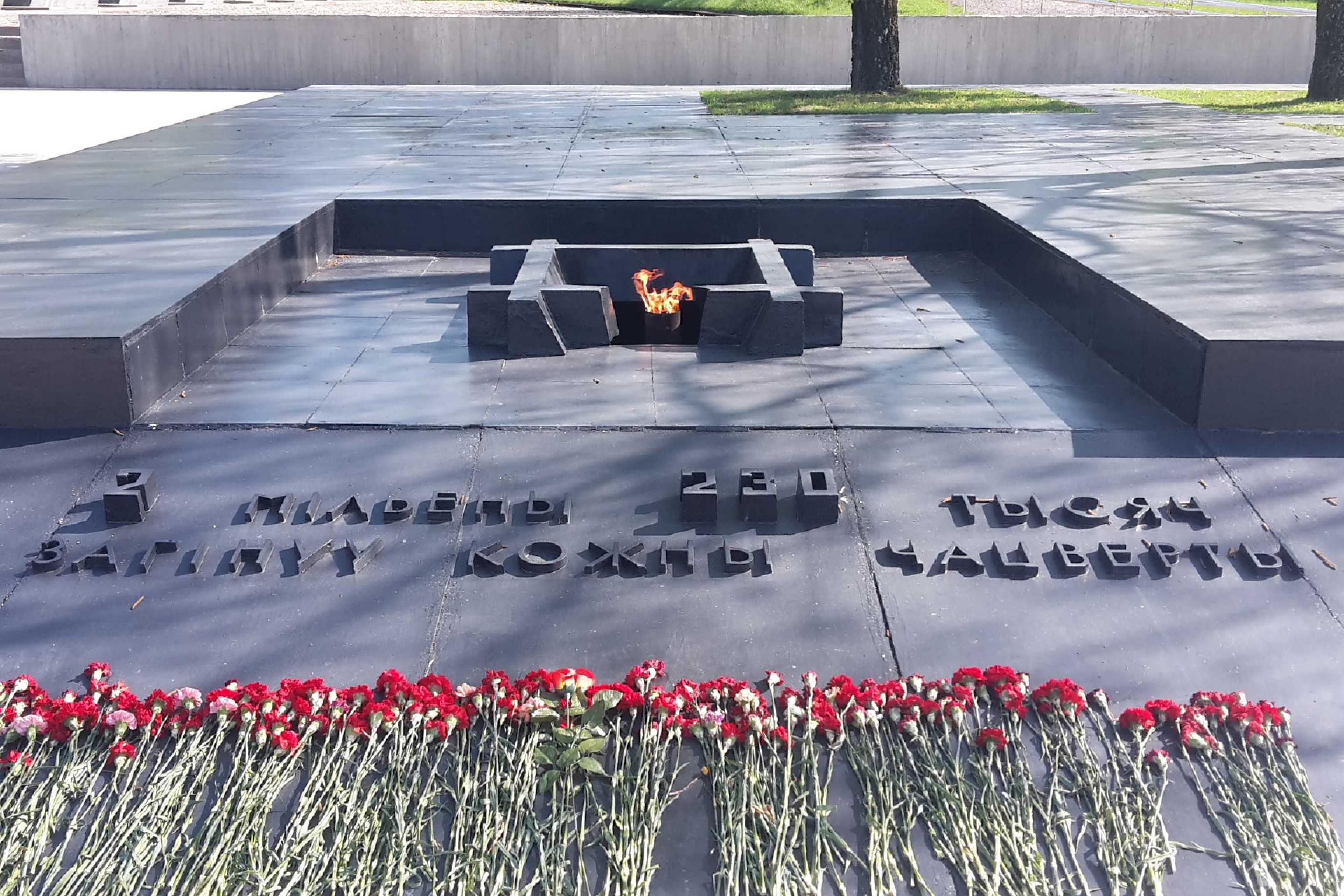
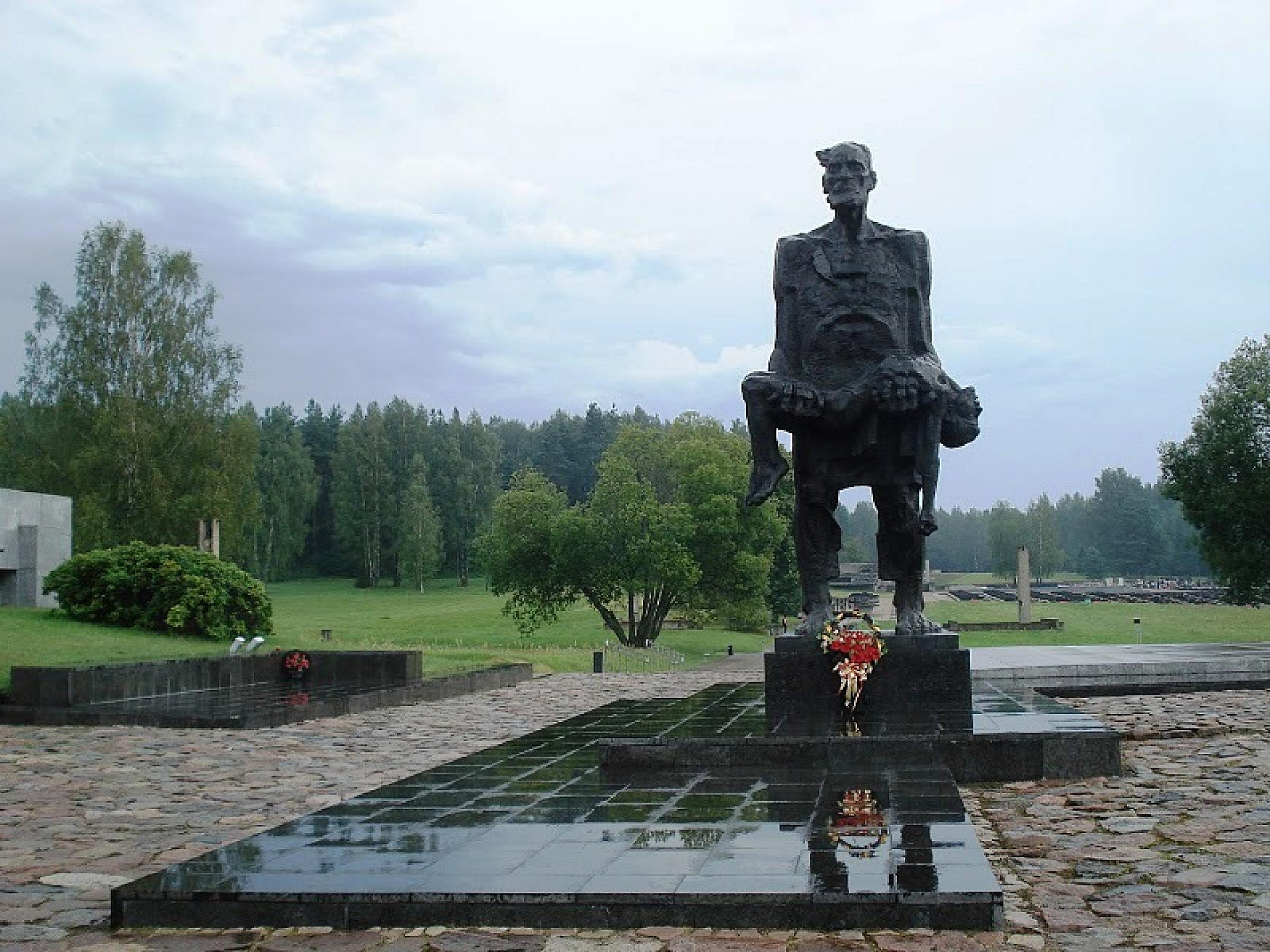
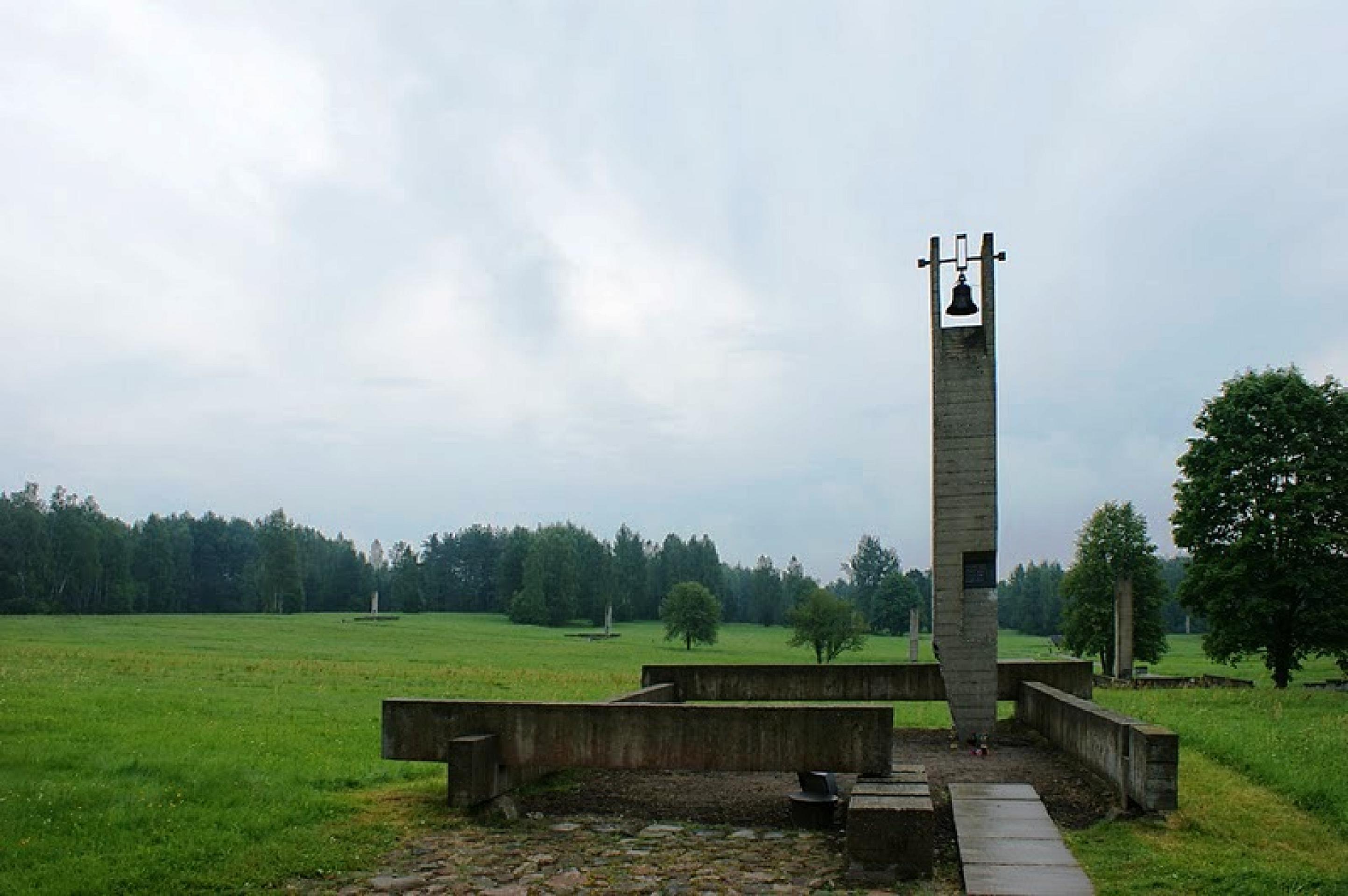
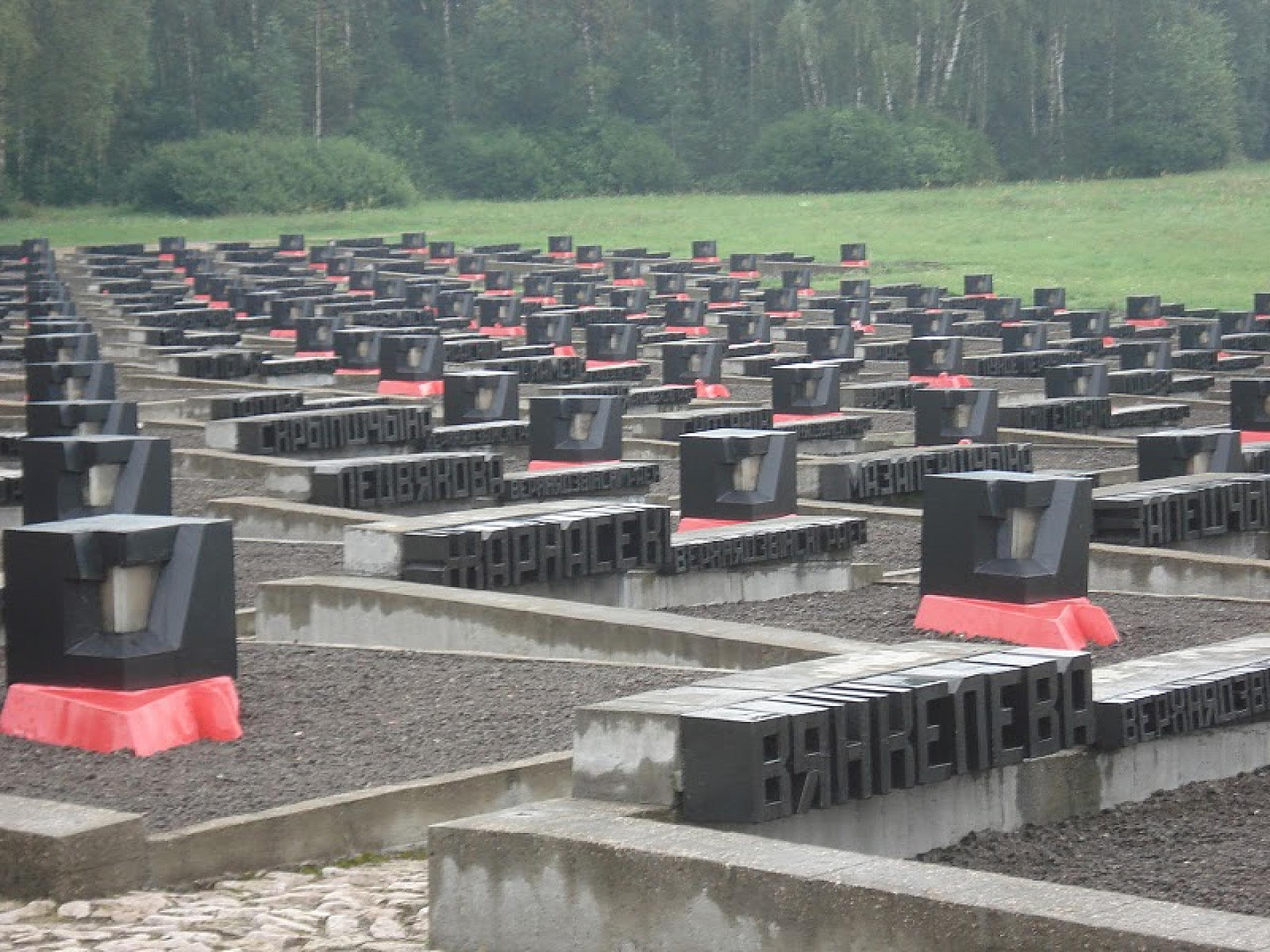
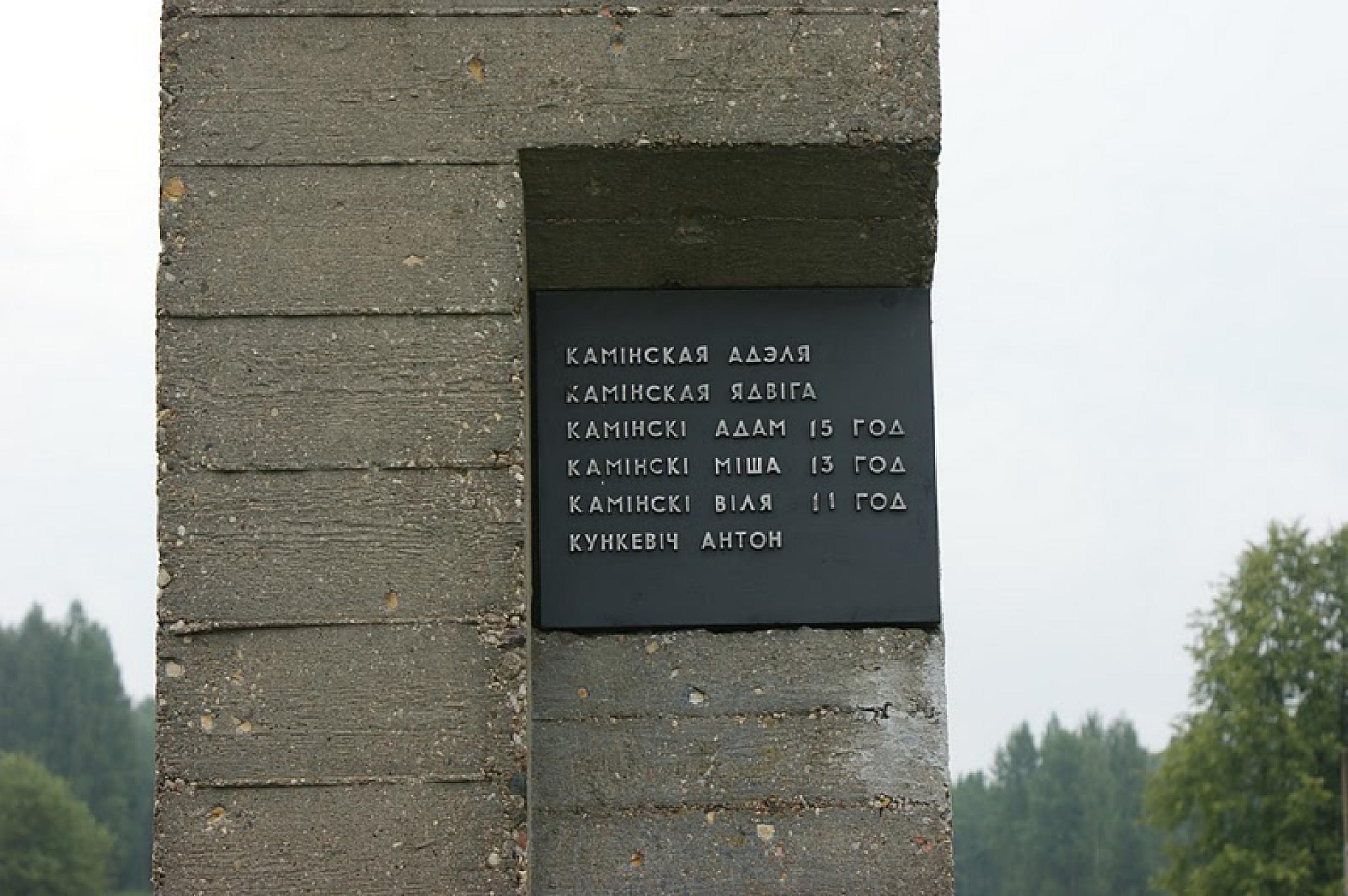
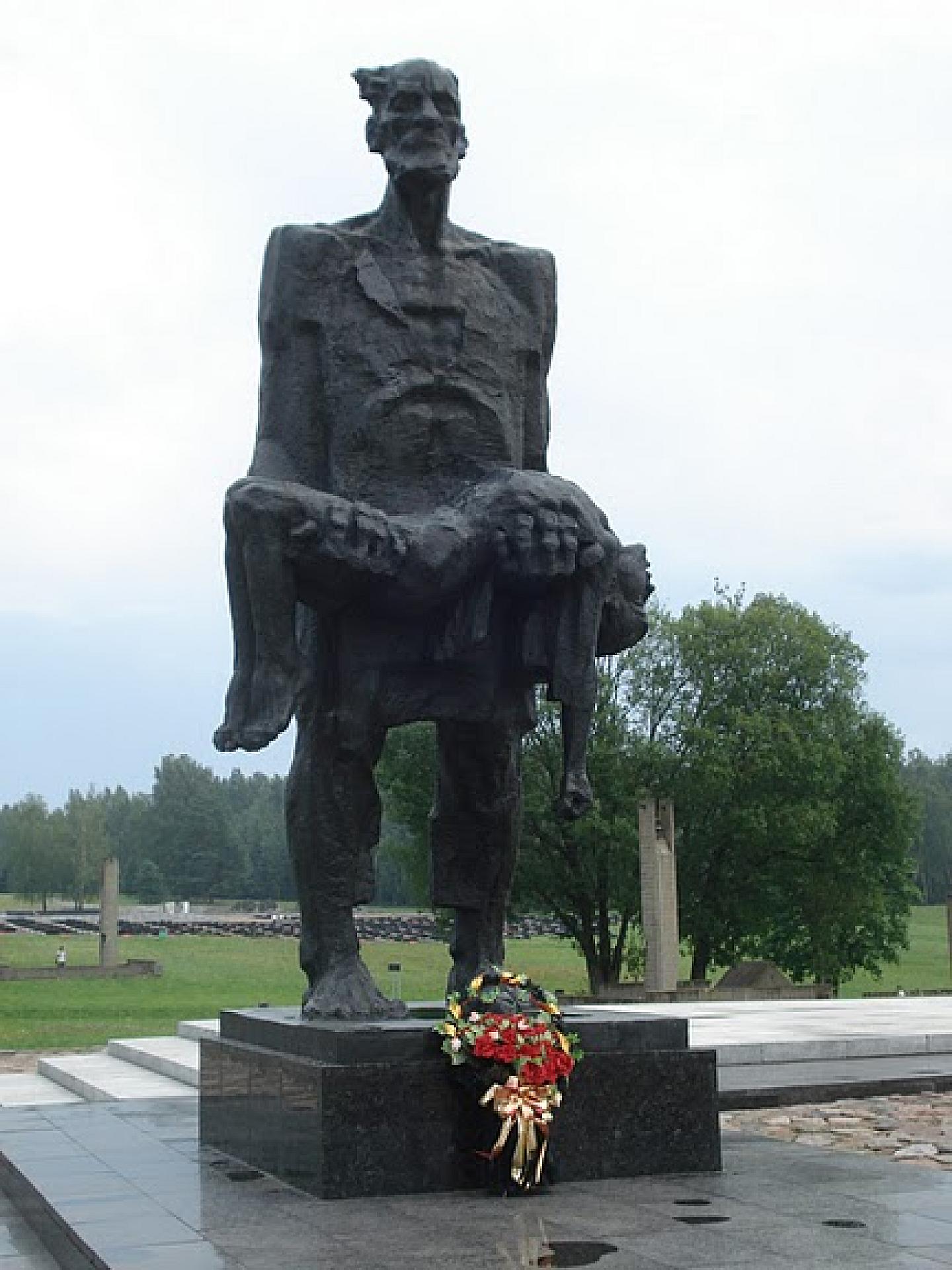
After the war, a memorial stone to the murdered inhabitants of Khatyn was set up. In 1965, a tender for a new design of the memorial site was issued on initiative of the Communist Party of Belarus. An architecture team made up of Yu. Gradov, V. Sankovich and Leonid Levin won the competition. On the 25th anniversary of the liberation of Belarus from German occupation, a state memorial was opened on the site where the village once stood. The approximately 30 ha large area of the memorial relates to the former village: concrete beams on the ground symbolise the outlines of the former 26 houses of the village at their original locations. On each of these marked houses stands a stylised concrete chimney. Memorial plaques give information about the number of victims from that house as well as their respective ages. On the site are also a stylised concrete barn, a well and a gate. In one of the memorial’s central spots is a 6 metre high bronze sculpture. It depicts the blacksmith Yozif Kaminskiy, holding his dead son in his arms. Not far lies a large concrete stele bearing an inscription to the »future generations« - it marks the mass grave for the village residents. In addition, there is a »cemetery of the villages«, 185 concrete blocks bearing the names of the 185 Belarusian villages which were destroyed and not rebuilt. »Symbolic trees of life«, on the other hand, depict the names of the 433 Belarusian villages which were burned down yet rebuilt. A several metre long »memorial wall« made of concrete names the 260 extermination sites and forced labour camps on the territory of Belarus. A further element of the memorial is the eternal flame, in memory of the fact that every fourth Belarusian citizen died in the Second World War. On the premises, bells ring regularly. Today, the complex is one of the most important memorial sites of Belarus.
Open
The memorial is accessible at all times. Photo exhibition: Tuesday to Sunday: 9.00 a.m. to 5.00 p.m.
Contact
khatyn@mail.ru
+375 (80)177 455 787
Logojskij Kreis, Minskaja Gebiet
223110 Chatyn