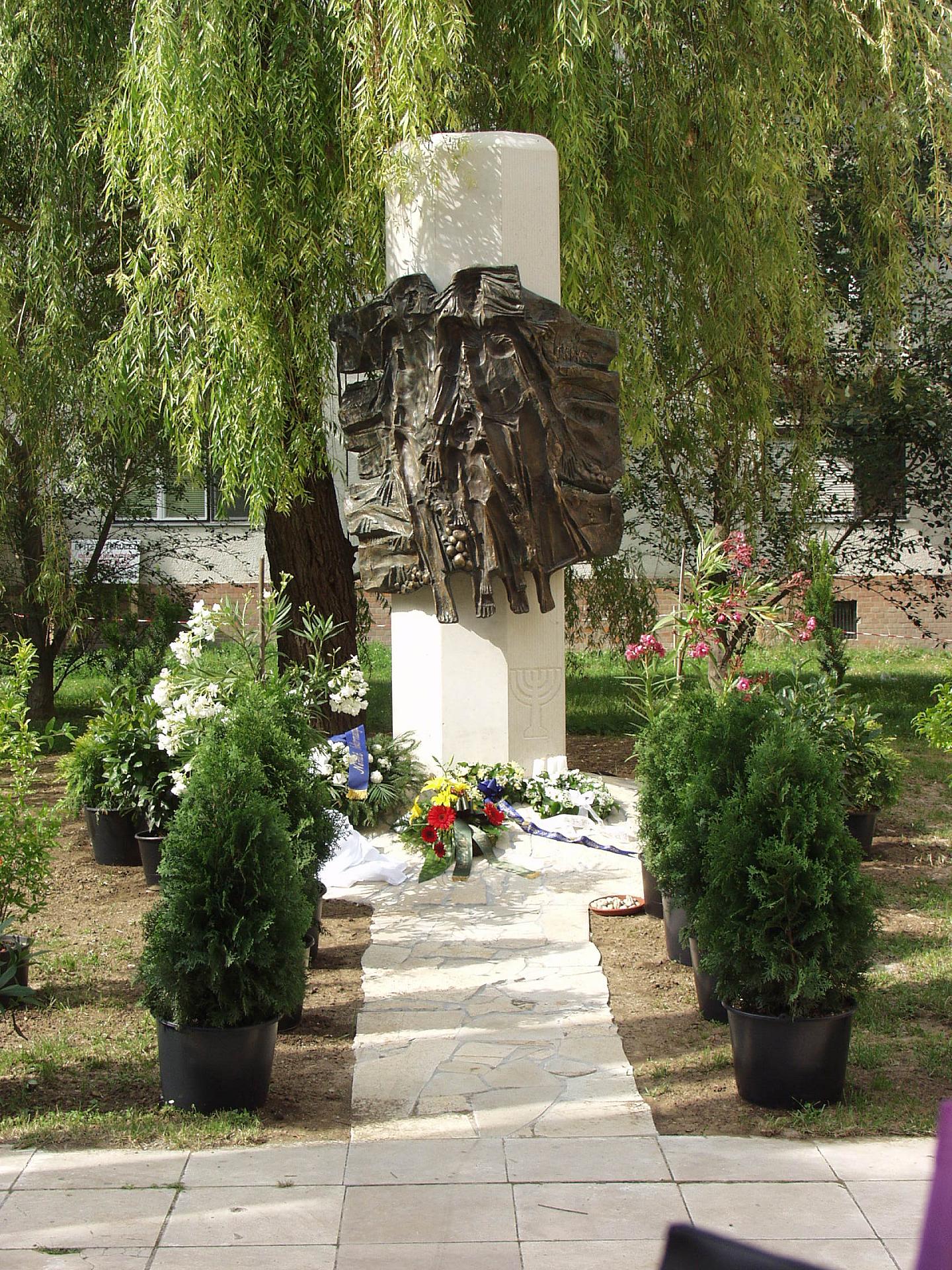
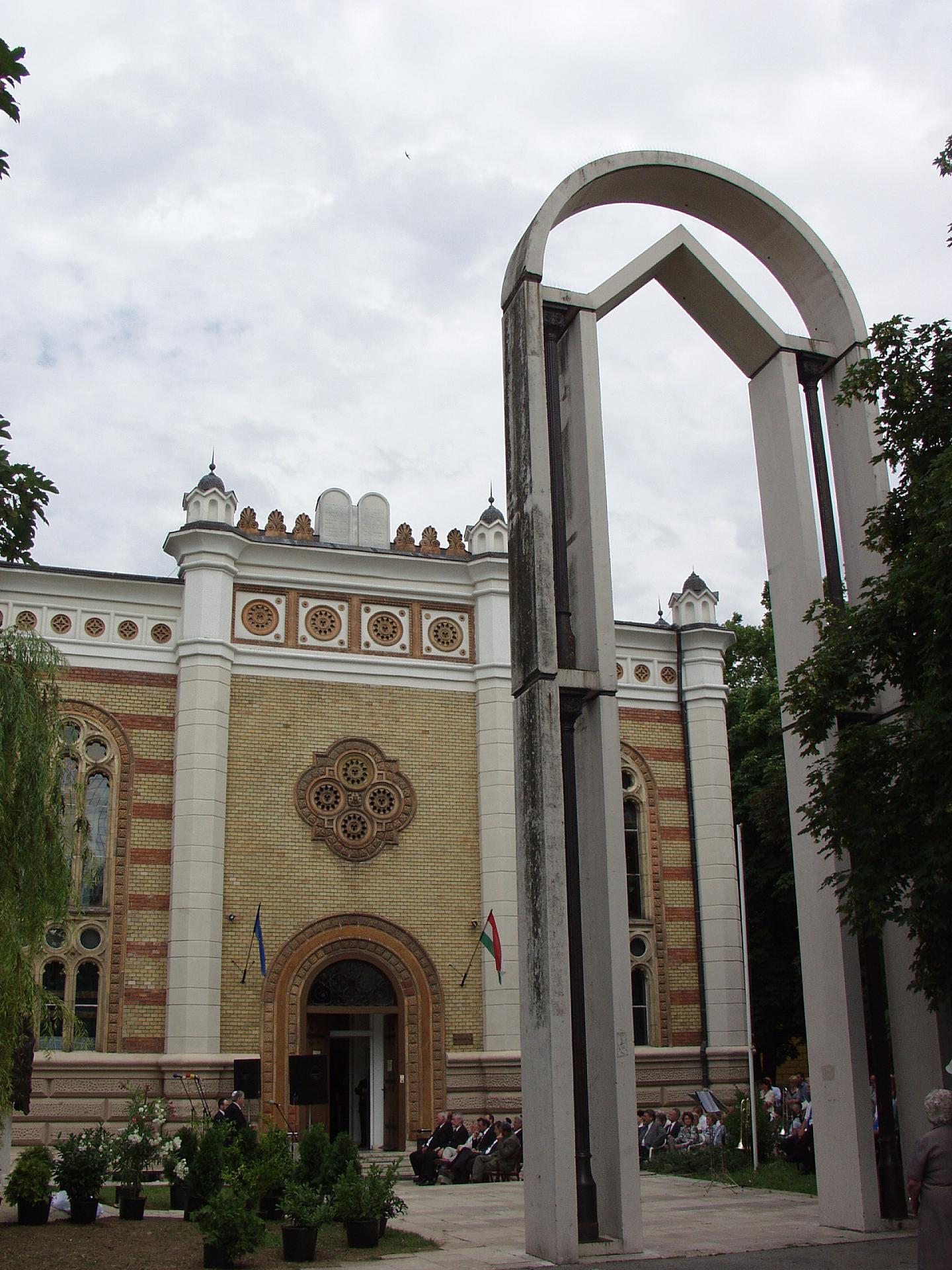
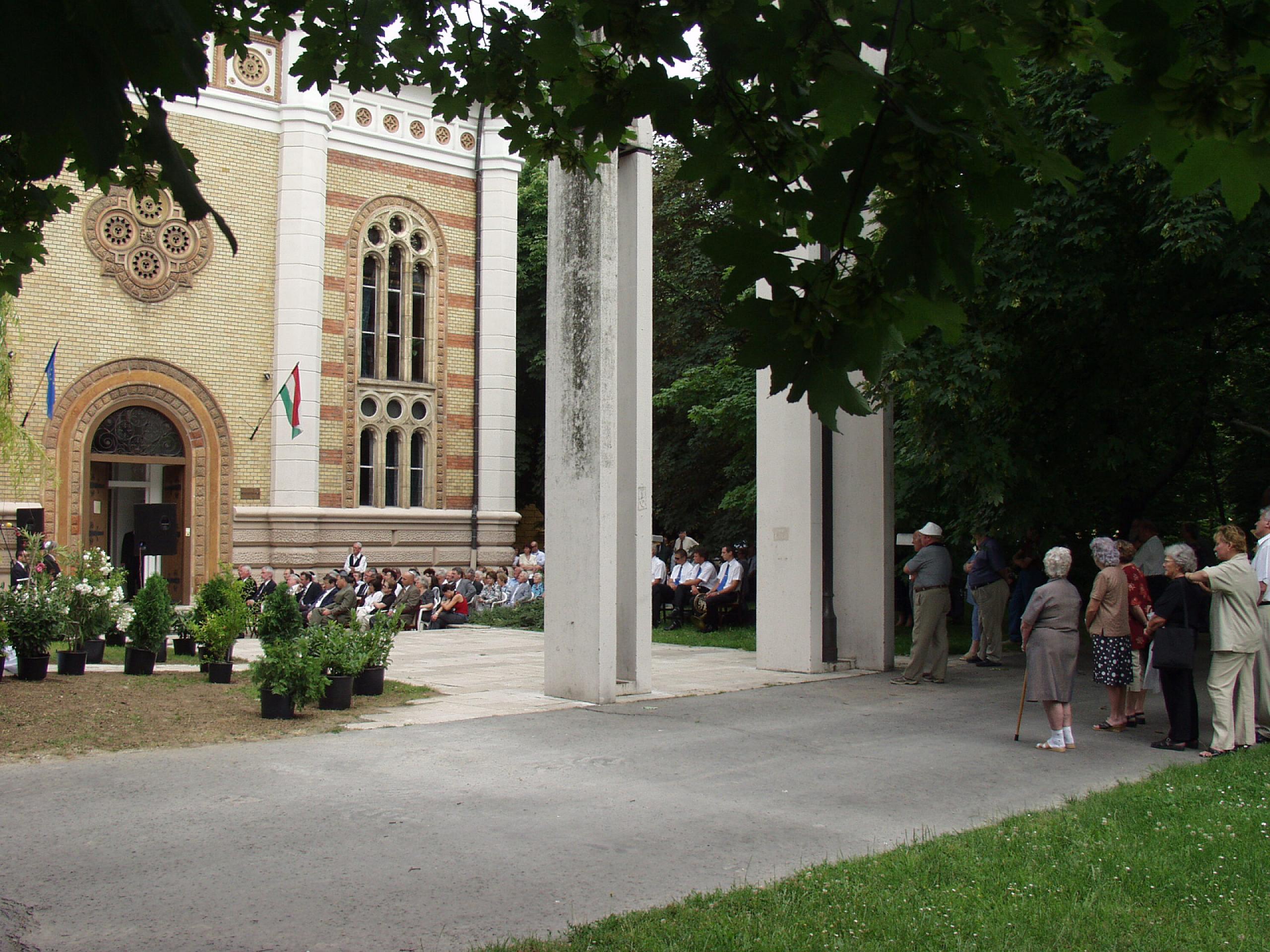
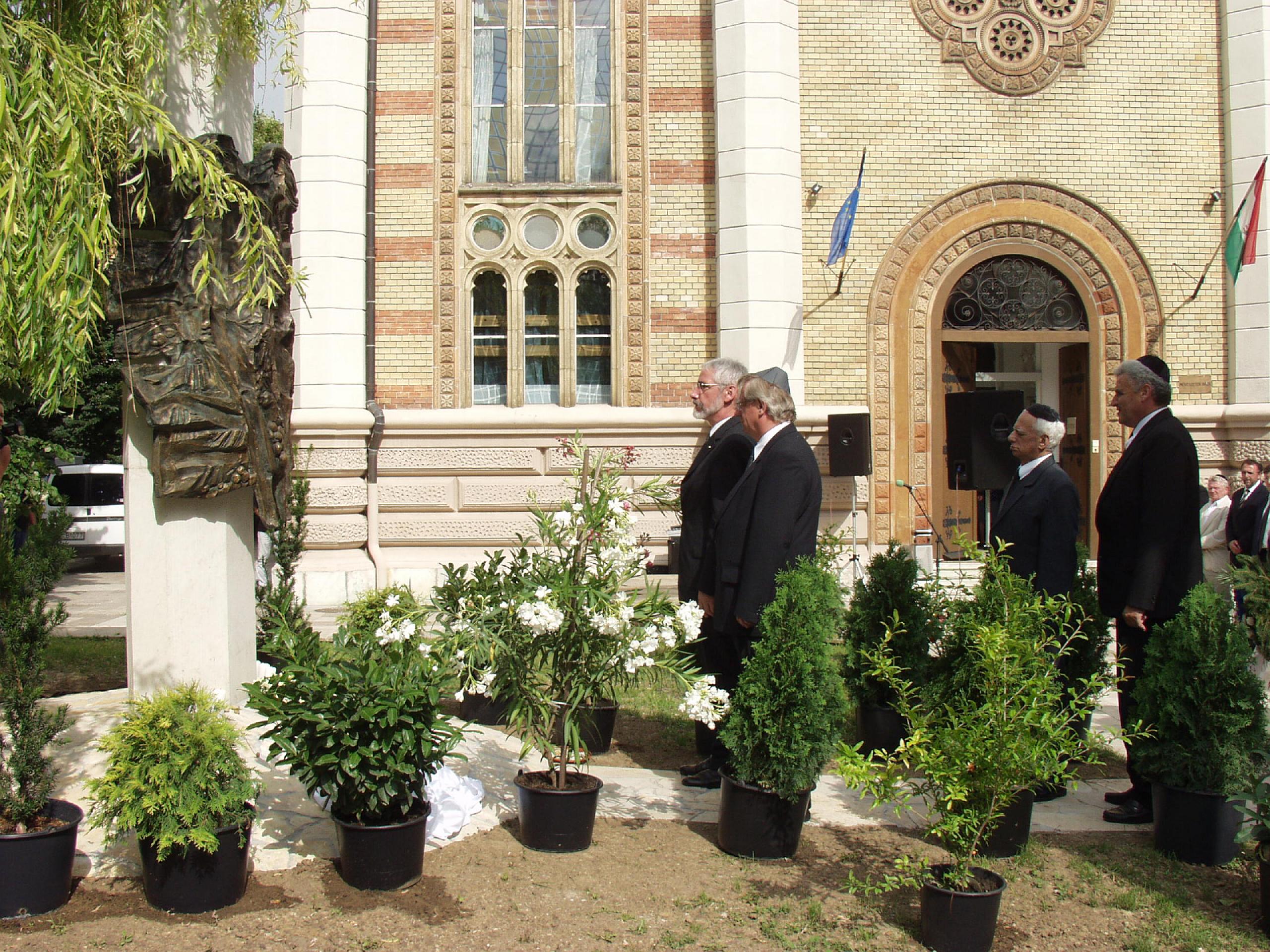
In 2004, a memorial was dedicated to the murdered Jews of Szekszárd in front of the former Szekszárd synagogue.
History
Szekszárd, population 33,000, is the capital of the Tolna county in south Hungary. The Szekszárd Jewish community was established in the first half of the 19th Century. In 1869, it became part of the Neolog movement in Judaism. In 1882, when the Hungarian public was gripped by a wave of anti-Semitism following a supposed ritual murder of a Christian girl in the village of Tiszaeszlár, an angry mob looted Jewish shops in Szekszárd.
The Great Synagogue was consecrated in 1897. Most of the town's several hundred Jews were assimilated. In 1941, there were 510 residents of Szekszárd who were deemed Jewish according to the Hungarian anti-Jewish legislation, about 3.5 percent of the population. Already in 1940, Jewish men were drafted for forced labour for the Hungarian army. A camp for the forced labourers was established in the town; later, they were transferred to the eastern front. Only few survived – according to eye-witness accounts, some were beaten to death by Hungarian soldiers.
On March 20, 1944, one day after the German Wehrmacht occupied Hungary, a »Judenrat« - Jewish council - was installed in Szekszárd. At the same time, the expropriation of Jewish property began. Already that spring, 15 Jews were deported to the Mauthausen concentration camp. Since the mayor of Szekszárd was opposed to the idea of establishing a ghetto in his town, about 380 Jews from Szekszárd were forcibly resettled to ghettos in the region. The Hungarian authorities and the German SS deported them from there to the Auschwitz-Birkenau extermination camp at the beginning of July 1944.
Victims
The exact number of victims is not known.
Following defeat in the First World War and the collapse of the Austro-Hungarian Empire, Hungary had to surrender two thirds of its territory and sixty percent of its population to its neighbours in 1920. The trauma caused by these losses led Hungary, under the leadership of Miklós Horthy (1868–1957), to gradually ally itself with Nazi Germany from 1937 onwards. Between 1938 and 1941 Hungary managed to almost double its territory in several stages of border revisions. Faced with the advance of the Red Army the country began to distanc itself from Nazi Germany and was therefore occupied by the Wehrmacht in March 1944. Miklós Horthy retained his position as head of state. Almost immediately after the invasion and with the assistance of Hungarian authorities, the SS began to deport Jews to the Auschwitz extermination camp, something that Hungary had refused to do up to then, despite having introduced anti-Jewish legislation. Of the 825,000 Jews from »Greater Hungary« the number murdered in Auschwitz stands at way over half a million. Up to 300,000 of these Jews came from the regions of what is today’s Hungary. In addition, around 140,000 soldiers along with some 170,000 non-Jewish civilians perished during the Second World War.
After 1945 Hungary was in the Soviet sphere of influence. Up to 1989, official commemorations in Hungary did not remember the war but rather its end as the »liberation from fascism«. However, for the majority of the population 1945 was the start of a long period of repression. For many Hungarians, memory of the national uprising in 1956 that was crushed by the Soviets overshadows that of the Second World War. Following the uprising the war was viewed as the inglorious prelude to the suffering under communist rule. At the same time, there were many state monuments celebrating »Hungarian-Soviet friendship«. During the communist period there was no official remembrance of those who had died during the war on the front, at home and during the genocide, nor were there any Holocaust memorial sites outside of Jewish institutions. The only related site was the Jewish Museum in Budapest, founded in 1932 and reopened in 1947. In 1985 the Jewish community in Budapest opened a »Raoul Wallenberg Memorial Park« alongside the large synagogue located on the edge of the former ghetto. A state monument to Raoul Wallenberg (*1912–?) was inaugurated in 1987 in connection with a visit by the communist head of state János Kádár (1912–1989) to Sweden. Wallenberg, a Swedish diplomat, saved thousands of Budapest Jews. He was deported by the Soviet occupation force in 1945 and since then has been missing, presumed dead. This monument marked a turnaround in the decades of silence regarding the Holocaust. Only since the new millennium have numerous Holocaust memorials and memorial sites emerged in Hungary. These include the »Shoes on the Danube Promenade« in Budapest, inaugurated on 16 April 2005, the date of the Hungarian Holocaust Remembrance Day introduced in 2000. This memorial remembers the murder of up to 20,000 Jews from the Budapest ghetto in January 1945 by the »Arrow Cross«, a right-wing extremist party that had assumed power in Hungary on 15 October 1944. A national Holocaust Museum was opened in the capital in 2004. However, there are still very few memorials to other victims. Symptomatic of the way in which post-communist Hungary has dealt with its 20th century past is the fiercely debated »House of Terror«, opened in the centre of Budapest in 2002, which deals with the history of »both totalitarian dictatorships«. The involvement of Hungarians in the deportation of their fellow Jewish citizens often recedes into the background.
Remembrance
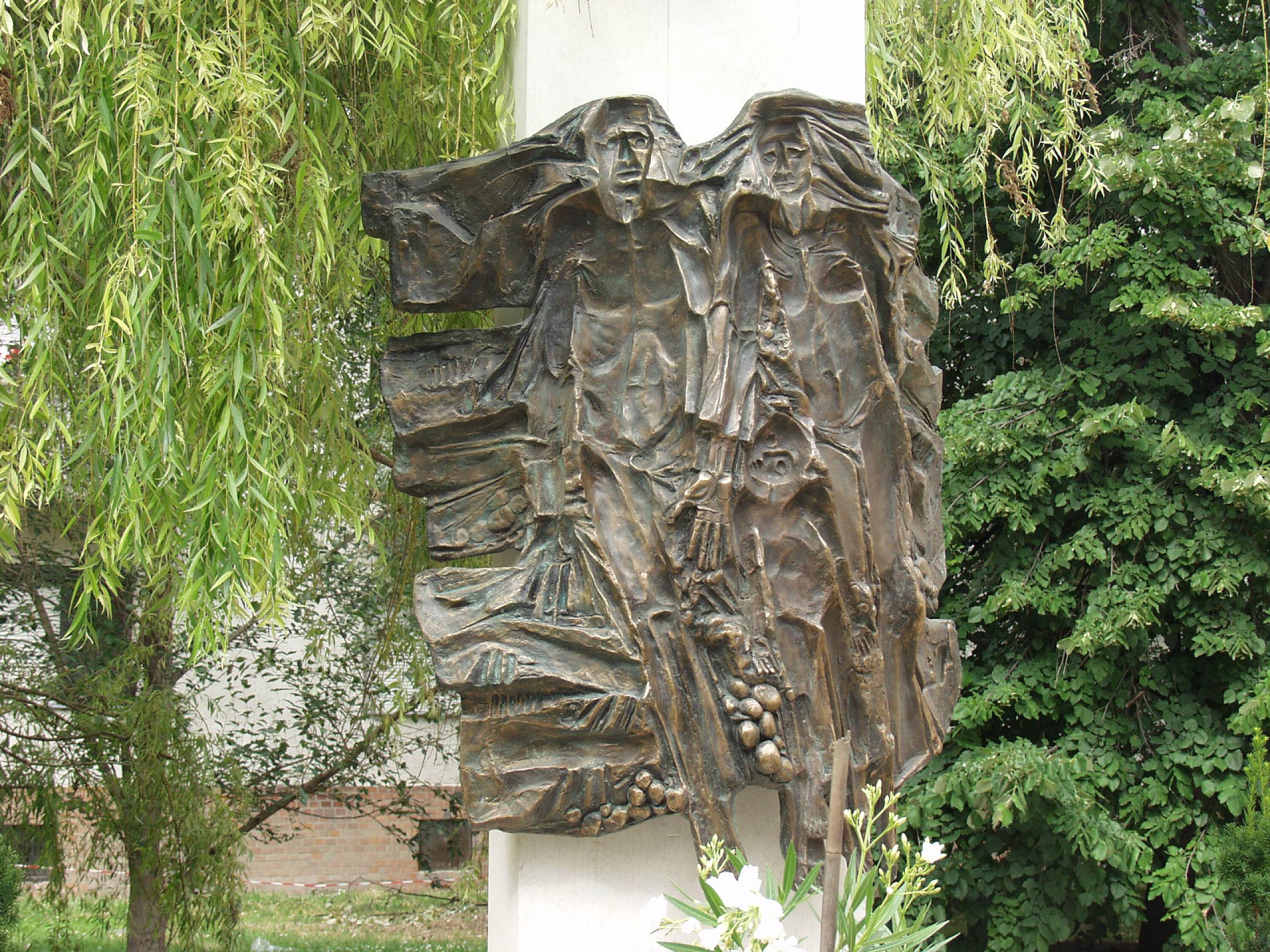
In 1949, the Jewish community of Szekszárd had 121 members, yet in the following years it shrank significantly. The synagogue became derelict. In 1971, the municipal council purchased the building. After many years of renovation, the building was reopened in 1984 as a »House of the Arts«. In 2004, 60 years after the deportations, a Holocaust memorial was dedicated on the square in front of the former synagogue. Designed by Hungarian sculptor László Szatmári Juhos, the memorial consists of a white concrete stele, affixed to it is a bronze negative relief portraying a family with expressive traits.