The Holocaust Exhibition at the Imperial War Museum
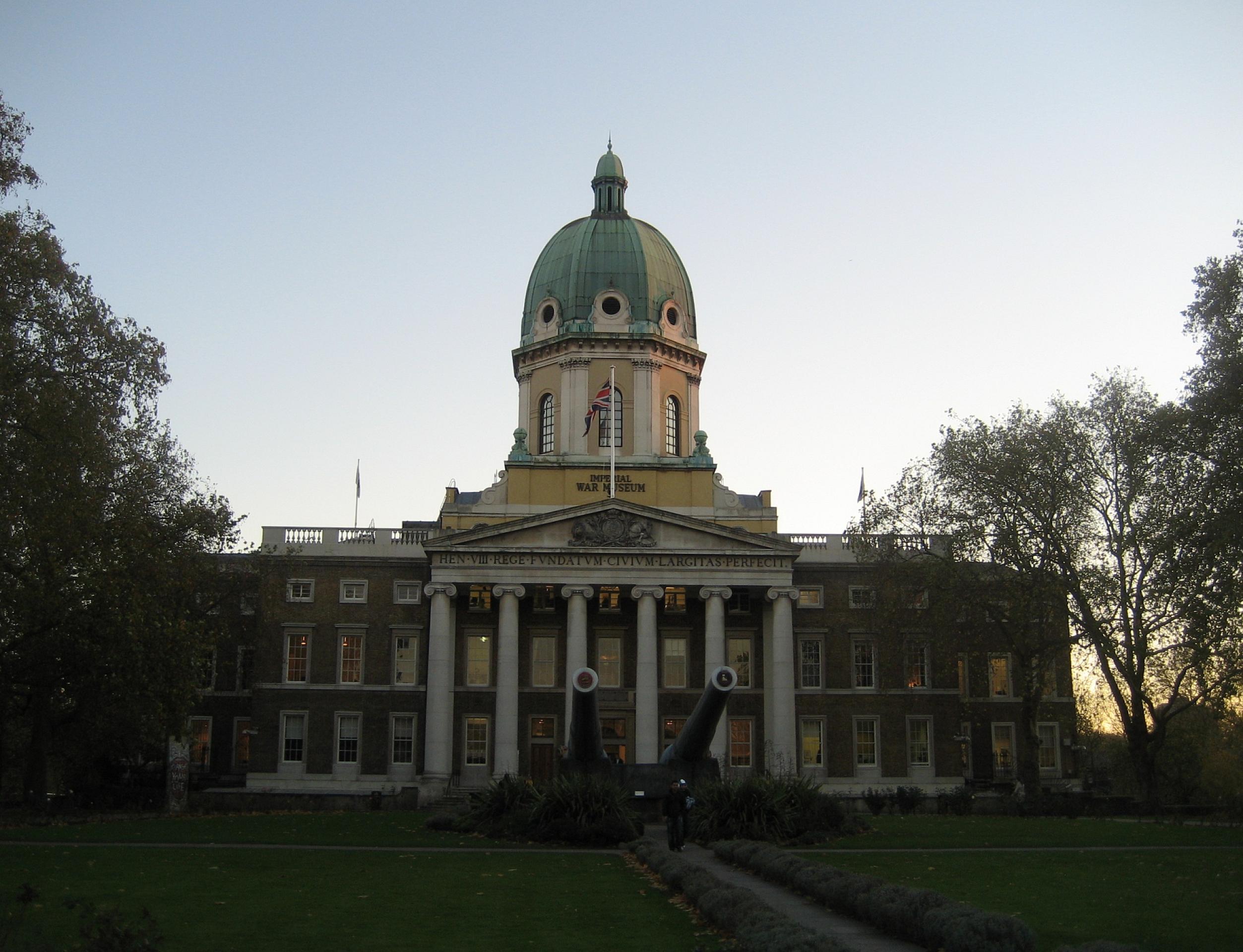
The Imperial War Museum London has since 2000 displayed a large Holocaust exhibition. It is Great Britain's most important national display on this topic.
History
In 1917, while the First World War was still being fought, the British government decided to begin collecting material for a later exhibition on the war. In 1920, the Imperial War Museum was officially established by the British parliament. Initially housed at various locations, it moved to its present seat in 1936. Since its establishment, the museum has aimed to not only present uniforms and military equipment, but to deal with the way in which war affects lives.
The collection was moved to a location outside of London during the Battle of Britain in 1940. In 1946, the museum was reopened and extended to include artefacts related to World War II. In 1953, it was decided that the museum would deal with all armed conflicts in which Great Britain and states of the Commonwealth had participated in recent history.
In 2000, Queen Elizabeth II opened the permanent exhibition on the Holocaust.
Victims
The exhibition aims to present extensive information about the Holocaust. It is therefore dedicated to the up to six million murdered Jews of Europe.
Contemporary British identity is largely based on the history of the country during the Second World War. Great Britain (excluding the Channel Islands) was the only European opponent of the Third Reich not to be occupied by the Wehrmacht. As a victorious power, the UK played a decisive role in the post-war reconfiguration of Europe. Memory of the war continues to centre on military and moral self-assertion. This form of memory is symbolised by the conservative Prime Minister Winston Churchill (1874–1965), who came into office in 1940. Churchill’s speeches succeeded in creating a spirit of optimism despite the severe losses suffered by the civilian population as a result of German bombing raids. The city of Coventry is representative of the destruction but also the post-war initiatives to achieve reconciliation with the Germans. A key feature of the British war effort was the joint deployment of various population groups on the »Home Front«. For example, the aristocracy opened their estates to city children and the royal family visited bombing victims. The »Labour Party« also appealed to community spirit in its post-war election campaign in 1945 and indeed succeeded in ousting Churchill from power. With its new education and welfare laws, Labour built the foundations of a phase of social peace following the principle of equal opportunities and equality. This attitude characterised a culture of memory unique in Europe in the early post-war years. As early as 1944, a survey concluded that projects to build monuments for the victims of the Second World War should »benefit or bring joy to the survivors«. Thus a swimming pool in Wales became an official memorial and in Eastbourne six houses were established for disabled servicemen and their families.
Forms of memory have since changed in Great Britain. Following the severe economic crisis of the 1970s the Conservative Prime Minister Margaret Thatcher (1925–2013) adopted a radically different political course and also changed British attitudes to their past. »Efficiency« became a key term. Entrepreneurial spirit was to make itself felt, even in the area of culture, and history was to become a consumer product. Indeed the burgeoning »history industry« also concerned the Second World War, as demonstrated by the range of items in many museum shops.
In subsequent years, memory of the war increased further through the commemoration of the Allied landings in Normandy in 1944 and victory in 1945, but also through many films and television series. This was coupled with increased memory of the Holocaust, which had been almost completely blocked out until the 1960s, even though many refugees had fled persecution to settle in Britain. In 2000 Queen Elizabeth II (1926–2022) opened a permanent exhibition on the murder of European Jews in the »Imperial War Museum«, the national war and military museum in London. This exhibition provides a detailed account of the crimes. On the initiative of the conservative government of David Cameron, a new UK Holocaust Memorial is to be built in London near the House of Parliament until the middle of the 2020s.
Remembrance
There are branches of the Imperial War Museum in several other cities. The main seat is located in a former hospital building in London. One of the most visited museums in Great Britain, it contains several permanent exhibitions, most prominently dealing with the British involvement in the two world wars. The permanent and temporary exhibitions concentrate less on purely military aspects of warfare than on the human side of war - this includes art exhibits.
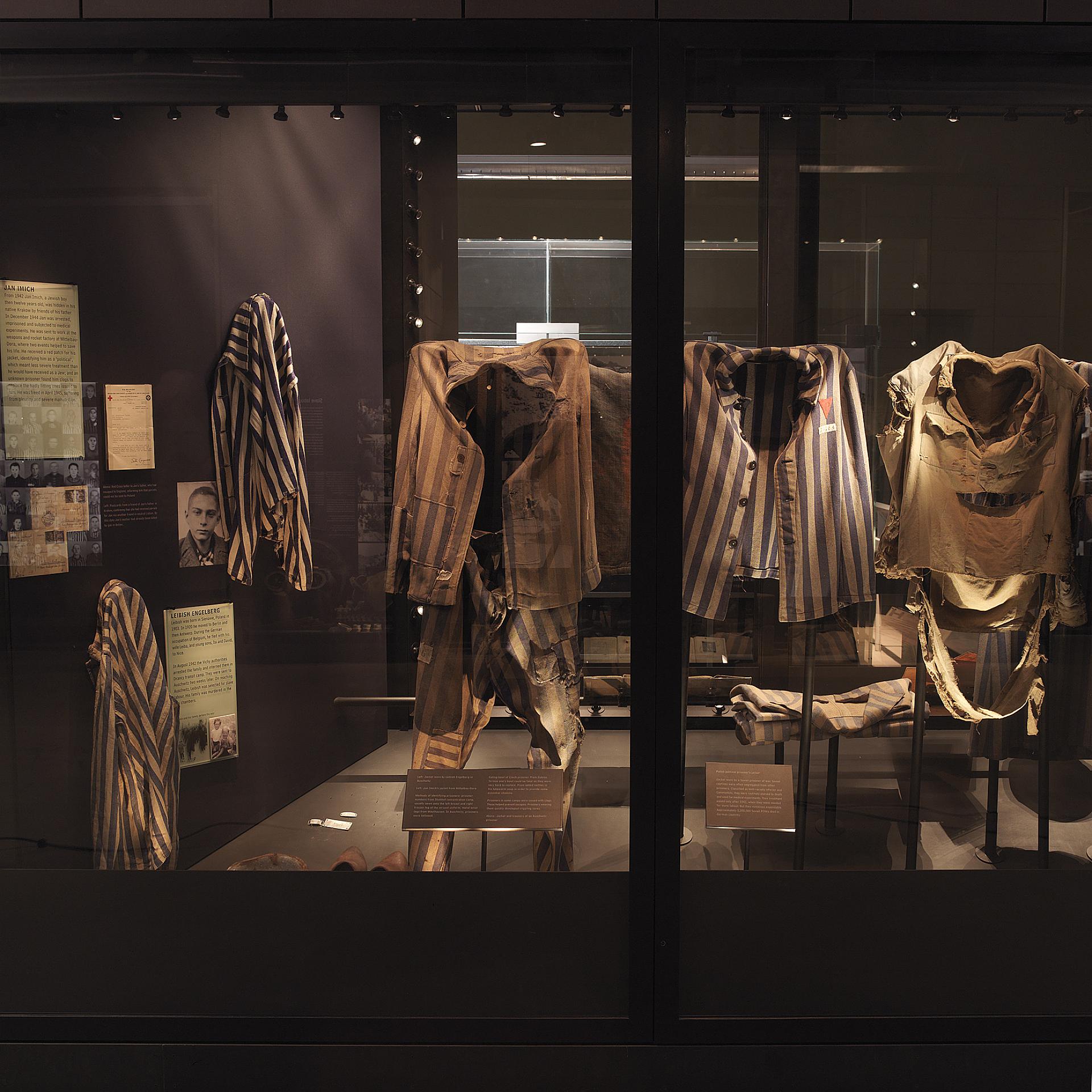
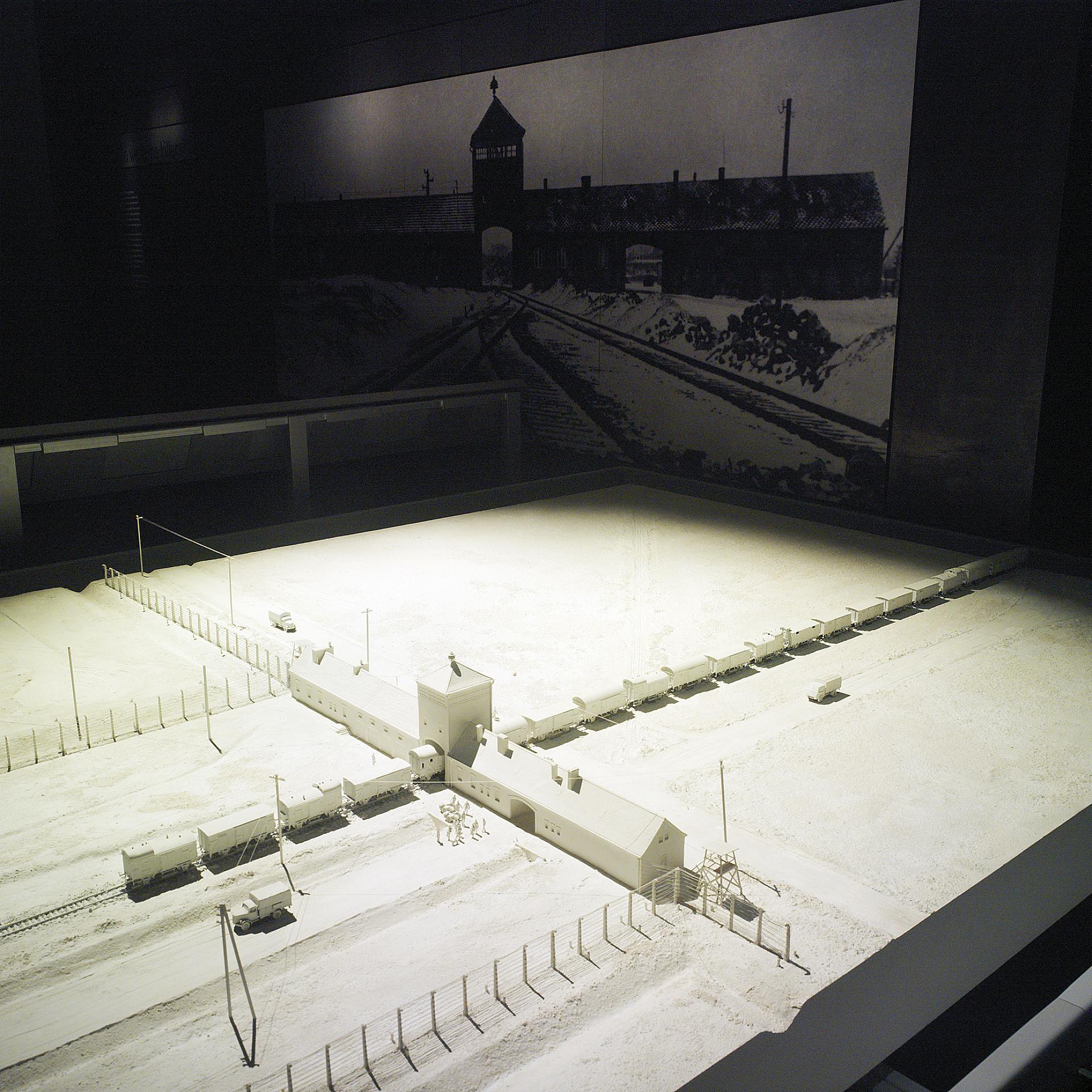
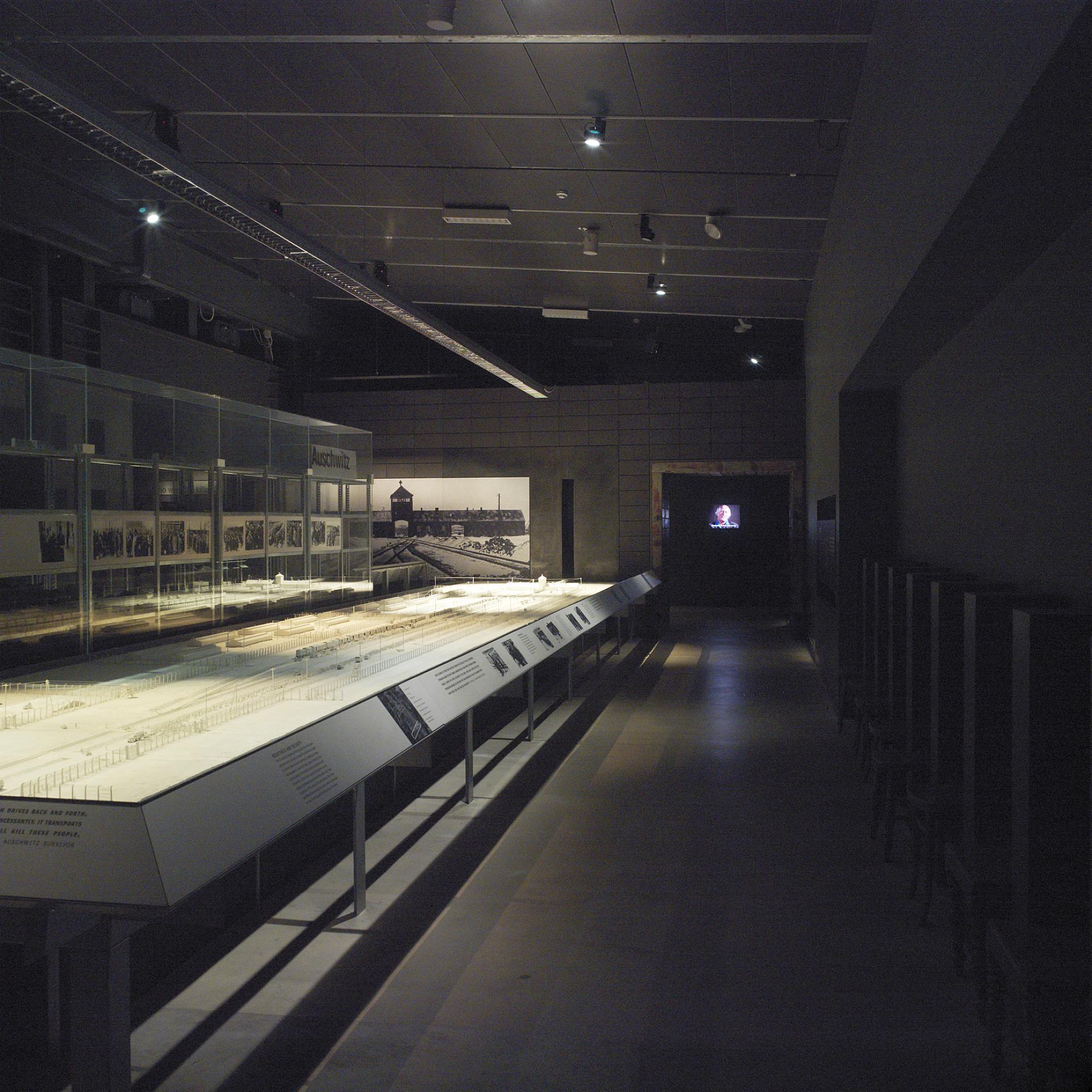
The museum had been planning a Holocaust exhibition since 1989, however, this only became possible after the main building had been extended. The extensive exhibition outlines the causes of the National Socialist genocide starting with the beginnings of the NSDAP and its anti-Semitic propaganda in the 1920s. Various artefacts are used to illustrate the presentation on the genocide, such as prisoners' utensils from concentration camps or a pushcart used to transport the dead in the Warsaw Ghetto. The exhibition also contains a model of the Auschwitz-Birkenau death camp. The last section is dedicated to survivors and their testimonies. Next to the genocide of the Jews, the exhibition also deals with the persecution of other victim groups under National Socialism.
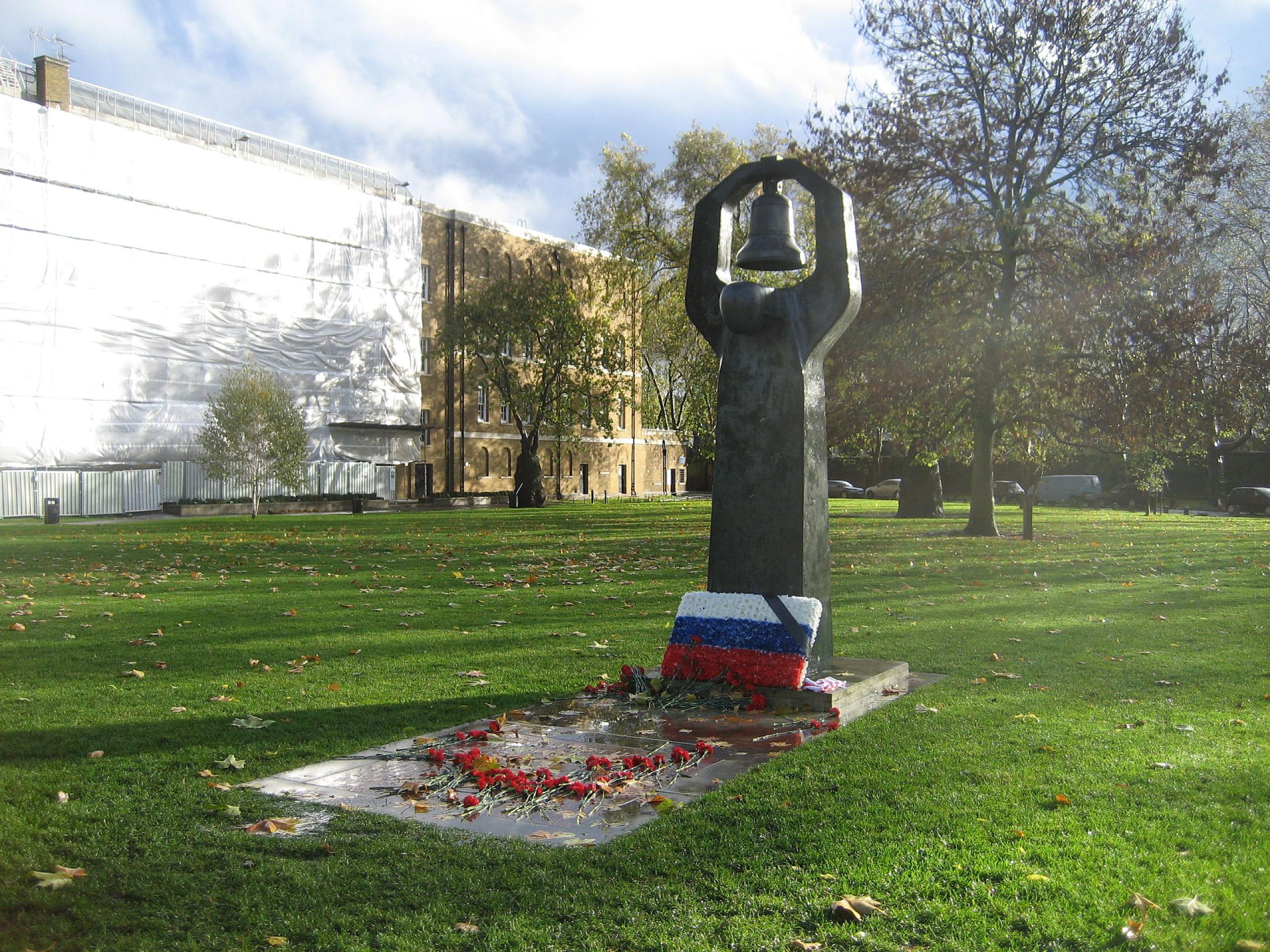
In 1999, a memorial was dedicated in the park of the Imperial War Museum to the approximately 27 million Soviet citizens who perished during World War II. This is the only memorial of its kind in Great Britain.
Possibilities
Educational tours and seminars for school groups, professional development seminars for teachers