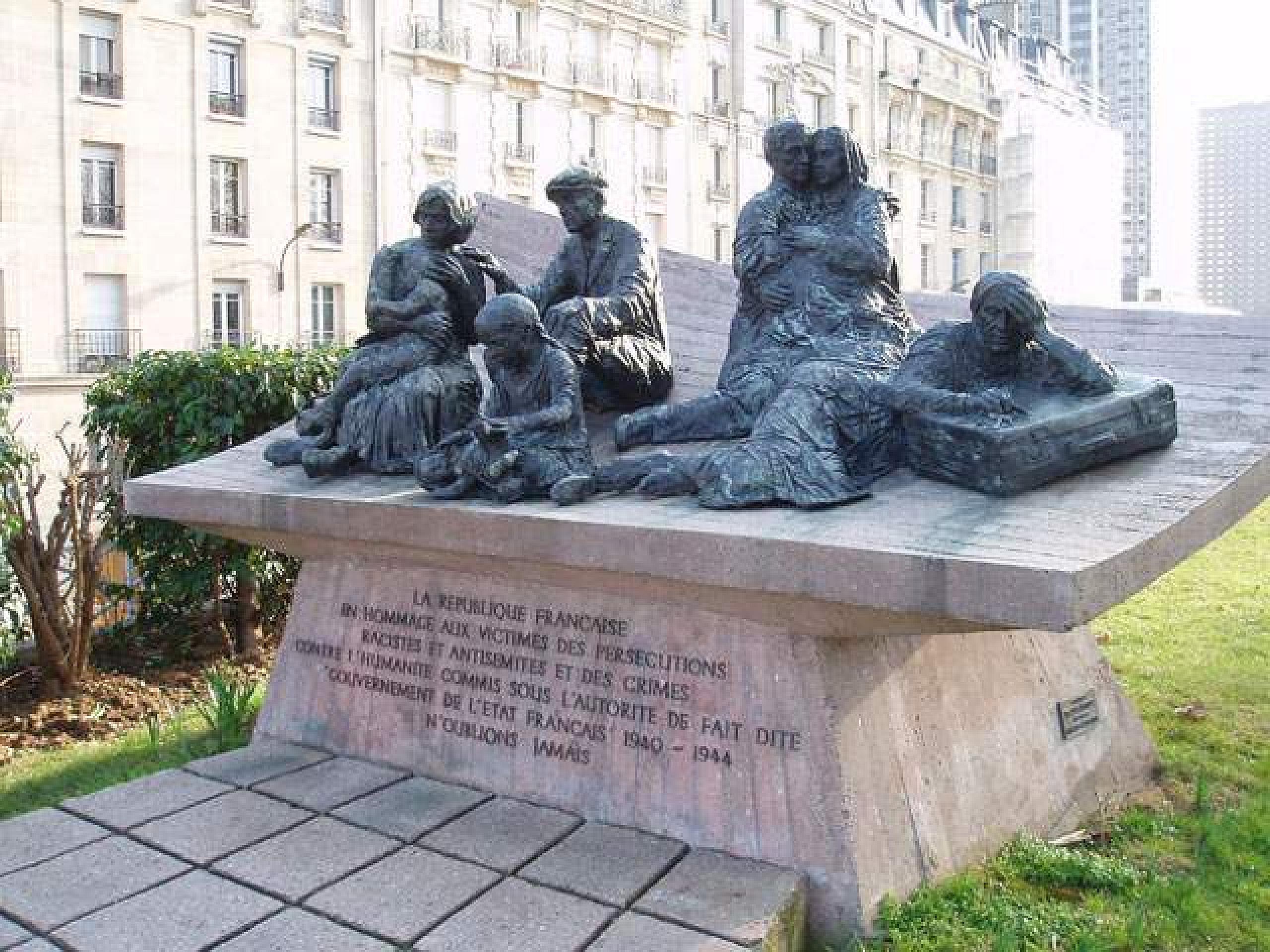
Several memorials, including a group of sculptures dedicated in 1994, serve as reminders of the internment of several thousand Jewish men, women and children at the Vélodrome d'Hiver (abbreviated as: »Vél d'hiv'«) cycling arena in the Parisian city centre near the Eiffel tower in July 1942. The internees were later deported by the SS via transit camps to the Auschwitz extermination camp in occupied Poland. The date of the beginning of the internment, July 16, 1942, now marks a significant date in the French culture of remembrance.
History
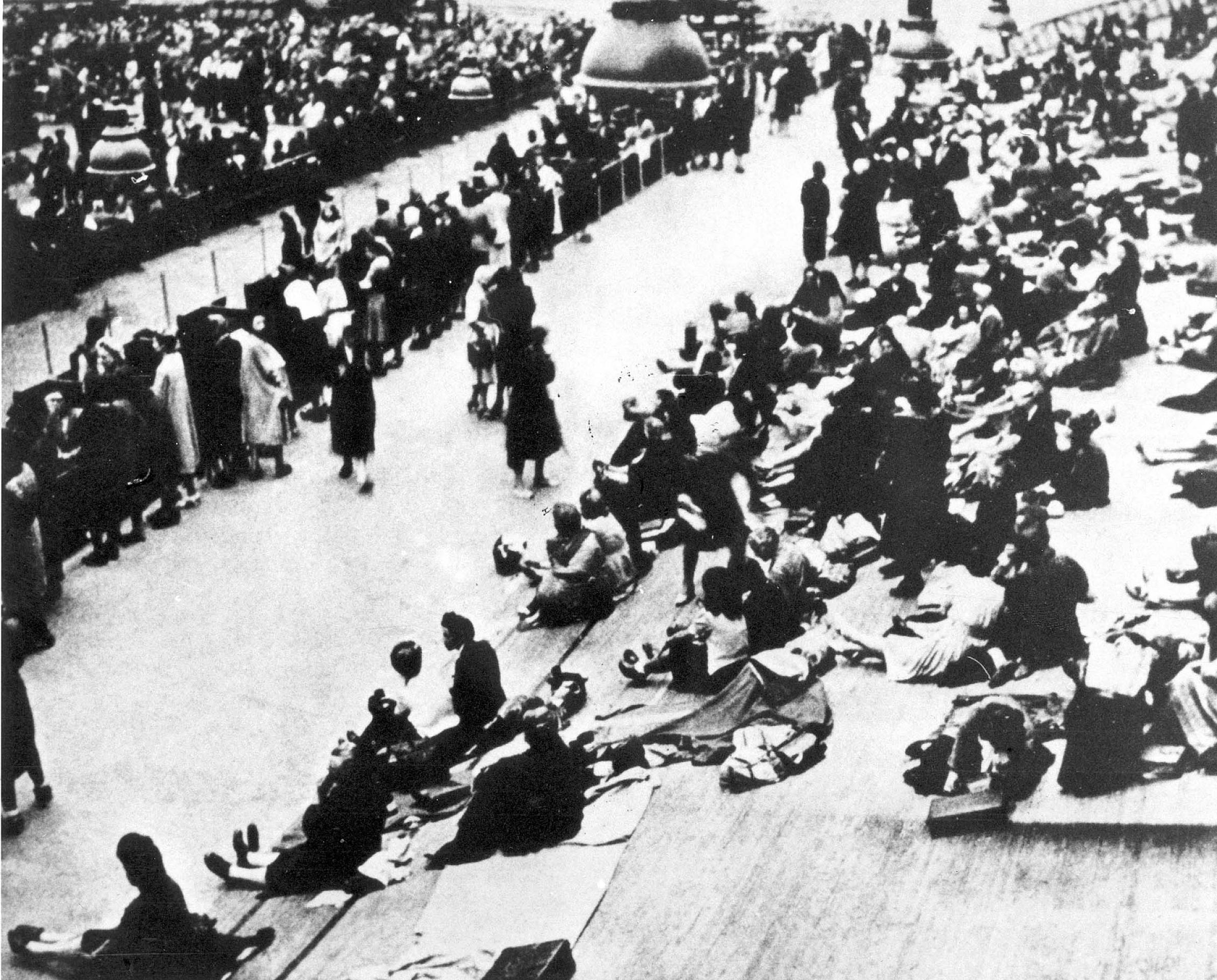
Northern France came under German occupation following the defeat of the French army in June 1940. The south remained unoccupied for the time being, instead being administered by the Vichy Regime, which was an ally of Germany. The Vichy government had thousands of people interned in camps – mainly Jewish and non-Jewish foreigners. On the basis of the »statute on Jews«, which was released in October 1940, Jews were ostracised, both in the occupied and the unoccupied parts of France. A further statute followed in June 1941. The French authorities supported the decision of the German occupying regime to continue to sharpen its anti-Jewish policies. In Paris, the police carried out its first round-up of Jews at the instance of the Gestapo already in May 1941. 3,700 foreign Jews were interned in camps. In August 1941, French police and German military police arrested 4,300 more French Jews and Jewish refugees. In March 1942, the deportation of the interned Jews to the Auschwitz extermination camp began. In mid-July 1942, Gestapo and French police arrested 13,000 Jews – the authorities had initially wanted to arrest 28,000, but apparently many of the Jews had been warned and could escape the raid. Two thirds of those arrested were gathered at the Vélodrôme d’Hiver cycling area and held there for several days without any provisions. They were eventually taken to the Beaune-la-Rolande and Pithiviers camps, from where they were later deported to Auschwitz.
Victims
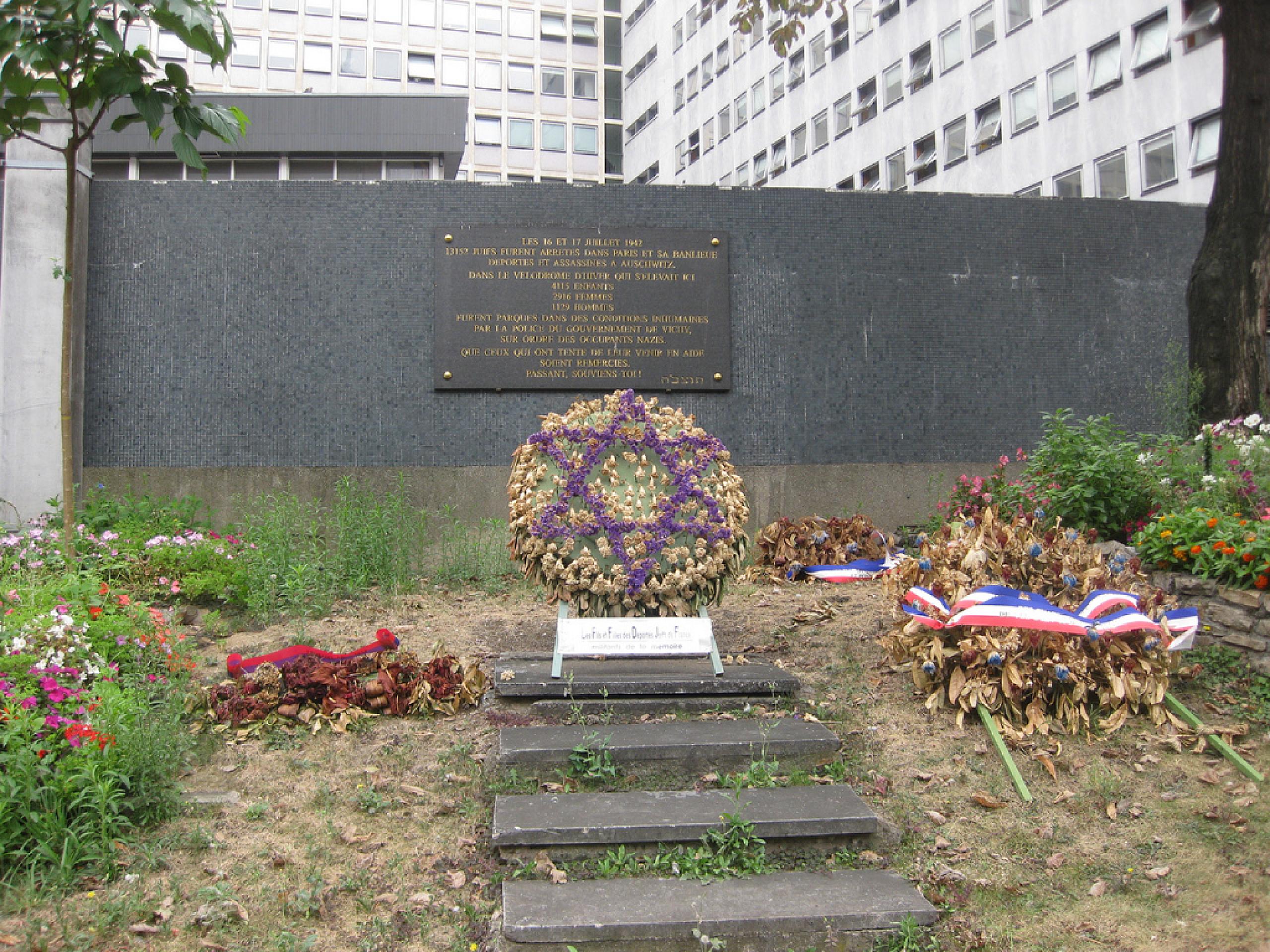
On July 16 and 17, 1942, the French police arrested 12,884 Jewish children, women and men at the instance of the Gestapo. Until July 20, the number of people arrested rose to 13,152, including 4,115 children. Single people and childless married couples were deported to the Drancy transit camp; all others, over 8,000 people, were held at the »Vélodrome d'Hiver« in inhumane conditions. After up to six days at the cycling arena, they were deported to the Auschwitz death camp via other transit camps. A total of 76,000 Jews deported from France perished in German extermination camps in occupied Poland.
Remembrance
The »Vélodrome d'Hiver« was built in 1889 as part of the World Fair complex. It was used as a cycling arena from 1903 on, and as a venue for other events from 1910 on. Already a few weeks after being used as an internment camp, the arena was again used for competitions. After the end of the German occupation, Frenchmen accused of having collaborated with the Germans were interned at the area for a short period. The »Vélodrome« was torn down in 1959.
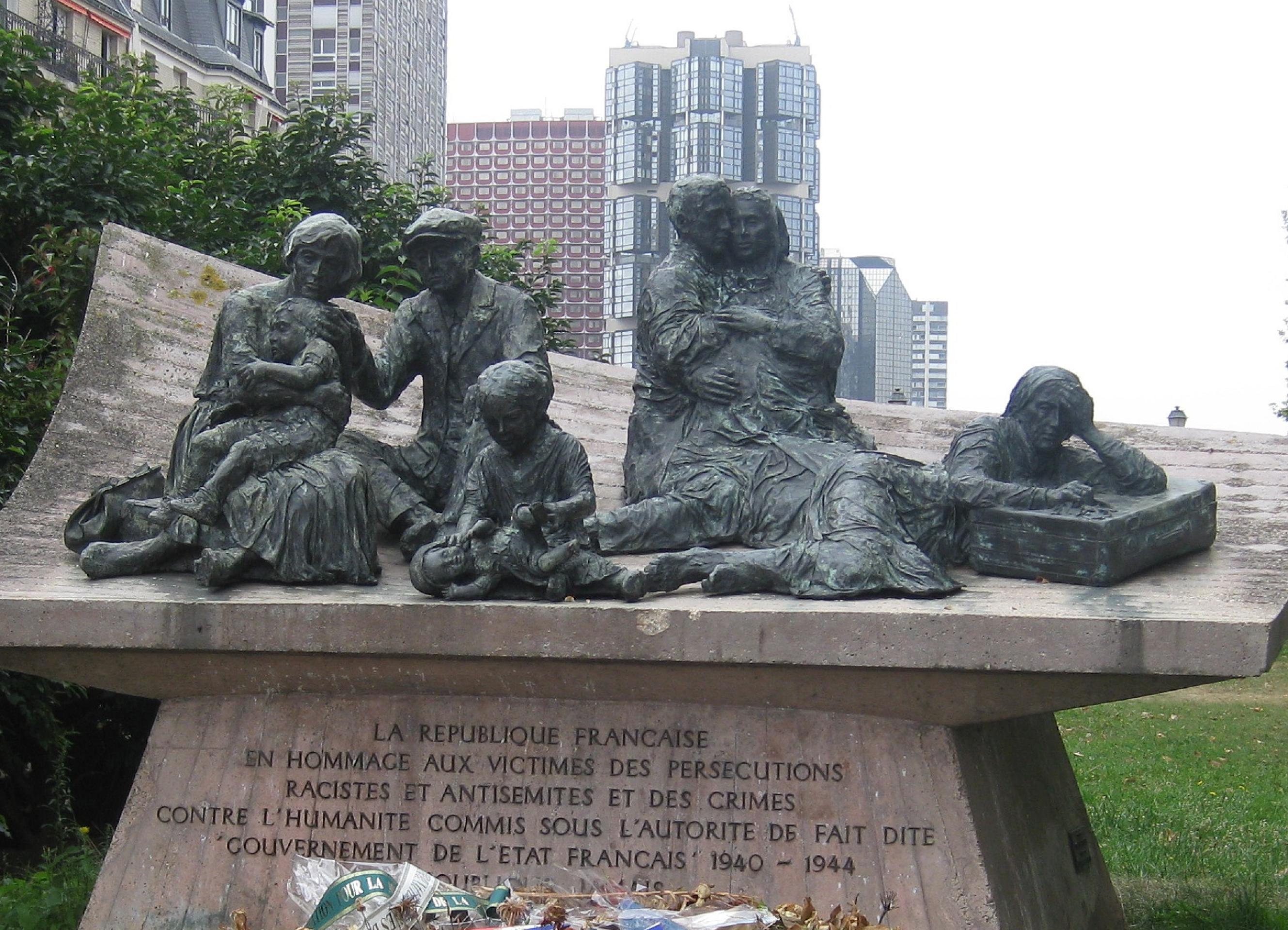
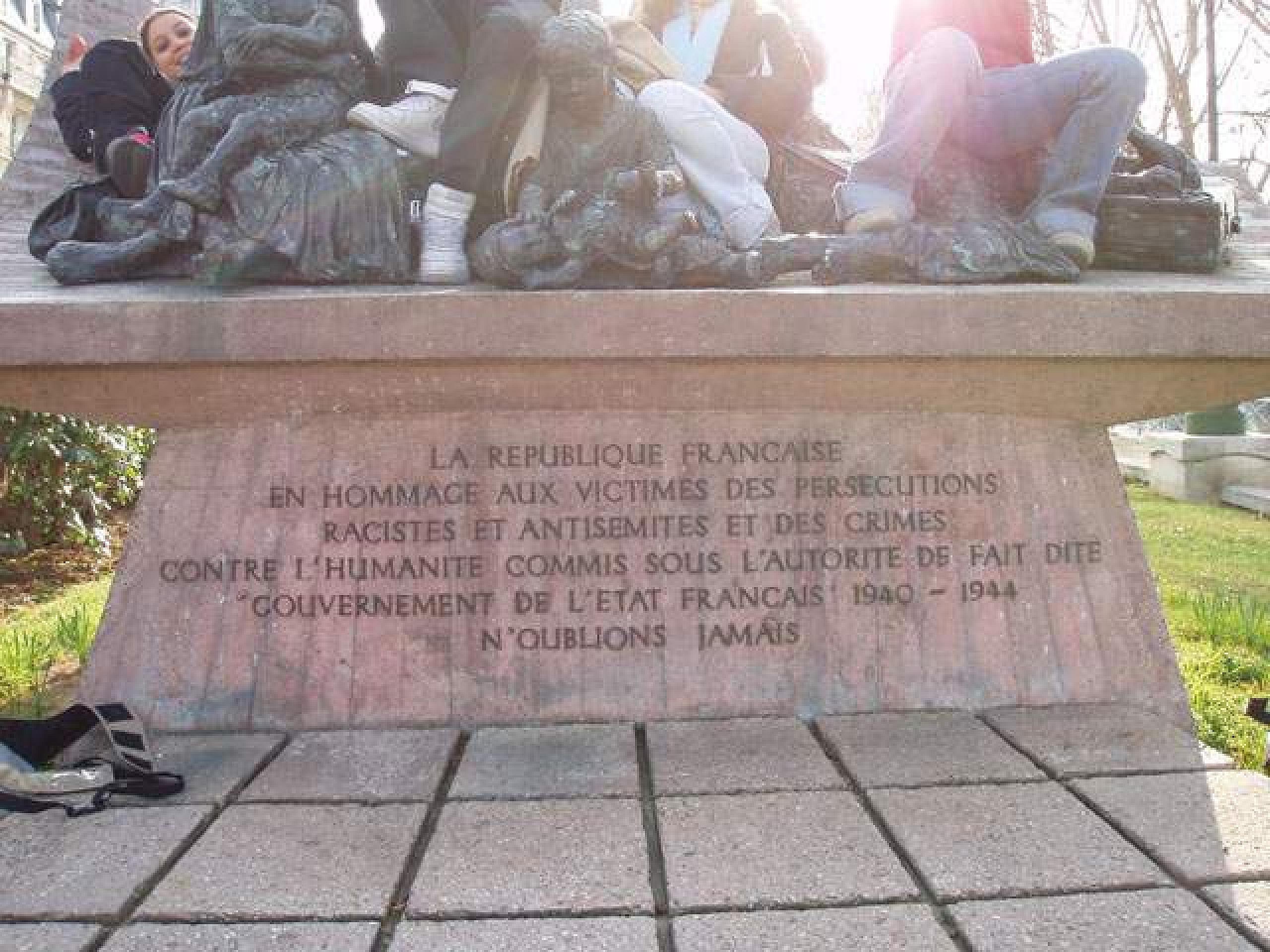
A memorial plaque commemorated the internment of thousands of Jews at the site since 1946; the plaque disappeared when the arena was torn down in 1959. Today, one of the departments of the ministry of interior is located on the site. A new memorial plaque was only set up in 1986. The inscription on the plaque gives the number of internees, stating that the »police of the Vichy Regime« was responsible for the round-up, having acted at the instance of the National Socialist occupying forces. Also in 1986, a nearby street crossing was renamed »Square to the Jewish martyrs of the Vélodrome d'Hiver«. In 1992, French president Mitterand laid a wreath at the historic site, yet he refused to take responsibility for the crimes of the Vichy Regime in the name of the French republic, as had been demanded by the »Comité Vél d'Hiv 42« citizens' initiative. In 1993, Mitterand decreed July 16 (the first day of the round-up in 1942) the »national memorial day to racist and anti-Semitic persecution«, which would be celebrated on the following Sunday each year. On July 17, 1994, Mitterand unveiled a monument to the deportees by sculptor Walter Spitzer on the nearby Quai de Grenelle. It depicts a group of seven figures crouched on the ground. The following year, on July 16, 1995, the incumbent French president Jacques Chirac conceded France's »timeless guilt« towards the 76,000 Jews who were deported from the country and murdered.
Open
The public memorial plaque and the memorial can be viewed at all times.
Contact
Ecke Rue Nélanton/Rue du Docteur Finlay
75015 Paris