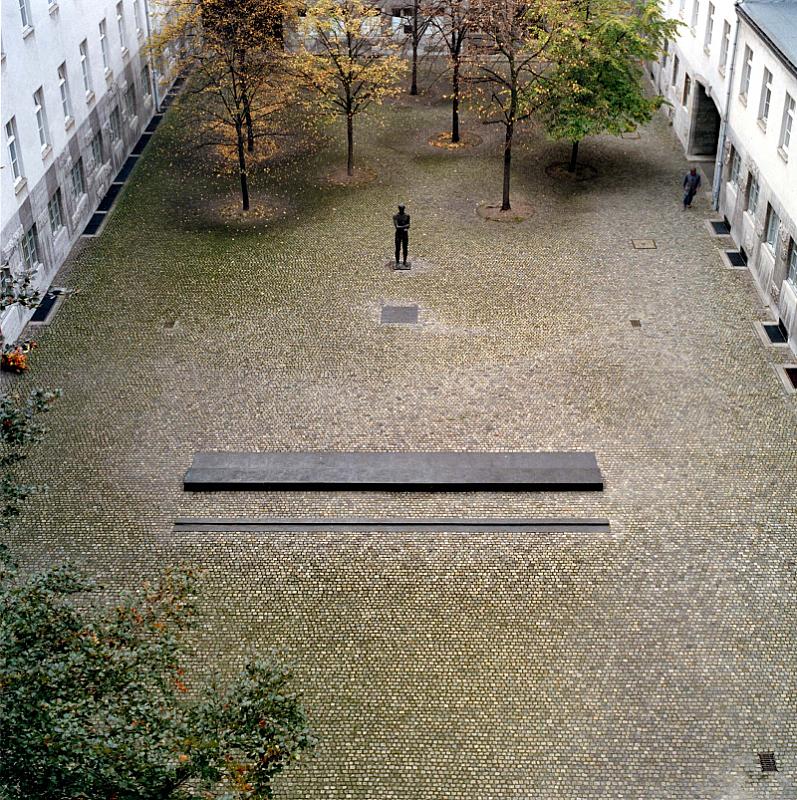
Since 1998, a memorial commemorates the three Nazi camps that existed in Haslach in 1944/45 and the fate of the victims.
History
At the beginning of the 20th century, deposits of amphibolite rock were discovered near Haslach, which is mainly used in road and railway construction. In the course of mining from 1911 onwards, numerous tunnels were driven through the rock mass, some of them several hundred metres long.
In 1944, when the Allies regularly flew missions against German targets, the German leadership tried to relocate armaments production underground. Prisoners of war, forced labourers and concentration camp prisoners were used as labourers to an extent never seen before. At the same time, the front came closer and closer after the Allied invasion of France in the summer of 1944, so that the Natzweiler-Struthof and Schirmeck-Vorbruck camps in Alsace were evacuated.
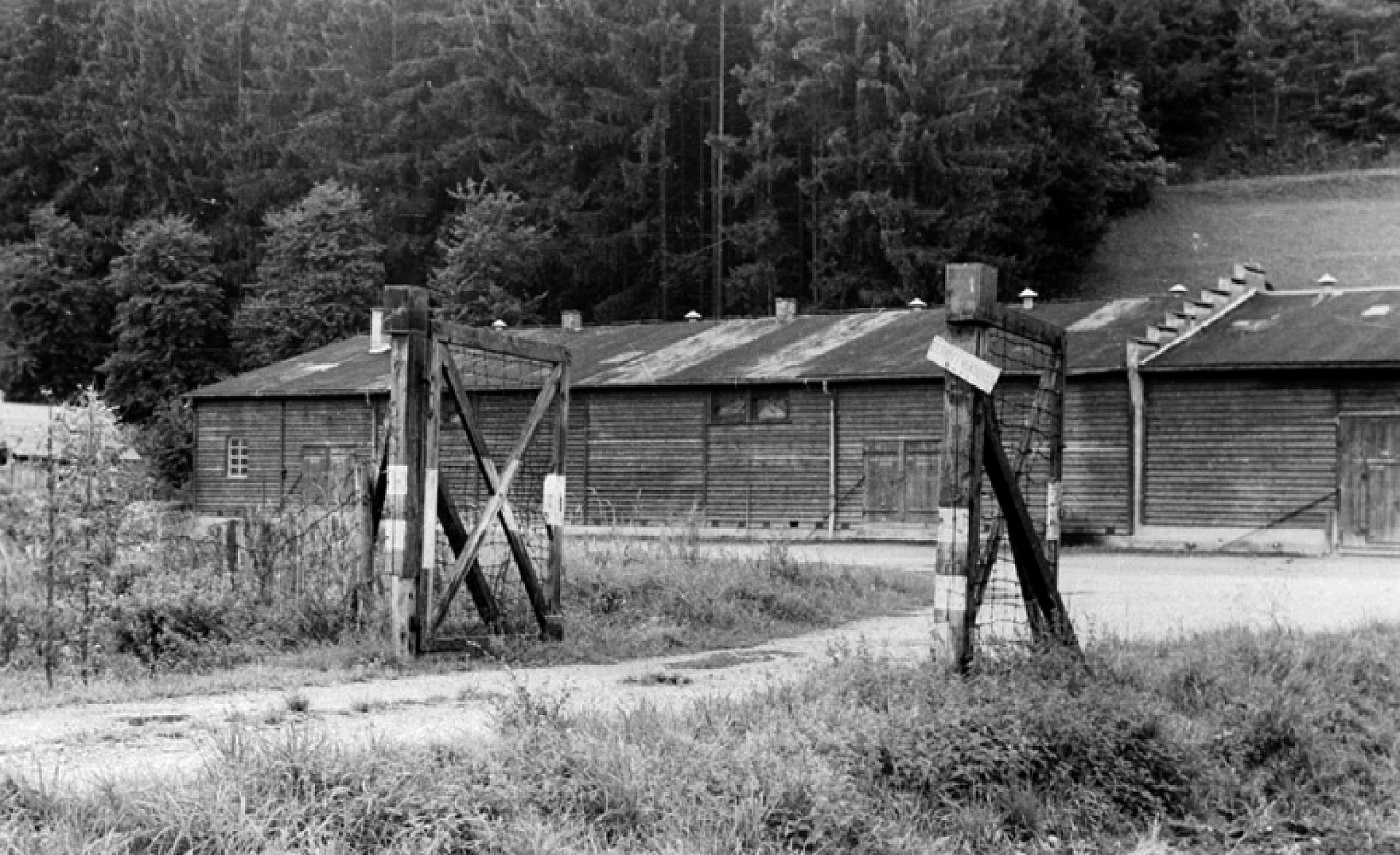
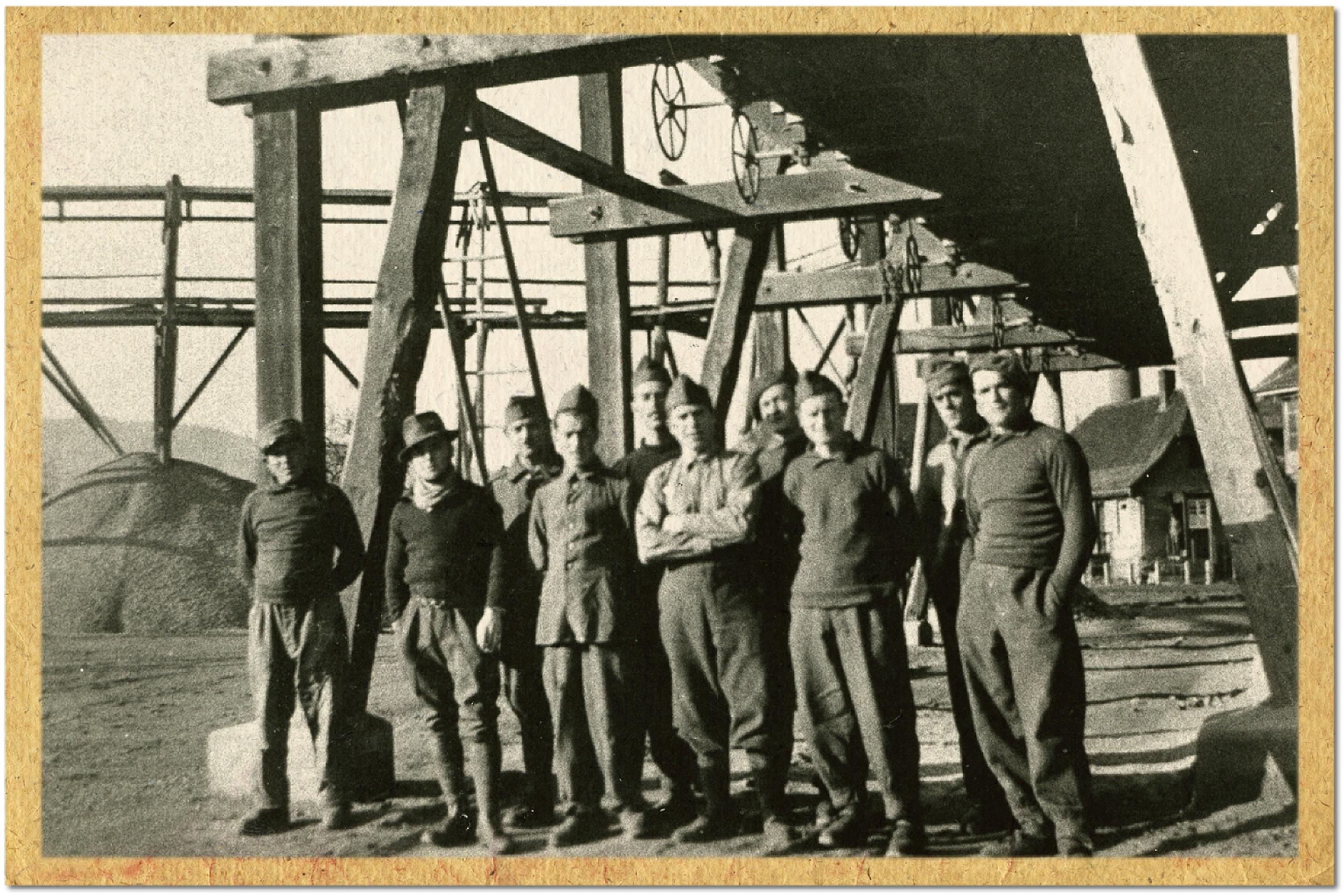
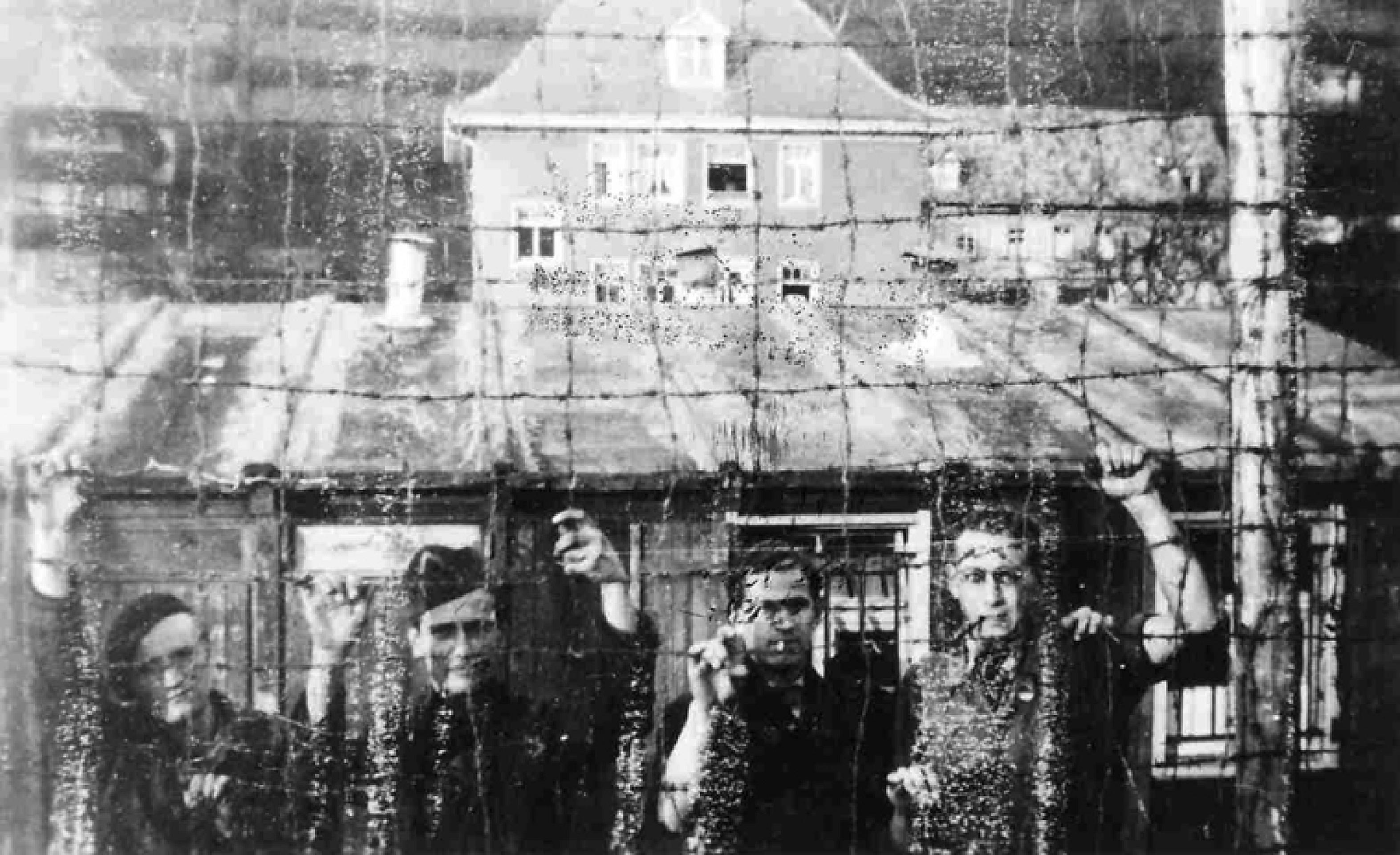
From September 1944 onwards, three camps were established in Haslach with the purpose of producing engine parts in the tunnels for the Daimler-Benz company. The first camp, called Sportplatz (sports field), was set up as a satellite camp of Natzweiler concentration camp in a Wehrmacht camp shed on the edge of the town. The first 399 prisoners were mostly French resistance fighters, most of them being transferred through the Dachau concentration camp. Later 251 prisoners were added from the Flossenbürg concentration camp. The prisoners were used in the construction of roads and the expansion of tunnels. The prisoners had to cover the five-kilometre climb to the tunnels on foot every day. Many of them died of exhaustion and diseases, which were raging in the camp because of the poor hygienic conditions.
The second camp, »Vulkan« (volcano), existed from December 4 in a tunnel with 700 prisoners, most of them French or Soviet. The living and working conditions were catastrophic, the guards regularly abused the prisoners.
The third camp, »satellite camp Kinzigdamm«, was set up on December 10, 1944 in two barracks in the city area. The prisoners of this camp also had to conduct forced labour in the tunnels or in local businesses.
Victims
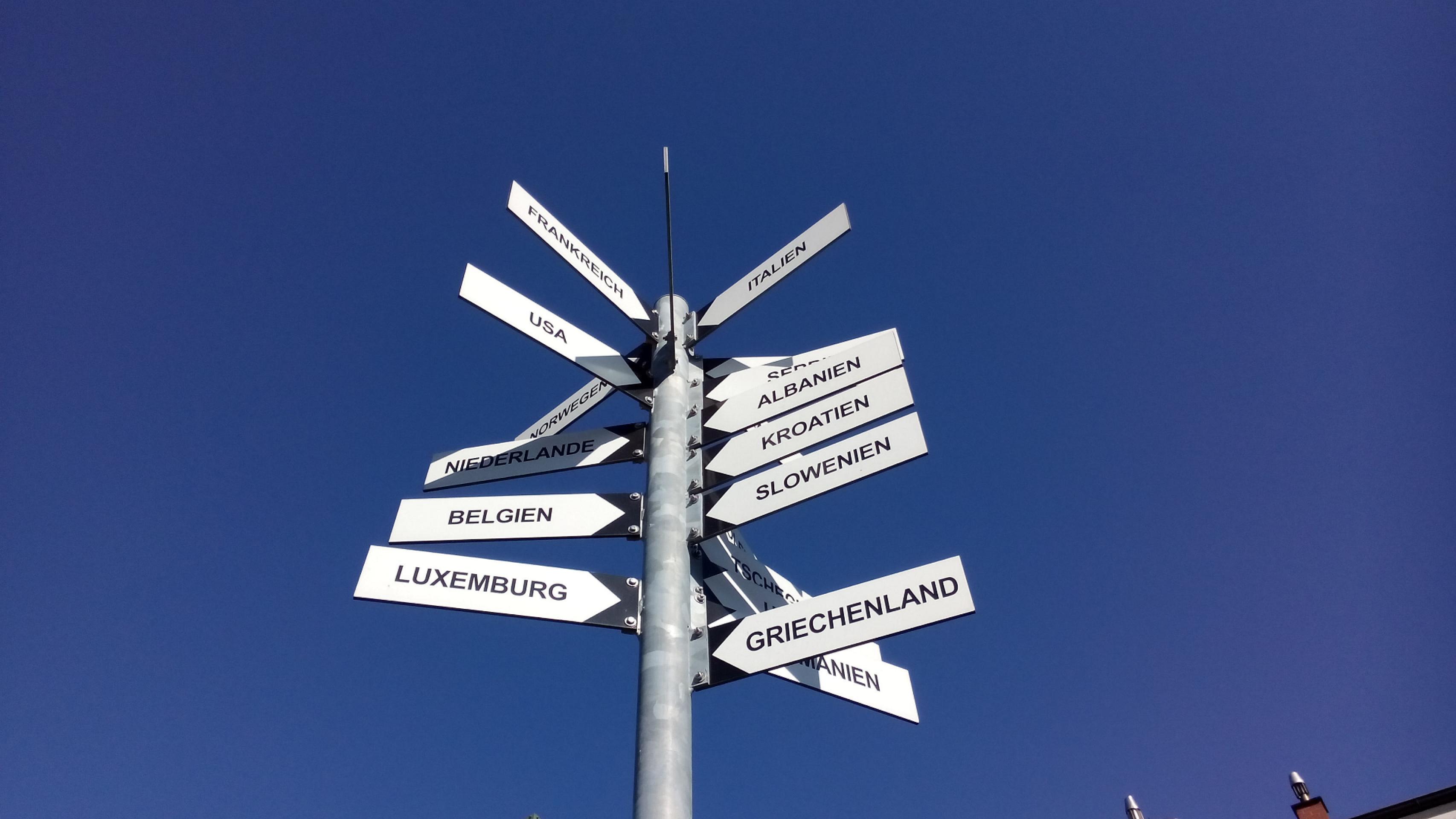
Up to 1,700 prisoners from 21 nations were imprisoned in the three Haslach camps until their dissolution in spring 1945. The prisoners came from concentration camps, but also from other National Socialist forced camps. 223 prisoners of the three camps died of illness, exhaustion or maltreatment in Haslach. Many others died on the death marches after the dissolution of the camps in March/April 1945.
Remembrance
French troops captured Haslach on April 21, 1945. In 1946 the French army opened mass graves with the remains of 210 prisoners. They were ceremoniously reburied on a new cemetery for the Allies. In the following years, those who could be identified were transferred to their home countries. Today, the remaining 75 are buried in a grave of honour in the Haslach cemetery.
In 1947, members of the former guards were brought before a French military tribunal. SS-officer Karl Buck (1894-1977), responsible for the Vulkan camp and notorious for his brutality, was sentenced to death. His sentence was later commuted to life imprisonment. In 1955 he was handed over to the German authorities, who released him and in 1957 discontinued all proceedings against him.
In 1948 the French military blew up the tunnels. In the 1950s, the French army used the grounds of the Vulkan camp as a munitions depot. In the 1970s a municipal landfill was established nearby.
The first commemorative event was organised in October 1970, when some 300 former prisoners, French resistance fighters and members of the Union of Persecutees of the Nazi Regime (VVN) met on the former site of the camp Sportplatz (sports field) and inaugurated a memorial plaque at the barracks. In 1979, the barrack was demolished and the plaque was attached to the market hall, which was built in its place.
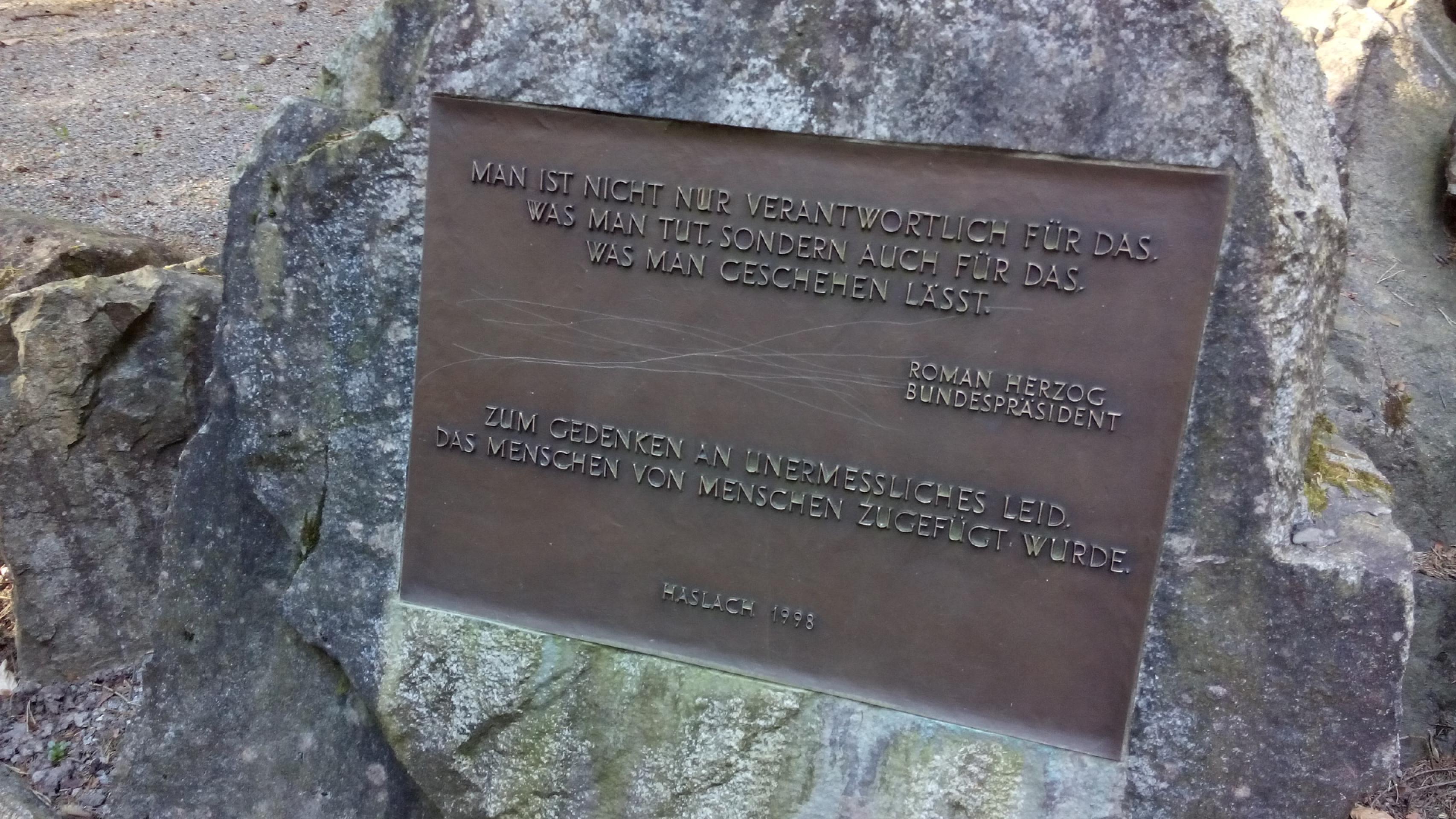
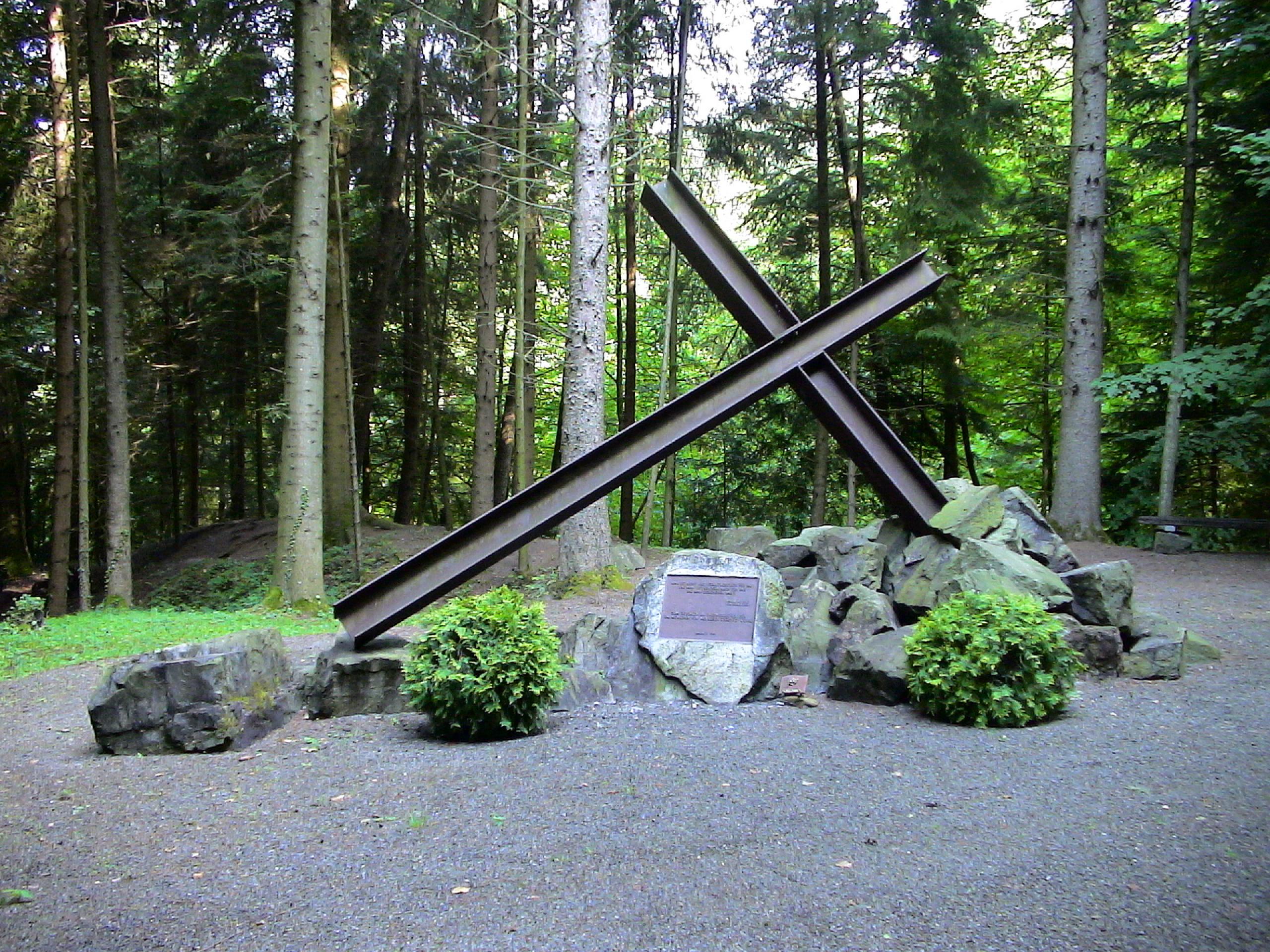
Apart from a few committed citizens, hardly anyone on site was interested in the history of the camps in Haslach for decades. In the 1990s, however, on the initiative of two local politicians of the Social Democrats it was resolved that a memorial would be erected on the historic site. On July 25, 1998 the Vulkan Memorial was finally inaugurated just below the former quarry. The central element is a sunken cross surrounded by stones. The memorial was created by the Haslach artist Frieder Haser. Nearby, twelve information panels inform about the history of the camps and the fate of the prisoners.
Since its establishment, seven large commemoration ceremonies were held at the memorial with survivors of the camp and their family members.
Possibilities
Guided tours on request
Open
The memorial is accessible at all times.
Contact
http://www.gedenkstaette-vulkan.de
info@gedenkstaette-vulkan.de
+49 (0)7832 2015
Breitestraße 4
77716 Haslach im Kinzigtal