Poland had been under German and Soviet occupation since September 1939. After the German invasion of the Soviet Union on 22 June 1941, eastern Poland was also occupied by the National Socialists. Years of brutal oppression followed. On 1 August 1944, the Polish Home Army (Polish: Armia Krajowa) rose up against the German occupiers in the Warsaw Uprising. After 63 days, SS troops crushed the uprising and then systematically destroyed the city. Since 1945, over 100,000 victims of the German occupation have found their final resting place in the Insurgents Cemetery.
History
The Polish capital Warsaw was attacked by the Wehrmacht on 1 September 1939, the first day of the Second World War. After a three-week siege, the city was taken by the Wehrmacht on 1 October. The National Socialists subsequently exercised a regime of terror against the Polish population. The Jews, who were imprisoned in the Warsaw ghetto from 1940, were hit even harder. On 19 April 1943, they fought back in the Warsaw Ghetto Uprising. However, the uprising failed and the Jewish quarter of Warsaw was razed to the ground. Only a fraction of the city's Jewish population survived the German occupation.
A year later, on 1 August 1944, the Polish Home Army rose up against the German occupiers. They tried to liberate the city themselves before the Red Army marched in. After fierce house-to-house fighting, the Polish units took control of important parts of the city in the first few days. The Germans quickly gained the upper hand, however, and in the weeks that followed, SS and police units carried out countless massacres of the civilian population. The massacres in the districts of Wola and Ochota were particularly brutal, with over 50,000 and 10,000 Poles killed respectively.


Victims
When the insurgents surrendered on 2 October 1944, around 15,000 soldiers of the Home Army, including around 2,000 women, were taken prisoner by the Germans. In total, at least 16,000 insurgents fell in combat and around 150,000 civilians, including many young people, lost their lives. In the first days of the uprising in particular, the SS carried out mass shootings, to which around 40,000 people fell victim. About 100,000 survivors were deported to the German Reich for forced labour and hundreds of thousands were expelled from the city. Some 500,000 inhabitants were forcibly evacuated to the Pruszków transit camp near Warsaw. Around 60,000 Poles were deported to various concentration camps. Warsaw was almost deserted when the SS burned down the city street by street, house by house.
Remembrance
During the uprising and the entire period of German occupation, thousands of victims were buried in makeshift graves. After the end of the war in 1945, it was decided to build a central cemetery in the Wola district for the fallen insurgents and other victims of the German occupation. The first reburials in the newly established Insurgents Cemetery began in November 1945, and over the next two years the remains of victims from all over the city were buried there.
In the 1950s, the administration of the cemetery was transferred to the Society of Fighters for Freedom and Democracy, a veteran organisation of the communist regime in Poland. The regime also tried to suppress the memory of the uprising and so the cemetery, which had previously been called the »Cemetery of the Defenders of Warsaw«, was renamed the »Municipal Cemetery No. 2 in Wola«. At the beginning of the 1960s, the cemetery was reduced in size by almost 90 per cent. The area that had been freed up was turned into a park. All references to the Warsaw Uprising were removed.
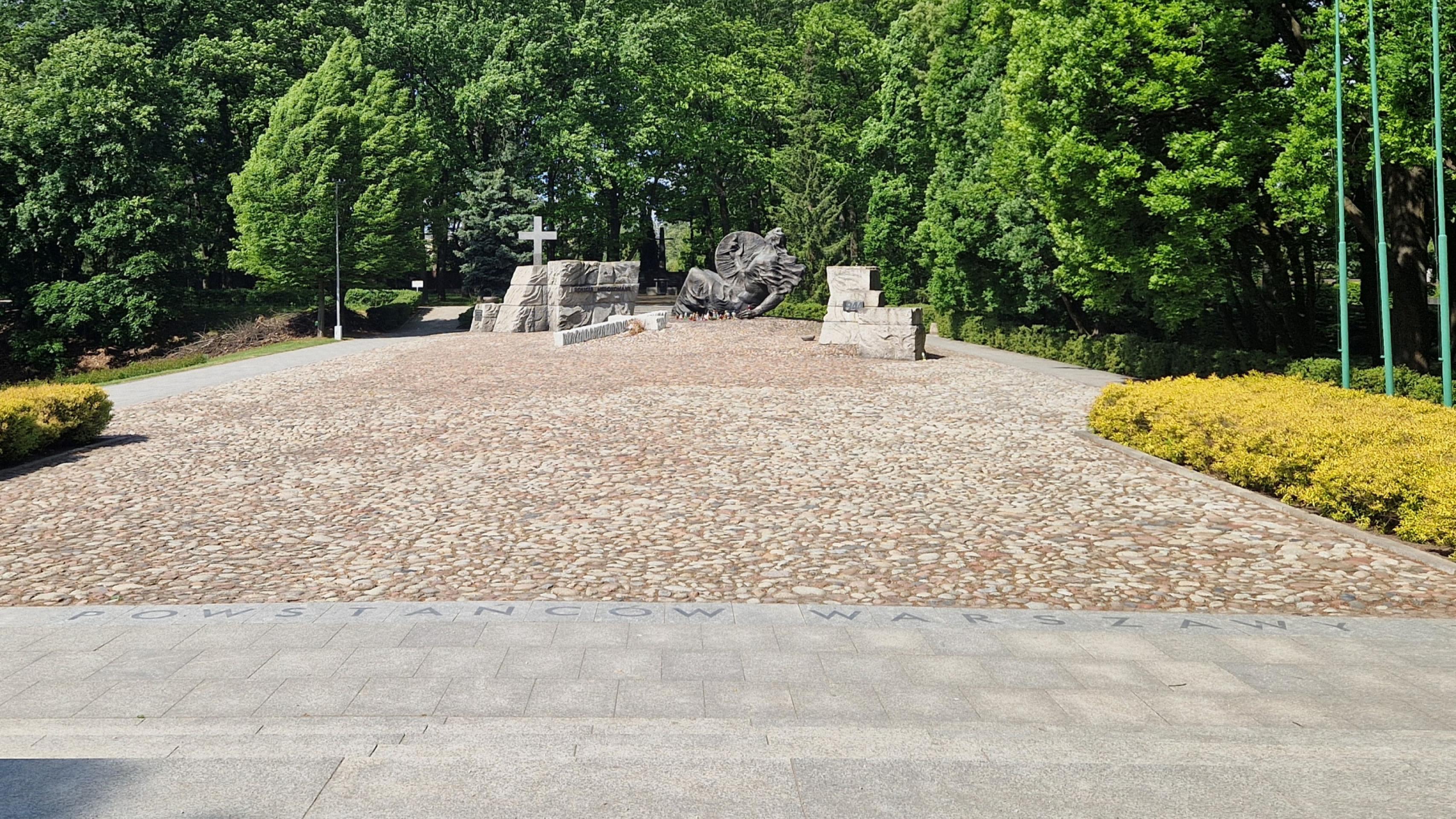
The Monument to the Fallen Unconquerable 1939–1945, designed by Gustaw Zemła, was inaugurated in 1973. The memorial stands on a grave mound covered with cobblestones, under which the ashes of 50,000 victims of the Nazi terror in Warsaw are buried.
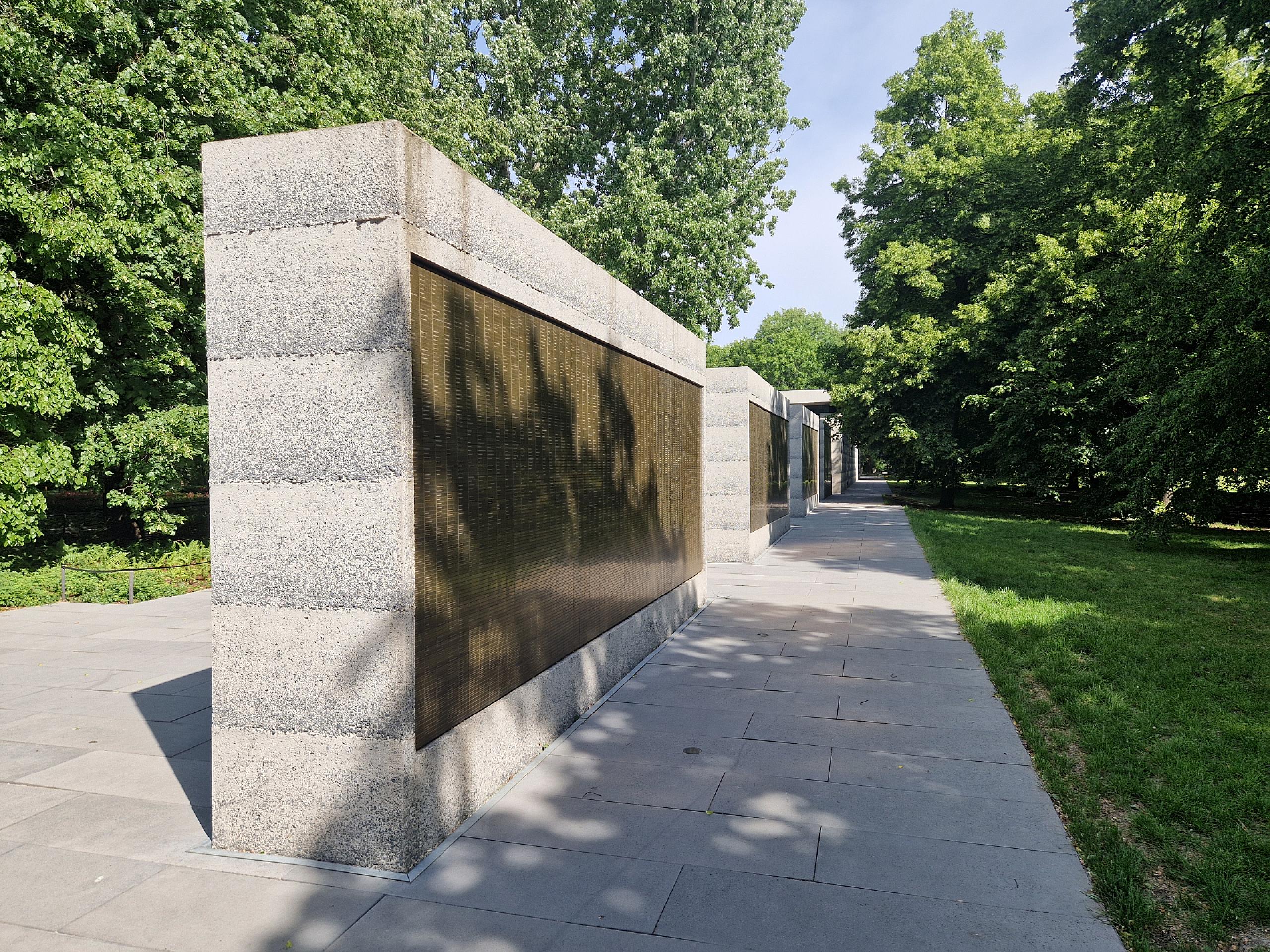
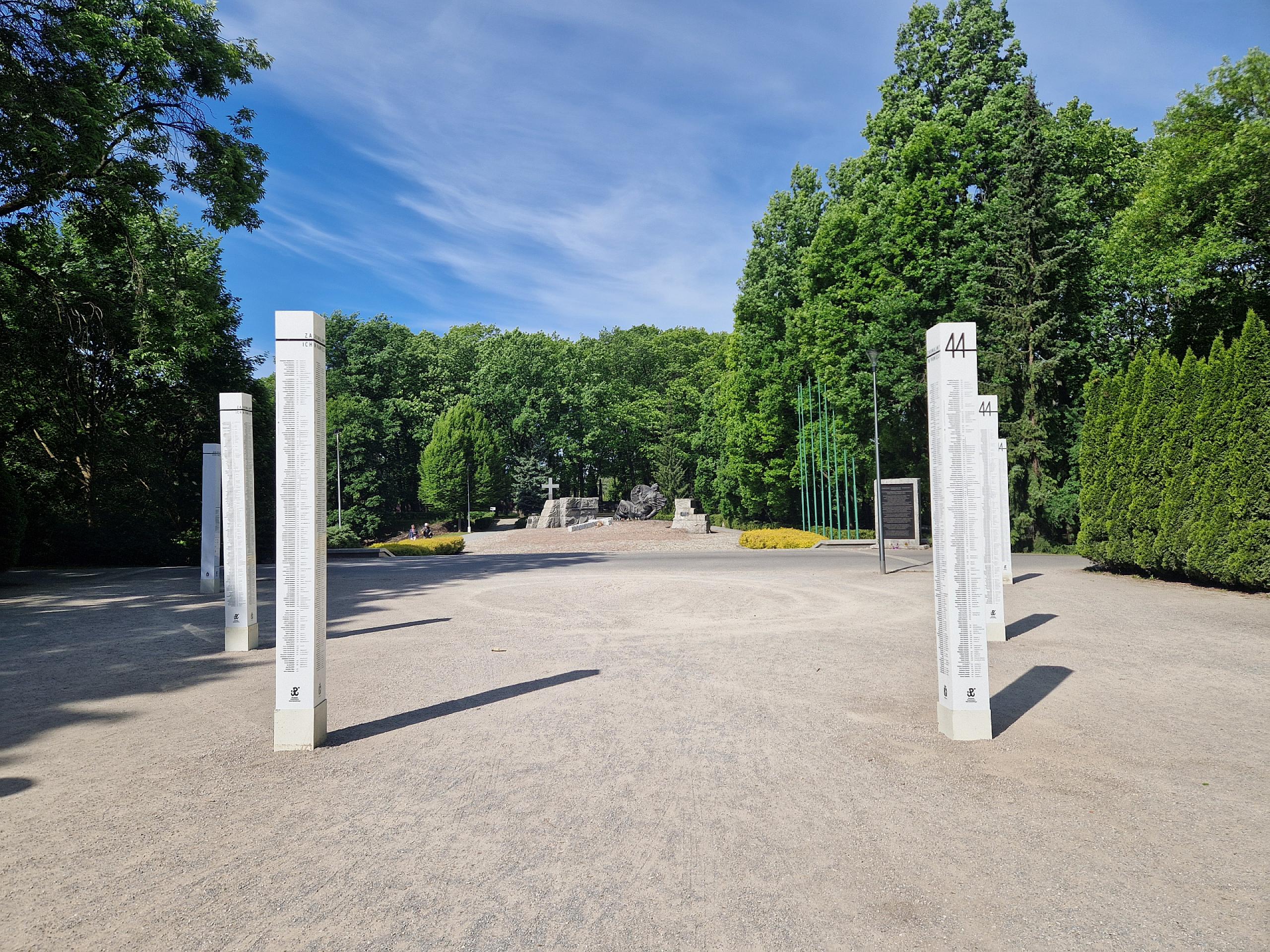
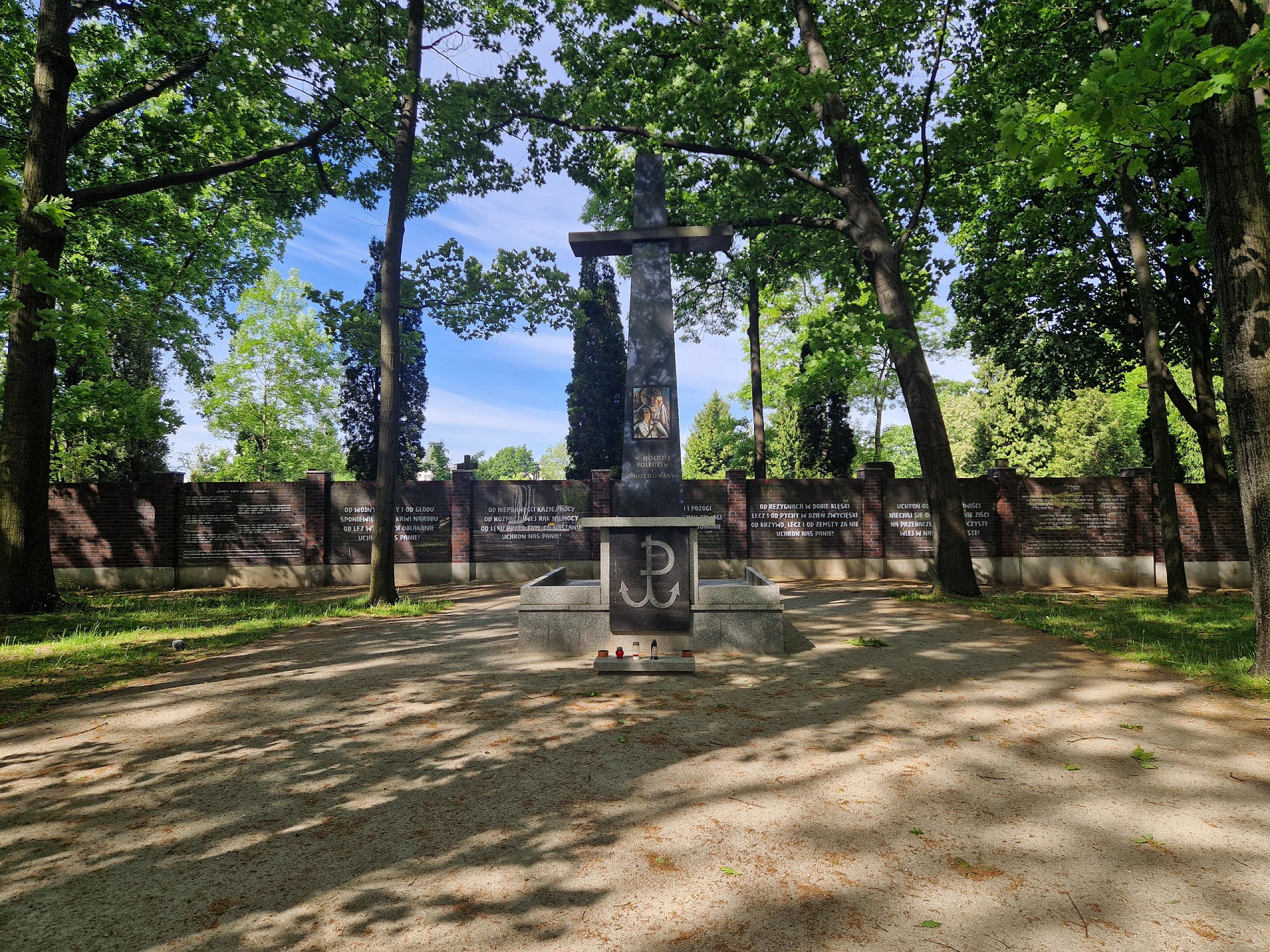
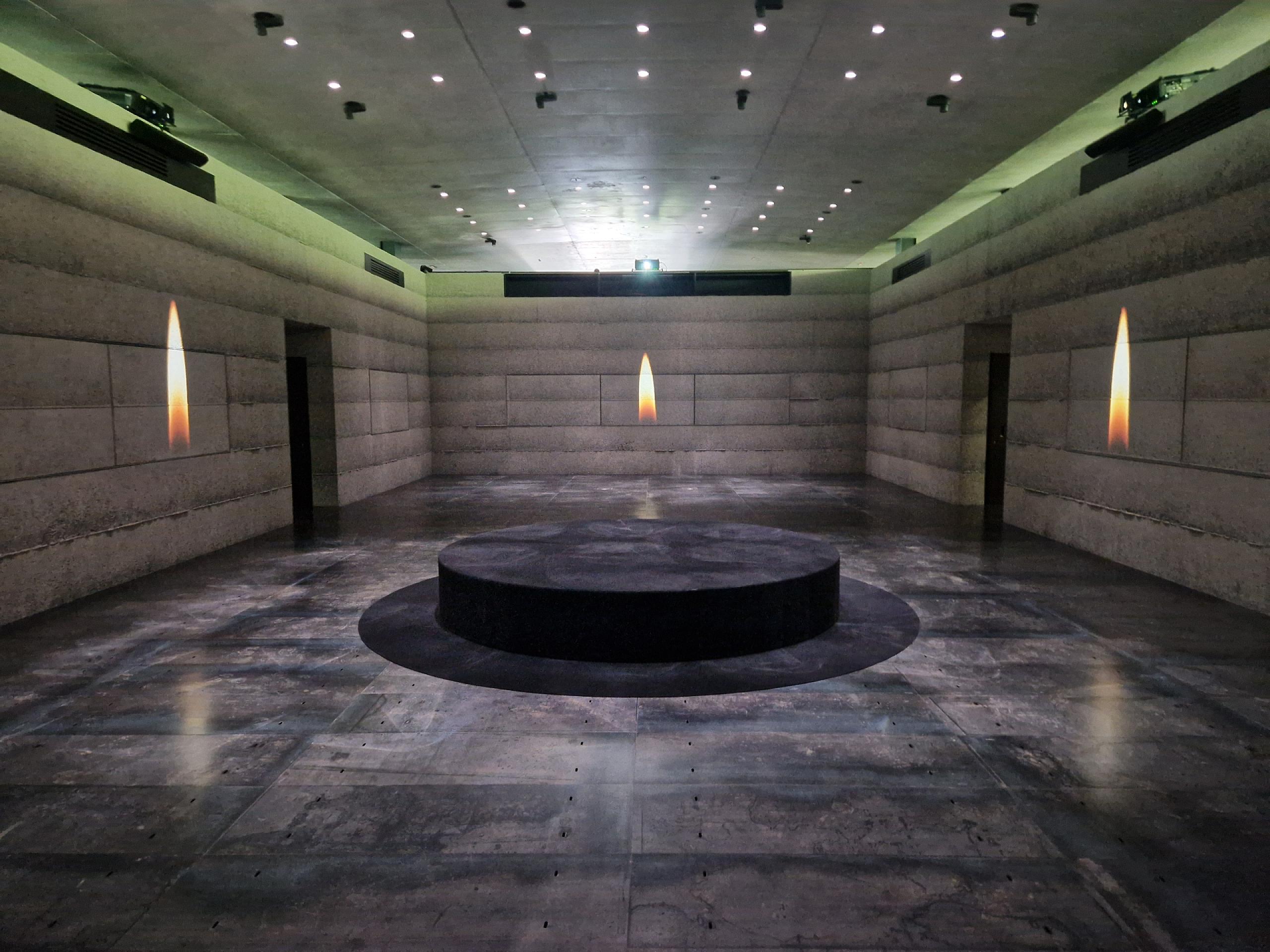
After the fall of the communist regime, the memory of the Warsaw Uprising was revitalised in the 1990s. Religious symbols and symbols commemorating the uprising were added to the cemetery. In 2021, the foundation stone was laid for a new memorial site at the cemetery. It comprises two pavilions and a memorial wall with 93,240 brass plaques bearing the names and ages of 62,000 identified people. In between are gaps that will one day be filled with further data. The memorial site was inaugurated on 2 October 2023.
Contact
Wolska 174/176
01-258 Warszawa