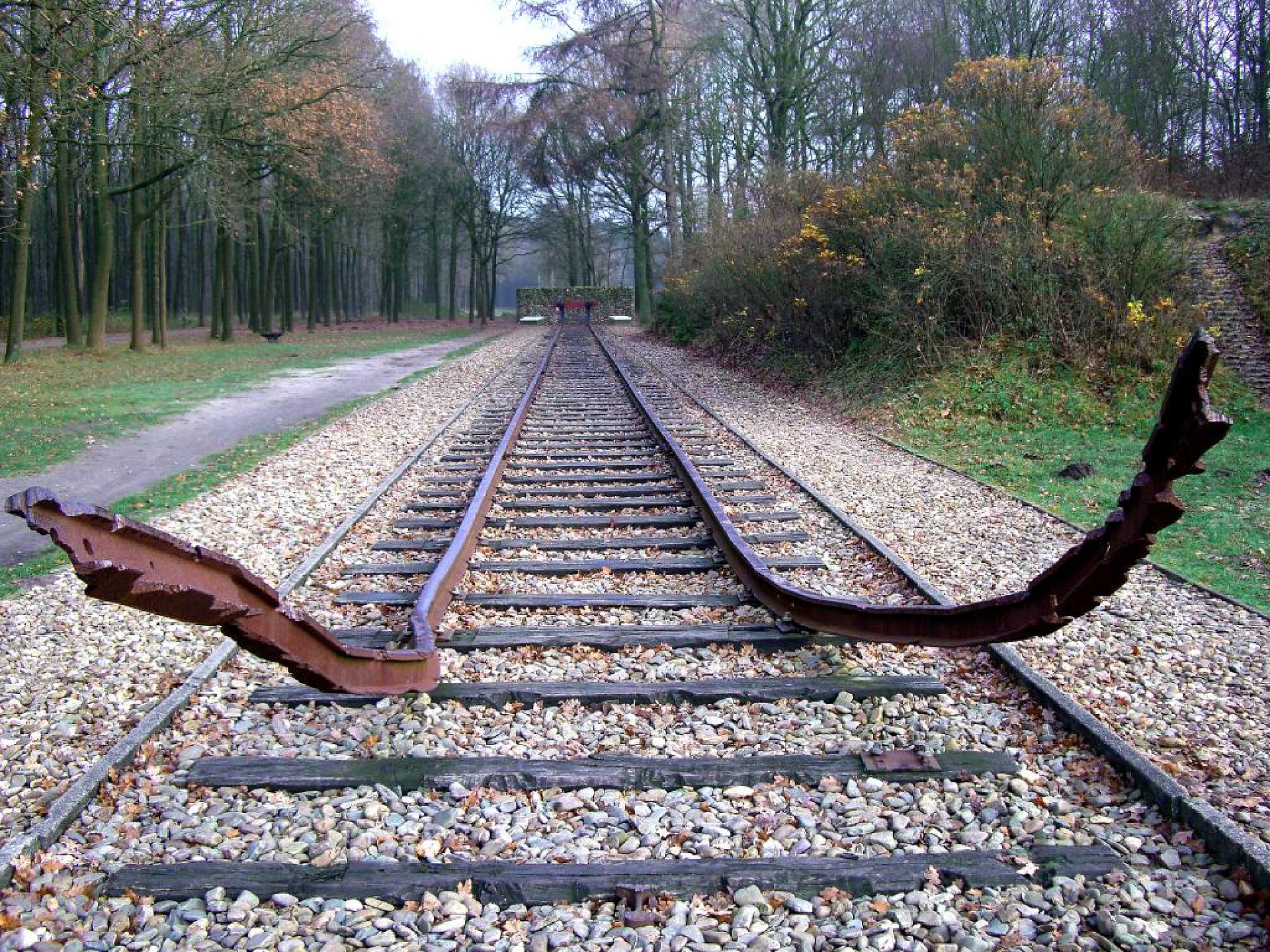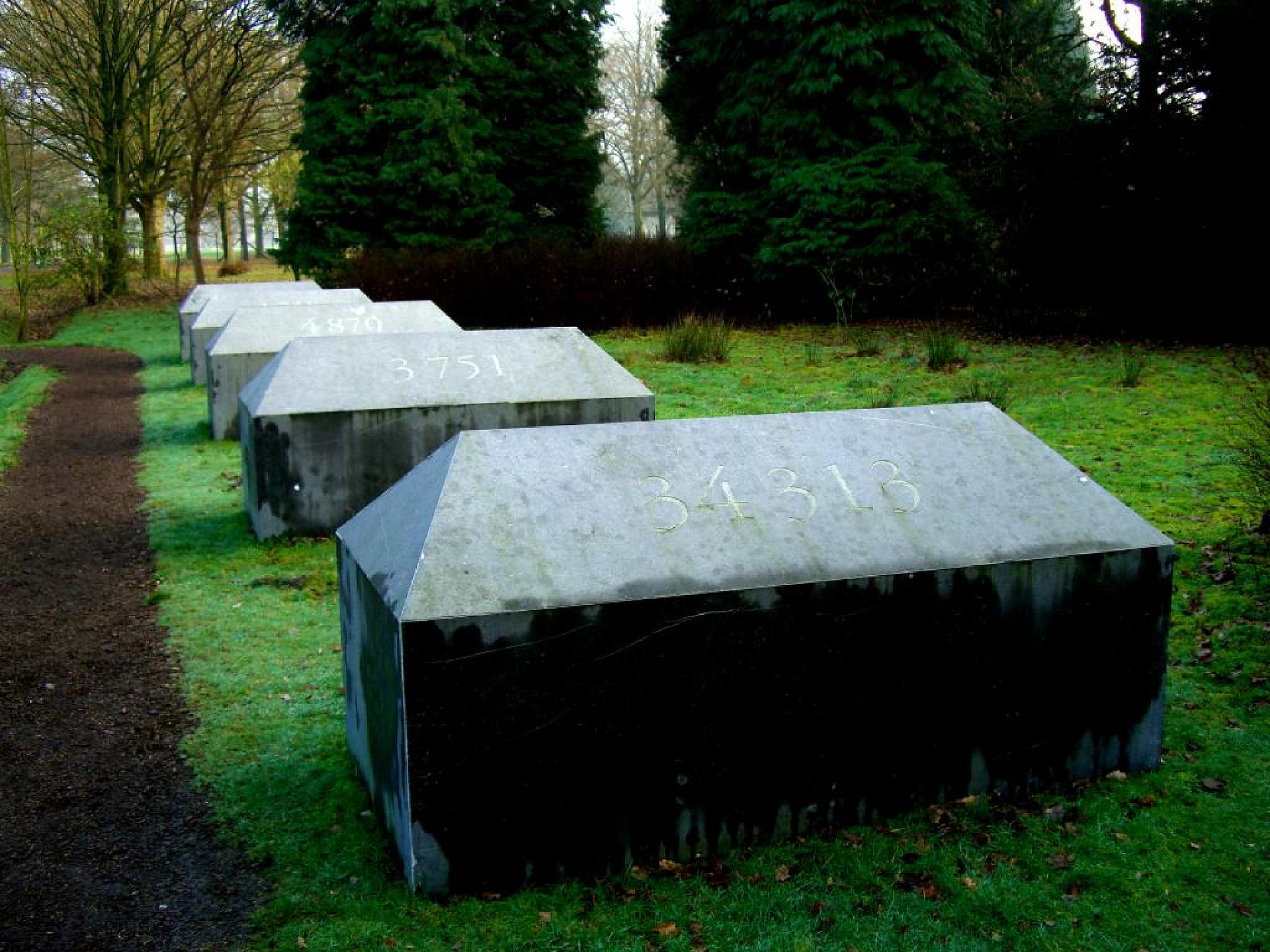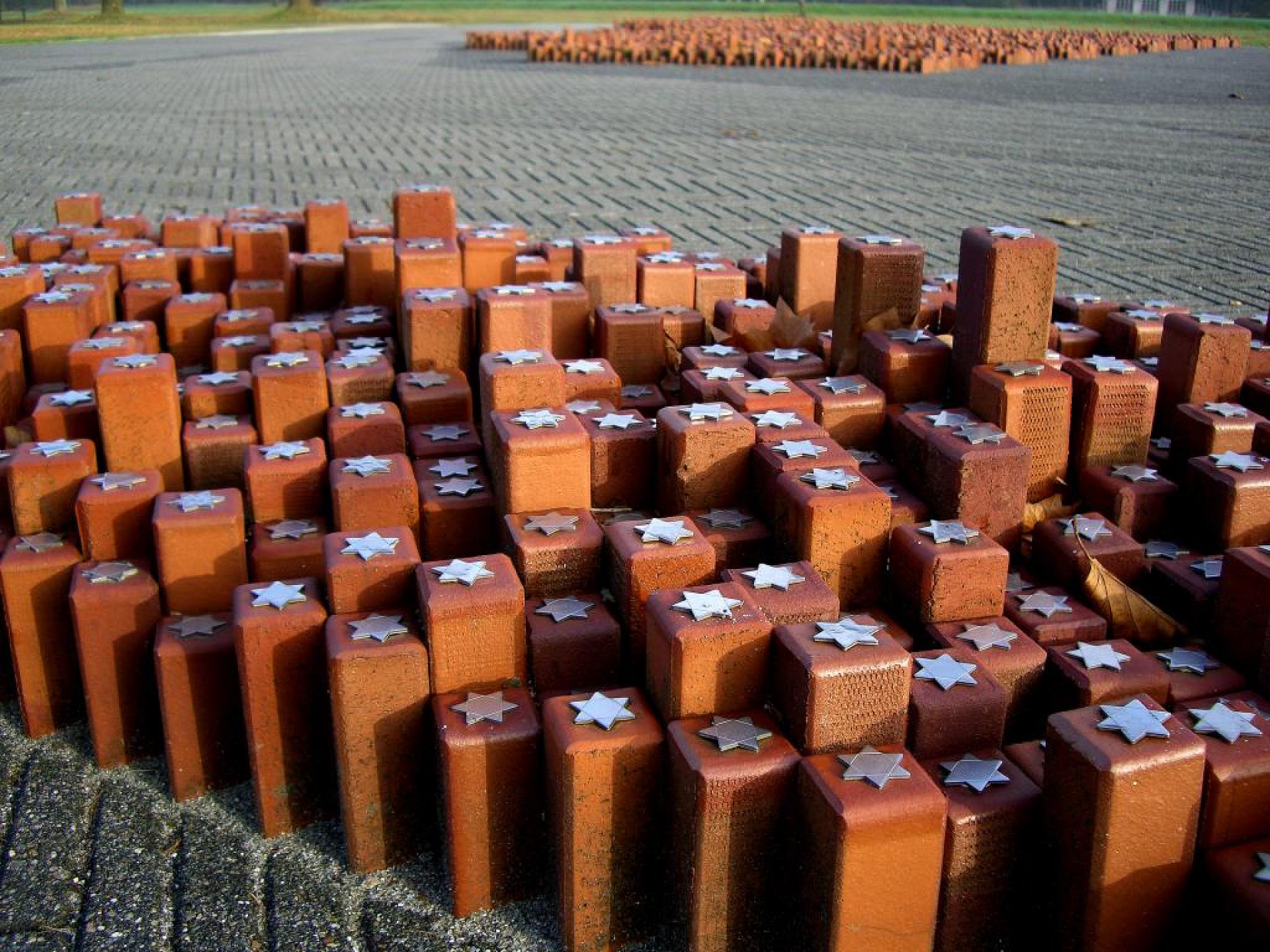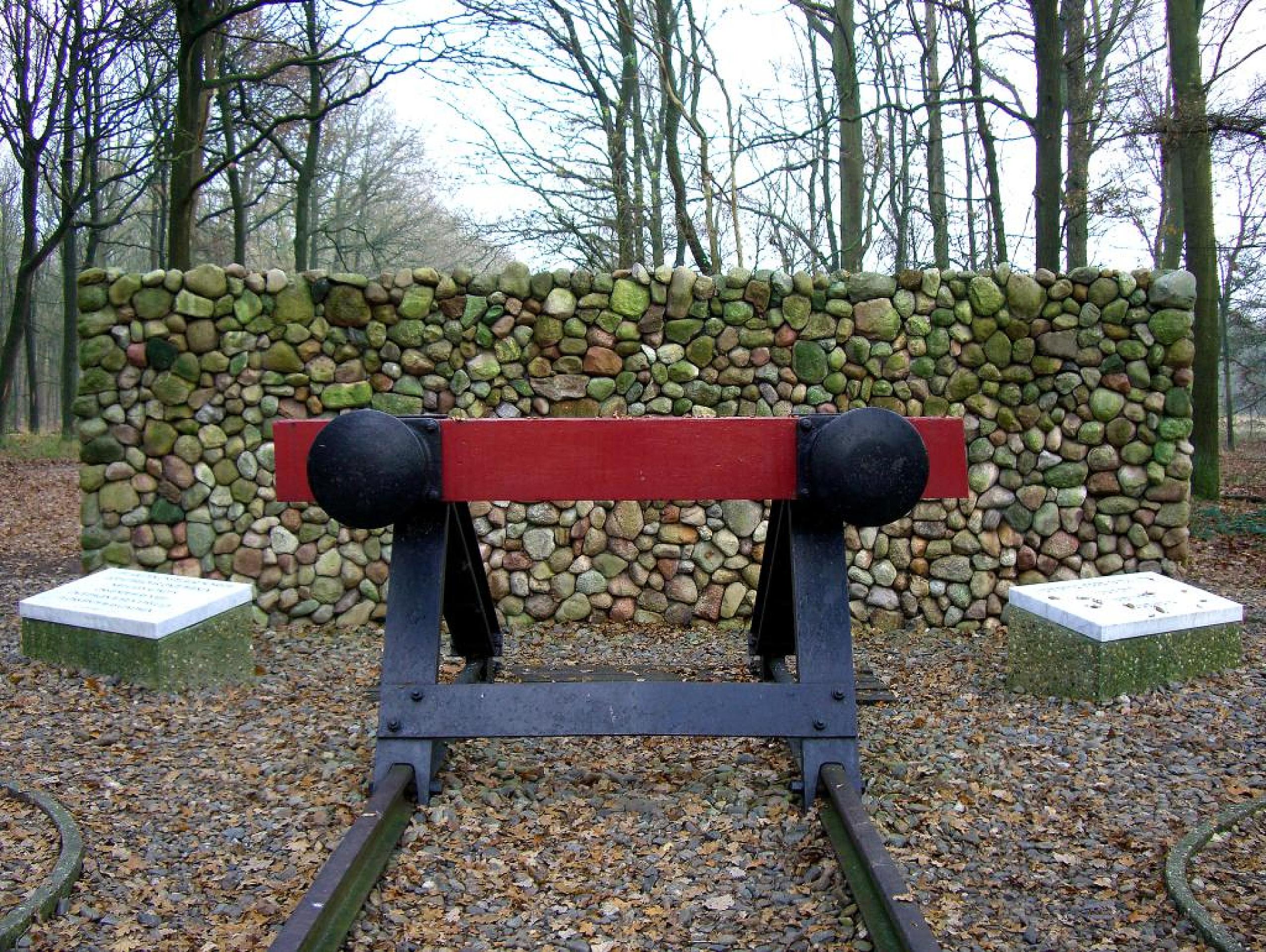
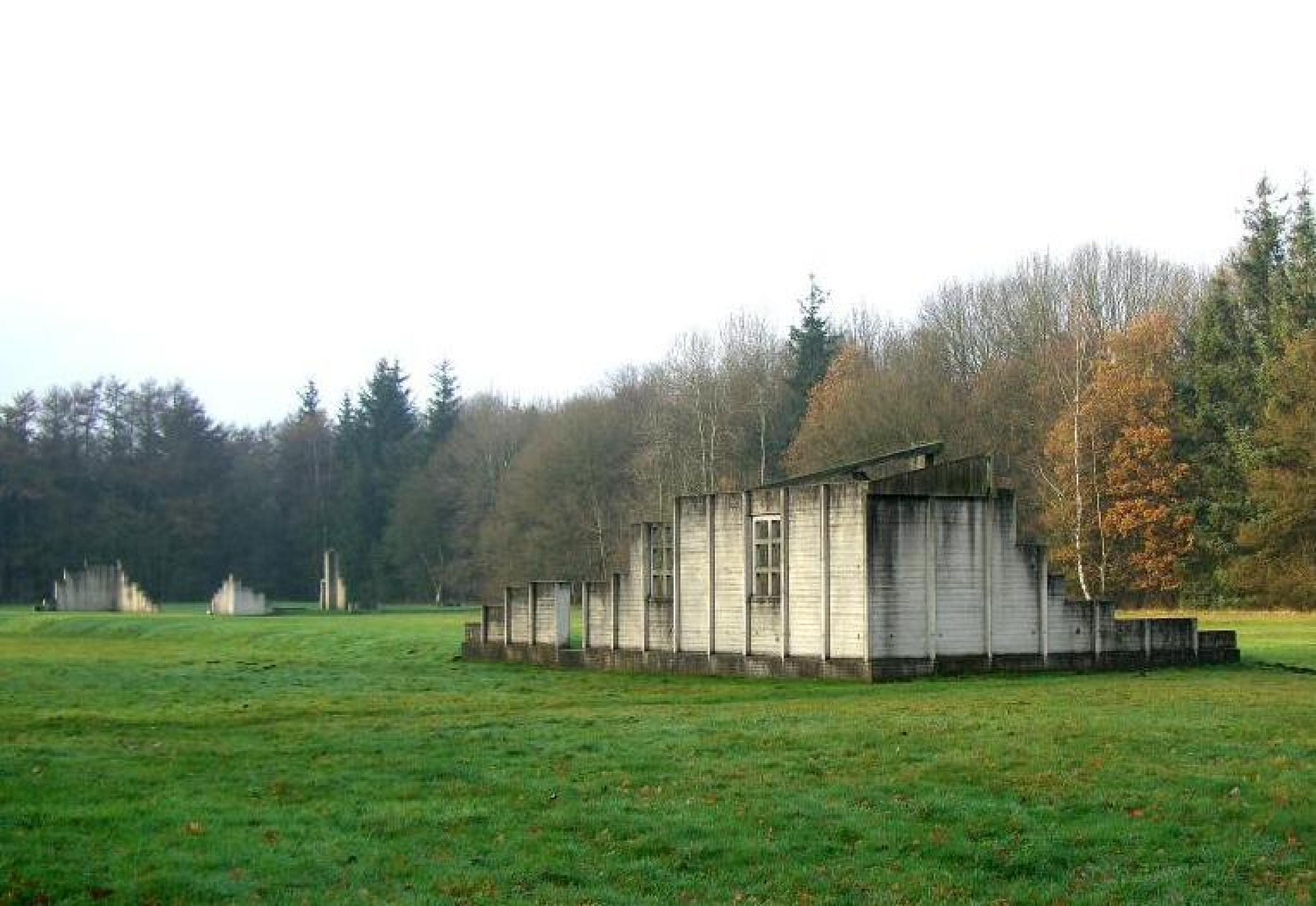
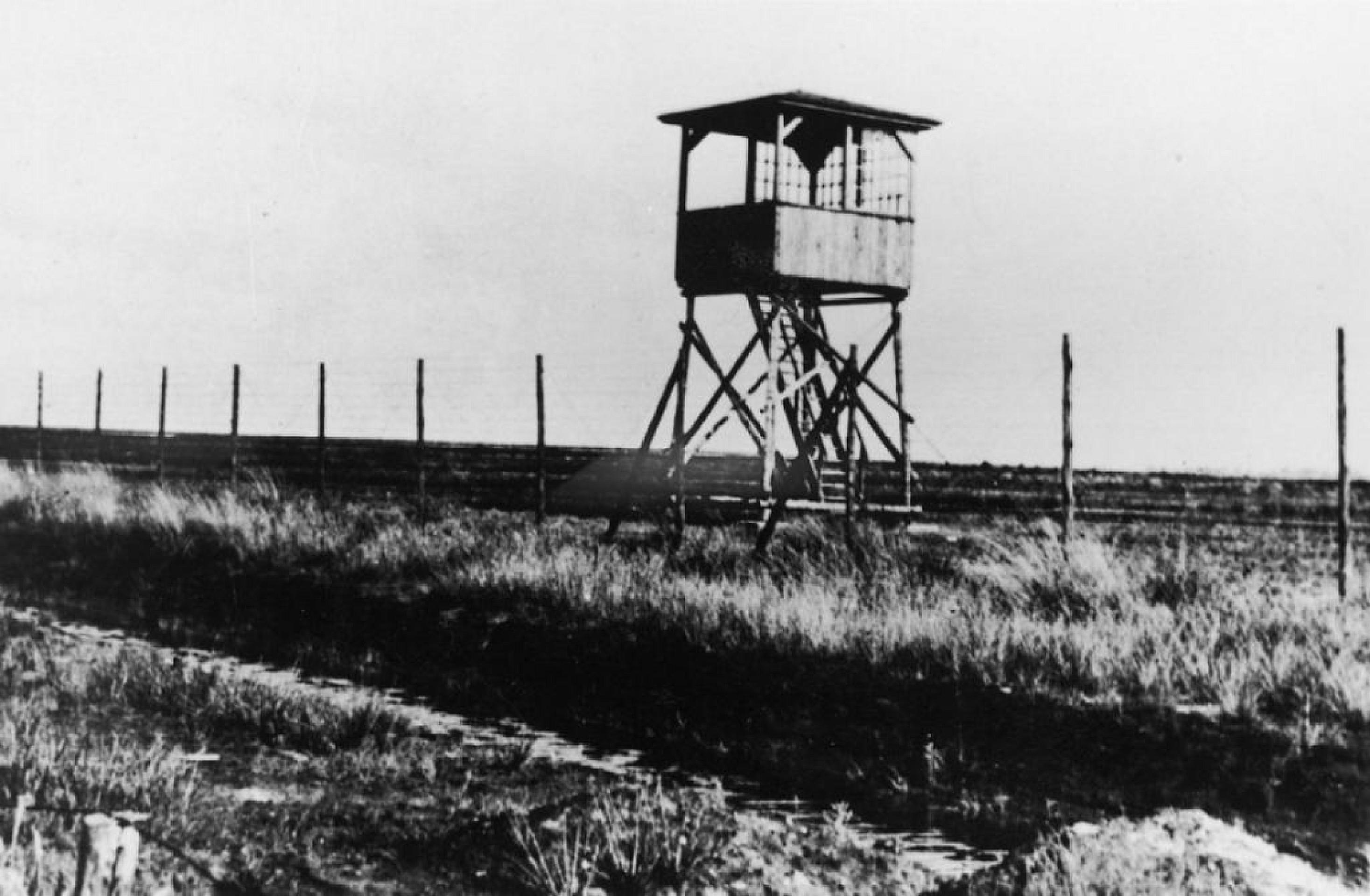
A memorial in Westerbork recalls the fates of the Jews who were deported from the »Westerbork Police Transit Camp for Jews« to the concentration camps and death camps in the occupied east.
History
The Westerbork camp was initially set up by the Dutch authorities in 1939 in order to cope with the wave of refugees from the »Third Reich«. Many Jews and people who were politically persecuted in Germany sought refuge in the neighbouring Netherlands. However, in many cases the Dutch government refused to integrate the refugees, instead accommodating them in camps. The central camp was set up near the town of Hoogdalen in the village of Westerbork.
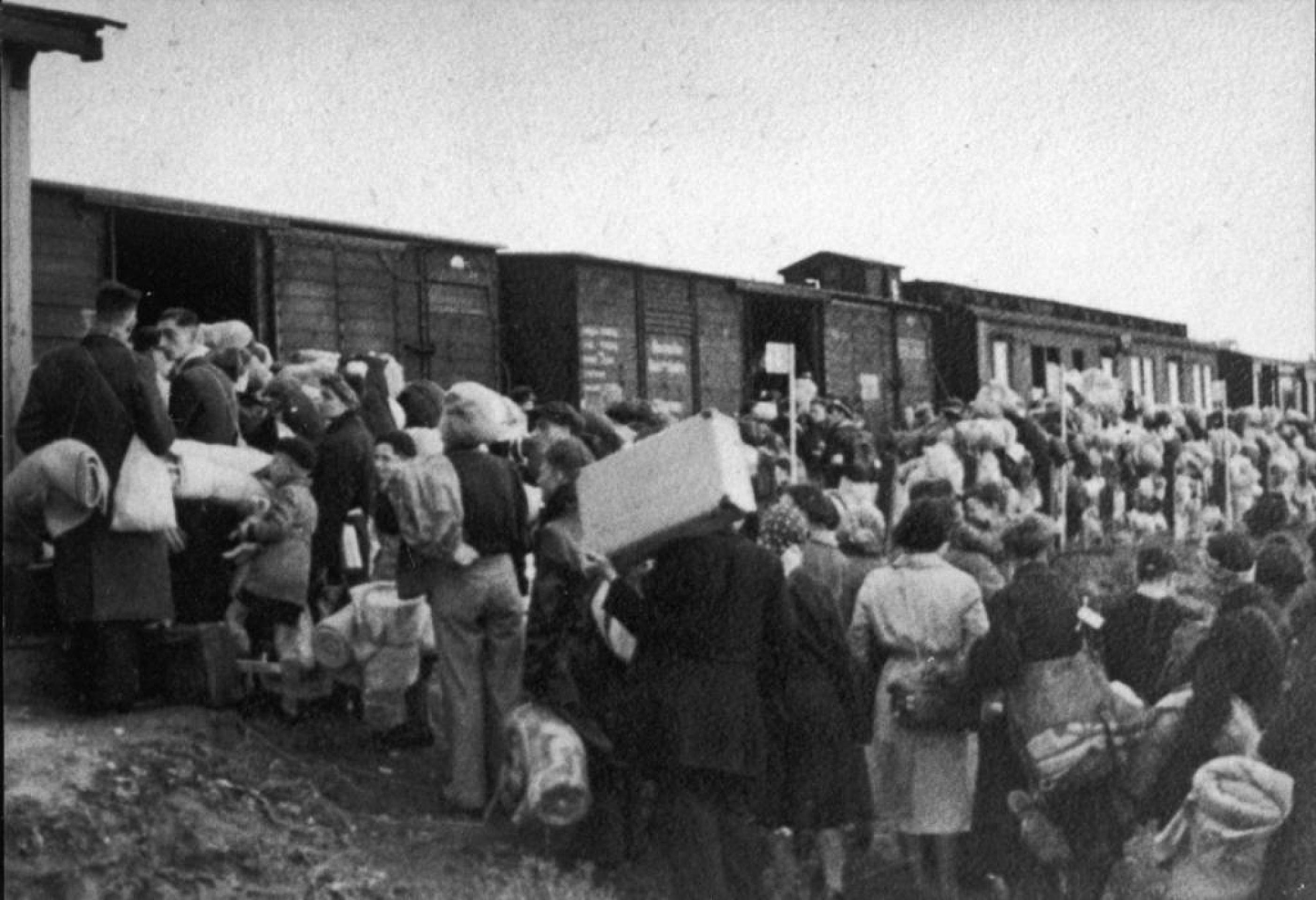
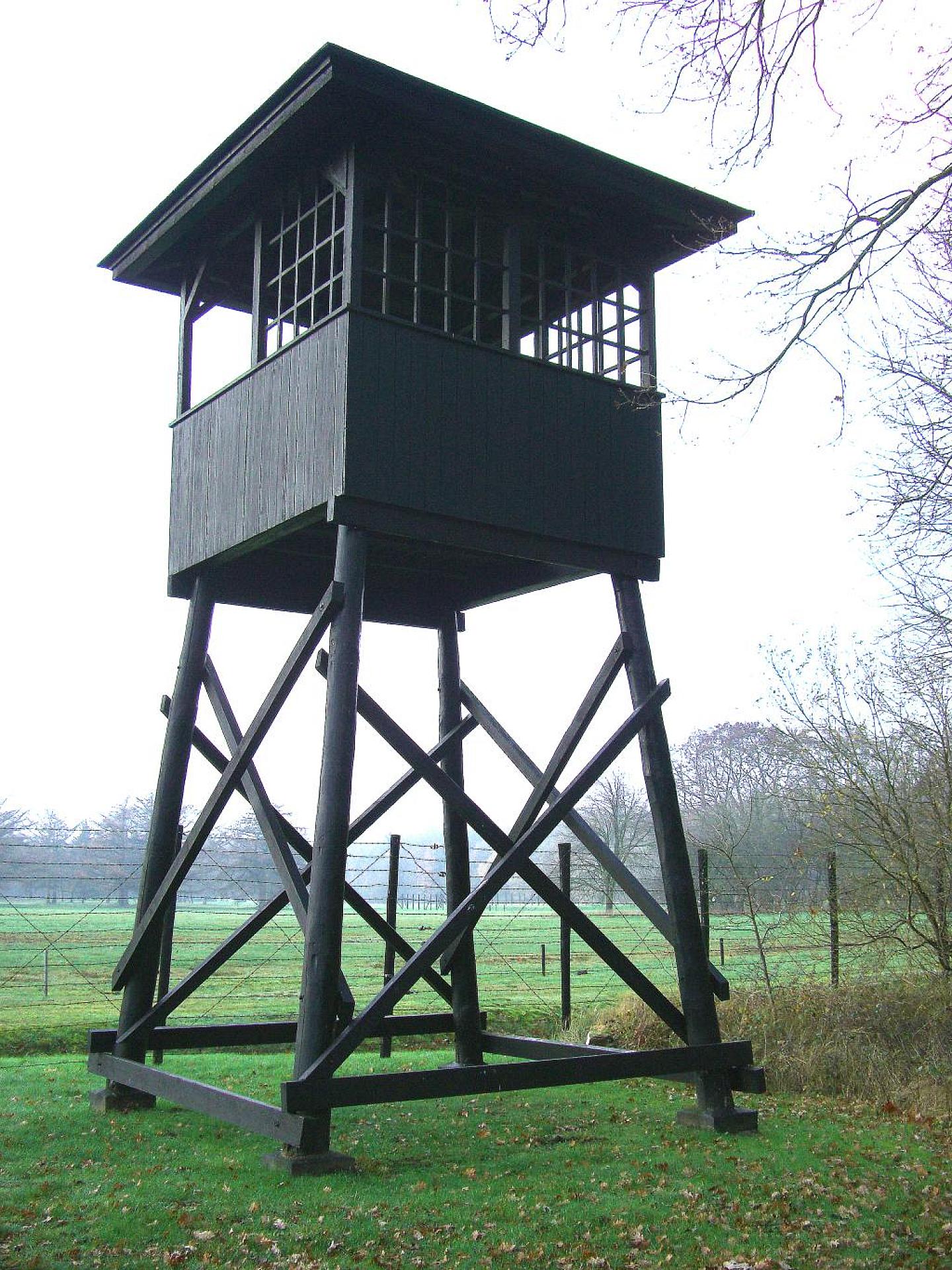
There were about 700 people at the camp when the German Wehrmacht invaded the Netherlands on May 10, 1940. The camp continued to be run by the Dutch administration, until two years later, the German occupying authorities transformed it into a transit camp for Jews who were to be deported. The main reasons to set up the transit camp at Westerbork were the already existing infrastructure and the vicinity to the German border. The camp was extended, connected to the rail network and on July 1, 1942, it came under the administration of the Security Police and Security Service as a »police transit camp for Jews«. At the time, there were 1,527 prisoners at the camp. The deportations began that same month. Jews were rounded up with the help of local police forces and brought to Westerbork, from where the SS deported them to the east after a short period of time. The first transport departed for Auschwitz on July 15, 1942. Until September 13, 1944, 93 more transports left for Auschwitz, Sobibór, Theresienstadt and Bergen-Belsen. Many Jews remained at the camp for longer, and the everyday life at the camp led prisoners to believe that they were not in danger: the camp was partly self-governed, and there were schools and various cultural and sporting events. This tactic of deceiving the victims thwarted resistance, meaning the prisoners kept calm even in the course of the deportations.
Victims
The Westerbork transit camp was the central site of the »final solution of the Jewish question« in the Netherlands. Of the 140,000 Jews who lived in the Netherlands when the German Wehrmacht invaded, 107,000 were deported to the east – all of them passed through the Westerbork transit camp.
Fewer than 5,000 of the deportees survived the concentration camps. Among those deported were also 245 Sinti and Roma. Only 30 of them survived.
751 people died in camp itself, mainly elderly and ill people. Over 500 dead were incinerated at the camp crematorium.
Remembrance
After the war, the Allies began incarcerating Dutch collaborators at the camp even before all of the remaining Jews could leave. Until December 1948, the camp was used as an internment camp under the administration of former Dutch resistance fighters. At least 89 of the internees died in the summer of 1945. When the Dutch East Indies (Indonesia) gained their independence in 1949, many refugees came to the Netherlands. Westerbork once again became a refugee camp, its name was changed to »Kamp Schattenberg«. The camp was dismantled only when it becae evident that the refugees would not be able to return to their homes. The last residents left the premises in 1971.
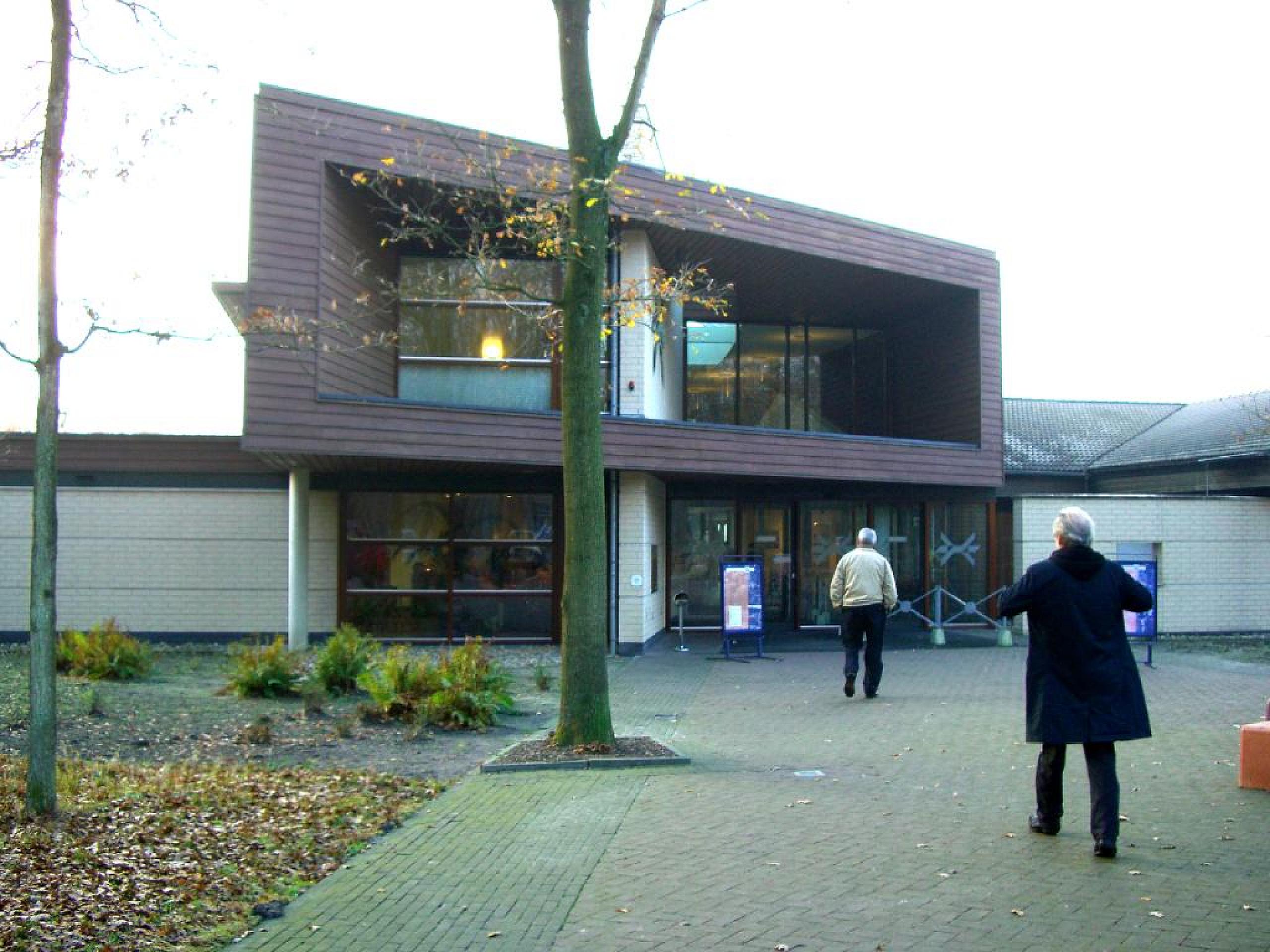
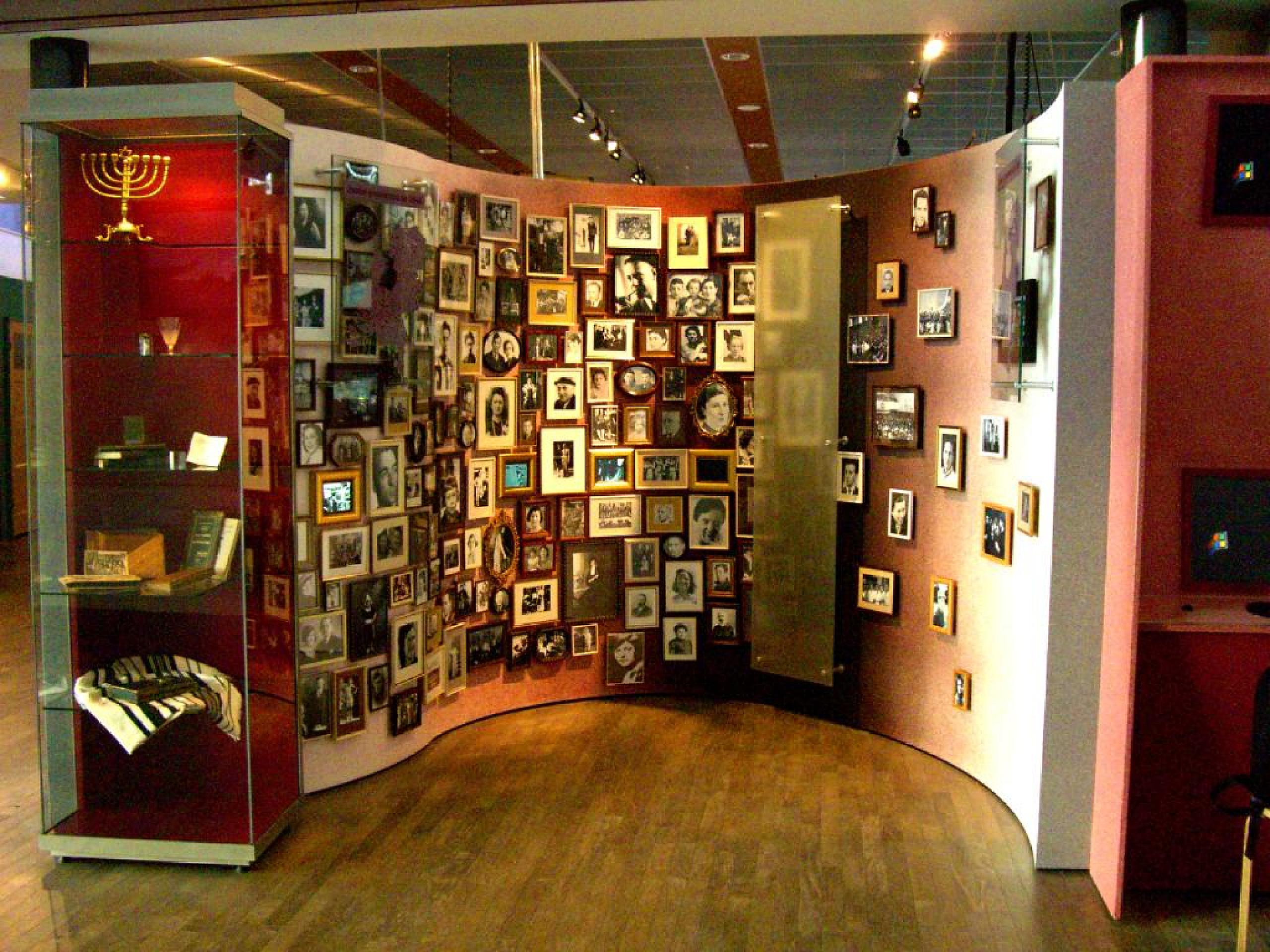
In 1949, the »Foundation 40-45« erected a monument to 10 executed resistance fighters behind the building of the former crematorium. A memorial to the deported Jews was only set up in 1970, following many years of efforts undertaken by the local authorities and the Jewish community. Politicians, former inmates and citizens supported a further development of the area. In 1983, a memorial centre was opened near the camp premises. Moreover, the state financed the renovation of the former camp, during which several original artefacts were reconstructed. In 1999, a modern museum building was opened as an extension to the memorial centre.
Possibilities
Library, archive, research assistance, guided tours, publications, commemorative ceremonies
Open
Daily 10 a.m. to 5 p.m., on holidays 11 a.m. to 5 p.m. Closed on December 25 and 31, and between January 6 and 21
The former camp premises are always accessible
Contact
info@kampwesterbork.nl
+31 (0)593 592 600